Zijin Mining(601899)

Search documents
小摩:料今年以旧换新政策继续利好金属商品市场 推荐买紫金矿业(02899)等
智通财经网· 2026-01-21 03:49
Core Viewpoint - Morgan Stanley forecasts China's GDP growth to reach 5% year-on-year by 2025, driven primarily by consumption stimulation from the trade-in policy [1] Group 1: Economic Outlook - The growth trend in the commodity market is expected to continue into 2026, with global demand-driven metals (such as gold, copper, and lithium) outperforming domestic demand-driven sectors (like coal and steel) [1] - Supply disruptions and accelerated industry consolidation are anticipated to persist throughout the year [1] Group 2: Policy Impact - The trade-in subsidy policy is projected to extend into 2026, with incentives becoming more targeted and efficiency-focused, still providing substantial support for overall commodity demand [1] Group 3: Industry Preferences - The preferred order for the basic materials sector in 2026 is gold and copper, followed by aluminum, lithium, coal, and steel [1] - The materials sector is expected to continue outperforming the MSCI China Index in 2026 [1] Group 4: Investment Recommendations - Investors are advised to buy Zijin Mining (02899, 601899.SH) and to accumulate China Aluminum (02600, 601600.SH) and China Hongqiao (01378) on dips [1] - Luoyang Molybdenum (03993) may experience a temporary pause due to the issuance of convertible bonds [1]
1月美联储进一步降息的概率较高,黄金上行动力较足
Zhong Guo Neng Yuan Wang· 2026-01-21 02:15
Group 1: Key Insights on Precious Metals - The upward momentum for precious metals, particularly gold, is strong, with London gold prices reaching $4,611.05 per ounce, an increase of $117.20 per ounce from the previous week, reflecting a rise of 2.59% [2] - The market is closely monitoring the Federal Reserve's upcoming meeting, with a 95% probability of a 25 basis point rate cut anticipated in January [2][3] Group 2: Key Insights on Copper and Aluminum - Copper prices are experiencing high-level consolidation, with LME copper closing at $12,925 per ton, down $65 per ton, a decrease of 0.50% [4] - Domestic copper inventory is reported at 213,515 tons, showing an increase of 4,600 tons from January 9, while SHFE inventory also reflects a similar trend [4] - Aluminum prices are at 24,000 yuan per ton, down 60 yuan, with LME aluminum inventory at 488,000 tons, a decrease of 9,825 tons [6] Group 3: Key Insights on Tin and Antimony - Domestic refined tin prices are at 41,4640 yuan per ton, up 639.40 yuan per ton, indicating a positive trend [8] - Antimony prices have rebounded, with domestic antimony ingot prices increasing by 0.2 million yuan per ton from January 9 [10] Group 4: Investment Ratings and Recommendations - The copper industry maintains a "recommended" investment rating due to ongoing tightness in copper supply [13] - The aluminum industry also holds a "recommended" investment rating, supported by rigid supply dynamics [14] - The tin industry is rated "recommended" as supply constraints are expected to support tin prices [14] - The antimony industry is rated "recommended" following a rebound in prices after a six-month decline [14] Group 5: Stock Recommendations - Recommended stocks in the gold sector include Zhongjin Gold (600489), Shandong Gold (600547), and China National Gold (600916) [15] - In the copper sector, recommended stocks include Zijin Mining (601899) and Western Mining (601168) [15] - For aluminum, recommended stocks are Shenhuo Co. (000933) and Yunnan Aluminum (000807) [15] - In the tin sector, recommended stocks include Tin Industry Co. (000960) and Hunan Gold (002155) [15]




杠杆资金净买入前十:浙文互联(2.65亿元)、人民网(2.21亿元)




Jin Rong Jie· 2026-01-21 01:01
沪深两市数据显示,1月20日,融资净买入前十的股票分别为: 浙文互联(2.65亿元)、 人民网(2.21 亿元)、 紫金矿业(2.14亿元)、 贵州茅台(1.95亿元)、 上海电力(1.63亿元)、 国电南瑞(1.52亿 元)、 航天电子(1.48亿元)、 中国电建(1.40亿元)、 长电科技(1.31亿元)、 包钢股份(1.28亿 元)。 ...
百余家A股公司,去年净利或翻倍!
Zheng Quan Shi Bao Wang· 2026-01-21 00:56
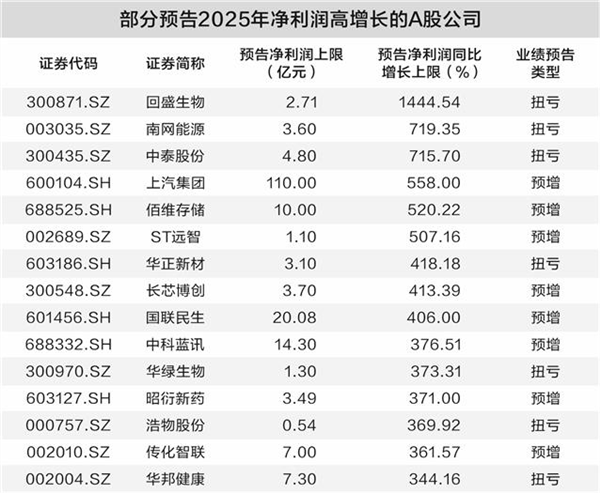
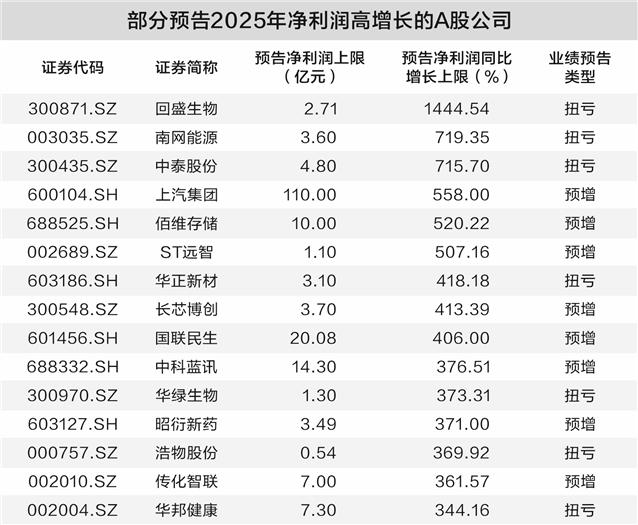
Core Viewpoint - The A-share market is experiencing a peak in earnings forecasts, with over 500 companies disclosing their 2025 performance predictions, highlighting strong growth in technology sectors driven by AI, while other sectors face challenges due to market fluctuations and supply-demand adjustments [1][2]. Group 1: Earnings Forecasts - As of January 20, 2025, 525 A-share companies have disclosed earnings forecasts, with approximately 200 companies expecting growth, and over 100 companies predicting net profit increases exceeding 100% [2]. - The highest expected net profit growth is from Huisheng Biological, with a forecasted net profit of 235 million to 271 million yuan, representing a year-on-year increase of 1265.93% to 1444.54% [3][4]. Group 2: Sector Performance - The technology sector, particularly "hard technology," is showing significant profit growth due to the expanding demand for AI infrastructure and computing power, benefiting upstream and downstream enterprises [6]. - Companies like Bawei Storage are expected to see substantial profit increases, with a forecasted net profit of 850 million to 1 billion yuan, reflecting a year-on-year growth of 427.19% to 520.22% [6]. - The PCB leader Shenghong Technology anticipates a net profit of 4.16 billion to 4.56 billion yuan, a significant increase of 260.35% to 295% compared to the previous year [7]. Group 3: Commodity Price Impact - The performance of companies in the commodity sector is varied, with precious metals, industrial metals, and chemicals experiencing strong price increases, positively impacting earnings [7]. - Tianqi Materials expects a maximum net profit growth of 230.63% due to rising lithium hexafluorophosphate prices, while North Rare Earth anticipates a 134.60% increase driven by rising rare earth product prices [7].





百余家A股公司,去年净利或翻倍
Zheng Quan Shi Bao· 2026-01-21 00:40
Core Viewpoint - The A-share market is experiencing a peak in earnings forecasts, with over 500 companies disclosing their 2025 performance predictions, highlighting strong growth in technology sectors driven by AI, while other sectors like photovoltaics and pig farming face challenges [1][2]. Group 1: Earnings Forecasts - As of January 20, 2025, 525 A-share companies have disclosed earnings forecasts, with around 200 expecting growth and over 100 projecting net profit increases exceeding 100% [2]. - The highest projected net profit increase is from Huisheng Biological, with an expected profit of 235 million to 271 million yuan, representing a year-on-year growth of 1265.93% to 1444.54% [3][4]. Group 2: Sector Performance - The technology sector, particularly "hard technology," is showing strong profitability, driven by the demand for AI infrastructure and data storage, with companies like Baiwei Storage expecting a net profit of 850 million to 1 billion yuan, a growth of 427.19% to 520.22% [6]. - Zijin Mining, a leading mining company, forecasts a net profit of 51 billion to 52 billion yuan, an increase of approximately 189 billion to 199 billion yuan, reflecting a growth rate of 59% to 62% [4][5]. Group 3: Challenges in Certain Industries - The photovoltaic industry is facing significant challenges, with companies like Tongwei Co. predicting a net loss of 9 billion to 10 billion yuan due to market fluctuations and rising raw material prices [8][9]. - In the pig farming sector, companies such as Muyuan Foods and Wens Foodstuffs are forecasting declines in performance, with some expecting losses due to falling pig prices and increased operational costs [9].


黄金14连增!去美元化加速,贵金属成新定价锚?
Sou Hu Cai Jing· 2026-01-21 00:34
Precious Metals Industry - Central banks worldwide are increasing their gold reserves to diversify risk, with China's central bank having increased its gold holdings for 14 consecutive months [1] - The global monetary easing expectations are rising, leading to a weaker dollar, which enhances the attractiveness of precious and non-ferrous metals priced in dollars [1] - The market for precious metals is expected to experience a broad rally starting in early 2026, characterized by a resonance between financial and industrial attributes [1] - Key players in the precious metals sector include Shandong Gold, Zijin Mining, Chifeng Jilong Gold Mining, and Guoyuan Platinum, all of which are focusing on optimizing production and expanding operations [3] Non-Ferrous Metals Industry - The demand for non-ferrous metals such as silver, copper, and aluminum is growing due to the rigid requirements from emerging industries like photovoltaics, electric vehicles, and AI servers [1] - The market dynamics for non-ferrous metals are changing, driven by both traditional infrastructure demand and new energy sectors [1] - Major companies in the non-ferrous metals sector include Luoyang Molybdenum, Northern Rare Earth, Huayou Cobalt, and Tin Industry Co., which are involved in mining, refining, and processing of various metals [4]


多家有色金属上市公司2025年业绩亮眼
Zheng Quan Ri Bao· 2026-01-20 16:39
Core Viewpoint - Several listed companies in the non-ferrous metals industry have released optimistic performance forecasts for 2025, driven by product price increases and production growth, reflecting a positive outlook for the sector [1][2][4]. Group 1: Company Performance Forecasts - Zijin Mining Group expects a net profit of 51 billion to 52 billion yuan for 2025, a year-on-year increase of 59% to 62%, supported by increased production and sales prices of gold, copper, and silver [1]. - Chifeng Jilong Gold Mining anticipates a net profit of 3 billion to 3.2 billion yuan for 2025, representing a growth of 70% to 81%, with gold production expected to be approximately 14.4 tons and sales prices rising by about 49% [2]. - Northern Rare Earth forecasts a net profit of 2.176 billion to 2.356 billion yuan for 2025, a significant increase of 116.67% to 134.60%, driven by new technologies and products [2]. - Jinchuan Magnetics expects a net profit of 660 million to 760 million yuan for 2025, with a year-on-year growth of 127% to 161%, attributed to record high product sales in various applications [2]. - Xianglu Tungsten Industry predicts a net profit of 125 million to 180 million yuan for 2025, marking a turnaround from losses, supported by rising tungsten prices and increased sales orders [3]. - Huayou Cobalt anticipates a net profit of 5.85 billion to 6.45 billion yuan for 2025, a growth of 40.80% to 55.24%, benefiting from improved production and cost management [3]. - Luoyang Molybdenum expects a net profit of 20 billion to 20.8 billion yuan for 2025, with a growth of 47.80% to 53.71%, driven by increased production and effective cost control [4]. Group 2: Industry Insights - The positive performance forecasts are attributed to multiple factors, including government policy support, improved supply-demand dynamics, and strategic upgrades by companies [4]. - Emerging sectors such as new energy vehicles, power batteries, energy storage, and artificial intelligence are expected to drive sustained demand for non-ferrous metals, particularly lithium, nickel, rare earths, and tungsten [4].




贸易摩擦升级引燃避险需求,贵金属市场再迎风口,核心企业业绩和价值将持续增长
Xin Lang Cai Jing· 2026-01-20 13:39
Core Viewpoint - The gold industry is experiencing significant growth due to rising gold prices and geopolitical tensions, leading to increased demand for gold as a safe-haven asset. Companies in this sector are leveraging their resource advantages and operational efficiencies to capitalize on these market conditions. Company Summaries - **Sichuan Gold (001337)**: Located in Sichuan, the company benefits from high-quality gold resources and low-cost mining advantages. It is expected to gain from rising gold prices and regional resource integration policies, enhancing its growth potential [1]. - **Zhaojin Gold (000506)**: A well-established player in the gold industry, Zhaojin has a comprehensive supply chain and strong technical capabilities. The company is positioned to benefit from increased gold demand due to geopolitical tensions and has a robust hedging strategy to stabilize profits [2]. - **Shandong Gold International (000975)**: This company operates globally, focusing on low-cost mining resources. It is expected to thrive amid geopolitical conflicts, leveraging its operational experience and resource management to respond to international gold price fluctuations [3]. - **Xiaocheng Technology (300139)**: Focused on intelligent mining solutions and African resource development, the company is set to benefit from both rising gold prices and increased demand for mining technology services [4]. - **China National Gold (600489)**: As a leading state-owned enterprise, it has the largest gold reserves in China. The company is expected to play a crucial role in stabilizing domestic gold supply and prices amid rising global demand [5]. - **Western Gold (601069)**: Based in Xinjiang, the company benefits from high-quality resources and regional policies supporting resource integration. It is positioned as a key player in ensuring domestic gold supply [6][7]. - **Chifeng Gold (600988)**: A rapidly expanding company that has increased its resource reserves through acquisitions. It is expected to enhance profit margins through optimized mining processes amid rising gold prices [8]. - **Hengbang Shares (002237)**: A leading gold smelting company, it benefits from its ability to process complex ores and is positioned to gain from rising gold prices and increased demand for silver recovery [9]. - **Shandong Gold (600547)**: The absolute leader in the gold industry, it has the largest resource reserves and production capacity. The company is expected to stabilize market expectations and supply amid rising gold prices [10]. - **Hunan Silver (002716)**: A core player in the silver industry, it benefits from rising silver prices and increased demand from the photovoltaic industry, enhancing its profit margins [11]. - **Zijin Mining (601899)**: A major player in the non-ferrous metals sector, it has a global footprint in gold mining and is expected to benefit from rising gold prices and geopolitical tensions [12]. - **Yintai Gold (000975)**: This company has a strong resource base and low-cost mining operations, positioning it well to benefit from rising gold prices and increased demand for gold as a safe-haven asset [13]. - **Shengda Resources (000603)**: A leading silver company, it is expected to benefit from rising silver prices and increased demand from the photovoltaic industry, while also expanding into gold resource development [14]. - **Yuguang Gold Lead (600531)**: A leader in lead and zinc smelting, it has strong silver recovery capabilities and is expected to benefit from rising silver prices amid increased industrial demand [15]. - **Hunan Gold (002155)**: A significant gold producer, it is expected to benefit from rising gold prices and regional resource development policies, enhancing its growth potential [16]. - **Zhongrun Resources (000506)**: Focused on overseas gold projects, it is expected to benefit from rising gold prices and geopolitical tensions, leveraging its operational experience [17]. - **Yuancheng Gold (600766)**: This company is focused on gold exploration and development, benefiting from rising gold prices and regional resource integration [18]. - **Xingye Mining (000426)**: A multi-metal mining company, it is expected to benefit from rising silver prices and increased demand for silver in the photovoltaic industry [19]. - **Jin Gui Silver Industry (002716)**: A leading silver smelting company, it is expected to benefit from rising silver prices and increased demand from the photovoltaic industry [20]. - **Western Mining (601168)**: A core player in the non-ferrous metals sector, it is expected to benefit from rising gold prices and increased demand for new energy metals [21]. - **Luoyang Molybdenum (603993)**: A global mining giant, it is expected to benefit from rising gold prices and geopolitical tensions, leveraging its diverse resource portfolio [22]. - **Guizhou Platinum Industry (600459)**: A leader in precious metals, it is expected to benefit from rising demand for platinum and palladium amid global energy transitions [23]. - **Nanmin Group (001360)**: A mining equipment leader, it is expected to benefit from rising gold prices and increased demand for mining equipment amid a booming gold market [24]. - **Xingye Silver Tin (000426)**: This company is expanding its global gold asset portfolio and is expected to benefit from rising silver prices and increased demand for gold [25].


投资铜条首现深圳水贝:1千克卖180元,回收仅80元,商家直呼不建议买
2 1 Shi Ji Jing Ji Bao Dao· 2026-01-20 11:18
Core Viewpoint - The emergence of "investment copper bars" has sparked controversy and discussion, despite copper being primarily an industrial metal with limited investment value [2][3][4]. Group 1: Market Dynamics - Investment copper bars are being sold at prices around 180 yuan per kilogram, with a recovery price of approximately 80 yuan, indicating a significant disparity between selling and recovery prices [3][4]. - The price of copper bars has fluctuated, with a recent peak of 250 yuan per bar before settling between 180 and 190 yuan [3][4]. - The copper market has seen a strong performance, with copper prices rising approximately 2.85% year-to-date, reaching around 10.12 million yuan per ton [9][10]. Group 2: Economic Implications - The phenomenon of investment copper bars raises questions about consumer behavior and market dynamics, as it does not align with traditional economic theories [4][10]. - The concept of "Giffen goods" and "Veblen goods" is discussed, suggesting that copper bars may be perceived as a form of entertainment spending rather than a serious investment [7][8]. - The recent surge in copper prices has been attributed to industrial demand and concerns over supply, particularly in relation to potential tariffs on copper imports to the U.S. [9][10]. Group 3: Industry Trends - The copper mining sector has shown strong stock performance, with companies like Jiangxi Copper and Luoyang Molybdenum seeing significant price increases [11]. - The market is witnessing a trend where companies related to copper products, such as the cultural and creative product company "Copper Master," are seeking to enter the capital market [11]. - Analysts remain bullish on copper prices, with expectations of reaching historical highs, despite short-term pressures from market adjustments [11].


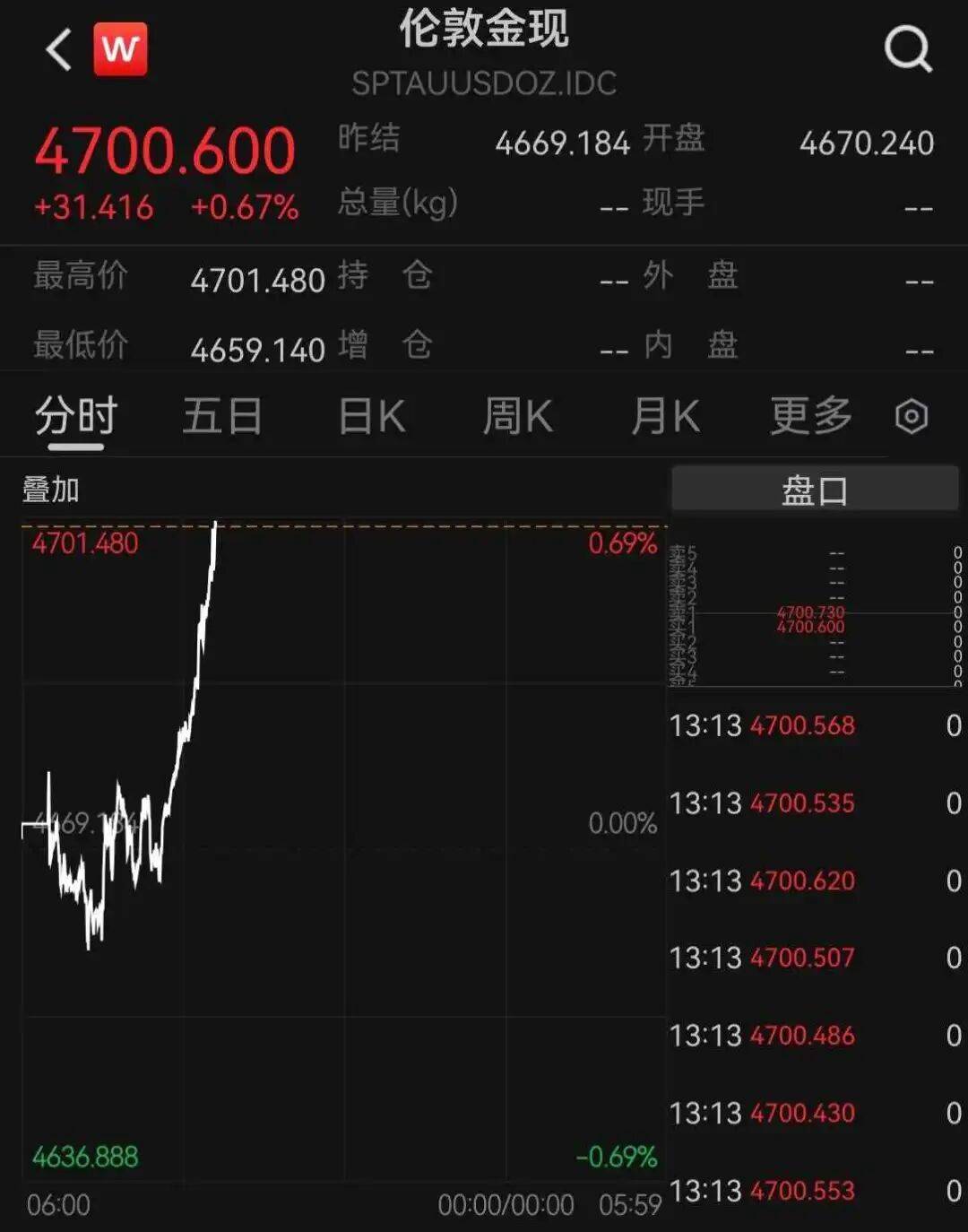
现货黄金,突破4700美元(黄金股梳理)
Sou Hu Cai Jing· 2026-01-20 09:39
Group 1: Gold Market Overview - In the first month of the new year, spot gold has increased by over 8%, rising more than $380 [1] - Major gold mining companies include Zijin Mining, Shandong Gold, and Zhongjin Gold, all of which have strong resource reserves and cost control capabilities [3] - Shandong Gold is noted for its high correlation with gold prices, indicating significant earnings elasticity [3] Group 2: Silver Market Overview - Silver resources are led by companies like Silver Mountain Mining, which has a silver reserve of 8,382 tons, ranking first in Asia [4] - Shengda Resources focuses on silver mining and refining, with 92% of its business in silver, showcasing strong profitability linked to silver prices [5] - Hunan Silver is the only listed company in China primarily focused on silver, with a full industry chain from mining to refining [7] Group 3: Platinum Group Metals - Companies like Zhongxin Metal and Guoyuan Platinum are involved in the recovery and production of platinum group metals, with significant future production expected [7] - The demand for palladium is anticipated to rise due to its use in automotive emissions control, benefiting companies that produce it as a byproduct [7] - GreenMei is a leader in the recycling of electronic and automotive waste, with a substantial capacity for recovering precious metals [7]