
Nanhua Futures(603093)

Search documents
永安期货恒生科技早报-20251208
Xin Yong An Guo Ji Zheng Quan· 2025-12-08 02:33
Economic Indicators - The core PCE price index in the U.S. met expectations, reinforcing the anticipation of an interest rate cut this week[1] - U.S. consumer spending showed almost no growth in September, indicating a cautious approach to spending amid persistent inflation[11] - The Michigan consumer confidence index rose for the first time in five months, with inflation expectations dropping to the lowest since January[11] Market Performance - The Shanghai Composite Index closed up 0.7% at 3902.81 points, while the Shenzhen Component rose 1.08% and the ChiNext Index increased by 1.36%[1] - The Hong Kong Hang Seng Index gained 0.58% to close at 26085.08 points, with the Hang Seng Tech Index up 0.84%[1] - The average daily trading volume in the Hong Kong stock market increased by 95% year-on-year to 2558 billion HKD in the first 11 months of the year[9] Geopolitical Tensions - Japan's defense ministry accused China of locking radar on Japanese military aircraft, escalating tensions between the two nations[11] - The Chinese military responded, claiming Japanese aircraft have repeatedly approached and interfered with Chinese fighter training, posing safety risks[11] Financial Market Developments - Prudential Corporation Holdings submitted an IPO application for ICICI Asset Management in India, planning to sell up to 9.91% of its stake[13] - China’s central bank increased its gold reserves for the 13th consecutive month, adding 30,000 ounces in November, bringing total reserves to approximately 74.12 million ounces[11]




期货策略周报:产业端产能调整-20251208
Nan Hua Qi Huo· 2025-12-08 02:10
Report Industry Investment Rating - No relevant content provided Core Viewpoints of the Report - The recent continuous decline in the market is mainly driven by the National Development and Reform Commission's coal supply guarantee policy. Coal chemical varieties have followed the downward trend, but their valuations are low, so short - selling is not cost - effective. The supply guarantee is a short - term logical driver, while anti - involution is a long - term logic. The oilseeds and oils of agricultural products are expected to remain volatile. China's purchase of 12 million tons of soybeans this year cannot change the global oversupply situation of soybeans. After the current adjustment, two investment ideas can be considered: low - buying of strong varieties after adjustment and technical rebound trading of oversold varieties [2][5]. Summary by Relevant Catalogs Weekly Market View Summary - The commodity market continued to diverge this week. Non - ferrous metals and precious metals were strong, while black and chemical varieties were weak. The 01 contract was pushed to an extreme. Copper, aluminum, and silver were in a main - rising wave due to supply shortages, but the gold trend deviated and required caution. Agricultural products showed an overall volatile pattern, with short - term selling pressure. After the domestic soybean meal adjusts, it can be considered for low - buying. The rising inventory of Malaysian palm oil has pressured palm oil prices. In the energy and chemical sector, domestic coal prices have continuously declined under the supply guarantee policy, which has also put pressure on coal - related chemical products. In the black sector, coking coal and coke have led the overall decline in valuations, but it is unlikely to return to the price levels in early July [4]. Capital Flow in Different Sectors - The total capital flow was 20.027 billion yuan. The precious metals sector had a capital flow of 1.253 billion yuan (15.5%), the non - ferrous metals sector had 8.545 billion yuan (100.0%), the black metals sector had 218 million yuan (4.9%), the energy and chemical sector had 802 million yuan (25.0%), the feed and breeding sector had 194 million yuan (9.3%), the oilseeds and oils sector had - 772 million yuan (- 17.1%), and the soft commodities sector had 463 million yuan (27.8%) [9]. Weekly Data of Different Commodity Categories - **Black and Non - Ferrous Metals**: For black metals such as iron ore, rebar, hot - rolled coil, etc., and non - ferrous metals like copper, aluminum, and silver, data on price percentile, inventory percentile, valuation percentile, etc., were provided. For example, iron ore had a price percentile of 20.5%, an inventory percentile of 96.1%, and a valuation percentile of 0.0% [9]. - **Energy and Chemical Products**: For energy and chemical products like fuel oil, low - sulfur oil, and asphalt, data on price percentile, inventory percentile, etc., were presented. For instance, fuel oil had a price percentile of 0.0%, an inventory percentile of 100.0%, and a valuation percentile of 0.0% [11]. - **Agricultural Products**: For agricultural products including soybean meal, rapeseed meal, and soybean oil, data on price percentile, inventory percentile, etc., were given. For example, soybean meal had a price percentile of 7.8%, an inventory percentile of 100.0%, and a valuation percentile of 0.0% [12].
大金融股,强势拉升
Di Yi Cai Jing Zi Xun· 2025-12-08 02:09
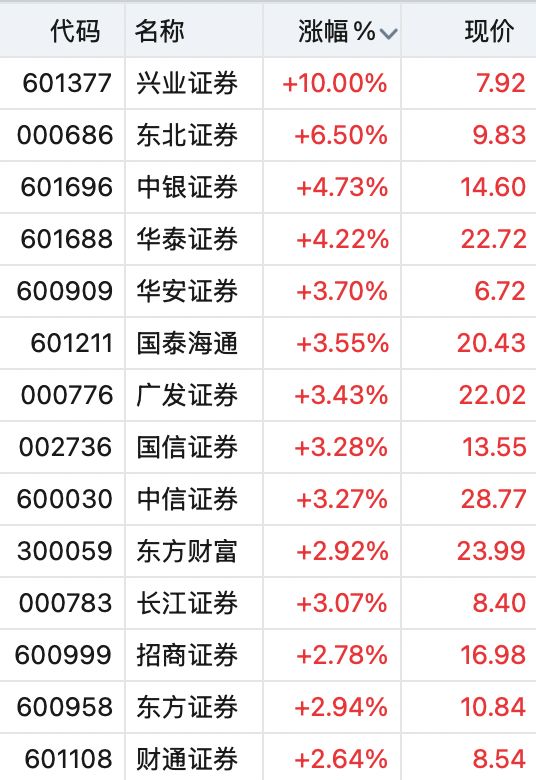
Group 1 - The financial sector continues to strengthen, with securities and futures leading the gains on December 8 [1] - Notable stock performances include: - Industrial Securities up by 10% to 7.92 [2] - Northeast Securities up by 6.5% to 9.83 [2] - Huatai Securities up by 4.22% to 22.72 [2] - Guotai Junan up by 3.55% to 20.43 [2] - GF Securities up by 3.43% to 22.02 [2] - Futures concept stocks also saw significant increases, with Ruida Futures up by 10% to 29.38 [3] - Other notable futures stocks include: - Hongye Futures up by over 8% [3] - Yong'an Futures up by 4.37% to 15.54 [3] - Nanhua Futures up by 3.27% to 20.22 [3]






南华期货铁合金周报:需求逐渐转弱,震荡偏弱-20251207
Nan Hua Qi Huo· 2025-12-07 13:42
1. Report's Industry Investment Rating - Not provided in the document. 2. Core Viewpoints of the Report - Ferroalloys face the fundamental situation of high self - inventory and weak demand. The cost center may shift downward due to the impact of coal supply guarantee on coking coal prices. However, due to the supply - side's trend of maintaining production cuts and the low valuation of ferroalloys, the downward space for ferroalloys is limited. It is expected that ferroalloys will fluctuate weakly. Although the market may be pre - trading the policy expectations for December recently and the steel prices have been fluctuating strongly, which may slightly drive up the ferroalloy prices, the weakly - fluctuating trend of ferroalloys is difficult to change [2][3]. 3. Summary According to Relevant Catalogs Chapter 1: Core Contradictions and Strategy Recommendations 1.1 Core Contradictions - **Market Review**: Last week, ferroalloys rose slightly due to the electricity price increase in some regions and then fell due to the decline in coking coal. The silicon - iron main contract increased by 1.56% month - on - month, and the total silicon - iron positions decreased by 6.75% month - on - month; the silicon - manganese main contract increased by 2.53% month - on - month, and the total silicon - manganese positions decreased by 14.6% month - on - month [2]. - **Core Logic**: Pig iron production continued to decline last week due to the decrease in steel mill profitability and seasonal patterns, and is expected to continue to decline slightly in the future. The inventory of the five major steel products still needs to be reduced through production cuts, so the demand for ferroalloys is expected to decline. The high self - inventory of ferroalloys further suppresses the demand. Ferroalloys are currently facing the contradiction of high inventory and weak demand. The production profit of ferroalloys is gradually declining, and the downstream demand is entering the off - season. The possibility of a significant increase in ferroalloy production is not high. The inventory of silicon - iron and silicon - manganese enterprises is at the highest level in the past five years, and the inventory of ferroalloy enterprises continued to accumulate last week, with a month - on - month increase of 2%. Affected by the month - on - month increase in silicon - iron production, the silicon - iron enterprise inventory increased by 1.12% month - on - month, and the inventory pressure still exists. The downstream demand is gradually weakening, and inventory reduction may still need to be achieved through production cuts. The relatively large decline in coking coal prices on Friday will also affect the rebound of ferroalloys [2]. 1.2 Trading - Type Strategy Recommendations - **Short - Term Trading Logic**: The inventory of downstream finished products is accumulating beyond the seasonal norm, with obvious characteristics of a non - prosperous peak season, which may further weaken the demand for ferroalloys. Pig iron production is expected to continue the production - cut trend, reducing the demand for ferroalloys. The profitability of steel enterprises has fallen below 40%, and although it rebounded slightly last week, mainly due to the concessions on the raw material side, the profitability of steel enterprises has declined rapidly recently, and the risk of negative feedback is gradually increasing. The continued decline in coking coal prices may affect the price of ferroalloys [7]. - **Long - Term Trading Expectations**: Expectations of anti - involution, the upcoming central work conference, and the downstream production - cut logic [12]. - **Market Positioning**: From a technical perspective, the 10 - day and 20 - day moving averages of ferroalloys are currently downward, and the MACD green bars are gradually increasing. The price range of the silicon - iron main contract 2601 is 5200 - 6400 yuan/ton, and the price range of the silicon - manganese main contract 2601 is 5500 - 6500 yuan/ton. - **Basis, Spread, and Hedge Arbitrage Strategy Recommendations**: Although the 1 - 5 spread of ferroalloys is at the lowest level in the same period in the past five years, it is still not recommended to buy at the bottom immediately. Under the current situation of high inventory and weak demand, the near - month contracts are still weak. With the resurgence of anti - involution, the expectations for the far - month 05 contract will gradually strengthen, and the 1 - 5 spread of ferroalloys may further weaken. However, the 1 - 5 spread of ferroalloys is already low, and the risk of reverse arbitrage is also relatively high [13]. 1.3 Industrial Customer Operation Recommendations - **Price Range Forecast**: The monthly price range forecast for silicon - iron is 5300 - 6000 yuan/ton, with a current 20 - day rolling volatility of 17.09% and a historical percentile of 43.2% in three - year data. The monthly price range forecast for silicon - manganese is 5300 - 6000 yuan/ton, with a current 20 - day rolling volatility of 13.18% and a historical percentile of 18.1% in three - year data [14]. - **Hedging Recommendations**: For enterprises with high inventory of finished products worried about the decline in ferroalloy prices, they can short ferroalloy futures according to their inventory to lock in profits and make up for production costs. The recommended hedging ratio is 15%, and the recommended entry range for silicon - iron is 6200 - 6250 yuan/ton and for silicon - manganese is 6400 - 6500 yuan/ton. For enterprises with low inventory of regular purchases and hoping to purchase according to orders, they can buy ferroalloy futures at present to lock in purchase costs in advance. The recommended hedging ratio is 25%, and the recommended entry range for silicon - iron is 5200 - 5300 yuan/ton and for silicon - manganese is 5300 - 5400 yuan/ton [14]. Chapter 2: This Week's Important Information and Next Week's Attention Events 2.1 This Week's Important Information - **Positive Information**: Ferroalloys have recently maintained a production - cut trend [15]. - **Negative Information**: The steel peak season is not prosperous, the profitability of steel mills has fallen below 40%, and the pressure of negative feedback is gradually increasing. The coil and plate sector is still in a situation of high inventory and high production, with production at the highest level in the same period in the past five years, and there is no driving force on the consumption side, and the inventory is accumulating beyond the seasonal norm, reaching the highest level in the same period in the past five years. Pig iron production is maintaining a production - cut trend due to seasonal patterns and the decline in steel enterprise profitability, reducing the demand for ferroalloys. The silicon - manganese enterprise inventory continued to accumulate last week, and the inventory pressure still exists [16][18]. 2.2 Next Week's Important Events to Watch - Next Monday, the final November 2025 ISM manufacturing PMI and November S&P Global manufacturing PMI of the United States will be announced. - Next Wednesday, the November 2025 ADP employment data of the United States will be announced [25]. Chapter 3: Market Interpretation 3.1 Price - Volume and Capital Interpretation - **Unilateral Trends and Capital Movements**: Not specifically described in text, but there are relevant charts for silicon - iron and silicon - manganese closing prices and positions [22]. - **Basis and Spread Structure**: The term structure of ferroalloys generally shows a contango structure, but the term structure of silicon - iron's phased contracts is gradually improving to become at a discount. Recently, the basis of ferroalloys has fluctuated in a narrow range. Under the current situation of high inventory and weak demand, the near - month contracts are still weak, and the 1 - 5 spread of ferroalloys may further weaken [23]. Chapter 4: Valuation and Profit Analysis 4.1 Upstream and Downstream Profit Tracking of the Industrial Chain - The production profit of ferroalloys is gradually declining, and the market has little expectation of a continued increase in ferroalloy production, maintaining a production - cut trend [39]. 4.2 Import and Export Profit Tracking - The export profit of silicon - iron has improved, and it is expected that the export volume of silicon - iron will rebound [58]. Chapter 5: Supply - Demand and Inventory Deduction 5.1 Supply - Demand Balance Sheet Deduction - **Supply Side**: The downstream demand is entering the off - season, and the previous production profit of ferroalloys has continued to decline, which does not support a continued increase in ferroalloy production. Instead, the possibility of manufacturers' production - cut drive is increasing. With the arrival of the flat - water season, the production in the southern silicon - manganese production area may also decline, so the ferroalloy production is expected to decrease [62]. - **Demand Side**: The downstream demand is about to enter the off - season. Currently, the profits of downstream rebar and hot - rolled coils are showing a downward trend, mainly because the inventory of the five major steel products is currently accumulating. In previous years, the inventory should have shown a de - stocking trend when the peak - season demand arrived, and the inventory - to - sales ratio of the five major steel products has also increased beyond the seasonal norm, suppressing the incremental demand for upstream ferroalloys. The demand for ferroalloys is expected to decline slightly [62]. 5.2 Supply Side and Deduction - The previous production profit of alloys has continued to decline, which does not support a continued increase in ferroalloy production, and the possibility of manufacturers' production - cut drive is increasing. With the arrival of the flat - water season, the production in the southern silicon - manganese production area may also decline. Especially, the production profit of silicon - iron has declined significantly, with a strong production - cut drive, and the production is expected to decline slightly [64]. 5.3 Demand Side and Deduction - Pig iron production is expected to maintain a production - cut trend according to seasonal patterns and the decline in steel enterprise profitability, and the demand for ferroalloys is expected to decline [68]. 5.4 Inventory Side and Deduction - Given the current high operating rate of ferroalloys and weak downstream demand, it is highly possible that the inventory of ferroalloy enterprises will continue to accumulate. However, after the forced cancellation, the warehouse receipts have started to be re - registered, and the total inventory is expected to gradually increase [83].
南华期货尿素产业周报:成交走弱-20251207
Nan Hua Qi Huo· 2025-12-07 12:32
Report Industry Investment Rating No relevant content provided. Core Viewpoints - The urea market is within the range of fundamentals and policies. In the short term, its downside is strongly supported, but there is also pressure on the upside. The 01 contract is expected to continue its oscillating trend [3]. - The short - term spot price of urea is significantly supported, and the sentiment in the industry has improved. The short - term domestic urea market is stable with a slight upward trend [3]. - The medium - term trend of urea is under pressure, and the 1 - 5 month spread is in a reverse arbitrage pattern [21]. Summary by Directory Chapter 1: Core Contradictions and Strategy Recommendations 1.1 Core Contradictions - In the context of the fourth batch of export quotas driving speculation, trading was strong in the first half of the week and weakened in the second half. It is expected that upstream enterprises will still be in a stage of slight destocking next week [3]. - Supported by policy supply guarantees and the repair of production profits, the daily output of urea is expected to remain high, and high supply exerts significant pressure on prices. However, timely and continuous adjustments to export policies relieve pressure on the fundamentals, weakening the downward driving force of prices [3]. - Due to the continuous restocking in Northeast China for two weeks, the willingness of compound fertilizer factories and traders to chase high prices is gradually weakening. But the continuous destocking of explicit urea inventories provides support for prices [3]. - Although new delivery warehouses have been added for urea, the locations of the cheapest deliverable goods are still Henan and Shandong. Considering the disappearance of export expectations for the 01 contract, the 1 - 5 month spread is in a reverse arbitrage situation. Since the 01 contract still has expectations for autumn fertilizers, there is still a premium for the urea 01 contract [6]. 1.2 Trading - type Strategy Recommendations - **Trend Judgement**: Urea is oscillating weakly. The price range of UR2601 is 1550 - 1750 yuan/ton. It is recommended to lay out short positions at prices above 1750 yuan/ton and lay out reverse arbitrage when the 1 - 5 month spread is above - 10 [13]. - **Base - difference, Month - spread and Hedge Arbitrage Strategy Recommendations**: - **Base - difference Strategy**: The 11, 12, and 01 contracts have a weak unilateral trend. The 02, 03, 04, and 05 contracts are strong contracts with expectations of peak - season demand [14]. - **Month - spread Strategy**: The upper pressure on the 01 contract is 1710 - 1720 yuan/ton, and the static support below is 1550 - 1620 yuan/ton, with dynamic fluctuations. From the perspective of the terminal value of the 01 contract, it is recommended to lay out short positions at high prices; conduct reverse arbitrage on the 1 - 5 spread at high prices [14]. - **Hedge Arbitrage Strategy**: None [15]. Chapter 2: This Week's Important Information and Next Week's Attention Events 2.1 This Week's Important Information - **Positive Information**: - On November 6, India announced a new round of urea import tenders for 250 tons, with 125 tons each for the east and west coasts, and the shipping date is January 15, 2026 [16]. - The fourth quarter is the winter storage period for the fertilizer industry. The national off - season reserve is concentrated from December to March, and the relatively low price level may also attract spontaneous reserves [16]. - **Negative Information**: As of this week, the daily output of domestic urea is 20.81 tons. Next week, the maintenance devices of Shandong Union and Jiangsu Linggu will gradually resume, and some gas - based urea plants in Inner Mongolia, Sichuan and other places have concentrated maintenance expectations. After a narrow upward fluctuation, the domestic daily output of urea is expected to decline significantly. If the maintenance expectations are fulfilled, the domestic daily output of urea is likely to drop to around 20 tons [17]. 2.2 Next Week's Important Events to Follow - The output of Chinese urea production enterprises is 131.53 tons, an increase of 3.74 tons from the previous period, a month - on - month increase of 2.93%. It is expected that the weekly output of Chinese urea next week will be around 134 tons, continuing to increase from this period [19]. Chapter 3: Disk Interpretation 3.1 Price - Volume and Capital Interpretation - Over the weekend, the domestic urea market continued to rise firmly, with an increase of 10 - 40 yuan/ton. The prices of small and medium - sized particles in the mainstream regions are in the range of 1510 - 1630 yuan/ton. Driven by the fourth batch of urea export quotas and the news of a new round of Indian tenders, the sentiment in the market is obviously bullish, and upstream urea factories continue to raise prices, while downstream resistance is emerging. The short - term market will continue to be stable with a slight upward trend [20]. - The weak domestic demand is the current main contradiction. It is expected that the increase in exports cannot make up for the weakening of domestic demand. The demand for compound fertilizers and industrial use is relatively weak, and the driving force for prices is also limited. Therefore, the medium - term trend is under pressure, and the 1 - 5 month spread of urea is in a reverse arbitrage pattern [21]. 3.2 Industry Hedging Recommendations - **Urea Price Range Forecast**: The price range of urea is predicted to be 1650 - 1950 yuan/ton, with a current volatility (20 - day rolling) of 27.16% and a historical percentile of 62.1% over three years [27]. - **Urea Hedging Strategy Table**: - **Inventory Management**: For enterprises with high finished - product inventories worried about falling urea prices, it is recommended to short urea futures to lock in profits, buy put options to prevent sharp price drops, and sell call options to reduce capital costs [27]. - **Procurement Management**: For enterprises with low regular procurement inventories, it is recommended to buy urea futures at present to lock in procurement costs in advance, sell put options to collect premiums and reduce procurement costs, and buy put options to lock in the purchase price if the urea price falls [27]. Chapter 4: Valuation and Profit Analysis 4.1 Upstream Profit Tracking in the Industrial Chain - The report provides seasonal data on the weekly fixed - bed production cost, natural - gas - based production cost, and water - coal - slurry gasification production profit of urea [29][31][33]. 4.2 Upstream Operating Rate Tracking - The report presents seasonal data on the daily output, weekly capacity utilization rate, coal - based capacity utilization rate, and natural - gas - based capacity utilization rate of urea [37][39]. 4.3 Upstream Inventory Tracking - The report shows seasonal data on China's weekly enterprise inventory, port inventory, Guangdong and Guangxi inventory, and total inventory (port + inland) of urea [41][43][45]. 4.4 Downstream Price and Profit Tracking - The report provides seasonal data on the weekly capacity utilization rate, inventory, production cost, production profit, and market price of compound fertilizers, as well as the weekly output, capacity utilization rate, market price, and production profit of melamine, and the daily market price of synthetic ammonia in the Henan market [47][50][54][66]. 4.5 Spot Production and Sales Tracking - The report shows seasonal data on the average production and sales of urea and the production and sales of urea in Shandong, Henan, Shanxi, Hebei, and East China [69][71].
锡产业周报:强预期弱现实,震荡为主-20251207
Nan Hua Qi Huo· 2025-12-07 12:32
1. Report Industry Investment Rating No information provided in the report. 2. Core Viewpoints of the Report - In the short - term, tin prices are expected to maintain a high - level wide - range oscillation pattern. Supported by the rigid gap in the ore end and positive macro factors, the downside space for tin prices is limited. However, due to negative demand feedback and signs of inventory accumulation in China, upward breakthroughs are also difficult [2]. - In the long - term, the tin market faces a structural contradiction between the supply rigidity caused by the decline in global tin ore grade and rising mining costs, and the demand elasticity due to the increasing tin consumption intensity from AI computing servers and photovoltaic solder strips [8]. 3. Summary According to Relevant Catalogs 3.1 Core Contradictions and Strategy Recommendations 3.1.1 Core Contradictions - **Macro Level**: The market has priced in an 84.9% probability of a Fed rate cut in December, putting pressure on the US dollar index and providing valuation support for the non - ferrous sector [2]. - **Supply Side**: The narrative of ore shortage remains strong. Although Myanmar's Wa State has approved mining licenses, actual exports are recovering slowly due to the rainy season and logistics issues. Domestic smelters in Yunnan and Jiangxi are restricted by raw material bottlenecks, with TC at a low level of 12,000 yuan/ton. Additionally, a subsidiary of Malaysia's MSC has suspended production for three weeks [2]. - **Demand Side**: Traditional consumer electronics and home appliances are in the off - season, with a significant reduction in orders. Although the photovoltaic and AI computing concepts offer long - term incremental demand, their current share in consumption is small and cannot offset the decline in traditional sectors. Downstream enterprises show a "fear of high prices" and only make rigid - demand purchases with extremely low inventories [2]. - **Inventory Side**: Global visible inventories are diverging. LME inventories have continuously decreased to a low of 3085 tons, with a risk of a short squeeze. In contrast, domestic SHFE and social inventories have slightly increased to 8012 tons, with a bearish inventory accumulation trend [2]. 3.1.2 Trading - Type Strategy Recommendations - **Futures Unilateral**: Adopt a range - trading strategy (buy low and sell high). Given the ore shortage, there is strong support below 290,000 yuan/ton, but due to negative demand feedback and domestic inventory accumulation, there is significant pressure above 320,000 yuan/ton [12]. - **Arbitrage Strategy**: Implement a cross - market reverse arbitrage (long LME and short SHFE). LME inventories (~3000 tons) are much lower than SHFE inventories (~6800 tons), and the overseas supply in the LME market is more directly affected by disruptions, so the Shanghai - London ratio has downward potential [12]. - **Option Strategy**: Sell a wide - strangle option. It is expected that the price will not break through the 290,000 - 320,000 yuan oscillation range in the short term, and volatility is expected to decline, allowing for the earning of time value [12]. 3.1.3 Industrial Customer Operation Recommendations - **Inventory Management**: For enterprises with high finished - product inventories worried about price drops, it is recommended to short the main Shanghai tin futures contract with a 75% hedging ratio at around 288,000 yuan, and sell call options with a 25% hedging ratio when volatility is appropriate [13]. - **Raw Material Management**: For enterprises with low raw - material inventories worried about price increases, it is recommended to long the main Shanghai tin futures contract with a 50% hedging ratio at around 277,000 yuan, and sell put options with a 25% hedging ratio when volatility is appropriate [13]. 3.2 This Week's Important Information and Next Week's Focus Events 3.2.1 This Week's Important Information - **Positive Drivers**: Strengthened Fed rate - cut expectations, concerns about US debt, low ore processing fees, overseas supply disruptions, and continuous inventory reduction in the LME [14][15]. - **Negative Information**: Eased geopolitical tensions, signs of inventory accumulation in China, a freezing point in spot transactions, and weak demand despite import losses [15]. - **Spot Transaction Information**: The price of Shanghai Non - Ferrous tin ingots increased by 4.93% week - on - week, and the prices of 40% and 60% tin concentrates also rose [16]. 3.2.2 Next Week's Important Events to Follow - **Domestic**: China's November CPI/PPI data on December 9, and SMM's weekly social inventory changes on December 12 [16]. - **International**: US November CPI data on December 10, and the Fed FOMC interest rate decision on December 11 [16]. 3.3 Disk Interpretation 3.3.1 Price, Volume, and Fund Interpretation - **Price and Inventory Data**: This week, tin prices showed a strong performance. The price of Shanghai tin futures, LME tin futures, and the prices of various tin products all changed to different degrees. Inventory data also showed corresponding fluctuations [18][19]. - **Domestic Market**: Tin prices were strong this week, and profitable positions were mainly long in net positions. The domestic term structure was complex, and the market was uncertain about supply recovery. The LME term structure maintained a B structure, and the internal - external price difference was relatively stable [20][22][26]. 3.4 Valuation and Profit Analysis - **Upstream and Downstream Profits in the Industrial Chain**: Processing fees have long hovered at historical lows, putting pressure on smelter profits and suppressing production willingness [30]. 3.5 Supply - Demand and Inventory Deduction 3.5.1 Supply Side and Deduction - The supply side is affected by factors such as ore shortages, slow recovery of overseas exports, and raw - material bottlenecks for domestic smelters [2]. 3.5.2 Demand Side and Deduction - Traditional demand is in the off - season, while emerging demand from photovoltaic and AI has not yet fully offset the decline in traditional sectors [2].
南华期货苹果产业周报:01面临交割上涨行情-20251207
Nan Hua Qi Huo· 2025-12-07 12:28
Report Industry Investment Rating - Not provided Core Views - The core contradictions affecting apple prices are the uncertainty of the final price of the 01 contract and the ambiguity of the Spring Festival consumption season. The 01 contract will follow the delivery logic due to reduced supply and limited deliverable fruits, while future price factors will shift from supply to consumption, with potential "off - peak during peak season" scenarios [1]. - The short - term trading logic is that it's the off - season for late Fuji apples, with limited orders from merchants and market impact from citrus fruits, but the price of high - quality apples remains firm. In the long - term, the scarcity of high - quality apples provides opportunities for price rebounds after declines [2][3]. - The upward momentum of apple prices may strengthen. The basis strategy is difficult to formulate, and the monthly spread strategy suggests waiting and seeing. For industrial clients, different hedging strategies are recommended based on inventory and procurement management needs [6][7][8] Summary by Directory Chapter 1: Core Contradictions and Strategy Recommendations - **Core Contradictions** - The 01 contract price is expected to keep rising due to reduced apple production, poor quality, and limited deliverable fruits. Future price determinants will shift to consumption, and there are concerns about "off - peak during peak season" and "bad money driving out good" [1]. - **Speculative Strategy Recommendations** - The upward momentum of apple prices may strengthen. The net long position decreased to 3029 lots. The basis strategy is hard to formulate, and the monthly spread strategy suggests waiting and seeing [6][7][8]. - **Industry Client Operation Recommendations** - The predicted price range for apples is 9200 - 10000 yuan/ton, with a current volatility of 10.5% and a historical percentile of 18.5% (3 - year). Different hedging strategies are recommended for inventory and procurement management [9]. Chapter 2: This Week's Important Information and Next Week's Concerns - **This Week's Important Information** - As of December 3rd, national apple cold - storage inventories decreased. Cold - storage shipments slowed down, and trading in production areas was sluggish. The number of vehicles in Guangdong's three major wholesale markets increased, but the sales slowed down [12]. - **Next Week's Important Information** - Monitor the weekly Thursday inventory data from Zhuochuang and Ganglian [15]. Chapter 3: Disk Interpretation - **Price, Volume, and Fund Interpretation** - Last week, apple futures showed a volatile and slightly upward trend. Total positions decreased significantly, and profitable seats continued to reduce positions. Technically, the main contract did not break through the previous high and maintained an upward structure [15]. - **Basis and Monthly Spread Structure** - The apple basis structure is complex due to inconsistent apple quality and changing futures delivery rules. The monthly spread structure shows significant fluctuations in the near - month approaching the delivery month, and the possibility of a stronger long - term market is increasing [17]. Chapter 4: Valuation and Profit Analysis - **Profit Tracking of the Industrial Chain's Upstream and Downstream** - Apple profits mainly include planting and storage profits. Currently, the market focuses on storage profits, which are closely related to the opening price. With more low - quality apples this year, storage faces challenges, and the storage profit for the 25/26 season is undetermined [19]. Chapter 5: Supply and Inventory Deduction - **Supply - Demand Balance Sheet Deduction** - Affected by weather, this year's apple production and quality declined. The estimated total production in 2025 is about 34 million tons, an 8% decrease from last year. Cold - storage inventories decreased by 10% compared to the same period last year, and the effective inventory may be lower [21].
南华期货工业硅产业周报:基本面双弱,下方空间有限-20251207
Nan Hua Qi Huo· 2025-12-07 05:55
Group 1: Report Industry Investment Rating - No relevant content provided Group 2: Core Views of the Report - The industrial silicon market showed a weakening trend this week. In the short - term, there is no driving force, presenting a weakening and oscillating pattern, but winter environmental protection speculation should be vigilant. In the medium - to - long - term, the downside space of industrial silicon prices is limited, and it is cost - effective to arrange long - term contracts during the peak season at low prices [1][2]. - The core driving factors for the future price trend of industrial silicon futures include the progress of eliminating backward production capacity under the "anti - involution" background of the industry, the reduction of production on the supply side due to environmental protection constraints or rising costs, and the expected reduction of production on the demand side due to weak terminal shipments [1]. - The price of industrial silicon is closely related to the price fluctuations of related varieties such as polysilicon and coking coal [2]. Group 3: Summary by Directory Chapter 1: Core Contradictions and Strategy Recommendations 1.1 Core Contradictions - The core driving logic for the future price trend of industrial silicon futures focuses on the progress of eliminating backward production capacity, supply - side production cuts, and demand - side production reduction expectations [1]. - The optimization of production capacity in the industrial silicon industry faces resistance because it is mainly composed of private enterprises with a large number of scattered enterprises, leading to low confidence in effective production capacity clearance through industry self - discipline [1]. - Power cost accounts for 30% of the production cost of industrial silicon, and coal price fluctuations affect power cost and then the price of industrial silicon. In December, there are expectations of a decline in the operating rate of industrial silicon production enterprises on the supply side, and the polysilicon industry is likely to cut production, while downstream organic silicon monomer plants have maintenance plans, with only the aluminum alloy industry maintaining a stable operating rate [2]. 1.2 Trading - Type Strategy Recommendations - Trend judgment: Wide - range oscillation and bottom - building [4]. - Price range: Oscillation range is 8400 - 9500; low - level range is 7000 - 8400 [5]. - Basis strategy: Wait and see [5]. 1.3 Industrial Operation Recommendations - For sales management, enterprises with plans to produce industrial silicon in the future can sell corresponding futures contracts or use a combination option strategy (buy put options + sell call options) with a recommended hedging ratio of 20% to prevent price drops and profit reduction [5]. - For procurement management, enterprises with plans to produce polysilicon/organic silicon/aluminum alloy can buy corresponding futures contracts or use combination option strategies according to different situations, with recommended hedging ratios ranging from 10% to 30% to prevent cost increases [5]. - For inventory management, enterprises with high industrial silicon inventories can short the main futures contract or use a combination option strategy (sell call options + buy put options) with recommended hedging ratios of 20% and 10% respectively to prevent inventory depreciation [5]. Chapter 2: Important Information and Concerns 2.1 This Week's Important Information Review - On December 2nd, Hesheng Silicon Industry announced the partial share pledge of its controlling shareholder [6]. 2.2 Next Week's Concerns - No relevant content provided Chapter 3: Disk Interpretation 3.1 Price - Volume and Capital Interpretation - This week, the Friday closing price of the industrial silicon futures weighted index contract was 8823 yuan/ton, with a week - on - week decrease of 3.29%; the trading volume was 290,100 lots, with a week - on - week increase of 9.38%; the open interest was 441,100 lots, with a week - on - week increase of 59,600 lots. The month - spread of SI2601 - SI2605 was in a contango structure, with a week - on - week decrease of 60 yuan/ton; the number of warehouse receipts was 7288 lots, with a week - on - week increase of 692 lots [12]. - The industrial silicon weighted futures price gradually fell below the 60 - day moving average this week. Combining the MACD indicator signals and open interest data changes, the disk showed the characteristic of "short - position increasing and price falling" [12]. - The current industrial silicon futures price has gradually moved from the middle track to the lower track of the Bollinger Band, and the Bollinger Bandwidth has shown a certain expansion. The first support level of 8700 yuan/ton and the second support level of 8400 yuan/ton should be focused on [12]. 3.2 Option Situation - The 20 - day historical volatility of industrial silicon has been slowly weakening in the past week, indicating that the actual price fluctuation range has been gradually narrowing [14]. - The implied volatility of at - the - money options of industrial silicon has been oscillating and weakening in the past week [14]. - The PCR of industrial silicon option open interest has been decreasing recently, indicating that the proportion of put option open interest relative to call option open interest has decreased, and the market's bullish sentiment is gradually rising [14]. 3.3 Silicon Industry Chain Spot Data - The prices of different grades and regions of industrial silicon and its downstream products such as trichlorosilane, polysilicon N - type price index, organic silicon DMC, and aluminum alloy ADC12 are provided, along with their daily and weekly changes [24]. Chapter 4: Valuation and Profit 4.1 Up - and Downstream Profit Tracking of the Industry Chain - Since reaching the profit low in May, the average profit of the industrial silicon industry has been in a continuous repair channel. The profit in the southwest region has declined rapidly due to the dry season [25]. - The polysilicon industry, the core downstream demand area of industrial silicon, has stable profits, providing important support for the demand of industrial silicon. The profit of the aluminum alloy industry is showing a weakening trend, and the profit level of the organic silicon industry is declining [25]. Chapter 5: Fundamentals 5.1 Upstream - Industrial Silicon - The weekly production and operating rate data of industrial silicon from different sources (Baichuan, Steel Union, SMM) are provided, showing different trends of production and operating rate changes [32]. - The inventory data of industrial silicon in different regions and forms are presented, including national, regional, and port inventories [47][48][49]. 5.2 Downstream - Polysilicon - The weekly production data of domestic polysilicon from different sources (SMM, Baichuan) are provided, with different trends of production changes. The weekly inventory data of domestic polysilicon in different parts (total inventory, production enterprise inventory, silicon wafer enterprise inventory, etc.) are also given [51][52][54]. 5.3 Downstream - Aluminum Alloy - The weekly operating rate and inventory data of primary and secondary aluminum alloys are provided, showing different trends of operating rate and inventory changes [58][59]. 5.4 Downstream - Organic Silicon - The weekly production data of organic silicon DMC are provided, showing a slight decrease in weekly production but an increase in monthly production [63]. 5.5 Terminal - The data of terminal products such as Chinese commercial housing sales area, automobile monthly production, and photovoltaic monthly new installed capacity are presented [66].
南华期货光伏产业周报:交割品牌增加,下行风险增大-20251207
Nan Hua Qi Huo· 2025-12-07 05:33
南华期货光伏产业周报 ——交割品牌增加,下行风险增大 夏莹莹 投资咨询证书:Z0016569 研究助理:余维函 期货从业证号:F03144703 联系邮箱:yuwh@nawaa.com 投资咨询业务:证监许可【2011】1290号 2025年12月07日 第一章 核心矛盾及策略建议 1.1 核心矛盾 本周多晶硅期货价格整体呈震荡偏弱态势。当前主导多晶硅期货价格走势的核心逻辑,聚焦于以下因素:供 给端检修停产情况、下游需求端排产情况、光伏反内卷政策、新注册交割品牌的仓单注册情况。 从基本面角度看,行业基本面当前呈现"供需双弱"的特征:供给端,多晶硅环节产量已出现下滑趋势,行 业供给扩张节奏显著放缓;需求端,下游硅片、电池片及组件环节产量同步承压,产业链整体呈现收缩态 势。库存端,多晶硅库存仍处于近期高位,未见明显拐点。从终端需求来看,组件招标市场表现持续疲软, 招标数量与成交均价均处于历史相对低位,预计后续基本面弱平衡状态仍在延续。 从时间维度来看,当前光伏收储平台落地进程未出现实质性进展。同时,由于近两周市场炒作可交割品不足 的问题,广期所已于周五新增两个厂家的交割品,预计后续将对多晶硅期货产生较大影响。 从 ...
供需边际博弈加剧 碳酸锂期价或现阶段性回调
Jin Tou Wang· 2025-12-05 08:05
Group 1 - The core viewpoint indicates that the domestic futures market for non-ferrous metals is experiencing mixed performance, with lithium carbonate futures slightly declining by 1.24% to 92,160.0 CNY/ton [1] - Supply side analysis shows a weekly production increase of 74 tons to 21,939 tons, with lithium spodumene production rising by 120 tons to 13,484 tons, while lithium salt lake production decreased by 145 tons to 3,090 tons [1] - Demand side insights reveal a divergence in expectations for December, with a slight reduction in production for lithium iron phosphate and ternary batteries, indicating a need to monitor weekly inventory depletion for demand performance validation [1] Group 2 - The outlook for the lithium carbonate market suggests intensified supply-demand dynamics due to the resumption of production by Ningde, with expectations for increased price volatility [2] - Technical analysis indicates that the current price is facing short-term pressure around the 100,000 CNY/ton mark, with strong profit-taking motivation from bulls, necessitating caution against high-risk chasing [2] - Overall, the market is advised to be cautious of potential short-term price corrections amid active trading and increased capital divergence [2]