
Kouzijiao(603589)

Search documents
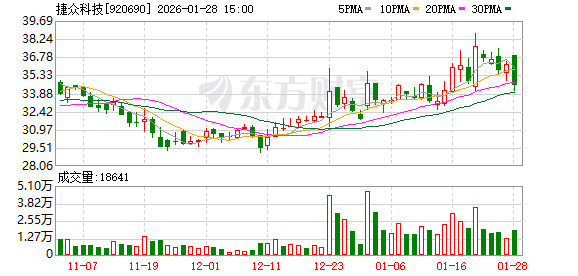
捷众科技:预计2025年净利润同比增长7.18%至31.18%
Zheng Quan Ri Bao· 2026-01-28 12:45
(文章来源:证券日报) 证券日报网讯 1月28日,捷众科技发布公告称,公司预计2025年归属于上市公司股东的净利润为6700万 元至8200万元,同比增长7.18%至31.18%。 ...


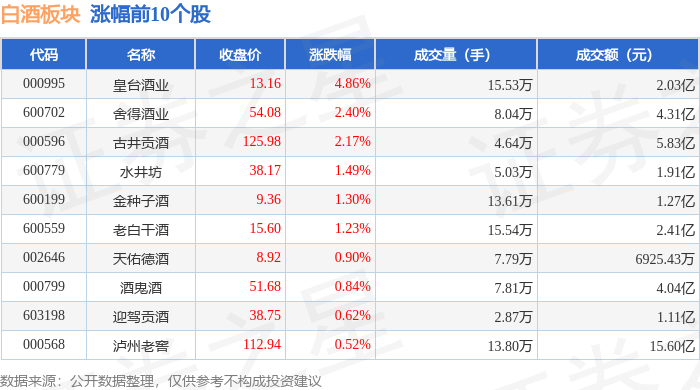
白酒板块1月28日跌0.79%,*ST岩石领跌,主力资金净流出12.38亿元
Zheng Xing Xing Ye Ri Bao· 2026-01-28 08:58
证券之星消息,1月28日白酒板块较上一交易日下跌0.79%,*ST岩石领跌。当日上证指数报收于 4151.24,上涨0.27%。深证成指报收于14342.9,上涨0.09%。白酒板块个股涨跌见下表: 从资金流向上来看,当日白酒板块主力资金净流出12.38亿元,游资资金净流入13.56亿元,散户资金净流 出1.18亿元。白酒板块个股资金流向见下表: | 代码 | 名称 | 主力净流入 (元) | 主力净占比 游资净流入 (元) | | 游资净占比 散户净流入(元) | | 散户净占比 | | --- | --- | --- | --- | --- | --- | --- | --- | | 000568 泸州老窖 | | 1.07 Z | 6.89% | -6686.18万 | -4.29% | -4056.45万 | -2.60% | | 600809 山西汾酒 | | 7464.03万 | 5.95% | 1.05亿 | 8.38% | -1.80亿 | -14.33% | | 000995 | 皇台酒业 | 2633.56万 | 12.95% | -253.88万 | -1.25% | -2379.67万 ...





搭台牵线 吸引外地龙头企业来松投资兴业
Sou Hu Cai Jing· 2026-01-23 01:45
Group 1 - The core viewpoint of the articles highlights the collaboration between Anhui Kouzi Liquor Co., Ltd. and local agricultural enterprises in Songyuan, aiming to enhance raw material supply channels and promote mutual development [1][2] - Anhui Kouzi Liquor's delegation visited various sites, including the hydrogen energy industrial park and modern agricultural technology company, to assess the local agricultural resources and production processes [1] - The delegation expressed high appreciation for the quality of local agricultural products, such as Qian'an yellow millet and mixed beans, and reached a preliminary cooperation intention regarding the procurement of brewing raw materials [1] Group 2 - During an industry seminar organized by the local business federation, discussions focused on raw material procurement, industrial chain collaboration, and regional brand development [2] - The delegation praised the rich agricultural resources and favorable business environment in Songyuan, sharing their experiences in the production of fragrant-type liquor and full industrial chain management [2] - The local business federation aims to continue facilitating cooperation between local agricultural products and external leading enterprises, focusing on key areas like new energy and modern agriculture to drive economic exchanges [2]
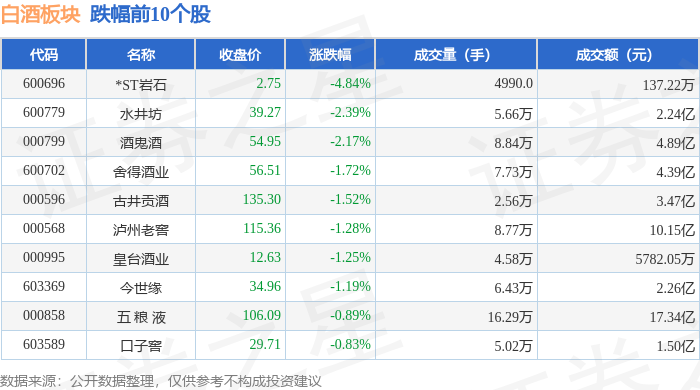
白酒板块1月15日跌0.77%,*ST岩石领跌,主力资金净流出11.52亿元
Zheng Xing Xing Ye Ri Bao· 2026-01-15 08:59
Group 1 - The liquor sector experienced a decline of 0.77% on January 15, with *ST Rock leading the drop [1] - The Shanghai Composite Index closed at 4112.6, down 0.33%, while the Shenzhen Component Index rose by 0.41% to 14306.73 [1] - Major liquor stocks showed varied performance, with *ST Rock down 4.84% to 2.75, and other notable declines including Shui Jing Fang down 2.39% and Moutai down 7.31% in net outflow [1][2] Group 2 - The liquor sector saw a net outflow of 1.152 billion yuan from main funds, while retail investors contributed a net inflow of 528 million yuan [1] - Specific stocks like Moutai and Wuliangye faced significant net outflows of 416 million yuan and 201 million yuan respectively, indicating a shift in investor sentiment [2] - The data indicates that retail investors are increasingly active, with a notable net inflow into stocks like Wuliangye, which saw 157 million yuan from retail investors [2]


90%的名酒在跌价,2026年酒企怎么活?
首席商业评论· 2026-01-14 04:34
Core Viewpoint - The article discusses the significant changes in the Chinese liquor industry, particularly the white wine sector, highlighting a shift from a focus on brand prestige and social status to a more value-driven approach based on product quality and consumer experience [3][5][21]. Group 1: Industry Overview - As of early 2026, the white wine industry is undergoing a deep adjustment, with a notable decline in both revenue and profit across major companies, marking the first time in a decade that the industry has experienced consecutive quarters of double-digit declines [14][21]. - The average inventory turnover days for 20 listed liquor companies reached 1,424 days by the end of Q3 2025, indicating that some inventory may take nearly four years to deplete [10]. - The overall revenue for 20 A-share listed liquor companies in the first three quarters of 2025 was 3,177.79 billion yuan, a year-on-year decrease of 5.90% [14]. Group 2: Market Dynamics - The price system in the white wine market has collapsed, with the market price of premium brands like Moutai dropping below 1,600 yuan, a decline of over 15% for other high-end products [12][14]. - Over 99% of famous liquor prices have fallen, with average retail prices decreasing by more than 30% [12]. - The industry is witnessing a "devaluation of value," where consumers are no longer willing to pay for brands that do not deliver tangible quality or experience [16][18]. Group 3: Future Trends - The future of the liquor industry will be characterized by a "polarization" where companies must either provide "extreme experiences" or "precise value" to survive [8][21]. - High-end products will focus on exceptional craftsmanship and unique experiences, while lower-end products will cater to specific daily needs with high cost-effectiveness [25][29]. - The younger demographic is increasingly important, with 95 post-90s consumers making up only 18% of the white wine market, prompting a need for products that resonate with their lifestyle [25]. Group 4: Strategic Shifts - Companies are exploring new distribution models, such as direct-to-consumer sales, and are innovating product lines to meet changing consumer preferences [18][20]. - Regulatory changes are pushing for clearer labeling of production processes and ingredients, moving away from vague marketing strategies [18]. - The industry is transitioning from a focus on speculative investment to a more grounded approach centered on genuine consumer value and experience [21][31].
迎最惨淡年报 口子窖缘何业绩滑铁卢
Bei Jing Shang Bao· 2026-01-13 15:08
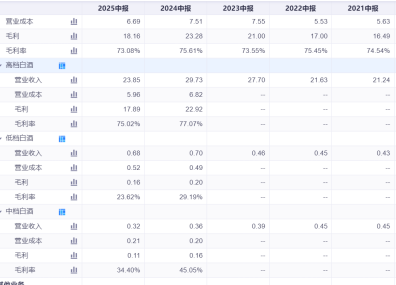
Core Viewpoint - Kuozi Jiao's net profit is expected to decline by over 50% in 2025, reflecting significant challenges in the white liquor industry and the company's operational difficulties [1][3][4] Financial Performance - Kuozi Jiao's 2025 net profit forecast is between 662 million to 828 million yuan, a decrease of 50% to 60% year-on-year [3][4] - The company's revenue for the first three quarters of 2025 shows a decline of 27.24%, with net profit down 43.39% [4] - The fourth quarter of 2025 is projected to be the worst since 2017, with net profit potentially falling into negative territory [4] Industry Context - The white liquor industry is undergoing a deep adjustment phase, with overall market demand weak and increased competition in Anhui province [5][6] - The "Matthew Effect" in the industry is squeezing the survival space for regional liquor companies as leading firms penetrate mid-range markets [5][6] Product and Market Challenges - Kuozi Jiao's high-end product sales have significantly underperformed, with high-end liquor revenue dropping by 27.98% year-on-year [6] - The introduction of the "Jian Series" products has not led to improved performance, as the company struggles with product structure optimization [5][6][7] Inventory and Operational Strategy - Kuozi Jiao's inventory reached 6.218 billion yuan by the end of Q3 2025, the highest in five years, indicating a pressing need to manage stock levels [8] - The company is exploring new sales channels, including opening a "Kuozi Wine Workshop" for bulk sales, to alleviate inventory pressure [9][10] Future Outlook - Kuozi Jiao aims for a revenue target of 10 billion yuan, but current performance indicates a significant gap, necessitating immediate action to manage inventory and improve sales [8][10]
口子窖净利“跳水”,2026白酒 “白马”失色
Xin Lang Cai Jing· 2026-01-13 10:33
Core Viewpoint - The article highlights the significant decline in the performance of Kuaizi Jiao (口子窖), a prominent Chinese liquor company, indicating a broader downturn in the liquor industry, driven by market differentiation, changing consumer demand, and increased competition [1][3][10]. Financial Performance - Kuaizi Jiao's 2025 annual profit forecast is between 662 million to 828 million CNY, representing a year-on-year decrease of 50% to 60% [1]. - The company's net profit for the first three quarters of 2025 was 742 million CNY, down 43.39% year-on-year, with a significant drop of 92.55% in the third quarter alone [3][9]. - The fourth quarter is expected to yield a net profit ranging from a loss of 79.9 million CNY to a profit of 85.6 million CNY, indicating a potential year-on-year decline of approximately 75% [3]. Market Dynamics - The liquor industry is experiencing a deep adjustment period, with Kuaizi Jiao's performance serving as a clear signal of the challenges faced by the sector [7]. - The company attributes its declining performance to market differentiation, channel changes, and a drop in demand, particularly for high-end products [3][4]. - Increased competition from other brands, such as Gujing Gongjiu and Yingjia Gongjiu, has eroded Kuaizi Jiao's market share [4]. Inventory and Channel Issues - The company is facing significant inventory pressures, with a backlog of stock that has not been adequately addressed, leading to a painful de-inventory process [9][10]. - The second quarter of 2025 saw a decline in channel confidence, exacerbated by a "ban on alcohol" in May, which negatively impacted sales [7]. Valuation and Market Sentiment - Kuaizi Jiao's current market valuation has reached a dynamic price-to-earnings ratio of 24.2 times, which is considered high compared to its historical performance and even exceeds that of leading brands like Kweichow Moutai [11]. - The article suggests that the capital market is losing patience with traditional industries like liquor, favoring emerging sectors such as commercial aerospace and brain-computer interfaces [13][14]. Future Outlook - The liquor industry is expected to face further challenges in 2026, with predictions of continued declines in both volume and price, leading to a potential further drop in net profits [15][19]. - The need for liquor companies to rebuild their pricing structures and manage accumulated channel inventory may take one to two years, a timeframe that the capital market may find difficult to tolerate [16][17].
A股白酒股普跌
Ge Long Hui· 2026-01-13 06:12
Group 1 - The core viewpoint of the article highlights a decline in A-share market for liquor stocks, particularly with major brands like Moutai planning to lower the prices of several products [1] - Major liquor stocks such as Shui Jing Fang, Gu Jing Gong Jiu, and others fell over 1%, while Moutai experienced a slight decline of 0.7% [1] - Moutai has reportedly confirmed a price reduction for certain products, including premium Moutai and Moutai 1935, affecting the contract prices for distributors [1]


商业航天、脑机接口元年,也是头部白酒暴雷元年
阿尔法工场研究院· 2026-01-13 00:05
Core Viewpoint - The article discusses the significant shift in investment logic within the liquor industry, particularly highlighted by the poor performance of Kuozi Jiao, marking a transition from traditional investment in established brands to a focus on emerging sectors like commercial aerospace and brain-computer interfaces [2][33]. Group 1: Kuozi Jiao's Performance - Kuozi Jiao's 2025 annual profit forecast indicates a net profit of 662 million to 828 million CNY, representing a year-on-year decrease of 50% to 60% [6][7]. - The company's revenue for the first three quarters of 2025 was 3.174 billion CNY, down 27.24% year-on-year, with a net profit of 742 million CNY, a decline of 43.39% [9][18]. - The third quarter saw a dramatic revenue drop of 46.23% and a net profit decline of 92.55%, with only 26.97 million CNY recorded [9][10]. Group 2: Industry Context and Challenges - The liquor industry is experiencing a deep adjustment period, with Kuozi Jiao's warning serving as a clear signal of broader challenges facing the sector [14][20]. - The market is witnessing a significant divide between "future" and "present," with investors favoring high-potential narratives over established companies facing declining performance [6][27]. - The competitive landscape in Anhui province has intensified, leading to market share erosion for Kuozi Jiao as it failed to transition effectively from low-end to mid-range products [11][12]. Group 3: Market Sentiment and Valuation - Despite Kuozi Jiao's declining performance, its market valuation remains high, with a dynamic price-to-earnings ratio reaching 24.2 times based on a profit median of 725 million CNY [22]. - The article highlights a growing impatience among investors for traditional industries, as they prefer to chase emerging sectors with perceived growth potential [29][32]. - The anticipated challenges for the liquor industry in 2026 suggest a potential for further declines in both volume and price, indicating a tough road ahead for companies like Kuozi Jiao [30][33].

口子窖发布2025年度“提质增效重回报”行动方案半年度评估报告;茅台下调精品茅台等多款产品出厂价丨酒业早参
Mei Ri Jing Ji Xin Wen· 2026-01-12 16:15
Group 1: Kuaijiao's Action Plan Evaluation - Kuaijiao released a semi-annual evaluation report for its 2025 "Quality Improvement and Efficiency Enhancement" action plan, detailing progress in main business development, cash dividends, reform empowerment, investor communication, and corporate governance [1] - For the first three quarters of 2025, Kuaijiao achieved operating revenue of 3.174 billion yuan and a net profit of 742 million yuan [1] - The company is advancing marketing, culture, management, and talent system construction, implementing high cash dividend ratios, establishing market value management systems, promoting digital transformation, and integrating wine and tourism projects [1] Group 2: Moutai Price Adjustments - Moutai has significantly reduced the ex-factory prices of several products, including a drop from 2,969 yuan to 1,809 yuan for premium Moutai and from 5,399 yuan to 3,409 yuan for aged Guizhou Moutai (15) [2] - The price reductions are substantial, with decreases of 1,160 yuan and 1,990 yuan per bottle, respectively [2] - The adjustments aim to create a reasonable price gap between ex-factory and market prices, reducing volatility and aligning with the "i Moutai" platform for precise distribution [2] Group 3: Zhiyi Liquor's Legal Issues - Zhiyi Liquor's shares in A-share company Mengsheng Electronics (688311) are set for judicial auction, with a starting price of 87.4369 million yuan and a market valuation of 105 million yuan [3] - The current market value of the shares exceeds 174 million yuan, indicating potential arbitrage opportunities [3] - Zhiyi Liquor has faced severe operational crises, including numerous lawsuits and becoming an executed party with debts nearing 200 million yuan [3]