CHANGAN AUTOMOBILE-B(000625)

Search documents
直辖市重大调整!一个史无前例的新“省会”,诞生了
商业洞察· 2025-11-19 09:55
Core Viewpoint - The article discusses the significant administrative restructuring in Chongqing, where the two existing districts, Jiangbei and Yubei, have been merged into the newly established Liangjiang New Area, marking a transition from an economic function zone to an official administrative district [5][6][9]. Group 1: Administrative Restructuring - On November 6, Chongqing announced a major administrative restructuring approved by the State Council, merging Jiangbei and Yubei districts into Liangjiang New Area, reducing the total number of districts from 38 to 37 [6]. - Liangjiang New Area, previously an economic function zone, now serves as a formal administrative district, addressing issues of management overlap and fragmentation that hinder regional development [9][10]. - The new Liangjiang New Area covers approximately 1,360 square kilometers and has a population of about 3.52 million, with a projected GDP exceeding 600 billion yuan, positioning it as the largest economic and population center in the central and western regions of China [10]. Group 2: Economic Significance - The restructuring is seen as a strategic move to enhance Chongqing's role as a "strong provincial capital," similar to Chengdu, which has seen significant economic growth and population influx due to its provincial capital status [12][13]. - Liangjiang New Area contributes around 20% of Chongqing's GDP while occupying less than 2% of the city's area, highlighting its importance as the economic heart of the city [14][15]. - The area is home to key infrastructure such as Jiangbei International Airport and Guoyuan Port, making it a central hub for Chongqing's development as an inland open gateway [15]. Group 3: Industrial Development - Chongqing's manufacturing sector is robust, producing nearly 50% of the world's laptops and ranking second in automotive production in China, with significant contributions from companies like Changan and Seres [16][17]. - The city is implementing a "33618" modern manufacturing cluster system, focusing on three trillion-level leading industries, three five-hundred billion-level supporting industries, six thousand billion-level characteristic industries, and eighteen emerging industries [18]. - Liangjiang New Area is pivotal in this strategy, housing two of the three leading trillion-level industries: intelligent connected new energy vehicles and next-generation electronic information manufacturing [20]. Group 4: Automotive and Electronics Industry - As the heart of Chongqing's automotive industry, Liangjiang New Area is expected to produce 1.25 million vehicles in 2024, with nearly 580,000 of those being new energy vehicles, accounting for about 58% of the city's total output [21][22]. - The area is also a hub for the new generation of electronic information manufacturing, with a complete industrial chain from display panels to smart terminals, driven by companies like BOE and Unisoc [26][28]. - The integration of the automotive and electronics sectors is anticipated to create a synergistic effect, particularly in the development of intelligent connected vehicles, which is projected to become a trillion-yuan market by 2025 [29][30].





深蓝L06上市 邓承浩:科技运动品牌是深蓝汽车未来的定位
Xin Jing Bao· 2025-11-19 08:43
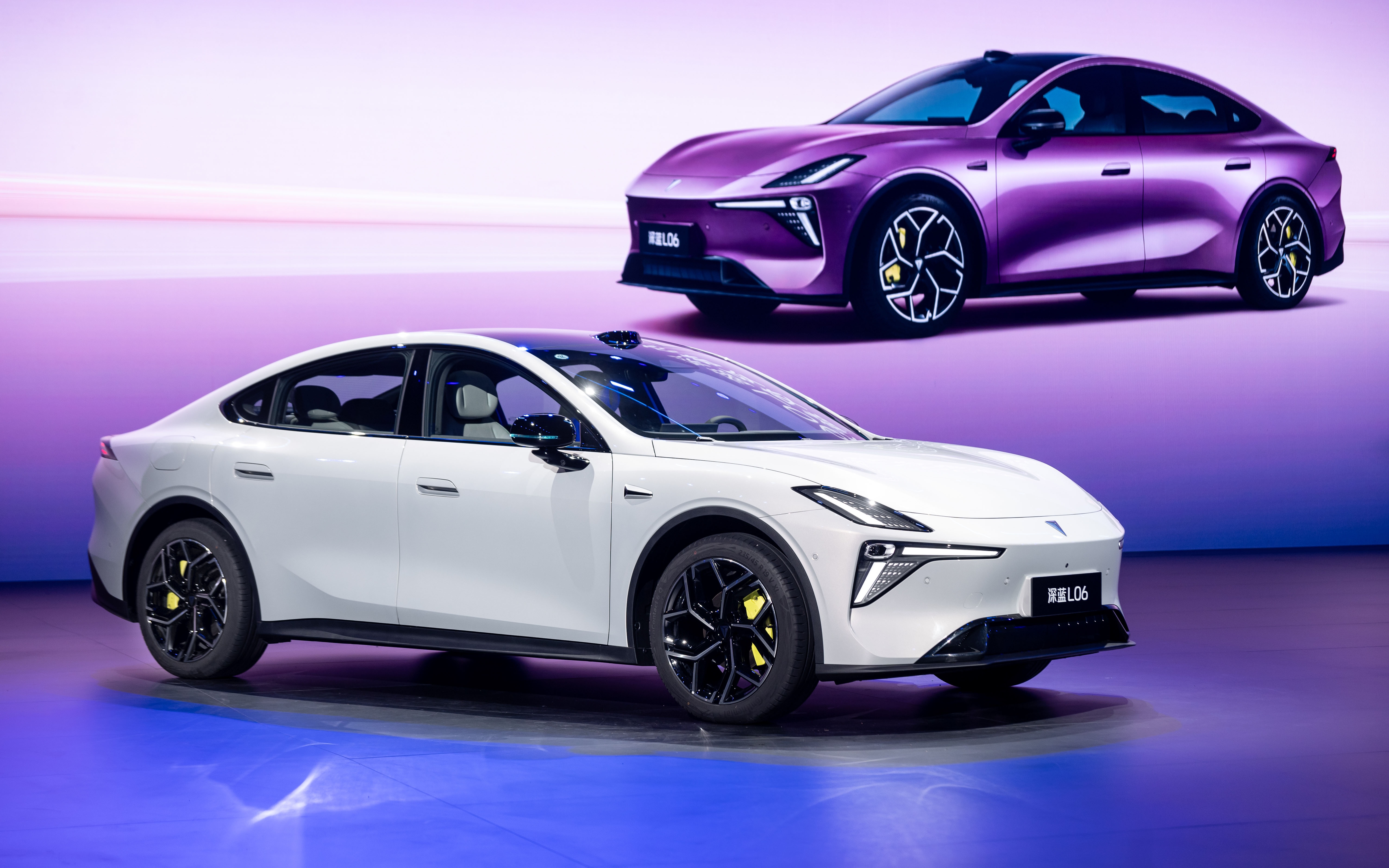
Core Viewpoint - The launch of the Deep Blue L06 marks a significant step for Deep Blue Automotive, targeting young consumers with a focus on safety over speed [2]. Group 1: Product Launch Details - The Deep Blue L06 was officially launched on November 18, featuring four models with a price range of 134,900 to 156,900 yuan [2]. - The L06 is the first mass-produced vehicle equipped with magnetorheological suspension [2]. - All models come standard with laser radar and the DEEPAL AD Max intelligent driving assistance system, which includes features like highway navigation assistance and intelligent parking [2]. Group 2: Technical Specifications - The L06 is equipped with the Dimensity S1 Ultra 3nm automotive-grade cockpit chip, enabling lane-level precise navigation [2]. - The pure electric version features a 68.8 kWh lithium iron phosphate battery, offering a maximum range of 670 km under CLTC conditions [2]. Group 3: Brand Positioning - Deep Blue Automotive is positioned as a mid-to-high-end new energy vehicle brand under Changan Automobile, specifically targeting the young demographic [2]. - The brand aims to establish itself as a technology-driven sports brand in the future [2].
深蓝L06上市,邓承浩:科技运动品牌是深蓝汽车未来的定位
Bei Ke Cai Jing· 2025-11-19 08:24
Core Points - The Deep Blue L06 has officially launched with a price range of 134,900 to 156,900 yuan, targeting young consumers [1][4] - The vehicle is designed with safety as a priority over speed, according to the chairman of Deep Blue Automotive, Deng Chenghao [1][5] Product Features - The Deep Blue L06 is the first mass-produced model equipped with a magnetorheological suspension system [4] - It comes standard with laser radar and features the Deep Blue intelligent driving assistance system DEEPAL AD Max, which supports various driving aids including highway navigation and smart parking [4] - The vehicle is powered by a 68.8 kWh lithium iron phosphate battery, offering a maximum range of 670 km under CLTC conditions [4] Brand Positioning - Deep Blue Automotive is positioned as a mid-to-high-end new energy vehicle brand under Changan Automobile, focusing on technology and sports [5]
新能源汽车指数下跌0.82%,磷酸铁锂平均报价上涨500元/吨丨行业周报
2 1 Shi Ji Jing Ji Bao Dao· 2025-11-18 07:27
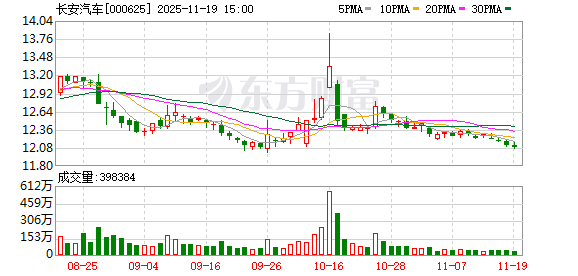
Market Performance - The new energy vehicle index (885431.TI) decreased by 0.82% from November 10 to November 14, outperforming the CSI 300 index by 0.26% [1] - The best-performing sector within the automotive industry was the automotive complete vehicle index (881125.TI), which rose by 0.42% [1] - In the new energy vehicle battery sector, the power battery recycling index (885944.TI) had the highest weekly increase of 1.49% [1] Company Stock Prices - The closing prices for various new energy vehicle companies as of November 14 are as follows: - Haima Automobile: 10.94 CNY [4] - JAC Motors: 47.87 CNY [4] - BYD: 98.37 CNY [4] - Changan Automobile: 12.23 CNY [4] - Great Wall Motors: 22.7 CNY [4] - Seres: 135.2 CNY [4] - GAC Group: 7.75 CNY [4] - BAIC Blue Valley: 7.82 CNY [4] Industry Data - In October, the production of new energy vehicles reached 1,772,000 units, a year-on-year increase of 21.1%, with cumulative production of 13,015,000 units, up 33.1% [37] - The sales volume for new energy vehicles in October was 1,715,000 units, reflecting a year-on-year increase of 20%, with cumulative sales of 12,943,000 units, up 32.7% [37] - Exports of new energy vehicles totaled 250,000 units in October, a year-on-year increase of 99.9%, with cumulative exports reaching 2,010,000 units, up 90.4% [37] - The wholesale sales of new energy vehicles in October were 1,621,000 units, a year-on-year increase of 18.6% and a month-on-month increase of 8.5% [37] Battery Data - The installed capacity of power batteries in October was 84,100 MWh, a year-on-year increase of 42.1% and a month-on-month increase of 10.7% [37] - Cumulative installed capacity reached 578,000 MWh, with a year-on-year increase of 42.4% [37] - The installed capacity of ternary material power batteries was 16,500 MWh, up 35.8% year-on-year, while lithium iron phosphate power batteries reached 67,500 MWh, up 43.7% year-on-year [37] Company Sales Performance - BYD's new energy vehicle sales in October were 441,706 units, a month-on-month increase of 11.47% but a year-on-year decrease of 12.13% [37] - Leap Motor's new energy vehicle deliveries were 70,289 units, a month-on-month increase of 5.45% and a year-on-year increase of 84.11% [37] - Seres sold 51,456 new energy vehicles in October, reflecting a month-on-month increase of 15.17% and a year-on-year increase of 42.89% [37]





一周一刻钟,大事快评(W130):数据闭环
Shenwan Hongyuan Securities· 2025-11-18 07:11
Investment Rating - The industry investment rating is "Overweight" indicating a positive outlook for the sector compared to the overall market performance [8]. Core Insights - The report emphasizes that intelligence will be a key theme in the market for 2026, with investment opportunities extending beyond smart driving to areas like Robotaxi. A data closed loop is identified as the core starting point for achieving full-stack self-research, which differs fundamentally from mere data collection [1][3]. - The establishment of a data closed loop is crucial for filtering effective information from massive data, enabling machines to understand data, feedback to correct models, and perform OTA updates for secondary verification. This requires not only data ownership but also the ability to identify data gaps and utilize data to enhance models [1][3]. - The report suggests that the scale of the data closed loop team (e.g., whether it reaches a hundred members) and related investments should be key indicators for assessing a company's commitment and capability for self-research [1][3]. Summary by Sections Data Closed Loop - The report highlights that when algorithm models are truly driven by PB-level data, it will create a competitive barrier that is difficult to replicate. Even if competitors acquire model architectures or poach key personnel, lacking a substantial underlying data accumulation will hinder their ability to replicate similar algorithm capabilities in the short term [2][4]. - Building a solid data closed loop is expected to provide companies with a certainty of competitive advantage for six months to a year. Companies like Xiaopeng, Li Auto, and Huawei are noted to have established a leading advantage in the smart driving sector, with a high degree of technical moat [2][4]. Investment Recommendations - The report recommends focusing on domestic strong alpha manufacturers such as BYD, Geely, and Xiaopeng, as well as companies that represent the trend of intelligence like Huawei's HarmonyOS. Attention is also drawn to companies like JAC Motors and Seres, with specific recommendations for Li Auto, Kobot, Desay SV, and Jingwei Hengrun [2]. - For state-owned enterprise integration, the report suggests monitoring SAIC Motor, Dongfeng Motor Group, and Changan Automobile. Additionally, it highlights component companies with strong performance growth and capabilities for overseas expansion, recommending Fuyao Glass, New Spring, Fuda, Shuanghuan Transmission, and Yinlun [2].



崔东树:10月商用车新能源渗透率攀升至33% 客车领跑 卡车市场潜力巨大
Zhi Tong Cai Jing· 2025-11-18 02:59
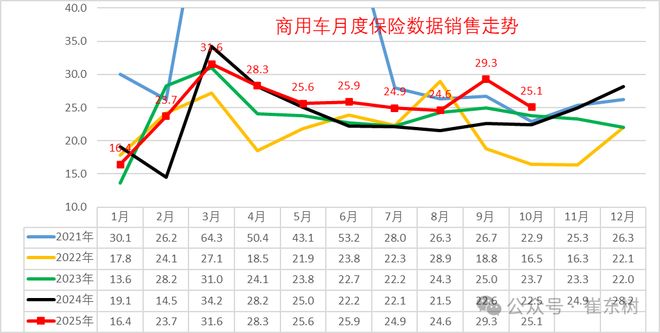
Core Viewpoint - The penetration rate of new energy commercial vehicles in China is projected to reach 33% by October 2025, an increase of 8 percentage points from 25% in October 2024, indicating strong growth in the sector driven by policy support and market demand [1][13]. New Energy Commercial Vehicle Penetration Rate - The penetration rate of new energy commercial vehicles has shown significant growth, reaching 27% in the first ten months of 2025, up from 20% in 2024 and 11% in 2023 [1][13]. - The penetration rates for trucks and buses are 24% and 72% respectively, both showing substantial increases compared to previous years [17]. Sales Performance - In October 2025, the domestic sales of new energy commercial vehicles reached 82,000 units, marking a year-on-year increase of 49% [2][11]. - From January to October 2025, total sales of commercial vehicles in China reached 2.55 million units, a 10% increase compared to the same period in 2024 [7][2]. Market Trends - The new energy commercial vehicle market has been characterized by strong growth, particularly from March to October 2025, with sales consistently at high levels [11][2]. - The overall commercial vehicle market has seen fluctuations, with a notable drop in January 2025 followed by a recovery in subsequent months [5][7]. Competitive Landscape - The commercial vehicle market is primarily supported by light truck manufacturers, with Foton and Wuling leading in sales [20][19]. - The heavy-duty truck segment has shown stability, with companies like FAW Jiefang and China National Heavy Duty Truck Group performing well [22][19]. Regional Market Dynamics - The eastern regions, particularly North China and South China, have shown strong performance in the light truck market, while the penetration of new energy heavy trucks is increasing in regions like Beijing-Tianjin-Hebei and Southwest China [21][23]. - The light passenger vehicle market is dominated by manufacturers such as Jiangling Motors and SAIC-GM-Wuling, with emerging players like Geely making significant strides in the new energy segment [27][29].




ST云动:长安汽车控股企业河北长安及长安汽车参股企业重庆长安跨越两家公司为公司发动机的客户
Mei Ri Jing Ji Xin Wen· 2025-11-18 01:05
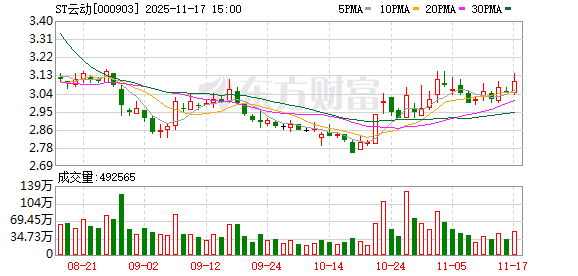
Group 1 - The company ST Yundong (000903.SZ) confirmed that Chang'an Automobile's subsidiaries, Hebei Chang'an and Chongqing Chang'an, are customers for its engines [2]

Changan Automobile Advocates for a Fair and Sustainable Automotive Future at COP30
Globenewswire· 2025-11-17 13:00
Belém, Brazil, Nov. 17, 2025 (GLOBE NEWSWIRE) -- Changan Automobile attended COP30 in Belém, Brazil, from November 10 to 21, joining the “China Business Power Driving Global Climate Transition” forum hosted by the China Chamber of International Commerce. The company exchanged views with international organizations, enterprises, and research institutions on exploring collaborative pathways for the automotive industry’s green transition. While green mobility is a global trend, fragmented carbon regulations h ...
装备制造行业周报(11月第2周):光伏硅片价格持续承压-20251117
Century Securities· 2025-11-17 10:41
Investment Rating - The report does not explicitly state an investment rating for the industry [1]. Core Views - The price of photovoltaic silicon wafers continues to be under pressure due to reduced demand from downstream battery segments, leading to a significant decrease in orders and subsequent price drops. Some second and third-tier companies are forced to clear inventory, causing further price declines. A slight rebound in N-type 183mm silicon wafer prices was noted after several companies attempted to stabilize prices [4][2]. - In the industrial gas sector, the price of liquid argon has increased by 7.94% to 829 RMB/ton, while the prices of liquid oxygen and nitrogen have decreased by 2.54% and 4.6%, respectively. The overall price trend is stable, with no significant upward pressure expected in the near future [4][2]. - The automotive market saw a slight decline in retail sales in early November, with a year-on-year decrease of 19%. However, long-term growth in sales is anticipated due to upcoming tax incentives for electric vehicles [4][2]. Summary by Sections Market Overview - The mechanical equipment, electric power equipment, and automotive industry indices experienced declines of -2.22%, -0.8%, and -2.11%, respectively, ranking 28th, 23rd, and 26th among 31 first-level industries [9][1]. Industry News and Key Company Announcements - Longi Green Energy plans to acquire approximately 61.9998% of Suzhou Jingkong Energy Technology Co., Ltd., marking its entry into the energy storage sector [22][2]. - The domestic inventory of photovoltaic components has continued to decline, with a 0.6GW reduction noted in the second week of November [22][2]. - The Inner Mongolia government has outlined plans to significantly develop renewable energy, aiming for over 300 million kW of installed renewable energy capacity by 2030 [22][2].



中国汽车流通协会:10月新能源商用车批发销量为8.89万辆 同比增长45.39%
智通财经网· 2025-11-17 09:06
Group 1 - In October 2025, the total sales of commercial vehicles reached 360,700 units, representing a year-on-year increase of 21.03% but a month-on-month decrease of 1.94% [4] - From January to October 2025, the cumulative sales of commercial vehicles amounted to 3,472,400 units, with a year-on-year growth of 8.84% [4] - Truck sales in October 2025 were 311,100 units, showing a year-on-year increase of 22.05% and a month-on-month decrease of 0.29% [21] - Cumulative truck sales from January to October 2025 reached 3,015,500 units, reflecting a year-on-year growth of 8.65% [21] - Bus sales in October 2025 totaled 49,600 units, with a year-on-year increase of 14.96% and a month-on-month decrease of 11.16% [32] - The cumulative bus sales from January to October 2025 were 456,900 units, indicating a year-on-year growth of 10.10% [32] Group 2 - The top five companies in commercial vehicle sales for October 2025 accounted for 52.46% of the total market, with Foton Motor, China National Heavy Duty Truck Group, Changan Automobile, Dongfeng Motor Group, and FAW Jiefang leading the sales [15] - For the cumulative sales from January to October 2025, the top five companies held a market share of 50.86%, with the same leading companies [18] - In the truck segment, the top five companies for October 2025 represented 55.51% of the market share, with Foton Motor, China National Heavy Duty Truck Group, FAW Jiefang, Dongfeng Motor Group, and Changan Automobile [29] - The cumulative truck sales for the top five companies from January to October 2025 accounted for 53.48% of the market [29] - In the bus segment, the top five companies for October 2025 held a market share of 71.39%, led by Changan Automobile, Jiangling Motors, SAIC Maxus, Foton Motor, and Yutong [44] - The cumulative bus sales for the top five companies from January to October 2025 represented 73.41% of the market [44]