CHANGAN AUTOMOBILE-B(000625)

Search documents
比俄乌冲突时期更差,俄罗斯汽车市场销售额10年来首降
Di Yi Cai Jing· 2026-01-28 12:36
Group 1 - The core viewpoint is that the Russian automotive market is experiencing a significant decline in sales, with a total market size of 13.8 trillion rubles in 2025, down 7.8% from 2024, marking the first negative growth since 2015 [1] - In 2025, the new car market in Russia is projected to generate 4.6 trillion rubles, a decrease of 18.4% year-on-year, while the used car market is expected to reach 9.2 trillion rubles, down 1.4% [1] - The decline in the Russian automotive market is attributed to high benchmark interest rates increasing loan costs and weak market demand, along with policy changes such as increased vehicle scrappage taxes [1][3] Group 2 - In 2025, new cars will account for 33% of the market's monetary value in Russia, while used cars will represent 67%, highlighting the higher share of used cars in the market [2] - Chinese automotive brands are experiencing a decline in market share in Russia, with sales of new cars dropping to 68.5 million units in 2025, a 25% decrease, resulting in a market share reduction from 58.5% in 2024 to 51.7% [2] Group 3 - Before the Ukraine conflict, European car manufacturers dominated the Russian market, holding about 30% of the market share, while local manufacturers had only 25% [3] - Following the conflict, Western car manufacturers exited the market, allowing local manufacturers to increase their market share to 40%, while Chinese brands surged from around 5% to over 50% by 2023 [3] - In 2024, Russia became the top destination for Chinese automotive exports, but the market showed signs of decline at the beginning of 2025 due to tightening export policies and rising tariffs [3][4] Group 4 - A significant turning point occurred in 2024 when new taxes and increased scrappage fees were implemented, affecting the cost of imported vehicles [4] - The number of Chinese brand showrooms in Russia is expected to decrease significantly, with 643 showrooms closing by 2025, reflecting a cooling market for Chinese vehicles [6] - The competitive landscape for Chinese automotive brands in Russia has intensified, leading to lower profit margins and increased price competition due to market saturation [5][6]



创近五年新低 2025年汽车行业销售利润率仅4.1%
经济观察报· 2026-01-28 12:24
Core Viewpoint - The automotive industry is experiencing a significant decline in profitability, with upstream components showing steady growth, while vehicle manufacturing and downstream dealerships face considerable pressure [1][2]. Group 1: Profitability Trends - In 2025, the automotive industry achieved a profit of 461 billion yuan, a year-on-year increase of 0.6%, but the sales profit margin dropped to 4.1%, lower than the average of 5.9% for downstream industrial enterprises [2]. - The profit margin for the automotive industry fell to 4.1% in 2025, marking a five-year low, with December profits plummeting to 20.7 billion yuan, a year-on-year decrease of 57.4% [2][3]. - The overall profit margin for the automotive industry in December 2025 was the lowest in five years, with a significant decline from 4.1% in December 2024 to 1.8% [2]. Group 2: Performance of Different Segments - Among 129 A-share automotive parts companies, 80 reported a year-on-year profit increase, indicating over 60% had both revenue and profit growth [3]. - In the vehicle manufacturing segment, 16 out of 22 A-share car manufacturers were profitable, but major players like BYD and GAC Group saw significant profit declines, with GAC Group's profit dropping by 3691.33% [3]. - The downstream dealership segment is under severe pressure, with only 28% meeting sales targets and a loss rate climbing to 55% [3]. Group 3: Cost Pressures - The overall unit cost for industrial enterprises has increased significantly, with lithium carbonate prices doubling and raw material costs rising for midstream and downstream sectors [3][4]. - The cost of a typical mid-sized smart electric vehicle has increased by 4,000 to 7,000 yuan due to rising prices of lithium, aluminum, and copper, which are difficult for manufacturers to pass on to consumers [4]. - Starting in 2026, a 5% purchase tax on new energy vehicles and changes to subsidy policies will further increase consumer costs, complicating demand and supply dynamics in the automotive market [4]. Group 4: Strategic Responses - Some automotive companies are accelerating collaboration with upstream suppliers to address challenges, as seen in the strategic discussions between China Aluminum Group and China FAW Group [5].




为什么L3还没正式上路,汽车公司却要直接跳过?
3 6 Ke· 2026-01-28 12:04
Group 1 - The automotive industry is divided on the approach to L3 and L4 autonomous driving, with some companies advocating for skipping L3 and moving directly to L4, while others are focused on accelerating the implementation of L3 [2][3] - Companies like Xiaopeng and Mercedes-Benz have expressed skepticism about L3, with Xiaopeng's founder stating that true fully autonomous driving will arrive by 2026, skipping L3 altogether [2][3] - In contrast, the Ministry of Industry and Information Technology in China has issued licenses for L3 vehicles, indicating a push towards practical implementation, with companies like BYD and Hongmeng already conducting extensive testing [2][8] Group 2 - The distinction between L3 and L4 is primarily based on legal and responsibility frameworks rather than clear technological differences, with L3 being seen as a limited version of L4 [4][6] - The current classification system for autonomous driving levels may not accurately reflect the technological capabilities, as many experts believe that the future will categorize driving into two main scenarios: driver assistance and true autonomous driving [4][6] - Despite the push for L3, regulatory hurdles remain significant, with companies facing lengthy approval processes and strict operational limitations even after receiving licenses [9][11] Group 3 - The market demand for L3 systems is currently insufficient, as evidenced by Mercedes-Benz's decision to pause its L3 rollout due to high costs and low consumer interest [13][14] - Tesla's Full Self-Driving (FSD) option has seen low adoption rates, prompting the company to shift to a subscription model to increase accessibility [14] - The timeline for mass production of L3 vehicles remains uncertain, with various interpretations of what "mass production" entails, leading to discrepancies between technical capabilities and regulatory approvals [15][16]




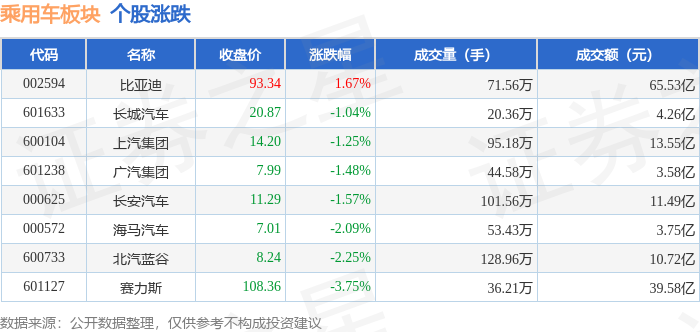
乘用车板块1月28日跌0.81%,赛力斯领跌,主力资金净流出10.29亿元
Zheng Xing Xing Ye Ri Bao· 2026-01-28 08:58
Group 1 - The passenger car sector experienced a decline of 0.81% on January 28, with Seres leading the drop [1] - The Shanghai Composite Index closed at 4151.24, up 0.27%, while the Shenzhen Component Index closed at 14342.9, up 0.09% [1] - BYD's stock price increased by 1.67% to 93.34, while several other major automakers like Great Wall Motors and SAIC Motor saw declines of 1.04% and 1.25% respectively [1] Group 2 - The passenger car sector saw a net outflow of 1.029 billion yuan from institutional investors, while retail investors contributed a net inflow of 762 million yuan [1] - Specific stocks like SAIC Motor and Great Wall Motors experienced significant net outflows from institutional investors, with amounts of -12.24 million yuan and -24.21 million yuan respectively [1] - In contrast, Haima Automobile and BYD saw net inflows from retail investors of 40.35 million yuan and 28.6 million yuan respectively [1]


创近五年新低 2025年汽车行业销售利润率仅4.1%
Jing Ji Guan Cha Wang· 2026-01-28 07:36
Core Viewpoint - The Chinese automotive industry is facing significant profit declines, with 2025 projected profits at 461 billion yuan, a mere 0.6% increase year-on-year, and a sales profit margin of 4.1%, which is below the average of 5.9% for downstream industrial enterprises [2] Group 1: Profit Trends - The automotive industry's profit margin is expected to drop to 4.1% in 2025, marking a five-year low, following a decline to 4.3% in 2024 [2] - In December 2025, the automotive industry reported profits of 20.7 billion yuan, a year-on-year decrease of 57.4%, with a profit margin of 1.8%, significantly lower than the 4.1% in December 2024 [2] - Excluding the pandemic-affected April 2022, December 2025's profit margin is the lowest in five years [2] Group 2: Industry Performance - The automotive supply chain shows a mixed performance, with upstream parts manufacturers experiencing stable growth, while vehicle manufacturing and downstream dealerships face significant challenges [3] - Among 22 A-share automotive companies, 16 reported profits, but major players like BYD and GAC Group saw substantial profit declines, with GAC Group's profit dropping by 3691.33% [3] - The dealership segment is under severe pressure, with only 28% meeting sales targets and a loss rate climbing to 55% [3] Group 3: Cost Pressures - The automotive industry is experiencing increased cost pressures, with lithium carbonate prices doubling and overall raw material costs rising, impacting profit margins [3][4] - The cost of a typical electric vehicle has increased by 4,000 to 7,000 yuan due to rising prices of lithium, aluminum, and copper, which manufacturers struggle to pass on to consumers [4] - Starting in 2026, a 5% tax on new energy vehicle purchases and changes to subsidy policies will further increase consumer costs, complicating demand and supply dynamics [4][5] Group 4: Future Outlook - The China Automotive Industry Association forecasts total vehicle sales to reach 34.75 million units in 2026, a 1% year-on-year increase, with new energy vehicles projected to grow by 15.2% to 19 million units [5] - Some automotive companies are accelerating collaborations with upstream suppliers to address these challenges, focusing on strategic partnerships and new material development [5]

2026年汽车行业投资策略:智能化+全球化驱动,把握结构性机会
Shanghai Aijian Securities· 2026-01-28 07:13
Core Summary - The automotive industry is experiencing structural opportunities driven by smart technology and globalization, with a focus on high-level intelligent driving and global supply chain positioning [4][9][40] - In 2025, the automotive sector outperformed the market with a 24.3% increase, while the overall market saw a 9.4% growth in total vehicle sales [9][12] - The forecast for 2026 indicates a shift from volume-driven growth to a focus on structural opportunities, with total vehicle sales expected to increase by only 1% [9][16] Industry Trends - The growth of the automotive industry is being driven by smart technology and globalization, with significant advancements in high-level autonomous driving expected to commercialize in 2026 [9][49] - The penetration rate of L2+ technology in new energy vehicles reached 25.9% in 2025, indicating a trend towards mainstream adoption of advanced driving technologies [49] Investment Recommendations - Focus on leading companies with full-stack self-research capabilities in high-level autonomous driving, such as XPeng Motors, Xiaomi Group, and Li Auto, which are expected to benefit from product premiumization and valuation increases [9][10] - In the components sector, companies with Tier 0.5 capabilities are anticipated to transition from single-module supply to full-stack system integration, with a focus on computing chips and intelligent chassis [9][10] - The operational services sector is expected to see growth from Robotaxi services as high-level autonomous driving technology matures, with companies like Cao Cao Mobility and Pony.ai positioned to benefit [9][10] Sales and Market Dynamics - The automotive market is projected to transition to a "stock game" in 2026, with total sales expected to show only marginal growth due to the nearing ceiling of new energy vehicle penetration [16][44] - In 2025, the total vehicle sales reached 34.4 million units, with a 9.4% year-on-year increase, while new energy vehicle sales surged by 29.3% [16][44] Export Trends - In 2025, China's automotive exports reached 7.1 million units, maintaining its position as the world's largest automotive exporter, with a 21% year-on-year growth [30][31] - The export structure is shifting, with domestic brands increasing their share from 22% in 2024 to 24% in 2025, while foreign brands' share is declining [30][31] Policy Environment - The policy support for the automotive industry is expected to continue in 2026, with adjustments to the new energy vehicle purchase tax and a shift towards incentives that favor usage rather than purchase [40][41] - The transition from full exemption to partial tax reduction for new energy vehicles indicates a focus on sustainable fiscal policies [40][41]

十王争霸,谁是“中国汽车第一城”
汽车商业评论· 2026-01-27 23:08
Core Viewpoint - The title of "China's Automobile Capital" has shifted back to Chongqing in 2025, reflecting the city's strong automotive production capabilities and the rise of local manufacturers [8][19]. Group 1: Automotive Production Overview - In 2025, Chongqing's total automobile production reached 2.788 million units, a 9.7% increase year-on-year, with 1.296 million units being new energy vehicles (NEVs), marking a 36% growth [8]. - Other cities with significant production include Hefei with approximately 2.5 million units (NEVs: 1.38 million, 55.2% share), Guangzhou estimated at 2.1-2.15 million units (NEVs: 700-750 thousand, 33%-35% share), and Changchun at around 2.1 million units (NEVs: 588 thousand, 28% share) [10][11][12]. Group 2: Key Players and Developments - Chongqing's automotive landscape is dominated by Changan and Seres, both achieving significant milestones in 2025, including Changan's establishment of its first overseas NEV manufacturing base [20][21]. - The local automotive supply chain has expanded to include 19 vehicle manufacturers and 1,200 parts suppliers, with a local supply rate exceeding 45% [28]. Group 3: Government Policies and Strategic Plans - The Chongqing government has prioritized the automotive industry, implementing policies such as the "2022-2030 Intelligent Connected New Energy Vehicle Cluster Plan" to guide development [30]. - The "33618" plan aims to establish Chongqing as a national advanced manufacturing center, with a focus on NEVs as a key growth area [31]. Group 4: Competitive Landscape and Future Outlook - The competition among cities for automotive production is intensifying, with cities like Hefei emerging as a leader in NEVs, while traditional automotive hubs like Changchun face challenges in transitioning to new energy [36][55]. - The automotive industry is undergoing a dynamic restructuring, with ongoing developments indicating that the title of "China's Automobile Capital" may continue to evolve [58].

2026年中国汽车工业协会政府座谈会成功召开
中汽协会数据· 2026-01-27 09:23
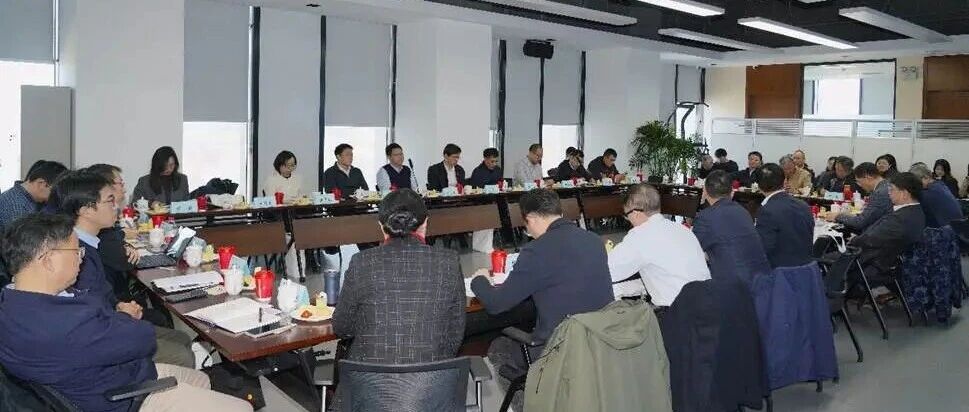
Group 1 - The meeting held by the China Automotive Industry Association on January 23, 2026, in Beijing, was attended by various government departments and leaders from major automotive companies, focusing on the development of the automotive industry since the 14th Five-Year Plan [1][2] - Key topics discussed included industry challenges such as internal competition, chip shortages, product management, environmental protection, consumer promotion, export, international development, infrastructure construction, and industry data statistics [2] - The meeting concluded with a summary from the Executive Vice President and Secretary-General of the China Automotive Industry Association, expressing gratitude to the attending leaders for their guidance [4] Group 2 - The meeting emphasized the importance of preparing for the 15th Five-Year Plan and the need for effective industry monitoring and management moving forward [2] - Leaders from five major automotive companies presented their views and contributions to the industry, highlighting collaborative efforts and future strategies [1][2] - The association's work since the 14th Five-Year Plan was positively acknowledged, with expectations set for continued progress in the upcoming years [2]


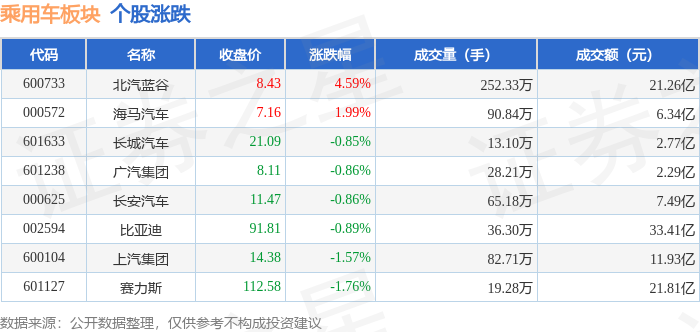
乘用车板块1月27日跌0.89%,赛力斯领跌,主力资金净流出8.12亿元
Zheng Xing Xing Ye Ri Bao· 2026-01-27 08:49
Group 1 - The passenger car sector experienced a decline of 0.89% on January 27, with Seres leading the drop [1] - The Shanghai Composite Index closed at 4139.9, up 0.18%, while the Shenzhen Component Index closed at 14329.91, up 0.09% [1] - Notable stock performances included Beiqi Blue Valley, which rose by 4.59% to a closing price of 8.43, while BYD fell by 0.89% to 91.81 [1] Group 2 - The passenger car sector saw a net outflow of 8.12 billion yuan from main funds, while retail investors contributed a net inflow of 6.36 billion yuan [1] - Beiqi Blue Valley had a main fund net inflow of 220 million yuan, while Great Wall Motors experienced a net outflow of 320.82 thousand yuan [2] - BYD faced a significant main fund net outflow of 5.937 billion yuan, with retail investors contributing a net inflow of 4.33 billion yuan [2]


中国商用车天空中,弥漫着说不出来的紧张感
汽车商业评论· 2026-01-26 23:27
Core Viewpoint - The commercial vehicle industry in China is experiencing a paradox of increasing sales but declining profits, driven by intense competition and a shift towards new energy vehicles [8][10][29]. Group 1: Market Overview - In 2025, the commercial vehicle market in China achieved a total sales volume of 4.296 million units, representing a year-on-year growth of 10.9% [8]. - The heavy truck market, often seen as a barometer of economic activity, sold 1.145 million units, up 27% year-on-year, indicating a recovery in demand [13]. - Despite the growth in sales, the profitability of leading companies has declined, with a total net profit of only 25.74 billion yuan for seven major manufacturers, down 40% year-on-year [13][14]. Group 2: Profitability Challenges - The industry faces a "sell more, earn less" scenario, where increased sales do not translate into higher profits due to price wars and compressed margins [9][24]. - The logistics sector is experiencing a supply-demand imbalance, with the average freight rate index at a historical low of 105.1 points, leading to significant drops in transport fees [17][19]. - The cost of traditional fuel vehicles remains high compared to new energy vehicles, which are driving down market prices and squeezing profit margins for traditional operators [20][22]. Group 3: Transition to New Energy - The penetration rate of new energy commercial vehicles exceeded 25% in 2025, with a total of 95.4 million units sold, marking a 63.7% increase year-on-year [42]. - Companies like Foton Motor have successfully adapted to the new energy landscape, achieving a revenue increase of 27.1% and a net profit surge of 157.4% [41]. - The transition to new energy and smart technologies is seen as essential for future profitability, although the initial costs remain high [25][27]. Group 4: Competitive Landscape - The market is increasingly dominated by a few leading companies, with over 70% market share held by top players like Beiqi Foton and China National Heavy Duty Truck [31]. - Successful companies are leveraging strategic positioning, policy alignment, and market responsiveness to navigate the competitive landscape [34][36]. - The focus is shifting from volume growth to refined competition, emphasizing the importance of understanding market dynamics and customer needs [54]. Group 5: Future Outlook - The commercial vehicle industry must transition from a reliance on one-time sales to a focus on long-term value creation through lifecycle services [56][70]. - Companies are setting ambitious sales targets for 2026, with major players like FAW Jiefang and China National Heavy Duty Truck aiming for significant increases in sales volume [56][59]. - The key to success in 2026 will be the ability to harness policy support, technological advancements, and a focus on customer-centric service models [60][73].