WLY(000858)

Search documents
A股今日共88只个股发生大宗交易,总成交27.74亿元
Di Yi Cai Jing· 2025-12-24 10:02
Summary of Key Points Core Viewpoint - The A-share market experienced significant block trading activity on December 24, with a total transaction value of 2.774 billion yuan across 88 stocks, indicating notable investor interest in specific companies [1]. Group 1: Trading Activity - The top three stocks by transaction value were Aorikin (3.64 billion yuan), YTO Express (2.73 billion yuan), and Wuliangye (2.22 billion yuan) [1]. - Among the stocks traded, 8 were sold at par value, 2 at a premium, and 78 at a discount, highlighting varied investor sentiment [1]. Group 2: Institutional Buying - The leading institutional buying amounts were for Aorikin (3.64 billion yuan), YTO Express (2.7 billion yuan), and Tuojing Technology (1.08 billion yuan) [2]. - Other notable institutional purchases included Zhongdian Electric (52.07 million yuan) and Wulian Media (43.06 million yuan) [2]. Group 3: Institutional Selling - The top stocks sold by institutions included YTO Express (2.73 billion yuan) and Wuliangye (2.22 billion yuan) [3]. - Additional significant sales were recorded for Lixun Precision (24.01 million yuan) and Jintian Titanium (15.47 million yuan) [3].



食品饮料行业资金流出榜:五粮液等7股净流出资金超5000万元
Zheng Quan Shi Bao Wang· 2025-12-24 09:45
Market Overview - The Shanghai Composite Index rose by 0.53% on December 24, with 26 out of the 28 sectors experiencing gains, led by defense and electronics sectors, which increased by 2.88% and 2.12% respectively [1] - The agriculture, forestry, animal husbandry, and fishery sectors, along with coal, were the biggest losers, declining by 0.85% and 0.70% respectively [1] Capital Flow Analysis - The net inflow of capital in the two markets reached 10.37 billion yuan, with 17 sectors seeing net inflows [1] - The electronics sector had the highest net inflow of 8.68 billion yuan, corresponding to its 2.12% increase, followed by the power equipment sector with a net inflow of 3.76 billion yuan and a daily increase of 1.03% [1] Food and Beverage Sector Performance - The food and beverage sector declined by 0.36%, with a net outflow of 1.11 billion yuan [2] - Out of 124 stocks in this sector, 46 rose, including one hitting the daily limit, while 73 fell, with two hitting the lower limit [2] - The top three stocks with the highest net inflow were Huangshi Group (21.71 million yuan), Yangyuan Beverage (21.13 million yuan), and Richen Co. (10.47 million yuan) [2] Food and Beverage Capital Flow - The top stocks with net outflows included Wuliangye (-162.02 million yuan), Shanxi Fenjiu (-138.72 million yuan), and Kweichow Moutai (-112.55 million yuan) [3] - Other notable stocks with significant outflows were Haiqin Food (-106.74 million yuan) and Angel Yeast (-64.93 million yuan) [3]


破局向新,定盘致远:解码五粮液12·18大会的战略意义
Jin Rong Jie· 2025-12-24 07:44
Core Viewpoint - The 12·18 conference of Wuliangye highlights the challenges and opportunities in the Chinese liquor industry, emphasizing the need for strategic clarity and leadership during a period of significant transformation and competition [3][4][6]. Group 1: Industry Context - The Chinese liquor industry is undergoing profound changes due to policy adjustments, consumer transitions, and intense competition, leading to a comprehensive transformation in product, market, and consumption structures [6]. - The year 2025 is seen as a pivotal moment for the industry, coinciding with the end of the 14th Five-Year Plan and the beginning of the 15th, necessitating a focus on value rather than just scale [4][6]. Group 2: Wuliangye's Strategic Response - Wuliangye's chairman, Zeng Congqin, outlined a strategic plan involving "five overall considerations," "three emphases," and "five new expansions" to create new advantages and foster new momentum [8]. - The theme of the conference evolved from "consultation, construction, sharing" to "consensus, construction, sharing," reflecting Wuliangye's commitment to collaboration with distributors and industry partners [8]. Group 3: Quality and Cultural Emphasis - The industry has entered a "three rationality era," where consumers prioritize product value, cultural identity, and emotional resonance, necessitating a focus on quality and cultural significance [9][12]. - Wuliangye has reinforced its commitment to quality through comprehensive quality control measures and has received multiple awards for its quality standards, establishing itself as a benchmark in the industry [11]. Group 4: Innovation and Market Adaptation - Wuliangye is positioning 2026 as a "year of marketing innovation," focusing on channel, scene, product, and mechanism innovations to adapt to market uncertainties [14]. - The company is expanding its distribution network and enhancing its online presence through partnerships with major e-commerce platforms, while also innovating in consumer engagement through various experiential marketing initiatives [14][15][17]. Group 5: Future Outlook - Wuliangye aims to solidify its role as a stabilizing force in the industry during this adjustment period, leveraging quality, culture, and innovation to drive growth and set a precedent for high-quality development in the Chinese liquor sector [18].

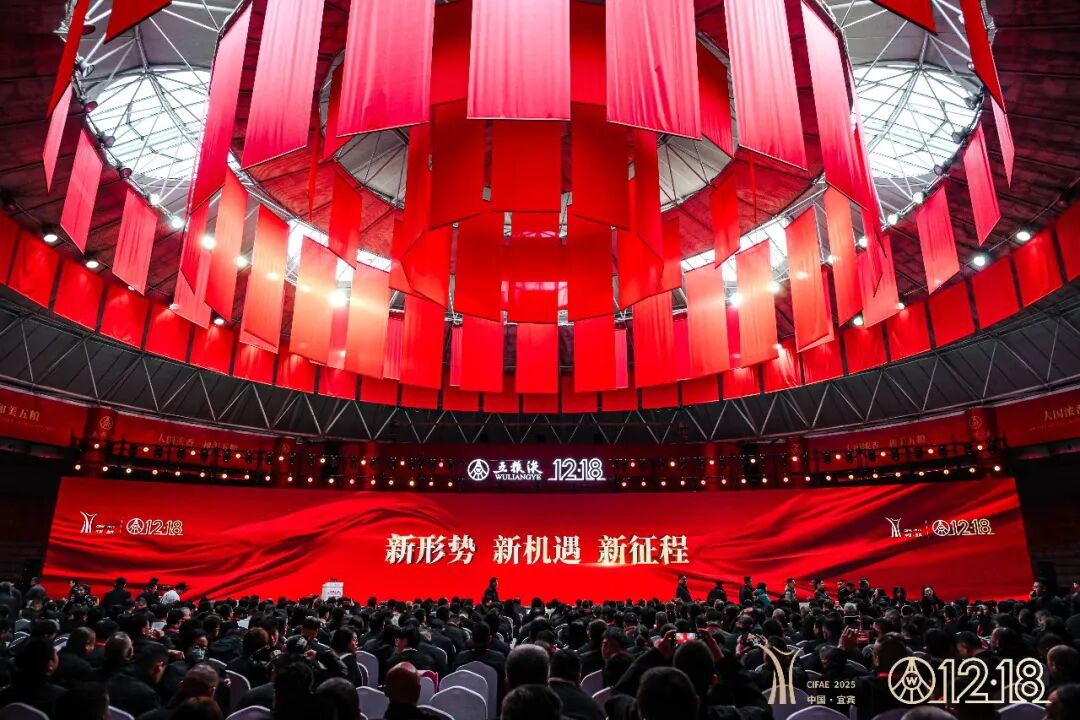
中国白酒企业召开会议,把握市场变化中的机遇
Huan Qiu Wang· 2025-12-24 07:29
Core Viewpoint - The Chinese liquor industry, particularly the baijiu sector, is undergoing a transformative change in demand and market structure, prompting producers like Wuliangye to strategize for future challenges and opportunities [1][3]. Group 1: Industry Changes - The baijiu industry is experiencing a comprehensive and disruptive transformation in product, market, and consumption structures, necessitating producers to confront these challenges [3]. - The current adjustment in the baijiu sector reflects a restructuring of competitive dynamics, value orientation, and market logic, presenting an opportunity for companies to gain strategic advantages [3]. Group 2: Wuliangye's Strategy and Strengths - Wuliangye's Chairman, Zeng Congqin, emphasized that new demand leads to new supply, which in turn creates new demand, highlighting the ongoing transformation in the baijiu industry [3]. - Wuliangye is well-prepared to navigate the industry reshuffle, backed by its strong development foundation and five key advantages: quality, brand, market presence, team, and financial resources [3]. - The company has established a dedicated grain base of 1.7 million acres for brewing and has developed advanced production facilities to ensure precise quality control [3]. Group 3: Achievements and Market Expansion - Wuliangye has received multiple quality awards, including the prestigious 2025 EFQM Global Award, which signifies its commitment to quality excellence [3]. - In 2025, Wuliangye expanded its retail presence by opening 474 specialty stores, experience centers, and themed restaurants, leading to significant increases in banquet sessions and bottle openings [3]. - A new low-alcohol product aimed at younger consumers achieved sales exceeding 100 million yuan within two months of launch, and the opening of themed restaurants in Singapore and Japan further expanded its overseas market presence [4].
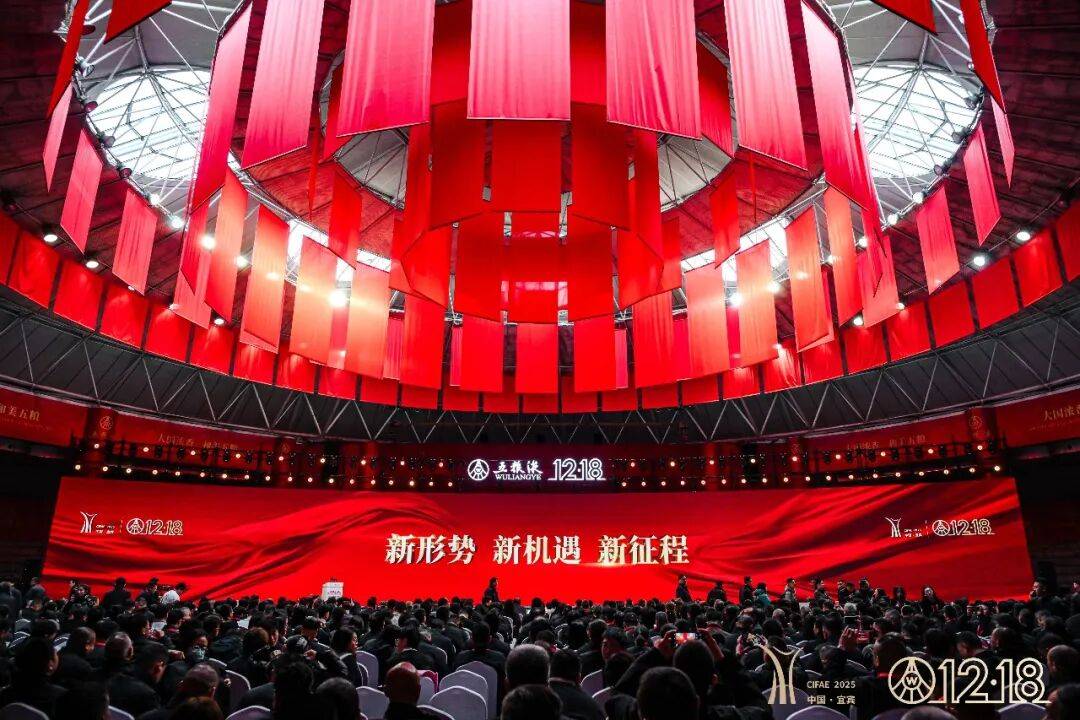
“三大支柱”锚定航向:五粮液12·18大会擘画“十五五”战略新蓝图
Sou Hu Cai Jing· 2025-12-24 05:24
Core Insights - The article discusses the 29th 12·18 Consensus Building and Sharing Conference of Wuliangye, emphasizing its role as an industry "barometer" amid the uncertainties facing the liquor industry in 2025 [1][3] - Wuliangye outlines its strategic blueprint for the "15th Five-Year Plan" period, aiming to inject strong momentum into high-quality development for both the company and the industry [1][3] Industry Context - The liquor industry is in a deep adjustment phase, characterized by a "triple overlap" of new policy adjustments, differentiated consumption structure transitions, and deep competition among existing players [3] - The industry is currently shrouded in uncertainty, as highlighted by the China Alcoholic Drinks Association's report [3] Company Strategy - Wuliangye's chairman, Zeng Congqin, emphasizes the company's commitment to quality, cultural foundation, innovation, market-oriented operations, and striving for excellence as key strategic pillars [5][6] - These five commitments create a closed loop that enables Wuliangye to navigate the uncertainties of the industry while maintaining a growth trajectory [6] Core Competitiveness - Wuliangye identifies quality, culture, and innovation as its three core pillars for sustainable development [7][8] - The company has established a comprehensive quality system, with 1.7 million acres dedicated to raw material production, ensuring high-quality inputs for its products [8][9] - Wuliangye's product matrix has been restructured to meet diverse market demands, achieving recognition for quality, including a nomination for the "Fifth China Quality Award" with a record score of 733 points [9] Cultural Initiatives - Wuliangye is advancing its cultural initiatives both internally and externally, transforming its rich cultural heritage into brand growth momentum [10] - The company emphasizes a collaborative culture with its distributors, as evidenced by the theme change of the conference from "co-consultation" to "consensus" [10] Innovation Efforts - Wuliangye's innovation strategy encompasses various aspects, including product, channel, market, and mechanism innovations [11] - The company plans to expand its presence with new retail formats and partnerships with major e-commerce platforms [11] Strategic Vision for the Future - The conference serves as a platform for Wuliangye to outline its strategic direction for the "15th Five-Year Plan," focusing on historical legacy and global leadership in the liquor industry [12] - Wuliangye's strategic framework includes "five coordinations" and "three emphases," aiming for sustainable and coordinated long-term development [12][13] Marketing Strategy - Wuliangye's marketing strategy for 2026 will focus on brand value enhancement and innovative marketing approaches to boost market share [13][15] - This comprehensive strategic planning is expected to provide a solid foundation for Wuliangye to navigate industry cycles and serve as a model for high-quality development in the liquor sector [15]
群兴玩具:公司酒类销售产品主要为五粮液、茅台、酒鬼酒等品牌酒
Mei Ri Jing Ji Xin Wen· 2025-12-24 04:00
Group 1 - The company, Qunxing Toys, confirmed that its online platform sells alcoholic beverages, specifically brands such as Wuliangye, Moutai, and Jiu Gui Jiu [1] - Investors inquired about the specific name of the company's online store for selling liquor [1] - The company responded to investor questions on an interactive platform regarding its liquor sales [1]


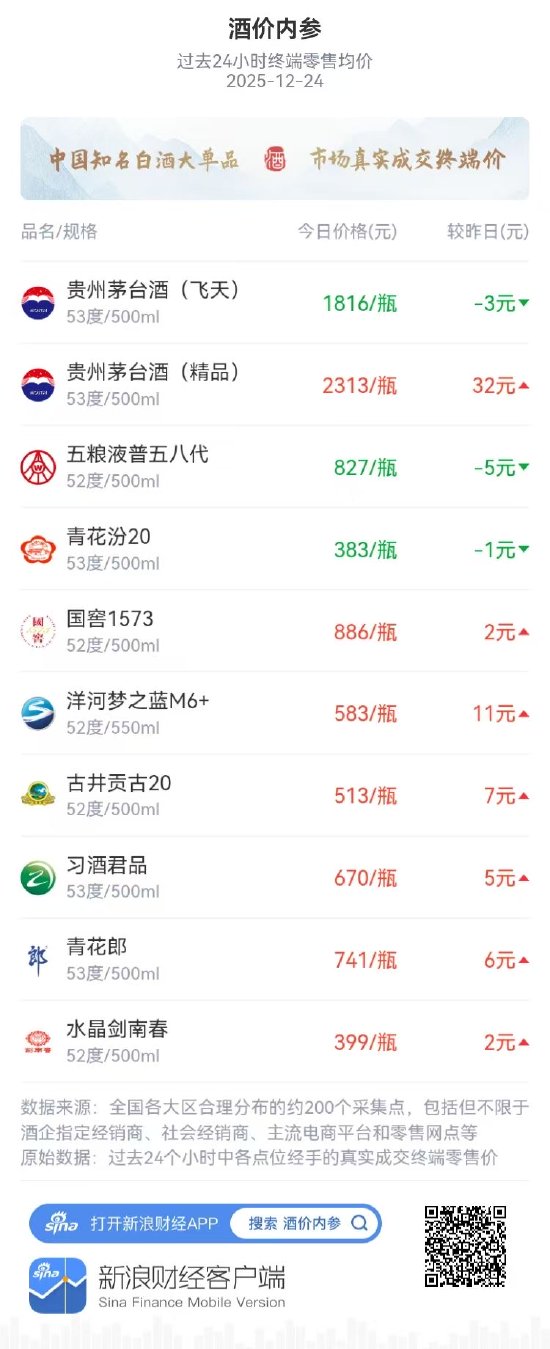
酒价内参12月24日价格发布 五粮液普五八代下跌5元
Xin Lang Cai Jing· 2025-12-24 02:44
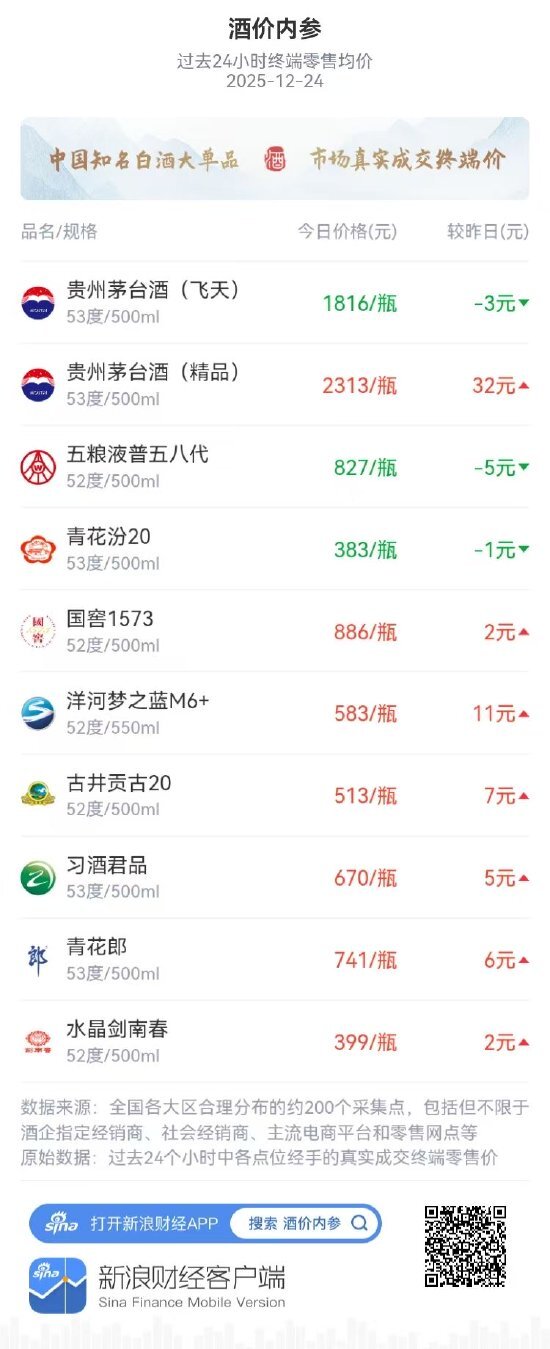
Core Insights - The Chinese liquor market has seen a significant increase in the retail prices of the top ten products, indicating a strong festive consumption atmosphere [1][2] - The overall price for a bundled sale of these ten products reached 9131 yuan, marking a daily increase of 56 yuan, the highest single-day rise recently [1] - The market is experiencing a broad upward trend driven by holiday demand, with premium products like Moutai leading the price increases [1][2] Price Movements - Moutai's premium product price rose by 32 yuan per bottle, reflecting strong demand for high-end gifts and banquet needs ahead of the holidays [1][2] - Other notable price increases include: - Yanghe Dream Blue M6+: up 11 yuan per bottle - Gujing Gonggu 20: up 7 yuan per bottle - Qinghua Lang: up 6 yuan per bottle - Xijiu Junpin: up 5 yuan per bottle - Guojiao 1573 and Shuijing Jian'nan Chun: both up 2 yuan per bottle [1][2] - Some products experienced minor price adjustments, such as Wuliangye Pu 58th generation down 5 yuan and Feitian Moutai down 3 yuan [1] Market Dynamics - The price surge for Moutai is linked to recent news about "quantity control" measures, which have led to a reduction in the supply of non-standard products by 30%-50% [2] - There is a noted shortage of certain Moutai products, leading to increased purchasing behavior among consumers and a sentiment of withholding among distributors [2]
酒价内参12月24日价格发布 青花郎上涨6元实现三连阳
Xin Lang Cai Jing· 2025-12-24 02:42
Core Insights - The Chinese liquor market has seen a significant increase in the retail prices of its top ten products, indicating a strong festive consumption atmosphere [1][2] - The overall price for a bundled sale of these ten products reached 9131 yuan, marking a daily increase of 56 yuan, the highest single-day rise recently [1] - The market is experiencing a broad upward trend driven by holiday demand, with premium products like Moutai leading the price increases [1][2] Price Movements - Moutai's premium product price increased by 32 yuan per bottle, reflecting strong demand for high-end gifts and banquet needs ahead of the holidays [1][2] - Other notable price changes include: - Yanghe Dream Blue M6+ up by 11 yuan per bottle - Gujing Tribute Wine up by 7 yuan per bottle - Qinghua Lang and Xijiu Junpin up by 6 yuan and 5 yuan per bottle respectively, with Qinghua Lang achieving three consecutive days of price increases [1] - Some products experienced minor price adjustments, such as Wuliangye down by 5 yuan and Feitian Moutai down by 3 yuan [1] Market Dynamics - The surge in Moutai prices is linked to recent news about the company's "quantity control" measures, which have led to a reduction in the supply of non-standard products by 30%-50% [2] - There is a noted shortage of certain Moutai products, leading to increased market speculation and consumer purchasing behavior, further driving up prices as the double festival approaches [2]



酒价内参12月24日价格发布 古井贡古20上涨7元
Xin Lang Cai Jing· 2025-12-24 01:26
Core Insights - The Chinese liquor market has seen a significant increase in the retail prices of the top ten products, indicating a strong festive consumption atmosphere, with the total price for a packaged set reaching 9131 yuan, up 56 yuan from the previous day, marking a recent single-day high in price increase [1][6][7] Price Movements - The price of premium Moutai increased by 32 yuan per bottle, leading the market surge, reflecting strong demand for high-end gifts and banquet needs ahead of the holidays [7] - Other notable price increases include: - Yanghe Dream Blue M6+: up 11 yuan per bottle - Gujing Gong 20: up 7 yuan per bottle - Qinghua Lang: up 6 yuan per bottle - Xijiu Junpin: up 5 yuan per bottle - Guojiao 1573 and Shuijing Jian Nan Chun: both up 2 yuan per bottle [7][9] - Some products experienced minor price adjustments, with Wuliangye Pu 58th generation down 5 yuan, Feitian Moutai down 3 yuan, and Qinghua Fen 20 down 1 yuan, which are considered normal fluctuations [7] Market Dynamics - The data for the "Liquor Price Reference" is sourced from approximately 200 collection points across various regions, including designated distributors, social distributors, mainstream e-commerce platforms, and retail outlets, aiming to provide objective and traceable market price data [2][7] - The recent price surge for premium Moutai is linked to supply control measures announced by the company, which have led to a reduction in the availability of non-standard products by 30%-50%, creating a sense of scarcity and driving up prices as demand increases during the holiday season [2][7]
2025年第51周:酒行业周度市场观察
艾瑞咨询· 2025-12-24 00:04
Industry Environment - The Chinese liquor industry faces three major challenges by 2025: demographic changes, deepening technological revolution, and internal industry adjustments. The shift from "scale expansion" to "structural optimization" is necessary due to population decline and a decrease in the main consumer demographic. AI technology is driving the smart transformation of the industry, reshaping production and marketing models. Solutions include returning to pragmatic values, upgrading technology and quality to meet diverse consumer demands, and enhancing brand IP and emotional connections to build a symbiotic commercial ecosystem [2][3] 1919 Strategic New Vision - The liquor distribution industry is transitioning from traditional inventory models to user operation and instant retail. 1919, as an industry leader, is implementing a "center store + front warehouse" model and a F2B2C supply chain, developing six core capabilities (brand, scale, online customer acquisition, offline fulfillment, supply chain, data sales) for efficient localized service. Collaborations with platforms like Taobao and Meituan have led to significant growth, with plans to expand to over 100,000 front warehouses by 2026. This strategy aligns with young consumer demands, potentially capturing 60%-70% of liquor retail market share [4] Insights from Cross-Industry Products - The introduction of cross-industry products like Mingren soda water has highlighted the collective anxiety within liquor channels due to high inventory and slow sales. Mingren's positioning as a beverage for both before and after drinking has penetrated liquor consumption scenarios, with over 3 million terminal outlets. This case emphasizes the need to shift from product selling to providing scene-based solutions and creating closed-loop experiential marketing [5] "Liquor + New Energy" Growth Potential - Several liquor companies are forming strategic partnerships with new energy giants to explore new paths for industry integration. Collaborations aim to reduce high energy costs in liquor production and build green supply chains, responding to carbon neutrality goals. Leading companies are leveraging these partnerships to expand high-end consumer bases and explore new growth points [6][7] E-commerce Tax Implications - New e-commerce tax regulations set to take effect in October 2025 will require platforms to report merchant data, eliminating tax ambiguities in liquor e-commerce. While small merchants are exempt, larger businesses will face stricter compliance, curbing practices like price dumping. This policy shift is expected to foster fair competition, pushing the industry towards value-based competition rather than price wars [8] New Survival Coordinates for Liquor Merchants - As competition intensifies and channels flatten, traditional profit models based on price differences are becoming obsolete. Merchants must enhance service capabilities, focusing on sales rates, user engagement, and data operations. Manufacturers are shifting from price support to funding market actions for distributors, creating a new formula of "price difference + service commission" [9] Transformation of Tobacco Shops - The traditional tobacco shop industry is undergoing significant transformation, facing challenges but not extinction. The industry is characterized by a "pyramid structure," with small shops leveraging low costs and new channels. Future directions include using digital tools to enhance efficiency and optimizing product offerings to stimulate repeat purchases [10][11] Insights on the Beer Industry - The Chinese beer industry is entering a phase of sustainable development and smart manufacturing, with a focus on high-end products and craft beers. The industry is shifting from scale expansion to value realization, emphasizing health and specialty in product development [12] Changes in Sichuan Banquet Alcohol Consumption - The Sichuan banquet alcohol market is witnessing a shift from traditional "white wine + red wine" combinations to "white wine + low-alcohol beverages," with over 50% of low-alcohol drinks being served. This trend reflects changing consumer preferences towards practicality and cost-effectiveness [12] New Trends in Liquor Chains - The liquor industry is experiencing structural changes driven by diversified consumption, fragmented channels, and personalized demands. The focus is shifting from "single-point breakthroughs" to "full-domain integration," emphasizing the importance of service value and user relationships [13] Brand Dynamics - The health-focused liquor market is rapidly growing, with brands like Zhenjiu leveraging technology and quality assurance to meet consumer demands. The market for health-oriented liquor is projected to reach 58.36 billion yuan by 2024 [14] Cultural Empowerment in Branding - Tiananmen Sauce Liquor emphasizes quality and cultural heritage during industry adjustments, showcasing its commitment to traditional craftsmanship and cultural transmission [15] Young Consumer Engagement Strategies - Wuliangye's collaboration with Pure K to target young consumers has resulted in significant sales growth, demonstrating innovative paths for integrating liquor into youth culture [16][17] Strategic Planning for Future Growth - Xifeng Liquor is focusing on brand youthfulness and internationalization, leveraging technology and cultural confidence to enhance its market position [18] Quality as a Competitive Edge - The liquor industry is transitioning from scale expansion to value enhancement, with quality and culture becoming key competitive factors. Companies like Congtai Liquor are emphasizing quality assurance and regional collaboration to drive growth [19] Evolution of Instant Retail - The liquor industry is moving towards "full-domain retail," emphasizing efficiency and value over price competition. Companies are encouraged to adopt a holistic approach to retail strategies [20] Low-Alcohol Product Success - The introduction of low-alcohol products like Guojiao 1573 has achieved significant market success, highlighting the trend towards healthier drinking options [21] Innovative Marketing Strategies - The collaboration between Wuliangye and FIFA for a new product launch demonstrates the effectiveness of sports marketing in engaging younger audiences [22] Cultural Exchange through Alcohol - The partnership between Chinese and French brands during a state visit symbolizes the cultural exchange and recognition of Chinese liquor on the international stage [28] New Consumption Scenarios - The launch of new products by JunTai Liquor targets both everyday celebrations and high-end collections, reflecting the evolving consumption landscape [29] Commitment to Quality and Development - Xifeng Liquor is reinforcing its commitment to quality and cultural heritage, aiming to lead the industry towards high-quality development [30]