
Sinoma Science & Technology (002080)

Search documents
行业周报:中央城市工作会强调城市更新,关注建材投资机会-20250720
KAIYUAN SECURITIES· 2025-07-20 11:43
Investment Rating - The investment rating for the construction materials industry is "Positive" (maintained) [1] Core Views - The central urban work conference emphasized urban renewal, which is expected to drive demand for construction materials such as pipes, waterproofing, and coatings. This will lead to significant improvements in the real estate chain's fundamentals [3] - The report recommends several companies in the consumer building materials sector, including Sankeshu (channel expansion), Dongfang Yuhong (waterproofing leader), Weixing New Materials (high retail business ratio), and Jianlang Hardware. Beneficiary companies include Beixin Building Materials (gypsum board leader) [3] - The National Development and Reform Commission's action plan for the cement industry aims to control cement clinker capacity at around 1.8 billion tons by the end of 2025, which is expected to accelerate energy-saving and carbon reduction efforts [3] Market Performance - The construction materials index fell by 0.23% in the week from July 14 to July 18, 2025, underperforming the CSI 300 index by 1.32 percentage points. Over the past three months, the CSI 300 index rose by 7.17%, while the construction materials index increased by 4.36%, underperforming by 2.82 percentage points. In the past year, the CSI 300 index rose by 14.68%, and the construction materials index increased by 16.62%, outperforming by 1.94 percentage points [4][13] Cement Sector - As of July 18, 2025, the average price of P.O42.5 bulk cement nationwide was 280.87 CNY/ton, down 0.71% month-on-month. The clinker inventory ratio was 67.24%, up 1.35 percentage points [6][27] - The report highlights regional price variations, with Northeast China stable, North China up by 0.74%, and East China down by 1.90% [26] Glass Sector - The spot price of float glass as of July 18, 2025, was 1214.63 CNY/ton, an increase of 0.71% from the previous week. The inventory of float glass nationwide decreased by 175 million weight boxes, a decline of 3.05% [82][84] - The average price of photovoltaic glass remained stable at 116.02 CNY/weight box [89] Fiberglass Sector - The market price for non-alkali 2400tex direct yarn ranged from 3300 to 4100 CNY/ton, with variations depending on the manufacturer [6] Consumer Building Materials - As of July 18, 2025, the price of asphalt was 4570 CNY/ton, stable week-on-week, and up 2.93% year-to-date. The price of titanium dioxide was 13050 CNY/ton, down 1.14% month-on-month [6]


长江新能源产业混合型A:2025年第二季度利润225.96万元 净值增长率2.17%
Sou Hu Cai Jing· 2025-07-19 16:42
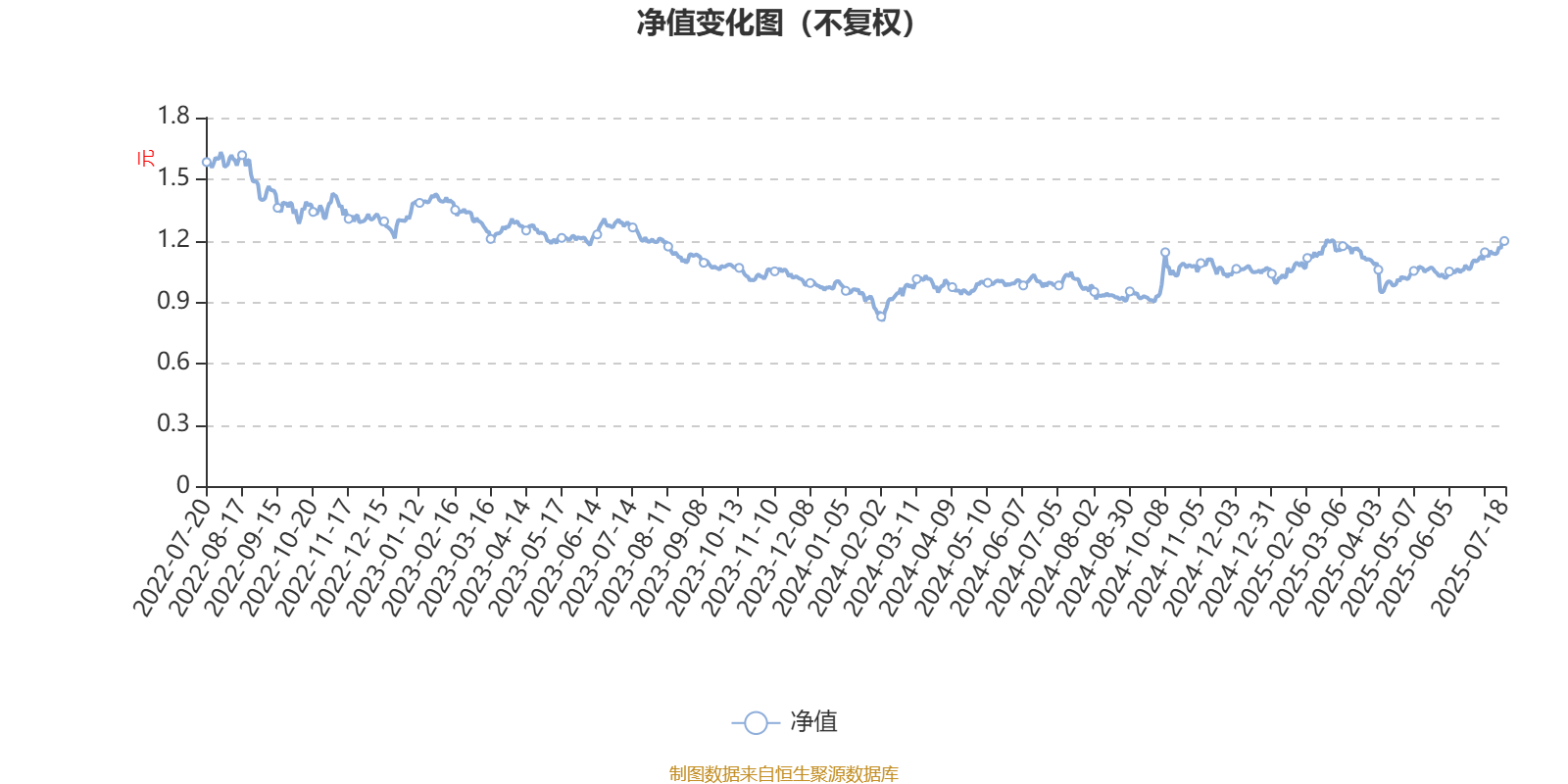
Core Insights - The AI Fund Changjiang New Energy Industry Mixed A (011446) reported a profit of 2.2596 million yuan for Q2 2025, with a weighted average profit per fund share of 0.0226 yuan [2] - The fund's net asset value (NAV) growth rate for the reporting period was 2.17%, and the fund size reached 110 million yuan by the end of Q2 [2][15] - The fund focuses on the new energy industry and its upstream and downstream sectors, seeking investment opportunities based on different stages and trends within various sub-industries [2] Performance Metrics - As of July 18, the fund's one-year cumulative net asset value growth rate was 18.29%, ranking 316 out of 601 comparable funds [3] - Over the past three months, the fund achieved a net asset value growth rate of 21.27%, ranking 65 out of 607 comparable funds [3] - The fund's three-year Sharpe ratio was -0.1567, placing it 347 out of 468 comparable funds [8] Risk and Drawdown - The fund's maximum drawdown over the past three years was 50.53%, ranking 56 out of 470 comparable funds [10] - The largest single-quarter drawdown occurred in Q2 2022, reaching 21.13% [10] Investment Strategy - The fund maintained an average stock position of 77.82% over the past three years, compared to a comparable average of 85.34% [13] - The fund's top ten holdings as of Q2 2025 included companies such as Huadian Electric, Huayang Group, and CATL [17]





建材行业2025年中期业绩前瞻:水泥与玻纤延续修复,后周期分化
Shenwan Hongyuan Securities· 2025-07-19 07:45
Investment Rating - The report rates the building materials industry as "Overweight" indicating an expectation for the industry to outperform the overall market [2][11]. Core Insights - The cement industry is showing a clear trend of recovery, with the average net profit per ton for A-share listed companies in 2024 expected to be 13.7 CNY, nearing historical lows from 2015. The willingness of cement companies to maintain profit margins is increasing, and with the gradual decline in coal costs, there is significant potential for profit recovery [3]. - The glass fiber sector is experiencing product structure differentiation, with higher price elasticity in mid-to-high-end products. Despite a slight decline in prices for some products, leading companies are benefiting from their product mix, leading to improved profitability [3]. - The consumer building materials sector is seeing a divergence in performance, with strong results expected in segments like coatings, which have a high retail value and renovation ratio. Companies like Sanke Tree and Keda Manufacturing are projected to show significant year-on-year profit growth [3]. - The glass sector is facing mixed results, with photovoltaic glass prices initially rising but then falling as installation policies change. The flat glass market continues to face pressure, with many small to medium enterprises entering negative profit margins [3]. Summary by Sections Cement Industry - The cement industry is in its third quarter of recovery, with a significant reduction in excess clinker capacity expected by the end of 2025. Current measures have already led to the exit of 45.09 million tons of clinker capacity [3]. - Key companies to watch include Conch Cement, Huaxin Cement, and Tianshan Cement, which are expected to perform well in the upcoming quarters [3]. Glass Fiber Industry - The price of direct yarn has shown a slight decline, but leading companies like China Jushi and Zhongcai Technology are expected to report significant improvements in profitability due to their focus on high-end products [3]. - The demand for specialty glass fiber products remains strong, benefiting companies with a higher proportion of these products in their portfolios [3]. Consumer Building Materials - The coatings segment is expected to perform well, with companies like Sanke Tree and Keda Manufacturing showing impressive profit growth. The overall market is shifting towards price recovery strategies [3]. - The renovation market in regions like Africa and South America is also expected to contribute positively to the performance of consumer building materials [3]. Glass Sector - Photovoltaic glass prices have fluctuated, and while there was a recovery, the market needs to be monitored closely as installation policies evolve. The flat glass market continues to face challenges, with many companies struggling to maintain profitability [3]. - Companies with cost advantages, such as Qibin Group and Xinyi Glass, are recommended for observation due to their potential resilience in the current market [3].


AI需求加速增长,PCB产业链升级机遇显著
Changjiang Securities· 2025-07-18 14:07
Investment Rating - The report indicates a positive investment outlook for the PCB industry, driven by the accelerating demand for AI and high-speed network infrastructure [6][7][37]. Core Insights - The rise of AI is identified as a core driver of the current electronic innovation cycle, with significant implications for hardware demand, particularly in the PCB sector [6][18]. - The report highlights the need for PCBs to evolve towards high complexity, high performance, and HDI (High-Density Interconnector) designs to meet the stringent requirements of AI applications and high-speed data transmission [6][7][37]. - The demand for AI servers is expected to grow significantly, with projections indicating that AI server revenue could reach approximately $205 billion in 2024, contributing to over 70% of overall server revenue by 2025 [20][24]. Summary by Sections AI Demand and Hardware Benefits - The report emphasizes that AI's emergence is reshaping technology innovation and driving explosive growth in new application scenarios [6][18]. - Major cloud service providers are increasing capital expenditures for data center expansions and AI server deployments, confirming the growth trend in AI servers [31][37]. PCB Industry Growth - The PCB industry is expected to see a compound annual growth rate (CAGR) of approximately 40.2% from 2023 to 2028, driven by AI server and HPC-related products [47]. - The report suggests focusing on two growth directions for PCBs: HDI technology and orthogonal backplane solutions, which are crucial for high-density computing clusters [7][53]. CCL and Material Upgrades - The demand for high-frequency and low-loss CCL (Copper Clad Laminate) materials is increasing, driven by the need for high-speed applications [8][72]. - The report notes that the transition to high-frequency applications is pushing CCL manufacturers to upgrade their materials to meet stringent performance standards [72][74]. Specialty Fiberglass and Resin Developments - The report highlights the accelerating domestic substitution of specialty fiberglass, driven by the high demand for Low-dK and Low CTE materials in AI applications [9][10]. - High-frequency and low-loss resin systems are becoming essential as traditional materials fail to meet the advanced requirements of AI applications [10][11]. Copper Foil Market Trends - The copper foil industry is experiencing a clear trend towards high-end products, with HVLP (High-Voltage Low-Power) copper foil expected to contribute significantly to profits [11][12]. - The report indicates that the market for copper foil is dominated by a few key players, creating opportunities for domestic manufacturers to capture market share [11][12]. Investment Opportunities - The report advises investors to focus on companies that are well-positioned in the high-end PCB market, as demand is expected to surge from 2025 onwards, providing a stable growth foundation for these companies [50][52].

建筑建材行业跟踪点评:玻纤仍需“反内卷”,落实效果或可期待
Orient Securities· 2025-07-17 05:42
Investment Rating - The report maintains a "Buy" rating for the fiberglass industry, indicating a relative strength of over 15% compared to market benchmarks [4][13]. Core Insights - The fiberglass industry has initiated a self-regulation against "involution" competition, yielding significant results. The government has prioritized addressing low-price disorderly competition, with a focus on orderly exit of outdated capacities [9]. - The collective price recovery initiated by leading companies like China Jushi has alleviated the price war, leading to improved profitability for major players in the first half of 2025. For instance, China Jushi reported a net profit of 730 million yuan in Q1 2025, a year-on-year increase of 108.5% [9]. - Despite the alleviation of price competition, supply-demand imbalances persist, with production capacity expected to rise from 5.41 million tons in 2020 to 7.35 million tons in 2024, raising concerns about potential price declines if competition intensifies [9]. Summary by Sections Investment Recommendations and Targets - The report suggests focusing on leading fiberglass companies such as China Jushi (600176, Buy) and China National Materials (002080, Not Rated), anticipating a significant profit improvement in the first half of 2025 due to collective price recovery efforts [4]. Industry Dynamics - The fiberglass industry is not classified as overcapacity, as it is encouraged by the state as an emerging industry. The ongoing capacity expansion, coupled with weak demand, raises concerns about future price stability [9]. - The implementation of "involution" countermeasures is expected to yield better results in maintaining stable prices and volumes, enhancing market expectations for corporate performance [9].
建材行业2024年报及2025年1季报总结
2025-07-16 06:13
Summary of Conference Call Records Industry Overview - The conference call primarily discusses the **consumption building materials industry** and its performance in 2024, highlighting a **7.2% year-on-year decline** in revenue for the sector [1] - The **real estate demand** remains weak, impacting the consumption building materials sector, which has seen continuous revenue pressure over the past few quarters [1] Key Points and Arguments - **Revenue Trends**: The revenue growth for the consumption building materials sector is expected to decline in 2024, with quarterly comparisons showing fluctuations: **0.2% growth**, **5.3% decline**, **10.7% decline**, **10.9% decline**, and **5.7% decline** from Q1 2024 to Q1 2025 [1] - **Profitability Issues**: The industry faces challenges such as **declining gross margins** due to reduced demand and increased expense ratios. Some companies have reported increased impairments on goodwill and assets [2] - **Improvement in Profitability**: In Q1 2024, some companies managed to stabilize and improve profitability through better gross margins and expense control, with half of the consumption building materials companies reporting year-on-year gross margin increases [2] - **Net Profit Performance**: Among 26 analyzed companies, **10 reported year-on-year net profit increases**, and **9 showed improvements in net profit margins** both year-on-year and quarter-on-quarter, particularly in waterproofing and coating sectors [3] - **Market Resilience**: Despite the downturn in new housing demand, the sector shows resilience supported by the high demand for second-hand housing, which could lead to revenue growth if new housing demand stabilizes [4] Additional Insights - **Future Growth Potential**: Companies with strong brand and channel capabilities are expected to have significant growth potential. Key players mentioned include **Sanhe Tree, Tubaobao, Beixing Building Materials, and others** [5] - **Cement Industry Outlook**: The cement sector is projected to see a bottoming out in Q1 2024, with expectations of gradual improvement in profitability throughout the year. The industry experienced a **35% year-on-year decline** in scale in 2024 [5] - **Price Trends**: Cement prices are expected to rise after a period of decline, with a **1.4% year-on-year drop** in demand noted in Q1 2024, but a recovery is anticipated post-Chinese New Year [6] - **Cost Management**: The decline in coal prices is expected to stabilize industry profitability, with a projected **6% year-on-year decline** in cement demand for 2025 [7] - **Investment and Dividends**: Companies with low cash flow and stable investment returns, such as **Tapai Group and Ningxia Building Materials**, are highlighted for their significant profit contributions [8] Conclusion - The consumption building materials and cement industries are navigating through challenging market conditions, with signs of potential recovery in profitability and demand stabilization. Key players are expected to leverage their market positions for future growth opportunities.


建材周专题:玻纤业绩预告优异,关注建材反内卷
Changjiang Securities· 2025-07-15 15:15
Investment Rating - The industry investment rating is "Positive" and maintained [12] Core Insights - The glass fiber industry is expected to perform well, with strong earnings forecasts for companies like China National Materials and China Jushi, driven by wind power demand and AI applications [6][10] - The cement prices continue to decline, while glass inventory has decreased month-on-month, indicating a potential recovery in demand [8][9] - The report emphasizes the importance of focusing on special glass fibers and the African supply chain, with leading companies being the main investment focus for the year [10] Summary by Sections Glass Fiber - The mid-year earnings forecast for glass fiber is optimistic, with China National Materials expected to achieve a net profit of approximately 670-830 million yuan, a year-on-year increase of 186-254% [6] - China Jushi's net profit is projected to be around 1.65-1.70 billion yuan, reflecting a year-on-year growth of 163-171% [6] - The demand for ordinary glass fiber remains under pressure, while special electronic fabrics are experiencing accelerated growth due to the AI wave [6][10] Cement - Cement prices have continued to decline, with average prices at 352.74 yuan per ton, down 0.65 yuan month-on-month and 45.32 yuan year-on-year [27] - The average shipment rate for cement companies in key regions is 43%, remaining stable month-on-month but down 3 percentage points year-on-year [27] - There are plans for price increases in certain regions as prices approach bottom levels [27] Glass - The domestic float glass market prices are stable, with slight increases in some areas, and overall demand remains cautious [9][41] - The production capacity utilization rate for the float glass industry is at 82.09%, with a total of 283 production lines [9] - Inventory levels have decreased, with a total of 5.734 million weight boxes, down 97,000 weight boxes month-on-month [9][41] Recommendations - The report recommends focusing on special glass fibers and the African supply chain, highlighting companies like China National Materials and Keda Manufacturing as key players [10] - It also suggests that the demand for building materials is expected to rise, particularly in the renovation sector, benefiting companies with strong business models [10]

石英纤维电子布产业链、需求与投资逻辑(附企业清单)
材料汇· 2025-07-15 13:31
Core Viewpoint - The article discusses the importance of electronic cloth in the production of copper-clad laminates (CCL) and its impact on the performance of printed circuit boards (PCB), highlighting the growing demand for specialized electronic cloth in high-performance applications such as AI hardware and data centers [5][16][21]. Group 1: Electronic Cloth and CCL - Copper-clad laminates (CCL) are essential materials for manufacturing printed circuit boards (PCB), composed of electronic cloth, resin matrix, and copper foil [5]. - The dielectric constant (Dk) and dielectric loss (Df) of electronic cloth significantly influence the signal integrity in PCBs, affecting the electromagnetic field distribution and energy loss during signal transmission [8][9]. - The dielectric properties of electronic cloth, such as Dk and Df, are critical for high-speed signal transmission, with lower values indicating better performance [9][10]. Group 2: Market Trends and Demand - The demand for specialized electronic cloth, including low dielectric (Low-DK) and low expansion (Low-CTE) glass fiber cloth, is increasing due to the rising requirements for AI hardware and high-speed data communication [20][21]. - The global PCB industry is entering a new growth cycle, with an expected compound annual growth rate (CAGR) of 5.2% from 2024 to 2029, driven by high-end applications in AI, servers, and automotive electronics [41][42]. - The market for high-end CCL is projected to outperform the overall market, with manufacturers maintaining a cautious expansion strategy amid strong demand [43][50]. Group 3: Competitive Landscape - The market for Low-DK second-generation glass fiber cloth is characterized by limited suppliers, with major players including Nitto Denko, AGY, and Huagong Technology actively expanding production capacity [54]. - The top ten manufacturers in the CCL market account for approximately 75% of global sales, with the leading four companies holding nearly 48% market share [51]. - Companies like Feilihua and Zhongcai Technology are focusing on developing quartz fiber electronic cloth, which offers superior dielectric performance compared to traditional glass fibers [60][79].



“国之大材”是如何锻造的——走进中国建材集团
Shang Hai Zheng Quan Bao· 2025-07-14 18:29
Group 1 - The article highlights the innovative advancements and green initiatives within the China National Building Material Group, showcasing various member companies' efforts in sustainable manufacturing and technology development [4][8] - The establishment of the world's first zero-carbon fiberglass production base by Jushi Group in Huai'an, which utilizes self-generated green electricity from a 233 MW wind farm, is a significant achievement [5][8] - The production line for cadmium telluride solar glass in Handan represents the most advanced and fully automated facility in North China, aiming to enhance energy conversion efficiency [7][8] Group 2 - China National Building Material Group has invested over 10 billion yuan annually in R&D over the past five years, resulting in numerous technological breakthroughs and awards [8] - The company is focused on developing innovative products, such as the multifunctional heating board and the new generation of gypsum board, which have shown significant market potential [11][12] - The introduction of automated production processes in various facilities has led to increased efficiency and reduced labor intensity, exemplified by the advancements in wind turbine blade manufacturing [9][10] Group 3 - The commitment to ecological sustainability is evident in the operations of Jiangxi Southern Cement, which emphasizes resource utilization and environmental protection [13] - The SCR denitrification system set to be operational by 2025 is expected to significantly reduce nitrogen oxide emissions, showcasing the company's dedication to green practices [13] - The overall strategy of China National Building Material Group aims to integrate technological innovation with industrial development to strengthen its market position and contribute to national material strength [13]


中材科技(002080):跟踪报告:风电韧性好预期,低介电产品加速放量
GUOTAI HAITONG SECURITIES· 2025-07-14 11:03
Investment Rating - The report maintains an "Accumulate" rating for the company with a target price of 29.00 CNY [6][13]. Core Viewpoints - The demand curve for AI is reshaping, driving the company's low dielectric products into a growth cycle of volume and profit, while the sustained prosperity of the wind power sector is expected to support strong production and sales in the wind power yarn and blade business [2][13]. Financial Summary - Total revenue is projected to be 25,893 million CNY in 2023, with a slight increase of 0.3%. However, a decrease of 7.4% is expected in 2024, followed by a recovery with a 16.4% increase in 2025 [4]. - Net profit attributable to the parent company is forecasted to drop significantly to 892 million CNY in 2024, a 59.9% decline, before rebounding to 1,865 million CNY in 2025, representing a 109.1% increase [4]. - Earnings per share (EPS) is expected to be 1.32 CNY in 2023, decreasing to 0.53 CNY in 2024, and then recovering to 1.11 CNY in 2025 [4]. Investment Highlights - The AI demand expectation has accelerated since May 2025, driven by various segments of the AI industry, including increased capital expenditure from cloud vendors and significant growth in token usage [17][20]. - The wind power installation is expected to be more sustainable than previously anticipated, with a projected 164.1 GW of new wind power tenders in 2024, indicating that the construction cycle is not yet over [18][41]. - The company is positioned as the first domestic supplier to provide second-generation low dielectric products in bulk, with production expected to ramp up significantly in 2025 [13][42]. Industry Outlook - The wind power sector is showing resilience, with a total of 46.28 GW of new installations in the first five months of 2025, indicating strong demand [35][41]. - The company’s blade and wind power yarn businesses are expected to maintain good production and sales levels, supported by the ongoing demand in the wind power market [18][38].