
Yanghe(002304)

Search documents
行业周报:社零增速放缓,牧场出清可期-20250720
KAIYUAN SECURITIES· 2025-07-20 13:13
Investment Rating - The industry investment rating is "Positive" (maintained) [1] Core Viewpoints - Domestic demand still needs to be boosted, with a focus on the clearing of pastures and new demand momentum [3][4] - The food and beverage index increased by 0.7% from July 14 to July 18, ranking 13th among 28 sectors, underperforming the CSI 300 by approximately 0.4 percentage points [11][13] - In June 2025, the total retail sales of consumer goods increased by 4.8% year-on-year, with a month-on-month decline of 1.6 percentage points [3][11] - The restaurant and catering revenue in June 2025 showed a year-on-year increase of 0.9% and a decline of 0.4%, indicating significant pressure on restaurant consumption [3][11] Summary by Sections Market Performance - The food and beverage sector underperformed the market, with a 0.7% increase, ranking 13th among sectors [11][13] - Sub-sectors such as soft drinks (+2.0%), dairy products (+1.2%), and liquor (+0.9%) performed relatively well [11][13] Upstream Data - The price of whole milk powder in the GDT auction on July 15 was $3,928 per ton, a year-on-year increase of 25.0% [18][22] - The domestic fresh milk price was 3.0 yuan per kilogram, showing a year-on-year decline of 6.2% [18][22] Recommendations - Recommended companies include Guizhou Moutai, Shanxi Fenjiu, Ximai Food, Wancheng Group, and Bairun Shares [5] - Guizhou Moutai is expected to deepen its reform process and emphasize sustainable development despite short-term demand pressure [5] - Shanxi Fenjiu has high mid-term growth certainty, with product structure upgrades and accelerated national expansion [5]






食饮行业周报(2025年7月第3期):龙头白马持续反弹,大众品Q2业绩表现分化-20250720
ZHESHANG SECURITIES· 2025-07-20 11:52
Investment Rating - The industry rating is maintained as "Positive" [4] Core Views - The rotation between old and new consumption sectors continues, with leading brands in liquor and dairy products rebounding. The performance of mass-market products in Q2 shows divergence, with new consumption-related stocks experiencing rapid growth despite previous adjustments in performance expectations. Traditional channel reforms have impacted some stocks, leading to ongoing adjustments in performance [1][3][33] - The liquor sector is expected to have limited downside potential for leading companies, with high ROE, dividends, and cautious profit assumptions indicating a valuation floor. Recommended stocks include Guizhou Moutai, Shanxi Fenjiu, and Luzhou Laojiao [2][12] - New consumption trends are anticipated to continue, with potential for recovery in the second half of the year. Focus on low-priced or undervalued stocks with future catalysts, including Wei Long, Yili, and Wancheng Group [1][3][33] Summary by Sections Liquor Sector - The liquor sector remains at a low point, with a focus on potential policy catalysts and rebound opportunities. Leading brands with strong market positions are prioritized for investment. Recommended stocks include Guizhou Moutai, Wuliangye, and Shanxi Fenjiu [2][12] - Recent performance shows a positive trend, with Luzhou Laojiao, Yanghe, and Jiu Gui Jiu leading in gains, while Jinzhidao and Huangtai Jiuye faced declines [5][39] Mass-Market Products - The new consumption paradigm is reshaping the food and beverage investment landscape. Despite a recent pullback, the long-term trend remains positive, with clear opportunities for continued investment. Focus on stocks that align with new consumption trends, such as Wei Long, Yili, and Wancheng Group [3][33] - The mass-market sector has seen significant fluctuations, with stocks like Huangshi Group and Guoquan showing strong gains, while stocks like Ganyuan and Gu Ming faced notable declines [39][42] Performance Metrics - From July 14 to July 18, the Shanghai Composite Index rose by 1.09%, with non-dairy beverages and liquor sectors showing gains of 2.16% and 1.30%, respectively. Conversely, frozen foods and snacks experienced declines of 2.26% and 1.10% [39][40] - The valuation levels for the food and beverage industry have adjusted, with the liquor sector showing the highest valuation increase this week [43]
食品饮料行业周报:6月餐饮增速放缓,关注白酒渠道创新-20250719
Shenwan Hongyuan Securities· 2025-07-19 11:59
Investment Rating - The report maintains a positive outlook on traditional consumer head enterprises, indicating they have long-term investment value from a dividend and yield perspective [5] Core Viewpoints - The report highlights that the pressure on the liquor sector is expected to remain significant due to slow macro demand recovery and limited consumption scenarios, with key recommendations including Guizhou Moutai, Shanxi Fenjiu, and Luzhou Laojiao [5][6] - In the mass consumer goods sector, the report emphasizes the cost advantages supporting profitability and the growth potential driven by new products and channels, particularly in dairy and beer sectors [5][7] - The report identifies opportunities in the dairy sector due to supply-demand rebalancing and policy support, recommending companies like Yili and Qingdao Beer [5][7] Summary by Sections 1. Weekly Insights on Food and Beverage - The food and beverage sector saw a 0.68% increase last week, with liquor rising by 0.88%, underperforming the Shanghai Composite Index by 0.02 percentage points [4] - The report notes that the liquor sector is under pressure, with Moutai's bottle price stable at 1870 yuan and a slight decrease in bulk prices [6][26] 2. Market Performance of Food and Beverage Sectors - The report indicates that the food and beverage industry underperformed the Shenwan A index by 0.64 percentage points, with various sub-sectors showing mixed results [45] - The beverage and dairy sector outperformed the index by 0.14 percentage points, while other sectors like processed food and snacks lagged behind [45] 3. Liquor Sector Updates - Moutai's pricing remains stable, while other brands like Wuliangye and Guojiao 1573 experienced slight price declines [6][26] - The report mentions Moutai's plans to establish joint ventures in various provinces to enhance market order and collaboration [6] 4. Mass Consumer Goods Sector Insights - The retail sales of consumer goods reached 4.23 trillion yuan in June, with a year-on-year growth of 4.8%, but the beverage sector saw a decline of 4.4% [7] - The report highlights the growth potential in the snack and low-alcohol beverage segments driven by new retail formats and consumer trends [7]

中国烈酒品牌霸榜前四!吃喝板块强势拉升,食品ETF(515710)上探1.16%!
Xin Lang Ji Jin· 2025-07-18 05:42
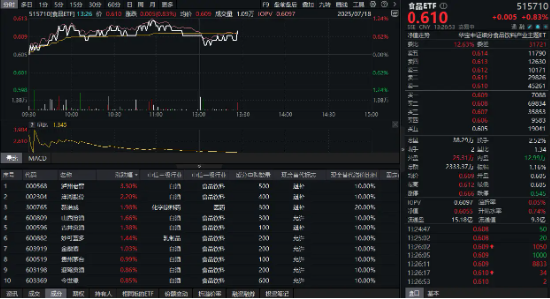
Group 1 - The food and beverage sector is performing well, with leading liquor stocks showing significant gains, such as Luzhou Laojiao rising over 3% and Yanghe Co. increasing over 2% [1] - The Food ETF (515710) reached a maximum intraday price increase of 1.16%, closing up 0.83% [1][3] - A report from Brand Finance revealed that six Chinese liquor brands made it to the top ten of the world's most valuable liquor brands, with Moutai, Wuliangye, Luzhou Laojiao, and Fenjiu ranking among the top four [1] Group 2 - The current valuation of the food and beverage sector is favorable, with the food ETF's price-to-earnings ratio at 20.01, which is at a low point compared to the past decade [3] - The food and beverage sector is expected to see improved demand as national economic stimulus policies take effect, leading to a potential recovery in the sector's overall performance [4] - By 2025, revenue growth for food and beverage listed companies is anticipated to remain in single digits, slightly above the industry average, with a friendly cost environment supporting profit margins [4][5] Group 3 - The Food ETF (515710) tracks the CSI segmented food and beverage industry theme index, with approximately 60% of its holdings in high-end and mid-range liquor stocks [5] - The top ten weighted stocks in the ETF include leading brands such as Moutai, Wuliangye, Luzhou Laojiao, and Yili [5]

江苏10家公司进入A股“千亿市值俱乐部” 总数位居全国前列
Zheng Quan Shi Bao Wang· 2025-07-18 05:17
Group 1 - Four companies, including Dongshan Precision, Yanghe Brewery, Hudian Co., and Hengli Hydraulic, have recently surpassed a market capitalization of 100 billion yuan, with Jiangsu province having a total of 10 such companies as of July 18 [1][2] - Dongshan Precision's stock price hit a ceiling on July 17, closing at 55.31 yuan per share, resulting in a market capitalization of 101.3 billion yuan. The company has developed three main sectors: electronic circuits, optoelectronics, and precision manufacturing, ranking second globally in flexible printed circuits (FPC) and third in PCBs based on revenue [1] - Hudian Co. saw an 8.59% increase in stock price on July 17, bringing its market capitalization to 102.2 billion yuan. The company is expected to achieve a net profit of 1.65 to 1.75 billion yuan in the first half of 2025, marking a year-on-year increase of 44.63% to 53.40% [1] Group 2 - Yanghe Brewery, a well-known domestic liquor company, has returned to the 100 billion yuan club, focusing on its major products like "Hai Zhi Lan" and "Meng Zhi Lan M6+" while planning to launch new products priced above 50 yuan [2] - Hengli Hydraulic's stock price has nearly doubled since January, with its market capitalization exceeding 100 billion yuan again. The company has entered mass production for its linear actuator project, which is expected to drive new growth [2] - In addition to the four companies mentioned, Jiangsu province also has six other companies, including Jiangsu Bank and Huatai Securities, in the 100 billion yuan market capitalization club, highlighting Jiangsu's status as a manufacturing powerhouse [3]


相继入局低度白酒赛道 低度酒能否成为头部酒企穿越周期的良药?
Sou Hu Cai Jing· 2025-07-17 10:54
Core Viewpoint - The Chinese liquor industry is facing challenges such as shrinking competition, declining prices, and increasing inventory pressure, prompting leading liquor companies to enter the low-alcohol liquor market to seek growth opportunities [2][6]. Group 1: Industry Trends - Major liquor companies like Wuliangye, Luzhou Laojiao, and Jiugui Liquor are actively discussing the trend towards low-alcohol products during their annual shareholder meetings [2][3]. - The low-alcohol liquor segment is expected to become a new growth area for leading liquor companies, as they adapt to the younger consumer demographic and the trend of lower alcohol content [2][3][6]. Group 2: Company Strategies - Wuliangye plans to reintroduce a 29-degree liquor product after 20 years, with market research already underway for three different flavors, expected to launch in September [3][5]. - Luzhou Laojiao has successfully developed a 28-degree product and is testing even lower alcohol content options [3][5]. - Other companies like Moutai, Shanxi Fenjiu, and Yanghe are also increasing their focus on low-alcohol products, with various new offerings in development [3][5]. Group 3: Market Dynamics - The low-alcohol segment is seen as a potential second growth curve for some liquor companies, with Luzhou Laojiao reporting that the proportion of low-alcohol products in their portfolio has increased from 15% to around 50% [6][8]. - The overall revenue growth for liquor companies has been declining, with only two out of twenty companies achieving double-digit revenue growth in the first quarter of 2025 [6][7]. Group 4: Historical Context - The low-alcohol trend in the Chinese liquor market has historical precedents, with previous waves of low-alcohol product launches occurring in the 1970s and 1980s, but the market has predominantly favored high-alcohol products [8][9][10]. - The introduction of low-alcohol products has often faced challenges, as seen in past attempts where many low-alcohol offerings did not meet market expectations and were eventually discontinued [9][11]. Group 5: Consumer Preferences - A survey indicated that among young consumers aged 25 to 35, only 19% prefer traditional liquor, while 52% favor beer, highlighting the need for liquor companies to adapt to changing consumer preferences [3][6]. - The pricing strategy for low-alcohol products is critical, as companies must balance affordability for younger consumers with maintaining a premium brand image [13][15].

29度五粮液、28度国窖1573……头部酒企为何集体“降度”?
Sou Hu Cai Jing· 2025-07-16 09:08
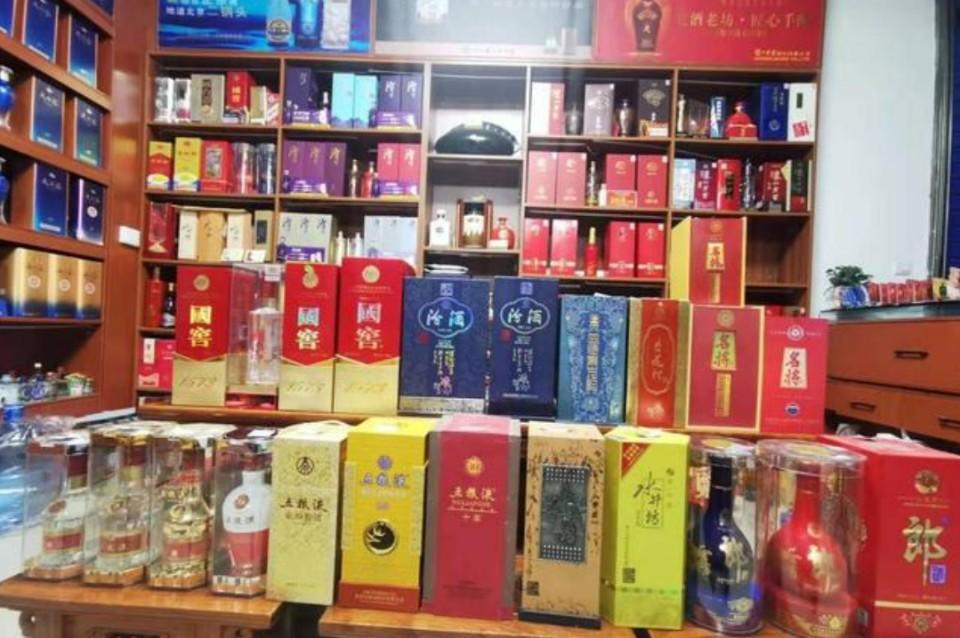
Core Viewpoint - The low-alcohol liquor market is experiencing a resurgence after nearly 30 years of dormancy, with major companies like Kweichow Moutai, Wuliangye, Luzhou Laojiao, and Yanghe actively entering this segment to attract younger consumers [3][4][6]. Group 1: Market Trends - The market share of low-alcohol liquor has been rapidly increasing, with its production accounting for approximately 15% in 2022 and projected to exceed 25% by 2024 [3]. - Some companies report that low-alcohol products have captured over 50% of their regional market share, indicating a significant shift in consumer preferences towards younger demographics [3][4]. - The demand for low-alcohol liquor is driven by changing consumer habits, with lower alcohol content products showing better sales performance compared to traditional high-alcohol options [4][19]. Group 2: Company Strategies - Wuliangye plans to launch a new mid-to-high-end 29-degree product named "Yijian Qingxin" in September, while Yanghe will introduce fruit wines and low-alcohol trendy drinks in August and September [6][9]. - Luzhou Laojiao has successfully developed a 28-degree version of its flagship product, Guojiao 1573, and will introduce additional low-alcohol options [6][8]. - Guizhou Moutai is accelerating its low-alcohol beverage brand, Youmi, with 14 new products launched at a recent trade fair and plans for online and offline distribution [13]. Group 3: Industry Challenges - The low-alcohol liquor segment faces challenges such as maintaining flavor balance and quality control, as reducing alcohol content can disrupt the equilibrium of flavor compounds [16]. - There is a risk of market homogenization, with many brands adopting similar "fruit flavor + bubbles" formulas, which may lead to consumer fatigue and a lack of brand loyalty [16][19]. - The industry must focus on technological innovation and cultural engagement to ensure sustainable growth and avoid being trapped in a highly competitive market [19].

一瓶几十元,白酒巨头狂卷光瓶酒
Xin Lang Cai Jing· 2025-07-16 05:50
Group 1 - The core viewpoint of the article highlights the growing popularity of low-priced "light bottle" liquor in the Chinese market, as high-end liquor brands struggle with price declines and sales challenges [1][14][16] - Major liquor companies are launching new products in the light bottle segment, with notable examples including Yanghe's "Yanghe Daqu High Line Light Bottle Liquor" priced at 59 yuan, which sold over 10,000 bottles in 48 hours [1][4] - The light bottle liquor market has reached a scale of approximately 1.5 trillion yuan in 2024, with continued growth expected in 2025, making it one of the most dynamic segments in the liquor industry [3][10] Group 2 - Consumer behavior is shifting towards more rational choices, with a significant portion of consumers prioritizing cost-effectiveness and practicality in their liquor purchases [10][11] - The traditional light bottle liquor market, represented by brands like Niulanshan and Baijiu, has established a strong presence, while new entrants are emerging to capture market share amid changing consumer preferences [7][9] - The competitive landscape is intensifying as more companies enter the light bottle segment, leading to concerns about market saturation and the ability to maintain quality and differentiation [17][18] Group 3 - The high-end liquor market, particularly brands priced above 1,000 yuan, is experiencing significant price declines, with major brands like Moutai and Wuliangye seeing their market prices drop below their official guidance prices [16][17] - The shift towards light bottle liquor reflects a broader trend in the industry where companies are adapting to consumer demands and seeking new growth opportunities in a challenging market environment [15][17] - The light bottle segment is increasingly viewed as a mainstream choice, moving away from its previous perception as a low-end product, and is now seen as a potential growth engine for liquor companies [17][18]



经导调查|降“度”抢市场!低度酒能否撑起白酒未来?
Da Zhong Ri Bao· 2025-07-16 04:35
Core Viewpoint - The low-alcohol liquor market in China has seen a resurgence after nearly 30 years of dormancy, with major companies like Kweichow Moutai, Wuliangye, Luzhou Laojiao, and others actively entering this segment to attract younger consumers [1][2][4]. Industry Trends - The market share of low-alcohol liquor has been rapidly increasing, with its production accounting for approximately 15% in 2022 and projected to exceed 25% by 2024 [1][2]. - Companies are launching new products with lower alcohol content to cater to changing consumer preferences, such as Wuliangye's 29-degree "Yi Jian Qing Xin" and Luzhou Laojiao's 28-degree Guojiao 1573 [4][10]. Consumer Preferences - There is a growing preference among consumers for low-alcohol liquor, which is perceived to have better sales performance compared to high-alcohol liquor, especially in daily consumption scenarios [2][11]. - The trend towards low-alcohol products is seen as a response to the demand for healthier drinking options and a younger demographic [6][16]. Product Innovation - Companies are focusing on product innovation to meet the demand for low-alcohol and flavored beverages, with strategies including the introduction of fruit-flavored and sparkling options [1][10]. - The industry is facing challenges in maintaining the quality and taste of low-alcohol products, as the reduction in alcohol content can affect the balance of flavors [13][16]. Market Dynamics - The low-alcohol liquor market is experiencing significant growth in regions like Guangdong and Jiangsu, while other areas such as Shandong and Henan require further development [16]. - The competition in the low-alcohol segment is intensifying, with many brands adopting similar flavor profiles, leading to concerns about market saturation and differentiation [13][16].
国信证券晨会纪要-20250716



Guoxin Securities· 2025-07-16 01:31
Macro and Strategy - June financial data shows a significant rebound in credit, with new social financing reaching 4.20 trillion yuan, exceeding expectations of 3.71 trillion yuan, and new RMB loans at 2.24 trillion yuan, surpassing the forecast of 1.84 trillion yuan [8][9][10] - The M2 money supply grew by 8.3% year-on-year, indicating a recovery in domestic economic momentum as private sector balance sheet expansion improves [8][9] - The "seesaw effect" between government financing and corporate loans has weakened, suggesting a shift in credit dynamics as local governments approach their annual debt targets [9][10] Retail Industry - The jewelry market is projected to grow steadily, with the market size reaching 728 billion yuan in 2024, reflecting a compound annual growth rate of 3.6% since 2019 [11][12] - The top five companies in the jewelry sector hold a market share of 41.4%, indicating increasing industry concentration as consumer preferences shift towards quality and design [11][12] - The retail sector is benefiting from the recent Amazon Prime Day, which generated an estimated $24.1 billion in sales, a 30% increase year-on-year, highlighting the growth potential in cross-border e-commerce [13][14] Food and Beverage Industry - The food and beverage sector saw a 0.92% increase, underperforming the Shanghai Composite Index by 0.17 percentage points [14] - The liquor market is stabilizing, with major brands focusing on brand positioning and market health, while the overall demand remains under pressure [15][16] - Recommendations include leading brands like Kweichow Moutai and Wuliangye, which have shown resilience and potential for recovery [15][16] Construction and Building Materials - The construction materials sector is expected to improve due to a shift towards healthy competition and urban renewal initiatives, with a focus on technological innovation [17][18] - Cement prices have stabilized, with a slight decrease of 0.4% week-on-week, while demand remains steady despite seasonal fluctuations [17][18] - Recommendations include companies like Three Trees and China National Building Material, which are well-positioned to benefit from domestic demand [18] Computer Industry - The AI ASIC market is rapidly expanding, with a projected market size growth from $14.8 billion in 2024 to $83.8 billion by 2030, reflecting a compound annual growth rate of 33.5% [19][20] - The price advantage of AI ASIC chips over GPUs is significant, with average prices of $5,236 compared to $8,001 for GPUs, making them more attractive for specific applications [19][20] - Companies like Google and Amazon are accelerating their development of ASIC chips, indicating strong future demand in this sector [21] Home Appliances - The home appliance sector is experiencing stable growth in domestic sales, driven by government subsidies, while exports face challenges due to high bases and tariff impacts [22][23] - White goods are seeing a slight increase in domestic sales, with air conditioning units showing a 9.5% growth in domestic shipments [22][23] - Recommendations include leading brands such as Midea and Gree, which are expected to maintain strong performance [22][23] Pharmaceutical Industry - Merck's acquisition of Verona for $10 billion aims to enhance its portfolio with a new COPD treatment, indicating strong growth potential in respiratory therapies [27][28] - WuXi AppTec is projected to achieve a 102% increase in net profit for the first half of 2025, reflecting robust operational performance [29] - The pharmaceutical sector is showing resilience, with a focus on innovative treatments and strategic acquisitions [27][28] Coal Industry - The coal market is expected to stabilize as domestic production increases and imports decrease, with a projected production of 4.85 billion tons in 2025, a 2% increase year-on-year [31][32] - Demand for coal is anticipated to improve in the second half of the year, particularly for non-electric uses such as chemical production [33] - Recommendations include leading coal companies like China Shenhua and China Coal Energy, which are well-positioned to benefit from market dynamics [34] Electronics Industry - The electronics sector is experiencing positive momentum, with a 0.93% increase in stock performance, driven by strong demand in the optical and semiconductor segments [34] - The industry is expected to see significant catalysts in the coming months, particularly in the context of AI and cloud computing advancements [34] - Companies involved in ASIC development are likely to benefit from the ongoing trends in computing and data processing [34]