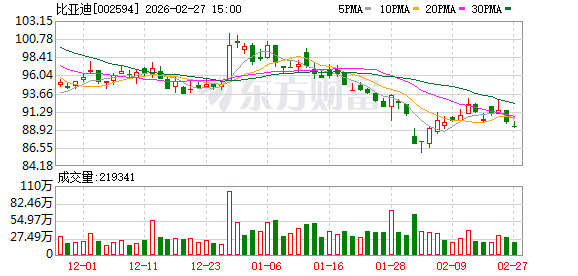
BYD(002594)

Search documents
北美电力紧张逻辑持续验证,继续关注燃气发电机及液冷产业链公司
Orient Securities· 2026-03-01 10:16
Investment Rating - The investment rating for the automotive and parts industry is maintained at Neutral [5] Core Insights - The report highlights that certain strong alpha automotive and parts companies are expected to withstand industry risks and achieve revenue and profit growth. The focus is on the gas generator and liquid cooling industry chain, as well as companies involved in humanoid robots and high-level autonomous driving that are set to enter supply chains for Tesla and other robotics companies [3][15] - The demand for self-built "shadow grids" in North America is increasing, with at least 47 data centers reported to be adopting gas power generation methods. This trend is expected to drive orders for gas power companies significantly [12] - The gradual implementation of vehicle trade-in policies is anticipated to improve passenger vehicle demand marginally, with government subsidies of 62.5 billion yuan already allocated to local departments [14] - The ongoing conflict between the US and Israel may impact China's passenger vehicle exports in the short term, but could also accelerate the penetration of new energy vehicles in the long term [15] Summary by Sections Investment Suggestions and Targets - Strong alpha automotive companies are expected to resist industry risks and achieve growth. Key sectors to watch include gas generators, humanoid robots, liquid cooling, and autonomous driving [3][15] - Recommended stocks include: - Gas generator related: Yinlun (002126, Buy), Weichai Power (000338, Not Rated) - Liquid cooling related: Invec (002837, Not Rated), Yinlun (002126, Buy), Top Group (601689, Buy), Feilong (002536, Not Rated) [16] - Robot related: Xinquan (603179, Buy), Top Group (601689, Buy), Yinlun (002126, Buy), Daimi (603730, Buy) [17] - Autonomous driving related: Jingwei Hengrun (688326, Buy), Bertley (603596, Buy), Desay SV (002920, Buy) [17] - Complete vehicles: BYD (002594, Not Rated), SAIC Group (600104, Buy), JAC Motors (600418, Not Rated), Seres (601127, Not Rated) [17] Sales Tracking - In the first week of February, wholesale sales of passenger vehicles reached 284,000 units, a year-on-year increase of 46%. Cumulative wholesale sales for the year are 2.257 million units, a decrease of 2% [19] - Retail sales for the same period were 328,000 units, up 54% year-on-year, with cumulative retail sales down 7% [19] Market Trends - The automotive sector is under slight pressure, with the passenger vehicle segment showing a decline of 1.41%, while other automotive sub-sectors performed better [30] - The report indicates that the automotive industry has underperformed compared to the broader market, with a 0.6% decline in the automotive sector compared to a 1.1% increase in the CSI 300 index [30][32]





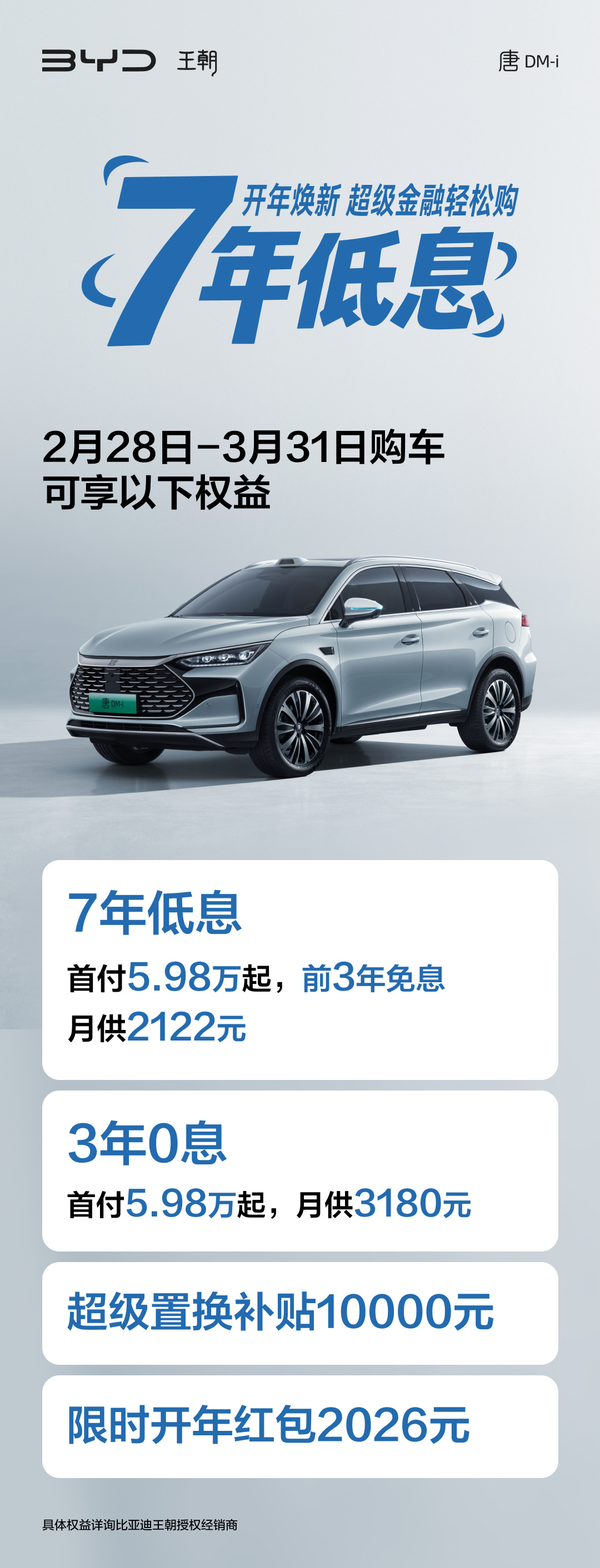
比亚迪汉唐家族开年购车权益:首付 5.98 万元起,提供 3 年 0 息、7 年低息方案
Xin Lang Cai Jing· 2026-03-01 08:26
7年低息 首付5.98万起,前3年免息 月供2122元 3年0息 首付5.98万起,月供3180元 超级置换补贴10000元 限时开年红包2026元 IT之家 3 月 1 日消息,比亚迪今日公布汉唐家族开年专属福利,首付 5.98 万元起,提供 3 年 0 息、7 年低息方案,活动时间 2 月 28 日-3 月 31 日。 2 月 28 日-3 月 31 日购车可享以下权益: 7年低息 首付5.98万起,前3年免息 具体权益详询比亚迪王朝授权经销商 BLHD 王朝 18 开年焕新 超级金融轻松购 FIFA . 2月28日-3月31日购车 可享以下权益 IT之家注意到,比亚迪昨日还公布了秦 PLUS 史上最强金融政策(3 月 31 日截止): 此外,截至 3 月 31 日(含),元 UP 享超级置换补贴 5000 元,综合补贴后 6.98 万元起。 ...

电力设备及新能源周报20260301:光伏行业整合有望加速,内蒙古深入推进电网建设-20260301
Guolian Minsheng Securities· 2026-03-01 08:01
Investment Rating - The report maintains a "Recommended" rating for several key companies in the electric equipment and new energy sectors, including CATL, Keda, and Mingyang Smart Energy [5][6]. Core Insights - The photovoltaic industry is experiencing significant consolidation, with Tongwei planning to acquire 100% of Lihua Qingneng, marking a strong signal of market-driven integration in the polysilicon sector [3][32]. - The European automotive market shows a shift towards hybrid vehicles, with Chinese brands like BYD and SAIC gaining market share against traditional leaders like Volkswagen, which is facing a decline in sales [2][13]. - Inner Mongolia is accelerating its power grid construction, with a planned investment growth of 7.1% in key projects by 2025, focusing on new energy systems and high-voltage direct current lines [4][46]. Summary by Sections 1. New Energy Vehicles - In January 2026, the European car market saw a total of 961,000 new registrations, a decrease of 3.5% year-on-year. Hybrid vehicles (HEV) accounted for 38.5% of the market, while pure electric vehicles (BEV) made up 19.7% [2][15]. - Chinese automakers are increasingly competitive in Europe, with BYD's sales growing by 165% year-on-year, while Volkswagen's sales fell by 3.8% [2][18]. 2. New Energy Generation - Tongwei's acquisition of Lihua Qingneng is a landmark event in the photovoltaic industry, indicating a shift from policy-driven consolidation to market-driven mergers, which may help alleviate price competition and optimize resource allocation [3][32][33]. - The industry is facing overcapacity and intense price competition, prompting a need for market-driven restructuring [32][34]. 3. Electric Equipment and Automation - Inner Mongolia's government has outlined plans for significant investment in the power grid, including the construction of 20 new 500 kV substations and a focus on smart grid upgrades [4][46]. - Nationally, investment in key power projects is expected to grow by 10.3% for power sources and 7.1% for grid projects by the end of 2025 [4][46]. 4. Commercial Aerospace - The recovery test plan for the Zhuque-3 rocket is set for the second quarter of 2026, aiming to achieve reusable technology for commercial spaceflight [5]. 5. Weekly Sector Performance - The electric equipment and new energy sector saw a weekly increase of 1.89%, with wind power indices rising by 5.73% and lithium battery indices declining by 4.74% [1].



亿纬锂能落子合肥;宁德时代/宝马合作深化;比亚迪45GWh项目公示;正力新能净利暴增;湖南60GWh项目开工;LG新能源方形储能电池厂落地
起点锂电· 2026-03-01 03:16
Core Insights - The article discusses the upcoming 2026 (Second) Starting Point Lithium Battery Cylindrical Battery Technology Forum and the release of the Top 20 Cylindrical Battery Rankings, emphasizing advancements in all-tab technology and leadership in the large cylindrical battery market [1] Group 1: Industry Developments - BMW Group signed a memorandum of understanding with CATL to enhance collaboration in the battery supply chain and reduce carbon footprints in electric vehicles, highlighting the importance of cooperation and innovation in the industry [2] - Zhengli New Energy anticipates a net profit increase of up to eight times by 2025, projecting a profit of approximately RMB 6.8 billion to 8.2 billion, driven by market demand and improved operational efficiencies [3] - ATL has acquired a stake in Shanghai Carbon Yuan New Materials Technology Co., entering the next-generation silicon-carbon anode materials sector [5] Group 2: Project Announcements - Rongjie Energy announced a new 15GWh battery production project, with a total investment of RMB 148 million, expanding its production capacity to 25GWh [6] - EVE Energy established a new company in Hefei with a registered capital of RMB 500 million, focusing on manufacturing and selling new energy equipment [7] - EVE Energy and CITIC Bo signed a strategic cooperation framework agreement for a two-year plan to collaborate on 12GWh of energy storage batteries and systems [8] Group 3: Production Capacity Expansions - Ganfeng Lithium's new 10GWh battery project has commenced operations in Dongguan, with a total investment of RMB 5 billion [9] - BYD's 45GWh battery project is undergoing planning adjustments to meet production needs [10] - Hunan Ningxiang Shengyan Technology's 60GWh lithium battery project has officially started construction, expected to meet the battery needs of approximately 1 million electric vehicles [11] Group 4: Market Trends - Lithium carbonate prices have surged, with contract prices reaching RMB 160,000 per ton, reflecting a 10.56% increase [15][16] - Zimbabwe has suspended the export of lithium concentrate and raw ore to encourage local processing, aiming to enhance economic benefits from its lithium resources [17] Group 5: Corporate Actions - Jinli New Energy completed a merger with Fosun Technology, marking the end of a two-year industry consolidation process [20] - Zhenyu Technology plans to raise up to RMB 1.88 billion through convertible bonds to expand its production of precision components for lithium batteries [21] - Jiangsu Hankan Electronics is ramping up production of lithium-ion battery electrolyte additives, with a new project expected to be completed by the end of the year [22]



比亚迪:公司在电池领域技术领先、多种路线都在研发
Mei Ri Jing Ji Xin Wen· 2026-02-28 15:51
Group 1 - The company, BYD, claims to be a leader in battery technology and is developing multiple routes in this field [1] - In the energy storage sector, the company has established a comprehensive global network for sales, delivery, operation, and after-sales service [1] - As of now, the company has successfully delivered over 500 energy storage projects, with applications in more than 110 countries and regions worldwide [1] Group 2 - An investor inquired about the company's battery and vehicle sales performance, noting that despite strong sales, the stock price has been declining [3] - The investor also asked about the company's progress on solid-state battery patents and its involvement in energy storage for the power grid [3]
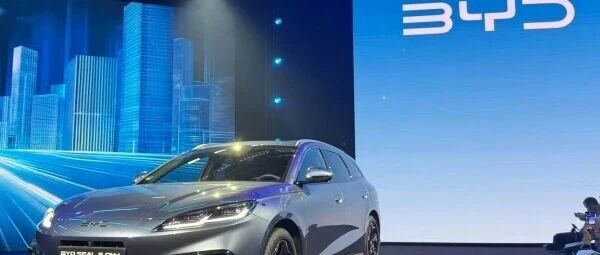
全球车企销量前十出炉,比亚迪、上汽、吉利控股上榜
Xin Jing Bao· 2026-02-28 13:05
Group 1 - Toyota remains the largest automotive manufacturer globally, with an estimated sales volume of approximately 11.32 million units in 2025, maintaining its position for six consecutive years since surpassing Volkswagen in 2020 [1] - Volkswagen ranks second with a projected sales volume of 8.984 million units in 2025, experiencing a decline in sales in both the Chinese and North American markets, with an 8% year-on-year decrease in China [1] - Hyundai, General Motors, and Stellantis are positioned third to fifth, with sales volumes of 7.274 million, 6.182 million, and 5.484 million units respectively [1] Group 2 - BYD ranks sixth among global automakers with a sales volume of 4.602 million units in 2025, improving its ranking by one position compared to 2024 [2] - SAIC Motor ranks seventh with a sales volume of 4.508 million units, also moving up one position year-on-year [2] - Geely Holding Group ranks ninth with a sales volume of 4.116 million units, surpassing Honda and improving its ranking by two positions compared to 2024 [2]


比亚迪夺新年首冠 安凯暴涨7倍进前五 1月新能源客车销量出炉 | 头条
第一商用车网· 2026-02-28 10:32
Core Insights - In January 2026, the sales of large and medium-sized new energy buses in China experienced a significant decline, with total sales of 2,137 units, representing a month-on-month decrease of 77.63% and a year-on-year decrease of 19.66% [1][2]. Group 1: Overall Market Performance - Despite the overall market downturn, several companies showed positive performance, with five out of the top ten companies achieving year-on-year sales growth [3][4]. - BYD led the market with 442 units sold, capturing a market share of 20.68%, and achieved a month-on-month growth of 10.22% and a year-on-year growth of 54.55% [2][3]. - Xiamen Golden Dragon returned to the top three with 260 units sold, reflecting a year-on-year increase of 6.56% [3][4]. Group 2: Competitive Landscape - Among the mid-tier companies, Zhongtong Bus sold 240 units, marking a year-on-year increase of 46.34%, while Ankai Bus saw a remarkable year-on-year increase of 725% with 198 units sold [4][6]. - Other notable performances included Suzhou Golden Dragon Haige with 183 units sold and Chery Wanda with a month-on-month growth of 5.80% and a year-on-year increase of 1.39% [4][6]. Group 3: Market Segmentation - The sales of new energy buses in January 2026 were categorized into three segments: public buses, seat buses, and other buses (including school buses), all of which experienced negative growth [6][7]. - In the public bus segment, 1,756 units were sold, with BYD leading at 442 units and a market share of 25.17% [7][8]. - The seat bus segment saw a total of 378 units sold, with Zhongtong Bus leading at 132 units and a year-on-year growth of 140% [9][10]. Group 4: Future Outlook - The overall performance in January indicates that while the market faced challenges, the potential for growth remains, supported by policies like "old-for-new" exchanges and ongoing advancements in new energy technology [12].

比亚迪日本研究(下)补贴未增,全方位参与
日经中文网· 2026-02-28 07:36
Core Viewpoint - BYD faces significant challenges in the Japanese market due to government subsidies favoring competitors like Toyota and Tesla, which receive over 1 million yen, while BYD's subsidy is only 350,000 yen, impacting its competitiveness in the plug-in hybrid vehicle (PHV) segment [2][5]. Group 1: Subsidy and Market Conditions - The Japanese government has increased the subsidy cap for electric vehicles (EVs) by 400,000 yen, benefiting companies like Toyota and Tesla, while BYD's subsidy remains unchanged at 350,000 yen [3][5]. - The competitive landscape is tough for BYD, as the actual purchase price of Toyota's bZ4X is lower compared to BYD's ATTO 3, creating a significant disadvantage [6]. Group 2: Product Strategy - BYD plans to focus on the PHV segment, which combines electric motors and internal combustion engines, making it more suitable for long-distance travel in Japan, where hybrid vehicles are more accepted than pure EVs [7]. - The company will start delivering the SUV "Sea Lion 6" in January and plans to launch the travel car "Sea Leopard 6" and compact SUV "ATTO 2" by 2026, aiming to cover a wide range of models in the Japanese market [7][9]. Group 3: Market Expansion and Future Outlook - Sales in China are expected to slow down, with vehicle purchase tax exemptions for EVs being halved by 2026, pushing BYD to focus on profitability in overseas markets [10]. - BYD is strengthening its presence in Southeast Asia, with projected sales growth of 60% in Thailand by 2025, reaching approximately 43,000 vehicles [10]. - Establishing credibility in Japan is crucial for BYD, as success in this market could enhance its reputation and sales in Southeast Asia, which is seen as a gateway for global automotive sales [10].
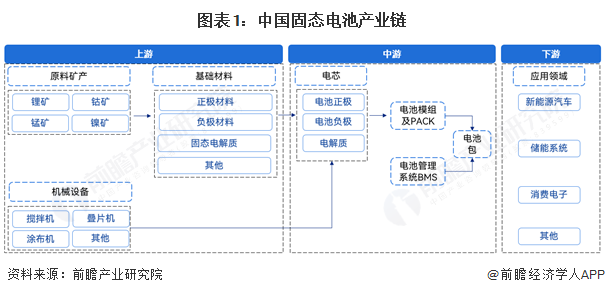
【干货】固态电池产业链全景梳理及区域热力地图
Qian Zhan Wang· 2026-02-28 03:09
Core Insights - The solid-state battery industry in China is characterized by strong vertical integration among manufacturers, with a diverse range of companies involved in various stages of the supply chain, including raw materials, battery production, and automotive applications [3][6]. Industry Overview - The solid-state battery supply chain is similar to that of liquid lithium batteries, with upstream components including raw materials, machinery, and basic materials. The main differences lie in the types of anode materials and electrolytes used, while the cathode materials are largely consistent [6]. - The downstream applications for solid-state batteries encompass electric vehicles, energy storage systems, and consumer electronics [6]. Market Players - Key listed companies in the solid-state battery sector include BYD, SAIC Motor, NIO, CATL, Aulton Technology, and Guoxuan High-Tech [1]. - BYD leads the market with a revenue of 566.27 billion yuan and a gross margin of 17.87%, leveraging its vertical integration to advance solid-state battery technology [11]. - CATL, a major player in battery manufacturing, reported a revenue of 283.07 billion yuan with a gross margin of 25.31%, highlighting its leadership position in the industry [11]. Investment Landscape - BYD is investing over 20 billion yuan to establish a 100GWh solid-state battery production base in Chongqing, with the first phase of 20GWh expected to be operational by 2026 [12][15]. - SAIC Motor is collaborating with Qingtao Energy to develop a solid-state battery production line, aiming for mass production in the near future [12][15]. - CATL has launched a 5GWh solid-state battery pilot line in Hefei, with plans to scale up to 100GWh by 2027 [12][15]. Barriers to Entry - The solid-state battery industry faces significant entry barriers, including customer resource barriers, technical and process barriers, talent barriers, and administrative licensing barriers [8][10]. - Establishing customer relationships requires lengthy processes involving identification, testing, and certification, making it difficult for new entrants to gain traction [10]. - The complexity of production processes and the need for specialized technical expertise further complicate entry for new companies [10].


报告:中国品牌汽车2025年在南非销量增速迅猛
Zhong Guo Xin Wen Wang· 2026-02-28 02:28
Core Insights - Chinese automotive brands are rapidly reshaping the South African market, with a projected 48% increase in search volume, 74% rise in inquiries, and 49% growth in sales by 2025 [1] Group 1: Market Trends - The CEO of AutoTrader, George Mienie, highlighted that Chinese manufacturers have effectively captured consumer sensitivity to the "price-value gap," contrasting with traditional automakers that rely on brand history and reputation [1] - South African car buyers have evolved into "value maximizers," demanding high-tech features, comfort, and design within affordable price ranges, which aligns with the strengths of Chinese brands [2] Group 2: Performance in Specific Segments - In the emerging new energy vehicle segment, Chinese brands have shown strong performance, with three models from Great Wall Motors ranking in the top ten hybrid vehicle sales: Haval H6 at fourth, Haval Jolion at seventh, and GWM Tank 300 at ninth [4] - In the pure electric vehicle category, BYD Dolphin has entered the sales ranking at ninth place [4] - Key brands driving increased search interest include SAIC LDV, SAIC MG, GAC, BYD, and Jetour [4]