BYD(002594)

Search documents
“湾区造”优势从何而来?实力体现在哪里?记者探访
Ren Min Ri Bao· 2025-12-24 13:28
Group 1: Economic Development and Innovation - The Central Economic Work Conference emphasizes "innovation-driven development" and the establishment of international technology innovation centers in regions like the Guangdong-Hong Kong-Macao Greater Bay Area [1] - The Greater Bay Area has developed a complete industrial system covering 31 manufacturing categories and has nurtured nine trillion-yuan industrial clusters, with emerging industries like new energy vehicles and artificial intelligence thriving [1] - The "Shenzhen-Hong Kong-Guangzhou" innovation cluster ranked first globally in the World Intellectual Property Organization's 2025 Global Innovation Index Report, highlighting the global impact of the Greater Bay Area's innovation [1] Group 2: Collaborative Innovation and Industry Support - The Greater Bay Area provides a collaborative innovation ecosystem that supports research and entrepreneurship, as seen in the case of Guangzhou Zhimi New Material Technology Co., which utilizes microcapsule technology for various applications [4] - Guangdong has established 10 national major scientific and technological infrastructure projects, including five in the Greater Bay Area, and has created two national laboratories and 45 national key laboratories [4] - As of June this year, the Greater Bay Area holds 817,000 effective invention patents, accounting for approximately one-sixth of the national total [4] Group 3: Automotive Industry and Supply Chain - The automotive supply chain in the Greater Bay Area enhances production efficiency, with companies like Xpeng Motors benefiting from nearby suppliers who can respond quickly to production needs [6][7] - The automotive industry in the Greater Bay Area is evolving towards a comprehensive development model, integrating electric vehicles, key components, and smart technologies [8] - Guangdong has developed a complete industrial chain covering vehicle manufacturing, battery systems, intelligent driving, and charging facilities, with major companies like BYD and Xpeng leading the market [8] Group 4: Smart Manufacturing and Digital Transformation - The digital transformation of manufacturing in Guangdong is exemplified by OPPO's automated production lines, which enhance efficiency and reduce costs [9][10] - Over 51,000 industrial enterprises in Guangdong have undergone digital transformation, with high rates of digital management and design tool adoption [10] - The "Artificial Intelligence Empowering Manufacturing High-Quality Development Action Plan (2025-2027)" aims to further integrate AI with manufacturing, establishing a globally influential model [11] Group 5: Brain-Machine Interface and Technological Advancements - The establishment of the Brain-Machine Interface Innovation Industry Alliance in the Greater Bay Area aims to create a global hub for brain-machine interface technology [12] - The Guangdong Provincial Laboratory for Artificial Intelligence and Digital Economy is facilitating the development of non-invasive brain-machine interface technologies, enhancing the quality of life for individuals with mobility impairments [13][14] - The laboratory has initiated numerous research projects and collaborations with leading enterprises, fostering a robust talent pipeline for AI innovation in the Greater Bay Area [14]


萝卜快跑将在伦敦开启业务;智元年销有望超10亿元丨新鲜早科技
2 1 Shi Ji Jing Ji Bao Dao· 2025-12-24 13:05
Group 1: Regulatory Actions - Apple has been fined approximately €98.63 million (around 813 million RMB) by the Italian antitrust authority for abusing its market dominance through its App Tracking Transparency policy, which restricts competition among third-party developers since April 2021 [2] Group 2: Autonomous Driving Developments - Baidu's autonomous driving service platform,萝卜快跑, plans to launch driverless testing and services in London by 2026, marking its first entry into a right-hand traffic market outside of Hong Kong [3] Group 3: AI and Robotics Innovations - Alibaba has open-sourced a new image generation model, Qwen-Image-Layered, which allows for advanced layer understanding and image generation, addressing consistency issues in AI-generated images [4] - 智元机器人 expects to achieve sales revenue exceeding 1 billion RMB this year, with plans for significant growth in robot shipments and revenue in the coming years [5] - 智元机器人 has launched a national robot rental platform, "擎天租," aiming to streamline the rental process and project the market size to exceed 10 billion RMB this year [5] Group 4: Corporate Transactions and Investments - 吉利汽车 has completed the privatization of 极氪, which is now a wholly-owned subsidiary, and its financial performance will be consolidated into 吉利汽车's financial statements [7] - 凌云光's subsidiary plans to invest up to $5 million in the IPO of 智谱, reinforcing their long-term partnership in AI and industrial data [8] - 通宇通讯 is increasing its registered capital by 10 million RMB through a cash investment from 武汉武创院投资有限公司 to enhance its capital strength [6] Group 5: Market Trends and Product Launches - 长飞光纤 reports that the demand for fiber optic cables related to the telecom market remains under pressure, despite increased attention on new products related to data centers [10] - 云知声 has launched a new medical AI model, "山海·知医大模型5.0," which aims to transition from an "intelligent tool" to a "clinical collaborator" [11] - 华为 has released the nova15 series smartphones, starting at 2,699 RMB, featuring the new 麒麟9010s chip and HarmonyOS 6 [23]


2.51万亿,再创新高!融资客加速进场,这些龙头成资金宠儿
Zheng Quan Shi Bao· 2025-12-24 11:04
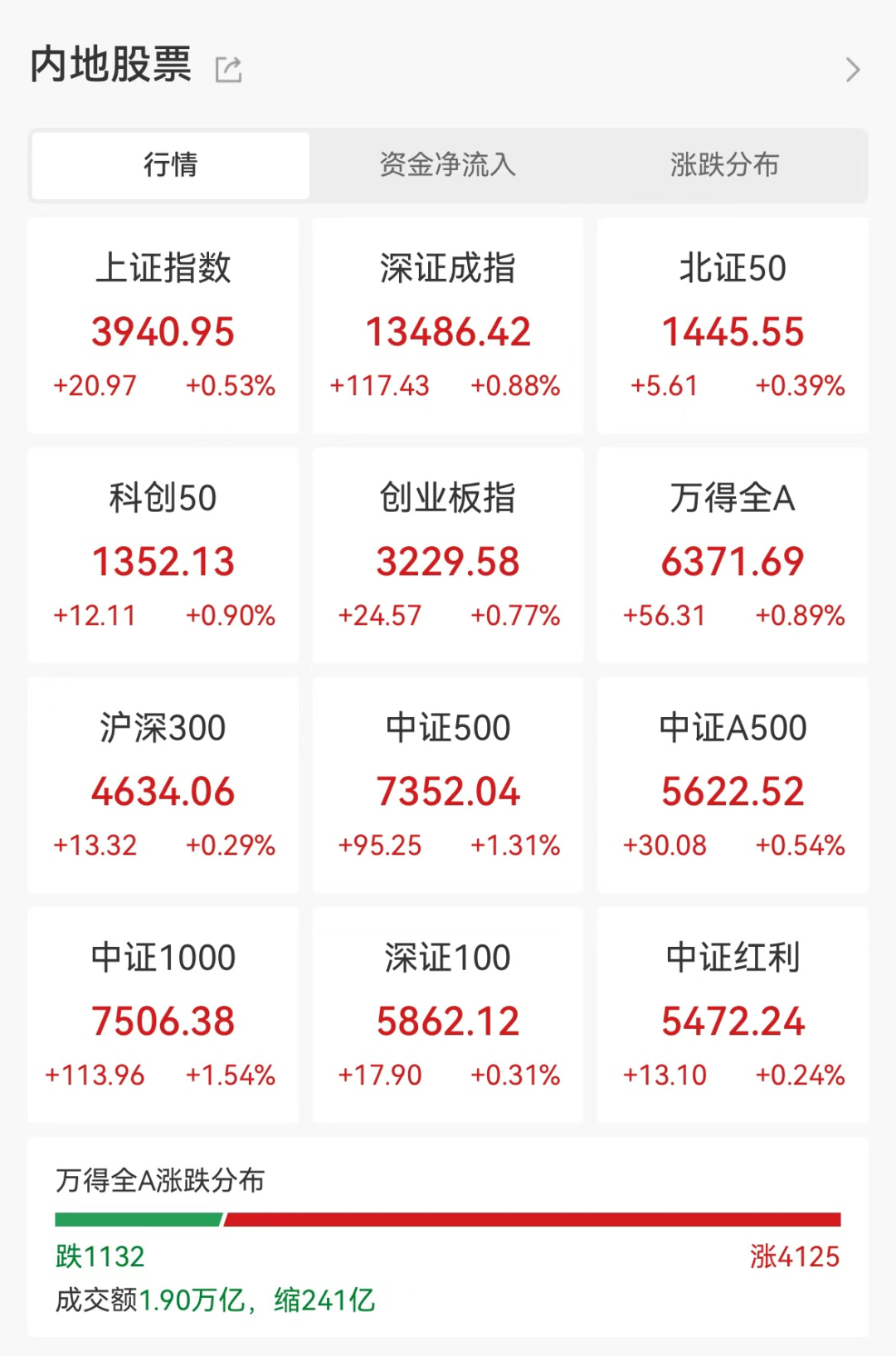
Group 1: A-Share Market Overview - The A-share financing balance has reached a historic high of 25.14596 trillion yuan as of December 23, 2025, marking an increase of 14.859 billion yuan from the previous trading day [6] - The A-share market showed positive movement with the Shanghai Composite Index rising by 0.53% to close at 3940.95 points, while the Shenzhen Component Index and the ChiNext Index increased by 0.88% and 0.77%, respectively [1][2] - The total market turnover was 1.897242 trillion yuan, which is a decrease of approximately 24.1 billion yuan compared to the previous day [1] Group 2: Sector Performance - The commercial aerospace sector experienced significant gains, with nearly 30 stocks, including China Satellite and Aerospace Power, hitting the daily limit [3] - Conversely, the precious metals and dairy sectors saw declines, with specific stocks like Zhuangyuan Pasture hitting the daily limit down [5] Group 3: Financing Trends - Since the second half of 2025, the A-share financing balance has increased by 6.76447 trillion yuan, representing a growth of 36.8% compared to the end of the first half of 2025 [6] - The electronics sector led the financing net purchases with a total of 161.426 billion yuan, followed by power equipment, telecommunications, and non-ferrous metals sectors with net purchases of 88.994 billion yuan, 60.579 billion yuan, and 44.721 billion yuan, respectively [6] - A total of 171 stocks have seen net financing purchases exceeding 1 billion yuan, with New Yisheng and Ningde Times leading the list with net purchases of 17.163 billion yuan and 15.126 billion yuan, respectively [8][11] Group 4: Future Outlook - Dongguan Securities suggests that the A-share market is likely to resonate with global markets amid a stable liquidity environment, supported by economic recovery and improving corporate profits [6] - The semiconductor industry is expected to see increased demand for 800G optical modules, driven by advancements in GPU and ASIC technologies, with significant growth anticipated in 2026 [10]






加税之下,中国汽车欧洲份额何以翻倍
Zhong Guo Qi Che Bao Wang· 2025-12-24 10:38
Core Viewpoint - The EU's high anti-subsidy tax policy aimed at Chinese electric vehicles has not deterred their market growth in Europe, with Chinese automakers experiencing a dramatic increase in sales and market share despite the tariffs [4][12]. Group 1: Market Performance - In the first ten months of this year, Chinese automakers' sales in Europe surged by 93% year-on-year, with projections indicating annual sales could exceed 700,000 units by 2025 [4][5]. - In October, Chinese automakers achieved a market share of approximately 7%, doubling from the previous year, with total sales reaching nearly 75,000 units [5][6]. - SAIC's MG brand led the sales among Chinese brands in Europe, with a 35% year-on-year increase, while BYD's sales skyrocketed by 208% [5][6]. Group 2: Product Strategy - Following the imposition of the anti-subsidy tax, Chinese automakers quickly adjusted their product mix, reducing the share of pure electric vehicles from 44% to 34% and increasing focus on hybrid models [5][6]. - By October, the sales of plug-in hybrid vehicles surged by 673%, while the share of pure electric vehicles remained significant at 36% [6][7]. Group 3: Competitive Advantages - Chinese automakers benefit from a manufacturing cost advantage of 20% to 30%, allowing them to maintain competitive pricing despite tariffs [7][8]. - The perception of Chinese brands in Europe is improving, with 47% of European buyers considering purchasing a Chinese vehicle, surpassing the interest in American brands [8][9]. Group 4: Long-term Strategy - Chinese automakers are establishing local production facilities in Europe, with BYD's factory in Hungary set to produce 150,000 vehicles annually by 2026, and Chery's joint venture in Spain already operational [9][10]. - Companies are also investing in local R&D centers to adapt products to European standards and consumer preferences, with several brands already establishing such facilities [11]. Group 5: Future Outlook - The competition is shifting from product offerings to ecosystem development, with Chinese companies rapidly expanding their charging networks across Europe [10]. - Ongoing negotiations between China and the EU aim to find alternative solutions to tariffs, indicating a potential for future collaboration [12].

欧洲市场不信“电动车才是未来”?数据打脸!
Guan Cha Zhe Wang· 2025-12-24 09:56
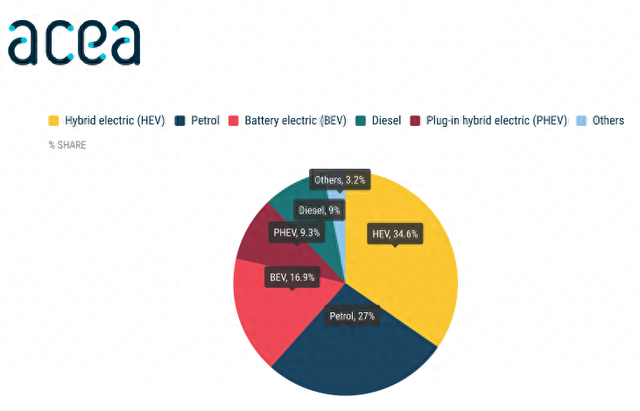
Core Insights - The European automotive market is experiencing a significant shift towards electric and hybrid vehicles, with pure electric vehicles (EVs) accounting for 16.9% of the market share, an increase of 3.5 percentage points from the previous year [1][4] - Hybrid vehicles have surpassed one-third of the market share, indicating a strong preference among EU consumers [1][4] - The total market share for fuel vehicles has decreased to 36.1%, down 9.7 percentage points compared to the same period last year [1][4] Market Performance - In the first 11 months of the year, the EU registered 9.86 million new cars, a year-on-year increase of 1.4% [4] - Pure electric vehicle registrations reached 1.6624 million, marking a 27.6% increase year-on-year [4] - The largest four markets (Germany, Belgium, Netherlands, and France) accounted for 62% of the electric vehicle registrations, with Germany seeing a 41.3% increase [4] Hybrid and Plug-in Hybrid Vehicles - The registration of new hybrid vehicles rose to 3.4089 million, a 14.5% increase year-on-year, representing 34.6% of the total market [4] - Plug-in hybrid vehicle registrations reached 912,700, up 33.1% year-on-year, making up 9.3% of new car registrations [6] Fuel Vehicle Decline - Gasoline vehicle registrations totaled 2.6657 million, down 18.6% year-on-year, with a market share of 27% [6] - Diesel vehicle registrations fell to 890,000, a 24.4% decline, representing only 9% of the market [7] Company Performance - Volkswagen Group registered 2.7311 million new cars in the EU, a 5% increase, maintaining a market share of 27.7% [8] - Stellantis Group registered 1.541 million vehicles, a 5.5% decline, with a market share of 15.6% [8] - BYD saw a remarkable 240% increase in registrations, totaling 110,700 vehicles, the highest growth rate among all automotive groups [8] Market Trends - The shift towards electric vehicles is becoming a prominent trend in the European market, despite the EU's recent decision to abandon the 2035 ban on internal combustion engine vehicles [10] - The demand for electric vehicles is increasingly being met by Chinese manufacturers like SAIC and BYD, impacting the expansion of local European brands in the electric vehicle segment [10] - Despite tariffs of up to 35.3% on Chinese electric vehicle imports, the competitive pricing and quality of Chinese electric vehicles have solidified their position in the European market [10]
固态电池行情纵贯全年 主机厂“卡位”2026上车节点
Xin Lang Cai Jing· 2025-12-24 09:35
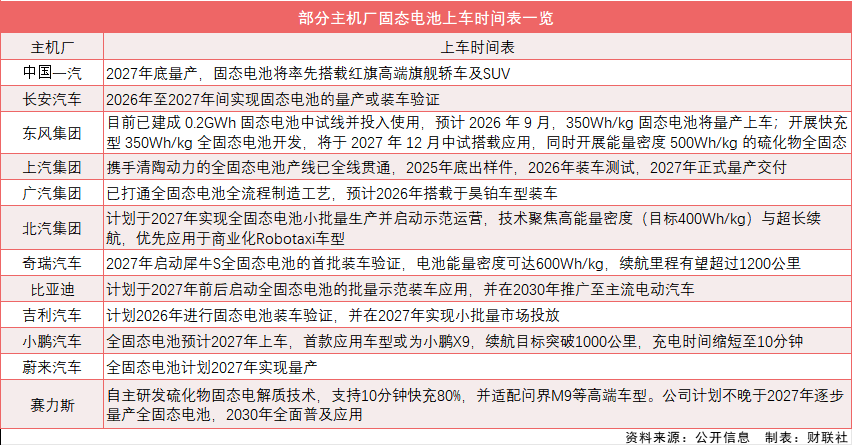
Core Viewpoint - The solid-state battery sector is gaining momentum in the electric vehicle industry, driven by the need to address range anxiety and enhance safety and efficiency. The market has seen a significant increase in solid-state battery stocks, with a 57.3% rise in the index over the past year, highlighting the growing interest and investment in this technology [1]. Group 1: Market Performance - The solid-state battery index rose from 696.24 in April 2025 to 1314.15 by the end of November 2025, reflecting a 57.3% increase [1]. - Companies such as Haike New Energy, Shanghai Xiba, and others have seen their stock prices increase by over 100% within the year [1]. Group 2: Manufacturer Plans - Twelve major automakers, including state-owned enterprises and companies like BYD and Geely, have disclosed their timelines for integrating solid-state batteries, targeting vehicle validation in 2026 and initial mass production in 2027 [1]. - Specific timelines include: - China FAW plans to mass-produce solid-state batteries by the end of 2027 for high-end vehicles [2]. - Changan Automobile aims for mass production or vehicle validation between 2026 and 2027 [2]. - Dongfeng Group has established a pilot line and expects to produce 350Wh/kg solid-state batteries by September 2026 [2]. - SAIC Group plans to deliver samples by the end of 2025 and conduct vehicle tests in 2026 [2]. - GAC Group has completed the manufacturing process for solid-state batteries and aims for vehicle integration in 2026 [2]. - BYD and Geely also have plans for solid-state battery applications around 2027 [2]. Group 3: Policy Support - The development of solid-state batteries is closely linked to government policies, with initiatives aimed at strengthening innovation in the electronic information manufacturing sector [3]. - The Ministry of Industry and Information Technology has emphasized the importance of technological innovation and the acceleration of new technology commercialization in the solid-state battery sector [3]. Group 4: Technical Innovations - The industry is focusing on replacing liquid electrolytes in lithium batteries with solid electrolytes to meet demands for higher energy density and faster charging [4]. - Experts suggest that achieving large-scale application of solid-state batteries will require three to five years of further development [4].


比亚迪荣获“格隆汇金格奖·年度品牌价值奖”
Ge Long Hui A P P· 2025-12-24 09:28
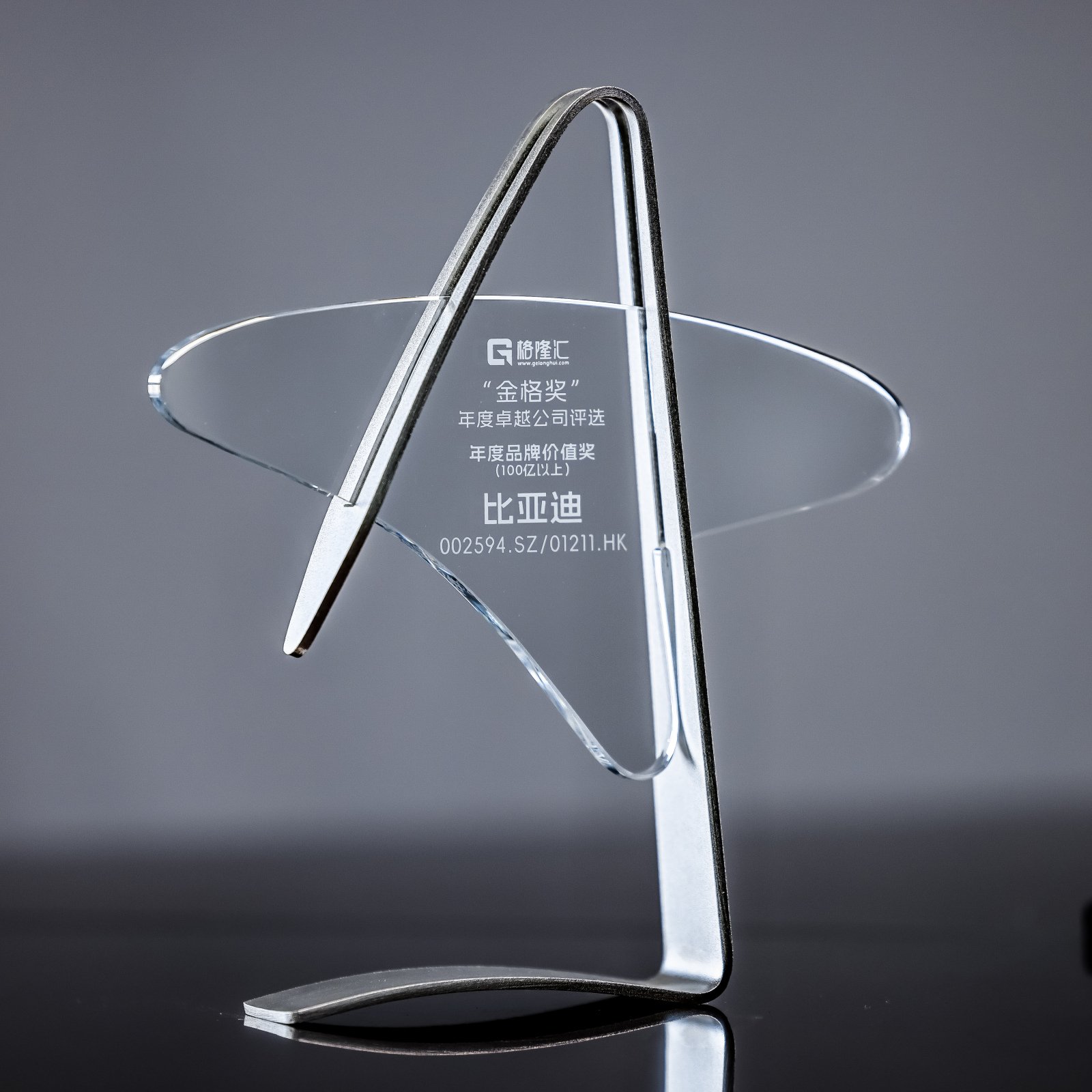
格隆汇12月24日|格隆汇12月22日线上举办"科技赋能·资本破局"分享会。备受瞩目的卓越公司评选榜单隆重揭晓。其中,格隆汇"金格奖"年度卓越公司评 选中,比亚迪(002594.SZ/1211.HK)荣获"年度品牌价值奖"奖项。 "年度品牌价值奖"旨在表彰资本市场中拥有最高品牌价值的企业。品牌作为企业生存和发展的核心,做好一个品牌,对于每个企业来说都是重中之重。本奖 项从品牌差异化、知名度、客户忠诚度等多角度衡量品牌价值,甄选出的企业都创造了卓越品牌,并在品牌价值提升的过程中做出创新和不凡实践。 N F ...
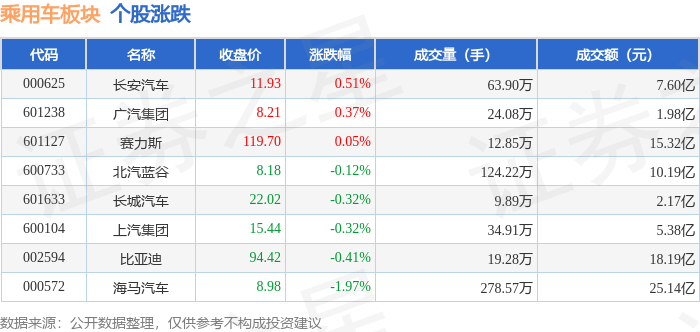
乘用车板块12月24日跌0.18%,海马汽车领跌,主力资金净流出7.87亿元
Zheng Xing Xing Ye Ri Bao· 2025-12-24 09:03
Core Viewpoint - The passenger car sector experienced a slight decline of 0.18% on December 24, with Haima Automobile leading the drop, while the overall stock market indices showed positive movements, with the Shanghai Composite Index rising by 0.53% and the Shenzhen Component Index increasing by 0.88% [1] Group 1: Market Performance - The Shanghai Composite Index closed at 3940.95, up 0.53% [1] - The Shenzhen Component Index closed at 13486.42, up 0.88% [1] - The passenger car sector saw a net outflow of 7.87 billion yuan from main funds, while retail investors contributed a net inflow of 6.13 billion yuan [1] Group 2: Individual Stock Performance - Changan Automobile (000625) closed at 11.93, with a slight increase of 0.51% and a trading volume of 639,000 shares, amounting to 760 million yuan [1] - GAC Group (601238) closed at 8.21, up 0.37%, with a trading volume of 240,800 shares, totaling 198 million yuan [1] - BYD (002594) closed at 94.42, down 0.41%, with a trading volume of 192,800 shares, amounting to 1.819 billion yuan [1] - Haima Automobile (000572) led the decline with a drop of 1.97%, closing at 8.98, with a trading volume of 2.7857 million shares, totaling 2.514 billion yuan [1] Group 3: Fund Flow Analysis - GAC Group saw a main fund net outflow of 2.9128 million yuan, with retail investors contributing a net inflow of 996.65 million yuan [2] - Great Wall Motors (601633) experienced a main fund net outflow of 14.755 million yuan, while retail investors had a net inflow of 1.91547 million yuan [2] - BYD faced a significant main fund net outflow of 199 million yuan, but retail investors contributed a net inflow of 82.7275 million yuan [2]





王传福背后的男人:投资250万狂赚1000亿,锂矿帝国大掌门
Tai Mei Ti A P P· 2025-12-24 08:28
Group 1 - The lithium carbonate market has experienced a significant surge, with prices reaching 111,400 yuan per ton, marking a 14% increase in a single week and the highest level in 18 months [1][2] - The recent price increase is attributed to the delayed resumption of lithium mining in Jiangxi, which has led to heightened market activity [1] - Rongjie Co., Ltd. (002192.SZ), under the leadership of entrepreneur Lv Xiangyang, is positioned to benefit from this price surge due to its ownership of the largest spodumene mine in Asia [4][5] Group 2 - Rongjie Co., Ltd. reported a revenue of 510 million yuan for the first three quarters of 2025, a 26% year-on-year increase, but a 21% decline in net profit attributable to shareholders [6] - However, the third quarter alone showed a remarkable recovery with a revenue of 210 million yuan, a 35% increase year-on-year, and a net profit of 58.58 million yuan, a staggering 249% increase [7] - The company is expanding its operations by increasing mining capacity and investing in lithium-ion battery material production, aiming to create a complete industry chain from mining to battery production [7][8] Group 3 - Lv Xiangyang has built a vast business empire, controlling or holding stakes in 236 companies with a total market value exceeding 900 billion yuan as of 2022 [10] - His investments span the lithium battery supply chain, including companies like Rongda Lithium Industry and Dongguan Derui, which have been crucial in supporting Rongjie Co., Ltd. during challenging times [10][11] - Lv's investment strategy involves leveraging real estate profits to fund industrial ventures and financial investments, showcasing a diversified approach to wealth accumulation [12] Group 4 - The investment in BYD by Lv Xiangyang in 1995, amounting to 2.5 million yuan, has yielded returns exceeding 100 billion yuan, demonstrating a remarkable investment acumen [13][14] - This investment is highlighted as a significant success story in Chinese business history, showcasing the importance of recognizing potential in emerging industries [13][15] - The narrative emphasizes the value of investing in people and relationships, as the initial investment not only provided financial returns but also fostered a long-term partnership between Lv and his cousin Wang Chuanfu [16]


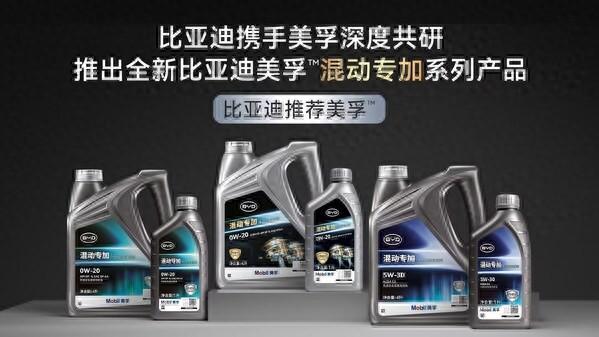
为混动而生,全新比亚迪美孚™混动专加产品系列全球首发
Huan Qiu Wang· 2025-12-24 07:37
Core Viewpoint - The collaboration between Mobil and BYD aims to address the unique lubrication needs of plug-in hybrid electric vehicles (PHEVs) through the launch of the BYD Mobil™ Hybrid Special Additive product series, enhancing performance and fuel efficiency in dynamic driving conditions [1][3][7] Group 1: Product Launch and Features - Mobil and BYD have jointly developed the BYD Mobil™ Hybrid Special Additive product series specifically for PHEV engines, which require customized high-performance lubricants due to their unique operating conditions [3][5] - The BYD Mobil™ Hybrid Special Additive 0W-20 oil, a flagship product, boasts over 50% better wear protection compared to industry standards, significantly reducing engine wear caused by frequent start-stop operations [5][7] - This product also features superior moisture handling capabilities, with emulsification stability exceeding industry standards by 2.5 times, addressing issues related to low-temperature short trips common in PHEV operations [5][7] Group 2: Market Context and Future Collaboration - PHEVs are recognized as a crucial technology route in the new energy vehicle market, with a substantial user base in China due to their balance of range and energy consumption [3] - The partnership between Mobil and BYD represents a strong collaboration in technology and market innovation, aiming to create a more efficient and reliable future for the transportation ecosystem [7]