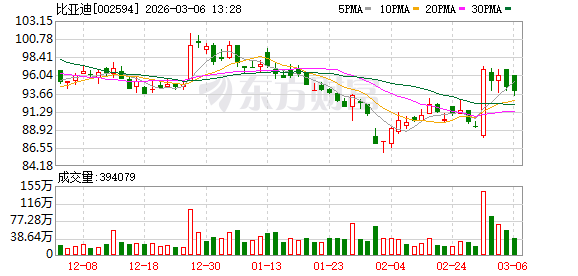
BYD(002594)

Search documents
五分钟充“好”九分钟充“饱”,比亚迪发布第二代刀片电池及闪充技术
Chang Sha Wan Bao· 2026-03-06 07:16
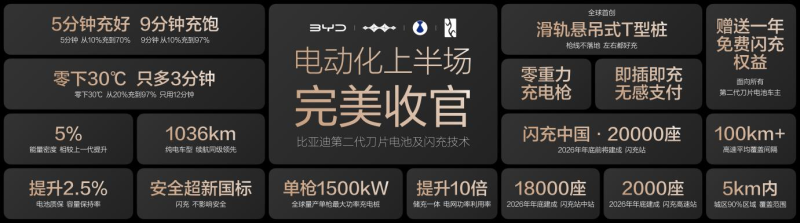
Core Viewpoint - BYD has officially launched its second-generation blade battery and flash charging technology, achieving the fastest charging speed in the world, which addresses the common issues of slow charging and low-temperature charging difficulties in electric vehicles [1][3]. Group 1: Flash Charging Technology - The new technology allows charging from 10% to 70% in just 5 minutes and from 10% to 97% in 9 minutes, even at -30 degrees Celsius, with only a 3-minute increase compared to normal temperatures [1][3]. - The second-generation blade battery has improved energy density by over 5% compared to the first generation, while also enabling fast charging [3]. - The battery features a "lithium-ion high-speed channel" and an "all-temperature intelligent thermal management system," which minimizes heat generation and ensures efficient heat dissipation, thus preserving battery life during fast charging [3][4]. Group 2: Safety and Warranty - The second-generation blade battery has undergone rigorous safety testing that exceeds new national standards, ensuring user safety throughout the battery's lifecycle [4]. - The warranty for the second-generation blade battery has been enhanced, with a 2.5% increase in "capacity retention rate," and the battery cells continue to have a "lifetime warranty" [3]. Group 3: Flash Charging Infrastructure - BYD has initiated the "Flash Charging China" strategy, aiming to build 20,000 flash charging stations nationwide by the end of the year, with 18,000 stations expected to be completed in collaboration with charging network operators [6]. - The coverage plan includes ensuring that users in first and second-tier cities have access to a flash charging station within 3 kilometers, while third and fourth-tier cities will have stations within 5 kilometers [6]. - BYD's "Flash Charging Highway Stations" will cover nearly one-third of highway service areas, with 2,000 stations expected to be completed by the end of the year, providing charging stations approximately every 100 kilometers [6].


BYD 1000km神續航5分鐘充飽 #BYDBlade電池 #電動車快充 #TeslaVSBYD #EV續航
大鱼聊电动· 2026-03-06 07:12
BYD這次真的 放大招了! 第二代Blade 電池剛發布 Yangwang U7 直接衝到CLTC 1006公里續航 換成美國 EPA大概 450英里左右 已經快追上 油車一箱油 的距離了! 更恐怖的是充電 10%到70% 只要5分鐘! 最高 1500kW快充 -20°C低溫也照衝 幾乎跟加油 一樣方便 BYD還說 2026年底要蓋 2萬個 Flash充電站 這是要把 Tesla超充甩在 後頭的節奏啊? 但真的 能實現嗎? BYD過去 建站常常跳票 這次會不會 又畫大餅?. ...
比亚迪第二代刀片电池发布,充电9分钟可达97%,电池ETF易方达(159175)配置逻辑强化
Mei Ri Jing Ji Xin Wen· 2026-03-06 07:03
Core Viewpoint - BYD has officially launched its second-generation blade battery and fast-charging technology, setting a new record for the fastest charging speed in mass production globally [1] Group 1: Battery Technology Advancements - The new battery can charge from 10% to 97% in just 9 minutes, and in a -20°C environment, it can charge from 20% to 97% in under 12 minutes [1] - The energy density of the new battery has improved by over 5% compared to the first generation [1] - The Tengshi Z9GT, equipped with this battery, boasts a range of 1,036 kilometers [1] Group 2: Industry Implications - The breakthrough in battery technology is expected to inject new momentum into the electric vehicle sector, alleviating charging anxiety and low-temperature range issues [1] - The battery industry chain has entered a peak season post-Chinese New Year, driven by sustained high demand in the energy storage sector [1] Group 3: Investment Opportunities - The CSI Battery Theme Index covers the entire battery industry chain, with key stocks including CATL, Sanhua Intelligent Control, and Sungrow Power Supply, which are likely to benefit from dual drivers of industry upgrades and demand expansion [1] - The E Fund Battery ETF (159175) closely tracks the CSI Battery Theme Index, providing investors with a convenient tool to invest in the battery industry chain [1]
汽车股今日普涨 吉利汽车涨超5% 零跑汽车涨超4%
Zhi Tong Cai Jing· 2026-03-06 06:54
Group 1 - The automotive stocks experienced a general increase, with notable gains from Geely Automobile (+5.61%), Leap Motor (+4.63%), Xpeng Motors (+3.93%), and Great Wall Motors (+2.96%) [1] - The government work report for this year proposed measures such as promoting the replacement of old consumer goods, advancing the commercialization of artificial intelligence, and addressing "involution" competition [1] - Shanxi Securities indicated that under the guidance of "anti-involution" policies, the automotive industry is expected to accelerate towards high-quality development characterized by technology and innovation by 2026, replacing previous price competition [1] Group 2 - The new generation blade battery from BYD was highlighted during its launch event on March 5, showcasing upgrades in charging speed, energy density, safety, and lifespan, with claims of charging in "5 minutes for good, 9 minutes for full, and only 3 additional minutes at -30°C" [1] - Shenwan Hongyuan noted that the release of new technologies by Xpeng and BYD marks a period of intensive investment catalysts [1] - Everbright Securities mentioned that from March to April, multiple major new vehicles from various automakers are set to be launched, with a short-term focus on the impact of rising costs on financial performance [1]



研报掘金丨中金:比亚迪第二代刀片电池暨闪充技术发布,补能速度比肩燃油车
Ge Long Hui A P P· 2026-03-06 06:53
Core Viewpoint - BYD has launched its second-generation blade battery and fast-charging technology, achieving charging times of "5 minutes for a quick charge and 9 minutes for a full charge," which approaches the refueling efficiency of traditional fuel vehicles [1] Group 1: Technology and Innovation - The new fast-charging technology addresses the charging pain points of pure electric vehicles, with performance in low-temperature scenarios comparable to traditional vehicles [1] - The company plans to establish 18,000 "fast-charging stations" and 2,000 fast-charging highway stations by the end of 2026 to enhance coverage [1] - The fast-charging stations will feature a single charging power of up to 1500 kW and introduce a sliding rail suspension T-type pile to solve issues related to entanglement, dirt, and weight [1] Group 2: Market Strategy - The new technology will first be equipped in 10 vehicle models, covering multiple price ranges across five major brands [1] - The company believes that the new models will offer competitive pricing compared to older models or similar vehicles while improving range [1] - The company maintains an "outperform the industry" rating with target prices of 120 RMB for A-shares and 130 HKD for H-shares [1]
比亚迪发布第二代刀片电池及闪充技术 单枪功率达1500kW
Xin Lang Cai Jing· 2026-03-06 06:51
Core Viewpoint - BYD has launched its second-generation blade battery and fast charging technology, introducing the "Fast Charging China" strategy, which aims to build 20,000 fast charging stations nationwide by the end of the year, marking a significant advancement in electric vehicle charging convenience [1][10]. Group 1: Product Launch and Features - The second-generation blade battery offers improved fast charging capabilities, allowing for a full charge in 5 minutes at normal temperatures and only 3 additional minutes at -30 degrees Celsius [5]. - The energy density of the second-generation blade battery has increased by over 5% compared to the first generation, while also ensuring that fast charging does not negatively impact battery lifespan [5]. - The new battery comes with a warranty policy that enhances the capacity retention rate by 2.5%, maintaining a lifetime warranty on the battery cells [5]. Group 2: Charging Infrastructure - BYD plans to construct 20,000 fast charging stations across China, with 18,000 of these stations expected to be completed by the end of the year, ensuring coverage within 3 to 6 kilometers in urban areas [10][12]. - The fast charging stations will also be strategically placed along highways, with 2,000 stations planned to be built, ensuring that there is a station approximately every 100 kilometers [12]. - The new fast charging piles will have a charging power of 1500 kW, designed to overcome grid capacity limitations and provide a user-friendly charging solution [8]. Group 3: User Benefits and Experience - All owners of vehicles equipped with the second-generation blade battery will receive one year of free fast charging at the new stations, enhancing the user experience [3]. - The fast charging stations will feature a user-friendly design, allowing for easy access and "no-sense payment" through the BYD fast charging app [8]. - BYD has initiated a "Dream Station Building" plan, allowing users to propose new charging stations based on demand, ensuring that infrastructure meets user needs [12]. Group 4: Future Plans - BYD aims to expand its fast charging network internationally, with plans to establish fast charging stations overseas by the end of 2026, contributing to global electric vehicle development [13]. - The company continues to innovate in electric vehicle technology, showcasing new models equipped with the second-generation blade battery and fast charging capabilities, including the Tengshi Z9GT and other models [15][16].
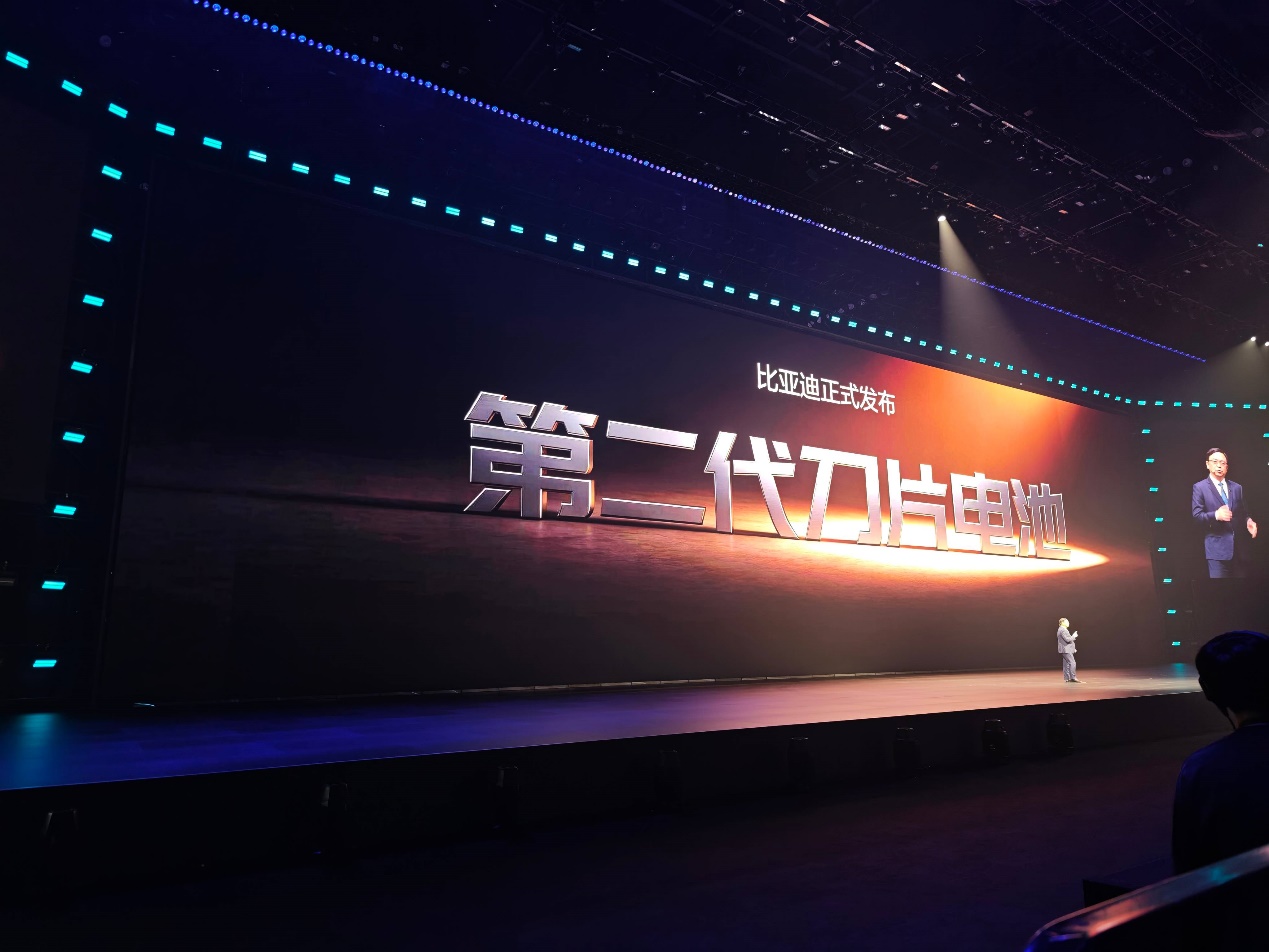
比亚迪发布第二代刀片电池及闪充技术:9分钟充至97% 破解充电速度瓶颈
Zhong Guo Xin Wen Wang· 2026-03-06 06:23
Core Viewpoint - BYD has officially launched its second-generation blade battery and flash charging technology, achieving record-breaking charging speeds and addressing key issues in electric vehicle charging, such as slow charging and difficulties in low-temperature conditions [1][2][3] Group 1: Flash Charging Technology - The second-generation blade battery allows charging from 10% to 70% in just 5 minutes and from 10% to 97% in 9 minutes, even at temperatures as low as -30 degrees Celsius, with only a 3-minute increase in charging time compared to normal conditions [1][3] - BYD's flash charging technology is designed to provide a user-friendly experience, with the introduction of a new charging pile that has a maximum power output of 1500 kW, making it the world's most powerful mass-produced charging pile [4][5] Group 2: Flash Charging Strategy - BYD has initiated the "Flash Charging China" strategy, aiming to build 20,000 flash charging stations across the country by the end of the year, ensuring that users have convenient access to charging services [1][6] - The strategy includes collaboration with national charging network operators to accelerate the construction of charging stations, ensuring coverage within 3 to 6 kilometers in urban areas [6] Group 3: User Benefits and Safety - All owners of vehicles equipped with the second-generation blade battery will enjoy one year of free flash charging at the new stations, enhancing the user experience [1][6] - The second-generation blade battery features improved safety measures, surpassing new national standards, and offers a capacity retention warranty increase of 2.5%, ensuring long-term reliability for users [3][4] Group 4: Global Vision - BYD aims to expand its flash charging stations internationally by the end of 2026, contributing to the global electric vehicle market and promoting a greener planet [7]
比亚迪宣布建设2万座闪充站,首批1000座计划五一前投用
鑫椤储能· 2026-03-06 06:21
Core Viewpoint - BYD officially launched the "Flash Charge China" strategy on March 5, aiming to establish 20,000 flash charging stations by the end of 2026, covering 90% of urban areas and every 100 kilometers on highways to alleviate charging anxiety for electric vehicle owners [1][5]. Group 1 - The first batch of 1,000 high-speed flash charging stations is planned to be operational before the May Day holiday, utilizing megawatt flash charging technology that allows for a full charge in 5 minutes and a near-full charge in 9 minutes, with only a 3-minute increase in extreme cold conditions [1][5]. - BYD's Chairman Wang Chuanfu announced that the second-generation blade battery technology will be featured in 10 models, including those from the Dynasty, Ocean, Tengshi, and Yangwang series [3]. - The extreme charging speed of the second-generation blade battery allows charging from 10% to 70% in just 5 minutes and from 10% to 97% in 9 minutes, effectively making electric vehicle charging as fast as refueling a traditional vehicle [5]. Group 2 - Following the announcement of the technology release, BYD's A-share stock price experienced an increase, indicating positive market sentiment towards the company's advancements [7].
比亚迪发布闪充中国战略 预计2026年底建成2万座
2 1 Shi Ji Jing Ji Bao Dao· 2026-03-06 05:56
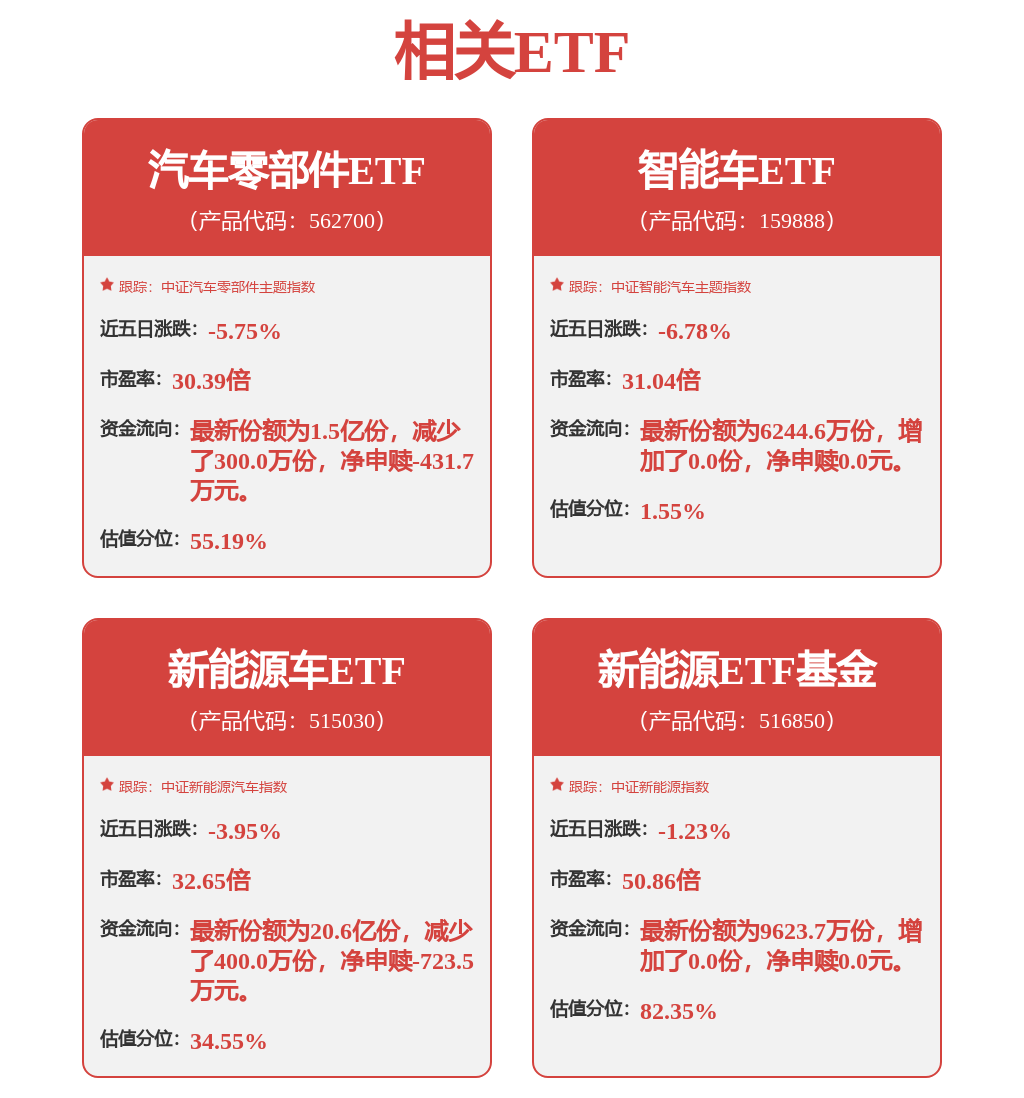
Group 1 - BYD Chairman Wang Chuanfu announced plans to build 20,000 fast charging stations across the country by the end of 2026, including 2,000 high-speed stations that will be open for public use [1] - As of March 5, BYD has already constructed 4,239 fast charging stations [1] Group 2 - Relevant ETFs include those tracking automotive parts, smart vehicles, new energy vehicles, and new energy indices, with varying performance metrics [2][3][4] - The automotive parts ETF has seen a recent decline of 5.75% and a PE ratio of 30.39, with a net redemption of 431.7 million yuan [4] - The smart vehicle ETF has decreased by 6.78% with a PE ratio of 31.04, showing no change in shares [4] - The new energy vehicle ETF has dropped by 3.95% with a PE ratio of 32.65, and a net redemption of 723.5 million yuan [4] - The new energy ETF has seen a slight decline of 1.23% with a high PE ratio of 50.86, with no change in shares [4]
比亚迪发布闪充中国战略,预计2026年底建成2万座
2 1 Shi Ji Jing Ji Bao Dao· 2026-03-06 05:28
Core Viewpoint - BYD plans to establish 20,000 fast charging stations across the country by the end of 2026, with 2,000 of these being high-speed stations open for public use [2] Group 1 - BYD Chairman Wang Chuanfu announced the ambitious plan during the launch of the second-generation blade battery and fast charging technology [2] - As of March 5, BYD has already built 4,239 fast charging stations [2] - The company aims to have a fast charging station every 100 kilometers on national highways [2]