Guosen Securities(002736)

Search documents
证券行业2026年年度策略报告:提质增效,格局优化-20251216
Ping An Securities· 2025-12-16 10:30
Core Viewpoints - The report emphasizes the importance of improving efficiency and optimizing the industry structure in the securities sector, projecting a strong performance relative to the market for 2026 [1] Market Review - The securities sector has demonstrated a prominent Beta attribute, with significant attention on the shift in funding styles. Historical analysis indicates that periods of excess returns for brokerages typically require a confluence of policy, liquidity, and market conditions [4][9] - From January to November 2025, the securities index underperformed the CSI 300 index by 12.9 percentage points, attributed to factors such as technology style preferences and the diversion of funds towards low-valuation H-shares [4][43] - Despite this, the brokerage sector achieved a notable excess return from April to August 2025, particularly H-share brokerages, which saw a cumulative increase of 43.9% for the year, outperforming the CSI 300 index by 25.4 percentage points [4][43] Fundamental Outlook - The equity market is experiencing high prosperity, with a strong certainty of profit growth. In the first three quarters of 2025, listed brokerages reported a year-on-year net profit growth of 63.4% and a revenue increase of 13.0% [4][20] - The revenue structure for the first three quarters of 2025 shows significant growth in brokerage, investment banking, and proprietary trading, with net income growth rates of 68%, 16%, and 42% respectively [4][20] - The wealth management sector is positioned to capitalize on internationalization trends, with Hong Kong emerging as a preferred fundraising destination for Chinese enterprises, leading to a 146% increase in IPO fundraising compared to the entire year of 2024 [4][20] Investment Recommendations - The report suggests that as capital market reforms deepen, the securities industry is expected to maintain steady growth in 2026, benefiting particularly head brokerages through mergers and acquisitions [4][20] - Recommended stocks include CITIC Securities and CICC, which are expected to benefit from their strong comprehensive service capabilities and balanced business structures [4][20] - Other notable mentions include Guosen Securities, Industrial Securities, and Dongfang Securities, which are anticipated to perform well due to their advantages in financial products and services [4][20] Valuation Insights - The current price-to-book (P/B) ratio for the securities industry stands at 1.35x, which is below the historical average of 1.71x, indicating potential for valuation recovery [4][50] - The report highlights that the industry P/B valuation is at the 27.7% historical percentile, suggesting that there is room for improvement in valuations relative to historical performance [4][50]




常友科技:接受国信证券等投资者调研
Mei Ri Jing Ji Xin Wen· 2025-12-16 09:46
Group 1 - The core viewpoint of the article is that Changyou Technology (SZ 301557) has a significant revenue concentration in the wind power industry, accounting for 97.12% of its total revenue for the year 2024 [1] - As of the latest update, Changyou Technology has a market capitalization of 6.7 billion yuan [2] - The company is actively engaging with investors, as evidenced by a recent investor meeting held on December 16, 2025, where the chairman Liu Wenye addressed questions from participants [1]
国信证券:预计2026年L4迎元年时刻 自主Robo-X厂商有望崛起
Zhi Tong Cai Jing· 2025-12-16 07:36
Core Insights - The report from Guosen Securities indicates that the L4 autonomous driving market is expected to reach a significant milestone in 2026, driven by policy support, technological advancements, and decreasing costs of related components [1][2]. Market Space - By 2030, the global L4 market is projected to exceed one trillion, with the domestic ride-hailing and taxi market estimated at 236 billion annually. By 2025, Robotaxi is expected to account for 0.6% of the shared mobility sector [1][2]. - The potential market for Robovan in China is estimated at 164.5 billion, with a 2% share in logistics delivery vehicles by 2025. The Robotruck market is projected to reach 1.5 billion in 2024 and 90 billion by 2030, assuming sales of 0.1 and 6 million units respectively [2]. - The annual market for Robobus in China is estimated between 15 to 35 billion, with a share of less than 2% in public transport. The Robosweeper market is projected to be between 11.3 to 22.5 billion, with a 4.7% share in sanitation vehicles by 2025 [2]. Competitive Landscape - In the Robotaxi sector, companies like WeRide, Pony.ai, and Loongson are accelerating commercialization. For Robovan, key players include Jiusi Intelligent, New Stone Technology, and others. The Robotruck segment features companies like Xidi Zhijia and Yikong Zhijia, while Robobus includes WeRide and Qingsong Intelligent. Robosweeper is represented by companies like Xiantu Intelligent and DeepBlue Technology [3]. Recommended Companies - For Robo-X vehicle sales and operations, recommended companies include Pony.ai (02026), WeRide (00800), and XPeng Motors (09868), with a suggestion to pay attention to Youjia Innovation (02431) [4]. - In the components sector, recommendations based on data flow include Hesai Technology (02525) and Sutech (02498), with attention to Tudatong (02665). For data transmission, Hu Guang Co. (605333) is recommended, while data processing recommendations include Kobot (603786), Huayang Group (002906), and others. For data application, recommended companies include Baolong Technology (603197) and Bertley (603596) [4].
国信证券:把握游戏龙头底部机会 布局AI应用新周期
Zhi Tong Cai Jing· 2025-12-16 02:34
Group 1 - The core viewpoint emphasizes the focus on the media industry's trend towards prosperity, driven by a strong new product cycle and AI applications [1] - The gaming sector is expected to see performance and valuation upgrades due to a robust new product cycle, with a total of 178 domestic games and 6 imported games approved in November, marking a three-year high [2] - The advertising spending is anticipated to grow as the economy recovers, benefiting the media sector [1] Group 2 - The gaming market revenue in October reached 31.4 billion yuan, a year-on-year increase of 7.8%, primarily driven by strong product cycles from leading companies [2] - The variety show market is performing well, with Tencent's "Now Just Depart Season 3" achieving a market share of 24.96% [2] - The short drama and comic drama segments are gaining popularity, with notable titles leading in viewership [2] Group 3 - AI applications are advancing rapidly, with significant breakthroughs in AI video models, including the public release of the O1 video model capable of generating 3-10 second videos [3] - The release of PixVerse V5.5 marks a milestone as the first domestic AI video model supporting multi-camera and audio-visual synchronization [3] - The rapid development of AI technologies is expected to create new opportunities across various sectors, including advertising and gaming [1][3]
国信证券荀玉根:投资增速回正靠AI和股市
Xin Lang Cai Jing· 2025-12-15 14:35
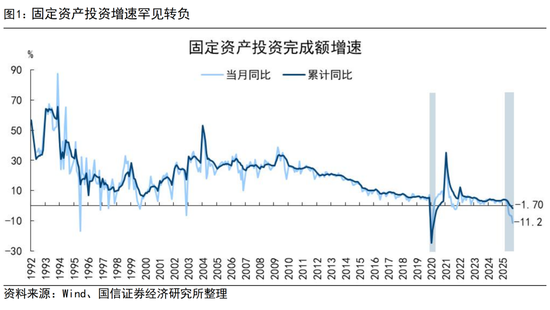
Core Conclusion - Fixed asset investment growth in China may experience its first annual negative growth since data collection began, with declines in real estate, infrastructure, and manufacturing investments [1][2][36] - To reverse the negative investment growth, reliance on the AI+ sector is essential, and the capital market must play a larger role [1][2][22] - Recommendations include accelerating the pace of technology IPOs, actively attracting long-term capital from the stock market, and increasing support for diversified financing tools like science and technology bonds [1][2][28][30][31] Investment Trends - Investment growth has been a key driver of China's economic growth, historically outpacing overall GDP growth [1][36] - The current situation marks a rare instance of negative investment growth, with a projected annual decline of -1.0% [2][36] - The decline is primarily driven by three major sectors: manufacturing, real estate, and infrastructure, which together account for over 70% of total investment [2][36] Real Estate Sector - The real estate sector has seen a significant slowdown, with cumulative investment down by -14.7% year-on-year in the first ten months of the year, and monthly growth dropping to -23.1% [6][39] - Demand-side factors include a demographic shift leading to a decrease of approximately 4.5 million eligible homebuyers compared to peak levels, and suppressed purchasing intentions due to falling housing prices [6][39] - Supply-side issues include ongoing debt risks for property companies, with approximately 524.4 billion due this year, limiting their investment capacity [6][39] Infrastructure Sector - Infrastructure investment has weakened, with a year-on-year decline of -12.1% in October [8][41] - Contributing factors include reduced funding capabilities due to a cooling land finance system and a lack of project reserves during the transition between the 14th and 15th Five-Year Plans [8][41] - Local governments are prioritizing risk prevention and debt repayment over new projects, reflecting a cautious fiscal approach [8][41] Manufacturing Sector - Manufacturing investment has shown signs of fatigue, with a year-on-year decline of -6.7% in October [10][43] - Factors include declining corporate profitability, with the median return on invested capital (ROIC) for non-financial A-share companies dropping to 2.9% from 3.7% the previous year [10][43] - The "anti-involution" policy has led to reduced capacity expansion among enterprises, while some are shifting investments abroad due to "de-globalization" trends [10][43] Historical Investment Recovery Insights - Historical data shows that previous investment recoveries were driven by demand shifts, with notable low points in 2006, 2015, and 2020 [12][45] - The 2008 recovery was fueled by a government-led stimulus plan focusing on large-scale infrastructure projects [14][47] - The 2015 recovery involved supply-side structural reforms and targeted demand stimulation through housing policy adjustments [16][51] - The 2020 recovery was characterized by a focus on new economic drivers amid the pandemic, with significant investments in high-tech sectors [18][55] Future Investment Strategies - The current investment recovery requires a focus on the AI+ sector, which presents vast opportunities and aligns with national strategic goals [22][56] - The government’s role in the economy is evolving, transitioning from direct involvement to a more supportive role that encourages private investment [26][60] - Recommendations for enhancing investment include improving the IPO process for tech companies, increasing long-term capital from the stock market, and expanding the use of science and technology bonds [28][30][31]

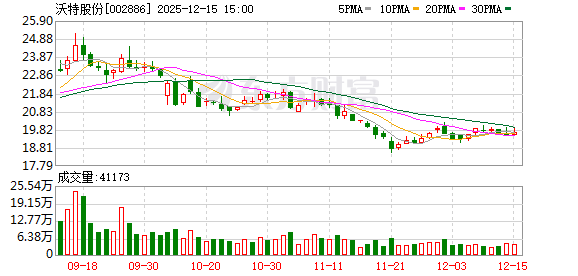
沃特股份:关于变更持续督导保荐代表人的公告

Zheng Quan Ri Bao· 2025-12-15 14:14
Core Viewpoint - The announcement from Shenzhen Water New Materials Co., Ltd. indicates a change in the designated sponsor representative from Guosen Securities for the company's ongoing supervision related to its 2022 private placement of shares [2] Group 1: Company Announcement - The company received a letter from Guosen Securities regarding the change in the representative responsible for continuous supervision [2] - The continuous supervision period for the private placement project is set to expire on December 31, 2024 [2] - Due to the unutilized funds from the fundraising, Guosen Securities will continue to fulfill its supervisory responsibilities [2] Group 2: Personnel Changes - The original representatives, Mr. Yao Zheng and Mr. He Yulong, were responsible for the sponsorship and supervision work [2] - Mr. He Yulong has changed jobs and will no longer serve as the sponsor representative [2] - Mr. Zou Jiuling has been appointed to replace Mr. He Yulong as the new sponsor representative [2]
连亏股晨曦航空收警示函 A股募5.2亿IPO国信证券保荐
Zhong Guo Jing Ji Wang· 2025-12-15 08:40
Core Viewpoint - The China Securities Regulatory Commission (CSRC) has imposed corrective measures on Xi'an Morning Star Aviation Technology Co., Ltd. due to issues related to revenue recognition and failure to account for credit impairment losses on receivables, leading to inaccurate financial disclosures [1][2]. Group 1: Regulatory Actions - The Shaanxi Securities Regulatory Bureau has ordered Xi'an Morning Star Aviation to correct its financial reporting and issued warning letters to Chairman Wu Xingyu and CFO Liu Rong for their primary responsibility in the violations [2][3]. - The Shenzhen Stock Exchange's ChiNext Management Department has also issued a regulatory letter to the company and its executives, citing violations of the listing rules [2][3]. Group 2: Financial Reporting Issues - The company acknowledged that its revenue recognition for certain clients in Q3 2024 was incorrect, resulting in a reduction of reported revenue by 28.92 million yuan and affecting various financial metrics [4]. - The adjustments led to a significant decline in reported revenue and net profit for the first three quarters of 2024, with revenue revised down to 42.45 million yuan, a year-on-year decrease of 56.26% [5][6]. Group 3: Financial Performance - For 2024, the company reported a net loss attributable to shareholders of 31.66 million yuan, compared to a profit of 5.75 million yuan in 2023 [6]. - The company has experienced a decline in revenue over the years, with 2023 revenue at 233 million yuan and 2024 at 141 million yuan, indicating ongoing financial challenges [6].

固收+系列报告之八:固收+再进化:+“基金”的可行性路径及实践指南
Guoxin Securities· 2025-12-15 05:29
1. Report Industry Investment Rating No relevant information provided. 2. Core Viewpoints - In the context of volatile equity markets, "Fixed Income +" products are favored by residents for wealth management in 2025. The new "Fixed Income +" products with "+ Fund" can diversify risks and balance risk - return more flexibly. The evolution of "Fixed Income +" is inevitable, and "+ Fund" practice is an imaginative part of this evolution [12] 3. Summary by Directory + Fund Policy and Regulation Highlights - Non - FOF funds investing in public funds must follow public fund holding rules, including specifying investment scope, asset ratio cap, and investment strategies in the fund contract. Existing regulations allow Fixed Income + funds to allocate securities investment funds, and valuation methods have been explored by FOF funds [13][15] Product Practice of Fixed Income + Funds Allocating Funds - Among "Fixed Income +" funds, partial - debt hybrid and second - tier bond funds are at the forefront of "+ Fund". Currently, 143 funds have public securities investment funds in their investment scope, all being these two types. The investment ratio limit for funds is ≤10%, and most products have specific constraints on investable targets [16][19] + Fund: Parallel Development of Active and Passive Funds - Generally, funds are divided into active and passive types. Passive funds are selected based on investment clock style, industry rotation, etc. Active funds are evaluated from quantitative (e.g., style stability, risk - return effectiveness) and qualitative (e.g., fund manager and management company) aspects [21] Broad - based and Industry ETFs are Highly Favored - As of Q3 2025, 47 out of 143 products with funds in the investment scope actually hold funds, with a total holding scale of 3.418 billion yuan. Red - chip funds are the most common choice among heavy - holding funds, and among broad - based indices, the Sci - tech Innovation and CSI 300 indices appear most frequently. Fixed Income + funds have a significantly higher proportion of ETF allocation compared to FOF funds [2][26][30] Performance Analysis of High - performing "Fixed Income +" Products with + Fund - Fund A has an asset value of 7.884 billion yuan, with a 2022 - 2025 net value return of 0%/ - 5%/7%/5% and a 2025 maximum drawdown of - 4%. It focuses on advantageous industries and has a concentrated quarterly position. Fund B has an asset value of 12.903 billion yuan, with a 2022 - 2025 net value return of 0%/1%/7%/6% and a 2025 maximum drawdown of - 2%. It has a balanced industry allocation and closely follows market hotspots [3][35][42] Feasibility Analysis of + Fund Advantages of Allocating Funds Instead of Individual Stocks/Bonds - Advantages include stronger availability of chips, wider access to assets, smoother transfer of top - down research ideas, more stable product net value fluctuations, and risk hedging with pure - debt positions [51] Disadvantages of Allocating Funds Instead of Individual Stocks/Bonds - The main disadvantage is limited offensive sharpness. When being optimistic about a market segment, there may not be a corresponding fund product [52] Discussion on the Choice between Active and Passive Funds - For industries with insignificant β but prominent α of some companies, subjective efforts are needed to select investment targets. Excellent subjective fund managers may outperform industry ETFs, and ETFs are better than non - professional investors directly investing in individual stocks. Fixed Income + funds can achieve a "pure - debt + thematic fund" product core through "+ Fund" investment [53]
国信证券:AI时代电力设备需求增长迅速 全球储能系统装机需求持续释放
智通财经网· 2025-12-15 03:09
Core Insights - The report from Guosen Securities highlights several key areas of investment opportunity in the energy sector, particularly focusing on the growth of global energy storage demand, the expansion of AIDC power equipment industry, advancements in green methanol, adjustments in the photovoltaic supply side, recovery in the power grid equipment sector, and the impact of rising lithium battery material prices on profitability, as well as the progress in solid-state battery industrialization [1]. Group 1: Power Equipment Demand - The demand for power equipment is expected to grow rapidly in the AI era, driven by companies like Google Cloud, OpenAI, and TikTok planning to build data centers, which accelerates the infrastructure for AI [2]. - The global data center construction is accelerating, leading to an explosive growth in power demand for equipment in the AI sector [2]. Group 2: Energy Storage Demand - Global energy storage demand is continuously increasing, with a projected 404 GWh of installed capacity by 2026, representing a 38% year-on-year growth [3]. - Factors driving this demand include power supply shortages due to data centers in the U.S., unstable power grids in Europe, and supportive government policies in emerging markets [3]. Group 3: Lithium Battery Industry - The lithium battery supply chain is expected to see a reversal of the downtrend in prices, with significant recovery in prices and profitability anticipated by 2026 [4]. - New technologies such as steel-shell batteries, silicon anodes, and large energy storage cells are expected to achieve mass supply by 2026, while solid-state battery technology is accelerating towards industrialization [4]. Group 4: Wind Power Sector - The domestic wind power sector is projected to maintain a 10%-20% growth in new installations by 2026, supported by saturated orders and stable pricing [5]. - The profitability of wind turbine manufacturers is improving, with exports contributing to performance growth, indicating a synchronized recovery in both domestic and international markets [5]. Group 5: Photovoltaic Industry - The photovoltaic sector is undergoing supply-side adjustments, with a focus on cost reduction through new technologies such as low-silver and silver-free pastes, which are nearing mass production by 2026 [6]. - Companies in the photovoltaic industry are increasingly expanding into the semiconductor field, indicating a strategic shift in their business models [6].
广东省上市公司ESG-V评级榜|上市公司观察
Sou Hu Cai Jing· 2025-12-15 02:17
Core Insights - The article discusses the ESG-V rating system applied to listed companies in Guangdong, emphasizing its role in assessing the sustainability and investment value of companies in China's economic hubs [1][2][3] Group 1: ESG-V Rating Framework - The ESG-V rating system integrates corporate value into traditional ESG assessments, focusing on objective, industry-specific, and verifiable metrics [1][2] - The evaluation covers four dimensions: Environment (E), Social (S), Governance (G), and Value (V), aiming to provide a comprehensive view of corporate sustainability and investment potential [1][3] Group 2: Environmental (E) Assessment - The environmental evaluation extends beyond pollution control to assess the overall environmental impact across the entire supply chain, including raw material sourcing and product lifecycle [1] - Companies are identified based on their ability to innovate with green technologies and collaborate within the industry to build long-term competitive advantages [1] Group 3: Social (S) Assessment - The social dimension focuses on the legality and authenticity of corporate operations, scrutinizing issues like financial fraud and information disclosure violations [1][2] - It emphasizes the fundamental legal responsibilities and social trust obligations that companies owe to investors, employees, and the public [1] Group 4: Governance (G) Assessment - Governance is defined as "corporate oversight," expanding the evaluation to include relationships with all stakeholders, particularly in tax compliance and debt obligations [2] - The framework incorporates the business environment into governance assessments, highlighting the importance of positive interactions with regulatory bodies [2] Group 5: Value (V) Assessment - The value dimension innovatively integrates corporate value into the ESG framework, utilizing the "Ji'an Pricing" model to assess long-term investment value and valuation rationality [2] - This allows investors to evaluate companies' sustainability capabilities alongside their potential for investment returns within a unified framework [2] Group 6: Guangdong Listed Companies Evaluation - A total of 790 companies were evaluated in Guangdong, with 8 achieving the highest rating of AAA, including notable firms like Haitai Flavor Industry and China Merchants Bank [3][5] - The rating system categorizes companies into ten levels from AAA to D, with 35 companies rated AA and 122 rated A, indicating a solid foundation for sustainable development and value management in Guangdong [3][5]