
LI AUTO(LI)

Search documents
理想社会价值之为全国12%高速提供优质充电体验
理想TOP2· 2025-10-16 12:02
Core Viewpoint - The main contradiction in China's high-speed charging issue is the growing demand for better charging experiences versus the current imbalance of high-quality charging resources in the country [1] Group 1: Charging Infrastructure - The overall high-quality charging resources in China need to increase to truly reduce the existing contradictions [1] - As of October 2025, the number of high-speed charging stations for the company is expected to reach 1,200, with over 3,300 supercharging stations and 18,000 charging piles nationwide [4] - The coverage of charging piles in highway service areas has reached 97%, with over 58,000 service areas equipped with charging stations [4] Group 2: Charging Demand and Usage - During the National Day holiday in 2025, the company's supercharging stations served 1 million times, with 410,000 times for its own vehicle owners and 590,000 times for non-owners, demonstrating a contribution to all vehicle owners [1] - From October 1 to 8, 2025, the total charging volume at the company's high-speed supercharging stations was 14.7 million kWh, accounting for approximately 12% of the national high-speed charging total [3] - The average daily charging volume during the National Day holiday increased by 23.61% compared to the May Day holiday and by 47.3% compared to the previous year's National Day holiday [4] Group 3: Charging Resource Quality - The current penetration of 250 kW+ fast charging resources is still insufficient [2] - The 120 kW fast charging resources in China are already at a high level compared to other countries, while 360 kW provides a significantly better charging experience [1]



理想哈萨克斯坦零售中心正式开业
理想TOP2· 2025-10-16 12:02
Core Insights - The opening of the first overseas authorized retail center of Li Auto in Tashkent, Uzbekistan, marks a significant step in the company's global expansion strategy, focusing on selling three range-extended electric vehicle models: Li L9, Li L7, and Li L6 [1][10] - Li Auto is adopting an authorized dealer model for overseas sales, differing from its direct sales approach in China, and plans to open additional retail centers in Kazakhstan [1][2] - The partnerships with leading local dealers in Uzbekistan and Kazakhstan are expected to enhance Li Auto's service network and provide high-quality products and services to global customers [2][7] Group 1 - The Tashkent retail center will offer official warranties, professional inspection and maintenance, efficient original parts delivery, technical support, and OTA upgrades for overseas customers [1] - Li Auto's international business head emphasized the strategic significance of entering the Central Asian market, highlighting the company's commitment to building lasting relationships with overseas customers [7] - The company aims to establish a comprehensive capability in "R&D, product, sales, and service" in overseas markets, with a focus on localizing products and technologies [10] Group 2 - The partnerships with Control Auto in Uzbekistan and Allur and Doscar in Kazakhstan leverage their established channel networks and local operational experience to strengthen Li Auto's presence in the luxury automotive sales and service sector [2] - Li Auto's global strategy includes expanding into the Middle East, Central Asia, and Europe, with a long-term commitment to building a robust overseas sales and service system [10] - The company has already set up R&D centers in Germany and the United States to support its global strategy and plans to launch new models that comply with overseas market regulations by 2026 [10]
蔚小理智驾部门“大换血”:技术路线转向世界模型,智能化下半场突围战承压
3 6 Ke· 2025-10-16 07:33
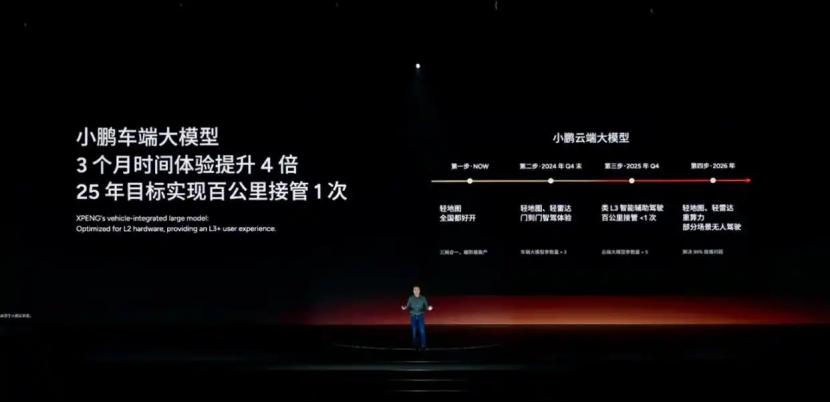
Core Insights - The competition logic in the Chinese automotive market is shifting as the penetration rate of electrification is expected to exceed 50% by 2025, with electrification determining the lower limit and intelligence determining the upper limit for automakers [1] - The three leading new forces, NIO, Xpeng, and Li Auto, are undergoing significant personnel changes in their autonomous driving departments, indicating a fundamental shift in their technical strategies in response to traditional automakers' acceleration [1][2] Group 1: Strategic Adjustments - Xpeng has seen notable personnel changes, including the departure of key figures and the hiring of new leaders from Alibaba and Cruise, reflecting a strong emphasis on transformation [2][4] - NIO is facing a complex situation with both structural reorganization and core talent loss, merging teams to form a larger model team aimed at integrating general AI technology [4][11] - Li Auto's adjustments are characterized by a reduction in team size and a shift from high-precision maps to a hybrid model combining VLA and world models, achieving over 90% success in specific scenarios [5][11] Group 2: Industry Trends - The collective adjustments of these companies point to a consensus that traditional modular autonomous driving solutions have reached a bottleneck, with world models being essential for achieving L3/L4 capabilities [7] - Traditional automakers and tech companies are intensifying competition, with several traditional brands rapidly advancing their autonomous driving technologies and gaining market recognition [8][10] - The financial burden of R&D in autonomous driving and AI is significant, with NIO projected to spend 13.04 billion yuan on R&D in 2024, while Xpeng faces delays in its self-developed chips [10][11] Group 3: Competitive Landscape - The competitive landscape is becoming increasingly crowded, with traditional automakers leveraging their scale and resources to catch up with new forces, while tech giants like Huawei are establishing technological barriers [8][10] - NIO, Xpeng, and Li Auto are adopting differentiated strategies to maintain their first-mover advantages, with Xpeng focusing on cloud-based models and NIO pursuing a dual approach of self-development and partnerships [11] - The race for intelligent driving is intensifying, with the ability to convert technological advancements into user experience and profitability becoming crucial for success in the market [11]


新势力不再只是 “蔚小理”,“BIG 6+1” 挑战比亚迪
自动驾驶之心· 2025-10-16 04:00
Core Viewpoint - The article discusses the evolution of the new energy vehicle market in China, highlighting the shift from the "Wei Xiaoli" (NIO, Xpeng, Li Auto) representation of new car manufacturers to a broader classification of seven key players, termed "BIG 6+1," which includes Tesla, Leap Motor, AITO, Xiaomi, Xpeng, Li Auto, and NIO. This shift reflects the changing market dynamics as new entrants gain significant market share and challenge established brands like BYD [1][15]. Group 1: Market Dynamics - By 2025, the penetration rate of new energy vehicles in China is expected to exceed 50%, leading to the market's accelerated elimination of some new car manufacturers [1]. - In August 2025, the total insurance volume of seven new energy vehicle manufacturers approached or briefly surpassed that of BYD, the market leader [1][13]. - The "BIG 6+1" collectively accounted for approximately 30% of the entire market, with a significant share in the new energy segment [15]. Group 2: Classification of New Energy Manufacturers - A clear distinction is made between manufacturers with fuel vehicle production qualifications and those without, with only seven companies in the top 40 insurance volume rankings lacking such qualifications [2]. - The seven new energy vehicle manufacturers identified are Tesla, Leap Motor, AITO, Xiaomi, Xpeng, Li Auto, and NIO, with their respective market shares in August 2025 being 2.81%, 2.52%, 2.19%, 1.79%, 1.71%, 1.53%, and 1.40% [4][14]. Group 3: Sales and Market Share - The sales rankings for August 2025 show BYD leading with 284,005 units sold, followed by other brands, with the "BIG 6+1" collectively nearing BYD's sales figures [3][14]. - The average selling prices of the "BIG 6+1" brands vary, with Tesla at 29.67 million yuan, Li Auto at 34.90 million yuan, and Leap Motor at 12.98 million yuan, indicating a diverse pricing strategy among these manufacturers [9][11]. Group 4: Product Strategy and Offerings - The "BIG 6+1" brands have a varied product lineup, with most brands offering around seven models, while Xiaomi has the least with three models [5]. - The product pricing strategy shows a concentration in the 20,000 to 40,000 yuan range, with the cheapest model from Leap Motor priced at around 50,000 yuan [7][12]. Group 5: Future Outlook - The article suggests that as the "BIG 6+1" brands stabilize their sales figures, they will likely lead the new energy vehicle market, marking a new phase in the industry's development [15]. - Upcoming product launches from these brands, such as the AITO M7 and NIO ES8, are expected to further enhance their market positions and sales potential [15].



千觉机器人获上海具身智能基金、理想汽车等亿元投资 年内已完成三轮融资
Zheng Quan Ri Bao Wang· 2025-10-16 03:50
Core Insights - Xense Robotics, a leading player in the embodied intelligence sector, has secured a new round of financing worth hundreds of millions, marking its third round of funding this year [1] - The funding round was led by Foton Capital, with participation from notable industry players such as Li Auto and Binfu Capital, indicating strong market confidence in the company's future [1][2] - Founded in May 2024, Xense Robotics focuses on multi-modal tactile perception technology, aiming to enhance robotic dexterity and interaction with the real world [2] Company Overview - Xense Robotics specializes in multi-modal tactile perception technology and is dedicated to enabling intelligent agents to understand the real world through innovative tactile solutions [2] - The company has successfully validated its products in various applications, including industrial precision assembly and flexible logistics, and has established partnerships with major clients like Li Auto and Google DeepMind [2] Investment Sentiment - The positive outlook from numerous renowned institutions is attributed to three main factors: the broad application prospects of tactile technology, Xense Robotics' global breakthroughs in tactile perception, and its comprehensive capabilities in providing integrated solutions [2][3] - Foton Capital emphasizes that physical intelligence is a frontier challenge in AI development, and Xense Robotics is uniquely positioned to offer solutions that surpass human tactile capabilities [3] Technological Advancements - Xense Robotics' tactile perception capabilities are crucial for the interaction between the model world and the physical world, which is a key technical hurdle for embodied intelligence applications [4] - The company has developed a series of tactile sensors that provide high-precision physical information, which can meet diverse customer needs in motion control and model training [4]

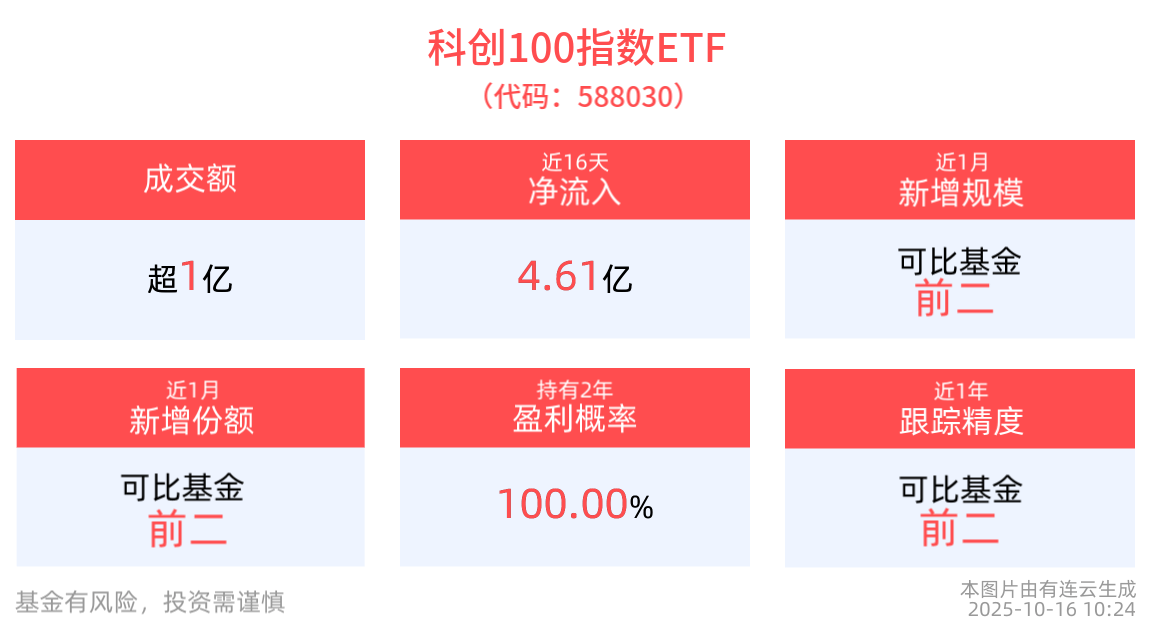
千觉机器人再获亿元PreA轮融资,科创100指数ETF(588030)近16日“吸金”合计4.61亿元,三生国健涨停
Sou Hu Cai Jing· 2025-10-16 02:57
Core Insights - The Shanghai Stock Exchange Sci-Tech Innovation Board 100 Index has shown a slight increase of 0.21%, with notable gains from companies such as Sangfor Technologies and Dige Medical [3] - The ETF tracking the Sci-Tech 100 Index has also risen by 0.22%, with a cumulative increase of 1.81% for the month as of October 15, 2025 [3] - The liquidity of the Sci-Tech 100 Index ETF is strong, with a turnover rate of 1.93% and a transaction volume of 1.26 billion yuan [3] - Recent partnerships in the AI sector, such as the collaboration between Yuke and Haiguang Information, highlight the growing demand for AI computing power [4] - OpenAI's significant cloud computing contract with Oracle, valued at 300 billion USD, indicates a surge in global AI computing needs [4] Market Performance - The Sci-Tech 100 Index ETF has experienced a scale increase of 4.64 million yuan over the past month, ranking second among comparable funds [4] - The ETF's share count has grown by 2.76 million shares in the same period, also placing it second among comparable funds [4] - Despite recent net outflows of 1.56 million yuan, the ETF has attracted a total of 4.61 billion yuan over the last 16 trading days [4] Index Composition - The Sci-Tech 100 Index is composed of 100 medium-sized, liquid stocks selected from the Sci-Tech Innovation Board, reflecting the overall performance of different market capitalizations [5] - As of September 30, 2025, the top ten weighted stocks in the index account for 24.32% of the total index, including companies like Hua Hong Semiconductor and BeiGene [5]



国家突然出手!过去5年最暴利的行业,彻底凉凉
Qian Zhan Wang· 2025-10-16 01:30
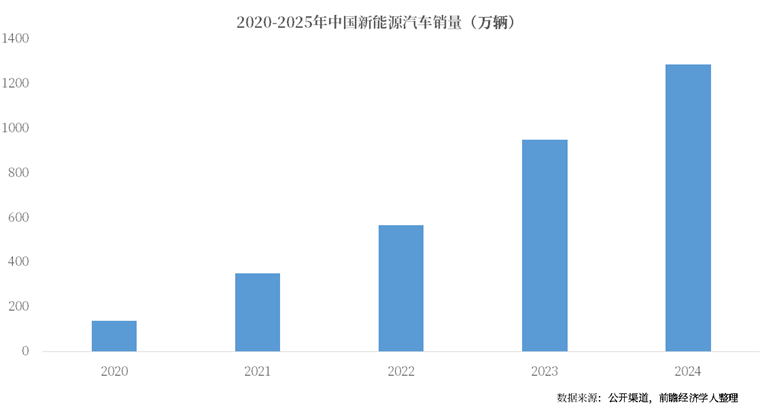
Core Viewpoint - The Chinese government has announced a new export license policy for pure electric passenger vehicles, effective January 1, 2026, to regulate the export of this growing sector and address issues related to gray market exports and intense domestic competition [1][8][17]. Group 1: Industry Growth and Achievements - The Chinese electric vehicle (EV) industry has seen remarkable growth, with production and sales expected to reach 12.8 million units in 2024, marking a significant increase from just over 1 million units in 2020 [2][4]. - The market penetration rate of EVs in China reached 44.3% in the first half of 2025, up from 5.4% in 2020, indicating a nearly eightfold increase [4]. - China has become a leading exporter of vehicles, with exports rising from 2.14 million in 2021 to 4.91 million in 2023, and projected to reach 5.86 million in 2024 [4][6]. Group 2: Export License Policy Rationale - The new export license policy aims to fill a legal gap in the regulation of pure electric vehicle exports, which previously did not require such licenses [6][7]. - The policy addresses the rise of gray market exports, where unauthorized dealers have been exporting vehicles without proper oversight, leading to market disorder and lack of after-sales support for consumers [8][9]. - The implementation of the export license is expected to reduce the prevalence of gray market activities and protect the interests of legitimate manufacturers [9][10]. Group 3: Industry Challenges and Internal Competition - The profitability of the Chinese automotive industry has declined significantly, with profits dropping from 215.1 billion in 2020 to an estimated 65.4 billion in 2024, indicating increasing internal competition [10][11]. - The average price of domestic EVs is projected to decrease by 10%-15% in 2024, with some models seeing price cuts exceeding 30% [11][12]. - The number of EV brands in China has surpassed 70, with over 3,000 models available, leading to intensified competition and market saturation [12][13]. Group 4: Future Directions and Strategic Recommendations - The export license policy is anticipated to accelerate industry consolidation, favoring leading companies with robust global service networks and technological capabilities [18]. - Key industrial regions are encouraged to shift from scale-driven growth to innovation-driven development, focusing on advanced technologies such as solid-state batteries and smart driving [19]. - Border regions are advised to transform from gray market hubs to legitimate trade and service centers, enhancing logistics and customs processes to support legitimate exports [20]. - Logistics hubs should evolve from simple transportation to providing comprehensive supply chain services, integrating advanced technologies for efficiency [21].
长假八天,智驾进入“大乱斗”
3 6 Ke· 2025-10-16 01:01
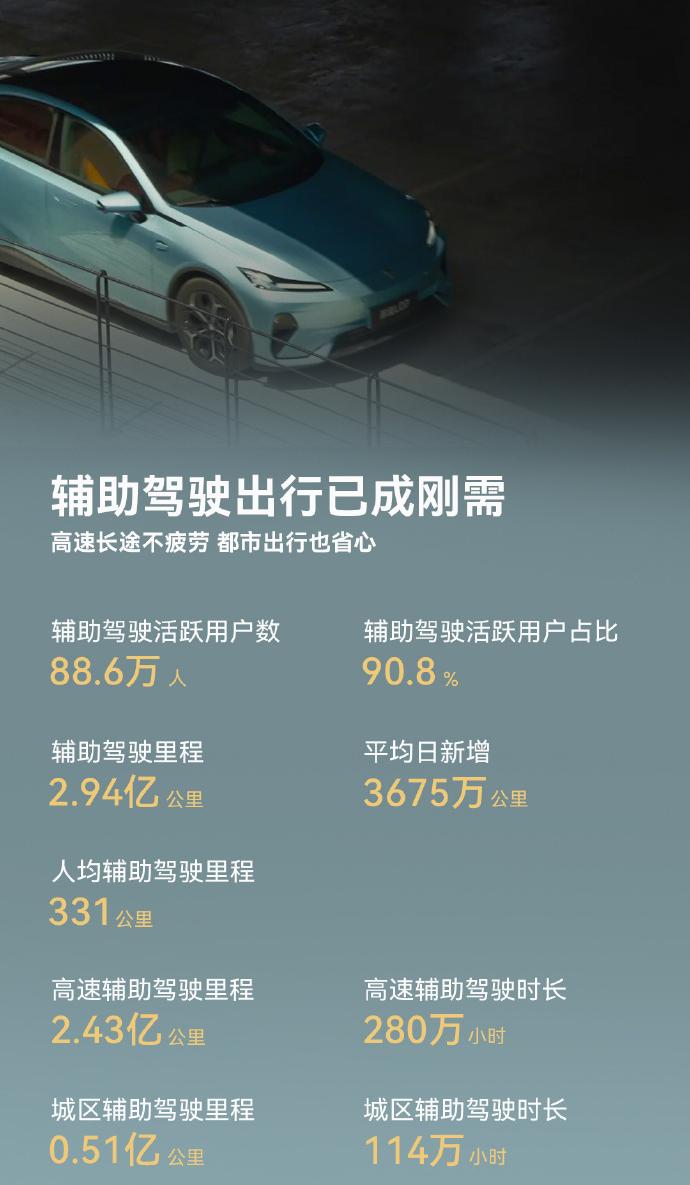
Core Insights - The recent National Day holiday saw a significant increase in traffic, with an average of 12.5 million new energy vehicles on the road daily, marking a 30% increase year-on-year and a 70% increase compared to regular days [2] - Unlike previous years where companies showcased their intelligent driving (智驾) capabilities during the holiday, this year saw a notable silence from major brands, with only Huawei and Xiaomi releasing relevant reports [3][4] - Major personnel changes occurred in the intelligent driving teams of companies like Xiaopeng and NIO, indicating a shift in strategy from the "Intelligent Driving Year" to a "Universal Intelligent Driving Year" [4][5] Industry Trends - The transition from "Intelligent Driving Year" to "Universal Intelligent Driving Year" suggests a focus on technological advancements rather than mere market penetration [5] - Data from Huawei indicates that during the recent holiday, their intelligent driving models achieved a total driving distance of 294 million kilometers, with 90.8% of users actively utilizing the assisted driving feature [6][8] - The challenge for new energy vehicle companies lies in achieving reliable L3 and L4 level intelligent driving in urban environments, as opposed to highways where conditions are more favorable [8][10] Technological Developments - The limitations of traditional end-to-end models have prompted a demand for innovative approaches in intelligent driving technology [10][11] - Three evolutionary strategies have emerged among leading brands: the "Improvement School" represented by Momenta, focusing on enhancing learning processes; the "Practical School" represented by Li Auto and Xiaopeng, emphasizing optimization of driving details; and the "World Model" (WA) approach, which simulates a virtual world for learning [11][13][17] - The WA model, which aims to provide a deeper understanding of driving logic, is seen as a more advanced but costly alternative to the VLA model, which is already integrated into products like Li Auto's i8 and Xiaopeng's G7 Ultra [21][17] Competitive Landscape - The intelligent driving sector is entering a more competitive phase, likened to a knockout tournament where brands must demonstrate their technological capabilities and ecosystem collaboration [22][24] - Smaller companies face significant challenges due to high costs and the need for integrated capabilities, with many struggling to keep up with the leading players [24][26] - The long-term outlook suggests that while VLA and WA represent different approaches, both are essential for the future of intelligent driving, with companies like Xiaopeng betting on both strategies to attract users and investors [26]
补贴政策退坡预期叠加购置税免征倒计时刺激车市升温 关注优质赛道核心标的(附概念股)
Zhi Tong Cai Jing· 2025-10-15 23:32
Group 1: Global Electric Vehicle Market - In September, global electric vehicle sales reached a record 2.1 million units, a year-on-year increase of 26%, driven by strong demand in China and tax incentives in the U.S. [1] - China remains the largest market for electric vehicle sales, while North America also set sales records due to consumer actions ahead of the expiration of EV subsidies at the end of September [1] Group 2: Domestic Market Performance - In September, China's retail sales of passenger vehicles reached 2.241 million units, a year-on-year increase of 6.3%, with cumulative retail sales for the first nine months at 17.005 million units, up 9.2% [1] - The record sales in September were attributed to the launch of over 70 new models, the highest concentration in history, and the urgency created by the expiration of tax exemptions for new energy vehicles [1] Group 3: Policy Impact on Automotive Sector - The automotive sector is experiencing strong performance due to multiple favorable policies, with a smooth transition in vehicle purchase tax policy expected to stabilize market expectations [2] - The government has set a target of 32.3 million total vehicle sales by 2025, with new energy vehicle sales projected at 15.5 million units, reflecting a growth rate of 20% [2] Group 4: Company Performance Highlights - BYD reported approximately 405,600 units produced and 396,300 units sold in September 2025, with a year-on-year production increase of 16.4% and sales increase of 18.64% for the first nine months [3] - Li Auto delivered 33,951 vehicles in September 2025, with a total of 93,211 vehicles delivered in Q3 2025, bringing cumulative deliveries to 1,431,021 units [3] - XPeng Motors achieved record deliveries of 41,581 smart electric vehicles in September 2025, a 95% year-on-year increase, with total deliveries for the first nine months reaching 313,196 units, up 218% from the previous year [3] - NIO delivered 34,749 vehicles in September 2025, marking a 64.1% year-on-year increase, with total deliveries for Q3 2025 reaching 87,071 units, a 40.8% increase [4][5]

新凯来子公司发布两款国产EDA设计软件;商汤科技与寒武纪达成战略合作|数智早参
Mei Ri Jing Ji Xin Wen· 2025-10-15 23:05
Group 1: New EDA Software Release - New Kai Lai's subsidiary Qiyunfang launched two domestically developed EDA design software with complete independent intellectual property rights, achieving industry-leading performance indicators and improving product performance by 30% compared to industry benchmarks [1] - The hardware development cycle for these products can be shortened by 40%, marking a significant breakthrough in China's semiconductor industry chain's autonomy [1] - This release is expected to boost investor confidence in the upstream semiconductor industry and provide safer and more efficient technical support for domestic chip design companies [1] Group 2: Strategic Cooperation between SenseTime and Cambricon - SenseTime and Cambricon signed a strategic cooperation agreement to promote joint optimization of software and hardware, aiming to build an open and win-win industrial ecosystem [2] - The collaboration will leverage each company's technological and industrial resource advantages, focusing on the construction of domestic AI infrastructure and vertical business development [2] - This partnership signifies a deepening trend of "soft and hard integration" in China's AI industry, potentially enhancing the domestic AI supply chain's confidence among investors [2] Group 3: Autonomous Driving Development Insights - Li Xiang, CEO of Li Auto, predicts that fully autonomous smart vehicles will be realized in 3 to 5 years, positioning them as the largest AI terminals in the physical world [3] - By 2030, there may emerge smart vehicle companies surpassing the scale of Apple iPhone, indicating a strategic revaluation of the smart vehicle industry's value [3] - This perspective suggests a shift in the automotive industry from hardware manufacturing to software services, leading to deeper integration within the smart vehicle supply chain [3]
