Luckin Coffee(LKNCY)

Search documents
2025 AI主战场,连锁门店“变形记”
3 6 Ke· 2025-07-23 12:11
Core Insights - The article emphasizes that AI must be effectively implemented in business operations to have a future, highlighting the shift of AI applications from traditional sectors to retail chains, particularly fast-food and beverage outlets [1][3]. Group 1: AI Implementation in Retail - Fast-food chains like McDonald's and KFC are leading the AI competition, with innovations such as KFC's "Car Speed Pickup 2.0" and McDonald's conversational AI "P.AI" enhancing customer experience [1][3]. - Chinese snack chain, Juewei Duck Neck, has introduced three AI systems to engage both store managers and consumers, while beverage brands like Luckin Coffee and Starbucks are also integrating AI for operational efficiency [3][4]. - AI is being utilized in various operational aspects of retail, including food safety monitoring, personalized marketing, and customer service enhancements, significantly improving quality control and customer satisfaction [4][6]. Group 2: Challenges and Opportunities - Retail chains face intense competition and pressure to innovate due to changing consumer habits and declining foot traffic, necessitating the adoption of AI to survive and thrive in a low-margin environment [9][11]. - The integration of AI in retail is driven by the need for improved efficiency in supply chain management and customer engagement, as traditional methods are no longer sufficient [11][13]. - The successful implementation of AI relies on the foundational data infrastructure that many retail brands have developed over the years, allowing them to leverage AI capabilities effectively [13][14]. Group 3: Future of AI in Retail - The shift towards AI in retail is characterized by a lower barrier to entry for smaller businesses, thanks to cloud-based AI services that simplify the integration process [16][19]. - Retail chains are becoming the primary battleground for AI applications, as they generate vast amounts of data that can enhance AI algorithms and improve customer interactions [17][19]. - The focus on practical applications of AI in retail emphasizes the importance of understanding business needs and ensuring that AI solutions are user-friendly and effective in addressing real-world challenges [20][21].







Luckin Coffee to Announce Second Quarter 2025 Financial Results on July 30, 2025
Globenewswire· 2025-07-23 12:00
Core Viewpoint - Luckin Coffee Inc. is set to release its second quarter 2025 financial results on July 30, 2025, before the U.S. market opens, followed by a conference call to discuss the results and answer questions [1]. Group 1: Financial Results Announcement - The financial results will be released on July 30, 2025, before the U.S. market opens [1]. - A conference call is scheduled for July 30, 2025, at 8:00 am Eastern Time to discuss the financial results [1]. - Participants can access the call through various toll-free numbers, including a dedicated line for Mainland China [1]. Group 2: Company Overview - Luckin Coffee has established a technology-driven retail network aimed at providing high-quality, convenient, and affordable coffee products [2]. - The company was founded in 2017 and is based in China, with a vision to build a world-class coffee brand [2]. - More information about the company can be found on its Investor Relations website [2].
瑞幸进军星巴克老家:$1.99的生椰拿铁能卷赢美国吗?
3 6 Ke· 2025-07-23 02:45
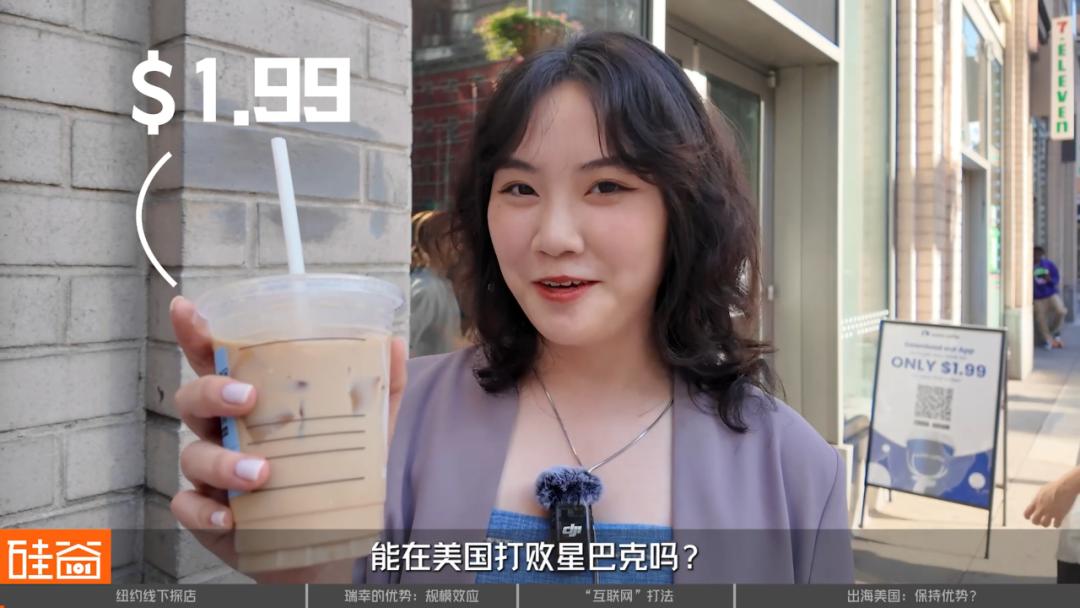
Core Viewpoint - Luckin Coffee has successfully entered the U.S. market after dominating the Chinese market, opening two stores in New York and employing a digital-first strategy to attract customers [1][3][39] Group 1: Market Entry Strategy - Luckin Coffee's entry into the U.S. market is characterized by its digital ordering system, which has received mixed reactions from local consumers [3][26] - The company aims to replicate its successful strategies from China, leveraging its supply chain and digital marketing capabilities [5][15][20] Group 2: Consumer Experience - The pricing strategy in New York features a cup of coconut latte priced at $1.99, which is perceived as affordable compared to competitors [3][31] - Local consumers have expressed curiosity and positive feedback about the brand, noting its innovative drink offerings tailored to American tastes [9][11][34] Group 3: Competitive Positioning - Luckin Coffee's product offerings are designed to appeal to a younger demographic, positioning itself as a more affordable alternative to Starbucks while providing a diverse menu [18][34] - The company has established a modular supply chain that allows for cost savings, which is crucial in a competitive market [20][22] Group 4: Digital and Marketing Strategy - The company's "no cash" policy and reliance on digital platforms for ordering have sparked complaints but also highlight its tech-driven approach [26][28] - Luckin Coffee's marketing strategy includes social media promotions and collaborations with popular brands, enhancing its visibility and appeal [25][29] Group 5: Financial Performance and Future Outlook - Despite past controversies, Luckin Coffee has shown significant growth, surpassing Starbucks in revenue in China and expanding internationally [37][39] - The company's ability to adapt its successful strategies from China to the U.S. market will be critical for its long-term success [39]
外卖内卷,私域深耕:第三方即配或成餐饮商家“博弈牌”
Huan Qiu Wang· 2025-07-21 11:31
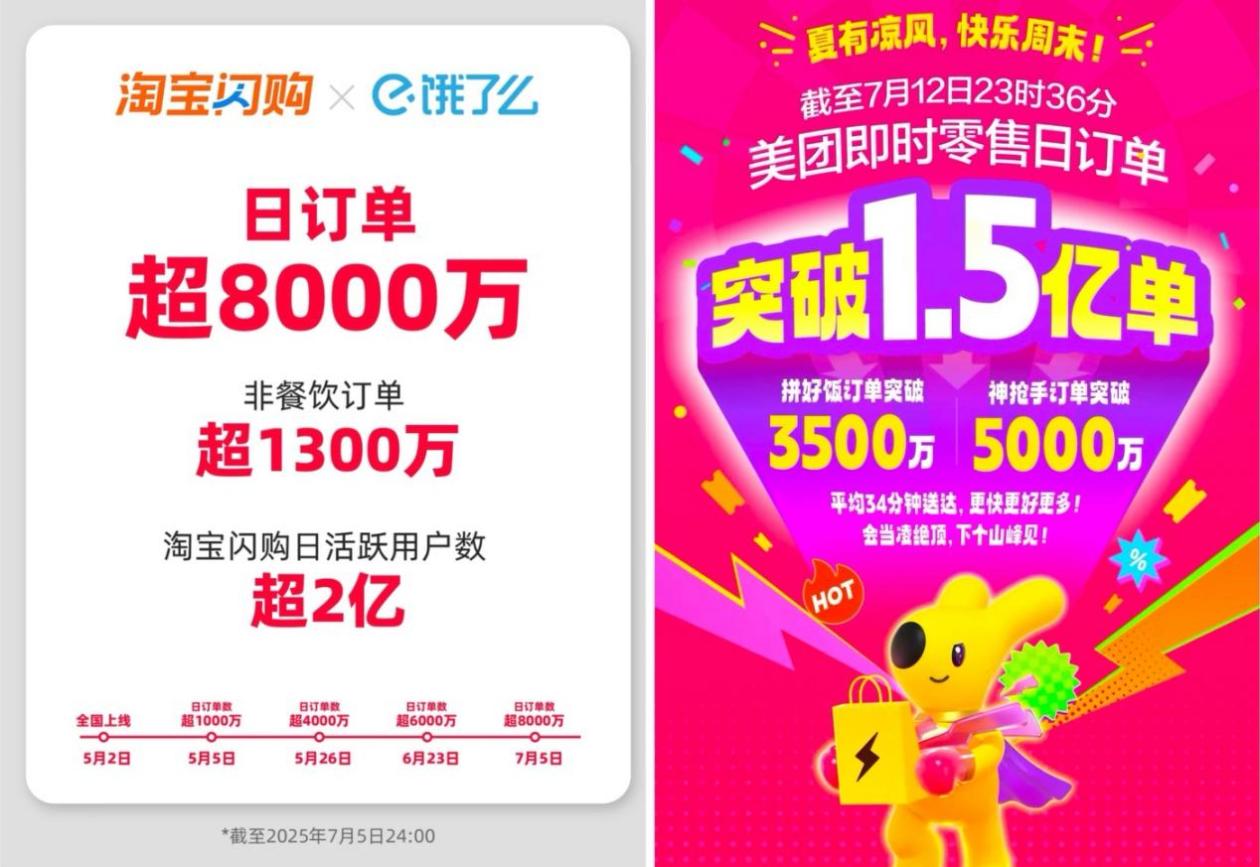
Core Viewpoint - The recent discussions by the Market Supervision Administration with major platforms like Ele.me, Meituan, and JD.com signal a regulatory intervention aimed at curbing aggressive promotional behaviors in the food delivery sector, promoting a healthier ecosystem for consumers, merchants, delivery riders, and platform companies [1] Group 1: Market Dynamics - The food delivery war has intensified, with platforms offering significant discounts and promotions, leading to a surge in order volumes [2][4] - During the first weekend of July, Taobao Flash Sale recorded over 80 million daily orders, while Meituan surpassed 120 million, indicating a total daily order volume of around 200 million [2] - The order volume spike has benefited large chain restaurants, with brands like Nayuki's Tea and Tim's Coffee experiencing substantial increases in delivery orders [4] Group 2: Merchant Challenges - The influx of orders has created operational challenges for many merchants, particularly small and medium-sized businesses, leading to staff shortages and increased pressure to fulfill orders [8][9] - Merchants are facing a "losing balance" situation, where the costs associated with promotional discounts are shared between platforms and merchants, often leading to unsustainable pricing models [9][11] - The competitive environment has intensified price wars, resulting in declining average transaction values for well-known brands [9][10] Group 3: Capital Market Response - The capital markets reacted positively to the benefits brought by the food delivery war, with stocks in the new tea beverage sector seeing collective gains following the promotional weekends [8] - Notable stock movements included a 2.17% increase for Gu Ming and a 0.74% rise for Mixue Group, reflecting investor optimism in the sector [8] Group 4: Strategic Shifts for Merchants - Merchants are beginning to explore alternative strategies to reduce dependency on platforms, such as building private domains and utilizing third-party delivery services [15][19] - Successful examples include Luckin Coffee, which has effectively developed its private domain strategy, reducing reliance on external platforms and enhancing customer loyalty [19][20] - The emergence of third-party delivery platforms like SF Express has provided merchants with flexible and cost-effective delivery solutions, allowing them to regain some control over pricing and operations [19][22]

一周新消费NO.318|瑞幸×多邻国推出新品;舒淇成为爷爷不泡茶品牌代言人
新消费智库· 2025-07-20 13:00
New Product Launches - Bright Dairy launched the new organic milk ice cream "Guangming Youbei," containing 55% organic milk, with protein content not less than 4.5g/100g [4] - Xueji Snacks and Yili Group introduced a new yogurt product featuring a "milk skin" layer, made from fresh milk sourced from Yili's professional farms [4] - Joyoung released a new red date soy milk powder, made from non-GMO soybeans and red dates, containing 28g of protein per 100g [6] - Yi Bao launched a new 5L packaging of its bottled drinking water, designed for multiple consumption scenarios [6] - Luckin Coffee and Duolingo collaborated to launch a new product, "Green Sand Latte," made with high-quality green beans and IAC award-winning coffee beans [22] Industry Events - Anta opened a new brand experience space called "Anta Home" in Jinjiang, featuring appearances by Olympic champions [9] - Mengniu's high-end ice cream brand Tilan Shengxue officially entered the Hong Kong and Macau markets, becoming the first high-end ice cream brand approved by local authorities [10] - Yuanji Cloud Dumplings announced its first store in Thailand, maintaining its original recipe without local adaptations [12] - Grandpa's Tea appointed actress Shu Qi as its brand ambassador, marking a significant step in brand influence [12] Investment and Financing - The smart beverage retail brand "Pengbei Station" completed a financing round of 50 million yuan, focusing on AIOT solutions for unmanned retail [16] - Qunxing Toys secured 159.47 million yuan in financing, representing 26.25% of the day's buying amount [17] - Jujitang completed a 10 million yuan angel round financing, focusing on health food supply chains [18] - Three Squirrels announced an investment of up to 200 million yuan to upgrade its snack supply chain [19] Food Industry Developments - The new "Shang Jian Wang" tea beverage series from Shan Zha Shu Xia Group features oolong and jasmine tea, with zero sugar, fat, and calories [6] - Farmer Spring launched a new birch tree juice product, currently available only through Sam's Club [24] - DolCas Biotech introduced a chocolate bar containing fish collagen peptides, targeting joint and skin health [26]





传媒互联网产业行业周报:稳定币法案落地后的新增投资路径-20250720
SINOLINK SECURITIES· 2025-07-20 09:56
Investment Rating - The report maintains an optimistic outlook on the Hong Kong stock market, particularly regarding new IPOs and sectors such as stablecoins, new consumption, and innovative pharmaceuticals [3][10]. Core Insights - The report highlights new investment paths following the implementation of stablecoin legislation, emphasizing the positive sentiment towards Hong Kong and U.S. Chinese stocks, with a notable shift towards new concepts and small-cap stocks [3][10]. - There is a sustained bullish view on virtual assets, including stablecoins, with recommendations for traditional virtual asset companies and infrastructure assets related to blockchain technology [3][10]. - The report identifies potential risks associated with overseas Chinese assets, particularly concerning U.S.-China tariff issues, and suggests monitoring the progress of global tariff negotiations [3][10]. Industry Situation Tracking Education - The Chinese education index increased by 2.10% from July 14 to July 18, outperforming the CSI 300 and SSE 50 indices, while underperforming the Hang Seng Tech Index [11]. - Notable stock performances include a 25.09% increase for Fenbi and a 14.37% increase for Dongfang Zhenxuan, while New Oriental saw a decline of 3.39% [11][19]. Luxury Goods - The luxury goods sector faced slight pressure, with a 6% year-on-year decline in Burberry's sales revenue for Q1 of FY2026, although the decline was less severe than previous periods [25]. - The report notes that the jewelry segment remains a growth driver, with Richemont's jewelry sales increasing by 11% year-on-year [31]. Coffee and Tea Beverages - The coffee sector maintains high growth, while the tea beverage sector shows signs of recovery, benefiting from summer demand and delivery subsidies [5][28]. E-commerce - The e-commerce sector is experiencing slight pressure, with a slowdown in overall growth and intensified competition among platforms [5][34]. - The report highlights a 742.95 billion yuan online retail sales figure for the first half of 2025, reflecting an 8.5% year-on-year growth [37]. Streaming Platforms - The streaming media index rose by 7.8%, outperforming both the Hang Seng Index and the Hang Seng Tech Index [38]. - Notable stock performances include a 12.08% increase for NetEase Cloud Music and an 11.37% increase for Tencent Music [38]. Virtual Assets & Internet Brokers - The global cryptocurrency market capitalization reached $392.19 billion, with Bitcoin and Ethereum prices increasing by 0.4% and 19.9%, respectively [40][43]. - The report emphasizes the positive trend in virtual assets following the passage of the GENIUS Act in the U.S., which establishes a regulatory framework for stablecoins [49].



茶咖日报|从LOGO到包装全面模仿,幸猫咖啡因侵权被判赔偿瑞幸500万
Guan Cha Zhe Wang· 2025-07-18 11:08
Group 1: Legal Issues in the Coffee Industry - Luckin Coffee won a trademark infringement case against Lucky Cat Coffee, resulting in a compensation of 5 million yuan [1][2] - The court found that the trademarks of Lucky Cat Coffee and Luckin Coffee were highly similar in appearance and visual effects, increasing the likelihood of confusion [2] - The infringing company, Hot Flow Company, was deemed to have acted with obvious malicious intent, profiting significantly from the infringement [2] Group 2: Strategic Partnerships and Sustainability Initiatives - Starbucks China announced a strategic partnership with Envision Group to develop a digital carbon management platform, aiming to cover 100% of its direct and indirect suppliers over the next three years [3] - The partnership will enhance sustainability practices in over 7,500 Starbucks stores, integrating smart IoT systems for real-time data tracking and energy efficiency [3] - Envision's solutions in the Starbucks Coffee Innovation Park include solar energy, smart storage, and digital carbon management systems to achieve energy savings and carbon reduction [3] Group 3: Market Expansion - Blue Bottle Coffee opened its first independent store in Southeast Asia at the Palais Renaissance shopping center in Singapore, following the success of its previous franchise [7] - The new store features a menu that includes Bella Donovan espresso drinks starting at 6.50 SGD, along with exclusive products like yogurt bowls and homemade waffles [7] Group 4: Environmental Restoration Efforts - Nestlé and Barry Callebaut announced a collaboration with Re.green to restore cocoa and coffee-growing regions in Brazil as part of their environmental restoration project [8][9] - The initiative aims to plant 11 million trees over 8,000 hectares, with Nestlé fully funding the Re.green project and covering 60% of Barry Callebaut's costs [9]

咖啡,6月开店2053家
3 6 Ke· 2025-07-18 03:21
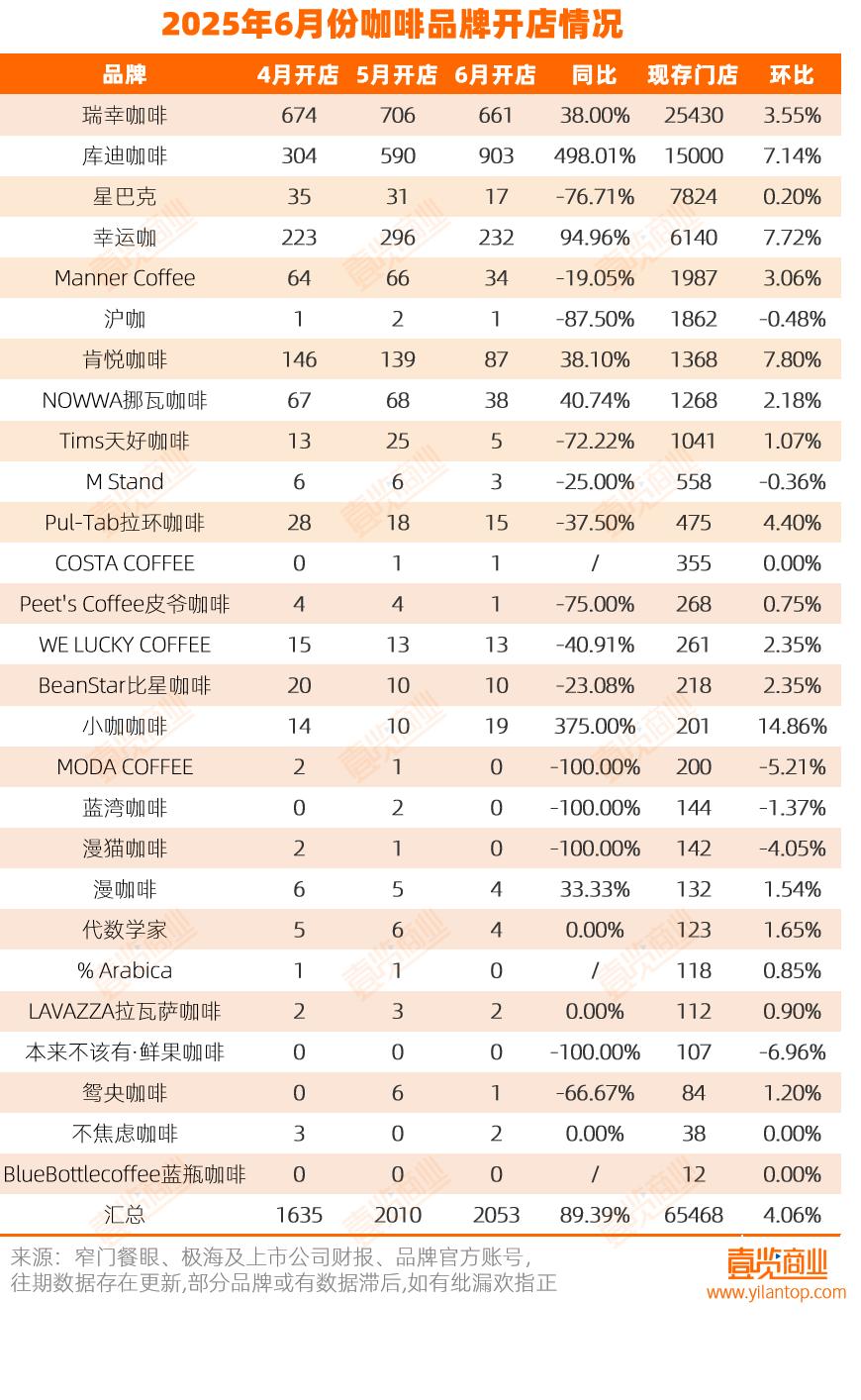
Core Insights - The coffee shop industry is experiencing significant growth, with a total of 2,053 new stores opened in June, representing a 2.14% month-over-month increase and an 89.39% year-over-year increase, bringing the total number of stores to 65,468 [1][2][3] Brand Performance - Luckin Coffee opened 661 new stores in June, a year-over-year increase of 38%, while Kudi Coffee led with 903 new stores, marking a staggering 498.01% increase [2][3] - Starbucks saw a decline in new openings, with only 17 stores opened in June, a decrease of 76.71% year-over-year, while maintaining a total of 7,824 existing stores [2][3] - Kudi Coffee's existing store count surpassed 15,000, reflecting rapid expansion, while Luckin Coffee's store count exceeded 6,000, having doubled in the past year [5][13] Product Innovation - A total of 79 new SKUs were launched across 27 brands in June, with Starbucks leading with 12 new products, followed by Kudi Coffee and Luckin Coffee with 11 and 10 new products, respectively [7][9] - Seasonal flavors and health-oriented products are trending, with many brands introducing fruit-infused coffee options to cater to summer preferences [10][11] Marketing Strategies - Collaborative marketing is becoming a norm, with 19 partnerships in June, notably increased activity from Luckin Coffee, which engaged in four collaborations, including popular IPs like SpongeBob [11][12] - The focus on animated IP collaborations is evident, with brands like Starbucks and Kudi Coffee targeting family-friendly and youth demographics through strategic partnerships [12][13] Industry Outlook - The coffee industry is shifting towards refined operations and product differentiation, with local brands gaining traction against international competitors [13]
9.9打不动,90亿抢着买?资本为何青睐星巴克
Tai Mei Ti A P P· 2025-07-16 07:04
Core Viewpoint - Starbucks is facing significant challenges in the Chinese market, leading to speculation about its valuation and potential sale of equity, with a reported valuation of $9 billion, raising questions about its worth in the current competitive landscape [1][4][6] Group 1: Market Dynamics - Starbucks China is projected to generate $2.958 billion in revenue for the fiscal year 2024, reflecting a year-over-year decline of 1.4% [4] - In contrast, Luckin Coffee's revenue is expected to reach approximately $5 billion, with a significantly lower price-to-sales ratio of 1.89 compared to Starbucks' 3 [8] - The number of Starbucks locations in China is 7,758, while Luckin has surged to 24,097 locations, indicating a substantial competitive advantage for Luckin [6] Group 2: Consumer Behavior - Consumer sentiment towards Starbucks has shifted, with many expressing that they would rather choose cheaper options from competitors like Luckin, even when Starbucks offers discounts [6][19] - The perception of Starbucks as a premium brand is deteriorating, as evidenced by comments on social media indicating that consumers are now more price-sensitive and less loyal to the brand [6][21] Group 3: Strategic Moves - The potential sale of a stake in Starbucks China is seen as a strategic retreat, with the company looking to retain 30% ownership while seeking new capital partners [6][23] - The involvement of major investors like Dazhong Capital, which has a history of aggressive market strategies, suggests a shift in control and potential rebranding efforts for Starbucks [10][12] Group 4: Future Outlook - The coffee market in China is still growing, with per capita coffee consumption significantly lower than in countries like Japan and South Korea, indicating room for expansion [15] - The outcome of the potential equity sale and subsequent strategies will determine whether Starbucks can reclaim its premium status or if it will continue to struggle against lower-priced competitors [24][26]

2025年6月餐饮月报:全国餐饮景气指数稳中有跌,当季水果与山野食材引领新品创新
东京烘焙职业人· 2025-07-16 05:21
Group 1 - The overall restaurant industry prosperity index in June 2025 slightly decreased to 104.1, down 0.1% from May's 104.2 [5][3] - The decline in the index was influenced by various factors, including seasonal changes and consumer behavior adjustments [8][4] - The index for third-tier and below cities saw the largest decline at 5.4%, followed by second-tier cities at 4.6%, while first-tier cities experienced a slight increase of 1.2% [12] Group 2 - The "Red Restaurant Index Top 100" for June 2025 saw 36 brands rise in rankings, 33 fall, and 30 remain unchanged, with one new entry [18] - The top three brands in the index were Haidilao, KFC (China), and Luckin Coffee, followed closely by McDonald's (China) and others [20][18] Group 3 - In June 2025, the snack fast food category showed significant growth, with its prosperity index rising to 103.7, an increase of 5.4% [16] - Conversely, the beverage category's index fell to 116.5, down 2.2%, while the index for hot pot and barbecue categories were 93.5 and 81.9, respectively, both showing declines [16] Group 4 - The restaurant industry saw active financing events in June 2025, with a total of 10 financing occurrences, marking a significant increase from the previous month [59] - Notable IPO movements included the submission of a prospectus by Banu International Holdings for a main board listing and the listing of Haitian Flavoring and Food Company on the Hong Kong Stock Exchange [62][58] Group 5 - The restaurant industry is witnessing a trend of local brand expansion and international market penetration, with brands innovating through unique store formats and digital models [55] - Significant industry events included the opening of Haidilao's first fresh-cut beef theme store in Guangzhou and Luckin Coffee's first stores in the U.S. [61][62]