PDD(PDD)

Search documents
高毅、景林、高瓴加仓中国!但斌业绩大反弹!险资私募集中入市!5月基金大事件一览!
私募排排网· 2025-06-03 03:41
Core Viewpoint - In May, A-shares experienced a rebound after tariff shocks, with major indices showing positive growth, while significant developments occurred in the public and private fund sectors, including increased holdings in Chinese assets by major private equity firms and new regulations for public funds [2][3]. Group 1: Market Performance - In May, the Shanghai Composite Index rose by 2.09%, the Shenzhen Component Index increased by 1.42%, and the ChiNext Index gained 2.32% [2]. - Among 5,370 stocks excluding new listings, 3,847 stocks rose, 32 remained flat, and 1,491 declined, indicating a 72% increase in the number of rising stocks [2]. Group 2: Private Equity Holdings - High-profile private equity firms such as Gao Yi, Jing Lin, and Gao Ling increased their positions in Chinese assets while reducing their holdings in U.S. tech stocks [3][4]. - Gao Yi's overseas fund held 22 U.S. stocks valued at $765 million, with significant increases in holdings of Chinese companies like Huazhu Group and Boss Zhipin [4]. - Jing Lin's overseas fund had 8 out of its top 10 holdings in Chinese stocks, reflecting a strong commitment to Chinese assets [4]. Group 3: Performance of Individual Funds - Dan Bin's funds saw a significant rebound in performance due to the recovery of U.S. tech stocks, with a reported average return of ***% over the past month [6]. - Dan Bin maintained a focus on major tech stocks, including Nvidia, Apple, and Microsoft, while also utilizing leveraged ETFs to enhance returns [9][10]. Group 4: Insurance Capital Involvement - Insurance companies are increasingly establishing private equity funds to invest in the stock market, with notable initiatives from China Life and Xinhua Insurance, which set up a 200 billion yuan fund [14][15]. - The National Financial Regulatory Administration announced plans to expand the trial of long-term investment by insurance funds, aiming to inject more capital into the market [14]. Group 5: Public Fund Developments - The public fund industry reached a total scale of 33.12 trillion yuan by the end of April 2025, marking a record high [23]. - New regulations were introduced to link fund manager compensation to fund performance, promoting a shift from focusing solely on scale to prioritizing returns [17][20]. Group 6: AI Quantitative Funds - The number of quantitative private equity firms focusing on AI has increased, with 15 out of 39 billion-yuan quantitative firms making strides in AI investment [11][12]. - Notable firms like Huanfang Quantitative have achieved significant returns, leading the performance rankings among AI-focused private equity funds [12][25].



强支撑再现!港股上演惊险深“V”,如何布局核“新”资产?
Sou Hu Cai Jing· 2025-06-03 02:53
Group 1 - The Hang Seng Technology Index experienced a significant fluctuation, dropping over 3% in the morning but recovering by the end of the day, with trading volume approximately half of the last trading day before the holiday [1] - The recent volatility is attributed to two main factors: the U.S. government's announcements regarding tariffs and production requirements for automakers, and disappointing domestic economic data, including PMI and real estate indicators for May [2][4] - The potential for a new round of tariff cycles may lead to a rotation in sectors, with a focus on technology and innovative pharmaceuticals that are less affected by tariffs, suggesting that opportunities may arise in the Hong Kong stock market [2][4] Group 2 - The Hong Kong stock market is a key area for new economy internet companies, with significant representation from major Chinese internet firms in the China Internet ETF, which has seen an 11% increase since April 8 [4][6] - The influx of A-share companies listing in Hong Kong, including major players like CATL and Heng Rui Pharmaceutical, is enhancing the market's focus on "hard technology" [5][6] - The Hong Kong Technology Index, with 50 constituent stocks, offers a broader exposure to sectors such as new consumption, internet, and innovative pharmaceuticals compared to the Hang Seng Technology Index, which has only 30 constituents [9]
利润腰斩、市值蒸发2000亿!拼多多“烧钱续命”能撑多久?
Sou Hu Cai Jing· 2025-06-03 02:08
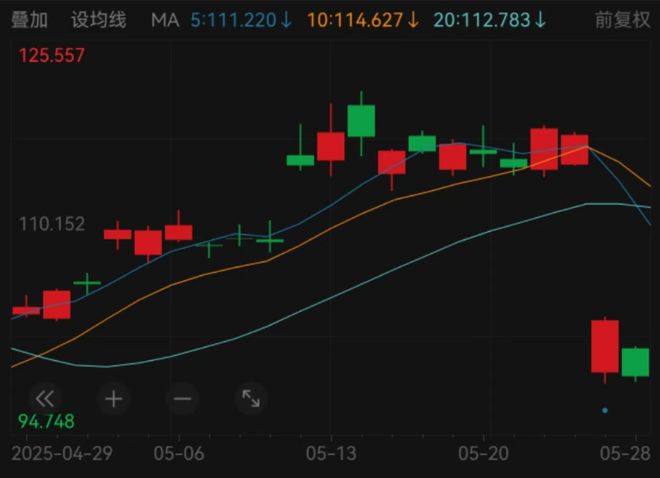
Core Viewpoint - Pinduoduo's recent financial report reveals a significant decline in profit and market value, raising concerns about its sustainability in a competitive e-commerce landscape [3][6][8] Financial Performance - In Q1 2025, Pinduoduo reported revenue of 957 billion yuan, a 10% year-on-year increase, but net profit fell by 47% to 147 billion yuan [3][4] - Adjusted net profit also decreased by 45% to 169 billion yuan, leading to a sharp drop in stock price and a market value loss exceeding 218 billion yuan over two days [3][4] Growth Challenges - Pinduoduo's revenue growth rate has slowed significantly, dropping from 59% in 2024 to just 10% in Q1 2025, indicating a potential growth ceiling [4][5] - The competitive landscape has intensified, with rivals like Douyin e-commerce gaining market share and attracting price-sensitive consumers away from Pinduoduo [4][5] Marketing Expenses - Marketing expenses surged to 334 billion yuan, a 43% increase from the previous year, reflecting Pinduoduo's aggressive spending to maintain user growth amid rising customer acquisition costs [5][6] - The cost per new user has exceeded 200 yuan, suggesting that the previous growth strategies may no longer be effective [5][6] Profitability and Business Model - The drastic 47% drop in net profit is attributed to increased investments in the platform's ecosystem, which may be a double-edged sword for Pinduoduo [6][7] - The shift towards a "profit for ecosystem" strategy contrasts sharply with its previous high-margin, low-asset model, raising questions about the long-term viability of this approach [7][8] External Challenges - Pinduoduo's cross-border e-commerce segment faces difficulties due to changing U.S. tariff policies, leading to a significant drop in GMV growth in the European and American markets [8] - The company's established low-price strategy is misaligned with the trend of consumer upgrading, and brand merchant growth has declined by 18% year-on-year [8] Future Outlook - Pinduoduo is at a crossroads, facing multiple challenges including slowing growth, declining profits, and intensified competition, which may hinder its ability to find new growth avenues [8] - The company's future hinges on its ability to navigate the transition from "profit for growth" to a sustainable business model amid these challenges [8]

Report: Temu Loses 58% of US Daily Users Due to Tariffs
PYMNTS.com· 2025-06-02 23:18
Core Insights - Temu experienced a significant decline in daily U.S. users, losing 58% in May following the end of the de minimis exemption on imported goods from China on May 2 [1] - The new tariffs have led to a sharp drop in both sales growth and customer growth for Temu, as reported by Bain & Company [1] - Temu's parent company, PDD Holdings, reported a 38% year-over-year decline in profits in the first quarter due to tariffs and other factors [5] Impact of Tariffs - The de minimis exemption allowed packages worth less than $800 to enter the U.S. without tariffs, which was beneficial for Chinese eCommerce retailers like Temu [2] - President Trump announced additional tariffs on imports from China on February 1, aiming to halt illegal drug importation [2] - In response to the new tariffs, Temu is overhauling its supply chain by implementing a "half-custody" policy, which is expected to lead to higher prices [3] Changes in Operations - More than one-third of Temu's products sold in the U.S. are now fulfilled with inventory maintained in the U.S. [4] - Temu has raised prices and increased efforts to sell in countries other than the U.S. to mitigate the impact of tariffs [4] - The company significantly reduced paid advertising in the U.S., resulting in an 80% downturn in paid search traffic, which may further destabilize its pricing models [5] Merchant Challenges - PDD Holdings Chairman Lei Chen stated that tariffs have created significant pressure for merchants, who often struggle to adapt quickly and effectively [6]

Temu's daily US users cut in half following end of ‘de minimis' loophole
New York Post· 2025-06-02 23:11
Core Insights - Temu's daily US users decreased by 58% in May, attributed to challenges from the US-China trade war and the end of the "de minimis" exemption for low-value shipments from China [1][10] - The company has reduced advertising spending in the US and is shifting its order fulfillment strategy in response to the changing tariff environment [1][8] - Temu's sales growth and customer growth rates have declined more sharply than its competitor Shein since the introduction of trade tariffs [4][5] Market Environment - The end of the "de minimis" provision has forced Temu and Shein to raise prices, impacting customer engagement and sales [5][10] - Despite the challenges, Shein has managed to increase spending per customer, while Temu has struggled to maintain its customer base [5][6] - Analysts suggest that if the current tariff situation persists, Temu's competitive position may continue to weaken [6] Business Model Changes - Temu's previous model involved merchants managing product orders while the company handled logistics, pricing, and marketing [9] - Following the tariff changes, Temu's merchants can now ship individual orders to US warehouses but must navigate tariffs and customs [12] - The company is focusing on a local fulfillment model to stabilize prices and support merchants [8][12] User Growth and Market Expansion - Temu's non-US market growth has accelerated, with non-US users constituting 90% of its 405 million global monthly active users in Q2 [13] - The fastest growth in new users is occurring in less affluent markets, indicating potential for expansion outside the US [13]

拼多多(PDD):25Q1季报点评:Q1业绩不及预期,短期调整不改长期竞争力
Orient Securities· 2025-06-02 15:19
Investment Rating - The report maintains a "Buy" rating for Pinduoduo with a target price of $135.58 per ADS [5][12]. Core Views - The Q1 performance of Pinduoduo fell short of expectations, with revenue of CNY 956.7 billion, a year-over-year increase of 10.2%, but below the Bloomberg consensus estimate of CNY 1,016.0 billion [9]. - Non-GAAP net profit for Q1 was CNY 169.2 billion, a significant decline of 44.7% year-over-year, also missing the consensus estimate of CNY 278.8 billion [9]. - The report highlights that while advertising revenue showed good performance, commission income was under pressure due to increased merchant support policies and adjustments in the Temu business [9]. Financial Forecasts and Investment Recommendations - Revenue projections for Pinduoduo are adjusted to CNY 4,403 billion, CNY 4,883 billion, and CNY 5,250 billion for 2025, 2026, and 2027 respectively [3][11]. - Non-GAAP net profit estimates are revised to CNY 1,072 billion, CNY 1,317 billion, and CNY 1,499 billion for the same years [3][11]. - The report employs a Sum-of-the-Parts (SOTP) valuation method, estimating the main e-commerce platform's value at $143.9 billion, the Duoduo grocery business at $5.9 billion, and the Temu business at $42.7 billion [12][14]. Key Financial Metrics - For 2025, the expected operating revenue is CNY 440,349 million, with a year-over-year growth of 12% [10]. - The projected operating profit for 2025 is CNY 112,152 million, reflecting a 3% increase from the previous year [10]. - The report anticipates a gross margin of 61.1% and a net margin of 22.1% for 2025 [10].
拼多多Q1利润下跌4成背后:大规模减免商家服务费,百亿费用补贴新质商家
Zhong Jin Zai Xian· 2025-06-02 07:40
Core Viewpoint - Pinduoduo's Q1 2025 financial report shows total revenue of 95.672 billion yuan, a 10% increase, but net profit dropped 47% to 14.7 billion yuan, both figures falling short of market expectations [1] Group 1: Financial Performance - Pinduoduo's Q1 total revenue reached 95.672 billion yuan, growing only 10% year-on-year [1] - Net profit attributable to ordinary shareholders was 14.7 billion yuan, a significant decline of 47% compared to the previous year [1] - Transaction service revenue grew by just 5.8% to 47 billion yuan, below the expected 56 billion yuan, indicating aggressive merchant support and commission reductions [2] Group 2: Merchant Support Initiatives - Pinduoduo has implemented various initiatives such as "100 billion reduction" and "new quality merchant support plan" to alleviate costs for small and medium-sized merchants [1][2] - The platform has reduced technical service fees, allowing merchants to save significant amounts; for example, a merchant in Shaanxi reported saving over 10,000 yuan monthly due to fee reductions [2][3] - The introduction of promotional software service fee refunds has also benefited merchants, with some reporting annual savings of up to 100,000 yuan [3] Group 3: Marketing and Subsidies - Sales and marketing expenses surged by 43% to 33.4 billion yuan, driven by increased promotional and advertising spending [4] - Pinduoduo's first-quarter GMV growth reached 16%, totaling 1.07 trillion yuan, indicating effective consumer stimulation through subsidies [4] - The "100 billion subsidy" plan for new quality merchants has led to significant price reductions for consumers, with some products seeing subsidies of nearly 30% [5] Group 4: Future Plans - Pinduoduo plans to continue exploring further commission reduction measures and expand support to small and medium-sized merchants [6] - The company has launched a "1 trillion support" plan to invest in merchant transformation over the next three years, including various consumer subsidy initiatives [5]
金十图示:2025年06月02日(周一)中国科技互联网公司市值排名TOP 50一览


news flash· 2025-06-02 02:54
Core Insights - The article presents the market capitalization rankings of the top 50 Chinese technology and internet companies as of June 2, 2025, highlighting significant players in the industry [1]. Group 1: Top Companies by Market Capitalization - Alibaba leads the list with a market capitalization of $2716.22 billion [3]. - Xiaomi Group follows with a market cap of $1655.8 billion [3]. - Pinduoduo ranks third with a market capitalization of $1370.1 billion [3]. - Meituan is in fourth place with a market cap of $1027.51 billion [3]. Group 2: Additional Notable Companies - JD.com has a market capitalization of $467.19 billion, placing it in the top ten [4]. - Semiconductor Manufacturing International Corporation (SMIC) has a market cap of $400.66 billion [4]. - Baidu's market capitalization stands at $281.55 billion [4]. - Kuaishou has a market cap of $279.05 billion [4]. Group 3: Companies Ranking 25 to 50 - Vipshop has a market capitalization of $71 billion, ranking 25th [5]. - Kingsoft's market cap is $56.87 billion, placing it at 31st [5]. - Perfect World has a market cap of $36.22 billion, ranking 50th [6].

作茧自缚是破茧而出前,必备一步
Ge Long Hui· 2025-06-02 01:26
Group 1 - The recent performance of Hong Kong and A-shares has been lackluster, with market movements heavily influenced by U.S. events, particularly Trump's tariff actions [1] - Trump's recent threats to impose tariffs on the EU and increase steel tariffs to 50% have created volatility in the markets, reflecting the uncertainty surrounding U.S. fiscal policy [1][2] - The 30-year U.S. Treasury yield remains above 5%, raising concerns about the stability of U.S. debt and its implications for the broader financial market [1][2] Group 2 - The new consumption sector in Hong Kong is gaining attention, characterized by a diverse range of companies from bubble tea to beauty products, indicating a broad interpretation of consumer spending [5][6] - Major internet companies in China, such as Meituan and Xiaomi, reported strong earnings, with Meituan exceeding revenue and profit expectations despite ongoing competition with JD.com [6] - PDD's financial performance has been mixed, with revenue growth but a significant drop in net profit, attributed to government subsidies and market conditions, leading to volatility in its stock price [6] Group 3 - The IPO market in Hong Kong has shown a positive trend, with a low first-day loss rate of 28.6% for new listings, the lowest since 2017 [7] - New stock performance varies significantly, with some companies like Ningde Times and Guanshi Shuduan showing substantial first-day gains, while others like Paige Biopharma experienced significant losses [8] - The strategy for participating in new stock offerings emphasizes quick exits within three days, suggesting a focus on short-term gains rather than long-term holdings [8][9]





主动减速,拼多多进入“全面惠商”新阶段
Guan Cha Zhe Wang· 2025-05-31 11:02
Core Viewpoint - Pinduoduo's Q1 2025 financial report reveals a significant decline in profit and a slowdown in revenue growth, leading to a sharp drop in its stock price, indicating a strategic shift towards long-term investments over short-term profits [1][21][25] Revenue and Profit Summary - Pinduoduo reported Q1 2025 revenue of 95.7 billion RMB, a 10% year-on-year increase, but net profit fell to 14.7 billion RMB, down 47% year-on-year [1][10] - Adjusted net profit was 16.9 billion RMB, reflecting a 45% decline compared to the previous year [1][10] - Advertising revenue grew by 14.8%, exceeding market expectations, while commission revenue dropped significantly, contributing to the overall revenue slowdown [3][6][7] Strategic Decisions and Investments - The company has increased marketing expenses to 33.4 billion RMB, a rise of nearly 100 billion RMB from the previous year, indicating a commitment to support merchants and enhance user experience [8][11] - Pinduoduo's management emphasized the importance of sacrificing short-term profits to foster a healthier ecosystem for merchants, which is seen as essential for long-term growth [5][20][21] - The "thousand billion support" strategy aims to provide substantial assistance to merchants, reflecting a shift in focus from immediate financial returns to sustainable development [5][12][22] Market Position and Future Outlook - Pinduoduo is positioning itself as a platform that prioritizes merchant support and ecosystem development, which may lead to a more resilient business model in the face of market fluctuations [6][21][24] - The company's proactive approach to reducing revenue growth in favor of long-term investments is viewed as a strategic pivot that could redefine its competitive edge in the e-commerce sector [21][24][25] - The ongoing transformation within Pinduoduo is expected to contribute to the overall upgrade of China's industrial supply chains, benefiting both merchants and consumers [22][24]