XPENG(XPEV)

Search documents
蔚小理2025年第三季度财报解析:小鹏交付量领跑 蔚来冲刺四季度盈利
Zhong Guo Zhi Liang Xin Wen Wang· 2025-12-09 07:28
Core Insights - The Chinese electric vehicle market is entering a critical phase of stock competition, with distinct performance differences among NIO, Xpeng, and Li Auto, reflecting a shift from single-dimensional competition to comprehensive strength comparison in the industry [1] NIO - NIO's multi-brand strategy has begun to yield results, achieving record delivery and revenue figures, with 87,071 vehicles delivered in Q3, a year-on-year increase of 40.8% and a quarter-on-quarter increase of 20.8% [3] - Q3 revenue reached 21.79 billion yuan, up 16.7% year-on-year and 14.7% quarter-on-quarter, with a significant improvement in profitability as automotive gross margin rose to 14.7%, the highest in three years [3][5] - Cost optimization has been a key factor in profitability improvement, with R&D expenses down 28% to 2.39 billion yuan, and cash reserves increased to 36.7 billion yuan, providing a solid foundation for future operations [5] - NIO aims for aggressive profitability targets, projecting Q4 deliveries of 120,000 to 125,000 vehicles, a year-on-year increase of 65.1% to 72.0%, and revenue of 32.76 billion to 34.04 billion yuan, a year-on-year increase of 66.3% to 72.8% [5] Xpeng - Xpeng experienced explosive growth in Q3, achieving record delivery of approximately 116,000 vehicles, a year-on-year increase of 149.3% and a quarter-on-quarter increase of 12.4% [10] - Total revenue reached 20.38 billion yuan, up 101.8% year-on-year, with a gross margin of 20.1%, marking a significant milestone [10][12] - R&D expenses reached a historical high of 2.43 billion yuan, reflecting a long-term commitment to technology development, while Q4 delivery guidance indicates a cautious approach with expected deliveries of 125,000 to 132,000 vehicles [12][14] Li Auto - Li Auto ended a streak of 11 consecutive profitable quarters, with Q3 revenue down 36.2% to 27.4 billion yuan and a net loss of 624 million yuan, marking its first quarterly loss in three years [15][17] - Q3 delivery volume was approximately 93,200 vehicles, a year-on-year decline of 39.0%, primarily due to weak demand for range-extended vehicles and slow ramp-up of pure electric models [17] - Despite the challenges, Li Auto maintains a strong cash reserve of 98.9 billion yuan and plans to return to a startup management model to focus on user value and efficiency improvements [19][21] Industry Trends - The competition logic in the electric vehicle market has fundamentally changed, with a focus on technological innovation as the new core competitive advantage, moving away from reliance on single blockbuster models or price wars [21] - The year 2026 is anticipated to be pivotal for reshaping the landscape of new forces in the industry, with the success of NIO, Xpeng, and Li Auto hinging on their strategic execution and responsiveness to market changes [21]


海归人才“拖箱南下”, 留学人才荟超三千岗位释放湾区引力
Nan Fang Du Shi Bao· 2025-12-09 06:21
对接会采取线上线下(300959)联动模式,共吸引广东电网、广汽集团、小鹏汽车、美的集团 (000333)、科大讯飞(002230)、特斯拉、中国科学院广州能源研究所、广州医科大学等80余家科研 院所与头部企业参会,集中发布3000多个岗位,覆盖人工智能、新能源、生物医药等广东战略性新兴产 业方向。 岗位层级与薪酬亮点突出——20余家顶尖高校、研究院及三甲医院为博士及以上人才提供博士后、研究 员岗位,多以年薪30万元起步;科大讯飞、视源电子、东鹏控股(003012)等企业开出的核心算法、硬 件开发、运营经理等岗位年薪普遍在20万至40万元之间,部分关键岗薪酬最高可达120万元。 上午9点多,对人工智能方向高度关注的英国利兹大学毕业生彭同学,在初创企业 Vocal beats 展位前与 HR 相谈甚欢。该公司专注海外市场、组织扁平、产品验证周期短,能提供快速成长的环境。企业今年 计划招聘50余人,并表示整体招聘已从"广撒网"转向"精选优",更加追求人与岗位的精准契合。 科研机构引才成效亮眼: 南都讯 12月8日,"百万英才汇南粤"2025年全省联动专项招聘——"留学人才荟"系列活动在粤港澳大湾 区(广东)人才港 ...
中概新能源车走高 蔚来(NIO)升2.68% 前11个月新能源乘用车国内零售销量同比增近2成
Xin Lang Cai Jing· 2025-12-09 05:32
金吾财讯 | 中概新能源车走高,蔚来(NIO)升2.68%,小鹏汽车(XPEV)升1.58%,理想汽车(LI)升0.85%。 来源:金吾财讯 乘联分会数据显示,11月新能源乘用车国内零售销量达132.1万辆,同比增长4.2%。前11个月,新能源 乘用车国内零售销量达1147.2万辆,同比增长19.6%。 ...
汽车:2026展望:鏖战升维,破界竞争
Zhao Yin Guo Ji· 2025-12-09 03:23
Investment Rating - The report assigns a "Buy" rating to several companies in the automotive sector, including Xpeng Motors, Geely Automobile, Great Wall Motors, BYD, GAC Group, and others, with target prices ranging from 2.5 to 125 [3][4]. Core Insights - The Chinese automotive industry is expected to achieve record-high retail and wholesale sales in 2025, with a more complex landscape anticipated in 2026 due to the phasing out of subsidies and tax incentives [2][4]. - The report expresses a more optimistic view on the resilience of the automotive sector compared to market expectations, predicting a slight decline in retail sales by 0.1% to 2,415 million units in 2026, while wholesale sales are expected to grow by 2.9% to 3,125 million units [4][22]. - The competition in the automotive sector is expected to intensify, with a record number of new models anticipated in 2026, leading to a potential increase in market share for domestic brands [4][24]. Summary by Sections Sales Forecast - Retail sales of passenger vehicles in China are projected to reach 2,418 million units in 2025, a 3.2% increase year-on-year, while wholesale sales are expected to exceed 3,000 million units for the first time [44][52]. - The report anticipates that the retail sales will remain stable in 2026, supported by the importance of automotive consumption to the Chinese economy and the introduction of new models [22][44]. Market Dynamics - The report highlights that the competition among automakers will become more fierce, with a record 173 new models expected to be launched in 2026 [23][24]. - The demand for electric vehicle batteries is expected to rise, potentially leading to increased battery prices, which could impact automaker profit margins [23][24]. Investment Strategy - The report recommends Geely Automobile as a top pick due to its solid fundamentals and attractive valuation, alongside the battery manufacturer Zhengli New Energy, which is expected to benefit from rising battery prices and a growing customer base [28][29]. - The report suggests that the valuation gap between traditional automakers and new entrants is likely to narrow as both groups adapt to market changes [25][26]. Export Potential - The report forecasts that China's passenger vehicle exports will increase by 16% in 2026, driven primarily by the growth in electric vehicle exports, which are expected to rise by 40% [61][62]. - The potential market for Chinese brands overseas is estimated at 7.8 million units, indicating significant growth opportunities in various regions [61][62].



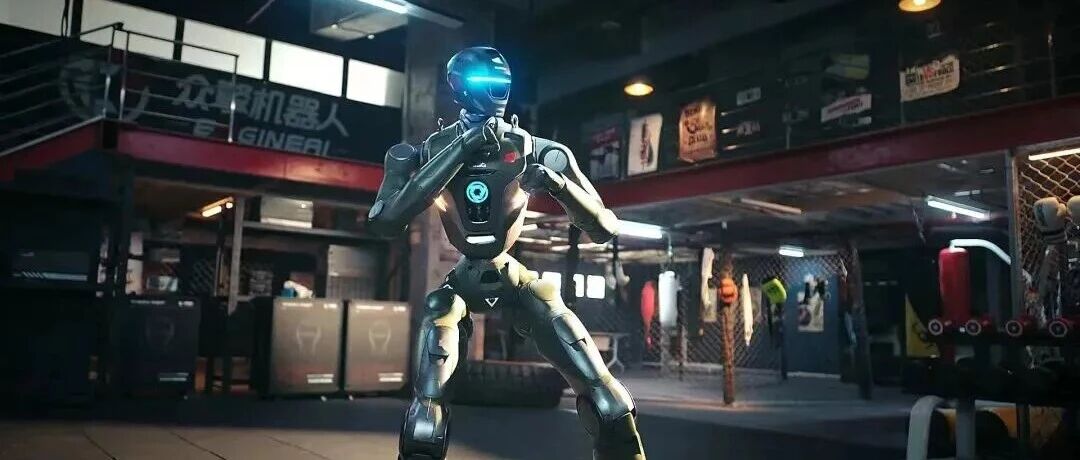
残暴!众擎T800机器人一脚踹翻老板,网友:多少带点私人恩怨;罗永浩硬件研发出意外,为「补贴家用」做播客;张予彤出任月之暗面总裁
雷峰网· 2025-12-09 00:49
Group 1 - Tesla's Optimus humanoid robot fell during a demonstration, raising concerns about its claimed autonomy as it appeared to mimic a "remove headset" action, suggesting possible remote control involvement [5][6] - The incident has been interpreted as a significant blow to Tesla's narrative of AI-driven independence, as the robot struggled with a simple task [6] - The CEO of a competing company, Zhongqing Robotics, was kicked by their T800 robot during a promotional video, which sparked discussions about workplace dynamics and safety [7][8] Group 2 - Zhang Yutong has been appointed as the president of Moonshot AI, taking charge of strategic planning and commercialization, amidst ongoing disputes with former associates [10][11] - The AI chip company Moer Thread recently went public, achieving a 425% increase on its first day, creating several billionaires in the process [17][18] - ByteDance's former public relations director Yang Jibin has joined Li Auto, indicating a trend of talent movement within the tech industry [15] Group 3 - The U.S. Senate has proposed a bill to ban the export of advanced AI chips to China and Russia for at least 30 months, which could significantly impact companies like NVIDIA and AMD [17][18] - The IPO of Jiangsu-based chip company Naxin Micro raised approximately 170 billion RMB, with significant backing from major investors including BYD and Xiaomi [23][24] - Midea Group has completed a 10 billion RMB share buyback, with plans to cancel a substantial portion of the repurchased shares, reflecting strong financial health [24][25] Group 4 - OpenAI's ChatGPT is currently serving over 800 million users weekly, highlighting the rapid growth and adoption of AI technologies across various sectors [45][46] - The upcoming GAIR Global AI and Robotics Conference will focus on cutting-edge topics in AI, showcasing the industry's commitment to innovation and collaboration [47]


今日A股市场重要快讯汇总|2025年12月9日
Xin Lang Cai Jing· 2025-12-09 00:23
Group 1: Market Overview - The three major US stock indices closed lower on Monday, with the Dow Jones down 0.45%, the Nasdaq down 0.14%, and the S&P 500 down 0.35% [1][7] - Large tech stocks showed mixed performance, with Broadcom rising over 2%, while Tesla and Netflix fell over 3% [1][7] Group 2: Commodity and Currency Dynamics - WTI crude oil fell below $59 per barrel, down 1.84% [3][9] - Gold futures briefly surpassed $4220 per ounce before retreating, closing down 0.79% [4][9] - Spot gold fell below $4180 per ounce, down 0.39% [5][9] - US natural gas futures dropped over 9% due to narrowing temperature drop forecasts and high production levels, currently at $3.849 per million British thermal units [5][9] - A 7.5 magnitude earthquake near eastern Honshu, Japan, caused short-term fluctuations in the USD/JPY exchange rate, which rose by 0.5% to 155.81 yen [5][9] Group 3: International Market Developments - Paramount launched a hostile takeover bid for Warner Bros. Discovery, offering $30 per share in cash, an 8% premium over Netflix's previous $720 billion acquisition offer of $27.75 per share, potentially providing shareholders with an additional $18 billion in cash benefits [10] - Warner Bros. owns several major networks including CNN, TBS, HGTV, and the HBO Max streaming platform, with Paramount claiming the proposal is more likely to pass regulatory scrutiny [10] - Former President Trump plans to sign an executive order this week to simplify AI industry regulatory approval processes, aiming to prevent individual states from creating conflicting regulations that could undermine the US's competitive edge in AI [10]


8点1氪|盒马回应“草莓蛋糕制作中将糖放成盐”;万达集团被恢复执行17亿;国家税务总局:严禁平台向“小哥”转嫁涉税义务
3 6 Ke· 2025-12-09 00:02
Group 1 - Hema acknowledged issues with strawberry cakes sold, affecting approximately 60 units across 7 stores due to ingredient handling errors [2] - Wanda Group has a new enforcement order for over 1.7 billion yuan, with over 6.9 billion yuan in total enforcement amounts against the company [2] - The State Taxation Administration prohibits platform companies from shifting tax obligations to gig workers, ensuring they are not overcharged [3][9] Group 2 - PepsiCo plans to reduce its product variety in the U.S. market by nearly 20% by early next year, aiming to cut operational costs and enhance efficiency [5] - The price of three-valent flu vaccines has dropped to 5.5 yuan, attributed to intense competition and oversupply in the vaccine market [8] - Paramount has proposed a cash acquisition offer of $30 per share for Warner Bros. Discovery, valuing the company at $108.4 billion [7] Group 3 - Faraday Future's board approved a five-year plan to produce 400,000 to 500,000 vehicles, with the first batch of FX Super One vehicles set to roll off the production line [13] - The International Monetary Fund (IMF) has officially launched its Shanghai Regional Center to enhance cooperation with the Asia-Pacific region [12] - The U.S. government announced a $12 billion aid package for farmers affected by tariff policies, addressing the negative impact on agricultural markets [14]

纳斯达克中国金龙指数收涨0.08%,热门中概股涨跌不一
Mei Ri Jing Ji Xin Wen· 2025-12-08 21:09
Core Viewpoint - The Nasdaq China Golden Dragon Index experienced a slight increase of 0.08%, indicating mixed performance among popular Chinese concept stocks [1] Group 1: Stock Performance - Baidu saw a significant rise of over 3% [1] - Xpeng Motors and New Oriental both increased by more than 2% [1] - NIO and GDS Holdings rose by over 1% [1] - Li Auto, Bilibili, and Kingsoft experienced slight gains [1] - ZTO Express, Ctrip, and NetEase all declined by more than 2% [1]


智驾国产芯片格局变化
2025-12-08 15:36
Summary of Conference Call Records Industry Overview - The records focus on the autonomous driving chip landscape in the Chinese automotive industry, highlighting various companies' strategies and developments in self-driving technology and chip utilization. Key Points by Company NIO - NIO's self-driving solution utilizes fully self-developed technology, primarily promoting a world model, but currently lags in effectiveness. The main task for next year is to improve the connectivity rate of the parking-to-parking function and handle complex cases. The Lido and Firefly series are expected to continue using NVIDIA solutions [1][3]. Xpeng Motors - Xpeng's mid-to-high-end models will feature the self-developed Turing chip with a computing power exceeding 1,000 TOPS. The focus is on the iteration of VLA and world models, deeply integrating the BL module. The Turing chip will also be used in the Robotic business line to optimize Robot Taxi efficiency and safety [1][5]. Li Auto - Li Auto's self-developed M100 Schumacher chip is expected to enter mass production in Q2 2026, debuting in high-end models. The AD Max system will feature a mix of M100 and Horizon solutions, while the AD Pro system will continue with Horizon but may upgrade to the G6H version. The algorithm will firmly follow the VOL route [1][5]. Xiaomi - Xiaomi plans to use NVIDIA's 42 series chips in high-end models, while the self-developed Xuanjie O2 chip will be temporarily shelved due to regulatory challenges. The algorithm will be upgraded to address key issues, adopting a structure similar to Tesla's, focusing on world models and language models to solve parking and urban commuting challenges [1][6]. BYD - BYD will upgrade its high-end solutions to NVIDIA's Orin solution, debuting in the Yangwang U8 model. The terminal solution, Tianyi Cloud B1, will have two versions, one continuing with the Orin 3OX low-cost solution and another possibly using Horizon's G6P. BYD plans to significantly adopt the Orin solution and phase out Horizon [1][7]. Chery - Chery's 2026 autonomous driving plan includes multiple tiers. The Falcon 500 series will primarily use Horizon and Qualcomm platforms, while the Falcon 700 series will adopt a dual Orin X platform. The Falcon 900 series will utilize the Sora Ultra platform [1][4][9]. Geely - Geely's autonomous driving layout spans low, mid, and high-end models. Low-end models will mix Black Sesame 1,000 and Horizon Orin chips, while mid-range models will use single and dual Orin X chips. High-end models will feature Soar and dual Soar chips, debuting in flagship models like Zeekr 001 [1][10]. Great Wall Motors - Great Wall's autonomous driving solutions are categorized into low, mid, and high computing power platforms. The low computing power platform will use TI TDA 4VH and Horizon GLM chips, while the mid computing power platform will collaborate with Momenta. The high computing power platform will include dual Orin X and Soar, with Soar expected to replace dual Orin X in 2026 [1][11]. Market Trends - By 2026, companies like BYD, Chery, Geely, and Great Wall, along with joint ventures like Toyota and Volkswagen, are expected to become significant third-party chip purchasers. Volkswagen plans to accelerate its smart vehicle process, heavily adopting Horizon's G6P and G6M solutions [1][12]. Cost Trends - The cost of mid-range platforms, such as BYD's Tianlian B1, is projected to decrease by about 10% in 2026, dropping to around 7,000 yuan. Low-end solutions like Horizon GO6M will see annual hardware cost reductions of 5%-7%. High-end solutions like Orin and Sol are expected to have limited cost reductions, primarily relying on software supplier price drops and increased shipment volumes [1][14][16]. Chip Development - The records indicate a growing trend towards self-developed chips in high-end vehicles to enhance profit margins and optimize resource allocation. In contrast, low-end vehicles will continue to utilize third-party solutions for cost efficiency and quality assurance [1][26]. Conclusion - The autonomous driving sector in China is rapidly evolving, with various companies adopting different strategies for chip development and algorithm integration. The competition is intensifying, particularly in the high-end market, where self-developed solutions are becoming more prevalent.
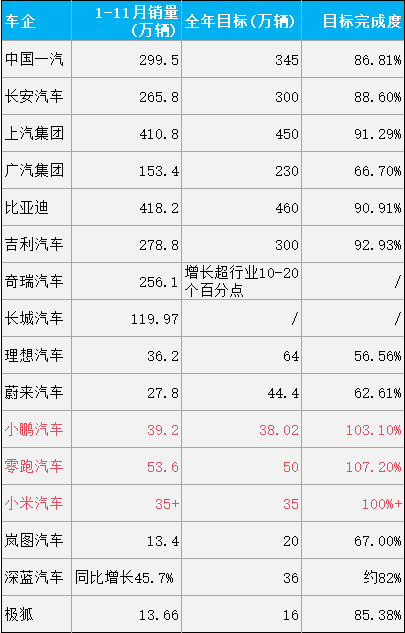
最后一个月!16家车企全年目标完成度大盘点!
Zhong Guo Qi Che Bao Wang· 2025-12-08 12:24
Summary of Key Points Core Viewpoint - The automotive industry in China is nearing the end of 2025, with various companies reporting their sales performance against annual targets, revealing a mix of successes and challenges across the sector. Group 1: Company Performance - China FAW Group achieved a cumulative sales of 2.995 million units from January to November, with a target completion rate of 86.81% against an annual goal of 3.45 million units, showing a year-on-year growth of 4.8% [3][4] - Changan Automobile reported cumulative sales of 2.658 million units, achieving 88.6% of its 3 million unit target, with a notable 54.66% year-on-year growth in its new energy vehicle sales [6] - SAIC Motor Corporation reached 4.108 million units in cumulative sales, completing 91.29% of its 4.5 million target, with a 16.4% year-on-year growth [8] - GAC Group's cumulative sales were 1.534 million units, achieving only 66.7% of its 2.3 million target, reflecting a 10.8% year-on-year decline [10] - BYD's cumulative sales stood at 4.182 million units, completing 90.9% of its revised target of 4.6 million units, with significant contributions from overseas markets [12] - Geely Automobile achieved 2.788 million units in sales, with a completion rate of 92.93%, reflecting a strong 42% year-on-year growth [14] - Chery Group's cumulative sales were 2.561 million units, with a year-on-year growth of 11.1%, aiming to exceed industry growth by 10-20 percentage points [16] - Li Auto reported 362,000 units sold, achieving only 56.56% of its 640,000 target, facing challenges in product cycles and market competition [18] - NIO's cumulative sales were 278,000 units, achieving 62.61% of its 444,000 target, with a year-on-year growth of 45.6% [20] - XPeng Motors exceeded its target with 392,000 units sold, achieving 103.1% of its goal [22][23] - Leap Motor surpassed its target with 536,000 units sold, achieving 107.2% of its goal [25] - Xiaomi's automotive division exceeded its target of 350,000 units, with expectations to surpass 400,000 units [27] - Lantu's cumulative sales were 134,000 units, achieving 67% of its 200,000 target, with a year-on-year growth of 82% [29] - Deep Blue reported a year-on-year growth of 45.7%, with a target of 360,000 units [31][32] - Arcfox aimed for significant growth, achieving 85.38% of its target with 136,600 units sold [34] Group 2: Industry Insights - The performance metrics of these companies reflect their strategic positioning in technology, market strategy, and organizational resilience, indicating a transition in the Chinese automotive industry from quantity accumulation to quality improvement [34]