智利国家铜业

Search documents
2026年铜期货期权白皮书:铜:AI叙事演进战略金属崛起
Ge Lin Qi Huo· 2026-03-06 08:18
1. Report Industry Investment Rating The provided content does not mention the industry investment rating. 2. Core View of the Report The report indicates that copper's strategic position is becoming increasingly prominent in the energy transition and digitalization process. The global copper supply is structurally tight, while the demand in China's new energy, power equipment, and high - end manufacturing sectors is rising, driving up the demand for high - end copper products and supporting copper prices. In 2026, the copper price is expected to remain high, with a trend of high - level fluctuations, rising first and then falling, and the price center will shift upwards. The global copper market will turn from a slight surplus to a substantial shortage [3][200][202]. 3. Summary According to Relevant Catalogs 3.1 Copper Industry Chain Analysis - **Nature and Application of Copper**: Copper has high thermal and electrical conductivity, chemical stability, and strong tensile strength. It is widely used in electronics, electrical, machinery, metallurgy, construction, and decoration industries [16]. - **Copper Industry Chain Structure**: The upstream provides copper concentrate and recycled copper raw materials, with high resource monopoly and high profits; the middle - stream smelts and processes raw materials into refined copper and copper products, with thin profits in general processing and premiums in high - end processing; the downstream is mainly for terminal consumption in power, transportation, electronics, construction, and home appliances, with the power and new energy sectors leading the demand. The waste copper recycling link runs through the entire industry chain [18][20][30]. 3.2 Introduction to Copper Futures and Options Contracts - **Cathode Copper Futures Contract**: The delivery system includes physical delivery (tax - paid delivery and bonded delivery, warehouse delivery, and factory warehouse delivery) and cash - settlement delivery. The delivery period is the two consecutive working days after the last trading day [34]. - **Cathode Copper Options Contract**: The contract types are call options and put options. The exercise method is American. The delivery system includes automatic exercise and exercise matching, and there is a margin system [37][40][41]. 3.3 Review of Copper Price Trends - **Nearly Twenty - Year Price Trend**: Divided into four stages: the recovery start from 2003 to July 2008, the financial crisis and the four - trillion stimulus from August 2008 to 2010, the high - level fluctuation and demand differentiation from 2011 to 2019, and the new energy and AI computing - power drive from 2020 to February 2026 [43][44][48]. - **2025 Price Trend**: Affected by global mining disturbances, macro - loose expectations, and demand structural differentiation, the price fluctuated upwards throughout the year and broke through 100,000 yuan/ton at the end of the year [49]. - **Volume, Open Interest, and Precipitated Funds in 2025**: From 2025 to the end of February 2026, the average daily trading volume of Shanghai copper was 258,800 lots, a year - on - year increase of 23.19%; the average daily open interest was 540,600 lots, a year - on - year increase of 14.22%; the average daily precipitated funds were 44.266 billion yuan, a year - on - year increase of 54.48% [57][58]. 3.4 Impact of Macroeconomic Factors on Copper Prices - **US Macroeconomic Impact**: Fed interest rate cuts support copper prices in the medium and long term, and the US dollar index is negatively correlated with copper prices. In 2026, the US economy may peak in the first quarter, and the probability of an economic and financial crisis in summer is relatively high [64][65][69]. - **Chinese Macroeconomic Impact**: China implemented a moderately loose monetary policy in 2025, which provided macro - support for copper prices. Although the overall PPI was negative, the PPI of the non - ferrous metal smelting and rolling industry increased month - on - month and year - on - year, supporting copper prices [70][71][76]. 3.5 Copper Supply Analysis - **Global Copper Mine and Refined Copper Production**: In 2025, global mine copper production increased by 1.22%, and refined copper production increased by 3.57%. The growth of copper mine production slowed down significantly, and the supply was structurally tight. Chinese - funded enterprises became the core engine of global copper mine growth [79]. - **Chilean Major Copper Mine Production**: In 2025, the production of major copper mines in Chile slowed down, and the annual production forecast was lowered. The production of El Teniente and Collahuasi copper mines declined significantly [83]. - **China's Copper Mine Import Volume**: In 2025, China's copper ore concentrate imports increased by 7.81%, and refined copper imports decreased by 5.26%. Chinese copper enterprises are actively deploying global resources [90][91]. - **China's Refined Copper Production**: In 2025, China's refined copper production was 14.72 million tons, a year - on - year increase of 7.89%, ranking first in the world. Enterprises adopted multiple strategies to expand production [92][93]. 3.6 Copper Demand Analysis - **China's Copper Product Output**: In 2025, China's copper product output was 24.81 million tons, a year - on - year increase of 5.58%. High - end copper products driven by new energy, power, and high - end manufacturing industries increased [97][99]. - **Power and Communication Infrastructure**: In 2025, China's power generation equipment output increased by 30.43%, and mobile communication base station equipment output increased by 17.68%, driving copper demand [101][108]. - **New Energy Vehicles and Charging Piles**: In 2025, China's new energy vehicle production increased by 25.49%, and the number of charging facilities increased by 49.7%, driving copper demand [109]. - **Industrial Equipment and Electronic Products**: In 2025, China's industrial robot production increased by 38.95%, and integrated circuit production increased by 7.28%, driving copper demand [113][116]. - **White Goods such as Air - conditioners and Refrigerators**: In 2025, China's air - conditioner production increased by 0.37%, and refrigerator production increased by 5.08%. The demand for copper in the refrigerator industry was less marginal [117][122]. - **Copper Product Export Situation**: In 2025, China's refined copper exports increased by 72.97%, and unprocessed copper and copper product exports increased by 30.04%. The export structure changed due to US tariff policies [123][126]. 3.7 Copper Inventory and Position Analysis - **Exchange Inventory Analysis**: In 2025, LME copper inventory first decreased and then increased, COMEX copper inventory increased significantly, and Shanghai copper inventory fluctuated [127][131][136]. - **Domestic Hidden Inventory Analysis**: In 2025, the hidden inventory first decreased and then increased. The inventory in Shanghai Free Trade Zone and Jiangsu Province changed significantly [140][141]. - **Copper Market Position Analysis**: In 2025, the net long positions of LME copper investment funds and COMEX copper non - commercial positions increased, and the net position of the top 20 members of Shanghai copper futures changed from net long to net short [144][148][152]. 3.8 Copper Market Arbitrage Analysis - **Cross - Variety Arbitrage**: The gold - copper ratio, silver - copper ratio, and oil - copper ratio were affected by factors such as Fed interest rate cuts, tariff policies, and geopolitical risks [156][160][164]. - **Spot - Futures Arbitrage**: The basis of Shanghai copper futures fluctuated between premium and discount, with a slightly higher number of positive bases [172]. - **Calendar Spread Arbitrage**: The price difference between near - month and next - near - month contracts showed a Contango structure in the first quarter of 2025, a Back structure in the second quarter, and small fluctuations in the second half of the year [174]. 3.9 Copper Options Analysis - **Options Volume and Open Interest**: In 2025, the trading volume of copper options was higher than that in 2024, and the open interest increased steadily. The bullish sentiment was dominant [178][180]. - **Options Implied Volatility**: The implied volatility of copper options fluctuated significantly three times in 2025, mainly affected by tariff wars, mine production cuts, and interest rate cut expectations [181][184]. 3.10 Copper Enterprise Futures Hedging Case - **Enterprise Situation**: A comprehensive copper production enterprise conducts futures and derivatives hedging to avoid price fluctuations in raw materials and products [185]. - **Operation Process**: The enterprise locks in the purchase cost of copper through futures hedging operations [186]. 3.11 Copper Price Technical Analysis - **Seasonal Analysis**: The copper price is relatively stable or slightly rebounds at the beginning of each year, reaches a peak in the second quarter, corrects or fluctuates from mid - year to the third quarter, and often shows a tail - rising market in the fourth quarter. The price center has gradually shifted upwards [191]. - **Technical Analysis**: The difference between the resistance level and support level of copper price fluctuated in 2025 - 2026, reflecting changes in market sentiment and volatility [195]. 3.12 2026 Copper Price Outlook and Strategy Recommendation - **Supply - Side**: Global copper supply is rigidly constrained due to factors such as insufficient long - term capital expenditure, declining ore grades, and frequent disturbances in major copper - producing countries [199]. - **Demand - Side**: New energy and AI computing - power construction are the main drivers of copper demand growth, and domestic demand is also resilient [200]. - **Price Outlook**: In 2026, the copper price will fluctuate at a high level, rising first and then falling, with a rising price center. The core operating range of LME copper is 11,500 - 13,500 US dollars/ton, and that of Shanghai copper is 98,000 - 108,000 yuan/ton [202]. - **Strategy Recommendation**: Strategies include buying on dips, trading in bands, and hedging. Futures investors can buy on dips, upstream and downstream enterprises can lock in costs and profits respectively [202]. 3.13 Appendix: Statistics of Copper - Related Stock Prices and Price Changes The report lists the stock prices, current prices, and price changes of copper - related upstream, mid - stream, and downstream companies as of February 26, 2026 [203][204][205].
银河期货铜3月报-20260227
Yin He Qi Huo· 2026-02-27 09:38
| . | | --- | | 战略储备需求增加,铜价偏强震荡 | 2 | | | --- | --- | --- | | 第一部分 | 铜市场综述 2 | | | 2 | | | | 2 | | | | 2 | | | | 第一部分 | 铜市场综述 3 | | | 3 | | | | 3 | | | | 第二部分 | 地缘局势紧张,战略储备需求增加 | 5 | | 第三部分 | 供应端 7 | | | 第四部分 | 消费面分析 15 | | | 15 | | | | 18 | | | | 21 | | | | 24 | | | | 26 | | | | 第五部分 | 供需平衡表 27 | | | 免责声明 | | 28 | 有色金属研发报告 铜 3 月报 2026 年 2 月 27 日 战略储备需求增加,铜价偏强震荡 第一部分 铜市场综述 邮 箱 银河期货 第 2 页 共 29 页 有色金属研发报告 铜 3 月报 2026 年 2 月 27 日 第一部分 铜市场综述 第 3 页 共 29 页 铜 3 月报 2026 年 2 月 27 日 图 1:铜价走势图 图 2:沪铜隔月价差(连一-连三)(元/吨) 图 ...
铜:矿端供应仍然偏紧
Wu Kuang Qi Huo· 2026-02-12 01:01
Report Industry Investment Rating - Not provided Core View - Since the second half of 2025, the global copper price has risen significantly, and the continuous tight supply of copper mines is an important factor driving the upward trend of copper prices. The current global copper mine supply remains tight, and the growth expectation for 2026 is weak, constrained by multiple structural factors. In an environment with sufficient funds in the financial market, the impact of mine - end disturbances is likely to be magnified, and copper prices still have strong support [1][23] Summary by Related Catalogs 2025 - 2026 Copper Mine Production - In Q4 2025, the sample mines had a year - on - year production reduction of about 290,000 tons, a decrease of 6.7%. The Grasberg mine under Freeport, the Kamoa - Kakula mine, Escondida, and some mines under Antofagasta all had significant production declines [4] - In 2025, the global sample mines produced about 16.65 million tons, a year - on - year decrease of about 270,000 tons (- 1.6%). It is expected that the sample mines will produce about 16.86 million tons in 2026, with an increase of about 210,000 tons, but the growth rate is lower than previously expected [5] 2025 Copper Mine Cost - In 2025, the 90th - percentile C1 cash cost of overseas sample copper mines was about $5,543 per ton, a decrease of 2.63% compared to 2024. The reasons include high by - product prices, stable energy prices, and the recovery of some mine production [8] Ore Grade - The average ore grade of overseas sample copper mines decreased from about 0.82% in 2021 to about 0.68% in 2025, showing a significant structural decline [13] Capital Expenditure - Since 2015, the capital expenditure of global sample copper mines has shown a fluctuating upward trend, but the growth rate has slowed down in recent years. The actual capital investment scale may be even lower after adjusting for inflation [16] - Maintenance capital expenditure accounts for most of the total capital expenditure. The increase in capital expenditure is mainly for the maintenance of existing development projects. The increase in capital expenditure for greenfield and brownfield project expansions is still moderate [20]
2000亿矿业“世纪联姻”告吹
Xin Lang Cai Jing· 2026-02-09 01:01
Core Viewpoint - Rio Tinto's termination of merger talks with Glencore highlights valuation disagreements and management control issues, reflecting the challenges faced by traditional mining companies amid global energy transition [1][2]. Group 1: Merger Negotiation Breakdown - The merger discussions between Rio Tinto and Glencore date back to before the 2008 financial crisis, with previous attempts in 2014 and 2024 also failing [1]. - Key issues leading to the breakdown include Glencore's high valuation demands, insisting on a 40% stake post-merger, and claiming its copper business is undervalued [2]. - Discrepancies in copper asset valuation between the two companies amount to several billion dollars, complicating negotiations [2]. Group 2: Management Control Disputes - Rio Tinto aimed to retain the chairman and CEO positions post-merger without offering sufficient premium compensation, which Glencore opposed, citing a lack of control premium [2]. - The strong stance from Rio Tinto is linked to its new CEO Simon Trott's aggressive expansion strategy focused on copper [2]. Group 3: Industry Context and Trends - The failed merger reflects broader trends in the mining industry, where companies are increasingly pursuing mergers to secure copper resources amid rising demand from electric vehicles and renewable energy [4]. - The International Copper Study Group predicts a global copper shortfall of 4.7 million tons by 2030, with new mine development taking 10-15 years, making mergers a viable growth strategy [4]. - If the merger had succeeded, Rio Tinto's copper production would have doubled to 2.3 million tons per year, surpassing Codelco as the largest copper producer [4]. Group 4: Industry Consolidation and Challenges - The breakup of the merger underscores the fierce competition among mining giants for industry dominance, with recent examples of mergers like BHP's acquisition of Anglo American assets [5]. - Smaller mining companies face a challenging environment, with a projected increase in mining transaction values by 2025, leading to a trend where they may either be acquired or marginalized [5]. Group 5: Future Outlook - Despite the merger's failure, the competition for copper resources among mining giants is expected to continue, with forecasts predicting copper prices could exceed $12,000 per ton by 2026 [6]. - Future mergers may focus on smaller, high-potential mining assets or involve partnerships and technology sharing to mitigate risks associated with valuation disagreements [6]. - The failure of this merger highlights the strategic contradictions faced by traditional mining companies in rapidly evolving energy markets, indicating that the quest for consolidation is far from over [6].

国内完善铜资源储备体系建设 沪铜会继续高位运行吗?【文华观察】
Wen Hua Cai Jing· 2026-02-04 10:32
美联储前理事凯文·沃什被特朗普提名为美联储下一任主席,由此引发了市场对于美联储后续货币政策 路径可能边际转鹰的一系列猜测,最近全球金融市场巨震,特别是贵金属板块前期累积过多获利盘导致 多头踩踏,抛售情绪下有色金属也出现大幅回调一幕。不过伴随着风险偏好的修复,铜价快速回归1月 份震荡平台附近。近期宏观情绪发什么怎样的变化?铜价下方有何支撑? 美元指数止跌企稳 美联储政策路径待明朗 前期重要矿产国密集出台资源保护政策,叠加去年美国大幅提高进口关税,以及今年以来委内瑞拉、格 陵兰岛变局,让市场意识到大国对战略性资源控制权的争夺愈发激烈。虽然此前美国232调查结果出炉 对关键矿产暂缓征税,但最近又祭出120亿美元战略金属收购存储计划,用于为汽车企业、科技公司、 制造商等采购并储存矿产资源,储备范围预计涵盖稀土、铜和锂等关键矿产以及其他价格波动较大的战 略性元素。与此同时,最近中国有色金属工业协会在新闻发布会上表示,将配合有关部门严控新增矿铜 冶炼项目,还将扩大国家铜战略储备规模,探索进行商业储备机制,通过财政贴息等方式选择国有骨干 企业试行商业储备,并可研究将贸易量大、容易变现的铜精矿纳入储备范围。这体现了全球主要经 ...

早报(12.17)| 悬念升级!美联储主席人选再添劲敌;特朗普将全美讲话;中央财办最新发声
Ge Long Hui· 2025-12-17 00:55
Group 1: Economic and Market Developments - Trump is set to interview current Federal Reserve Governor Waller for the position of Fed Chair, with an announcement expected in early January [1] - The U.S. stock market showed mixed results, with the Dow down 0.62% and the Nasdaq up 0.23%, while major tech stocks like Tesla and Meta saw gains [2] - The international oil prices declined, with WTI crude oil futures dropping to $55.27 per barrel, a decrease of nearly 2.73% [2] Group 2: Corporate News and Developments - AMD's CEO Lisa Su visited Lenovo's headquarters in Beijing, showcasing Lenovo's latest products and technologies [4] - Apple is expected to launch at least seven new iPhone models by fall 2027, including a foldable iPhone and a 20th-anniversary edition [5] - XPeng Motors received a license for L3 autonomous driving road tests in Guangzhou, while Huawei's Hongmeng Zhixing began internal testing for L3 capabilities [6] Group 3: Regulatory and Policy Changes - The EU plans to abandon the 2035 ban on internal combustion engines, allowing some plug-in hybrid vehicles and reducing emissions targets [9] - China's Ministry of Commerce announced anti-dumping duties on EU pork products, ranging from 4.9% to 19.8%, effective from December 17 [22] - The Chinese government approved the establishment of a joint venture between Chilean companies for lithium mining, with conditions to ensure fair supply [15] Group 4: Industry Trends and Forecasts - Morgan Stanley predicts a copper supply deficit of 60,000 tons by 2026, indicating a tightening market [20] - The automotive sector in China saw significant growth in commercial vehicle production and sales, with November figures showing a year-on-year increase of 18.6% [21] - The postal industry in China reported a 6.7% increase in business revenue year-on-year for the first eleven months of the year [21]


国泰君安期货商品研究晨报-20251204
Guo Tai Jun An Qi Huo· 2025-12-04 02:54
Report Summary 1. Investment Ratings for the Industry The report does not provide an overall investment rating for the industry. Instead, it offers trend intensities for various commodities: - **Strongly Bullish**: Copper [9] - **Bullish**: Gold, Silver, Zinc, Aluminum, Cast Aluminum Alloy [5][12][22] - **Neutral**: Lead, Tin, Platinum, Palladium, Nickel, Stainless Steel, Lithium Carbonate, Industrial Silicon, Polysilicon, Rebar, Hot - Rolled Coil, Ferrosilicon, Manganese Silicon, Coke, Coking Coal, Logs, p - Xylene, PTA, MEG, Synthetic Rubber, LLDPE, Bottle Chips, Pulp, Methanol, Urea, Styrene, Soda Ash, PVC, Fuel Oil, Low - Sulfur Fuel Oil, Container Shipping Index (Europe Line), Short - Fiber, Pure Benzene, Palm Oil, Soybean Oil, Soybean Meal, Soybean, Corn, Cotton, Eggs, Peanuts [15][18][27][31][36][40][46][51][55][57][61][70][73][131][85][92][97][100][103][114][117][119][138][141][148][151][159][165][171] - **Bearish**: Iron Ore, PP, Caustic Soda, Glass, Sugar, Live Pigs [43][76][80][90][155][167] - **Strongly Bearish**: None 2. Core Views The report analyzes the fundamentals, market trends, and news of various commodities. Key views include: - **Precious Metals**: Gold is influenced by rising rate - cut expectations, and silver is accelerating its upward movement [5]. - **Base Metals**: Copper prices are rising due to multiple drivers, and zinc is oscillating with a bullish bias [9][12]. - **Energy and Chemicals**: PX is in a high - level oscillating market with a widening PXN, and MEG is recommended to be long while PTA is short [61]. - **Agricultural Products**: Palm oil is waiting for a turning - point confirmation, and soybean oil is oscillating due to insufficient US soybean drivers [141]. 3. Summary by Commodity Precious Metals - **Gold**: Rising rate - cut expectations drive price increases. The price of domestic and international gold futures and spot has increased, and ETF holdings have also increased slightly [5]. - **Silver**: It is accelerating its upward movement and reaching new highs. The price of domestic and international silver futures and spot has risen significantly, and trading volume has increased [5]. Base Metals - **Copper**: Multiple drivers, including a potential supply shortage in 2026 and strong Asian demand, are pushing prices higher. Futures and spot prices are rising, and inventory changes vary [9]. - **Zinc**: It is oscillating with a bullish bias. Futures prices are relatively stable, and spot premiums have changed [12]. - **Lead**: Reduced inventory limits price corrections. Futures and spot prices are relatively stable, and inventory has decreased [15]. - **Tin**: Supply has been disrupted again. Futures prices are oscillating, and spot prices have decreased slightly [18]. - **Aluminum**: It is running strongly, while alumina is under pressure, and cast aluminum alloy follows electrolytic aluminum. Futures and spot prices of aluminum have increased, and inventory has decreased [22]. - **Nickel**: Fundamental factors limit the upside potential, and it is oscillating at a low level. Futures and spot prices are relatively stable, and inventory changes are small [31]. - **Stainless Steel**: High inventory and weak supply - demand result in a cost - limited downside. Futures prices are oscillating, and spot prices are relatively stable [31]. Energy and Chemicals - **Lithium Carbonate**: It is oscillating within a range, and the actual progress of major manufacturers'复产 needs attention. Futures prices are oscillating, and spot prices have decreased slightly [36]. - **Industrial Silicon**: It is mainly running weakly. Futures prices are falling, and spot prices are relatively stable [40]. - **Polysilicon**: Attention should be paid to the fermentation of news. Futures prices are rising, and spot prices are relatively stable [40]. - **PX**: PXN is continuously widening, and it is in a high - level oscillating market. Futures and spot prices are falling slightly, and processing margins are widening [61]. - **PTA**: It is in a high - level oscillating market on a single - side. Futures prices are falling, and spot prices are relatively stable [61]. - **MEG**: Long MEG and short PTA positions are recommended. Futures prices are falling, and spot prices are relatively stable [61]. - **Rubber**: It is oscillating weakly. Futures prices are falling, and spot prices are relatively stable [66]. - **Synthetic Rubber**: It is oscillating and falling. Futures prices are falling, and spot prices are relatively stable [70]. - **LLDPE**: The basis has turned positive, and supply remains loose. Futures prices are falling, and spot prices are relatively stable [73]. - **PP**: It has a short - term rebound, but the medium - term trend is under pressure. Futures prices are falling, and spot prices are relatively stable [76]. - **Caustic Soda**: The trend is still under pressure. Futures prices are relatively stable, and spot prices are falling [80]. - **Pulp**: It is oscillating. Futures prices are rising, and spot prices are relatively stable [85]. - **Glass**: The price of the original sheet is stable. Futures prices are falling, and spot prices are relatively stable [90]. - **Methanol**: It is oscillating, and the upside space is narrowing. Futures prices are falling, and spot prices are relatively stable [92]. - **Urea**: Spot trading volume has continuously increased, and the price center has shifted upward. Futures prices are rising, and spot prices are relatively stable [97]. - **Styrene**: It is oscillating in the short term. Futures prices are relatively stable, and spot prices are relatively stable [100]. - **Soda Ash**: The spot market has little change. Futures prices are falling, and spot prices are relatively stable [103]. - **LPG**: The trend is under pressure. Futures prices are falling, and spot prices are relatively stable [105]. - **Propylene**: The pattern remains loose. Futures prices are falling, and spot prices are relatively stable [106]. - **PVC**: It is oscillating at a low level. Futures prices are falling, and spot prices are relatively stable [114]. - **Fuel Oil**: It is making narrow adjustments, and the weak trend continues. Futures prices are falling, and spot prices are relatively stable [117]. - **Low - Sulfur Fuel Oil**: It continued to weaken at night, and the price difference between high - and low - sulfur in the overseas spot market slightly narrowed. Futures prices are falling, and spot prices are relatively stable [117]. Agricultural Products - **Palm Oil**: Waiting for a turning - point confirmation, and it is temporarily traded within a range. Futures prices are relatively stable, and spot prices are rising [141]. - **Soybean Oil**: Oscillating due to insufficient US soybean drivers. Futures prices are falling, and spot prices are relatively stable [141]. - **Soybean Meal**: Oscillating as the market waits for Chinese purchases of US soybeans. Futures prices are relatively stable, and spot prices are relatively stable [148]. - **Soybean**: The spot price is stable, and the futures price is oscillating. Futures prices are rising slightly, and spot prices are relatively stable [148]. - **Corn**: Oscillating. Futures prices are rising, and spot prices are relatively stable [151]. - **Sugar**: Running weakly. Futures prices are falling, and spot prices are relatively stable [155]. - **Cotton**: Supply and demand are both strong. Futures prices are relatively stable, and spot prices are rising slightly [159]. - **Eggs**: The volume of culling has increased, and the sentiment for chick - replenishing has also strengthened. Futures prices are falling, and spot prices are relatively stable [165]. - **Live Pigs**: An increase in supply is approaching, and the industrial logic is returning. Futures prices are falling, and spot prices are falling [167]. - **Peanuts**: Attention should be paid to the spot market. Futures prices are falling, and spot prices are relatively stable [171].
【有色】中国铜冶炼厂2026年减产有望兑现,继续看涨铜价——铜行业系列报告之十一(王招华/方驭涛)
光大证券研究· 2025-12-01 23:04
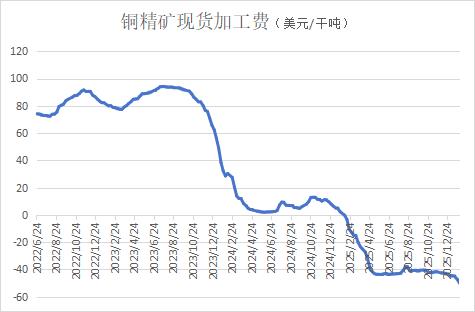
Core Viewpoint - The article discusses the consensus reached by the China Copper Raw Material Joint Negotiation Group (CSPT) to reduce copper production capacity and strengthen market cooperation to ensure the healthy development of the global copper industry [4]. Group 1: Production Capacity - The CSPT group covers approximately 70% of China's electrolytic copper production capacity, with a total capacity of about 1,422 million tons as of October 2025, and CSPT members collectively account for over 1,000 million tons per year [5]. Group 2: Copper Mining - The reduction in copper mining is an inevitable result of supply disruptions in 2025, with several mines, including Kamoa-Kakula and El Teniente, lowering their production guidance due to various incidents, leading to a total reduction of 42,000 tons and 35,000 tons for 2025 and 2026, respectively, which represents about 1.8% and 1.5% of global copper production in 2024 [6]. Group 3: Profitability - Mining companies are facing declining treatment charges (TC) due to tight copper concentrate supply and rapid expansion of smelting capacity, with spot TC prices at -43 USD/ton as of November 28, 2025, and long-term contracts dropping to 0 USD/ton, forcing smelting companies to rely on by-products like sulfuric acid for profitability [7][8]. Group 4: Inventory - As of November 27, 2025, global copper inventory reached approximately 67.6 million tons, the highest in nearly six years, with significant amounts being moved to the U.S. due to tariff expectations, which may exacerbate supply tightness outside the U.S. if disruptions occur [9].
CSPT商议联合减产推升铜价历史新高
Zhong Xin Qi Huo· 2025-12-01 08:38
1. Report's Investment Rating for the Industry - Not provided in the given content 2. Core Viewpoints of the Report - Copper prices have recently surged, with LME copper breaking through USD 11,000 per tonne and SHFE copper approaching RMB 90,000 per tonne, surpassing historical highs. The rise is likely due to expectations of continued supply - side contraction as CSPT members will reduce copper ore production capacity by over 10% in 2026 [4][5]. - With increasing expectations of Fed rate cuts, the return of liquidity is favorable for copper prices. Also, as the Fed chair transition approaches, the US dollar index may be relatively weak, supporting copper prices [6][9]. - On the supply side, copper mine supply disturbances are increasing, TC remains low, and scrap - copper recycling cost and difficulty are rising. Supply has already started to contract, with copper output falling by over 50k tonnes in September and continuing to decline in October [7]. - On the demand side, although terminal demand for copper is weak in the off - season, spot premiums are positive, and Chile's state - owned copper company is raising the refined copper annual premium to Chinese customers, indicating expected tighter supply - demand for refined copper next year [8]. - It is anticipated that under the backdrop of a weak US dollar and significant supply - side constraints, the center of gravity for copper prices will shift further upward, and investors are advised to continue monitoring long positions in copper [9]. 3. Summary by Relevant Catalog Event Review - Copper prices have reached new historical highs. The trigger is the expectation of supply - side contraction as CSPT members will cut copper ore production capacity by more than 10% in 2026 due to low spot processing fees for copper concentrate and upcoming 2026 long - term processing fee negotiations [4][5]. Market Outlook - **Macroeconomic Aspect**: Expectations for Fed rate cuts are rising, and as the Fed chair transition nears, concerns about the Fed's independence may keep the US dollar index weak, which is favorable for copper prices [6][9]. - **Supply Aspect**: Copper mine supply disturbances are increasing, with the Grasberg mine's production cut exacerbating the tightness. Low TC and the risk of further decline triggered CSPT's joint production cut. The cost and difficulty of scrap copper recycling have increased, leading to production cuts at some scrap - copper smelters since Q3, and copper output has declined in September and October [7]. - **Demand Aspect**: Terminal demand for copper is weak in the off - season, but spot premiums are positive, showing increasing downstream acceptance of higher copper prices. Chile's state - owned copper company is raising the annual premium for refined copper to Chinese customers, reflecting expected tighter supply - demand next year [8]. - **Overall Outlook**: With a weak US dollar and strong supply - side contraction expectations, the center of gravity for copper prices is expected to move further upward, and investors are advised to monitor long positions in copper [9].
光大证券:中国铜冶炼厂2026年减产有望兑现 继续看涨铜价
Zhi Tong Cai Jing· 2025-12-01 07:27
Group 1 - The core viewpoint of the report is that the tightness in copper mines is being transmitted to electrolytic copper, leading to an optimistic outlook for copper prices reaching new highs [1] - The China Copper Raw Materials Joint Negotiation Group (CSPT) has reached a consensus to reduce copper mine production capacity by over 10% by 2026, indicating a commitment to address the supply shortage [2] - CSPT members cover approximately 70% of China's electrolytic copper production capacity, with a total capacity of about 1,422,000 tons as of October 2025 [3] Group 2 - The reduction in copper mine production is seen as an inevitable result of the tight supply expected in 2025/2026, with several mines already adjusting their production forecasts downward due to various disruptions [4] - The profitability of smelting companies is increasingly reliant on by-products like sulfuric acid, as the treatment and refining charges (TC/RC) have been declining, with spot prices reaching historical lows [5] - Global copper inventories are at a six-year high, but regional imbalances may exacerbate tightness in electrolytic copper outside the U.S., particularly due to expectations of U.S. tariffs [6]