
美的集团

Search documents
研究了10000名消费者,我们为2026写下30条新消费暴利的秘密
3 6 Ke· 2026-01-06 03:15
Core Insights - The Chinese consumer market in 2026 will be driven by five core consumer groups, shifting from "cost-performance" and "emotional value" to "quality-price ratio" and "holistic self-consumption" [1] - Consumers will prioritize rationality and quality, expecting brands to be both functional and emotionally resonant [1] Group 1: Generation Z (Ages 18-27) - Consumption for Generation Z is a means of self-expression and social identity, where purchases serve as "social currency" to enter specific circles [3][5] - They are willing to spend significantly on items that symbolize their identity, such as limited edition sneakers or local cultural products, reflecting their values and community [5][6] - The rise of "identity consumption" indicates that purchases are more about expressing beliefs and belonging than fulfilling needs [6] - The "谷子经济" (Guzi Economy) represents a mature emotional currency system, with a market size projected to reach 200 billion, driven by fandom and collectibles [9] - Young consumers are increasingly skeptical of influencer marketing, preferring authentic and relatable brand interactions [10][11] - The trend of "micro-luxury" consumption allows young consumers to find joy in small, affordable indulgences, enhancing their daily lives [12] - There is a growing demand for time-saving solutions, with consumers willing to pay for convenience in their daily routines [13][15][17] - The second-hand market is thriving, combining environmental consciousness with unique personal style, as consumers seek vintage items for both quality and social status [18][19] - Digital ownership, such as collecting unplayed games or apps, provides a sense of security and potential [20] - Aesthetic preferences are shifting towards simplicity and authenticity, rejecting excessive packaging and marketing [21][23][24] - Young consumers are exploring less commercialized areas for authentic experiences, seeking a contrast to urban life [25][26] Group 2: Small Town Middle-Aged Consumers - This demographic is characterized by stable income, property ownership, and a strong sense of local pride, making them a foundational consumer group [30] - Their purchasing decisions heavily rely on recommendations from friends and family, emphasizing trust over advertising [30] - Leisure activities define their consumption patterns, focusing on local experiences and community engagement [31][32] - Social currency is significant, with purchases serving to enhance their social image within their communities [33] Group 3: Millennials - There is a polarization in spending habits, with consumers seeking high value in everyday items while indulging in premium products for self-care and family [40][42] - Service consumption is on the rise, as consumers prefer to pay for convenience and quality outcomes rather than doing tasks themselves [43][44] - The "healing economy" is emerging, with consumers regularly engaging in emotional wellness activities, indicating a shift towards prioritizing mental health [46] - Anti-aging products are becoming more sophisticated, with consumers investing in comprehensive health management systems [47] - Membership-based shopping models are gaining traction, as consumers value curated selections that save time and ensure quality [49] - The revival of physical media, such as books and vinyl records, reflects a desire for tangible experiences and meaningful consumption [50] Group 4: New Middle-Class Women - The concept of "self-pleasure" is evolving into a comprehensive investment in personal growth, encompassing various aspects of life [51][52] - Women are increasingly investing in education, fitness, mental health, and skincare, seeking holistic self-improvement [52] - Brands must shift from merely meeting needs to providing integrated solutions that empower consumers [52]


建信期货铝日报-20260106
Jian Xin Qi Huo· 2026-01-06 02:51
1. Report Industry and Date - The report is about the aluminum industry, specifically an "Aluminum Daily Report" [1] - The report date is January 6, 2026 [2] 2. Research Team - The non-ferrous metals research team includes Yu Feifei, Zhang Ping, and Peng Jinglin, with their respective contact information and futures qualification numbers provided [3] 3. Market Review and Operational Suggestions - Despite the lack of news in the aluminum market after the New Year's Day holiday due to the US raid on Venezuela, both LME and SHFE aluminum prices continued to rise in a macro - optimistic atmosphere. LME aluminum exceeded and stood above $3000, and SHFE aluminum rose by over 4% to 23,645 yuan/ton on the first trading day after the holiday, with total positions increasing by more than 45,000 lots to 711,000 lots [8] - Spot trading was sluggish due to high aluminum prices. The discounts in East China were - 220, in Central China were - 450, and in South China were - 280 [8] - The domestic electrolytic aluminum smelting industry maintained high profits, leading to a slight increase in domestic operating capacity. Overseas disruptions were frequent, such as the uncertain renewal of the power contract of a Mozambique aluminum plant. Attention should be paid to the progress of Indonesian capacity expansion [8] - The operating rate of aluminum processing enterprises was weakened by environmental restrictions and high aluminum prices, especially in core consumption areas like Central China where environmental control was tightened, leading to direct shrinkage of spot demand and a rapid increase in domestic aluminum ingot inventories to 684,000 tons [8] - In the medium term, aluminum prices are likely to rise due to loose liquidity and the strong performance of the gold and copper sectors. After the holiday, the enthusiasm of SHFE aluminum funds for long positions was ignited. It is recommended to take a long - position approach at low prices, although short - term fundamental support is limited [8] 4. Industry News - Nineteen air - conditioning enterprises and research institutions, including Midea, Haier, and Xiaomi, jointly launched the implementation of "aluminum replacing copper" standards. Some brand stores said they would launch aluminum household air - conditioning products in 2026 at the earliest, while others had no such plan [9] - Lizhong Group's Mexican factory's second - phase project of 1.8 million ultra - lightweight aluminum alloy wheels has been initially put into production. The third Thai aluminum alloy wheel factory's annual production capacity of 3 million cast - spun aluminum alloy wheels is expected to be put into production next year. High - performance aluminum alloy new material projects in Chongqing, Huai'an, Changchun, and Thailand will be put into production from the fourth quarter of this year to next year [10] - India's state - owned National Aluminium Company (Nalco) plans to start mining the Pottangi bauxite mine in Odisha in June 2026. It is expanding the fifth production line at its Damanjodi alumina refinery, which will increase the annual capacity by 1 million tons to 3.275 million tons [10] - In the first 11 months of this year, China's automobile production and sales both exceeded 31 million, with a year - on - year increase of over 10%. The production and sales of new energy vehicles were both close to 15 million, with a year - on - year increase of over 30%. New energy vehicle exports reached 2.315 million, doubling year - on - year [10]
从小切口透视大行业 ——2025年汽车供应链变革“风暴眼”
Zhong Guo Qi Che Bao Wang· 2026-01-06 02:18
Core Insights - The automotive industry's core competitiveness is shifting from traditional mechanical performance to smart technology, safety, and integration with energy networks [3] - Eight key component areas have emerged as focal points for change in the automotive supply chain by 2025 [3] Group 1: AI and Smart Technology - AI large models, including VLA and VLM, are reshaping the perception, decision-making, and interaction systems in smart vehicles [4] - Companies like Li Auto and XPeng are actively developing and deploying VLA-based autonomous driving systems, with plans for mass production by 2026 [4] - The competition in AI models is intensifying, with a focus on the underlying support systems like computing power and data [4] Group 2: Vehicle-to-Grid (V2G) Interaction - V2G is becoming a hot topic as electric vehicles can act as distributed energy storage units within new energy systems [5] - Government policies are driving the adoption of V2G, with pilot projects and plans to expand the scope of V2G applications by 2027 [5][6] - Companies like GAC Group are implementing V2G functionalities in their models and developing charging infrastructure to support this transition [6] Group 3: Battery Safety Standards - The new national standard for electric vehicle batteries, effective July 2026, emphasizes safety by requiring batteries to be "non-flammable and non-explosive" [7] - The updated standards will compel battery manufacturers to innovate in materials, design, and production processes to meet stricter safety requirements [7] - Leading battery companies like BYD are already adapting to these new standards, which will enhance safety and consumer trust in electric vehicles [7] Group 4: Door Handle Innovations - Electric hidden door handles are becoming a focal point due to safety concerns arising from their failure in collision scenarios [8][9] - New regulations are being proposed to ensure that all door handles, including electronic ones, have a mechanical release function for emergency situations [9] Group 5: Solid-State Batteries - Solid-state batteries are gaining traction due to their advantages in energy density and safety, with several companies planning to launch new products or production lines [10] - The development of solid-state batteries is seen as a key competitive factor for companies in the next generation of electric vehicles [10][11] Group 6: Human-Car-Home Ecosystem - The "Human-Car-Home" ecosystem is emerging, integrating automotive, home, and personal devices into a cohesive smart system [12] - Companies like Haier and Midea are collaborating with automotive brands to create interconnected systems that enhance user experience [12][13] Group 7: Humanoid Robots - The automotive industry is increasingly intersecting with humanoid robotics, with companies exploring the integration of robotic technology into manufacturing processes [14][15] - The demand for precision and adaptability in manufacturing is driving the development of humanoid robots tailored for automotive applications [14] Group 8: Zero-Gravity Seats - Zero-gravity seats are becoming a key feature in mid to high-end vehicles, enhancing passenger comfort and experience [16] - The lack of standardized regulations for these seats poses challenges, particularly regarding safety during vehicle operation and collisions [16]

AI应用、储能与机器人在2026年的预期差
3 6 Ke· 2026-01-06 01:40
在机器人领域,主要玩家就是速腾和禾赛,目前速腾凭先发优势占据国内超过60%的市场份额,禾赛则 以更强产品力拿下 30-40% 份额;海外市场禾赛们目前领先,其空间更大且利润率更高,禾赛国际化程 度优于速腾,且在抢占外资品牌的市场份额。 3.中国储能市场2025 年迎来 "政策强制" 向 "市场化需求" 转型的关键拐点,核心驱动跳出"光伏装机配 储" 单一逻辑,电源侧与储能联合报价将成为主流收益路径。 电网侧储能受新能源接入扩容与储能盈利空间收窄推动,预计 "十五五" 中后期将反超电源侧,成为增 长核心:乐观预计2025年新型储能装机同比增长40%左右至135GW左右,新型储能 2027 年 1.8 亿千瓦 规模化目标大概率提前落地。 1.Anthropic公司旗下的大模型技术发力点略有不同:Claude 4.5 官方定位为最强代码、电脑操作及复杂 智能体构建工具。 根据测评,其综合能力显著提升,能够处理一定的复杂任务处理,比如可在 30 小时内自主创建聊天应 用,支持长时间自主代码运行,且擅长处理代码、公式与数据交错的业务,同时融入了安全策略。 2.国产激光雷达价格打下来之后,实现了在车端智能驾驶的放量突破, ...

供应扰动忧虑继续,基本金属大幅走高
Zhong Xin Qi Huo· 2026-01-06 01:18
Report Industry Investment Rating No clear industry investment rating is provided in the report. Core Viewpoints - In the short - to - medium term, the logic of weak US dollar expectations and supply disruption concerns remains unchanged. The impact of weak real - time demand is limited, and supply disruption concerns continue to drive up base metals. Opportunities for low - buying and long - positions in copper, aluminum, and tin are worth attention. In the long term, with the expectation of potential incremental stimulus policies in China and ongoing supply disruption issues for copper, aluminum, and tin, there is an expected tightening in supply - demand, and the price trends of copper, aluminum, and tin are optimistic [1]. Summary by Related Catalogs 1.行情观点 - **Copper**: Supply contraction expectations are strong, and copper prices are expected to remain at a high level. The macro - environment of loose liquidity supports copper prices. On the supply - demand side, copper mine supply disruptions are increasing, and the supply of refined copper is expected to contract. Although terminal demand is weak and inventory is accumulating, the supply - demand for copper is expected to tighten [7]. - **Alumina**: Cost support is not very effective, and alumina prices are still under pressure. High - cost production capacity has some fluctuations, but the actual supply contraction is insufficient. The market is in a strong inventory - building trend, and raw material prices are weak. The cost support is average, and there is pressure on the upper side of the price [8][9]. - **Aluminum**: With optimistic capital sentiment, aluminum prices have risen significantly. The macro - outlook is positive. On the supply side, domestic operating capacity and utilization rates are high, and there are constraints on medium - term supply. On the demand side, high aluminum prices have suppressed demand to some extent, and inventory has increased. In the short term, the positive macro - outlook and expected tightening of supply - demand suggest that aluminum prices will remain in a strong - side oscillation. In the medium term, the price center is expected to rise [11][12]. - **Aluminum Alloy**: Cost support is strong, and the market has risen significantly. The cost support from tight scrap aluminum supply is solid. Supply is restricted by factors such as raw material shortages and profit inversions. Demand is currently based on rigid needs, and the medium - term demand is expected to improve. With cost support and stable supply - demand, prices are expected to remain in a strong - side oscillation in the short and medium terms [13][14]. - **Zinc**: The import ore TC has not stopped falling, and zinc prices have rebounded with the non - ferrous sector. The macro - outlook may be volatile. On the supply side, zinc ore supply is tight in the short term, and smelter profits are declining. On the demand side, it is the off - season, and demand is average. In the short term, zinc prices may remain in high - level oscillation, and there is a possibility of decline in the long - term [15][16]. - **Lead**: With the accumulation of social inventory, lead prices are oscillating with the non - ferrous sector. On the supply side, production has decreased due to environmental protection and other factors. On the demand side, electric bicycle orders are weak, while automobile battery orders are improving. Lead prices are expected to oscillate [17][18]. - **Nickel**: With repeated expectations of nickel ore quotas, the market is oscillating. Indonesia will regulate nickel production quotas in 2026. On the supply side, there is pressure. On the demand side, it is in the off - season. Nickel prices are expected to oscillate, and the actual quota implementation needs to be monitored [18][20]. - **Stainless Steel**: With repeated expectations of nickel ore quotas, the stainless - steel market has corrected. The cost has some support. Production decreased in December, and there may be a slight increase in January. Terminal demand is cautious, and inventory may accumulate. Stainless - steel prices are expected to oscillate, and Indonesian policy changes need to be tracked [21][22]. - **Tin**: With continued capital games, tin prices are running strongly. Supply risks are high. On the supply side, there are disruptions in various regions, and refined tin production is difficult to increase. On the demand side, it is expected to grow due to factors such as the semiconductor industry and new energy. Tin prices are expected to run strongly in an oscillating manner [22][24]. 2.行情监测 - **Copper**: No specific monitoring content is provided in the given text. - **Alumina**: On January 5, the spot prices in different regions were mostly stable, with a slight decline in Xinjiang. The alumina warehouse receipts were 156,917 tons, unchanged from the previous day [8]. - **Aluminum**: On January 5, the SMM AOO average price was 23,310 yuan/ton, up 850 yuan/ton from the previous day. The inventory of aluminum ingots and aluminum rods in the main consumption areas increased. The warehouse receipts of electrolytic aluminum on the SHFE increased. An Indonesian electrolytic aluminum project started production [11]. - **Aluminum Alloy**: On January 5, the price of Baotai ADC12 was 22,700 yuan/ton, up 400 yuan/ton from the previous day [13]. - **Zinc**: On January 5, the spot premiums of zinc in different regions were reported. As of January 5, the total inventory of zinc ingots in seven regions was 114,800 tons, up 8,700 tons from December 31, 2025. In 2025, the import of zinc concentrates increased significantly [15][16]. - **Lead**: On January 5, the price of waste electric vehicle batteries increased, and the price of lead ingots also rose. The social inventory of lead ingots increased, and the warehouse receipts decreased slightly [17]. - **Nickel**: On January 5, the SHFE nickel warehouse receipts increased, and the LME nickel inventory also increased slightly. Indonesia will regulate nickel production quotas in 2026 [18]. - **Stainless Steel**: The latest stainless - steel futures warehouse receipts decreased. On January 5, the spot premium of Foshan Hongwang 304 was reported [21]. - **Tin**: On January 5, the LME and SHFE tin warehouse receipts decreased, and the SHFE tin positions decreased. The average price of 1 tin ingots increased [24].
2025电商榜单价值及影响力洞察报告
艾瑞咨询· 2026-01-06 00:03
Core Insights - The article emphasizes the evolving role of e-commerce rankings, highlighting their transition from simple recommendation tools to comprehensive business components that enhance user decision-making efficiency, build platform trust, leverage brand growth, and promote industry quality ecosystems [1]. Group 1: User Behavior and Trust - Over 90% of consumers pay attention to ranked products, with 50% prioritizing clicks on items marked with rankings, indicating that rankings are crucial decision-making touchpoints in the purchasing process [6][4]. - Approximately 30% of consumers have started to focus on e-commerce rankings while shopping, and this trend is on the rise, with over 40% believing that ranked products are worth considering [4][6]. - 75.6% of consumers view rankings as a decisive factor in their purchasing decisions, reflecting their significant influence on consumer trust and decision-making [6][15]. Group 2: Ranking Mechanism and Consumer Experience - The rankings are built on a data-driven model that ensures objectivity and transparency, addressing consumer concerns about potential marketing biases [23][25]. - The rankings utilize a comprehensive evaluation system based on sales, popularity, reputation, growth, and brand strength, which helps consumers navigate the overwhelming product choices available [43]. - 61% of consumers express high satisfaction with products recommended by rankings, and 96.9% plan to maintain or increase their usage of e-commerce rankings in the future [6]. Group 3: Brand and Industry Impact - E-commerce rankings serve as a trust-building infrastructure for platforms, providing fair exposure opportunities for quality products and brands, thus enhancing the platform's influence [8][30]. - The rankings reflect consumer trend changes and provide essential guidance for product innovation, driving a positive development cycle in the quality consumption ecosystem [30][32]. - Case studies, such as the success of Hai Lan Zhi Jia's jeans and the collaboration with SHOKZ for exclusive earphones, illustrate how rankings can significantly boost product visibility and sales, creating a virtuous cycle of exposure and consumer trust [32][33]. Group 4: Future Trends and Innovations - The future of e-commerce rankings is expected to see advancements in AI technology, leading to more personalized and intelligent ranking systems that enhance user experience and brand engagement [37][40]. - The article suggests that the evolution of rankings will focus on maintaining objectivity and enhancing user experience, which are critical for meeting consumer needs in a competitive market [35][46].

【钛晨报】证监会新年首会,重拳出击财务造假;2026存储涨价第一枪:三星、海力士DRAM报价上调70%;高盛:建议高配中国股票
Sou Hu Cai Jing· 2026-01-05 23:44
Group 1: Regulatory Actions and Market Oversight - The China Securities Regulatory Commission (CSRC) held a meeting to discuss the implementation of a comprehensive system to prevent financial fraud in the capital market, emphasizing the need for a problem-oriented and systematic approach [2] - In 2024, the CSRC has handled 159 financial fraud cases, with 111 administrative penalties amounting to 8.1 billion yuan, and has intensified accountability for major shareholders and third-party accomplices [3] - The CSRC aims to enhance the quality of listed companies and protect investors' rights, contributing to the high-quality development of the capital market [2][3] Group 2: Industry Developments and Trends - The humanoid robot industry has made significant progress, with expectations of 14,000 units shipped in China in 2024, potentially doubling annually and reaching over 1 million units by 2034 [4] - Alibaba is launching a service to help restaurants utilize AI for showcasing their environments, aiming to reduce marketing costs and compete with Meituan in the food service sector [5] - The semiconductor industry is experiencing shifts, with MediaTek prioritizing resources towards AI-specific integrated circuits and automotive chips, anticipating ASIC business revenue to reach $1 billion by 2026 [7] Group 3: Market Performance and Economic Outlook - The A-share market saw the Shanghai Composite Index rise from 3,351.76 points at the beginning of 2025 to 3,968.84 points by year-end, reflecting an 18.4% increase [13] - High-tech industries, particularly manufacturing and scientific research, showed significant market value growth, with total market values increasing by 33.3% and 32.1% respectively [13] - Goldman Sachs recommends overweighting Chinese stocks in 2026, citing structural growth in exports and a rebound in investments supported by policy [14]
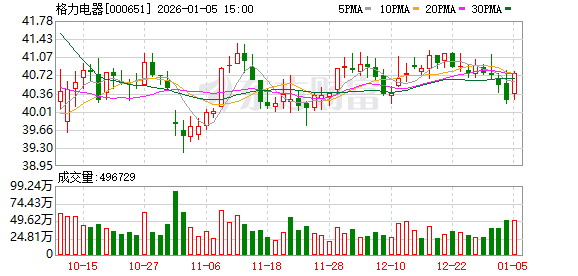
格力公开承诺家用空调不涨价 其他品牌还能涨吗?可能给行业竞争带来什么影响?
Mei Ri Jing Ji Xin Wen· 2026-01-05 23:20
《每日经济新闻》记者获悉,12月初,美博空调国内营销中心向代理商下发《关于美博空调12月价格调 整通知》。由于以铜为代表的大宗原材料价格持续高位运行,原材料成本压力已超出企业消化极限,空 调整机成本持续攀升,为有效缓解成本压力,保障各代理商的利润空间,自2025年12月16日起,美博空 调提货价格在11月份基础上提升5%,具体产品价格明细由区域经理单独下发。 不仅美博空调,美的、志高、富士通等品牌空调接连传出涨价的消息。 在铜价不断上涨、多个品牌传出空调产品涨价之时,格力1月5日对外宣布,积极响应2026年家电国家补 贴政策,切实让利消费者,承诺家用空调不涨价。 龙头企业旗帜鲜明地表明态度,给空调行业正在发酵的涨价潮泼了冷水。 1月5日,格力电器CMO(首席营销官)朱磊向《每日经济新闻》记者详细解释了格力空调不涨价背后 的逻辑。他表示,核心目的就是让消费者真正受益。他说:"当前铜价上涨确实让行业面临成本增加的 压力,但如果我们跟风涨价,最终会稀释补贴红利。"此外,格力明确表示暂无"铝代铜"计划,背后的 原因也是为消费者负责,守住"十年免费包修"的承诺。 记者从卓创资讯获悉,1月5日,电解铜现货价格再次突破10 ...

李强在广东调研时强调 只争朝夕做好“十五五”开局之年工作
Zhong Guo Zheng Quan Bao· 2026-01-05 22:49
Group 1 - The core message emphasizes the importance of high-quality development and innovation in driving economic growth, as highlighted by Premier Li Qiang during his visit to Guangdong [1][2] - The focus on technological innovation is crucial for future competitiveness, with a call for enhanced support for enterprises in terms of policies, funding, and talent [1] - The development of the Guangdong-Hong Kong-Macao Greater Bay Area is seen as a key opportunity to gather innovative resources and strengthen research collaboration in emerging fields and core technologies [1] Group 2 - The visit included an inspection of the digital and intelligent production lines at Midea Kitchen Appliances, indicating a shift towards meeting new consumer demands through quality product development [2] - Emphasis was placed on the integration of infrastructure and regulatory standards to enhance connectivity and collaborative development within the Greater Bay Area [2] - The government is encouraged to deepen reforms in key areas, improve service efficiency, and optimize the business environment to stimulate economic growth [2]
只争朝夕做好“十五五”开局之年工作
Zhong Guo Zheng Quan Bao· 2026-01-05 20:05
Group 1 - The focus of the research is on promoting high-quality development and innovation in the Guangdong-Hong Kong-Macao Greater Bay Area, emphasizing the importance of technological innovation for future success [1][2] - Companies are encouraged to strengthen their innovation capabilities and collaborate on research and development in emerging fields and key technologies, leveraging the advantages of the Greater Bay Area [1] - The government aims to enhance the industrial ecosystem by fostering application scenarios for new technologies such as robotics and drones, promoting their integration into various industries [1] Group 2 - The development of digital and intelligent production lines in manufacturing, as seen in companies like Midea, is highlighted as a response to new consumer demands driven by economic growth [2] - The government is committed to expanding high-level opening-up, integrating hard infrastructure with soft connectivity in rules and standards, and promoting balanced development in imports and exports [2] - There is a call for companies to seize opportunities and innovate to drive economic growth, with an emphasis on improving the business environment and enhancing service efficiency [2]