
古茗

Search documents
古茗官宣吴彦祖成咖啡合伙人:现磨咖啡已覆盖7600+门店,鲜豆周期压至30天
Xin Lang Ke Ji· 2025-06-23 01:50
Core Insights - The company has announced that actor Wu Yanzu has become a quality partner for Guming Coffee, launching a limited-time promotion of coffee priced at 8.9 yuan nationwide [1] - By June 2025, Guming aims to have its freshly brewed coffee products available in over 7,600 stores across the country, positioning itself among the top five in the market [1] - Guming has established a proprietary cold chain system supported by 22 warehouses and an efficient logistics network, enabling 97% of its stores to receive cold chain deliveries every two days [1] Product and Quality Upgrades - Guming emphasizes freshness in its coffee offerings, controlling the entire process from green bean roasting to store usage within 30 days [1] - The company sources 100% Arabica beans from Brazil, Colombia, Ethiopia, and Yunnan, and has optimized its roasting and blending techniques [1] - Guming's espresso blend coffee beans won the Gold Award at the 2024 IIAC International Coffee Tasting Awards, and its new medium-roasted beans received the Platinum Award at the 2025 IIAC [1] Ingredient and Equipment Enhancements - The company has upgraded its ingredients to include fresher, customized materials, such as fresh milk, customized coconut milk, and HPP cold-pressed juices, ensuring quality through rapid freezing and real-time temperature monitoring [1] - Guming has also enhanced its store equipment by equipping them with Swiss-imported commercial coffee machines [1] Product Line Expansion - Guming has developed a diverse range of freshly brewed coffee products, including classic options like Americano, fresh milk latte, and caramel velvet latte, using IIAC award-winning beans [2] - The company launched the "Good Light Coconut Latte" in May 2025, catering to health-conscious consumers with low-fat and low-calorie options [2] - Recently introduced products include the Vanilla Seed series lattes, featuring Vanilla Milk Brick Latte and Vanilla Seed Latte [2]


这阳光多明媚,而我在烂泥堆
Ge Long Hui· 2025-06-23 01:19
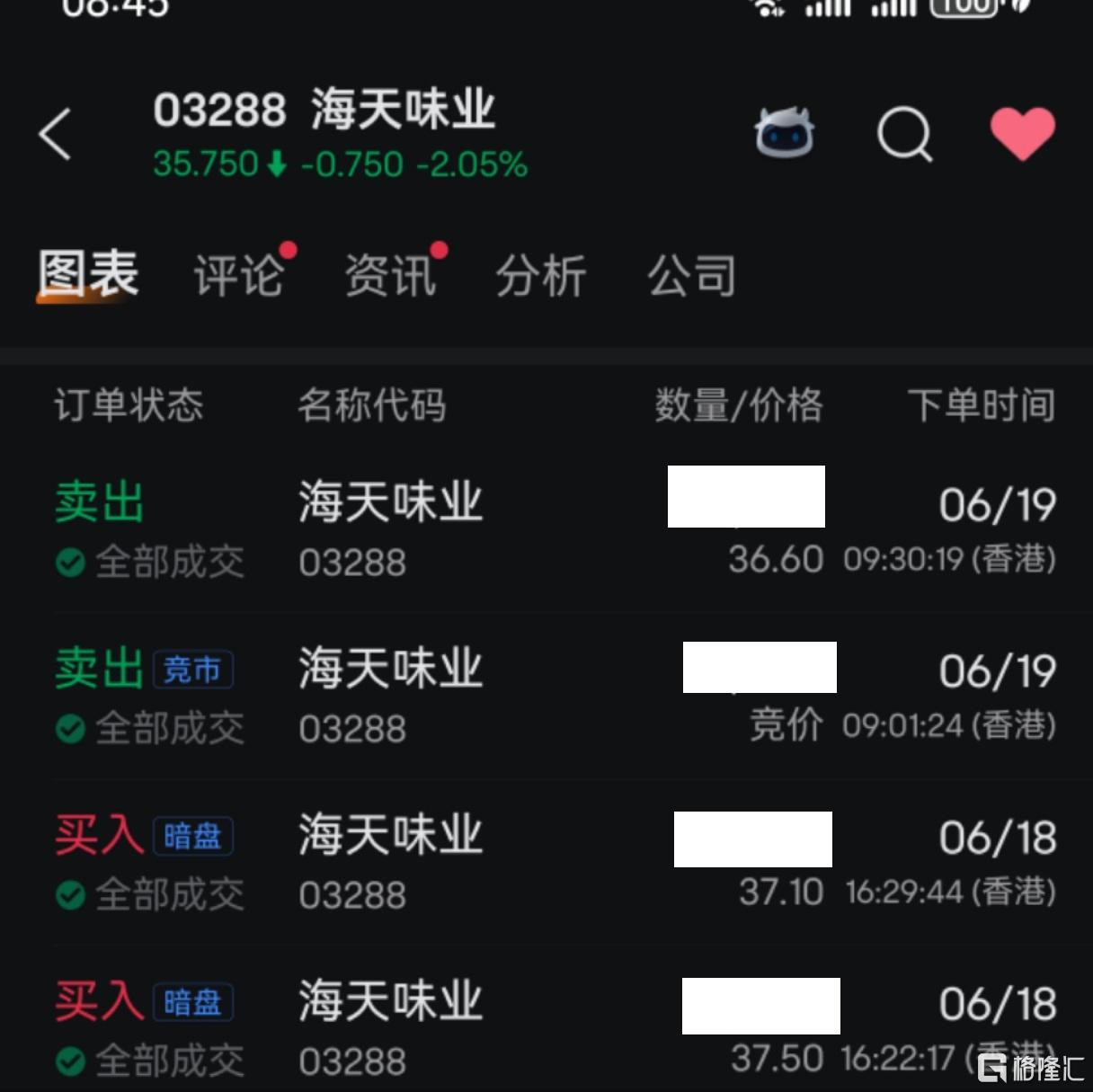
Group 1 - The market sentiment around Hai Tian Wei Ye has been volatile, with initial enthusiasm leading to a significant drop in stock price on the listing day, falling below the issue price [1][2] - The recent trend in the market shows that the perception of risk-free arbitrage in IPOs has shifted, with a high probability of losses being observed in recent offerings [2][3] - The performance of other companies like Hengrui Medicine and CATL has created a misleading expectation of easy profits from IPOs, contributing to the current market dynamics [2][6] Group 2 - The recent market downturn has affected various sectors, including new consumption and innovative pharmaceuticals, indicating a broader sentiment shift [6] - The liquidity in the Hong Kong market remains high, as evidenced by the drop in overnight Hibor rates, yet this has not translated into positive market performance for many stocks [6] - The focus on stocks that are currently declining is emphasized, suggesting a strategy to concentrate on potential recovery opportunities rather than chasing new IPOs [4][6]
下沉市场!县城餐饮人做生意的3个狠招
Sou Hu Cai Jing· 2025-06-22 17:06
Core Insights - The article emphasizes that the lower-tier market is not a simplified version of urban dining, but rather a complex environment where local businesses thrive through understanding consumer needs and leveraging local resources [1][22]. Group 1: Key Principles for Success in Lower-Tier Markets - Key Principle 1: "Upgrading" is rooted in "essential needs," where value perception is crucial rather than just low pricing [3]. - Customers in county towns seek quality and visible value, as evidenced by local restaurants achieving high patronage despite higher average spending compared to urban chains [4][5]. - Key Principle 2: "Efficiency wars" focus on supply chain effectiveness, with local sourcing being critical for maintaining quality and customer loyalty [9]. - Local sourcing can lead to higher costs but results in better customer experiences and repeat business, as shown by a local hotpot restaurant that prioritizes fresh ingredients [9][10]. - Key Principle 3: Understanding local social dynamics is essential for success, where building relationships and community ties can drive business [20]. - Engaging with local key customers, such as wedding planners and influential families, can secure consistent business opportunities [16][18]. Group 2: Case Studies and Examples - A case study from Jiangxi highlights a restaurant that emphasizes transparency and quality, leading to customer satisfaction despite higher costs [5]. - Another example from Hebei illustrates how a restaurant enhances the dining experience through entertainment, making it appealing for family gatherings [6][9]. - A community kitchen in Shandong demonstrates the importance of adapting to local supply conditions and customer preferences, showcasing flexibility in menu offerings [12][14]. Group 3: Marketing and Community Engagement - Local marketing strategies, such as personal outreach and relationship-based discounts, are more effective than digital advertising in county towns [20]. - The importance of compliance with local regulations and maintaining good relationships with neighboring businesses is highlighted as critical for operational success [22].

1分钱一杯比水还便宜?去年爆火的冰杯,今年杀回来了
3 6 Ke· 2025-06-20 09:12
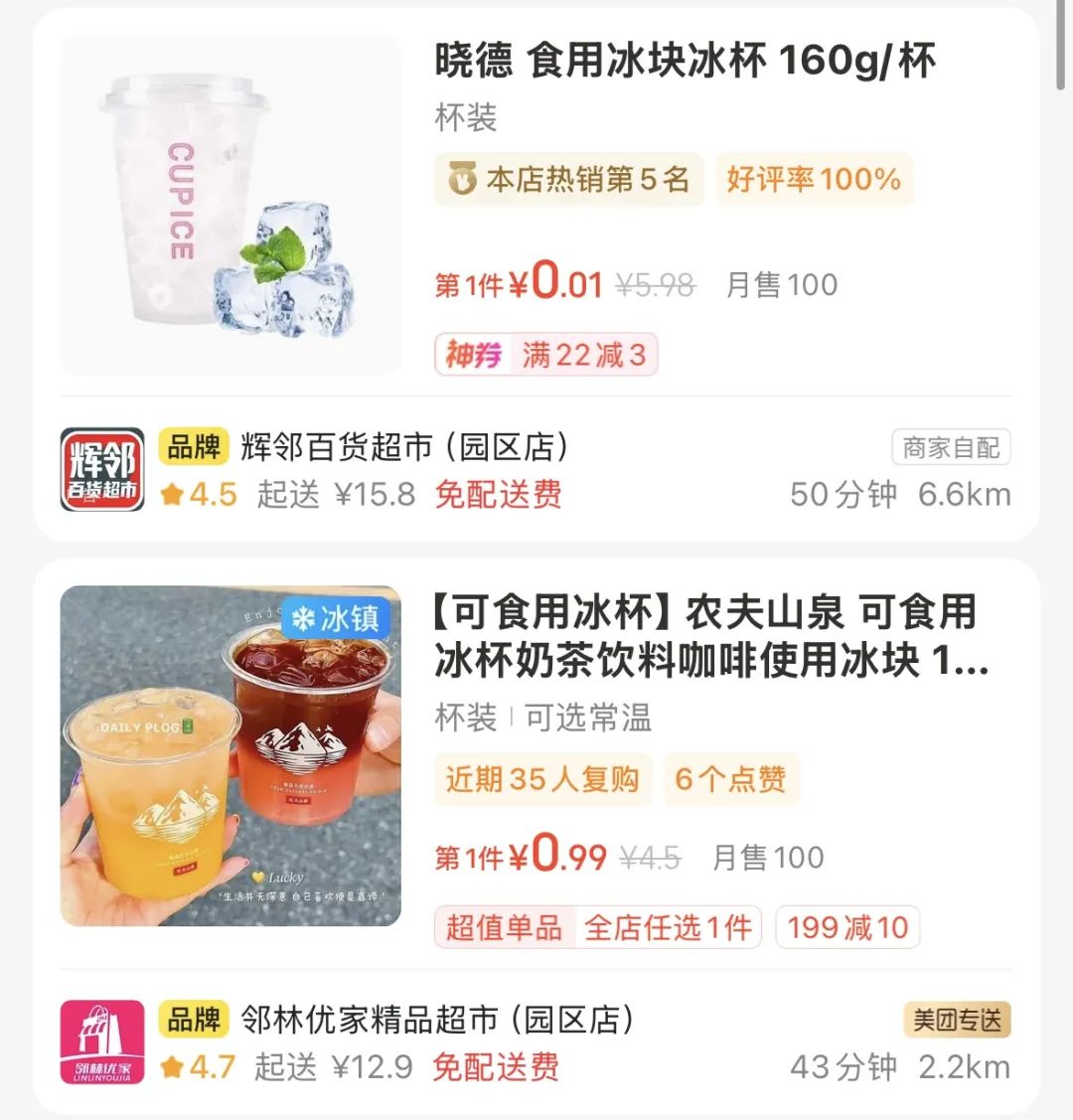
Core Viewpoint - The ice cup market is experiencing significant growth, driven by low pricing strategies and innovative marketing tactics, leading to increased consumer engagement and sales opportunities. Group 1: Market Dynamics - Online platforms have reduced the price of ice cups to as low as 1 yuan or even 0.01 yuan, while major tea brands are launching "1 yuan ice water/ice cup" promotions to attract customers [1][4] - According to the "2025 China Urban Consumption Behavior White Paper," ice cup sales have seen a growth rate exceeding 300% for two consecutive years, with per capita annual consumption in first-tier cities reaching 48 cups [7] - The "one yuan strategy" has proven effective in driving foot traffic to stores, with approximately 35% of customers who purchase 1 yuan ice water also buying additional products, raising the average transaction value to over 20 yuan [9][12] Group 2: Product Innovation - Ice cups are evolving beyond simple ice blocks, with brands introducing flavored ice cups and unique shapes, enhancing the visual appeal and consumer experience [17][19] - The packaging of ice cups is also being upgraded to cater to younger consumers' preferences for personalization and social sharing, with themed designs gaining popularity [21][23] Group 3: Consumer Behavior - The rise of DIY beverage culture, fueled by social media, has positioned ice cups as essential components for creating personalized drinks, with 69% of consumers using ice cups for homemade beverages [31] - The convenience of purchasing ice cups over making ice at home aligns with the "lazy economy," as consumers seek instant gratification during hot weather [34][35] Group 4: Competitive Landscape - Traditional giants and emerging brands are entering the ice cup market, with established players like Mengniu and Yili launching their own ice cup products [25][28] - The market is witnessing a shift in consumer preferences, with ice cups becoming a staple in convenience stores and supermarkets, driving additional sales through bundled offerings [14][16]
海外消费周报:供需优化,行业增长韧性十足-20250620
Shenwan Hongyuan Securities· 2025-06-20 06:12
Group 1: Education Industry Overview - The youth vocational skills training market is experiencing a surge in demand, with the industry showing strong resilience in growth. The number of young people entering the labor market is expected to continue increasing due to a rise in university graduates and high school graduates who do not pass college entrance exams. This trend is anticipated to drive the demand for vocational skills training, with the market size projected to reach 80 billion yuan in 2025, and a penetration rate of only 5%, indicating significant growth potential [1][8]. Group 2: Higher Education Investment Trends - A turning point in investment in higher education institutions is emerging, with expectations for improved operational efficiency. Over the past three years, private higher education institutions have increased their investment to enhance educational quality amid tighter regulations. This has led to a situation where the growth rate of operational costs has outpaced revenue growth. However, as the quality of education improves, operational efficiency is expected to gradually recover in the coming year. Additionally, with capital expenditures peaking, the resumption of dividends from higher education companies is anticipated, with some companies offering dividend yields exceeding 10% at a current payout ratio of 30% and a PE ratio of around 3 [2][9]. Group 3: K12 Training Institutions - The K12 training sector is transitioning from a fully market-driven competition model to a franchise model, leading to rapid capacity expansion and significant revenue and profit growth. Following the "double reduction" policy, the capacity for academic training has decreased by 96%. Although licenses for operation are being redistributed, the supply remains limited, and non-compliant institutions contribute only 11.2% of the capacity, having minimal impact on the competitive landscape. The sector is now seeing a shift towards competency-based training, with legitimate institutions poised to accelerate capacity expansion, resulting in high revenue and profit growth [3][10]. Group 4: Investment Recommendations - The report recommends focusing on Hong Kong-listed higher education companies, as the slowdown in investment and peak capital expenditures are expected to enhance profitability. Key companies to watch include Yuhua Education, Neusoft Ruixin Group, China Education Group, and New Oriental. Additionally, attention is drawn to vocational education companies like China Oriental Education, which is expected to see significant operational improvements due to a rebound in vocational training demand. The report also highlights the potential for rapid expansion in training institutions under normalized regulatory conditions, which could accelerate revenue growth [13].
茶咖日报|违规收集个人信息!多个茶咖知名品牌被通报
Guan Cha Zhe Wang· 2025-06-19 12:42
Group 1: Mobile Applications and Data Privacy - 64 mobile applications, including well-known brands like Starbucks and CoCo, have been reported for illegal collection and use of personal information [1][2] - This is not the first time tea brands have been named for personal information collection issues, with previous complaints regarding excessive data requests from users [1] - In March 2023, Shanghai Consumer Protection Commission found similar issues with brands like CoCo and Yi Dian Dian, where customers were forced to provide personal information to place orders [2] Group 2: Starbucks Store Closure - Starbucks will close its Guangzhou Taikoo Hui store on June 28 due to adjustments in the shopping mall's business layout [3] - The company emphasizes that store closures and renovations are part of its ongoing strategy to adapt to changing consumer demands and market conditions [3] - Nearby Starbucks locations will continue to provide services, ensuring customer access to their products [3] Group 3: New Tea Beverage Trends - New tea beverages are driving regional fruits like Huangpi and lychee to a national market, with brands like Luckin Coffee and Heytea incorporating these ingredients into seasonal products [4] - The trend includes a variety of regional specialties being introduced to the national market, breaking geographical barriers in product availability [4] - New tea brands are increasingly collaborating with supply chains to establish exclusive agricultural bases, enhancing product differentiation and consumer experience [4] Group 4: Nestlé's Investment in Brazil - Nestlé plans to invest 7 billion Brazilian Reais (approximately 9.3 billion RMB) in Brazil from 2025 to 2028, an increase from the previous investment of 6.3 billion Reais [5] - Brazil is Nestlé's third-largest market, with projected revenues of approximately 4 billion Swiss Francs (around 4.9 billion USD) in 2024 [5] - The new investment plan includes over 500 million Reais specifically for the coffee business, which is part of the overall investment strategy [5]



AH股午后跌幅扩大,三大股指跌超1%,油气股拉升,恒指跌超2%,新消费三宝大跌
news flash· 2025-06-19 08:20
港股收盘:恒生指数收跌1.99%,恒生科技指数跌2.42%,科技股多数下跌,金山软件跌超4%;消费概 念股持续回调,老铺黄金跌6.4%,古茗、泡泡玛特跌超5%。 ...
2100亿,酱油女王IPO敲钟了
投资界· 2025-06-19 02:42
Core Viewpoint - The article highlights the successful IPO of Haitian Flavor Industry Co., Ltd. on the Hong Kong Stock Exchange, marking it as one of the largest IPOs in the region this year, with a subscription rate exceeding 930 times and raising approximately 10.1 billion HKD [2][3]. Company Overview - Haitian Flavor Industry, known for its soy sauce and other condiments, has a rich history dating back to the mid-17th century, originating from the famous Foshan ancient soy sauce factory [5]. - The company was established in 1955 through the merger of 25 ancient soy sauce factories and has grown significantly under the leadership of its key figure, Pang Kang, who transformed it from a local factory into a well-known national enterprise [6][7]. Financial Performance - Despite facing challenges in recent years, including a decline in revenue and profit in 2022, Haitian Flavor has shown signs of recovery in 2024, achieving a revenue of 26.9 billion CNY, a year-on-year increase of 9.53%, and a net profit of 6.34 billion CNY, up 12.75% [12][13]. Market Position - Haitian Flavor boasts a strong market presence with over 80% household penetration in China and is recognized as the largest condiment company in the country for 28 consecutive years [10]. - The company has a diverse product portfolio, including over 1,450 SKUs and seven product lines generating over 1 billion CNY in annual revenue [12]. Strategic Initiatives - The company plans to utilize approximately 20% of the net proceeds from its IPO to enhance its global brand image, expand sales channels, and improve overseas supply chain capabilities, particularly targeting Southeast Asia and Europe [13]. - Haitian Flavor aims to establish a dedicated overseas sales team and optimize its global e-commerce platform to strengthen its competitive position in international markets [13]. Industry Context - The Hong Kong IPO market has seen a resurgence in 2023, with a significant increase in the number of companies going public and the total amount raised, indicating renewed investor confidence [16][18]. - The article notes that the current environment presents a unique opportunity for companies to access international capital markets, with many firms looking to capitalize on this trend by listing in Hong Kong [19][20].

【转|太平洋食饮-消费深度】拥抱新消费的浪潮
远峰电子· 2025-06-18 11:46
Core Insights - The article emphasizes the importance of boosting domestic demand as a long-term strategy for economic growth, especially in light of reduced export contributions due to trade tensions [2][4] - It highlights the ongoing consumer policy initiatives aimed at stimulating spending and increasing household income, which are expected to positively impact consumption ratios in the coming years [4][6] - The article draws parallels between the current economic situation in China and Japan's economic history, particularly the similarities in aging populations and real estate market challenges [8][12] Group 1: Domestic Demand and Consumption - Domestic demand is becoming the main driver of economic growth as export contributions decline, with household consumption currently accounting for 38-40% of GDP, significantly lower than in developed countries [2][4] - Recent consumer policies, including subsidies and consumption vouchers, are expected to enhance household income and stimulate spending, with a projected increase in consumer spending in 2025 [4][6] - The first quarter of 2025 showed a 4.6% year-on-year increase in retail sales, indicating a stable upward trend in consumption [4] Group 2: Economic Comparisons with Japan - The article compares China's current economic conditions to Japan's in the late 1990s, noting similar GDP per capita levels and aging demographics [8][12] - Both countries have experienced real estate market downturns, with China implementing policies to stabilize housing prices and Japan facing a prolonged economic slump after its real estate bubble burst [8][12] - The analysis suggests that understanding Japan's economic history could provide valuable insights for China's future economic strategies [8][12] Group 3: Consumer Behavior Trends - There is a noticeable shift in consumer preferences towards value-oriented and health-conscious products, with brands like Sam's Club and Dazhong increasingly appealing to consumers seeking quality at competitive prices [34][39] - The rise of discount retailers and the focus on high-cost performance products reflect a broader trend of rational consumption among consumers, particularly in the context of economic uncertainty [19][25] - The article highlights the growing importance of local brands and products that cater to domestic tastes, as consumers show a preference for homegrown options over foreign imports [31][20]

商贸零售行业点评:5月社零同比增长6.4%,略超预期
GOLDEN SUN SECURITIES· 2025-06-18 10:53
Investment Rating - The report maintains an "Accumulate" rating for the retail sector [5] Core Insights - In May 2025, the total retail sales of consumer goods reached 41,326 billion yuan, with a year-on-year growth of 6.4%, slightly exceeding expectations [1][9] - The retail sales excluding automobiles amounted to 37,316 billion yuan, with a year-on-year increase of 7.0% [1][9] - The overall retail sales from January to May 2025 totaled 203,171 billion yuan, reflecting a year-on-year growth of 5.0% [1][9] Summary by Sections Retail Sales Performance - In May 2025, the retail sales of essential goods showed positive growth across all categories, with food and oil products experiencing significant changes [2][14] - Essential goods such as grain and oil, food, beverages, and daily necessities saw year-on-year increases of 14.6%, 0.1%, 11.2%, and 8.0% respectively [2][14] - The retail sales of discretionary items, except for petroleum products, also showed growth, with home appliances and communication equipment experiencing accelerated growth [2][14] Regional and Channel Analysis - Urban retail sales in May reached 36,057 billion yuan, growing by 6.5% year-on-year, while rural retail sales were 5,269 billion yuan, growing by 5.4% [3][28] - Online retail sales of physical goods from January to May 2025 reached 49,878 billion yuan, accounting for 24.5% of total retail sales, with food, clothing, and daily necessities showing year-on-year growth of 14.5%, 1.2%, and 6.1% respectively [3][30] Investment Recommendations - The report highlights a stable recovery in the retail sector since 2025, with certain sub-sectors showing marginal improvements and policy support expected to drive future growth [4][34] - Key investment targets include companies in new consumption, retail transformation, cross-border e-commerce, and tourism sectors [4][34]