
洽洽食品

Search documents
2025年第51周:食品饮料行业周度市场观察
艾瑞咨询· 2025-12-25 00:05
Group 1 - The beverage market is experiencing a surge in demand for turmeric drinks, particularly among young consumers, despite taste complaints and high sugar content [3] - The health and wellness trend is gaining traction among young people, with a significant increase in health-related consumption, particularly in the "healthcare and wellness" sector [4] - The approval of elderberry anthocyanins as a new food ingredient in China marks a significant opportunity in the functional food market, with a projected global market size of $960 million by 2027 [5] Group 2 - The 2025 Probiotic Industry White Paper highlights the rapid growth of the probiotic market in China, with an expected annual growth rate of 11%-12% [6] - The food and beverage sector is anticipated to gradually recover, supported by government initiatives to promote consumption and the integration of various consumption scenarios [9] - The classic beverage iced tea has seen a resurgence in popularity, with sales reaching 12.7 billion yuan, driven by nostalgia and innovative marketing strategies [10] Group 3 - The plant-based market is facing challenges, with major brands like Beyond Meat withdrawing from China due to high prices and poor taste, indicating a need for product improvement [12] - The beverage industry is entering a price war, with major brands signaling price reductions, which may impact profit margins across the supply chain [13] - The low glycemic index (GI) food market is rapidly expanding, with a projected market size of 176.2 billion yuan by 2024, driven by health trends and rising diabetes rates [14] Group 4 - Beer companies are diversifying into the beverage sector as the beer market slows, reflecting a trend of cross-industry expansion [15] - The self-service dining model is gaining popularity in the restaurant industry, with significant growth in the small hot pot segment, driven by cost-effectiveness [17] - The trend of cross-industry collaboration in the food and beverage sector is evident, with brands like Mixue Ice City testing breakfast offerings to expand consumer engagement [18] Group 5 - The beverage market is witnessing structural growth opportunities, particularly in niche segments that cater to specific consumer needs [19] - Innovative product forms and visual appeal are becoming key drivers in the beverage industry, as brands seek to differentiate themselves in a crowded market [21] - The competition among food delivery platforms is intensifying, with major players adjusting strategies to focus on operational efficiency rather than solely on price competition [22] Group 6 - New product launches in the food and beverage sector include innovative items like sugar-free Oreos and functional non-alcoholic beers, reflecting changing consumer preferences [23][24] - Companies like Kunlun Mountain Mineral Water are expanding their market presence through strategic partnerships, aiming to enhance brand visibility and market reach [25] - Jiahua Foods is facing challenges in its transition to consumer branding, with rising costs impacting profitability despite slight revenue growth [26]


扩内需:食品饮料行业投资机会
2025-12-24 12:57
Summary of Key Points from the Conference Call Industry Overview - The food and beverage industry is experiencing systemic opportunities driven by policies aimed at expanding domestic demand and increasing residents' income levels, which are expected to enhance consumption capabilities [1][2] - The liquor industry is undergoing a deep adjustment, with expectations of entering an EPS killing phase by 2025, while high-end liquor brands like Moutai and Lao Jiao are recommended for investment [1][4] - The dairy industry has completed supply-demand adjustments, with anticipated increases in demand for milk powder and liquid milk due to fertility and income policies, highlighting companies like Yili and New Dairy as potential recovery opportunities [1][5] - The snack food sector is benefiting from the "lipstick effect," new channels, and health trends, with recommendations for companies such as Salted Fish, Wei Long, Wan Chen Food, and Qiaqia Food [1][6] - The beverage sector is seeing a clear trend towards health, with non-traditional channels gaining market share, making high-growth companies like Dongpeng Beverage noteworthy [1][7] Key Insights and Arguments - The central economic work conference in 2026 will prioritize expanding domestic demand, which is expected to lead to a series of policies stimulating consumption, positively impacting the food and beverage industry [2] - The food and beverage sector has faced significant changes in volume, price, and channel structure over the past six years, with varying performances across sub-sectors [3] - The liquor sector is expected to see marginal improvements in 2026, driven by policies aimed at boosting business and government consumption [4] - The dairy sector is projected to enter a recovery phase, with increased demand anticipated due to supportive policies [5] - The snack food market is expected to gradually recover, supported by rising incomes and new retail channels [6] Additional Important Content - Cost fluctuations are a significant factor affecting the performance of consumer goods companies, with some agricultural product costs declining, providing investment opportunities [9] - The planting area for sunflower seeds is expected to recover, leading to a projected 10% decrease in the cost of sunflower seeds, which will positively impact Qiaqia Food's gross margin [10][11] - The konjac market is facing supply-demand imbalances, with high prices expected to ease in 2026, alleviating cost pressures for companies like Wei Long and Salted Fish [12] - The sugar molasses market is currently at low prices, providing strong support for Angel Yeast's profitability [13] - Innovative companies are leveraging product and channel innovations to drive growth, with notable examples including Nongfu Spring and Uni-President [14] - Efficient supply chain management is crucial for companies, with Dongpeng Beverage demonstrating strong performance in this area [15] Future Outlook - Dongpeng Beverage is expected to achieve double-digit growth in 2026 through strategic measures and product innovations [16] - Wan Chen is enhancing store quality and accelerating store openings, which is expected to improve profitability in the snack food sector [17][18] - Hai Tian Flavoring has implemented efficiency improvements under new management, resulting in revenue and profit growth exceeding industry averages [19] - The restaurant industry is expected to see a mild recovery, with companies like Yihai International and Tianhe Flavoring showing potential for improvement [20][21] - In the liquor sector, companies like Yanghe and Budweiser are expected to benefit from product and channel improvements, leading to potential breakthroughs in performance [22][23][25] - Gan Yuan Food is focusing on expanding e-commerce and high-end membership stores, with a stable development outlook [26][27] - Overall, companies in the food and beverage sector are expected to experience gradual recovery and growth, making them worthy of investor attention [28]





消费:年末复盘及2026Q1展望
2025-12-24 12:57
消费:年末复盘及 2026Q1 展望 20151223 摘要 白酒板块预计 2026 年 Q1 收入和利润双位数下滑,但降幅或收窄,头 部企业汾酒、五粮液可能调整,酒企对全年持保守态度,重在稳定市场 和份额,预计 Q1 仍处于下修状态。 大中型零食和饮料企业受益于品类和渠道红利,对未来展望积极,叠加 春节效应,预期增长高于行业平均水平;啤酒企业淡季保守,奶制品企 业结构性收缩,液态奶下滑明显。 品牌服饰受气温和需求影响,终端流水走弱,运动品牌加盟渠道 12 月 流水下降,但海澜之家、森马等大众品牌保持增长。春节较晚利于去库 存,但对 Q4 财报有负面影响,多数龙头品牌对 26 年度计划谨慎。 出口制造受耐克财报影响,大中华区销售额下降,运动品牌订单调减。 中期看好全球化布局、垂直一体化及新产能新客户开拓标的,如申洲国 际、华利实业等。 黄金珠宝受金价高涨压制终端销售,推动商业模式向品牌化转型,如潮 宏基、周大福等逆势增长。春节较晚使订货会滞后,Q1 订货量同比有 利,Q4 压力大。高金价背景下,板块调整延续,关注传动机,适度关 注周大福与老铺。 Q&A 2025 年第四季度食品饮料行业的表现如何?对 2026 ...
中邮人寿第三季度投资“暴雷”,年内4度举牌
Xin Lang Cai Jing· 2025-12-24 12:16
Core Viewpoint - China Post Life Insurance is undergoing a significant transformation in its investment strategy, focusing on direct equity investments, despite facing challenges in investment performance and profitability [1][8]. Investment Performance - In the first three quarters of 2025, China Post Life's comprehensive investment return rate was only 0.31%, significantly below the industry average of 6.10% [2][9]. - The third quarter saw a further decline in investment returns to -1.90%, making it the only bank-affiliated insurer with negative quarterly returns [2][10]. - The company has experienced consecutive investment net losses in 2023 and 2024, indicating a persistent issue with investment performance [2][10]. Business Scale and Profitability - China Post Life achieved insurance premium income of approximately 151.31 billion yuan in the first three quarters of 2025, a year-on-year increase of 17.66% [3][11]. - Despite being the second-largest non-listed life insurance company by net profit, the company reported a 15.57% decline in net profit to 9.129 billion yuan [3][11]. - The increase in operating costs and insufficient investment returns have contributed to a "revenue without profit" situation [3][11]. Solvency and Management Concerns - The company's solvency ratios have been under pressure, with core solvency adequacy ratio dropping to 92.53% in the third quarter of 2025, nearing regulatory limits [3][12]. - The high surrender rate of 21% for participating insurance policies and management issues have raised concerns about the company's operational capabilities [3][12]. Investment Strategy and Actions - In 2025, China Post Life has made four significant equity investments, focusing on high-dividend assets in sectors like transportation infrastructure and environmental protection [4][13]. - The latest investment involved acquiring a 5% stake in Sichuan Road and Bridge, with a total investment of approximately 3.89 billion yuan [4][13]. - The company aims to convert equity investments into long-term holdings to stabilize dividends and mitigate short-term market fluctuations [4][15].



告别旧战役! 看休闲零食如何打响升维之战
Sou Hu Cai Jing· 2025-12-23 16:31
Core Insights - The leisure food market continues to face significant pressure in Q3, with many companies experiencing declines in both revenue and net profit, often exceeding 20% year-on-year in net profit [1][3] - Companies that previously thrived on e-commerce benefits are now struggling with transformation pains, compounded by external market pressures and internal structural issues [1][4] Group 1: Financial Performance - Three Squirrels reported a revenue of 7.759 billion yuan in the first three quarters, an increase of 8.22% year-on-year, but its net profit plummeted by 52.91% to 161 million yuan [3] - Laiyifen's revenue grew by 13.12% year-on-year, yet its net loss surged by 194.06% to 125 million yuan [3] - Liangpinpuzi faced a severe decline, with a revenue of 4.14 billion yuan, down 24.45% year-on-year, and a net profit loss of 1.22 billion yuan, a staggering drop of 730.83% [3] Group 2: Market Dynamics - The decline in traffic benefits has led to increased customer acquisition costs, making marketing expenses a heavy burden for companies [4] - The shift in consumer decision-making from chasing viral products to valuing product quality, health attributes, and brand values has disrupted the growth foundation of these brands [4][8] - The leisure food market is transitioning from incremental competition to stock competition, necessitating brands to reconstruct their growth logic for sustainable development [4] Group 3: Channel Challenges - Traditional snack brands have struggled to find new growth avenues through channel transformations, with many initiatives yielding disappointing results [5] - Brands have attempted to expand offline channels but faced challenges such as store closures and unsuccessful partnerships [5][6] - The lack of a cohesive operational system that aligns online and offline channels has hindered performance, with online revenue growth slowing significantly [6] Group 4: Product and Supply Chain Issues - Product homogenization remains a core issue, with many brands offering similar products, leading to diminished brand differentiation and pricing power [7][8] - The reliance on a light-asset model and external manufacturing has weakened brands' control over quality and supply chain resilience [7][9] - Rising raw material costs have significantly impacted profit margins, with brands struggling to pass on these costs to consumers [9][10] Group 5: Organizational Challenges - Many brands face organizational inertia, with outdated team structures hindering their ability to adapt to new market demands [14][15] - The integration of new talent and ideas into traditional structures has proven difficult, leading to internal conflicts and slow responses to market changes [16] - The need for a comprehensive transformation in thinking, organization, and business models is critical for brands to navigate the current challenges [18]




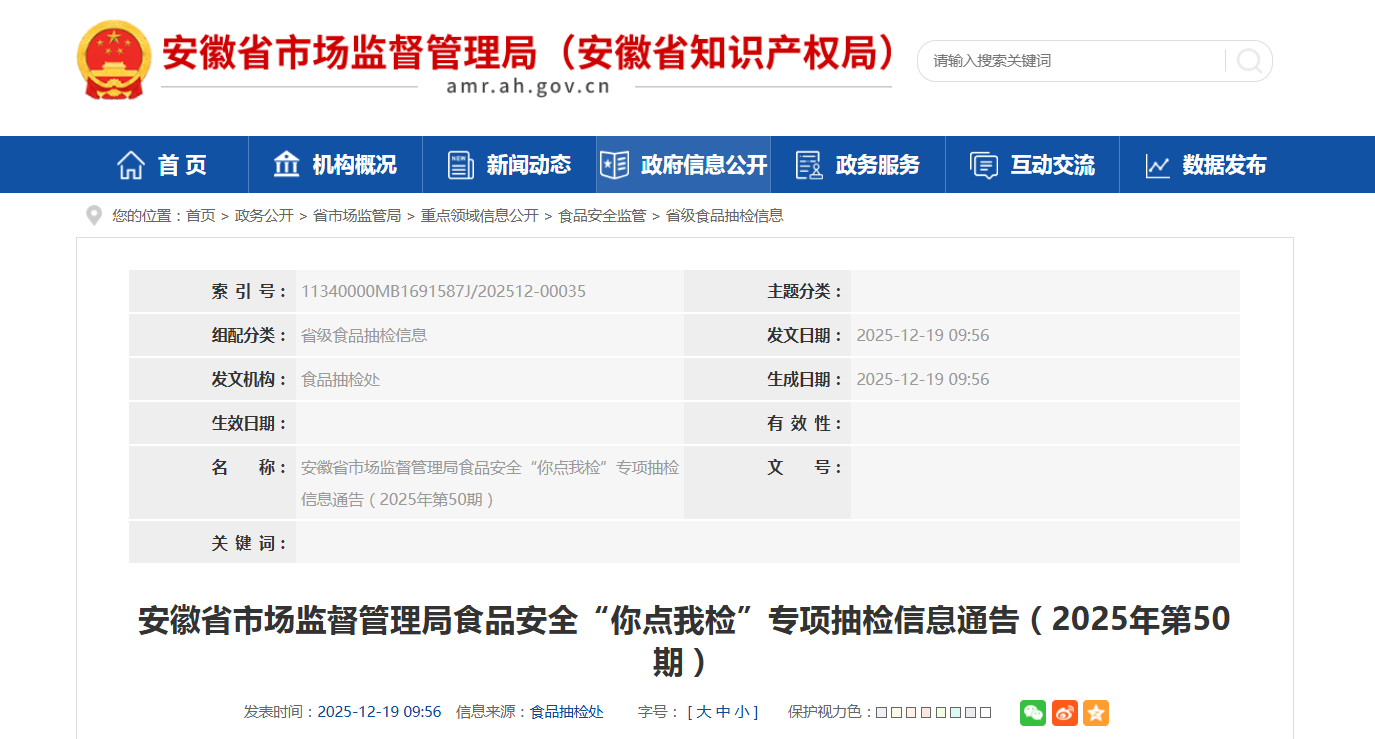
安徽省市场监督管理局食品安全“你点我检”专项抽检信息通告(2025年第50期)
Zhong Guo Zhi Liang Xin Wen Wang· 2025-12-23 08:07
Group 1 - The Anhui Provincial Market Supervision Administration conducted a special sampling inspection of 200 batches of food products based on consumer feedback, focusing on 16 categories including edible oils, dairy products, and frozen foods [2] - Out of the 200 samples tested, 197 were found to be compliant with national food safety standards, while 3 samples were deemed non-compliant [2] - Local market supervision departments have initiated verification and disposal actions for the non-compliant food products identified during the inspection [2] Group 2 - The inspection included a wide range of food categories such as condiments, beverages, canned foods, and agricultural products, reflecting a comprehensive approach to food safety [2] - Specific non-compliant products included items with excessive bacterial counts and aluminum residue, indicating potential health risks associated with these products [2][3] - The announcement emphasizes the commitment of the Anhui Provincial Market Supervision Administration to ensure food safety and consumer protection [2]





食品饮料行业周度市场观察:行业环境,头部品牌动态,投资运营,产品技术,营销活动-20251223
Ai Rui Zi Xun· 2025-12-23 07:46
Investment Rating - The report indicates a gradual recovery in the food and beverage sector, suggesting a positive outlook for investment opportunities in the industry [6]. Core Insights - The beverage market is experiencing a surge in demand for health-oriented products, particularly turmeric drinks and low-GI foods, driven by younger consumers' health consciousness [2][10]. - The approval of elderberry anthocyanins as a new food ingredient is expected to unlock a significant market potential, with a projected global market size of $960 million by 2027 [4]. - The report highlights the ongoing price wars in the beverage industry, with major brands signaling a trend towards price reductions, which may impact profit margins across the supply chain [9]. Industry Trends - The popularity of turmeric drinks among young consumers is attributed to their perceived health benefits, despite concerns over taste and sugar content [2]. - The rise of the health economy is evident, with a significant increase in sales of health-related products, such as herbal teas and functional foods, particularly among millennials and Gen Z [2]. - The elderberry anthocyanins market is anticipated to grow rapidly, with opportunities for product innovation in immune support and gut health [4]. - The low-GI food market is projected to reach ¥176.2 billion by 2024, driven by increasing health awareness and the prevalence of diabetes among younger populations [10]. - The beverage industry is facing a structural shift, with a focus on "precision" beverages that cater to specific consumer needs and preferences [14]. Brand Dynamics - Kunlun Mountain Mineral Water has entered a strategic partnership to expand its market presence in Hong Kong, leveraging local resources and distribution channels [16]. - Jiahe Foods is transitioning from a contract manufacturer to a consumer brand, facing challenges in profitability due to rising raw material costs and increased marketing expenses [19]. - Vitasoy International reported a decline in revenue, particularly in the mainland market, as competition in the plant-based milk sector intensifies [20]. - Tian Shili's "medical-grade" sugar-free tea has achieved a high repurchase rate by targeting pre-diabetic consumers, showcasing the potential for functional beverages in the health market [21]. - The new brand "Bie Xiang Bao Bao" has gained traction in the sugar-free tea market, achieving significant sales growth through innovative product offerings [22].
爆品买1赠1、千款“69减10”,京东七鲜零食超级品类日福利享不停
Jin Rong Jie Zi Xun· 2025-12-23 04:56
Core Insights - The article highlights the increasing consumer demand for snacks as a source of emotional satisfaction, particularly during the winter season and holiday gatherings [1] - JD Seven Fresh is launching a "Super Snack Day" event from December 22 to December 25, featuring over 300 brands and nearly 1,000 products with significant discounts [1][7] Group 1: Promotions and Discounts - The "Super Snack Day" offers promotions such as "69 off 10" and buy-one-get-one-free deals, catering to the emotional consumption needs of consumers during winter [1][7] - Popular chocolate brands are seeing price reductions, with items like the Swiss Lotus soft heart chocolate reduced to 119 yuan and various gift boxes priced under 100 yuan, making them attractive for gifting [3] Group 2: Consumer Trends - There is a notable increase in sales of snacks like chocolate and nuts during the year-end, reflecting a dual growth in "self-reward" and "gift-giving" consumption [7] - The instant delivery service, promising delivery within 30 minutes, enhances the consumer experience by allowing immediate gratification for snack purchases [7] Group 3: Product Offerings - During the promotional period, over 20 popular snacks are available with buy-one-get-one-free offers, such as pumpkin seeds priced as low as 6.25 yuan per bag and walnut-flavored seeds at 4.95 yuan [5] - The "Super Snack Day" is part of a broader strategy to offer various categories like baking, beverages, and fruits, with weekly specific discounts [7]

静水深流,大象无形 - 食品饮料行业2026年度投资策略
2025-12-22 15:47
Summary of the Food and Beverage Industry Conference Call Industry Overview - The food and beverage industry is expected to end its deep adjustment cycle by 2026, with consumer goods having largely completed inventory destocking [1][4] - The liquor sector, particularly baijiu, is projected to reach a new equilibrium by Q2 2026, with CPI stabilizing to alleviate price deflation pressures [1][4] - Companies with innovation or supply chain optimization capabilities are expected to stand out in the recovery phase [1][4] Key Insights and Arguments - The liquor sector is currently in a bottoming process, with mid-term investment value being significant [1][5] - Consumer goods are benefiting from an efficiency revolution and the transition between old and new growth drivers, with emerging channels and cost advantages continuing [1][5] - In 2025, the food and beverage sector showed mixed performance, with yellow wine, soft drinks, dairy products, and meat products leading in growth, while baijiu faced significant downward pressure from high-end price declines [1][6] Market Dynamics - The CPI and PPI differential has been volatile, with weak price increase expectations; however, a future stabilization of CPI could relieve downward price pressures [1][7] - The liquor price average has returned to a high level, indicating limited future downward space, necessitating companies to maintain a balance between volume and price [1][8] Sector-Specific Trends Liquor Industry - The baijiu sector is expected to reach a new balance by Q2 2026, with a characteristic of low-to-high price movement [1][5] - Companies are advised to focus on maintaining volume-price balance during the destocking phase [1][8] Consumer Goods - The industry is currently in a "channel is king" phase, necessitating the exploration of structural opportunities to meet changing consumer demands for health, personalization, convenience, and cost-effectiveness [1][9] - After completing inventory destocking, traditional sectors may rebound, with new emerging segments expected to thrive [1][9] Dairy Industry - The dairy sector is in a stabilization phase, with raw milk supply expected to contract in 2026, leading to a potential improvement cycle [1][11] - Key companies to watch include Yili, Mengniu, and Miaokelando, which are expected to show growth potential [1][11] Beer and Yellow Wine - The beer industry is stable but experiencing changes due to the rise of new channels, suggesting a focus on leading companies like Qingdao Beer and Yanjing Beer [1][12] - The yellow wine sector is seeing a concentration of market share among leading companies, with structural upgrades expected to continue [1][12] Soft Drinks and Snacks - The soft drink market is facing intensified competition, with notable segments like glucose tea and sports drinks showing promise [1][13] - The snack sector is benefiting from new channel transformations, with companies like Weilong and Chacha expected to perform well [1][13] Restaurant Supply Chain and Food Chains - The restaurant supply chain is recovering from regulatory impacts, with companies like Anji Food and Gaoli Co. being highlighted for their growth potential [1][14] - Food chain companies are accelerating their expansion through optimization and innovation, presenting investment opportunities [1][14] Health Products - The health product market shows potential for significant growth, with key products like coenzyme Q10 and probiotics gaining traction [1][15] Conclusion - Each sub-sector within the food and beverage industry presents unique opportunities and challenges, necessitating tailored investment strategies to capture alpha opportunities and achieve stable returns [1][16]
非金属建材周观点 251221:险资再现举牌,重视高股息个股-20251221
SINOLINK SECURITIES· 2025-12-21 13:18
Investment Rating - The report highlights a positive outlook for the construction and building materials sector, particularly focusing on high dividend stocks like Sichuan Road and Bridge, which has a projected dividend yield of approximately 5.6% by the end of 2025 [2] Core Insights - The report emphasizes the increasing interest from insurance capital in high dividend stocks within the construction and building materials sector, as evidenced by the significant share purchases in companies like Sichuan Road and Bridge [2] - It suggests that the AI new materials industry is experiencing rapid changes, with a recommendation to adopt a "steady response" strategy due to the high frequency of market fluctuations [3] - The report advocates for overseas expansion, particularly in African markets, as lower interest rates are easing external debt pressures and creating opportunities for investment [4] Summary by Sections Weekly Discussion - China Post Insurance has acquired a 5% stake in Sichuan Road and Bridge, investing a total of 3.9 billion [2] - Other companies targeted by China Post Insurance include Eastern Airlines Logistics and Green Power Environmental Protection, indicating a broader trend of insurance capital entering the high dividend segment of the construction sector [2] Industry Trends - The AI new materials sector is seeing increased participation from domestic and international manufacturers, with a focus on stability amidst rapid changes [3] - Companies like Zhongcai Technology and Copper Crown Copper Foil are highlighted as leaders in the AI materials space, with strong technology and cost advantages [3] Market Performance - The report notes a decline in cement prices, with the national average price at 354 RMB per ton, down 67 RMB year-on-year [5] - Glass prices have also decreased, with the average price for float glass at 1151.40 RMB per ton, reflecting a 1.17% drop [5] Important Developments - Significant investments and project wins were reported, including a 4.32 billion RMB project win by Shenghui Integration in Thailand [6] - Sichuan Road and Bridge's share acquisition by China Post Insurance is expected to attract more attention to high dividend stocks in the construction sector [6]