
中宠股份

Search documents
农林牧渔展望 2026 行业报告:周期破晓见曦,成长擎画新篇
Haitong Securities International· 2026-01-05 06:40
Investment Rating - The report recommends focusing on the cyclical turning points in the pig and beef farming sectors, highlighting companies like Muyuan Foods and WH Group as potential investments. The pet industry shows clear growth potential, with companies that integrate production, sales, and research expected to succeed, such as Zhongchong Co., Guibao Pet, and Petty Co. The planting sector also has significant growth potential, with recommendations for companies like Morning Light Bio and Noposion [11]. Core Insights - The pig farming sector is expected to face continued low prices in the first half of 2026, driven by both policy and cyclical factors, with a focus on cost improvement and growth potential in pig farming enterprises [2][15]. - The poultry sector is experiencing a recovery phase, with white chicken prices remaining low and yellow chicken demand potentially increasing due to promotional activities [3][37]. - The beef farming sector is characterized by a long production cycle, with supply-side contractions likely to drive prices upward, particularly from 2025 onwards [4][46]. - The feed and animal health sectors are expected to see growth in sales, with a focus on the competitive landscape and the impact of low profits on animal health demand [5][63]. - The planting sector is projected to see stable grain prices, driven by domestic control and innovation, with a focus on specialty crops and plant extracts [6][69]. Summary by Sections Pig Farming - Prices are expected to remain low in the first half of 2026, with a gradual increase in supply due to rising breeding sow inventories [15]. - Capacity policies and cyclical adjustments are leading to a continued reduction in production capacity, with a focus on cost reduction and debt management among pig farming companies [23][27]. - Companies like Muyuan Foods are highlighted for their cost improvements, with expectations of further reductions in production costs [29]. Poultry Farming - The white chicken industry is in a deep price slump, with recovery expected to take time, while yellow chicken prices may see slight recovery due to promotional efforts [32][37]. - Leading companies are improving their operational efficiencies to cope with low prices, which may enhance their performance when prices recover [33]. Beef Farming - The long production cycle and fragmented market structure of beef farming in China are significant factors, with supply reductions expected to lead to price increases starting in 2025 [41][46]. - The beef supply is projected to decrease in the latter half of 2025, with expectations of continued price increases through 2027 [47]. Feed and Animal Health - The feed sector is expected to see a recovery in sales, with high inventory levels in the livestock sector supporting growth [52]. - The animal health sector may face pressure due to low profits in the livestock sector, but there are opportunities for breakthroughs in key products [63][65]. Planting - Grain prices are expected to stabilize and rise, with a focus on domestic production and innovation in seed varieties [69][75]. - The planting sector is seeing a shift towards high-quality, innovative seed varieties, with companies like Kangnong Seed showing strong growth potential [87].


元旦客流引领复苏,空调提价打响反内卷
Yin He Zheng Quan· 2026-01-04 11:19
Investment Rating - The report indicates a positive outlook for the service consumption sector, particularly in light of the government's efforts to stimulate consumer spending through various holidays and subsidies [1][4]. Core Insights - The report highlights a significant increase in service consumption during the New Year holiday, with a total of 590 million people expected to travel, marking a 19.5% year-on-year increase [2]. - The introduction of a large-scale subsidy program for replacing old appliances is expected to boost consumer spending, with an initial allocation of 62.5 billion yuan (approximately 9.1 billion USD) for 2026 [4]. - Midea's decision to raise air conditioner prices is seen as a strategic move to counteract intense competition in the industry, with price increases of 2% and 4% planned for early January [4]. Summary by Sections Service Consumption Growth - The report notes that during the New Year holiday, railway passenger volume is projected to reach 48.22 million, a 53.1% increase year-on-year, while road travel is expected to account for 540 million people, up 15.5% [2]. - The recovery in travel is anticipated to drive growth in the cultural tourism, hotel, and restaurant sectors, making service consumption a key driver of domestic demand recovery [2]. Domestic and International Tourism - The report indicates a substantial increase in inbound tourism, with ticket bookings for inbound travel during the New Year holiday rising by 110% year-on-year [3]. - Major cities like Shanghai, Beijing, and Guangzhou remain popular among international tourists, while smaller cities like Dali and Xishuangbanna have seen a threefold increase in inbound visitors [3]. Government Subsidies and Industry Response - The government has initiated a subsidy program for replacing old appliances, which is expected to support consumer demand during peak seasons like the New Year and Spring Festival [4]. - Midea's price adjustments are viewed as a necessary step to improve the competitive landscape of the air conditioning industry, which has faced rising costs due to increased copper prices [4].
农林牧渔行业:元旦前猪价反弹明显,牛肉进口配额保障政策落地
GF SECURITIES· 2026-01-04 11:14
Core Insights - The report highlights a significant rebound in pork prices before the New Year, with the average price of lean pigs reaching 12.39 CNY/kg, a 7.6% increase from the previous week, although it remains 19.7% lower year-on-year [5][13][23] - The implementation of a safeguard policy for beef import quotas is expected to alleviate domestic supply pressures, with a total import quota of 2.688 million tons for 2026, which is 93.5% of the total imports in 2024 [14] - The report recommends focusing on leading companies with cost advantages in the livestock sector, particularly Wens Foodstuff and Muyuan Foods, while also highlighting potential turnaround candidates like Zhengbang Technology [5][13] Livestock Farming - The report notes that the pork market is under pressure due to significant losses in the industry, but the reduction in production capacity is expected to accelerate, leading to a more stable price environment in the first half of 2026 [5][13] - For poultry, the average price of white feather chickens is reported at 3.78 CNY/lb, down 3.1% week-on-week, while yellow feather chicken prices have shown slight increases, benefiting companies like Lihua and Wens [5][13][32] Dairy Industry - The current price of fresh milk in major production areas is 3.03 CNY/kg, stable week-on-week but down 3.2% year-on-year, indicating a balance in supply and demand as inventory levels decrease [14] - The safeguard measures on beef imports are anticipated to support domestic beef prices, which are expected to rise, enhancing the performance of companies like Yurun and Modern Farming [14] Feed and Animal Health - The report indicates a rebound in aquaculture prices due to holiday demand, with significant increases in white shrimp prices leading up to the New Year [15] - The feed industry is facing intense competition, but leading companies are expected to gain market share due to their cost advantages, especially in international markets [15] Agricultural Sector Performance - The agricultural sector outperformed the market by 0.7 percentage points, with livestock farming and feed sectors showing the highest gains of 1.4% and 0.5%, respectively [21] - The report tracks various agricultural product prices, noting fluctuations in corn and soybean meal prices, with corn prices rising by 0.6% to 2352 CNY/ton [23][46]
暴利的宠物,大厂的坟墓
创业邦· 2026-01-04 10:35
Core Viewpoint - The pet economy, with a market size of 300 billion and a gross margin of up to 50%, appears lucrative but is proving challenging for large companies to profit from [6]. Group 1: Market Dynamics - The pet food sector is the most popular category, with domestic brands achieving gross margins of 40%-50%, and some products, like high-end cat food, reaching a gross margin of 44.7% [8]. - Despite the high gross margins, many companies in the pet industry, such as Zhongchong Co. and Petty Co., report low net profit margins, with Zhongchong's gross margin at 28.16% and net margin at only 9.33% for 2024 [9]. - The high gross margins in the pet economy are often offset by significant marketing and operational costs, leading to a situation where companies struggle to convert revenue into profit [11][12]. Group 2: Challenges Faced by Large Companies - Large companies entering the pet market, like Hema, have faced significant losses, with Hema's Pet Fresh store losing over 20,000 yuan per month and closing after just nine months [6][9]. - The reliance on KOLs (Key Opinion Leaders) for marketing has led to increased sales expenses, which can consume a large portion of revenue, making it difficult for companies to achieve profitability [12][16]. - The pet economy is characterized by a high degree of fragmentation, with many successful businesses being small, owner-operated shops rather than large chains [20][24]. Group 3: Emotional Value vs. Cost - The perceived high margins in the pet economy are often attributed to the emotional value pet owners place on their pets, but this emotional value comes with significant costs, particularly in marketing and service delivery [11][14]. - Services like pet grooming and veterinary care can be profitable, but they require skilled personnel, making it difficult for large companies to scale effectively [20][23]. Group 4: Comparison with Other Industries - The challenges faced by the pet economy are similar to those in other high-margin industries like beauty and medical aesthetics, where the profitability often lies with individual practitioners rather than large companies [18][19]. - The pet industry, like the beauty industry, is heavily reliant on personal relationships and trust, which complicates efforts to scale operations [22][24].



俄工院院士第二个IPO,战投们低价卖股
Sou Hu Cai Jing· 2026-01-04 09:52
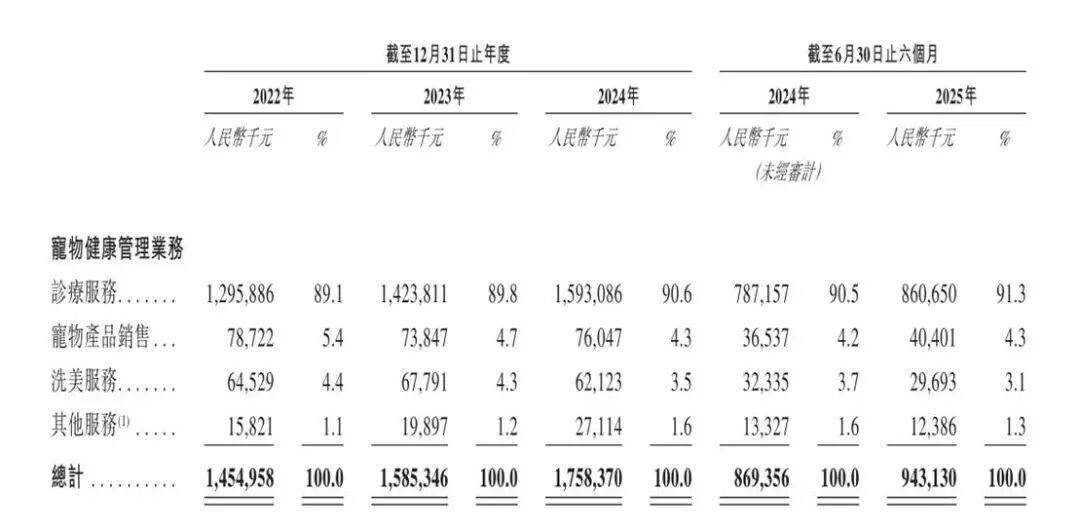
Core Viewpoint - The article discusses the growth and development of Ruipai Pet, a national chain of pet medical institutions in China, founded by Li Shoujun, who transitioned from a state-owned enterprise to entrepreneurship. The company is preparing for a potential listing on the Hong Kong stock market, which could enhance its presence in the international capital market [2][3]. Group 1: Company Overview - Ruipai Pet was established in December 2012 with a registered capital of 100 million yuan, primarily owned by Zhongrui Huapu and individual shareholders [3]. - The company has undergone multiple financing rounds, raising a total of 2.147 billion yuan from investors including Mars China and Goldman Sachs [3][4]. - As of the first half of 2025, Ruipai Pet operates 548 pet hospitals, making it the second-largest pet medical service provider in China [19]. Group 2: Financial Performance - Ruipai Pet's revenue has shown consistent growth, with figures of 1.455 billion yuan in 2022, 1.585 billion yuan in 2023, and projected 1.758 billion yuan in 2024, alongside a revenue of 943.13 million yuan in the first half of 2025, reflecting an 8.52% year-on-year increase [19][20]. - The core business of diagnostic services has also seen growth, with revenues of 1.296 billion yuan in 2022 and projected 1.593 billion yuan in 2024 [19]. - The gross profit margin for Ruipai Pet has fluctuated, with a margin of 22.4% in 2022, 21.0% in 2023, and increasing to 24.8% in the first half of 2025 [27][28]. Group 3: Ownership and Control - Li Shoujun, the actual controller of Ruipai Pet, holds a 26.91% stake in the company through Zhongrui Huapu and Ruipu Biology [8]. - The company has seen various shareholders transfer their stakes, with significant transactions occurring in 2020 and 2022, indicating active management of equity [5][6]. Group 4: Operational Insights - Ruipai Pet's hospitals are primarily acquired, with 428 out of 548 hospitals being obtained through acquisitions [21]. - The company has a diverse range of services, including pet product sales and grooming services, although these contribute a smaller portion of total revenue compared to diagnostic services [19][23]. - The average revenue contribution per city center hospital is significantly higher than that of community hospitals, indicating a strategic focus on higher-margin facilities [21]. Group 5: Future Prospects - Ruipai Pet is preparing for a potential IPO, which could provide additional capital for expansion and enhance its market position [2][3]. - The company has maintained positive operating cash flow, with net inflows of 2.92 billion yuan in 2022 and 2.63 billion yuan in the first half of 2025 [29].

量化大势研判 202601:宜攻守兼备:成长+质量
Minsheng Securities· 2026-01-04 07:25
- The report introduces a quantitative framework for market trend analysis, emphasizing the inherent attributes of assets and their lifecycle stages, categorized into five styles: external growth, quality growth, quality dividend, value dividend, and bankruptcy value[6][7][10] - The framework prioritizes asset comparison using metrics such as expected growth (gf), actual growth (g), profitability (ROE), high dividend (D), and bankruptcy value (PB/SIZE), each tailored to specific lifecycle stages[7][10] - The quantitative model has demonstrated strong historical performance, achieving an annualized return of 27.45% since 2009, with notable positive excess returns in most years, particularly post-2017[17][20][18] - The report recommends three dominant styles for January 2026: expected growth, actual growth, and profitability, supported by metrics like Δgf, Δg, and ΔROE, all showing expansion trends[15][33][29] - Expected growth strategy selects industries with the highest analyst forecasted growth rates, achieving significant excess returns since 2019. Recommended sectors for January 2026 include automotive sales, home appliances, tungsten, emerging financial services, and lithium[37][39][36] - Actual growth strategy focuses on industries with the highest Δg and related factors (sue, sur, jor), showing strong long-term excess returns. Recommended sectors for January 2026 include photovoltaic equipment, electronic chemicals, lithium battery chemicals, aerospace military, and home appliances[39][40][36] - Profitability strategy targets industries with high ROE and low PB-ROE valuation residuals, with notable excess returns from 2016 to 2020. Recommended sectors for January 2026 include agriculture, liquor, power distribution equipment, non-dairy beverages, and network connection/tower setup[42][43][36] - Quality dividend strategy uses DP+ROE scoring to select industries, with significant excess returns in 2016, 2017, and 2023. Recommended sectors for January 2026 include forestry/processing, boiler equipment, public transportation, fuel cells, and network connection/tower setup[45][46][36] - Value dividend strategy employs DP+BP scoring, achieving notable excess returns in 2009, 2017, and 2021-2023. Recommended sectors for January 2026 include security, daily chemicals, pet food, buses, and network connection/tower setup[48][50][36] - Bankruptcy value strategy selects industries with the lowest PB+SIZE scores, showing strong excess returns in 2015-2016 and 2021-2023. Recommended sectors for January 2026 include automotive sales, ceramics, cotton textiles, dyeing, and building decoration[52][53][36]
东方证券农林牧渔行业周报(20251229-20260104):年底猪价延续偏强,关注补库进程影响-20260104
Orient Securities· 2026-01-04 05:30
Investment Rating - The industry investment rating is "Positive" and is maintained [5] Core Viewpoints - The pig farming sector is expected to benefit from recent policies and market dynamics that promote capacity reduction, leading to a potential price turning point in Q2 2026, with long-term performance improvements anticipated for related stocks [3][43] - The structural growth trend in the post-cycle sector continues, with profits likely to gradually transmit downstream if the current round of pig capacity reduction proceeds smoothly, benefiting the animal health sector [3] - The planting chain shows a confirmed upward trend in grain prices, indicating favorable fundamentals for planting and seed industries, highlighting significant investment opportunities [3] - The pet food sector is experiencing growth and price increase logic, with continuous recognition of domestic brands and sustained growth of leading companies [3] Summary by Sections Pig Farming - The average price of live pigs as of December 31 was 12.76 yuan/kg, a week-on-week increase of 10.38%, while the average price of 15 kg piglets was 19.44 yuan/kg, up 2.21% week-on-week [12][51] - The supply side shows a widening price gap for fattened pigs, supporting price increases, while demand is boosted by consumption expectations during the New Year holiday [12][17] Poultry - The price of white feather broilers increased to 7.82 yuan/kg, up 6.39% week-on-week, and chick prices rose to 3.59 yuan/chick, up 1.7% week-on-week [17][51] - The supply of meat chickens has increased, leading to a more relaxed market supply, while demand has weakened due to some slaughterhouses reducing operations [17] Feed Sector - The prices of corn, wheat, and soybean meal have risen, with corn averaging 2351.57 yuan/ton, up 0.57% week-on-week, and soybean meal at 3172.29 yuan/ton, up 0.96% week-on-week [27][51] - Increased selling enthusiasm among farmers is noted, although the pace of supply remains slow [27] Major Agricultural Products - The domestic natural rubber futures price was 15605 yuan/ton as of December 31, down 0.29% week-on-week, with inventory levels increasing [38][51] - The current down cycle for sugar prices continues, with no significant recovery expected [39]


从规模扩张到生态重构:中国宠物行业的高质量发展路径与未来趋势
Da Gong Guo Ji· 2026-01-04 05:12
Investment Rating - The report indicates that the Chinese pet industry is in a "golden development period" characterized by high growth and resilience, with a projected market size increase from 725 billion CNY in 2015 to 3,598 billion CNY by 2024, reflecting a compound annual growth rate (CAGR) of approximately 20.66% [2][4]. Core Insights - The Chinese pet industry is experiencing significant structural upgrades, with consumption shifting towards high-value areas such as medical care and smart products, driven by increasing pet ownership and consumer spending [1][2]. - The industry is characterized by a younger, highly educated, and middle-to-high-income demographic, with pet ownership becoming an integral part of family life [13][14]. - The report highlights the rapid rise of domestic brands leveraging local innovation and supply chain advantages, with a focus on high-end and global market expansion [1][19]. Market Structure - The market is expanding rapidly, with the urban pet population expected to exceed 124 million by the end of 2024, and average spending per pet increasing significantly [4][5]. - Pet food remains the largest market segment, accounting for 52.8% of total consumption in 2024, with notable growth in medical care spending, which rose from 19% in 2018 to 28% [7][9]. - The penetration rates for various pet categories are increasing, with pet food and medical services showing strong growth potential, while traditional grooming services face challenges [9][12]. Consumer Demographics - The pet consumer base is predominantly composed of individuals born in the 1990s and 2000s, who represent 66.8% of the market, indicating a shift towards younger pet owners [13][14]. - The report notes a significant increase in married pet owners, reflecting a change in the perception of pets as family members rather than mere companions [14][17]. - Online purchasing channels dominate, accounting for 68.1% of pet product sales, while offline channels are preferred for service-related purchases [18]. Industry Chain and Segmentation - The pet industry chain encompasses food, products, and services, with a clear trend towards brand specialization and lifecycle service upgrades [19][20]. - The pet food segment is projected to grow from 157 billion CNY in 2012 to 1,585 billion CNY by 2024, with a CAGR of 21.2%, indicating strong resilience and potential for growth [21]. - The smart pet products market is rapidly expanding, with significant increases in sales for smart feeding devices and health monitoring products [22][23]. Future Trends - The report anticipates a convergence of technology and emotional consumerism in the pet industry, with smart devices enhancing pet care experiences and emotional services becoming more prevalent [28][29]. - Globalization is expected to create new opportunities, with Chinese pet food exports projected to grow significantly, indicating a shift towards international markets [30]. - Cross-industry innovations, such as pet-friendly travel and integrated home designs, are expected to emerge, providing new growth avenues for the pet industry [31].
农林牧渔行业:牛肉进口实施配额制及配额外关税,看好肉牛价格周期上行
GF SECURITIES· 2026-01-04 01:24
[Table_Page] 跟踪分析|农林牧渔 证券研究报告 [Table_Title] 农林牧渔行业 牛肉进口实施配额制及配额外关税,看好肉牛价格周期上行 [Table_Summary] 核心观点: | [Table_Grade] 行业评级 | 买入 | | --- | --- | | 前次评级 | 买入 | | 报告日期 | 2026-01-04 | [Table_PicQuote] 相对市场表现 -4% 4% 11% 19% 26% 34% 01/25 03/25 05/25 08/25 10/25 12/25 农林牧渔 沪深300 | [分析师: Table_Author]钱浩 | SAC 执证号:S0260517080014 | | | --- | --- | --- | | SFC CE No. BND274 | 021-38003634 | | | shqianhao@gf.com.cn | 分析师: | 李雅琦 | | SAC 执证号:S0260524080006 | 021-68827265 | | | liyaqi@gf.com.cn | 请注意,李雅琦并非香港证券及期货事务监察委员会的注 ...
农林牧渔展望2026行业报告:周期破晓见曦,成长擎画新篇
GUOTAI HAITONG SECURITIES· 2026-01-03 14:20
Investment Rating - The report assigns an "Accumulate" rating for the agricultural industry [9] Core Insights - In 2026, the pig and beef cattle farming sectors are expected to reach a cyclical turning point, with clear growth potential in the pet sector and significant opportunities in specialty planting [2][13] - Companies with complete production, sales, and research capabilities in the pet industry are likely to succeed amid competitive pressures [8] Summary by Sections Pig Farming - Price: The pig price is expected to remain low in the first half of 2026, leading to continued low profits in the industry [3] - Capacity: Policy and cyclical adjustments are driving capacity reduction, with a focus on cost improvement and growth potential in pig farming enterprises [3][27] - Debt Reduction: The average debt-to-asset ratio for listed pig farming companies has decreased to 56.27%, indicating improved financial health [27] Poultry Farming - White Chicken: The industry is experiencing deep price declines, with a return to supply-demand balance expected to take time [4][30] - Yellow Chicken: Prices may see slight recovery, supported by promotional activities for native chicken varieties [35] Beef Farming - Long Cycle: The beef farming cycle is lengthy, with a fragmented supply structure impacting pricing dynamics [39] - Price Outlook: A supply contraction is expected to support continued price increases for beef from 2025 onwards [46] Feed and Animal Health - Feed: The feed sector is anticipated to see growth in sales, with a positive outlook for 2026 as livestock numbers remain high [49] - Animal Health: Demand for animal health products may face pressure due to low profits in farming, but breakthroughs in key products are worth monitoring [58][59] Planting - Grain Prices: Grain prices are expected to trend upwards, driven by increased focus on food security and innovation in seed varieties [7][64] - Specialty Planting: Opportunities in specialty crops like blueberries and mushrooms are highlighted, with a focus on innovation and market demand [7][70] Pet Industry - Growth Potential: The pet market is thriving, with strong consumer willingness to spend, indicating clear growth prospects [8][13] - Competitive Landscape: Companies with integrated production, sales, and research capabilities are rare and likely to outperform in the competitive environment [8][13]
