
古茗

Search documents
5家消费公司拿到新钱;古茗2025年超额完成开店计划;泡泡玛特马年盲盒线上一分钟售罄|创投大视野
36氪未来消费· 2026-01-10 15:05
Investment Opportunities - Mu Xiaoma completed nearly 10 million RMB in Pre-A financing, with funds allocated for self-research of core components and new product development [3] - Canmi Bio raised 20 million RMB in angel round financing, focusing on enhancing its supply chain system [4] - Su Man Xiang secured several million RMB in A round financing, aimed at supply chain optimization and brand influence enhancement [6] - Xing Lian Future SATELLAI announced several million RMB in A round financing for AI technology development in pet health [8] - Zhang Bang Food completed 10 million RMB in angel round financing, focusing on capacity expansion and global supply chain network construction [9] Company Expansion Plans - Gu Ming exceeded its 2025 target by opening hundreds of additional stores, reaching a total of 13,000 stores by the end of 2025, with plans to open 4,000 more in 2026 [10][11] - Ming Ming Hen Mang is set to become the first "bulk snack stock" in Hong Kong, achieving a retail sales volume of 66.1 billion RMB, a 74.5% increase year-on-year [14] Market Trends - Disney's "Zootopia 2" became the highest-grossing Hollywood film in China, with box office revenue of approximately 4.25 billion RMB [19] - The domestic travel market saw 142 million trips during the New Year holiday, with total spending of 84.789 billion RMB [22]







新消费行业周报(2026.1.5-2026.1.9):四部门鼓励每年最多开展四次春秋游,支持发放文旅消费券、电影券;毛戈平与LVMH旗下基金达成战略合作-20260110
Hua Yuan Zheng Quan· 2026-01-10 08:27
Investment Rating - The industry investment rating is "Positive" (maintained) [4] Core Viewpoints - The report highlights the encouragement from four departments to conduct up to four spring and autumn tours annually, supporting the issuance of cultural and tourism consumption vouchers and movie vouchers. This initiative aims to enhance cultural consumption among workers and stimulate the tourism and hospitality sectors [3][6]. - The strategic partnership between Mao Geping and L Catterton Asia Advisors is expected to facilitate global market expansion and optimize capital structure, indicating a strong growth potential for high-end retail channels [3][6]. - The report emphasizes the importance of understanding new consumer narratives shaped by younger generations, suggesting that companies with strong brand value and innovative capabilities, such as Mao Geping and others, are likely to experience significant growth [21]. Summary by Relevant Sections Industry Performance - The new consumption sector showed positive performance with the beauty care index increasing by 2.55%, the retail index by 4.23%, and the social services index by 4.71% during the week of January 5 to January 9, 2026 [9]. Key Industry Data - In November, retail sales for clothing and textiles increased by 3.5% year-on-year, cosmetics by 6.1%, gold and silver jewelry by 8.5%, and beverages by 2.9% [12][16]. Investment Analysis Opinions - The report recommends focusing on high-quality domestic brands in beauty care, such as Mao Geping and Shangmei, head brands in traditional gold jewelry like Laopu Gold and Chaohongji, companies with successful IP operations like Pop Mart in the trendy toy sector, and strong tea brands like Mixue Group and Guming in the ready-to-drink tea market [21].

奶茶店开始“卖饭”?蜜雪、古茗、阿嬷都盯上这门生意
3 6 Ke· 2026-01-10 04:52
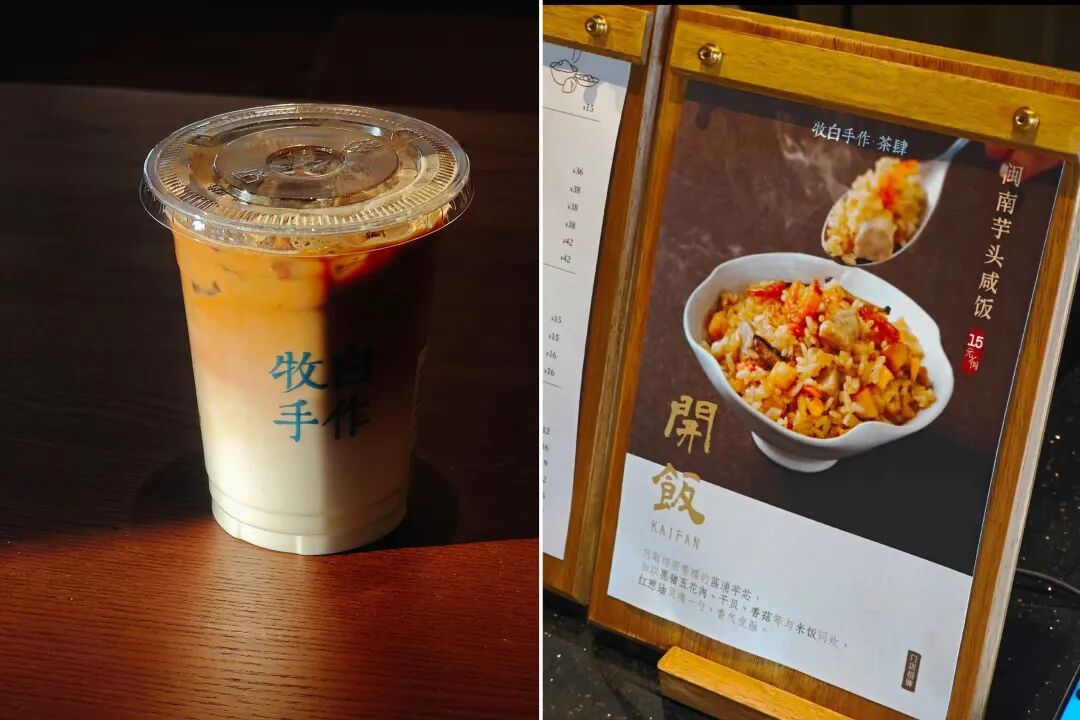
Core Insights - The trend of beverage shops selling food items, particularly rice dishes, is gaining traction, with brands like Mubaishou and A-Ma Handcrafted leading the way in this new market segment [1][3][7] Group 1: New Product Offerings - Mubaishou has introduced a new dish, Min Nan Taro Rice, priced at 15 yuan, which has received positive feedback for its flavor and value [3] - A-Ma Handcrafted has also attracted attention by offering rice dishes, although they primarily sell a rice sauce for customers to pair with rice [7][18] - The beverage industry is increasingly integrating food offerings, moving from simple snacks to full meal options, targeting breakfast and lunch markets [8][13] Group 2: Market Strategy - Brands are redefining their business models by creating new store formats that emphasize the combination of beverages and meals, enhancing customer experience [14][16] - Companies like Nayuki are launching new store concepts focused on light meals, aiming to cater to the lunch crowd with affordable options [17] - The strategy of offering food items is seen as a way to increase average transaction value and enhance brand presence in consumers' daily lives [20][21] Group 3: Industry Trends - The beverage sector is witnessing a shift towards food offerings as a response to market competition, with brands looking to expand their product categories and consumer touchpoints [21][24] - Successful integration of food and beverage offerings often relies on light processing or strong synergy between products, with many brands still exploring this model [24] - Despite the growing trend, food sales currently represent a small percentage of total revenue for many beverage brands, indicating that the fusion of drinks and meals is still in its early stages [24]

2025餐饮业复盘:新茶饮IPO年,资本盛宴后的供应链暗战
3 6 Ke· 2026-01-09 13:02
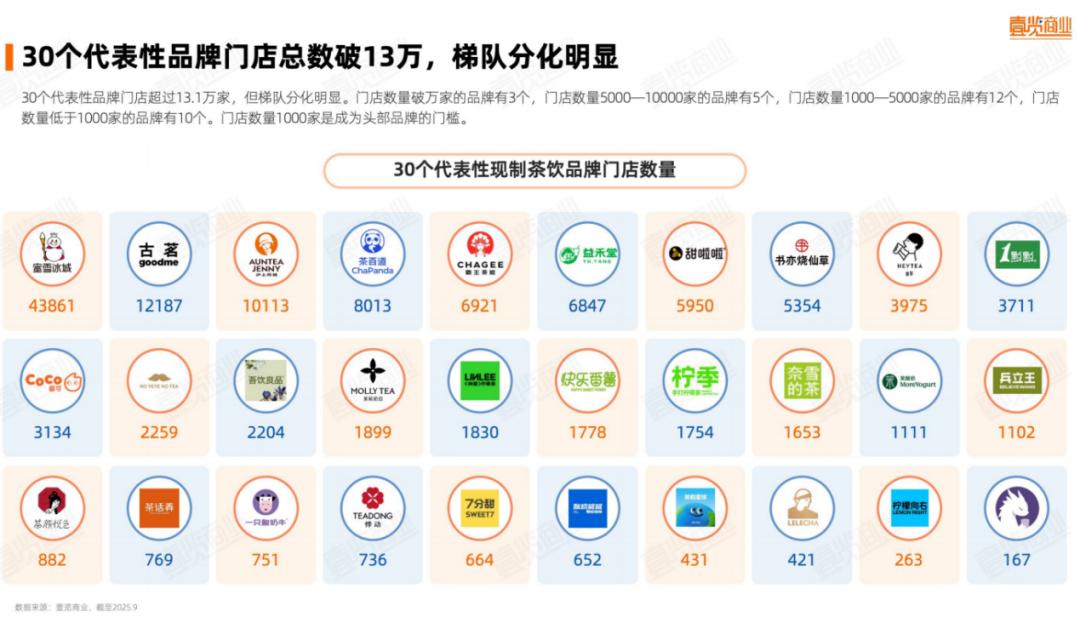
Group 1 - The core viewpoint of the article emphasizes that the new-style tea beverage industry is transforming from a "restaurant model" to a "retail model," focusing on large-scale, multi-channel sales to achieve greater market size and stable cash flow [1][2] - In 2025, the new-style tea beverage industry is characterized by a significant capital influx, with four major brands going public, marking it as the "IPO year" for the industry [3][6] - The industry is experiencing a dual trend of store closures and expansions, with 5,788 stores shutting down, indicating a shift towards high-quality development and a "survival of the fittest" market environment [6][19] Group 2 - The article outlines six key strategies for the new-style tea beverage industry, including product standardization, vertical supply chain integration, and online-offline integration to enhance customer retention [10][12][16] - The competitive landscape is diversifying, with leading brands adopting different operational models: efficiency-driven, quality-premium, and digital balance strategies [7][19] - The profitability logic of the industry is primarily driven by the franchise model, allowing rapid expansion with lower risks, while direct-operated models face higher operational costs and slower adjustments [26][30] Group 3 - The article highlights the importance of supply chain management as a core competitive advantage, suggesting that the future competition will focus on efficiency and innovation in supply chain operations rather than just front-end store battles [21][24] - The new-style tea beverage market is characterized by high gross margins and quick product turnover, allowing for potential price reductions while maintaining profitability [28][30] - The article concludes that the industry's future will depend on balancing efficiency and customer experience, with a focus on sustainable profitability for franchisees and consumer satisfaction [32][33]
新茶饮一年消失15.7万家,品类选错了?
3 6 Ke· 2026-01-09 12:39
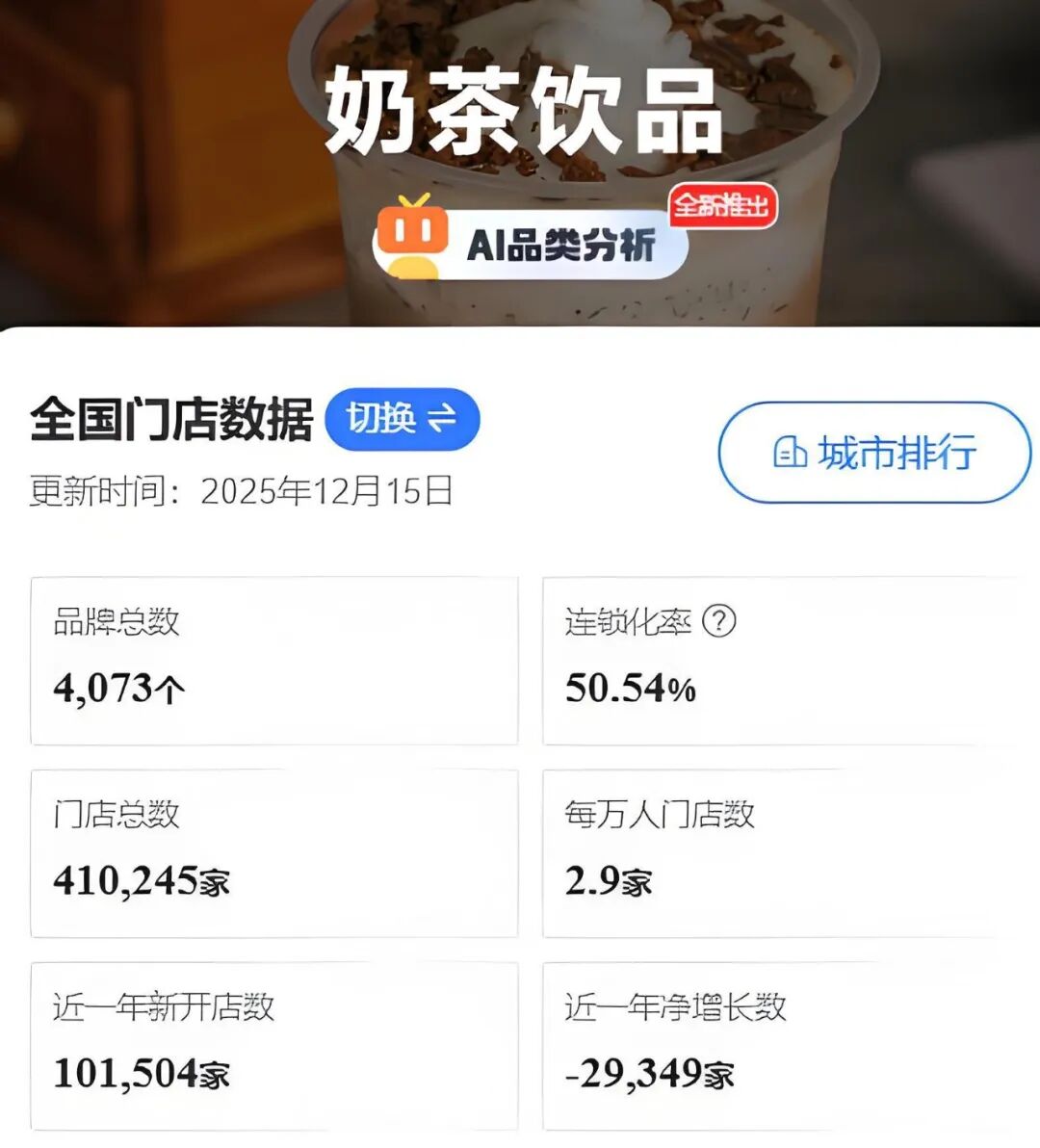
Core Insights - The new tea beverage sector in China has seen significant growth, with major brands like Mixue Ice City, Gu Ming, and others successfully going public, leading to the emergence of the "New Tea Beverage Six Dragons" [1][10] - The total number of tea beverage stores in China has surpassed 400,000, but the industry is experiencing a rapid "survival of the fittest" phase, with 157,000 stores closing in the past year [1][3] Industry Overview - The new tea beverage industry is characterized by a high chain rate of 50.54%, with a total of 410,245 stores and a net decrease of 29,349 stores in the past year [3] - The development of the tea beverage sector has evolved from low-cost, low-quality products in the 1980s to a focus on high-quality tea and innovative flavors in recent years [4][7] Brand Development - Major brands have adopted different strategies, with some focusing on single-hit products while others diversify their offerings [9][10] - The "single-hit" strategy has allowed brands like Shuyi Burned Fairy Grass to optimize their product development and operational efficiency, but it also poses risks if consumer preferences shift [11][13] Product Innovation - The introduction of unique products like cheese milk cap tea has revolutionized the market, leading to a focus on high-quality tea bases and innovative flavor combinations [5][7] - Brands are increasingly exploring the use of fresh fruits and unique ingredients to differentiate their products, although this also complicates supply chain management [8][17] Market Challenges - The rapid expansion of the new tea beverage market has led to intense competition and a high rate of store closures, indicating a need for brands to innovate continuously [1][13] - Supply chain complexities are increasing as brands strive to maintain quality and manage costs, with some companies investing in their own ingredient sourcing [17][18]
2025年港股IPO行业图谱:全口径下工业募资723亿港元 新面孔中新消费 信息技术 医疗成募资主力
Xin Lang Cai Jing· 2026-01-09 10:51
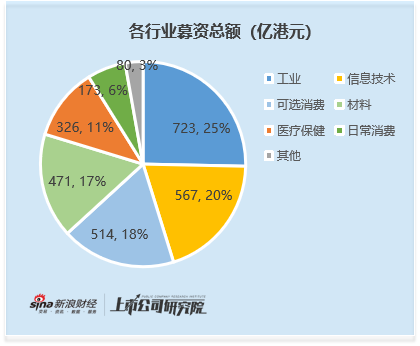
Core Viewpoint - The Hong Kong IPO market experienced a strong resurgence in 2025, with 114 companies completing listings and raising a total of 285.3 billion HKD, a 224% increase from 88.1 billion HKD in 2024, making it the largest IPO fundraising exchange globally [1][9]. Industry Analysis - The fundraising distribution in the Hong Kong IPO market shows a clear structural characteristic, with significant differences in financing vitality and capital preferences across different sectors, highlighting the importance of understanding the market ecology [1][9]. - The top five industries—Industrial, Information Technology, Consumer Discretionary, Materials, and Healthcare—accounted for 90% of the total fundraising, raising a combined 260.2 billion HKD, demonstrating the strong appeal of core sectors to investors [1][9]. Major Fundraising Projects - Notably, the largest IPO projects in these five industries came from well-known companies, including CATL, which raised 41.0 billion HKD, and SANY Heavy Industry, which raised 15.3 billion HKD through A to H listings [3][11]. - The fundraising landscape changes significantly when excluding established companies, revealing that the top three industries for new entrants are Consumer Discretionary, Information Technology, and Healthcare, which collectively raised 72.5 billion HKD, representing 81% of the total for new entrants [4][12]. Sector Highlights - The Consumer Discretionary sector led the new entrants with a total fundraising of 30.2 billion HKD, driven by key players like Chery Automobile, which raised 10.4 billion HKD [6][14]. - The Information Technology sector also performed well, with 20 new entrants raising a total of 21.8 billion HKD, benefiting from the rise of robotics and artificial intelligence [6][14]. - The Healthcare sector raised 20.5 billion HKD, with 16 unprofitable biotech companies completing IPOs, accounting for 65% of the sector's total fundraising, showcasing the sector's potential as a financing platform for innovative medical enterprises [6][14]. Market Preferences - The distribution of industry fundraising aligns with market capital preferences, where established industries attract long-term capital due to stable profitability, while new sectors like Consumer Discretionary, Information Technology, and Healthcare are favored for their high growth potential [7][15].
霸王茶姬还没做成“东方星巴克”,先得了星巴克的病
3 6 Ke· 2026-01-09 10:24
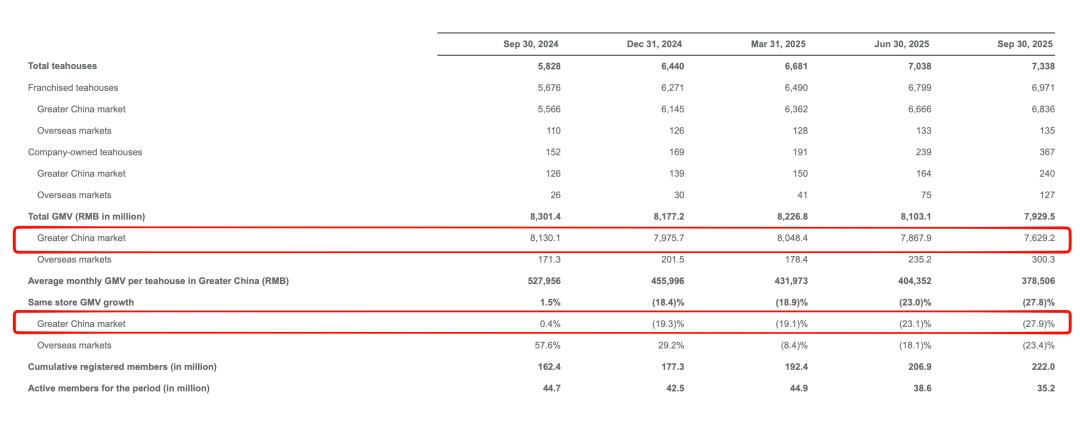
Core Viewpoint - The company BaWang Tea Ji, which went public on NASDAQ less than a year ago, is reportedly considering a secondary listing in Hong Kong, although it has denied these rumors. The company is experiencing a significant slowdown in revenue and profit growth, raising concerns about its market position and brand image [1][3][4]. Financial Performance - BaWang Tea Ji's revenue and profit growth have noticeably slowed over the past year, with growth rates declining for three consecutive quarters. In Q3 of the previous year, the company reported a revenue decline of 9.4% year-over-year and a nearly 40% drop in net profit, marking the first time its quarterly GMV turned negative [1][5]. - The average monthly GMV per teahouse in Greater China has been declining for seven consecutive quarters, with the same-store GMV growth rate falling into negative territory for four quarters, reaching a decline of nearly 28% in Q3 [1][2]. Market Position and Brand Image - BaWang Tea Ji has faced multiple public relations crises that have damaged its high-end brand image, including controversies over product ingredients and employee behavior. The company is known for its significant marketing expenditures, which have helped it establish a premium position in the market [3][4][11]. - The company has refrained from participating in the aggressive food delivery subsidy wars that have benefited competitors, which has contributed to its revenue decline. While other brands like MiXue Ice City and GuMing have seen substantial growth, BaWang Tea Ji's revenue growth has sharply decreased since Q2 of the previous year [5][6][7]. Expansion and Future Strategy - BaWang Tea Ji has expanded its store count significantly, from 1,087 in 2022 to 6,440 in 2024, but the pace of new store openings is expected to slow in 2025 [8][10]. - The company is exploring overseas markets, where it has seen better performance, with GMV in international markets exceeding 300 million RMB, reflecting a year-over-year growth of 75.3% [22]. Stock Performance - Since its peak market valuation of over $7 billion, BaWang Tea Ji's stock price has dropped by more than 60%, with a current market cap of approximately $2.366 billion [23].
霸王茶姬,不止困在“失眠”里
3 6 Ke· 2026-01-09 10:07
Core Viewpoint - The recent controversies surrounding Bawang Chaji, including concerns over high caffeine content in its products, have led to significant market reactions, including a drop of over 14% in its stock price, marking the largest single-day decline since its IPO. The company is facing declining performance metrics, raising questions about its competitive strength and the overall market for new tea beverages [1][8]. Group 1: Caffeine Controversy - The debate over Bawang Chaji's caffeine levels has been ongoing since the popularity of its product "Boya Juexian" in 2021, which was associated with sleep disturbances due to its high tea polyphenol content [2]. - A recent post by a blogger highlighted the caffeine content in Bawang Chaji's drinks, leading to widespread discussions on social media about the brand's "sleep assassin" reputation [2][3]. - Bawang Chaji claims that its caffeine content is lower than that of a cup of Americano, but the caffeine levels in its drinks, such as 117.2 mg in "Boya Juexian" and 210 mg in "Wanli Mulian," are significantly higher than common energy drinks [3][4]. Group 2: Market Performance - Since its peak market value of approximately $76.7 billion in April 2025, Bawang Chaji's stock has declined over 70%, with its third-quarter revenue dropping by 9.4% year-on-year to 32.08 billion yuan and net profit falling by 35.8% [8][9]. - The brand's rapid expansion has led to a decline in single-store performance, with average monthly GMV decreasing for five consecutive quarters [8]. - The company has struggled to introduce new blockbuster products following the success of "Boya Juexian," which previously accounted for 60%-70% of its total revenue [9][10]. Group 3: Consumer Awareness and Brand Strategy - Bawang Chaji has attempted to address caffeine concerns by launching "light caffeine" versions of its products, but the impact on sales has been limited compared to its regular offerings [6][7]. - Other brands, such as Heytea, have begun to disclose caffeine content more transparently, which has been well-received by consumers, highlighting a shift in consumer expectations for information on beverage ingredients [6][7]. - The current market trend indicates that consumers are increasingly concerned about health implications, leading to a demand for clearer labeling and information regarding caffeine content in beverages [7].
高盛:古茗(01364)今年透过多重策略推动同店销售增长 予“买入”评级
智通财经网· 2026-01-09 07:25
Core Viewpoint - Goldman Sachs released a report indicating that Gu Ming (01364) faces high base pressure for same-store sales growth but expects support from key factors such as coffee product promotion, gradual breakfast offerings, early store openings, product category expansion, and enhanced in-store experiences [1] Group 1: Company Outlook - Gu Ming's management anticipates same-store sales growth to face high base pressure but remains optimistic due to strategic initiatives [1] - The company plans to maintain its store expansion at a year-on-year level, focusing on existing regional penetration and new market development [1] - The gross margin is expected to remain stable, while operating profit margin is projected to increase moderately due to operational leverage [1] Group 2: Market Strategy - Management noted a recent easing in subsidy intensity but believes the overall impact remains manageable due to cautious brand activities, successful new products aiding customer retention, and in-store sales recovering from low levels [1] - Long-term, Gu Ming aims to expand to 30,000 to 40,000 stores in China under the current model, indicating potential for further growth if new store potential is realized [1] - The group reaffirmed its commitment to a payout ratio exceeding 50% [1]
高盛:古茗今年透过多重策略推动同店销售增长 予“买入”评级
Zhi Tong Cai Jing· 2026-01-09 07:24
Core Viewpoint - Goldman Sachs released a report indicating that Gu Ming (01364) acknowledged challenges in same-store sales growth due to high base pressure, but several key factors will provide support, including coffee product promotions, gradual breakfast offerings, early store openings, product category expansion, and enhanced in-store experiences [1] Group 1: Company Outlook - Gu Ming's management expects same-store sales growth to face high base pressure but remains optimistic about support from various initiatives [1] - The company anticipates its store expansion to remain flat year-on-year, focusing on existing regional penetration and new market development [1] - The gross margin is expected to remain stable, while operating profit margin is projected to rise moderately due to operational leverage [1] Group 2: Market Strategy - Management noted a recent easing in subsidy intensity, but believes the overall impact remains manageable due to cautious brand activities, successful new products aiding customer retention, and in-store sales recovering from low levels [1] - Long-term, Gu Ming aims to expand to 30,000 to 40,000 stores in China under the current model, indicating potential for further growth if new store potential is realized [1] - The group reaffirmed its commitment to a payout ratio exceeding 50% [1]