
千禾味业

Search documents
旅游消费又一催化,餐饮行业新规6月实施
Xuan Gu Bao· 2025-05-20 08:15
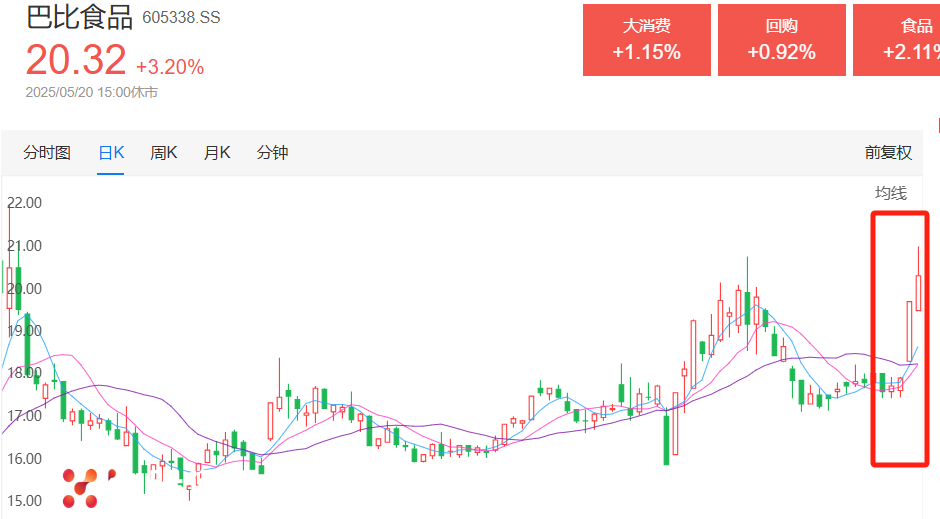
Group 1 - The "Measures for Promoting and Managing the Catering Industry" will be implemented on June 15, 2025, with significant enhancements in industry promotion, including support for digital development and local特色餐饮 cultivation [1] - The revised measures provide practical guidance for catering service operators, aiming to improve service quality and competitiveness in the industry [1] - Analysts predict a recovery opportunity for the catering industry in 2025, driven by increased demand for banquets, ongoing subsidy policies like dining vouchers, and a potential rise in business dining as economic activity picks up [1][2] Group 2 - Following the announcement of the new measures, companies like Baba Food and Tianwei Food saw significant stock price increases, indicating positive market sentiment towards the catering sector [2] - Key companies in the catering supply chain include Hai Tian Wei Ye, Tian Wei Food, and An Qi Yeast, with projected revenue growth rates varying across the sector [5][6] - The core companies in the catering industry chain encompass various segments, including basic and compound condiments, as well as small dining chains [6]



控股股东将破产清算,连亏4年的“酱油第一股”能否走出泥潭
Xin Jing Bao· 2025-05-15 06:54
Group 1 - The controlling shareholder of Jiajia Food, Hunan Zhuoyue Investment, has been ruled to enter bankruptcy liquidation, which may lead to a change in control of the company [1][3] - Jiajia Food has faced severe operational challenges, reporting losses for four consecutive years, with its core soy sauce business struggling to maintain its market position [1][5] - In 2024, Jiajia Food reported revenue of 1.301 billion yuan, a year-on-year decline of 10.52%, and a net loss of 243 million yuan, an increase in loss of 26.83% compared to the previous year [6] Group 2 - Hunan Zhuoyue Investment holds over 216 million shares of Jiajia Food, accounting for 18.79% of the total share capital, but has lost liquidity due to share pledges and freezes [2] - The actual controller of Zhuoyue Investment is Yang Zhen, the founder of Jiajia Food, who, along with family members, has been listed as a dishonest executor multiple times from 2020 to 2023 [2] - China Orient Asset Management acquired nearly 270 million shares of Jiajia Food for 1.066 billion yuan, becoming the largest shareholder, which raises the possibility of a change in control [3][4] Group 3 - Jiajia Food's soy sauce business has seen a decline in revenue from 1.017 billion yuan in 2019 to 730 million yuan in 2024, while competitors like Haitian Flavoring and Qianhe Flavoring have maintained strong performance [6][7] - The company has been investing in market expansion and brand image improvement, leading to increased marketing and promotional expenses [6] - The potential change in control due to the bankruptcy of the controlling shareholder may impact the company's future management and strategic direction [3][4]
17家调味品企业年报披露:跨界风潮持续,“零添加”产品需调整
Bei Ke Cai Jing· 2025-05-11 06:41
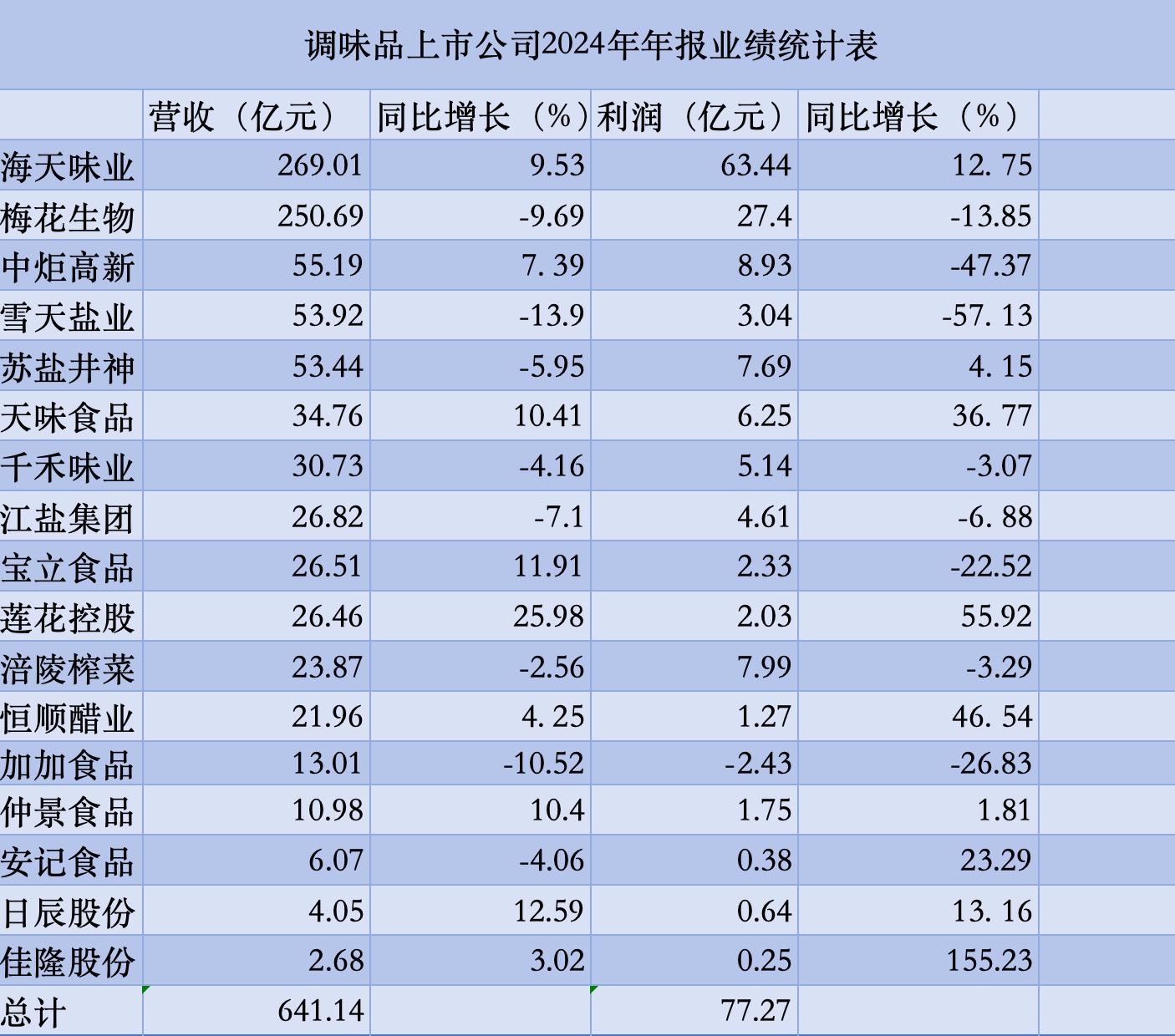
Core Insights - The A-share condiment companies reported a total revenue of 64.1 billion yuan and a net profit of 7.72 billion yuan for 2024, with 7 companies achieving growth in both revenue and profit [1][2] - The leading company, Haitian Flavoring, maintained its dominance with over 20 billion yuan in revenue and a net profit of 6.34 billion yuan, accounting for 82.1% of the industry's total profit [1][6] - The condiment industry is entering a phase of stock competition, with product innovation becoming crucial for breaking through market stagnation [1][8] Revenue and Profit Performance - In 2024, 7 condiment companies achieved both revenue and profit growth, including Haitian Flavoring, Tianwei Food, Lianhua Holdings, Hengshun Vinegar, Zhongjing Food, Richen Co., and Jialong Co. [2] - Conversely, 6 companies experienced declines in both revenue and profit, including Meihua Biological, Xue Tian Salt Industry, Qianhe Flavor, Jiangyan Group, Fuling Pickles, and Jiajia Food [2] - Total revenue for the 17 companies was 64.1 billion yuan, with a total net profit of 7.72 billion yuan [3][4] Company-Specific Highlights - Haitian Flavoring reported a revenue of 26.9 billion yuan, a year-on-year increase of 9.53%, and a net profit of 6.34 billion yuan, a 12.75% increase [6][4] - Lianhua Holdings showed significant growth with a revenue increase of 25.98% and a net profit increase of 55.92% [5][4] - Jiajia Food was the only company to report a loss, with a revenue of 1.3 billion yuan, a decline of 10.52%, and a net loss of 243 million yuan [5] Market Trends and Innovations - The condiment industry is experiencing a shift towards "zero-additive" products, with companies like Haitian Flavoring and Qianhe Flavor actively developing these offerings [10][11] - The new regulations on "zero-additive" products will require companies to adapt their product lines by 2027, pushing for a return to quality competition [11][10] - Cross-industry ventures are becoming a trend, with companies like Lianhua Holdings diversifying into computing power while maintaining their traditional condiment business [12][13] Competitive Landscape - The soy sauce market is showing signs of saturation, with per capita demand dropping significantly from 28 kg in 2015 to less than 5 kg in 2023 [8] - Companies are facing intensified competition, necessitating innovation and differentiation to maintain market share [9][8] - The industry is witnessing a dual flow of cross-industry collaboration, as seen with partnerships between condiment companies and other sectors [13]

东吴证券晨会纪要-20250509
Soochow Securities· 2025-05-09 04:01
Macro Strategy - The report highlights that China's consumption rate is only 37.2%, significantly lower than the average of 53.8% across 38 countries, indicating a need to improve the income of the middle and low-income groups to boost consumption [1][16][17] - It is noted that the low consumption rate is primarily due to a low consumption propensity, with China's consumption propensity at 62% compared to the average of 92.3% for the 38 countries [1][16] - The report suggests that increasing the tax burden on high-income earners and redistributing the revenue to lower-income groups could potentially increase total consumption by 1.6 trillion yuan, raising the consumption rate by 1.3 percentage points [1][17] Macro Commentary - The Federal Reserve maintained its interest rate at the May FOMC meeting, expressing concerns about economic uncertainty and stagflation risks, which complicates the decision-making process regarding interest rate cuts [2][18] - The commentary indicates that the market's expectation of three interest rate cuts this year may be overly optimistic, with potential upward pressure on U.S. Treasury yields [2][18] Industry Insights - The report on the AI and automotive industry emphasizes the growing opportunities for leading third-party autonomous driving suppliers, driven by the demand for equal access to intelligent driving technology and performance validation [6] - It is projected that leading autonomous driving suppliers could capture about 50% of the market share in new car sales, particularly benefiting second and third-tier automakers [6] - The report also discusses the competitive landscape for domestic chip manufacturers, noting that they have made significant progress in performance and production validation, positioning themselves to compete with established players like NVIDIA [6] Real Estate Industry - The real estate sector is expected to stabilize gradually due to the introduction of incremental policies and a reduction in housing loan interest rates, with a focus on quality developers in core cities [9] - Recommendations include developers like China Resources Land and Yuexiu Property, as well as property management companies such as China Resources Vientiane Life and Greentown Service [9] Construction Materials Industry - The report indicates that public fund holdings in the residential industry chain remain low, with a slight increase in construction and building materials allocations [8] - The concentration of holdings in the construction materials sector has increased, with 27% of stocks in this sector held by public funds [8]
大众品2024年报及2025年一季报总结:需求筑底,细分突围
Soochow Securities· 2025-05-08 00:30
Investment Rating - The report maintains an "Accumulate" rating for the food and beverage industry [1]. Core Insights - The food and beverage industry is experiencing a demand bottoming out, with opportunities for differentiation in sub-segments [1]. - The report highlights the potential for recovery in the dairy sector, driven by policy support and supply-side adjustments [33][34]. - The overall industry is facing challenges such as weak demand and increased competition, but cost advantages are improving profitability for leading companies [39][52]. Summary by Sections 1. Dairy Products - The dairy sector is expected to see an upward cycle as impairment pressures are released, with upstream clearing expected to continue [33]. - In 2024 and Q1 2025, the dairy industry faced significant supply-demand imbalances, with fresh milk prices dropping to levels not seen since 2010 [11][16]. - Major dairy companies like Yili and Mengniu are showing signs of revenue improvement in Q1 2025, benefiting from cost reductions and inventory management [20][28]. 2. Condiments - The condiment sector is characterized by strong resilience among leading companies, with significant cost advantages boosting profitability [39]. - In 2024 and Q1 2025, the condiment industry faced weak demand, but leading companies like Haitian and Zhongju have shown revenue improvements due to internal adjustments [39][52]. - The report suggests focusing on companies that have successfully implemented channel reforms and cost management strategies [49][52]. 3. Soft Drinks - The soft drink sector is experiencing a slowdown in revenue growth, with significant differentiation among companies [39]. - The report notes that leading brands like Dongpeng are capitalizing on cost reductions and scale effects to improve profitability [20][39]. - The overall market is expected to see a gradual recovery, with attention on long-term growth potential in specific segments [39]. 4. Health Products - The health product sector is undergoing a transformation driven by new consumer trends, with online brands gaining traction [39]. - Companies like H&H Holdings and Xianle Health are expected to benefit from market recovery and new retail contributions [39]. - The report emphasizes the importance of identifying high-quality companies with new consumer genes for investment opportunities [39]. 5. Hong Kong Restaurant Sector - The restaurant sector in Hong Kong is anticipated to recover as consumption stimulus policies take effect [39]. - Companies like Haidilao are focusing on supply chain and cost management to enhance performance [39]. - The report suggests monitoring companies that are expanding their store networks and improving operational efficiency [39].




大众品综述:24年承压,25年改善可期
HTSC· 2025-05-06 04:00
Investment Rating - The report maintains an "Overweight" rating for the food and beverage industry [9]. Core Insights - The food and beverage sector is expected to see improvements in 2025 after a challenging 2024, with various sub-sectors showing signs of recovery and growth potential [1][16]. Dairy Products - The dairy sector experienced a revenue decline of 7.2% in 2024, with a significant drop in net profit by 27% and 43.3% for attributable and non-recurring net profit respectively. However, Q1 2025 showed a slight revenue increase of 0.4% and a notable recovery in non-recurring net profit by 24.4% [2][16]. - Major dairy companies are expected to stabilize operations after channel adjustments, with recommendations for Yili and Mengniu [2][24]. Snack Foods - The snack food sector saw a revenue increase of 2.8% in 2024, but faced challenges in Q1 2025 with a revenue decline of 4.8%. The sector is benefiting from channel innovations and the growth of the konjac category [3][29]. - Companies like Yanjinpuzi and Ganyuan Foods are recommended due to their adaptability to market changes [3][33]. Beer - The beer sector faced a revenue decline of 1.5% in 2024, but Q1 2025 showed a recovery with a 3.7% revenue increase. The sector is expected to improve due to low inventory levels and a stabilizing restaurant demand [4][24]. - Recommended stocks include Yanjing Beer and Zhujiang Beer [4][24]. Soft Drinks - The soft drink sector demonstrated resilience with a revenue growth of 15.7% in 2024, and a stable performance in Q1 2025 with a 5.5% increase. The sector is benefiting from strong travel demand and new product launches [5][24]. - Key recommendations include Nongfu Spring and attention to Kangshifu and Uni-President [5][24]. Condiments - The condiment sector saw a revenue increase of 7.7% in 2024, but growth has been modest in 2025. Major players are adjusting to improve market share [6][24]. - Companies like Haitian Flavoring and Zhongju Gaoxin are highlighted for their ongoing transformations [6][24]. Frozen Foods - The frozen food sector has been under pressure with a revenue increase of only 1.6% in 2024 and a decline of 5.1% in Q1 2025. Intense price competition is affecting profitability [7][24]. - The sector is expected to improve as restaurant demand recovers [7][24].




海天味业:第一季度归母净利润同比增长15%,龙头优势凸显-20250501
Guoxin Securities· 2025-05-01 01:20
Investment Rating - The investment rating for the company is "Outperform the Market" [5][3][16] Core Views - The company achieved a total revenue of 8.315 billion yuan in Q1 2025, representing a year-on-year growth of 8.08%, and a net profit attributable to the parent company of 2.202 billion yuan, up 14.77% year-on-year [1][8] - The company maintains a strong growth trajectory in soy sauce and other products, with online sales showing significant growth after improvements in 2024 [1][2] - The company’s gross profit margin reached 40.0% in Q1 2025, an increase of 2.7 percentage points year-on-year, indicating effective cost management [2][9] Summary by Sections Financial Performance - In Q1 2025, the company reported a net profit margin of 25.8%, the highest quarterly figure since Q1 2022, with a year-on-year increase of 1.6 percentage points [2][9] - The company’s revenue from soy sauce, oyster sauce, seasoning sauce, and others was 4.42 billion, 1.36 billion, 0.91 billion, and 1.29 billion yuan respectively, with growth rates of 8%, 6%, 14%, and 21% year-on-year [1][8] Revenue and Profit Forecast - The company is expected to achieve total revenues of 29.675 billion, 32.440 billion, and 35.152 billion yuan for 2025, 2026, and 2027 respectively, with year-on-year growth rates of 10.3%, 9.3%, and 8.4% [3][14] - The forecast for net profit attributable to the parent company is 7.141 billion, 7.790 billion, and 8.462 billion yuan for the same years, with growth rates of 12.6%, 9.1%, and 8.6% [3][14] Market Position and Strategy - The company’s strong brand and channel management capabilities are expected to continue driving performance, with a stable dealer network across various regions [2][11] - The company has effectively managed costs and maintained a healthy investment in expenses, reflecting its robust channel control capabilities [2][11]
新标准效应改善消费认知 零添加概念调味品打折清库
Zhong Guo Chan Ye Jing Ji Xin Xi Wang· 2025-04-30 22:54
Core Viewpoint - The newly implemented national food safety standard (GB7718—2025) prohibits the use of terms like "no additives" or "zero additives" on pre-packaged food labels, leading to significant promotional activities for products previously marketed under these terms [1][4][5]. Group 1: Market Response - Many brands, especially in the soy sauce category, are currently offering substantial discounts, with some products being sold at up to 50% off their original prices [2][3]. - For example, a 1-liter bottle of Qianhe zero-additive soy sauce, originally priced at 39.9 yuan, is now being sold for 29.9 yuan, while other brands are also engaging in similar promotional strategies [2]. - The trend of increased discounts is not limited to physical stores; online platforms are also offering promotions, although the discounts are generally smaller compared to offline [3]. Group 2: Industry Dynamics - The competitive landscape for zero-additive soy sauce is intensifying, with market demand not meeting expectations, prompting businesses to resort to discount promotions to stimulate sales [4]. - The number of zero-additive products has surged from over 300 in Q2 2022 to more than 800 by Q4 2024, indicating a saturated market [4]. - Experts suggest that the new standard signals a need for companies to shift their focus from marketing gimmicks to product quality, emphasizing the importance of innovation and consumer education [5][6]. Group 3: Consumer Perception - The perception of zero-additive products is changing among consumers, with many indicating they will no longer prioritize purchasing these items [6]. - A survey revealed that while some consumers are concerned about the availability of natural products post-standard implementation, the majority support the regulation of the zero-additive label [6]. - The new standard is expected to lead to a transformation in the food market, encouraging consumers to focus more on the actual nutritional value and safety of food products rather than relying solely on marketing labels [7].
千禾味业(603027) - 招商证券股份有限公司关于千禾味业食品股份有限公司2022年度向特定对象发行股票之持续督导保荐总结报告书
2025-04-29 08:45
关于千禾味业食品股份有限公司 2022 年度向特定对象发行股票之 持续督导保荐总结报告书 招商证券股份有限公司(以下简称"招商证券"或"保荐机构")担千禾味 业食品股份有限公司(以下简称"千禾味业"、"发行人"、"公司")2022 年度 向特定对象发行股票的保荐机构,负责本次股票发行上市后的持续督导工作,持 续督导期自 2023 年 7 月 11 日至 2024 年 12 月 31 日止(以下简称"持续督导期 间")。招商证券根据《证券发行上市保荐业务管理办法》《上海证券交易所股票 上市规则》和《上海证券交易所上市公司自律监管指引第 11 号——持续督导》 等相关规定,出具本持续督导保荐总结报告书。 一、保荐机构及保荐代表人承诺 (一)根据公司提供的相关资料和信息,保荐总结报告书和证明文件及其相 关资料的内容不存在虚假记载、误导性陈述或重大遗漏,保荐机构及保荐代表人 对其真实性、准确性、完整性承担法律责任。 (二)保荐机构及保荐代表人自愿接受中国证券监督管理委员会(以下简称 "中国证监会")对保荐总结报告书相关事项进行的任何质询和调查。 千禾味业食品股份有限公司 持续督导保荐总结报告书 (三)保荐机构及保荐代 ...
海天味业:渠道补库、成本红利拉动利润超预期-20250429
HTSC· 2025-04-29 04:15
Investment Rating - The report maintains an "Overweight" rating for the company with a target price of 51.20 RMB [7][8]. Core Views - The company's Q1 performance exceeded expectations due to significant cost benefits, with revenue and net profit increasing by 8.1% and 14.8% year-on-year, respectively [1][3]. - The company is expected to continue its steady growth trajectory in the short term, supported by low inventory levels and proactive replenishment by distributors [1][4]. - The competitive landscape is intensifying, prompting the company to increase its marketing expenditures to maintain market share [3][4]. Revenue and Profitability - In Q1 2025, the company achieved a revenue of 83.2 billion RMB, with a gross margin of 40.0%, reflecting a year-on-year increase of 2.7 percentage points due to lower raw material costs [1][3]. - The net profit margin for Q1 2025 was 26.5%, up 1.5 percentage points year-on-year, indicating improved profitability despite rising sales expenses [3]. Product and Channel Performance - Revenue growth in Q1 was driven by downstream replenishment and the introduction of new products, with specific categories like soy sauce and oyster sauce showing strong performance [2]. - The company reported a 43.2% increase in online sales, while offline sales grew by 8.9%, highlighting the effectiveness of its channel strategies [2]. Market Position and Outlook - The company is expected to solidify its leading position in the market through ongoing channel reforms and product expansion strategies [4]. - Earnings per share (EPS) forecasts for 2025-2027 are projected at 1.28, 1.42, and 1.59 RMB, respectively, with a reference PE ratio of 40x for 2025 [4][6].