蜜雪冰城

Search documents
全球资本竞逐港股IPO基石席位 红杉、IDG等头部基金积极入场
Zhong Zheng Wang· 2025-10-28 05:32
Core Viewpoint - The Hong Kong stock market is becoming an important platform for mainland companies to expand financing channels and enhance internationalization, with a significant increase in IPO activities and foreign investment interest [1][4]. Group 1: Market Activity - As of October 21, 11 A-share listed companies have successfully listed on the Hong Kong stock market, with 78 more in the queue for approval, indicating a strong trend towards the "A+H" dual-platform strategy [1]. - Cambridge Technology (603083) is set to list on October 28, attracting a cornerstone investment of $290 million from 16 global investment institutions, accounting for 48.89% of the total shares issued [1][2]. Group 2: Investment Trends - There is a noticeable increase in foreign investment enthusiasm for Chinese assets, with long-term funds from Europe and the U.S., as well as sovereign funds from the Middle East, actively participating in cornerstone investments and IPOs in Hong Kong [1][3]. - The cornerstone investment trend is not limited to Cambridge Technology; other companies like Zijin Mining and Mixue Ice City have also attracted significant investments, highlighting the growing interest from top-tier institutions in quality Hong Kong IPO projects [3]. Group 3: Company Performance - Cambridge Technology has shown steady revenue growth over the past three years, with projected revenue of approximately 2.034 billion yuan for the first half of 2025, reflecting a year-on-year increase of about 24% [2]. - The company maintains a gross profit margin above 20%, indicating strong growth potential [2]. Group 4: Industry Outlook - The ongoing optimization of regulatory policies, active southbound capital flows, and the acceleration of quality enterprises listing in Hong Kong are expected to sustain the vibrancy of the IPO market [4]. - The continuous entry of capital giants is transforming the Hong Kong market from a fundraising platform to a value discovery hub, fostering a more internationalized and market-oriented capital ecosystem [4].

新茶饮出海:提速也需提质
Zhong Guo Zhi Liang Xin Wen Wang· 2025-10-28 04:47
Core Insights - Nayuki's Tea has successfully entered the U.S. market, opening its first store in Flushing, New York, and achieving sales of 13,000 products and revenue of $87,000 in just three days, setting a record for the brand [1] - The expansion of Chinese tea brands into international markets is becoming a significant growth point, as domestic markets reach saturation [2][3] Industry Trends - The Chinese tea beverage market has shifted from incremental competition to stock competition, with first- and second-tier cities reaching market saturation, prompting brands to seek new growth opportunities [2] - Global consumer demand for fresh experiences and the increasing influence of Chinese culture are facilitating the internationalization of tea brands [2] Challenges in Internationalization - Cultural differences pose a significant challenge for tea brands entering Western markets, where coffee culture is dominant [2][3] - Supply chain management is complex for new tea beverages, which require fresh ingredients and timely production, complicating the establishment of efficient global supply chains [2] Strategies for Market Entry - Brands are adopting various strategies for international expansion, with some focusing on cost-effectiveness in emerging markets, while others emphasize high-end cultural output in developed markets [3] - Balancing localization and standardization is crucial; brands must adapt to local tastes without losing their unique identity [3] Future Directions - For successful global expansion, tea brands need to enhance their cultural storytelling, digital operational capabilities, and integrate sustainable development principles into their business models [4] - The ultimate goal for these brands is not just to open stores abroad but to establish a global narrative around Chinese tea culture [4][5]
补贴撑起的“虚假繁荣”,餐饮人终于看懂了
36氪未来消费· 2025-10-28 04:07
Core Viewpoint - The article highlights the challenges faced by the restaurant industry due to the recent "takeout war," which has led to a false sense of prosperity driven by heavy subsidies, resulting in declining profit margins and customer spending [6][10][16]. Group 1: Industry Challenges - 75% of new orders during the takeout war had a payment price below 15 yuan, while dine-in customer spending has returned to 2015 levels, indicating a significant drop in profitability for restaurants [6][10]. - The takeout war has created a vicious cycle of low-price competition, with 75% of consumers opting for cheaper takeout over dine-in options, further squeezing restaurant margins [14][15]. - Many restaurants are forced to participate in subsidy programs, leading to unsustainable business practices where they often lose money on each order [21][26]. Group 2: Impact of Subsidy Wars - The subsidy wars have consumed nearly 100 billion yuan, equivalent to three years of profits for the entire takeout industry, leaving many restaurants to deal with the aftermath [6][18]. - The competition has led to a significant increase in the recovery of second-hand restaurant equipment, with reports indicating a 100% year-on-year increase in the recovery of hot pot restaurant equipment [9][10]. - Despite the apparent growth in order volume, many restaurants are experiencing closures, highlighting the disparity between reported growth and actual business health [11][24]. Group 3: Responses and Strategies - Companies like Meituan are advocating for a "de-involution" approach, focusing on supporting restaurants rather than engaging in destructive price wars [5][28]. - Meituan has launched initiatives such as the "Prosperity Plan," allocating 28 billion yuan to help restaurants maintain profits and improve operations [29][30]. - Successful restaurants are finding ways to innovate their products and business models rather than competing solely on price, as seen with brands like Laoxiangji, which has accelerated product innovation during the subsidy wars [32][33]. Group 4: Future Outlook - The article suggests that the restaurant industry's core competitiveness lies in quality, service, and innovation rather than low prices, emphasizing the need for a sustainable business model [16][44]. - The return to fundamental business practices, focusing on product and service quality, is essential for long-term survival in the industry [44].

补贴撑起的“虚假繁荣”,餐饮人终于看懂了
3 6 Ke· 2025-10-28 04:06
Core Insights - The recent restaurant industry conference in Beijing highlighted the struggles faced by businesses post the intense food delivery subsidy wars, revealing that 75% of new orders were priced below 15 yuan and dine-in customer spending has reverted to 2015 levels [1][3] - The so-called "false prosperity" created by heavy subsidies has led to a significant decline in merchant profits and customer spending, with many restaurants forced to lower prices to maintain order volumes [1][6][9] Industry Overview - The food delivery subsidy wars, which began in early 2025, have consumed nearly 100 billion yuan, equivalent to three years of profits for the entire food delivery sector, leaving restaurant owners to deal with the aftermath [3][10] - Data from the restaurant industry conference indicated a sharp decline in customer spending starting in April 2025, with many businesses unable to raise prices during peak demand months due to ongoing subsidy competition [8][14] Business Impact - Many restaurants are experiencing closures, with a significant increase in second-hand equipment being sold, as evidenced by a 100% year-on-year increase in the recovery of used equipment from hot pot restaurants [5][6] - The competitive landscape has forced restaurants to either participate in subsidy programs or lose customer traffic, leading to a vicious cycle of low pricing and reduced profit margins [9][14] Consumer Behavior - A survey indicated that 75% of consumers opted for cheaper delivery options over dine-in, and 86% would choose delivery if it was less expensive than dining in, further exacerbating the challenges for dine-in reliant businesses [8][14] Strategic Responses - Meituan's CEO emphasized the need for restaurants to focus on structural cost advantages and overall operational improvements rather than engaging in price wars [3][18] - Meituan has initiated a 28 billion yuan support plan for merchants, including direct financial assistance and funds for innovative store models, to help stabilize the industry post-subsidy wars [18][20] Future Outlook - The industry is shifting focus from aggressive discounting to enhancing product quality and service, with successful businesses finding ways to innovate and adapt rather than compete solely on price [19][25] - AI tools introduced by Meituan aim to assist restaurants in optimizing operations and improving efficiency, indicating a move towards sustainable growth strategies [26]

近半年股价腰斩,沪上阿姨开店数放缓
Shen Zhen Shang Bao· 2025-10-27 06:50
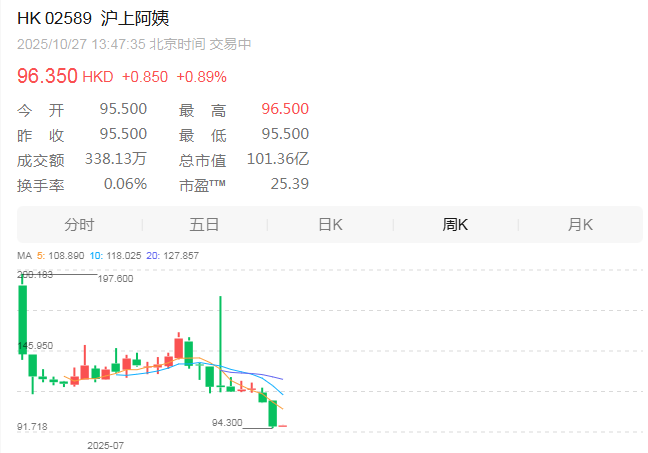
Core Viewpoint - The stock price of Hu Shang A Yi has dropped over 50% since its IPO, indicating a weak market performance compared to competitors like Mi Xue and Gu Ming [1][3] Financial Performance - In the first half of the year, Hu Shang A Yi reported a revenue of 1.818 billion yuan, a year-on-year increase of 9.7%, and a net profit of 203 million yuan, growing by 20.9% [3] - The net profit growth rate of Hu Shang A Yi is significantly lower than that of its peers, with Mi Xue achieving a 44% increase and Gu Ming a 121.5% increase [3] - Hu Shang A Yi's net profit margin stands at 11.16%, which is considerably lower than Gu Ming's 28.72% and Mi Xue's 18.3% [3] Expansion Plans - The founder of Hu Shang A Yi proposed a "10,000 store plan" aiming for 10,000 stores, but as of mid-year, the company only had 9,436 stores, falling short by 564 stores [4] - In the first half of the year, Hu Shang A Yi opened 905 new franchise stores but closed 645, resulting in a net increase of only 260 stores [4] - Compared to competitors, Hu Shang A Yi's store expansion is lagging, with Gu Ming adding 1,265 stores and Mi Xue adding 6,535 stores in the same period [4] Franchise Policies - To accelerate expansion, Hu Shang A Yi introduced various franchise incentives, including a reduction in franchise fees and opening subsidies [5] - Despite these incentives, the expected expansion has not materialized, with a decrease in new store openings reported [5] - Quality issues have been raised regarding Hu Shang A Yi's products, with over 4,500 complaints related to service and hygiene reported [5] Industry Outlook - Multiple institutions predict a decline in Hu Shang A Yi's growth rate, with Zhongyou Securities forecasting revenue growth rates of 28%, 19%, and 15% from 2025 to 2027, and net profit growth rates of 46%, 33%, and 17% [6] - Hu Shang A Yi is expected to face increased competition as the tea beverage industry transitions from high-speed growth to a more competitive environment [5][6]
预制菜企业最集中的省份 为什么是河南?
3 6 Ke· 2025-10-27 02:05
Core Insights - Henan province, known for its large population, is emerging as a significant player in the new consumption landscape, particularly in the prepared food sector [1][2] - The province is home to over 4,000 companies related to prepared food, ranking first in the country for the number of such enterprises [2] - Henan's agricultural advantages contribute to its dominance in the prepared food industry, producing a substantial portion of China's staple foods [3][4] Industry Overview - Henan produces 25% of China's steamed buns, 33% of instant noodles, 50% of ham sausages, and 60% of dumplings, showcasing its agricultural strength [3] - The province is recognized as a major agricultural hub, with its grain output second only to Heilongjiang in 2024, and it consistently ranks first in wheat production [3] - The local market provides high-quality, low-cost raw materials, supported by a well-established food production and management system [3] Market Dynamics - The population density in Henan provides a robust market and labor force, while its strategic location enhances logistics and cold chain transportation capabilities [4] - Companies like Shuanghui have successfully entered the prepared food market, launching various products under their brands [3] - The combination of agricultural output and industrial development positions Henan as a key player in the prepared food sector, often referred to as "China's kitchen" [4]


中国啤酒升级故事怎么讲?摸一摸美国“精酿革命”的石头
Guan Cha Zhe Wang· 2025-10-26 14:03
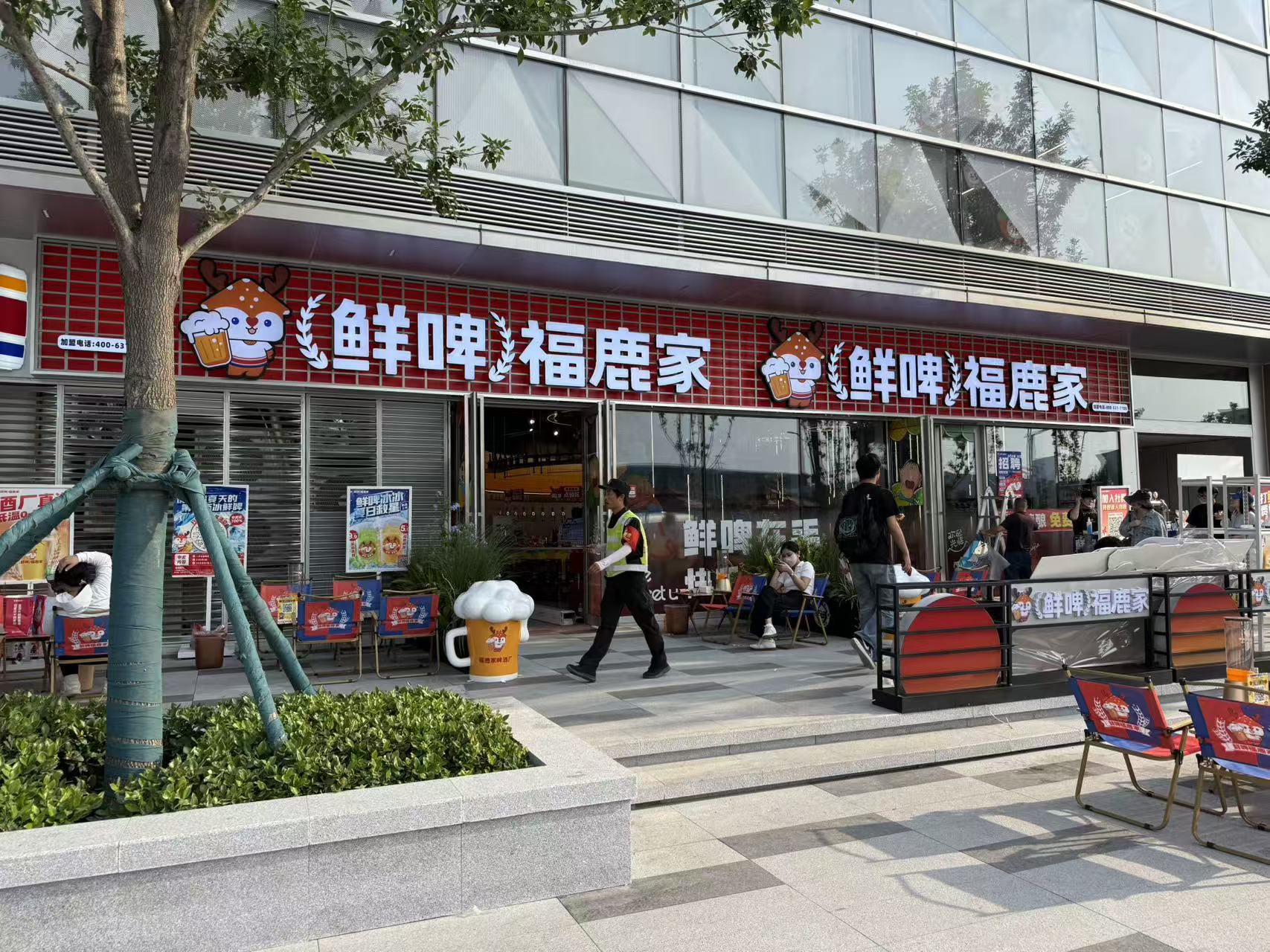
Core Viewpoint - The acquisition of 53% stake in Fresh Beer Fulu by Mixue Group for 297 million yuan marks a significant move for the company, aiming to diversify its product offerings beyond tea drinks and tap into the beer market [1][5][6]. Group 1: Acquisition Details - Mixue Group completed its first major acquisition post-IPO by acquiring a 53% stake in Fresh Beer Fulu for 297 million yuan, achieving absolute control [1][5]. - Fresh Beer Fulu, founded in 2021, operates approximately 1,200 stores and offers fresh beer products priced between 5.9 yuan and 14.9 yuan [5][20]. - The acquisition structure involved a combination of capital injection and share transfer, allowing Mixue to avoid potential antitrust scrutiny [5][6]. Group 2: Market Context - Following a brief post-IPO surge, Mixue's stock has faced downward pressure, reflecting market skepticism regarding its growth potential and operational challenges in the coffee and overseas expansion sectors [2][6]. - The tea drink sector's growth rate is projected to slow from 44.3% in 2023 to 12.4%, prompting Mixue to seek new growth avenues [6][28]. Group 3: Strategic Implications - The acquisition is seen as a strategic extension of Mixue's business, aiming to cover a broader range of product categories and meet consumer demand for high-quality, affordable products [6][27]. - The entry of a major player like Mixue into the craft beer market is viewed positively, potentially enhancing industry visibility and optimizing supply chains [7][27]. Group 4: Challenges Ahead - Significant challenges include adapting to the operational differences between tea and beer production, brand perception shifts, and navigating a complex regulatory environment for alcoholic beverages [28][29]. - The financial performance of Fresh Beer Fulu has been underwhelming, with a reported loss of 1.5277 million yuan in 2023, raising concerns about the valuation of the acquisition [29].
古茗(01364.HK)深度研究:大众现制饮品龙头 冷链快反筑造护城河
Ge Long Hui· 2025-10-25 22:37
Core Viewpoint - The company, Guming, is experiencing significant growth in the Chinese ready-to-drink tea market, with a market share of approximately 9.1%, making it the second-largest player after Mixue Ice City and the leading brand in the 10-20 yuan price segment [1] Group 1: Market Position and Performance - As of the end of H1 2025, Guming operates 11,179 stores across over 200 cities, with 81% of its stores located in second-tier and lower cities [1] - The company is projected to achieve revenue of 8.791 billion yuan in 2024, representing a 14.5% increase, with a corresponding GMV of 22.4 billion yuan, up 16.57% [1] - Guming's revenue is primarily derived from the sale of raw materials and equipment to franchise stores, accounting for 80% of total revenue [1] Group 2: Competitive Landscape - The ready-to-drink beverage market in China is characterized by a rising per capita consumption potential, with low-tier markets being the main source of growth [1] - In the milk tea segment, the chain rate is expected to reach 49% in 2024, with supply chain capabilities becoming a critical competitive factor due to product homogeneity and low replication barriers [1] - The coffee segment faces less intense competition compared to milk tea, with leading brands leveraging scale advantages to combat rising coffee bean costs and price wars [1] Group 3: Store Performance and Expansion Strategy - Guming's single-store model shows resilience, with an average monthly GMV of 197,000 yuan, despite a 4% decline, and approximately 40% of sales coming from third-party platforms [2] - The company maintains a focus on store quality and franchisee health, with a strategy of expanding in existing stronghold provinces while also entering neighboring regions [2] - The new franchise policy for 2025 emphasizes the importance of franchisee management and lowers the entry threshold to 230,000 yuan to encourage expansion [2] Group 4: Logistics and Supply Chain - Guming leads the industry in cold chain and warehousing logistics, ensuring fresher products compared to competitors, with most fresh ingredients transported to stores within 1-3 days [3] - The company owns 362 transportation vehicles, with 75% of its stores located within a 150-kilometer radius of its warehouses, allowing for efficient cold chain service [3] Group 5: Financial Projections - Revenue forecasts for Guming are set at 11.98 billion yuan, 15.18 billion yuan, and 18.34 billion yuan for 2025-2027, with growth rates of 36%, 27%, and 21% respectively [3] - The projected net profit for the parent company is 2.6 billion yuan for 2025, remaining stable at 2.6 billion yuan in 2026, and increasing to 3.2 billion yuan in 2027 [3] - The adjusted net profit is expected to be 2.12 billion yuan, 2.71 billion yuan, and 3.29 billion yuan for the same period, with corresponding growth rates of 37%, 28%, and 21% [3]
学习贯彻党的二十届四中全会精神丨乘势而上融入服务大市场
He Nan Ri Bao· 2025-10-24 23:48
Core Insights - The establishment of a million-ton beverage super factory by Coca-Cola in Henan signifies a strong commitment to investing in the region, reflecting confidence in its future potential [1] - Henan's strategic position as a major market with a population of approximately 100 million and over 22 million middle-income groups enhances its attractiveness for investment [1] - The provincial government is actively promoting the integration into a unified national market, which is seen as a key strategy for high-quality development [2] Market Connectivity - The logistics network in Henan is improving, with railway transport covering over 53% of the national population within three hours and air transport covering over 87% within two hours [3] - Collaborative projects with neighboring regions are being implemented to enhance infrastructure connectivity and industrial innovation [3] - The number of China-Europe (Asia) freight trains has increased significantly, with 2,385 trains operating in the first three quarters, marking a 52.4% year-on-year growth [3] Market Efficiency - Efforts to optimize land use have led to a 51.7% share of "standard land" in industrial land transfers, an increase of 4.54 percentage points year-on-year [4] - Zhengzhou has been selected as one of the top ten pilot cities for comprehensive reform in market-oriented allocation of data elements, with a 10.1% increase in data products and services available [4] Competitive Capability - The production of new energy vehicles in Henan has grown by 20.6% year-on-year, while lithium-ion battery production has more than doubled [5] - The retail sales of consumer goods in Henan increased by 6.2% year-on-year, surpassing the national average by 1.7% [5] - The province is focusing on breaking bottlenecks and enhancing connectivity to boost its role in the global market, aiming to attract more investment [5]
2025年中国品牌在东南亚市场的崛起报告-增长机遇及对区域竞争者的影响-
Sou Hu Cai Jing· 2025-10-24 19:01
Core Insights - The report highlights the rapid expansion of Chinese brands in Southeast Asia, driven by domestic economic pressures and regional opportunities, with exports to Southeast Asia expected to reach $587 billion in 2024, a 12% increase year-on-year [1][9][31] - The ASEAN-6 countries (Indonesia, Malaysia, Philippines, Singapore, Thailand, and Vietnam) account for 95% of Southeast Asia's $4 trillion GDP, making them key markets due to their young population (63% under 40 years old, median age 31) and supportive policies [1][9][12] - Chinese brands dominate sectors with low localization needs, such as electronics, electric vehicles, and home appliances, with market share in Southeast Asia's smartphone sector rising from 21% in 2014 to over 60% in 2024 [1][9][14] Trade Evolution - The evolution of trade between China and Southeast Asia has been significant, with over 70% of Chinese companies in ASEAN planning market expansion, reflecting a shift in China's economic landscape [9][19] - The region's favorable demographics and historical trade ties enhance its attractiveness as a market for Chinese exports, especially as Western market barriers increase [9][19][21] Investment Trends - Chinese investment in Southeast Asia has surged, particularly in manufacturing, driven by the need to circumvent U.S. tariffs and target the growing middle-class market in ASEAN [42][43] - Foreign direct investment (FDI) from China in ASEAN's wholesale and retail sectors increased by over 700% since 2017, indicating a strategic focus on deepening economic integration [42][43] E-commerce and Digital Trends - Cross-border e-commerce has transformed the Southeast Asian market, with platforms like Lazada and TikTok Shop facilitating entry for Chinese brands [46][47] - The rise of live-streaming e-commerce is changing consumer behavior, helping to shift perceptions of "Made in China" from low-end to high-quality products [46][47] Consumer Trends - Southeast Asia's consumer market is thriving, supported by a young, digitally savvy population and rapid economic growth, with countries like Vietnam and Indonesia expected to outpace China's GDP growth in the coming years [12][52] - The region presents significant untapped opportunities in e-commerce and digital services, with a relatively low penetration rate despite high internet usage [52][53] Industry Focus - Key growth industries for Chinese brands in Southeast Asia include home appliances, beauty and personal care, food services, pet care, packaged foods, and digital wallet payments, reflecting a broadening of market presence beyond traditional sectors [7][12][55] - The competitive landscape is evolving, with existing companies needing to adapt quickly to the digital capabilities and pricing strategies of Chinese competitors to maintain market share [10][12]