宝马

Search documents
安世争端或影响芯片供应链,欧洲众车企发声
Guan Cha Zhe Wang· 2025-10-23 08:14
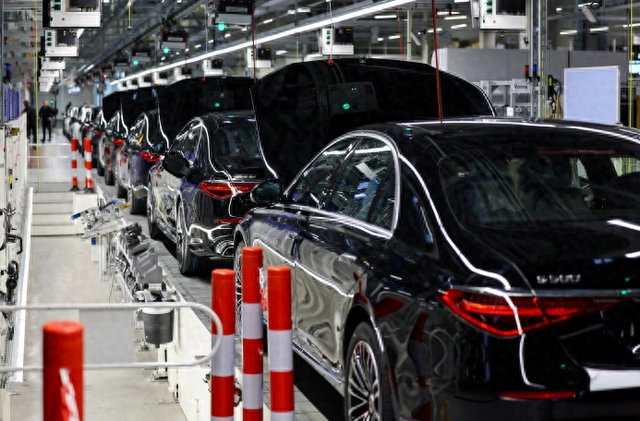
Core Viewpoint - The automotive industry is facing potential long-term challenges due to the supply chain disruptions caused by the ongoing dispute involving Anshi Semiconductor, despite short-term assurances from major manufacturers that their production plans remain unaffected [1][3][4]. Group 1: Company Responses - Mercedes-Benz has secured short-term chip supplies through strong supplier relationships and lessons learned from previous chip crises, but warns of ongoing challenges for the entire automotive sector [1][3]. - BMW is closely collaborating with suppliers to assess the situation and identify potential supply risks, while continuing production as planned [3]. - Volkswagen Group acknowledges that Anshi Semiconductor is not a primary supplier but recognizes that some parts from its first-tier suppliers may contain components from Anshi, and is monitoring the situation for potential short-term impacts [3][4]. - Renault has established a monitoring department to maintain daily contact with suppliers and seek alternative solutions to ensure production continuity, currently reporting limited potential impacts [3][4]. Group 2: Industry Context - Anshi Semiconductor, a wholly-owned subsidiary of China's Wingtech Technology, derives 60% of its revenue from the automotive sector, with major clients including Volkswagen, BMW, and Mercedes-Benz [4]. - 70% of Anshi's production capacity is based in China, and recent U.S. export controls have raised concerns about the stability of the global supply chain [4]. - The Dutch Ministry of Economic Affairs has imposed restrictions on Anshi and its subsidiaries, further complicating the supply chain situation for automotive manufacturers [4]. Group 3: Governmental Discussions - Chinese Commerce Minister Wang Wentao discussed the Anshi Semiconductor issue with EU Trade Commissioner Valdis Dombrovskis, emphasizing the need for constructive dialogue to maintain global supply chain stability [5][6]. - Wang also communicated with the Dutch Economic Minister, urging the Netherlands to consider the broader implications of their actions on global supply chains and to protect the rights of Chinese investors [6].


当成都决定寻找全球“新坐标”
Mei Ri Jing Ji Xin Wen· 2025-10-23 06:57
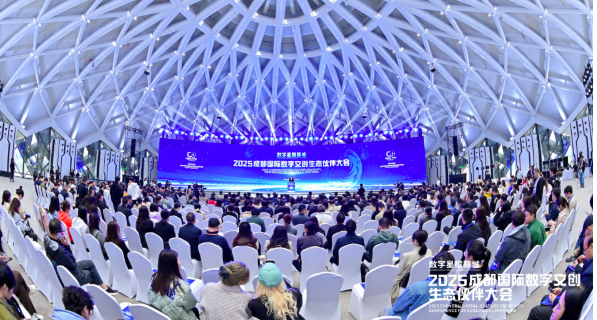
Core Insights - Chengdu is positioning itself as a leading hub for the digital cultural and creative industry, aiming to create a high-level innovation platform and ecosystem to foster new IPs and projects [2][3][10] Group 1: Industry Development - Chengdu ranked fourth in the 2025 China Digital Cultural and Creative City Index and released a list of 100 billion yuan cooperation opportunities in the digital cultural sector [2] - The city achieved a cultural and creative industry added value of 287.6 billion yuan in 2024, with a year-on-year growth of 11.7%, and the core digital cultural industry revenue reached 381.9 billion yuan [3] - In the first half of this year, the added value of the cultural and creative industry was 187.2 billion yuan, growing by 7.4%, while the core digital cultural industry revenue was 212.1 billion yuan, with nearly 900 registered digital cultural enterprises [3] Group 2: Events and Engagement - The 2025 Chengdu International Digital Cultural and Creative Ecosystem Partner Conference attracted over 340 global leaders and showcased the city's commitment to advancing the digital cultural industry [1][2] - The recent "Super Golden Week" saw significant attendance at events like the 21st World Line Animation Exhibition, which attracted 40,000 visitors on its opening day [8] - The conference announced that five world-class esports events will be held in Chengdu from October to December, highlighting the city's growing importance in the global esports landscape [10] Group 3: Policy and Support - Chengdu has implemented supportive policies for nurturing digital cultural startups, including financial services and entrepreneurial support, making it the first city to focus on this sector [14] - The city has established itself as a favorable environment for innovation, with strong government support and a welcoming business climate, which is crucial for the growth of the digital cultural industry [12][14] Group 4: Global Outreach - Chengdu is actively engaging in international investment promotion, having facilitated nearly 10 billion yuan in cooperation agreements with European partners [19] - The city is becoming a key entry point for European companies into the Chinese market, with significant projects like the establishment of the German machine tool headquarters in Chengdu [19] - The international digital cultural ecosystem conference reflects Chengdu's unique industrial appeal and its readiness to embrace global opportunities [22]

固态电池系列报告之三:车端应用加速,产业链有望迎来变革
Bank of China Securities· 2025-10-23 06:25
Investment Rating - The report maintains an "Outperform" rating for the solid-state battery industry [1]. Core Viewpoints - Solid-state batteries are expected to see rapid growth in demand for electric vehicles due to their significant advantages in safety and energy density, supported by strong policy backing [1][3]. - The production of solid-state batteries is anticipated to accelerate, with production lines and equipment likely to benefit first from this transition [1][3]. - The global market for solid-state battery equipment is projected to reach CNY 40 billion in 2024, with expectations to grow to CNY 1,079.4 billion by 2030 [28][30]. Summary by Sections Industry Overview - Solid-state batteries are positioned as the next-generation technology for electric vehicle power sources, offering superior safety and energy density compared to traditional lithium-ion batteries [1][13]. - The industry is experiencing a dual drive from both policy and market forces, leading to an increase in production capacity and technological advancements [1][19]. Market Dynamics - Equipment orders for solid-state batteries are expected to precede the demand for end products, indicating a rapid growth potential in the equipment market [23][28]. - The solid-state battery equipment market is projected to grow significantly, with a forecasted market size of CNY 1,079.4 billion by 2030 [28][30]. Technological Developments - The introduction of new equipment and upgrades across various production stages is essential for the solid-state battery industry, particularly in the front-end and mid-stage processes [24][31]. - The solid-state battery production process requires specific equipment that differs from traditional lithium-ion battery production, necessitating significant investment in new technologies [24][31]. Investment Recommendations - The report suggests focusing on specific equipment segments such as dry electrode technology and static pressure equipment, which are expected to see increased demand and penetration rates [3][19]. - Companies like Xianlead Intelligent, Winbond Technology, and others are highlighted as key players to watch in the solid-state battery equipment sector [3][19].


摩根大通:从芯片到汽车:深入探讨高级驾驶辅助系统与无人驾驶出租车的报告
欧米伽未来研究所2025· 2025-10-23 04:26
Core Insights - The report from J.P. Morgan highlights that autonomous driving technology is becoming a decisive trend, with its maturity potentially outpacing the realization of zero-emission goals [2] - The global autonomous driving market is on the brink of explosion, with the penetration rate of high-level autonomous vehicles (Level 3 to Level 5) expected to rise from less than 5% in 2025 to approximately 15% by 2030, and around 45% by 2040 [2][3] Global Market Dynamics - The report outlines a tri-polar structure in the global autonomous driving landscape, focusing on the strategies of major players in China, the U.S., and Europe [4] - China is positioned as a future leader in Level 4/5 autonomous driving, with significant players like Baidu and Pony.ai leading the Robotaxi services [5] - The U.S. market exhibits a dual-track system, with companies like Waymo focusing on Level 4 Robotaxi technology, while Tesla leads in the consumer market with Level 2+ systems [6] - Europe leads in Level 3 consumer systems but lags in Level 4 Robotaxi development due to stringent regulations and public trust issues [7] Technological and Economic Challenges - The report identifies two core obstacles to achieving the autonomous driving vision: the need for technological maturity and a significant reduction in the costs of technology and hardware [3] - J.P. Morgan estimates that a Robotaxi must achieve at least 80% utilization to break even, highlighting the economic challenges in scaling deployment [3][15] Ecosystem and Competitive Landscape - The autonomous driving ecosystem consists of five key layers: OEMs, AV technology and software suppliers, fleet operators, financial stakeholders, and demand platforms [9] - Nvidia is currently the dominant player in the semiconductor space, with its "cloud-to-car" vertical integration providing a competitive edge [10] - Rideshare platforms like Uber and Didi are seen as essential participants in the autonomous driving ecosystem, facilitating demand and supply matching [11] Future Implications for Industries - The rise of autonomous driving will not only transform transportation but also disrupt related industries such as insurance [13] - The insurance industry is expected to shift from retail to commercial models due to the transfer of accident liability from drivers to manufacturers or technology providers [14] - The report warns that insurance companies heavily reliant on traditional retail models may face elimination risks as autonomous vehicle adoption increases [14]
新能源车的“9系”大战来了
吴晓波频道· 2025-10-23 00:30
Core Viewpoint - The article discusses the competitive advantages of Zeekr, particularly focusing on the launch of the Zeekr 9X and its positioning in the luxury electric vehicle market, highlighting its pricing strategy and technological advancements [6][10][11]. Group 1: Market Position and Performance - Zeekr 009 has become a market leader, capturing significant sales in the luxury electric MPV segment, with over 70% of its users coming from high-end luxury brands [6][21]. - The Zeekr 9X is positioned as a flagship model, with a competitive pricing strategy that undercuts traditional luxury brands, starting at 465,900 yuan, which is significantly lower than expected [10][11]. - The emergence of the "9 Series Battle" in 2025 signifies a turning point in the Chinese electric vehicle market, indicating a shift towards flagship models and heightened competition among automakers [7][9]. Group 2: Strategic Insights - The article emphasizes the importance of brand differentiation and competitive pricing as key strategies for Zeekr, which aims to deliver superior products at lower costs [11][12]. - Zeekr's development is supported by its parent company Geely's extensive resources and technological capabilities, including the CMA and SEA architectures [19][23]. - The strategic integration of Zeekr within Geely's broader framework is seen as a move to enhance collaboration and resource optimization, aligning with the "One Geely" strategy [22][24]. Group 3: Industry Context and Future Outlook - The article highlights the competitive landscape of the Chinese electric vehicle market, noting that major players like BYD and AITO are also vying for market share, each with distinct strengths [26][27]. - The article posits that the evolution of the electric vehicle market in China is leading to a "flagship era," where technological integration and strategic positioning will define success [27][28]. - The discussion around Zeekr's competitive landscape suggests that the focus will increasingly shift to leveraging technological advantages and creating structural barriers to competition [27][32].

年会预告 | 逸飞激光专场冠名2025高工锂电年会
高工锂电· 2025-10-22 02:08
Core Viewpoint - The 2025 High-Performance Lithium Battery Annual Conference will showcase advancements in the cylindrical battery industry, highlighting its increasing penetration in the passenger vehicle market and diversification into various applications [2][3][4]. Group 1: Event Details - The 2025 High-Performance Lithium Battery Annual Conference will take place from November 18-20, 2025, at the JW Marriott Hotel in Shenzhen Qianhai [2][6]. - The event is organized by GGII and features various sponsors, including Hymson Laser and Dazhu Lithium Battery [2][6]. Group 2: Industry Trends - The cylindrical battery is gaining traction in the passenger vehicle market due to its advantages in energy density, fast charging, and safety, with notable applications from leading manufacturers like Tesla and BMW [3]. - The trend towards full-scene electrification is driving the cylindrical battery's diversification into sectors such as home energy storage, eVTOL, and lightweight power applications [4]. Group 3: Technological Advancements - Equipment companies are optimizing core processes like full-tab ear technology, which is crucial for the advancement of cylindrical battery production [5]. - Yifei Laser, a key player in the cylindrical battery manufacturing process, has made significant breakthroughs in full-tab ear forming and welding technologies, achieving mass production capabilities [11]. - The company has also partnered with leading firms to develop key technologies and equipment for precise laser welding of full-tab ear cylindrical batteries [11]. Group 4: Future Projections - GGII forecasts that China's cylindrical battery shipments will exceed 400 GWh by 2030, indicating strong future growth in this sector [10]. - Yifei Laser has successfully delivered the first batch of all-solid-state lithium metal cylindrical batteries, showcasing its technological foresight in next-generation battery solutions [12].


想掀桌了?欧盟放狠话:中国想赚钱就必须转让技术,尤其是新能源
Sou Hu Cai Jing· 2025-10-21 08:54
Core Viewpoint - The European Union (EU) is reportedly drafting new regulations that require Chinese companies to transfer core technologies, particularly in the fields of new energy batteries and clean technologies, in order to access the European market, which raises concerns about fairness and market openness [1][7][10]. Group 1: EU Regulations and Requirements - The EU plans to implement a pilot program in December for a €10 billion battery development subsidy, mandating that Chinese firms share technology and establish local manufacturing or joint ventures to qualify for subsidies [7][10]. - The EU's justification for these requirements is framed as a need for "real investment" and job creation, but it is perceived as a means to extract technology from Chinese companies [7][10]. Group 2: China's Response and Market Dynamics - China's Ministry of Foreign Affairs has firmly opposed the EU's demands, stating three main objections: against forced technology transfer, interference in business operations, and protectionism [10][22]. - The EU's actions are seen as a reaction to China's dominance in new energy technologies, with China projected to become the largest supplier of high-tech products to the EU by 2024, accounting for 30% of imports, particularly in batteries and electronics [10][22]. Group 3: Internal EU Conflicts - There are divisions within the EU regarding the approach to China, with some member states, like Germany and Hungary, opposing tariffs and actively seeking Chinese investments, indicating a lack of consensus on the strategy towards Chinese companies [16][22]. - The potential for retaliatory measures from China, such as restricting rare earth exports, could significantly impact the EU's electric vehicle transition and overall energy costs [17][22]. Group 4: Strategic Implications - The EU's "technology protectionism" is viewed as a sign of strategic anxiety, revealing weaknesses in its own industrial competitiveness and a misunderstanding of the resilience of Chinese enterprises [22]. - The EU's reliance on market access as leverage may backfire, as Chinese companies could accelerate their global expansion into more favorable markets, potentially leading to adverse consequences for the EU's green transition efforts [22].
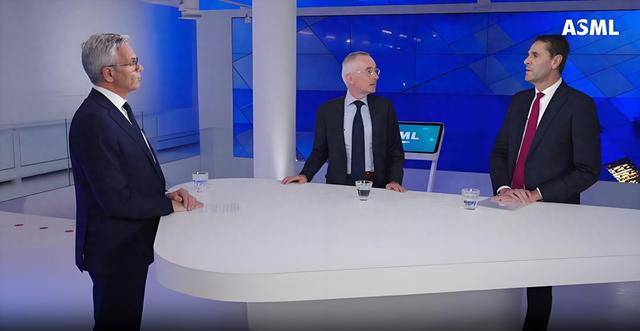
ASML老板突然改口,中国稀土反制击中要害!光刻机战争迎意外转折
Sou Hu Cai Jing· 2025-10-21 08:04
Core Viewpoint - ASML's CEO expressed concerns over China's potential abandonment of its lithography machines and the implementation of rare earth countermeasures, highlighting the intense technological competition between the US and China [1] Group 1: ASML's Concerns - ASML's anxiety stems from recent US regulations that expanded sanctions to subsidiaries controlled by Chinese companies, leading to the freezing of assets of a Chinese semiconductor firm [3] - The Dutch government, feeling supported by the US, took aggressive actions against Chinese investments, underestimating China's ability to retaliate swiftly and effectively [3] Group 2: Impact of Rare Earth Regulations - China announced strict export controls on five types of medium and heavy rare earths, affecting the entire supply chain from mining to manufacturing [3] - ASML's lithography machines require over 10 kilograms of rare earth magnets, with over 90% of these materials sourced from China, leading to a potential production drop of 15-20 machines per month and a loss of up to €3.2 billion annually [5] Group 3: China's Advancements in Lithography Technology - By Q3 2025, China is projected to become ASML's largest customer, with a 42% share of equipment deliveries, despite being blocked from acquiring advanced EUV lithography machines [7] - Chinese companies are making significant strides in developing their own lithography technologies, with local equipment coverage expected to rise from 15% in 2022 to 35% by 2025 [7] Group 4: ASML's Historical Context and Challenges - ASML has been a key player in US-led technology restrictions against China, facing a dilemma between adhering to US regulations and maintaining access to the Chinese market [12] - The company's sales to China peaked at 49% in early 2024 but are expected to drop to 25% by 2025 due to ongoing sanctions, resulting in a projected revenue loss of €2 billion [12] Group 5: Future Dynamics and Industry Implications - The Dutch government has shown signs of softening its stance, seeking negotiations with China, while the automotive industry in Germany expresses significant concern over reliance on Chinese rare earths [14] - The ongoing semiconductor industry struggle reflects a broader battle for control over supply chains, emphasizing the need for cooperation rather than confrontation to ensure sustainable development [15]


争分夺秒下单稀土!全球车企在中国稀土出口管制之前满世界采购
Zhi Tong Cai Jing· 2025-10-21 07:07
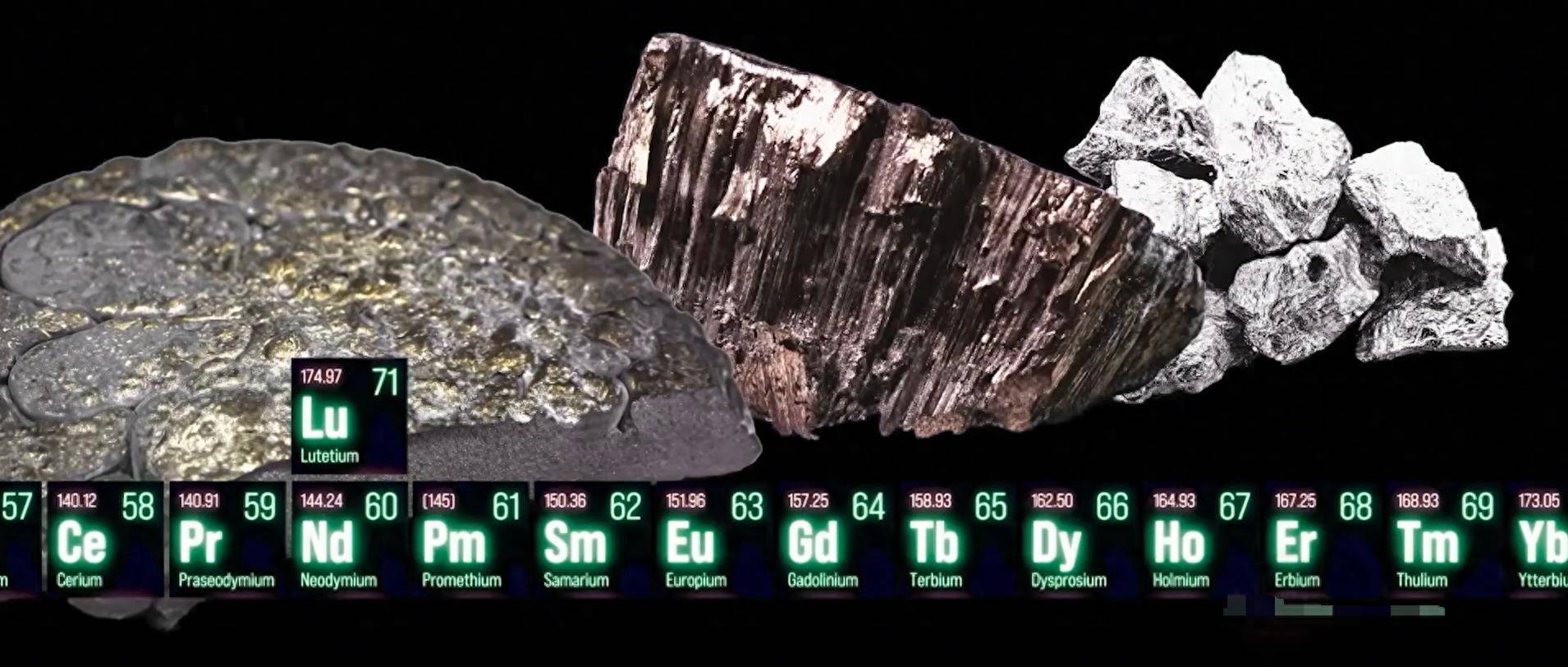
Core Viewpoint - The global automotive industry is facing significant challenges due to China's export controls on rare earth elements, which are critical for various automotive components, particularly in electric vehicles. This situation raises concerns about potential shortages and production halts in the automotive sector [1][6]. Group 1: Supply Chain Concerns - Automotive executives are worried that China's export restrictions could lead to shortages of essential components and factory shutdowns [1]. - China controls approximately 70% of global rare earth mining, 85% of refining capacity, and about 90% of rare earth metal alloys and magnet production [1]. - The new export control list from China includes elements like yttrium, holmium, and europium, which are also used in automotive manufacturing [2]. Group 2: Inventory and Production Challenges - Suppliers are experiencing tight inventory levels, with some reporting that their products are nearly sold out [2]. - Even if new orders are fulfilled before the export controls take effect, shipping delays could exacerbate supply issues, as it takes about 45 days to transport goods to Europe [5]. - The automotive industry is expected to stockpile rare earth materials before the November 8 deadline, but many companies have already depleted their inventories [6]. Group 3: Industry Adaptation and Innovation - Automakers are actively seeking to reduce their dependence on rare earth elements by developing electric motors with low to zero rare earth content [7]. - Companies like General Motors, ZF, and BorgWarner are working on new motor technologies, while BMW and Renault have already produced rare earth-free motors [7]. - Despite these efforts, industry experts indicate that it will take years for these new technologies to be fully implemented, and the plans to develop new rare earth mines and processing facilities outside China face significant challenges [7]. Group 4: Competitive Landscape - The U.S. government is reportedly more focused on the threat posed by China's control over rare earth supplies compared to Europe [7]. - Supply chain experts note that China is likely to continue undercutting competitors on price, making it difficult for automakers to justify the higher costs of rare earth-free components [7]. - The ongoing export controls from China are expected to persist, maintaining the country's dominance in the rare earth market [7].
稀土储量超铜,却卡住全球产业,中国握关键一步,美砸30亿难赶超
Sou Hu Cai Jing· 2025-10-21 01:38
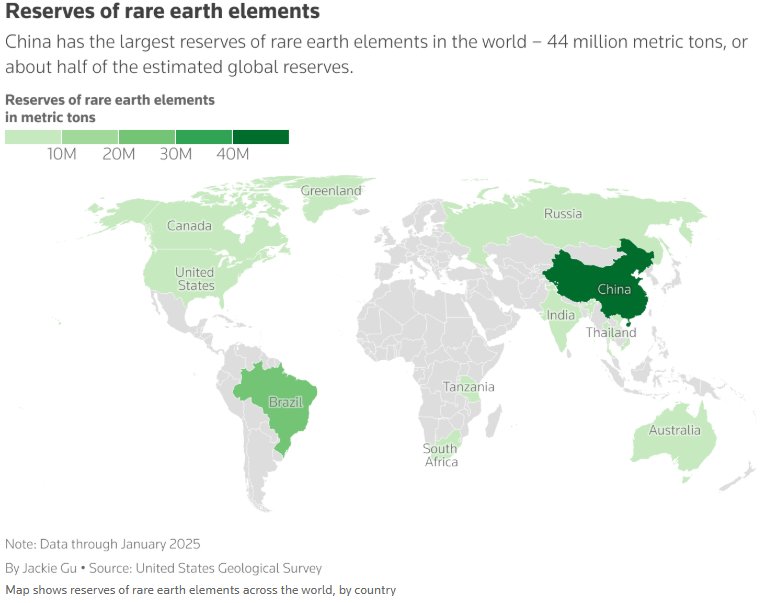
Core Insights - The recent rare earth export controls by China have significantly impacted the global automotive industry, leading to production halts and a 65% increase in neodymium-iron-boron magnet prices within three weeks [1][3][10] - Despite the abundant global rare earth reserves, the difficulty in processing these materials into usable forms has created a chokehold on the supply chain, particularly for industries reliant on high-performance magnets [10][12][19] Industry Impact - The automotive sector, particularly electric vehicle manufacturers, faced immediate challenges as demand for rare earth magnets surged by 32% following the export restrictions, resulting in major companies like Volkswagen and Ford missing production targets [3][5] - Other industries, including wind energy and high-precision machinery, also experienced disruptions due to their reliance on rare earth materials, with significant reductions in production capabilities [3][5] Supply Chain Challenges - China's partial easing of export licenses has led to uncertainty, with lengthy approval processes and short validity periods for permits, causing companies to hesitate in making long-term investments [5][27] - Historical context shows that past disruptions in rare earth supply, such as the 2010 China-Japan dispute, have led to significant price spikes and supply chain vulnerabilities [5][10] Technical and Environmental Barriers - The complexity of extracting and purifying rare earth elements involves numerous chemical processes, with high environmental costs, making it difficult for other countries to replicate China's processing capabilities [12][19] - The U.S. and other nations are attempting to re-establish their rare earth supply chains but face significant hurdles, including environmental regulations and technological gaps [25][27][31] Geopolitical Dynamics - The U.S. once dominated the rare earth market but lost its position due to regulatory challenges and environmental costs, allowing China to capture a significant share of the global market [19][23] - Current efforts by the U.S. to revive its rare earth industry, including investments in mining and processing facilities, are still far from meeting domestic demand, highlighting the challenges of rebuilding a competitive supply chain [25][31] Future Outlook - Companies are exploring alternative technologies and materials to reduce reliance on rare earths, but these solutions have not yet proven viable for large-scale production [33] - The ongoing competition for rare earth resources underscores the importance of technological advancement and supply chain integration, which China has developed over decades, making it difficult for other nations to catch up quickly [33]