伊利股份

Search documents
政策力挺消费复苏,“茅五泸汾洋”集体飘红!食品ETF(515710)上探1.36%,机构:白酒处估值与预期双底
Xin Lang Cai Jing· 2025-12-15 02:17
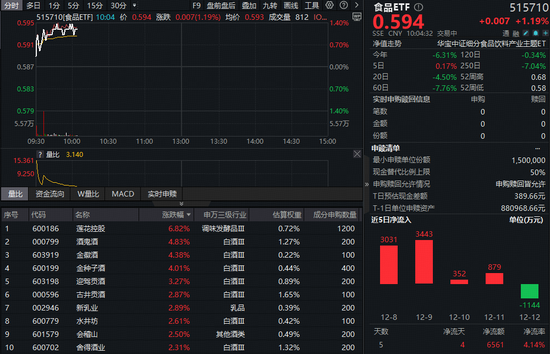
吃喝板块今日(12月15日)全线上攻!反映吃喝板块整体走势的食品ETF(515710)开盘后震荡拉升, 盘中场内价格最高涨幅达到1.36%,截至发稿,涨1.19%。 有分析指出,当前,我国正处于消费结构升级、新型消费加速发展的关键时期,《通知》对提振消费具 有直接且重要的指导意义。 资金面上,吃喝板块近期调整之际,板块场内热门布局工具食品ETF(515710)持续吸金。交易所数据 显示,截至上个交易日(12月12日),食品ETF(515710)近5个交易日有4个交易日获资金净申购,合 计净申购额达到6561万元;近10个交易日,食品ETF(515710)更是有8个交易日获资金净申购,合计 净申购额更是超过1亿元。 国盛证券指出,当下白酒龙头应对工具箱仍较为充沛,且白酒需求磨底、供给出清下短期2026年春节旺 季Q1有望迎来动销环比改善、下半年报表压力释放后低基数下修复可期,2026年扩大内需发力下板块 估值修复与基本面改善有望先后兑现,建议关注底部配置价值。 开源证券指出,当前白酒板块处于估值与预期双重底部,茅台的积极定调,以及五粮液的降价政策,均 表现行业已经步入改革深水区。叠加筹码结构优化,板块或已具备择 ...

交银国际_消费行业2026年展望:新常态下的消费新动能_
2025-12-15 02:13
Summary of the Conference Call Transcript Industry Overview - **Industry**: Consumer Sector - **2025 Performance**: The consumer market in mainland China has shown a mild recovery, with a year-on-year growth of 4.3% in retail sales from January to October 2025, indicating a steady recovery path [1][6][29]. - **2026 Outlook**: The consumer market is expected to continue its moderate growth, characterized by slower overall demand growth but increasing rational consumption and demand tiering, which will drive structural differentiation and become a key growth driver in niche markets [1][6][7]. Key Insights Consumer Behavior - **Consumer Confidence**: The consumer confidence index has gradually improved but remains below the neutral level of 100, indicating cautious consumer sentiment regarding future income and employment [7][13]. - **Spending Trends**: Consumers are increasingly focused on value for money and emotional value, with a high willingness to pay for emotional experiences, which is reshaping brand competition [26][31][32]. Market Dynamics - **Segment Performance**: Different segments are recovering at varying paces. Categories like home appliances, jewelry, and food staples have shown strong growth, while others like dining and personal care have seen slight declines [23][62]. - **Channel Evolution**: The integration of online and offline channels is deepening, with online growth slightly outpacing offline. New retail formats are emerging, focusing on consumer-centric approaches [37][28]. Technological Impact - **AI Integration**: Artificial intelligence is increasingly being integrated into various industry segments, enhancing operational efficiency and potentially reshaping competitive dynamics [49][50]. Investment Strategy - **2026 Investment Focus**: A balanced strategy is recommended, combining defensive sectors with stable cash flows and high-growth potential opportunities. Key sectors to focus on include: - Defensive companies benefiting from supply-demand improvements, such as Shenzhou (2313 HK) and Yili (600887 CH) [56]. - Fast-growing niche leaders like Pop Mart (9992 HK) and Miniso (9896 HK) [56]. - Industry leaders with strong growth foundations and resilience, such as Anta (2020 HK) and China Resources Beer (291 HK) [56]. Risks - **Macro Uncertainties**: Potential risks include macroeconomic uncertainties, commodity inflation exceeding expectations, international trade uncertainties, and insufficient consumer stimulus policies [57]. Additional Insights - **Emerging Trends**: The rise of emotional consumption is driving growth in categories like trendy toys and cultural products, with brands leveraging IP ecosystems for rapid revenue growth [68][70]. - **Global Expansion**: Chinese consumer brands are increasingly looking to expand internationally, particularly in Southeast Asia, to tap into new growth opportunities [35][36]. This summary encapsulates the key points from the conference call, highlighting the current state and future outlook of the consumer sector, along with strategic investment recommendations and associated risks.
食品饮料行业2026年投资策略:需求多元、供给升级,大众消费的嬗变与曙光
2025-12-15 01:55
Summary of the Food and Beverage Industry Conference Call Industry Overview - The food and beverage sector experienced a poor performance in 2025, with a year-on-year decline of 8.1%, primarily due to weak domestic demand and alcohol restrictions [1][8] - Despite the overall downturn, leading companies in the consumer goods segment demonstrated resilience, achieving a revenue growth of 4.5% and a profit increase of 2.3% in the first three quarters [1][8] - The industry is currently undervalued, with an absolute valuation of approximately 20 times PE, which is a 50% premium over the CSI 300 index, nearing levels seen in 2013-2014 [1][10] Key Factors Affecting Performance - Major factors impacting the 2025 performance include consumption scene restrictions, pessimistic sentiment, and profit pressures [2][3] - The ban on alcohol has negatively affected the consumption of liquor, beer, and the restaurant supply chain, putting pressure on earnings per share (EPS) [3] Investment Strategy for 2026 - The investment strategy for 2026 focuses on a bottom-up approach, particularly in the liquor sector, with an emphasis on identifying signs of recovery in distressed companies [1][9] - Recommended companies include Dongpeng, Weilong, Moutai, Anjuke, Qiaqia, Yanghe, and Qianhe Flavor Industry, along with opportunities in the upstream and downstream of the restaurant supply chain [1][9] Consumer Trends and Channel Changes - Future development in the consumer goods sector will hinge on adapting to modern consumption patterns, with accelerated channel transformations including traditional retail adjustments, O2O integration, and instant retail [1][13] - Companies need to optimize their channel systems to seize new retail opportunities and adapt to changing cooperation models [1][14] Expected Changes in Consumer Behavior - Consumer confidence is expected to improve in 2026, with a shift from extreme price comparison to a focus on high quality-to-price ratios [1][15] - The supply side will likely see broader opportunities for product and service innovation as consumers are willing to pay for added value that meets their needs [1][15] Company Performance Insights - As of December 5, 2025, 83 stocks in the food and beverage sector recorded positive growth, with a total market value increase of 21% and profit growth of 12.5% compared to the previous year [5] - Notable performers include Nongfu Spring, Weilong, and Babi Foods, with respective stock price increases of 57%, 51%, and 67% [5] Valuation and Trading Volume - The food and beverage industry's valuation is relatively low, with trading volumes declining sharply to around 1.4% in the fourth quarter, indicating increased industry pressure but also potential for value recovery [10][11] Sector-Specific Insights - The beer industry is expected to face weak growth prospects, with opportunities arising from differentiated products and the importance of new retail channels [4][17] - The snack industry is experiencing significant channel changes, with emerging channels like high-end membership supermarkets and instant retail showing strong vitality [21][22] - The dairy sector is under pressure, particularly liquid milk, but leading companies like Yili and Mengniu are optimistic about future growth due to proactive inventory management and product innovation [30] Recommendations for Investment - Investment recommendations include focusing on value recovery companies, value creation firms, and those with strong earnings certainty [7] - Specific recommendations for the restaurant supply chain include companies like Hai Tian and Anjuke, which are expected to benefit from demand recovery and improved operational efficiency [31][34] Conclusion - The food and beverage industry is navigating a challenging landscape with opportunities for recovery and growth in specific segments. Investors are advised to focus on companies that can adapt to changing consumer preferences and channel dynamics while capitalizing on the potential for value recovery in the sector.
飞天茅台批价大涨!食品ETF(515710)近10日吸金超1亿元,布局时机已至?
Xin Lang Cai Jing· 2025-12-15 01:26
Core Viewpoint - The price of Feitian Moutai is on the rise due to new control measures and strategic focus on core products, indicating potential stabilization in wholesale prices and stock prices for the company [1][7]. Group 1: Moutai Pricing and Strategy - Moutai's distributors recently discussed a strategy focusing on three core products for 2026: Moutai 1935, Feitian Moutai, and premium Moutai, while reducing non-standard products like zodiac and kilogram Moutai [1][7]. - Following the announcement of new control measures, the price of Feitian Moutai in Tianjin reached 1,630 yuan per bottle on December 14, with a two-day increase of over 150 yuan per bottle [1][7]. - Analysts suggest that Moutai's control measures indicate a potential stabilization of both wholesale prices and stock prices [1][7]. Group 2: ETF and Market Performance - Guizhou Moutai is the largest holding in the Food ETF (515710), with a holding ratio of 14.89% as of the end of Q3 2025 [1][8]. - The Food ETF has seen significant net inflows, with a total of 65.61 million yuan in net subscriptions over the last five trading days and over 100 million yuan in the last ten trading days [8][11]. - The valuation of the food and beverage sector is currently at a historical low, with the food index's price-to-earnings ratio at 19.97, indicating a favorable long-term investment opportunity [9][11]. Group 3: Market Outlook and Recommendations - Analysts from CITIC Securities highlight that the current low valuations in the food and beverage sector present a good opportunity for investment, particularly in quality assets like Moutai [10][11]. - The demand for liquor is expected to stabilize, with potential improvements in sales during the 2026 Spring Festival, suggesting a recovery in the sector's performance [10][11]. - Investors are encouraged to focus on core assets in the food and beverage sector through the Food ETF, which has a diversified portfolio including leading brands in high-end and mid-range liquor [11].


国泰海通 · 晨报1215|宏观、策略、乳制品
国泰海通证券研究· 2025-12-14 14:26
Group 1 - The central economic work conference held on December 11-12, 2025, emphasized a moderate policy tone focusing on internal conditions and long-term issues, shifting from "stability while seeking progress" to "maintaining stability while seeking progress and improving quality and efficiency" [3][4] - Fiscal policy is expected to maintain a deficit rate around 4%, with a focus on standardizing tax incentives and fiscal subsidies to address local protectionism and "involution" competition [4][5] - The conference highlighted the importance of domestic demand, with specific measures to stabilize investment and promote service consumption through reforms [4][6] Group 2 - The central government aims to address "involution" competition through long-term institutional reforms, indicating a reliance on supply-side measures to boost Producer Price Index (PPI) recovery [5] - Risk prevention and resolution priorities have shifted, with continued policies in real estate and debt management, including reforms to the housing provident fund system [5][6] - Ensuring stable livelihoods remains a key focus, with policies targeting healthcare, education, employment, and medical care to enhance both quantity and quality of supply [6] Group 3 - The economic outlook for 2026 is optimistic, with expectations for a gradual reduction in interest rates and a focus on stabilizing investment and consumption, particularly in the real estate sector [10][12] - The report suggests a favorable environment for sectors such as technology, finance, and consumer goods, with specific recommendations for investments in AI, financial services, and cyclical consumer stocks [12] - The agricultural sector, particularly dairy and beef, is expected to see a recovery in prices and profitability due to supply-side adjustments and demand growth, with a focus on improving operational efficiency [14][16]

食品饮料行业周报:震荡中坚守主线-20251214
Orient Securities· 2025-12-14 14:11
Investment Rating - The report maintains a "Positive" outlook for the food and beverage industry, indicating a potential for returns exceeding the market benchmark by over 5% [5]. Core Insights - The food and beverage sector is currently in a favorable position for investment, with a focus on valuation before performance. The report suggests that despite recent adjustments in the sector, there is fundamental support for new consumption trends, and stock prices have absolute upside potential [7][4]. - Short-term trading strategies should focus on "individual stock improvement" and "turnaround opportunities," recommending specific stocks such as Miaokelan Duo (600882), Jinshiyuan (603369), Gujing Gongjiu (000596), and Shede Liquor (600702) for buying [3]. - Structural dividends are expected to continue, with recommendations for Dongpeng Beverage (605499) and Yanjinpuzi (002847) [3]. - The report highlights a stabilization in demand or market share, recommending stocks like Kweichow Moutai (600519), Shanxi Fenjiu (600809), Luzhou Laojiao (000568), Qingdao Beer (600600), and Yili Group (600887) for buying [3]. Summary by Sections - **Market Conditions**: The food and beverage industry is experiencing pressure on both volume and price, primarily influenced by macroeconomic factors and consumer sentiment. High-end consumption is performing better than low-end, with emerging channels outpacing traditional ones. Categories like snacks and beverages are expected to maintain relative prosperity, while dairy and beer are projected to see structural growth [7][4]. - **Mid-term Trends**: New consumption remains a key theme, with expanding demand in categories such as health foods and pet foods. Instant retail channels are showing high growth, although discount formats and high-end retail are slowing down compared to traditional supermarkets [7][4]. - **Future Outlook**: The report anticipates that the food and beverage sector will transition from valuation-driven growth to performance-driven growth in 2026, with expectations of a performance bottom in the first quarter of 2026 for the liquor segment [7][4].






行业动态更新:11月CPI继续正增长,关注顺周期β与新消费α
Yin He Zheng Quan· 2025-12-14 12:34
Investment Rating - The report maintains a "Recommended" rating for the food and beverage industry [1] Core Insights - The November CPI shows continued positive growth, with a year-on-year increase of 0.7% compared to 0.2% in October. Food prices also turned positive, with a year-on-year increase of 0.2% [5][6] - The central economic work conference emphasizes expanding domestic demand, which is expected to improve per capita income and drive recovery in the food and beverage sector [5][6] - The report highlights the potential for new consumption (higher quality goods and services) to contribute positively to the industry [5] Summary by Sections 1. November CPI and Economic Focus - November CPI increased by 0.7% year-on-year, marking two consecutive months of positive growth. Food prices rose by 0.2% year-on-year, with fresh vegetable prices increasing by 15% [5][6] - The central economic work conference prioritizes expanding domestic demand and improving income plans, which is expected to benefit the food and beverage industry [5][6] 2. Data Tracking: December Price Trends - As of December 12, 2025, the price of Feitian Moutai continued to decline, with prices at 1495/1485 RMB for whole and individual bottles, down 85 RMB from November 30 [7] - Core raw material prices show mixed trends, with packaging material prices declining year-on-year, while some raw materials like aluminum and paper boxes saw increases [16][27] 3. Market Review: December Index Performance - The food and beverage index fell by 3.5% as of December 12, 2025, underperforming the Wind All A index by 4.5%, ranking 27th among 31 sub-industries [47][49] - All ten sub-sectors experienced declines, with beer, seasoning, and soft drinks showing relatively smaller drops [47][49] 4. Investment Recommendations - The report suggests focusing on companies in the mass consumer sector, including Dongpeng Beverage, Nongfu Spring, and others, as well as key players in the liquor sector like Kweichow Moutai and Shanxi Fenjiu [50][51] - New consumption trends are expected to continue, with opportunities in snack and functional beverage markets, while traditional consumption is anticipated to improve [50][51]
食品饮料行业周报 20251208-20251212:高端酒批价反弹重申白酒已在战略配置期-20251213
Shenwan Hongyuan Securities· 2025-12-13 14:36
Investment Rating - The report maintains a positive outlook on high-quality liquor companies, indicating that it has entered a strategic allocation period for these firms [2][7][8]. Core Viewpoints - The report highlights a significant decline in revenue for major liquor companies, with expectations of continued pressure in Q1 2026, but anticipates stabilization in Q2 and a potential turning point in Q3 2026 as inventory clears and demand recovers [2][7][8]. - The report recommends key liquor stocks including Luzhou Laojiao, Shanxi Fenjiu, Guizhou Moutai, and Wuliangye, while also suggesting attention to other brands like Yingjia Gongjiu and Jinhuijiu [2][7]. - For consumer goods, the report emphasizes opportunities in the restaurant supply chain, particularly in condiments and frozen foods, recommending companies like Anjifood, Yili, and Qindao Beer [2][9]. Summary by Sections 1. Weekly Insights on Food and Beverage - The food and beverage sector saw a decline of 1.63% last week, with liquor down 1.50%, underperforming the broader market [6]. - The top gainers included Yanjin Beer and Xin Dairy, while the largest losers were Xiwang Food and Haixin Food [6]. 2. Market Performance by Sector - The report notes that high-end liquor prices have been under pressure, with Moutai's bottle price at 1500 yuan, down 45 yuan week-on-week, and Wuliangye at approximately 780 yuan, down 20 yuan [8][38]. - The report indicates that Moutai's price has dropped over 100 yuan in three weeks due to increased supply and weak seasonal demand [8]. 3. Industry Events - The report discusses the strategic adjustments made by companies to alleviate channel pressures and boost confidence among distributors, which is expected to stabilize prices [2][8]. - It also mentions the anticipated recovery in the dairy sector, with a focus on solid-state processing products and low-temperature milk [9]. 4. Valuation Table - The report provides a current valuation for the food and beverage sector at a dynamic PE of 19.92x, with a premium rate of 22%, and for the liquor sector at a dynamic PE of 18.60x, with a premium rate of 14% [38].



2025年1-10月中国乳制品产量为2441.6万吨 累计下降0.9%
Chan Ye Xin Xi Wang· 2025-12-13 02:42
Core Viewpoint - The Chinese dairy product industry is experiencing a decline in production, with a notable decrease in output for the year 2025, indicating potential challenges for companies in this sector [1] Industry Summary - According to data from the National Bureau of Statistics, the production of dairy products in China for October 2025 was 245,000 tons, representing a year-on-year decrease of 5.7% [1] - From January to October 2025, the cumulative production of dairy products in China reached 2,441.6 million tons, showing a slight decline of 0.9% compared to the previous year [1] - The report by Zhiyan Consulting outlines the operational status and investment prospects of the Chinese dairy product industry from 2026 to 2032, suggesting a need for strategic adjustments in response to the declining production trends [1] Company Summary - Listed companies in the dairy sector include Yili Co., Ltd. (600887), Bright Dairy (600597), San Yuan (600429), New Dairy (002946), Huangshi Group (002329), Yantang Dairy (002732), Zhuangyuan Pasture (002910), and Pinwo Foods (300892) [1]





2025年第49周:食品饮料行业周度市场观察
艾瑞咨询· 2025-12-13 00:07
Group 1 - The pre-prepared food market is experiencing a paradox of consumer trust issues and capital enthusiasm, driven by urbanization and the demand for convenient dining [3][4]. - The "zero additives" concept is being phased out in favor of "clean label" standards, emphasizing ingredient transparency and natural prioritization [5][6]. - The energy drink industry is undergoing rapid transformation with ingredient innovation and scene segmentation, focusing on health trends and diverse flavors [7][8]. Group 2 - The nut import market in China is projected to reach $2.386 billion in 2024, with a significant increase in demand for high-end varieties like pistachios [10]. - The beverage market is facing a downturn, with sales declining due to the rise of on-demand drink services and aggressive pricing strategies [14][15]. - The convenience food industry in China is shifting towards value creation, with a market size expected to grow from 673.6 billion yuan in 2023 to 960.3 billion yuan by 2026 [18]. Group 3 - The dairy industry is seeing a shift from ambient milk to fresh milk, with companies like Bright Dairy exploring new growth areas in the pet food market [20]. - Wangwang is facing challenges in the milk market, prompting the company to diversify into AD calcium milk to regain market share [21]. - The plant-based food sector is experiencing a downturn, with companies focusing on technological innovation and localization to meet market demands [17]. Group 4 - JD.com is enhancing its pre-prepared food strategy, aiming to strengthen its supply chain and align with the growing demand for ready-to-eat meals [31]. - China Resources Beverage is entering the ready-to-drink coffee market, competing against established brands like Nestlé and Starbucks [32]. - Wanglaoji is diversifying into the functional beverage market by acquiring distribution rights for Red Bull in southern China, aiming for significant sales growth [33].