避险情绪

Search documents
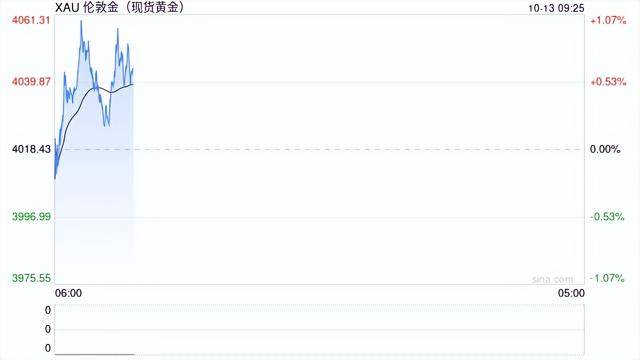
受美新一轮关税影响,国际金价突破4060美元/盎司,金ETF(518680)、稀土ETF(159713)早盘双双涨逾2%
Mei Ri Jing Ji Xin Wen· 2025-10-13 02:29
Core Viewpoint - The U.S. has announced a 100% tariff increase on Chinese imports, leading to a surge in gold prices and a strong performance in the rare earth sector [1] Group 1: Gold Market - On October 13, gold prices on Comex futures reached a new historical high of $4060 per ounce due to the announcement of tariffs [1] - The gold ETF (518680) opened with over a 2% increase and has seen a year-to-date rise of nearly 55%, ranking first among 14 gold ETFs over the past year [1] - As of October 10, the gold ETF (518680) reached a record share of 452 million, the highest since its listing and the largest among similar ETFs [1] Group 2: Rare Earth Sector - The rare earth ETF (159713) experienced a peak increase of over 3% in early trading, closing with a rise of 2.52% [1] - Notable stocks within the index include Jiuling Technology, which rose over 14%, and AnTai Technology, which hit the daily limit, while Baogang Co. increased by over 9% [1] Group 3: Tariff Impact - President Trump announced that starting November 1, a 100% tariff will be imposed on Chinese imports, which is an additional charge on top of existing tariffs [1] - The U.S. will also implement export controls on "all critical software" on the same date, indicating a significant rise in tariff risks [1] - Recent market sentiment driven by risk aversion is expected to continue supporting the prices of gold and other resource commodities in the medium to long term [1]
港股异动 | 黄金股多数走高 避险情绪驱动金价继续上涨 现货黄金一度冲破4060美元
Zhi Tong Cai Jing· 2025-10-13 02:08
Group 1 - The core viewpoint of the article highlights a significant increase in gold stocks, driven by rising gold prices and geopolitical tensions [1] - As of the report, several gold stocks saw notable gains: Zijin Mining International rose by 5.44% to HKD 137.5, Datong Gold increased by 5.38% to HKD 0.49, Chifeng Jilong Gold surged by 3.87% to HKD 33.82, and others followed suit [1] - On October 13, spot gold prices exceeded USD 4060 per ounce, marking a new historical high [1] Group 2 - The article mentions that U.S. President Trump announced a 100% tariff on Chinese imports starting November 1, which adds to existing tariffs and raises significant trade risks [1] - The U.S. will also implement export controls on "all critical software" on the same date, further escalating geopolitical tensions [1] - Guosen Securities expresses a positive outlook on gold prices in the medium to long term, suggesting that the proportion of gold in individual asset allocation should be between 2-10%, while institutional allocations could be increased [1]
这个国庆,资本市场悄悄上演了哪些看点?
Sou Hu Cai Jing· 2025-10-13 02:05
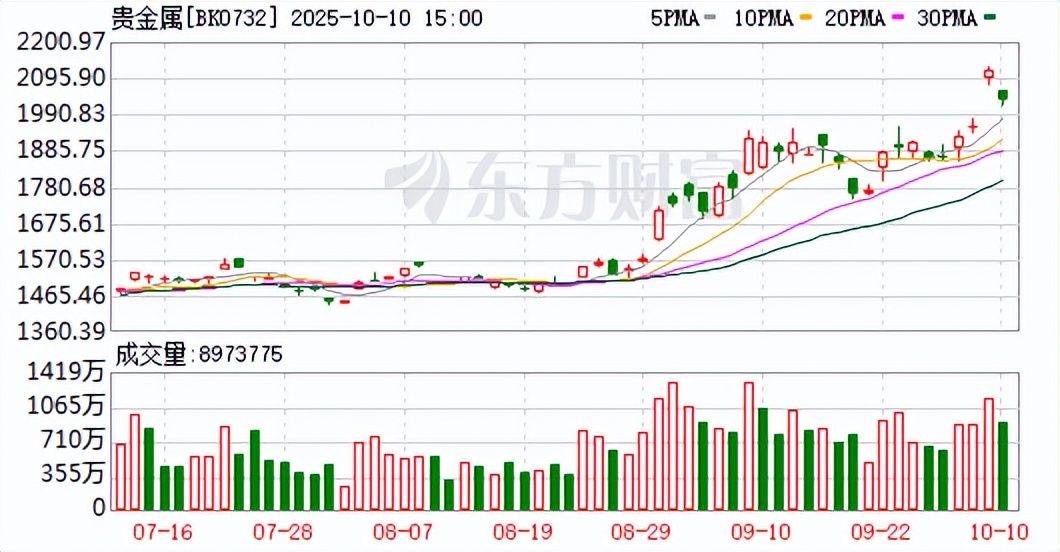
【编者语】 国庆长假归来,资本市场已经悄悄换了一片天。黄金闪耀、A股起舞、全球央行政策转向......这个假期,资本市场的精彩程度丝毫不输热门景区。我们 梳理了六大值得关注的市场看点,带你快速读懂假期期间发生的那些"资本大戏"。你的持仓,准备好了吗? 【免责声明】 本文由北京明德蓝鹰投资咨询有限公司撰写,仅为行业研究与商业案例以及探讨市值管理问题之目的而分享,不构成任何投资建议。我们所采用的信 息均来自公开披露资料,但我们无法保证其完整性与准确性。文中所有对公司的提及均旨在进行技术、模式或竞争格局分析,绝非股票推荐。请您知 悉,所有投资决策均伴随风险。我们强烈建议您基于个人独立判断并寻求专业顾问的意见。请务必谨慎决策,风险自担。 朋友们,节后开盘是不是感觉错过了一个亿?这个国庆,资本市场可比景区热闹多了,从黄金冲破天际到A股节后发红包,从美联储的"鸽声嘹亮"到 原油价格的"跌跌不休"……今天咱们就来聊聊这些比你假期还"刺激"的资本大戏。 热点一:黄金破4000美元,闪闪发光 国际金价在假期期间突破每盎司4000美元大关,创下历史新高。节后A股开盘,黄金板块直接起飞,多只黄金股涨停。 点评:这金光闪闪的行情,比 ...


中美贸易扰动再度来袭,贵金属历次表现如何?
Sou Hu Cai Jing· 2025-10-13 01:45
Core Viewpoint - The performance of precious metals, particularly gold, is significantly influenced by the interplay of monetary policy, risk aversion, and geopolitical tensions, especially during escalations in the US-China trade conflict [2][4]. Group 1: Historical Context of Precious Metals Performance - Since 2018, several escalations in the US-China trade conflict have led to increased demand for safe-haven assets, with gold prices rising in response to heightened market volatility and geopolitical risks [3]. - Historical data indicates that when global monetary policy becomes more accommodative, particularly with expectations of interest rate cuts by the Federal Reserve, it tends to depress the dollar and real interest rates, providing a foundation for rising gold prices [2][4]. - The combination of trade tensions and existing geopolitical risks can significantly enhance the attractiveness of gold, leading to increased capital inflows into the precious metals market [2][4]. Group 2: Current Market Analysis - Current market conditions show a notable increase in risk and uncertainty, with threats of significant tariffs on Chinese goods and ongoing government shutdowns in the US exacerbating trade tensions and economic concerns [5]. - Expectations for interest rate cuts by the Federal Reserve in October and December, along with a trend towards more accommodative monetary policy, are likely to enhance gold's appeal as a safe-haven asset in the short term [6]. - Silver may face weaker performance compared to gold due to potential suppression of industrial demand amid market uncertainties, despite previous significant price increases and existing tightness in the physical silver market [6].
黄金价格创历史新高,能化及部分农产品承压
2 1 Shi Ji Jing Ji Bao Dao· 2025-10-12 22:42
南方财经记者 翁榕涛 实习生 李欣彤 马雨欣 消息面上,除美联储释放的鸽派信号之外,桥水基金创始人瑞·达利欧公开表示黄金"比美元更具避风港 作用",进一步强化了市场对贵金属的配置信心。地缘政治方面,中东局势再现波折,推动避险情绪升 温。 光大期货认为,下半年金价将继续呈现"高位震荡、中枢上移"的特征,预计COMEX黄金期货价格在 3400~3700美元/盎司区间运行。 国庆节后的首周,国内大宗商品期货涨跌不一,贵金属、黑色系及基本金属板块领涨,能源化工板块及 部分农产品显著回落。 10月9日至12日期间,就国内期货市场具体来看,能源化工板块,燃油周下跌3.00%、原油下跌3.71%; 黑色系板块,铁矿石周上涨1.86%、焦煤上涨3.11%、焦炭上涨2.68%;基本金属板块,沪锌周上涨 2.04%、沪铜上涨3.37%、沪铝上涨1.45%;贵金属板块,沪金周上涨3.11%、沪银上涨1.50%;农产品板 块,鸡蛋周下跌7.64%、生猪下跌8.38%、豆粕下跌0.20%、棕榈油上涨2.28%。 交易行情热点 热点一:国际金价突破历史新高 供需与政策共振支撑高位运行 节日期间,国际金价强势上涨。受美国联邦政府停摆问题持 ...

白银暴涨75%,散户为何总在接盘?
Sou Hu Cai Jing· 2025-10-12 15:58
Core Insights - Recent surge in precious metal prices, with gold surpassing $3993 per ounce and silver reaching $50.67, reflecting significant year-to-date increases of over 50% and 75% respectively [1][3] - Market dynamics are influenced by factors such as risk aversion, Federal Reserve rate cut expectations, and central bank gold purchases, but the real opportunities often arise before consensus is reached [3][10] Market Behavior Analysis - Market trading behavior is complex, with different phases indicating various investor actions: bullish dominance, profit-taking, bearish dominance, and short covering [5] - Historical data shows that significant price movements can occur even when positive news is announced, as seen in a silver mining stock that dropped 15% despite a positive discovery announcement due to prior profit-taking [7][9] Current Precious Metals Market - The increase in silver ETF holdings by 1000 tons this year does not necessarily indicate retail investor buying, as commercial short positions are at historical lows, suggesting miners and refiners are reducing hedging [10][12] - The recent gold market surge is driven by more than just risk aversion; a multi-dimensional analysis reveals deeper insights into market behavior and potential pitfalls for investors [10][12] Investment Principles - Three key investment principles are highlighted: the need for data-driven decision-making, understanding market discrepancies, and the importance of dynamic tracking of market momentum [12][13] - The current precious metals market resembles past trends where early identification of industry turning points led to significant profits, emphasizing the importance of information processing capabilities in investment strategies [11][12]
美国政府停摆,关税升级助力黄金
Dong Zheng Qi Huo· 2025-10-12 11:44
Industry Investment Rating - The investment rating for the gold industry is "Oscillation" [1] Core Viewpoints - The price of gold has reached a new high due to multiple positive factors, including the U.S. government shutdown, escalating Sino - U.S. trade frictions, and a weakening U.S. employment market. However, after reaching a new high, the volatility of gold has increased, and there are also some factors that may cause short - term fluctuations [2][3] - In the short term, the price of gold will be in a high - level oscillation, with increased market volatility, and the domestic gold will remain at a discount [4] Summary by Directory 1. Gold High - Frequency Data Weekly Changes - The domestic basis (spot - futures) decreased by 27.3%, and the internal - external futures price difference (internal - external) decreased by 47.5%. The inventory of the Shanghai Futures Exchange remained unchanged, while the COMEX gold inventory decreased by 0.42%. The SPDR ETF holding volume increased by 0.22%, and the CFTC gold speculative net long position decreased by 1.2% [11] - The U.S. Treasury bond yield decreased by 1.9%, the U.S. dollar index increased by 1.13%, the SOFR decreased by 1.7%, the U.S. 10 - year breakeven inflation rate increased by 0.72%, the S&P 500 index decreased by 2.4%, and the VIX volatility index increased by 30.1% [11] - The gold cross - market arbitrage trading decreased by 0.7%, and the U.S. 10 - year real interest rate decreased by 1.3% [11] 2. Financial Market - Related Data Tracking 2.1 U.S. Financial Market - The U.S. overnight secured financing rate is 4.13%. Oil prices decreased by 2.8%, and the U.S. inflation expectation is 2.35% [17] - The U.S. dollar index increased by 1.28%, and the U.S. Treasury bond yield decreased to 4.03%. The S&P 500 index decreased by 2.43%, and the VIX index increased to 21.66 [19] - The real interest rate decreased to 1.76%, and the gold price increased by 3.4%. The spot commodity index closed down, and the U.S. dollar index increased by 1.28 [20] 2.2 Global Financial Market - Stocks, Bonds, Currencies, and Commodities - Most developed - country stock markets declined, with the S&P 500 index down 2.43%. Most developing - country stock markets also declined, with the Shanghai Composite Index down 0.37% [21] - U.S. and German bonds declined, with a U.S. - German yield spread of 1.42%. The yield of UK Treasury bonds is 4.72%, and that of Japanese bonds is 1.688% [24] - The euro depreciated by 1.06%, the pound depreciated by 0.9%, the yen depreciated by 2.52%, and the Swiss franc depreciated by 0.48%. The U.S. dollar index increased by 1.28% to 98.9, and most non - U.S. currencies depreciated [26][29] 3. Gold Trading - Level Data Tracking - The data on the net long position of gold speculation was suspended due to the government shutdown. The SPDR gold ETF holding volume rebounded to 1017 tons [32] - The RMB exchange rate fluctuated, and the discount of Shanghai gold widened. Gold and silver prices rose, and the gold - silver ratio dropped to 78.5 [34] 4. Weekly Economic Calendar - Monday: China's September import - export, credit, and social financing data - Tuesday: U.S. September NFIB Small Business Optimism Index - Wednesday: China's September CPI - Thursday: U.S. September retail sales, October NAHB Housing Market Index, and the Fed's Beige Book on Economic Conditions - Friday: U.S. September new housing starts and building permits [35]
【广发宏观团队】关于外部关税扰动:三点历史经验
郭磊宏观茶座· 2025-10-12 09:23
External Tariff Disturbances - Since 2018, tariffs imposed by the Trump administration have shown that China's manufacturing competitiveness is difficult to contain or replace, with China's export share of global exports increasing from 12.7% in 2018 to an expected 14.6% in 2024 [1] - Capital markets typically experience a one-time "provisioning" followed by a "rebound" and "hedging" as external shocks are absorbed, as seen in the market's response to tariff changes in 2025 [2] - The safety margin of the assets themselves is a more critical pricing factor than external disturbances, as evidenced by the performance of the "Mao Index" and "Ning Combination" during tariff escalations [2] Long-term Confidence in Chinese Economy and Assets - There is a maintained long-term confidence in the Chinese economy and assets, with the number of high-tech enterprises expected to reach 463,000 in 2024, 1.7 times that of 2020 [3] - If external demand is impacted, the timing of counter-cyclical policy signals often serves as a crucial asset pricing coordinate, especially in the context of expected growth stabilization in Q4 [3] - A broad-based asset allocation is recommended to avoid excessive exposure to single-sided asset risks, particularly given the high valuations in the US stock market [3] Market Dynamics and Asset Rotation - In the second week of October, risk-off sentiment dominated, leading to a decline in asset rotation and increased volatility, with the VIX index rising above 20 [4] - The global stock market experienced a risk-off phase due to the US government shutdown and tariff escalations, with the S&P 500, Nasdaq, and Dow Jones all declining [5] - Commodity prices showed mixed results, with gold and silver performing well while oil prices retreated [6] Commodity Market Trends - Gold and silver prices have shown strength, with gold rising by 2.3% and silver by 6.6% in recent weeks, reflecting a significant year-to-date increase [7] - The copper market experienced fluctuations, initially rising but then declining due to tariff impacts, with LME copper futures dropping by 3.0% [7] - Domestic pricing for certain commodities, such as rebar, has shown slight recovery, indicating resilience in specific sectors [8] US Economic Indicators and Federal Reserve Policy - The US government shutdown is expected to continue until mid-October, increasing short-term economic uncertainty, while the upcoming CPI report on October 25 will provide critical inflation data for the Federal Reserve [12][14] - Federal Reserve officials have indicated a preference for two 25 basis point rate cuts by the end of the year to support employment and balance risks, reflecting a cautious shift towards gradual easing [15][14] Domestic Economic Indicators - The September construction PMI fell to 49, indicating contraction, but new orders and business activity expectations have shown signs of improvement [21] - The establishment of new policy financial tools has led to significant funding allocations for infrastructure and emerging industries, with over 110 billion yuan already disbursed [22] Price Competition Regulation - The National Development and Reform Commission and the State Administration for Market Regulation have issued guidelines to address price disorder in the market, emphasizing the need for fair competition and self-regulation among businesses [23][29]

稀土管制升级,避险情绪升温
Guotou Securities· 2025-10-12 09:07
Investment Rating - The industry is rated as "Leading the Market - A" with a maintained rating [4]. Core Viewpoints - The report highlights the impact of recent geopolitical events, including the U.S. government shutdown and potential tariffs on Chinese imports, which have led to increased prices for precious and industrial metals [1][2]. - There is a focus on the strategic attributes of rare earth metals and the safe-haven properties of gold in the short term, while maintaining a long-term outlook on the fundamentals of copper, aluminum, tin, cobalt, and tantalum [1]. - The report suggests that the recent announcements from the U.S. and China regarding rare earths indicate a shift towards dual control of technology and supply chains, which may lead to a new round of price increases in the rare earth sector [7]. Summary by Sections Precious Metals - Gold and silver prices have seen increases of 3.6% and 3.0% respectively, with COMEX gold closing at $3986.2 per ounce and silver at $47.4 per ounce [2]. - The market is expected to continue favoring gold due to policy uncertainties and rising demand for silver, which has been included in the U.S. critical minerals list [2]. Industrial Metals - Copper prices have increased, with LME copper closing at $10,374 per ton, reflecting a 0.86% rise [3]. - Supply constraints from major producers and a slight recovery in demand post-holiday are expected to support copper prices [3]. - Aluminum prices have also risen, with LME aluminum at $2,746 per ton, although recent geopolitical tensions have caused some volatility [3][7]. Strategic Metals - The report emphasizes the growing anxiety in the U.S. and Europe regarding the supply of rare earth materials, particularly for AI and military applications [8]. - Recent policy changes in China regarding rare earth management are expected to influence market dynamics positively, with potential price increases anticipated [8]. - Cobalt prices are on the rise due to limited supply and strong demand, particularly in the context of the upcoming export quota regulations from the Democratic Republic of Congo [8].
贸易冲突再起,资产价格如何演绎? | 投研报告
Zhong Guo Neng Yuan Wang· 2025-10-12 02:29
Core Viewpoint - The macroeconomic research by Guosen Securities indicates that following the U.S. government's announcement of "reciprocal tariffs," the U.S. dollar index has weakened significantly, while global risk aversion has increased, driving up gold prices. The uncertainty in trade has led to a bleak global growth outlook, with commodities generally declining, particularly global pricing varieties experiencing larger drops than domestic ones [1][3]. Trade Relations - As the fourth quarter approaches, China and the U.S. are set to enter a new round of intensive negotiations regarding trade issues. The medium to long-term uncertainty in trade relations between the two countries remains high. A review of the key events from the first round of trade confrontations in April-May this year can provide insights into potential market fluctuations in the next phase [2]. - In April, the Trump administration initiated a trade war by imposing a 34% "reciprocal tariff" on Chinese goods. Following China's response, the U.S. increased tariffs to 125% within a few days. By May, under internal pressure, the U.S. softened its stance and expressed willingness to resolve trade disputes through diplomatic channels, leading to a temporary easing of tensions [2]. Dollar and Commodities - The announcement of "reciprocal tariffs" has led to a significant decline in the U.S. dollar index. Concurrently, global risk aversion has surged, further boosting gold prices. The uncertain trade environment has resulted in a pessimistic global growth outlook, with commodities generally weakening, especially global pricing varieties experiencing more significant declines than domestic ones [3]. - Looking ahead, under the trade conflict, gold prices are more likely to rise while other commodities remain weak. The impacts of trade policy conflicts tend to clear in the short term, potentially leading to overshooting opportunities. It is noteworthy that current trade negotiations are primarily focused on U.S.-China relations, differing from the broader global impact of the April tariff announcements [3]. Bond Market Outlook - The bond market is expected to see a phase of rebound due to fundamental pressures. During the April trade tensions, bond yields fell by 18 basis points. Historical experiences suggest that sudden tariff and sanction events lead to rapid pricing in the bond market. Following the tariff policy announcement, the bond market experienced fluctuations exceeding 5 basis points within two trading days, but the impact diminished significantly as trade sanctions escalated [4][5]. - Looking forward, the probability of a bond market rebound in October appears higher. Economic pressures in July and August suggest that monetary policy may continue to ease. Additionally, the current 10-1 yield spread of 40 basis points is above the historical median, reflecting a relatively neutral economic outlook, with limited upward pressure on long-term yields under stable monetary policy conditions [5].