
供需失衡

Search documents
获全胜,特朗普敲定新协定,原油大跌!美联储降息预期近85%
Sou Hu Cai Jing· 2025-11-26 17:41
Group 1 - Morgan Stanley warns that Brent crude oil prices could drop to $30 by the end of 2027 due to worsening supply-demand imbalances, with current prices around $60 [1][9] - The recent drop in oil prices is attributed to geopolitical developments, particularly the progress towards a peace agreement between Ukraine and Russia, which has led to expectations of smoother Russian oil exports [5][7] - The supply-demand imbalance is expected to persist, with global oil supply growth outpacing demand growth by three times from 2025 to 2026, leading to a projected average Brent crude price of $57-$58 in 2026-2027 [9] Group 2 - The Trump administration is seen as a significant factor behind the declining oil prices, with the President advocating for lower oil prices to combat inflation and pressure the Russian economy [11][13] - Market expectations for a Federal Reserve interest rate cut have surged to nearly 85%, influenced by recent economic data and dovish comments from Fed officials [14] - Asset prices are being reassessed in light of these developments, with oil prices dropping significantly, while stock markets reacted positively to the prospect of lower interest rates [16]


碳酸锂为何两日大涨的原因
Sou Hu Cai Jing· 2025-11-26 04:38
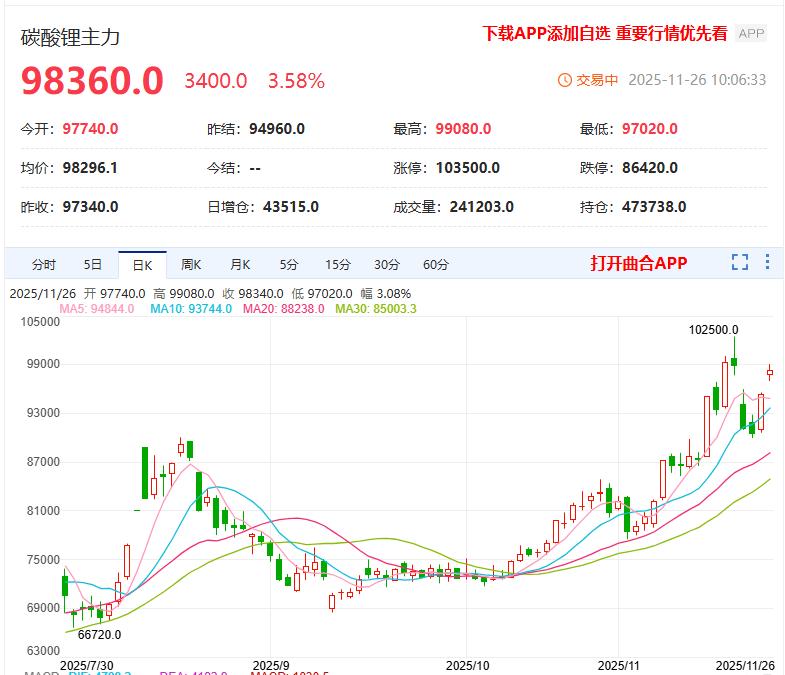
Supply and Demand Dynamics - Supply constraints are exceeding expectations, with winter conditions affecting lithium extraction in key regions like Qinghai and Tibet, leading to a projected capacity reduction of 15-20% [1] - Core mining operations are facing challenges, such as the Jiangxi Jianxiawo lithium mine, which is unable to resume production due to incomplete mining rights processes, and the shutdown of some mica mines due to low lithium carbonate prices, resulting in ongoing supply contraction [1] - Demand remains robust, particularly in the energy storage market, with global energy storage cell shipments expected to surge by 75% year-on-year by 2025, and domestic new energy storage installations doubling [1] - The demand for power batteries continues to grow, with October vehicle installations increasing by 10.7% month-on-month, driven by a "rush to install" ahead of the end of tax exemptions for new energy vehicles [1] - A consensus reached between China and the U.S. to suspend lithium battery export controls for one year has further amplified demand [1] Inventory and Price Movements - Lithium carbonate social inventory has been decreasing for 13 consecutive weeks, dropping to a two-year low of 109,000 tons, with turnover days falling to 28.1 days, the lowest since futures listing [2] - The supply-demand gap in November is projected to reach 16,800 tons, widening from 12,600 tons in October, creating a solid foundation for price increases [2] Technical and Market Sentiment - After experiencing significant volatility, lithium carbonate futures prices rebounded, with a notable drop of 9% on November 21, followed by a further decline of 2.88% to 90,480 yuan/ton, nearing industry cost lines, indicating strong rebound demand [3] - Policy impacts are gradually dissipating, as adjustments to trading fees and limits on November 24 led to a temporary price drop, but the market quickly absorbed this negative news, allowing prices to rise again based on fundamental pricing logic [3] Industry Chain and Financial Support - The price transmission within the industry chain is evident, with upstream lithium spodumene prices reaching 3,000 USD/ton, increasing production costs for lithium carbonate, while downstream processing fees for lithium iron phosphate have also risen significantly [4] - The futures market for lithium carbonate has maintained a holding volume of over 1 million contracts, attracting significant attention from investors, with trading volumes on November 25 reaching 511,300 contracts, indicating strong bullish sentiment [4]
供应趋紧叠加美联储降息预期升温,伦铜现货升水创五周新高
Hua Er Jie Jian Wen· 2025-11-25 06:33
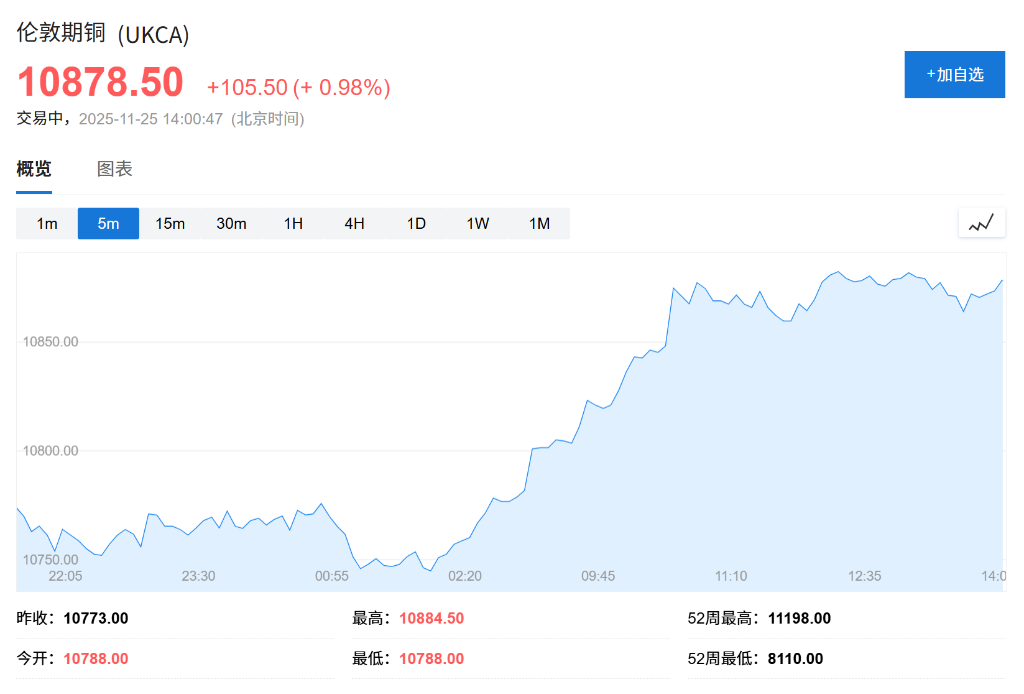
受现货供应趋紧和市场对美联储下月降息预期增强的双重提振,铜价走高,凸显了宏观经济前景与实体供需基本面的共同作用。 引发市场乐观情绪的主要催化剂是美联储官员的最新表态。美联储理事Christopher Waller以美国劳动力市场疲软为由,主张下调利率,这番言论 巩固了市场对于进一步货币宽松的信心。通常而言,更低的借贷成本对工业金属构成利好。 与此同时,实体市场的供应紧张信号愈发明确。伦敦金属交易所(LME)现货铜较三个月期期货的升水(cash-three-month spread)跃升至超过20 美元/吨,创下约五周新高,表明交易员愿意为即期交付的铜支付更高溢价。 受此影响,周二伦铜期货价格上涨0.98%至10878美元/吨,纽约商品交易所(Comex)的期铜价格同样走高。其他基本金属中,铝价上涨0.4%, 锌价上涨0.5%。 供应紧张加剧,冶炼费用跌至新低 | 概览 | 图表 | | | | | | | | | | | | --- | --- | --- | --- | --- | --- | --- | --- | --- | --- | --- | --- | | 1m | 5m | 15m | 30m ...
玻璃期货跌破千元大关,弱势何时方休?
Xin Lang Cai Jing· 2025-11-21 10:24
Core Viewpoint - The glass futures market has experienced a significant downturn, with the main contract price falling below the critical threshold of 1000 yuan/ton for the first time in over four months, raising concerns about the market's bottom and future trends [1] Market Performance - The glass futures market has shown weak performance, with the main contract price dropping over 2% in early trading on November 21 [1] - After the National Day holiday, production companies initiated price cuts to alleviate inventory pressure, leading to a decline in the average transaction price of large glass sheets in the Shahe region from approximately 1237 yuan/ton in early October to around 1117 yuan/ton by the end of October [3] Supply and Demand Dynamics - Despite some manufacturers starting cold repairs to adjust supply, the impact has been minimal, and the speed of supply adjustment is lagging behind the decline in demand [4] - Glass companies and midstream traders have significantly higher inventory levels compared to the same period last year, contributing to a persistent supply-demand imbalance [4] - The real estate sector's downturn has directly affected glass demand, with downstream processing companies facing insufficient orders, as indicated by a drop in order days to 9.9 days, a record low [8] Future Outlook - In the short term, the glass market lacks clear driving forces, and a weak trend is likely to continue; however, prices are at a low point, and expectations for further cold repairs may stimulate some mid-to-downstream demand [11] - The recovery of the glass industry in the medium to long term will depend on the extent of supply-side capacity adjustments and the recovery of demand from the real estate market [11] - Market participants should closely monitor changes in supply-side production cuts and real estate policy developments, as well as potential technical rebound risks [11]

光大期货能化商品日报-20251119
Guang Da Qi Huo· 2025-11-19 05:05
1. Report Industry Investment Rating No information about the industry investment rating is provided in the report. 2. Core Viewpoints of the Report - The overall upward drive of the crude oil market is supported by geopolitical factors, but the medium - term suppression of supply - demand imbalance still exists, and oil prices are expected to fluctuate [1]. - The high - sulfur fuel oil market is supported by relatively healthy downstream bunker demand, and the LU - FU spread is expected to remain at a relatively high level in the near future [2]. - The asphalt market is expected to be bearish due to the dual decline of supply and demand, with the decline in supply being less than that in demand [2]. - The PTA price is expected to fluctuate strongly due to the improvement of fundamentals, while the ethylene glycol price is expected to have a wide - range adjustment [2][3]. - The rubber market is expected to fluctuate under the situation of strong supply and weak demand, with winter storage demand supporting the raw material price [3]. - The methanol market is expected to maintain a bottom - range fluctuation, and the port inventory is expected to enter the destocking stage from mid - December this year to early January next year [3]. - The polyolefin market is expected to have a bottom - weak fluctuation as it gradually shifts to a situation of strong supply and weak demand, but the decline in valuation may prompt downstream price - fixing or inventory - building actions [5]. - The PVC market is expected to show a weak - range fluctuation due to high supply - demand pressure and weak fundamental drivers, despite the narrowing of the hedging space [5]. 3. Summary According to Relevant Catalogs 3.1 Research Views - **Crude Oil**: On Tuesday, oil prices moved up. WTI December contract closed up $0.83 to $60.74 per barrel, a 1.39% increase; Brent January contract closed up $0.69 to $64.89 per barrel, a 1.07% increase. SC2512 closed at 466 yuan per barrel, up 5.4 yuan per barrel, a 1.17% increase. The new main contract SC2601 closed at 465.7 yuan per barrel, up 3.4 yuan per barrel, a 0.74% increase. API data showed that last week, US API crude oil inventory increased by 4.448 million barrels, and Cushing crude oil inventory decreased by 790,000 barrels. China's gasoline and diesel production in October 2025 had different year - on - year changes, and an Iranian coast guard intercepted a tanker [1]. - **Fuel Oil**: On Tuesday, the main contract of fuel oil on the Shanghai Futures Exchange, FU2601, closed down 1.62% at 2558 yuan per ton; the low - sulfur fuel oil main contract LU2601 closed up 0.31% at 3247 yuan per ton. Singapore is expected to receive about 2.9 - 3 million tons of low - sulfur fuel oil arbitrage cargo from the West in November [2]. - **Asphalt**: On Tuesday, the main contract of asphalt on the Shanghai Futures Exchange, BU2601, closed down 0.36% at 3032 yuan per ton. Refineries are still releasing a large number of low - price forward contracts, and the spot price is under great pressure [2]. - **Polyester**: TA601 closed at 4670 yuan per ton, down 0.47%; EG2601 closed at 3907 yuan per ton, down 0.79%. The production and sales of polyester yarn in Jiangsu and Zhejiang are weak, and the cancellation of India's BIS certification is beneficial to PTA and its downstream exports [2][3]. - **Rubber**: On Tuesday, the main contract of Shanghai rubber, RU2601, fell 20 yuan per ton to 15295 yuan per ton, and the NR main contract fell 10 yuan per ton to 12345 yuan per ton. Rubber production is seasonally increasing, and imports are increasing year - on - year, while overseas tire demand is slightly decreasing [3]. - **Methanol**: On Tuesday, the spot price in Taicang was 2002 yuan per ton. Domestic maintenance devices are gradually resuming production, and Iranian devices may stop from late November to December, which may lead to a significant decline in arrivals in January [3]. - **Polyolefin**: On Tuesday, the mainstream price of East China drawn polypropylene was 6380 - 6580 yuan per ton. Polyolefins are gradually shifting to a situation of strong supply and weak demand, but the decline in valuation may prompt downstream actions [5]. - **Polyvinyl Chloride**: On Tuesday, the price of PVC in East, North, and South China markets decreased. The supply remains at a high - level fluctuation, and the demand is expected to decline as real - estate construction slows down [5]. 3.2 Daily Data Monitoring - The report provides the basis, basis rate, spot price, futures price, and other data of various energy - chemical products on November 19, 2025, including crude oil, liquefied petroleum gas, asphalt, etc. [6] 3.3 Market News - API data shows that last week, US API crude oil inventory increased by 4.448 million barrels, Cushing crude oil inventory decreased by 790,000 barrels, and gasoline and distillate inventories also changed [9]. - China's National Bureau of Statistics data shows that in October 2025, China's gasoline production was 13.457 million tons, a 1.7% year - on - year increase, and diesel production was 17.683 million tons, a 0.5% year - on - year increase [9]. 3.4 Chart Analysis - **4.1 Main Contract Price**: The report presents the closing price charts of the main contracts of various energy - chemical products from 2021 to 2025, including crude oil, fuel oil, low - sulfur fuel oil, etc. [10][11][12] - **4.2 Main Contract Basis**: It shows the basis charts of the main contracts of various products, such as crude oil, fuel oil, low - sulfur fuel oil, etc., from 2021 to 2025 [28][29][30] - **4.3 Inter - period Contract Spread**: The report provides the spread charts of different contracts of various products, including fuel oil, asphalt, PTA, etc. [42][43][44] - **4.4 Inter - variety Spread**: It includes the spread and ratio charts between different varieties, such as crude oil internal and external markets, fuel oil high - and low - sulfur, etc. [58][59][60] - **4.5 Production Profit**: The report shows the production profit charts of LLDPE and PP [65][66]
己内酰胺价格跌至四年新低
Zhong Guo Hua Gong Bao· 2025-11-19 02:13
Core Insights - The caprolactam market is experiencing a significant supply-demand imbalance due to substantial capacity expansion over the past few years, leading to intensified competition and a continuous decline in product prices [1][2] - As of November 3, the market price for caprolactam has dropped to 8,050 yuan per ton, marking a 28% decrease from the year's high of 11,225 yuan [1][2] - The industry is expected to face ongoing price declines in 2025, with analysts noting a pattern of "high opening, continuous decline" in market trends [2] Price Trends - From 2020 to 2024, the caprolactam industry's capacity is projected to increase from 4.33 million tons to 6.95 million tons, with a compound annual growth rate of 12.56% [2] - The price of caprolactam peaked at 11,225 yuan in mid-February 2023 but has since entered a prolonged downward trend due to weak downstream demand and external market pressures [2] - Despite temporary price increases from May to August due to favorable factors, the overall price trajectory remains downward due to significant de-stocking pressures in downstream sectors [2] Regulatory Impact - New EU regulations on per- and polyfluoroalkyl substances (PFAS) have imposed strict limits on residual solvent content in caprolactam products, exacerbating domestic supply-demand mismatches and further driving down prices [3] Industry Profitability - The persistent low prices have severely impacted profitability across the entire caprolactam supply chain, with significant losses reported in both upstream and downstream sectors [4] - As of mid-November, the caprolactam industry is facing substantial losses, with per-ton losses exceeding 600 yuan in the latter half of the year [4] - The entire supply chain is experiencing negative margins, with upstream cyclohexanone and downstream nylon 6 products also reporting losses [4] Supply Adjustment Measures - In response to the challenging market conditions, caprolactam producers are implementing voluntary supply adjustments, including a 20% production cut to alleviate inventory and price pressures [5][6] - The industry is transitioning from a state of excess inventory to a more balanced supply-demand situation, with expectations of further price stabilization and potential increases in the near future [6]
电商进入出清期
3 6 Ke· 2025-11-19 00:13
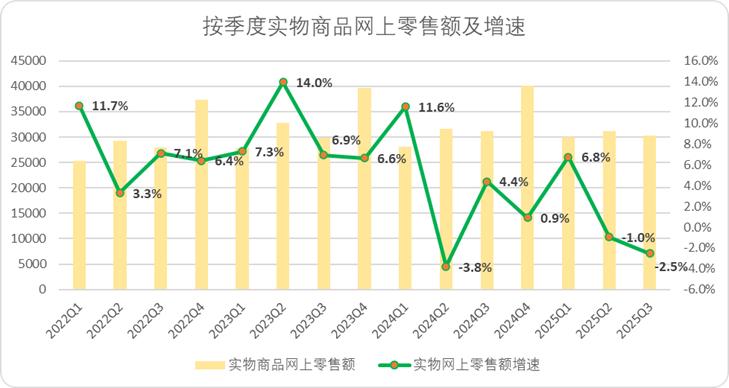
Core Insights - The e-commerce industry is experiencing significant growth pressure, with major players like JD.com and Pinduoduo facing declining profit margins despite revenue growth, indicating a shift towards a clearing phase in the market [2][11]. Group 1: Industry Overview - The e-commerce sector is entering a period of oversupply, where supply growth has outpaced demand growth, leading to intensified competition and profit declines among leading platforms [2][10]. - The overall online retail sales of physical goods grew by 6.5% in the first three quarters of the year, primarily driven by subsidy policies, but growth has slowed significantly in subsequent quarters [3][5]. - The online penetration rate for physical goods has stabilized between 24% and 27% since 2021, indicating a bottleneck in potential growth for e-commerce [6][8]. Group 2: Demand Side Analysis - Demand growth has been largely driven by subsidies, with natural growth showing signs of weakness, particularly as the incremental growth is concentrated in the first quarter of the year [3][5]. - The demand side is facing a stagnation period, with both existing business demand and potential for online retailing reaching a developmental bottleneck [8]. Group 3: Supply Side Analysis - The supply side is characterized by a surge in the number of players, particularly with the rise of content platforms, leading to increased homogeneity in offerings and intensified price competition [9][10]. - The market is witnessing a structural shift from a few monopolies to a "hammer-shaped" monopoly, where smaller players are being diluted, and larger players are increasingly competing for market share [13][15]. - Data shows that the concentration ratio (CR2) in the e-commerce sector has decreased from 60% in 2022 to 57% in early 2023, while the CR5 has increased from 84% to 93%, indicating a shift towards a more concentrated market [13]. Group 4: Profitability Challenges - Despite revenue growth, the overall profitability of the e-commerce industry is under significant pressure, with many companies experiencing a "growth without profit" scenario [11][15]. - For instance, JD.com reported a profit reduction of over 50% due to high subsidies in its delivery business, while Alibaba's commercial segment saw a 21% decline in adjusted EBITA [11][15]. - The overall trend indicates that as competition intensifies, profit margins are being squeezed, leading to a decline in operational profitability across the sector [11][15]. Group 5: Merchant Challenges - Merchants are facing a dilemma of increasing costs without corresponding revenue growth, leading to a decline in return on investment (ROI) for marketing expenditures [16][19]. - Many merchants have reported poor performance from new marketing models, resulting in significant losses despite initial revenue boosts [16][19]. - The data indicates that companies that reduced marketing expenses have seen improvements in long-term profitability, while those that increased spending have experienced declines [18][19]. Group 6: Strategic Recommendations - To navigate the clearing phase, platforms should focus on the essence of trade, minimizing friction in supply-demand matching, rather than pursuing aggressive expansion strategies [21][25]. - Historical examples from successful companies demonstrate that maintaining focus on core business operations and avoiding distractions from market trends can lead to sustained growth [22][24]. - The e-commerce industry must return to its roots of enhancing transaction efficiency and creating real value, rather than relying on superficial growth strategies [25][26].
美国铝价飙升之际,力拓再对北美铝材征收“附加费”
Hua Er Jie Jian Wen· 2025-11-18 05:34
Core Viewpoint - Rio Tinto, the world's largest aluminum producer, is imposing an additional fee on aluminum products sold to the U.S., potentially disrupting an already strained North American aluminum market due to import tariffs [2] Group 1: Additional Fees and Costs - The additional fee imposed by Rio Tinto adds a layer on top of existing costs, which already include the Midwest premium reflecting transportation, storage, insurance, and financing costs [3] - The new fee adds an extra 1 to 3 cents on top of the Midwest premium, resulting in an increase of over 70% on the raw material price of approximately $2830 per ton, surpassing the 50% import tariff set by Trump [3] Group 2: Supply and Demand Imbalance - The aluminum market in the U.S. is facing significant pressure due to Trump's tariffs, which were raised from 25% to 50%, leading importers to seek domestic supplies [4] - The London Metal Exchange has reported no aluminum inventory in the U.S., with the last 125 tons being withdrawn in October, indicating a critical supply shortage [4] - Domestic inventory levels are reported to be sufficient for only 35 days of consumption, a situation that typically triggers price increases [4] Group 3: Market Dynamics and Global Context - Canadian aluminum producers have redirected more metal to Europe to offset losses in the U.S. market, with Quebec accounting for about 90% of Canadian aluminum capacity [4] - A specific clause in presidential announcements allows imported aluminum to be exempt from tariffs if it is smelted and cast in the U.S., creating more demand for U.S.-manufactured aluminum [4] - In contrast, European regional premiums have decreased by about 5% year-over-year, but recent supply disruptions and upcoming EU import fees based on greenhouse gas emissions are expected to push global benchmark prices above $3000 per ton [5]


甲醇数据日报-20251117
Guo Mao Qi Huo· 2025-11-17 06:35
Report Summary 1. Report Industry Investment Rating No investment rating is provided in the report. 2. Core View of the Report This week, the core logic of methanol revolves around supply - demand imbalance and inventory pressure. On the supply side, although domestic production has slightly decreased, the significant increase in imports has significantly boosted the total supply, and the expected resumption of subsequent installations will further increase the supply pressure. In the inventory segment, the port shows an obvious trend of inventory accumulation, and although there are differences in the inland area, overall de - stocking is difficult. High - level inventory continuously suppresses market sentiment. On the demand side, only the profits of some downstream sectors have slightly recovered, the weak pattern of the terminal has not been fundamentally improved, and the model of mainly purchasing on a just - in - time basis can hardly provide strong support for the market. The firm coal price at the cost side provides some support, but the overall industry profit has deteriorated, especially the losses of some processes have intensified, and the cost support is limited. In the short term, the market lacks clear positive drivers. It is recommended to wait and see, focus on subsequent import arrivals and changes in downstream restocking willingness, and avoid blindly gambling on price rebounds [3]. 3. Summary of Each Section Spot Market - **Regional Prices**: The current spot prices are 2047 in Inner Mongolia North Line, 1620 in Shaanxi Guanzhong, 1980 in Xinjiang (outside the region), 1945 in Shandong Linyi, 2160 in Taicang, and 2055 in Henan. Compared with the previous values, the prices in Inner Mongolia North Line, Shaanxi Guanzhong, Xinjiang (outside the region), Taicang, and Henan have decreased by 25, 0, 25, 20, and 5 respectively, while the price in Shandong Linyi remains unchanged [1]. - **Taicang Transaction Price Range**: The transaction price ranges in Taicang from November to December are as follows: 2045 - 2055 in early November, 2035 - 2065 in mid - November, 2045 - 2075 in late November, 2075 - 2105 in late December [3]. Futures Market - **Contract Prices**: The current prices of MA2601 and MA2605 are 2055 and 2163 respectively, with a decline of 2.28% and 2.08% compared with the previous values [1].
芯片股逆市走高 中芯国际营收创单季度新高 大摩称存储领域或出现供需失衡
Zhi Tong Cai Jing· 2025-11-17 02:29
Core Viewpoint - Semiconductor stocks are rising against the market trend, with notable increases in share prices for companies like Shanghai Fudan, Hua Hong Semiconductor, and SMIC, indicating positive investor sentiment in the sector [1] Company Performance - SMIC reported its Q3 2025 financial results, achieving total revenue of 17.162 billion yuan, a quarter-on-quarter increase of 6.9% and a year-on-year increase of 9.9%, marking a record high for quarterly revenue [1] - The company recorded a net profit attributable to shareholders of 1.517 billion yuan, reflecting a year-on-year growth of 43.1% and a quarter-on-quarter increase of 60.64% [1] - SMIC's CEO, Zhao Haijun, provided a positive outlook for Q4, expecting revenue to remain flat or grow by 2% quarter-on-quarter, with a gross margin guidance of 18% to 20% [1] Industry Trends - The global DRAM market is experiencing shortages, leading to rising prices for DRAM modules and a situation where products are hard to obtain [1] - Morgan Stanley's report suggests that the memory chip industry may enter a "super cycle" next year due to potential supply-demand imbalances in the storage sector [1] - The high market demand is causing a series of chain reactions in the storage chip industry, including supply shortages, price increases, and changes in ordering patterns [1]
