经济增长预期

Search documents
关键时刻,张坤再次“对抗”市场
华尔街见闻· 2025-07-21 10:53
Core Viewpoint - The article discusses Zhang Kun's investment strategy and outlook for the market, emphasizing his belief in the potential for economic growth in China despite current pessimism among investors [4][6][10]. Economic Outlook - Zhang Kun argues that the market has linear extrapolated the economic situation in China over the past two years, leading to long-term government bond yields that do not match economic potential [6]. - He believes that China's per capita GDP is still at a developing country level, with significant room for improvement in income and living standards compared to developed countries [9][16]. - The expectation is that economic growth will eventually reflect in the performance of quality listed companies [11][16]. Market Sentiment - Zhang Kun asserts that the prevailing pessimistic expectations will eventually be broken, indicated by long-term government bond yields no longer remaining at low levels that do not align with economic growth prospects [10][18]. - He emphasizes that understanding what will happen is more important than when it will happen in investment decisions [13][19]. Investment Strategy - In the second quarter, Zhang Kun maintained a high stock position across all managed funds, with stock holdings remaining above 91% [7]. - He has differentiated his approach to liquor stocks, significantly increasing positions in high-end liquor companies while reducing exposure to Yanghe Brewery, which has been a long-term holding [24][25]. Sector Analysis - The real estate sector is under pressure, with new housing sales and investment declining significantly, reflecting a lack of confidence in domestic demand [14][15]. - Zhang Kun attributes the ongoing decline in real estate prices and negative price indices to investor pessimism regarding domestic demand [15][16]. Portfolio Adjustments - The article notes a shift in Zhang Kun's portfolio, with a reduction in U.S. stock investments and an increase in Korean stocks, particularly SK Hynix, which became the top holding in the fund [36][37]. - New additions to the portfolio include JD Health and SF Express, while Meituan and Yanghe Brewery have exited the top holdings [27][30]. Fund Performance - Despite a challenging environment, Zhang Kun's funds have seen a reduction in scale to approximately 55 billion, yet he continues to uphold his investment strategy and stock selections [40][41].


张坤最新动向来了,重仓股新进京东健康,大手笔加仓顺丰控股
Ge Long Hui· 2025-07-21 07:20
Group 1 - Zhang Kun's funds under management reached 55.047 billion yuan as of the end of Q2 2025, including four funds: E Fund Blue Chip Selection, E Fund Quality Selection, E Fund Quality Enterprises Three-Year Holding, and E Fund Asia Selection [1] - In Q2 2025, significant portfolio changes included new positions in JD Health, increased holdings in SF Holding, Alibaba-W, Wuliangye, Luzhou Laojiao, Kweichow Moutai, Shanxi Fenjiu, and Yum China, while reducing positions in Tencent Holdings, Yanghe Brewery, and Meituan [1] - The top ten holdings at the end of Q2 included Tencent Holdings, Alibaba-W, Wuliangye, Luzhou Laojiao, Kweichow Moutai, Shanxi Fenjiu, China National Offshore Oil Corporation, JD Health, SF Holding, and Yum China [1] Group 2 - In Q2 2025, the A-share market saw the CSI 300 Index rise by 1.25%, the Shanghai Composite Index by 3.26%, and the ChiNext Index by 2.34%, while the Hong Kong market experienced a 4.12% increase in the Hang Seng Index [2] - The real estate sector faced challenges, with new residential sales area and sales value declining by 2.9% and 3.8% year-on-year, respectively, and real estate development investment down by 10.7% [2] - CPI showed negative growth for four consecutive months from February to May, indicating downward pressure on prices, while the stock market exhibited significant sector divergence [2] Group 3 - The company does not share the pessimistic outlook on domestic demand and economy, highlighting that per capita GDP still has room for growth compared to developed countries [3] - The company believes that the pessimistic expectations will eventually be broken, with a key indicator being the long-term bond yields aligning with economic growth prospects [3] - The company will continuously assess the competitiveness of its portfolio companies during economic downturns and their potential to strengthen their market position during recoveries [3]






英国央行行长贝利:持续的不确定性仍然对经济增长预期构成压力。
news flash· 2025-07-14 17:59
Core Viewpoint - The ongoing uncertainty continues to exert pressure on economic growth expectations according to the Bank of England Governor Bailey [1] Group 1 - The Bank of England highlights that persistent uncertainty is a significant factor affecting the outlook for economic growth [1]
国际金融市场早知道:7月14日
Xin Hua Cai Jing· 2025-07-14 01:07
Group 1 - President Trump announced a 30% tariff on goods imported from the EU and Mexico, effective August 1, and a 35% tariff on Canadian products [1] - The European Commission President Ursula von der Leyen stated that the EU will extend the suspension period for countermeasures against US tariffs until early August, emphasizing a preference for negotiation [3] - The UK economy has entered a recession for the second consecutive month, with May GDP declining by 0.1%, slightly better than April's 0.3% decline but still below economists' expectations [4] Group 2 - Brazil's Ministry of Finance raised its GDP growth forecast for 2025 from 2.4% to 2.5% [5] - Global foreign exchange reserve managers shifted their risk-averse asset allocation from the Japanese yen to the Swiss franc in Q1, selling a record $94.3 billion worth of yen and buying $66.7 billion worth of Swiss francs, increasing the franc's share in global reserves to 0.76% [5] Group 3 - The Dow Jones Industrial Average fell by 279.13 points to 44,371.51, a decline of 0.63%, while the S&P 500 and Nasdaq also experienced declines [6] - COMEX gold futures rose by 1.34% to $3,370.30 per ounce, and silver futures increased by 4.74% to $39.08 per ounce [6] Group 4 - Light crude oil futures for August increased by $1.88 to $68.45 per barrel, a rise of 2.82%, while Brent crude for September rose by $1.72 to $70.36 per barrel, up 2.51% [7] - The US dollar index rose by 0.21% to 97.853, with fluctuations in exchange rates against the euro, pound, and yen noted [7]
领峰环球解密非农数据:黄金投资者必知的市场波动规律
Sou Hu Cai Jing· 2025-07-07 10:12
美国非农数据是全球金融市场中的一个重要经济指标,通常于每个月的首周星期五公布,对市场的影响 深远,尤其是对现货黄金市场来说,非农数据的发布常常引发黄金价格的剧烈波动。因此,了解非农数 据及其与黄金价格之间的关联性,是投资者应对非农行情的必修课。本文中,领峰环球将详细介绍非农 数据的知识点,分析其与黄金价格的关系,并为投资者提供捕捉非农行情的实用建议。 一、非农数据是什么? 非农数据是美国劳工部每月发布的一项重要经济报告,主要反映了美国境内非农业行业的新增就业人 数。具体来说,它包含了全美就业市场的综合表现,排除了政府部门、农业和自营职业的影响。因此, 非农数据对于衡量美国经济健康状况具有重要的参考价值。 非农数据的核心内容包括: 1.新增就业人数:指的是一个月内新增的非农业就业岗位数量。 理解非农数据与黄金价格之间的关系后,投资者可以通过以下几种方式把握非农期间的黄金交易机会。 2.失业率:反映劳动力市场中失业人口的比例。 3.平均小时工资:衡量劳动力市场中工资变化的趋势。 这些数据不仅反映了美国经济的就业情况,还能够揭示出潜在的经济增长动能,对金融市场具有重大影 响。投资者登录领峰环球官网、领峰环球官方AP ...
未来或引发债市变局的三大因素
Shang Hai Zheng Quan Bao· 2025-07-06 14:56
Group 1 - The bond market has experienced two significant adjustment phases in the past six months, driven by discrepancies in monetary policy expectations and fundamental outlooks [2] - The first adjustment occurred from February to March, where the anticipated "double reduction" policy did not materialize, leading to a tightening of the funding environment and a subsequent decline in bond prices [2] - The second adjustment was triggered in early April by unexpected increases in U.S. tariffs, raising concerns about the economic fundamentals and leading to a rapid strengthening of the bond market [2] Group 2 - Future variables that could disrupt the current market oscillation include a potential slowdown in economic growth, which may lead to a temporary strengthening of bonds [3] - If the market doubts the sustainability of short-term positive economic data, it could impact corporate capital expenditure and consumer confidence, potentially leading to a correction in economic growth expectations and a subsequent bond market rally [3] - A more proactive signal from the central bank could guide funding prices lower, which may lead to a decrease in short-term yields and open up space for long-term price increases [4] Group 3 - The resilience shown in the domestic economy during the first half of the year may lower policy expectations for the second half, and if fiscal and real estate policies exceed expectations, it could lead to an upward revision of fundamental outlooks [4] - The bond market is currently in a low interest rate and low spread environment, with institutional funds likely to engage in ongoing debates regarding the pace and intensity of easing measures [4] - In this oscillating market, flexibility in duration management and careful selection of investment products will be essential to enhance returns through periodic trading [4]
若鲍威尔怂了、美联储提前降息,对市场意味着什么?
华尔街见闻· 2025-07-02 10:27
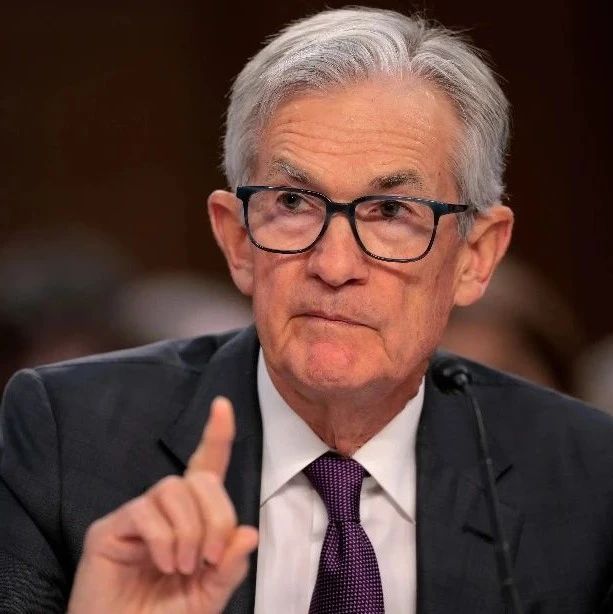
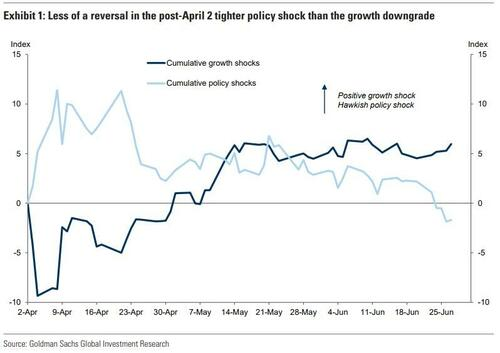
Core Viewpoint - Goldman Sachs analyst Vickie Chang's report analyzes four scenarios in which the Federal Reserve may implement monetary easing earlier than expected, highlighting that a decline in U.S. Treasury yields and a weaker dollar will be the main trends across all scenarios [1][2]. Scenario Summaries Scenario 1: Downward Inflation Risk Drives Rate Cuts - If inflation data continues to exceed expectations or if the Fed believes the impact of tariffs is temporary, the market will lower the 2-year Treasury yield by 25 basis points [4]. - Market reactions include rising stock prices, declining bond yields, a steeper yield curve, and a broadly weaker dollar [5][6]. Scenario 2: Declining Growth Expectations Drive Rate Cuts - A 50 basis point downward adjustment in U.S. economic growth expectations will fully drive the rate cut [7]. - This scenario may occur due to further deterioration in labor market and economic activity data, especially if the market doubts the limited damage from tariffs [8]. - In this case, both stock prices and bond yields will decline, with a slightly weaker dollar overall [9][10]. Scenario 3: Dovish Policy + Downward Growth Expectations - This scenario combines dovish policy impacts with negative growth shocks, pricing in both Fed easing and downward growth expectations [11][12]. - The U.S. stock market will see slight declines, with bond yields dropping more than in the previous scenarios, a steeper yield curve, and a broadly weaker dollar [13]. Scenario 4: Dovish Policy + Upward Growth Expectations - In this scenario, the market prices in Fed easing while also raising U.S. economic growth expectations by 50 basis points [14]. - Risk assets perform strongly, with significant stock market gains, slight declines in bond yields, and a moderately weaker dollar, particularly against cyclical currencies [15]. Consistent Trends Across Scenarios - Across all scenarios, a decline in yields, a weaker dollar, and an increase in gold prices are consistent trends [16]. - The direction of the stock market is highly dependent on accurate assessments of growth expectations, as is the strength of risk currencies against the dollar [16][17]. Market Pricing and Future Outlook - The market has begun to price in Fed easing, and if data supports this, the trend may continue [18]. - Current market pricing for growth is slightly above the one-year forecast, but there is still potential for upward movement if the focus shifts to 2026 growth outlooks [18]. - If growth conditions remain stable, a dovish shift from the Fed could benefit risk assets, although current growth expectations appear relatively full compared to April [19].

若鲍威尔怂了、美联储提前降息,对市场意味着什么?
Hua Er Jie Jian Wen· 2025-07-02 01:44
Core Viewpoint - The market is increasingly focused on when the Federal Reserve will implement interest rate cuts, with Goldman Sachs analysts outlining four scenarios for potential monetary easing and their cross-asset impacts [1][3]. Group 1: Scenarios for Rate Cuts - Scenario 1: If inflation data continues to improve or if the Fed believes tariff impacts are temporary, the 2-year Treasury yield may decrease by 25 basis points, leading to a rise in the stock market and a weakening of the dollar [4]. - Scenario 2: A 50 basis point downward adjustment in U.S. economic growth expectations could drive rate cuts, particularly if labor market and economic activity data worsen [5][6]. - Scenario 3: A combination of dovish policy and negative growth expectations would result in a slight decline in the stock market and a more significant drop in bond yields [8]. - Scenario 4: If the market prices in both dovish policy and a 50 basis point increase in growth expectations, risk assets would perform strongly, with significant stock market gains [9]. Group 2: Market Reactions and Trends - Across all scenarios, a consistent trend of declining yields, a weaker dollar, and rising gold prices is expected, while stock market direction will depend heavily on growth expectations [10]. - The market has begun to price in the Fed's easing, and if data supports this, the trend may continue [11].
中信期货晨报:市场情绪延续回暖,风险资产表现偏好-20250630
Zhong Xin Qi Huo· 2025-06-30 02:13
1. Report Industry Investment Rating No relevant content provided. 2. Core Viewpoints of the Report - Market sentiment continues to warm up, with risk assets showing a preference. The domestic economy remains stable, presenting mainly structural opportunities for domestic assets, and the policy - driven logic will be strengthened in the second half of the year. Overseas geopolitical risks may increase short - term market volatility, while the weak US dollar pattern will continue in the long run. Attention should be paid to non - US dollar assets and strategic allocation to resources such as gold [6]. - The overseas stagflation trading cools down, and the ideas of long - short allocation diverge. In the financial sector, the bullish sentiment for stocks and bonds has declined. For precious metals, risk appetite has recovered, leading to a short - term adjustment. Shipping sentiment has declined, and the duration of the increase in the loading rate in June should be monitored. In the black building materials sector, the performance of furnace materials is better than that of finished products. The low inventory reality and weak demand expectations in the non - ferrous and new materials sector lead to continued oscillations. In the energy and chemical sector, crude oil remains stable, and the positive basis of chemicals provides some support. In the agricultural sector, the substantial progress of Sino - US negotiations is beneficial for the market [7][9]. 3. Summary by Directory 3.1 Macro Highlights - **Overseas Macro**: US consumer sentiment has improved, and the economic fundamentals are recovering. However, due to tariff policies, consumers remain cautious about the future. This week, the long - term inflation expectation has stabilized, the short - term inflation expectation has risen, and the market's expectation of the Fed's interest rate cut has increased [6]. - **Domestic Macro**: The domestic fundamentals have changed little this week, with both internal and external demand showing some resilience. The real estate market is in the off - season, and the infrastructure physical workload has decreased seasonally. At the local level, the issuance of special bonds has increased at the end of the month, and the remaining trade - in funds from the central government will be issued in July to support consumption [6]. - **Asset Views**: Domestic assets present mainly structural opportunities, and overseas geopolitical risks may cause short - term market fluctuations. In the long run, the weak US dollar pattern will continue, and attention should be paid to non - US dollar assets and strategic allocation to resources such as gold [6]. 3.2 Viewpoint Highlights 3.2.1 Macro - Domestic: Moderate reserve requirement ratio cuts and interest rate cuts, and the implementation of established fiscal policies in the short term. - Overseas: The inflation expectation structure flattens, the economic growth expectation improves, and the stagflation trading cools down [7]. 3.2.2 Finance - Stock index futures: Funds are releasing congestion, with a short - term judgment of oscillation. - Stock index options: Sellers need to wait for the inflection point of the decline in volatility, with a short - term judgment of oscillation. - Treasury bond futures: The bullish sentiment in the bond market has declined, with a short - term judgment of oscillation [7]. 3.2.3 Precious Metals - Gold and silver: With the recovery of risk appetite, precious metals are in a short - term adjustment, with a short - term judgment of oscillation [7]. 3.2.4 Shipping - Container shipping to Europe: Focus on the game between peak - season expectations and price - increase implementation, with a short - term judgment of oscillation [7]. 3.2.5 Black Building Materials - Coke: Pessimistic sentiment fades, and the price remains stable, with a short - term judgment of oscillation. - Coking coal: Transaction conditions improve, but confidence is still insufficient, with a short - term judgment of oscillation. - Other varieties: Most varieties are in a state of oscillation, while soda ash is expected to oscillate downward [7]. 3.2.6 Non - ferrous and New Materials - Most non - ferrous metals are in a state of oscillation, while zinc is recommended to look for short - selling opportunities, and nickel and stainless steel are expected to oscillate downward [7]. 3.2.7 Energy and Chemicals - Crude oil: The rebound is limited, with a short - term judgment of oscillation and decline. - LPG: Weak oscillation due to geopolitical easing. - Other varieties: Different varieties have different short - term judgments, such as oscillation, oscillation and rise, or oscillation and decline [9]. 3.2.8 Agriculture - Most agricultural products are in a state of oscillation, with different influencing factors and short - term trends [9].
宏观经济周报(2025年6月16日-6月22日)
Sou Hu Cai Jing· 2025-06-23 18:43
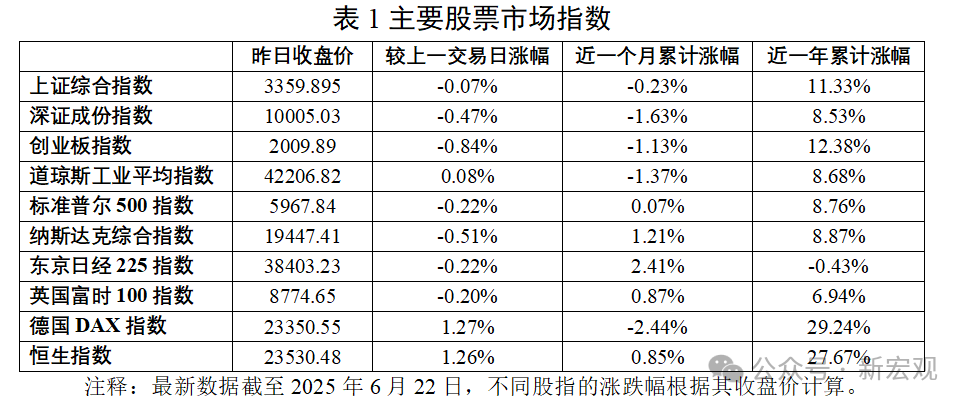
Group 1: Key Events - On June 16, the White House announced a trade agreement between the U.S. and the UK, which includes a quota of 100,000 vehicles per year for U.S. imports from the UK, with a 10% tariff rate [1] - On June 17, the Bank of Japan decided to maintain its policy interest rate at around 0.5% and slow down the pace of bond purchase reductions, currently reducing by approximately 400 billion yen per quarter [2] - On June 18, the Federal Reserve maintained the federal funds rate target range at 4.25% to 4.50%, marking the fourth consecutive meeting without a rate change, while lowering economic growth forecasts for the U.S. [1][2] Group 2: Economic Data - Japan's exports fell for the first time in eight months in May, with exports to the U.S. down 11.1% year-on-year to 1.51 trillion yen, driven by declines in automotive and automotive parts exports [5] - The ZEW Economic Sentiment Index for the Eurozone rose significantly to 35.3 in June, up from 11.6, with Germany's index increasing to 47.5 from 25.2 [5] - U.S. retail sales fell by 0.9% month-on-month in May, the largest decline since March 2023, primarily due to decreased automobile purchases [5] Group 3: Monetary Policy - The Bank of England decided to keep its key interest rate unchanged at 4.25%, citing weak GDP growth and a soft labor market [2] - The yield on 10-year U.S. Treasury bonds decreased by 0.9 basis points, while the yield on 10-year Japanese bonds fell by 1.6 basis points [10] Group 4: Commodity Prices - Brent crude oil prices fell by 3.76% to $75.78 per barrel, while WTI crude oil prices increased slightly by 0.28% to $74.04 per barrel [12] - The CRB Commodity Index decreased by 0.59%, while the Baltic Dry Index dropped by 3.54% [12]