
均值回归

Search documents
BEN share price at $13: here’s how I would value them
Rask Media· 2025-09-14 20:38
Group 1: Company Overview - Bendigo & Adelaide Bank Ltd (ASX: BEN) shares are currently priced around $12.60, with a focus on determining their true value for investors seeking dividend income [1][11] - The bank operates in a competitive environment dominated by a few large players, with a preference among Australian investors for bank shares due to their dividend potential and franking credits [2][3] Group 2: Valuation Methods - The Price-Earnings (PE) ratio is a common valuation tool, with BEN's current PE ratio calculated at 14.5x, compared to the banking sector average of 19x, leading to a sector-adjusted valuation of $16.92 [6] - A Dividend Discount Model (DDM) is highlighted as a more effective valuation method for banks, with BEN's share price estimated at $13.32 using a blended growth and risk rate, and $13.75 using an adjusted dividend payment [11][12] - Considering fully franked dividends, the valuation based on a gross dividend payment of $0.93 results in a share price estimate of $19.64 [12] Group 3: Growth and Risk Considerations - The analysis includes various growth and risk rate scenarios, indicating that a 6% risk rate with a 2% growth rate yields a valuation of $16.25, while a 10% risk rate with a 4% growth rate results in a valuation of $10.83 [13] - Investors are encouraged to assess the bank's growth strategy, including its focus on lending versus non-interest income, and to consider economic indicators such as unemployment and consumer sentiment [14]



做“安心”投资 锚定价值顺势而为
Zhong Guo Zheng Quan Bao· 2025-09-14 20:14
Core Viewpoint - The recent strong performance of the A-share market is attributed to long-term valuation compression and the subsequent recovery potential, which has been building up over the past few years [1][3]. Investment Philosophy - The investment philosophy emphasizes "value anchoring and going with the trend," focusing on maintaining a balanced portfolio while adhering to low valuation principles for safer investments [1][2]. - The preference for low-valuation assets reflects a stable investment style, favoring diversified sector allocations and different stages of valuation realization [2][4]. Market Strategy - In a strong market environment, capturing the trend of valuation recovery is more important than trying to maximize profits [3][4]. - The approach to investment is flexible, adapting strategies based on market conditions, with a focus on risk-reward ratios and certainty [4][5]. Research and Team Structure - The investment research team consists of nearly 20 members, covering various sectors such as manufacturing, TMT, pharmaceuticals, and consumer services, focusing on both fundamental and technical analysis [4][5]. Sector Focus - The company is optimistic about multiple sectors, including high-end manufacturing, technology, cycles, military, and pharmaceuticals, with a particular emphasis on the innovative drug sector [5][6]. - The innovative drug industry is expected to undergo significant transformation, moving from reliance on technology imports to self-innovation and global market expansion [6][7]. Future Outlook - The company anticipates continued growth in the innovative drug sector, with a focus on tracking key companies' pipeline data and business development progress [6][7]. - Other areas of interest include AI, advanced manufacturing, energy and chemicals, automotive, and public utilities, with specific strategies for each sector [7].
金价历史新高!还能走多远,现在还能不能上车?
雪球· 2025-09-13 13:01
Core Viewpoint - The article discusses the recent surge in gold prices, driven by central banks' de-dollarization efforts and increased demand for gold as a safe-haven asset amid macroeconomic uncertainties [5][6][12]. Group 1: Reasons for Gold Price Surge - The first key factor driving the rise in gold prices is the global trend of central banks moving away from the US dollar, leading to increased purchases of gold to adjust their reserve structures [7][8][9]. - The second factor is the heightened demand for gold as a safe-haven asset due to macroeconomic uncertainties, with $40 billion flowing into gold ETFs and related funds in the first half of the year [12][18]. Group 2: Future of the Gold Bull Market - The continuation of the gold bull market depends on multiple factors, including ongoing central bank purchases and persistent macroeconomic uncertainties [18]. - Historical data shows a strong negative correlation between gold and the US dollar; a weaker dollar could further boost gold prices [19]. - If the Federal Reserve lowers interest rates, it may enhance gold's relative attractiveness, supporting its price [19]. Group 3: Risks and Considerations - Current gold prices are at historical highs, and even favorable conditions may not fully offset potential downward risks [21][22]. - Gold's inflation-adjusted price is currently more than double its long-term average, indicating a risk point [22]. - Gold has experienced significant volatility historically, with periods of both rapid price increases and declines [24][26]. Group 4: Strategic Use of Gold in Portfolios - Gold is not a yield-generating asset; its price is primarily influenced by supply and demand rather than intrinsic value [29]. - For long-term preservation of value, gold may be a suitable choice, but it may not be the best option for asset appreciation [29]. - Gold's role as a risk diversification tool in investment portfolios is significant, with a low correlation to major asset classes like A-shares [30][31].

贝莱德:AI主导全球投资主线,中国科技股吸引海外关注
Di Yi Cai Jing· 2025-09-11 02:58
Group 1: Investment Outlook - BlackRock is particularly optimistic about AI-driven large-cap tech stocks in the U.S. over the next 12 months, supported by strong expectations for interest rate cuts in the U.S. [1] - The firm predicts that the Federal Reserve will implement two rate cuts this year, contrary to the market's expectation of 5-6 cuts, due to a moderate economic slowdown rather than a recession [1][4] - BlackRock maintains a neutral view on the Chinese stock market but is optimistic about Chinese tech stocks, citing significant valuation gaps compared to global peers and the potential for further valuation recovery driven by AI [1][7] Group 2: Employment and Economic Conditions - Recent U.S. non-farm payroll data showed a significant slowdown, with only 22,000 jobs added in August, leading to a 4.3% unemployment rate, the highest in nearly four years [3] - Despite the weak employment data, BlackRock's CIO suggests that the labor supply is decreasing due to demographic changes and immigration policy adjustments, complicating the interpretation of employment statistics [3] - Wage growth remains strong, with average hourly earnings increasing by 3.7% year-over-year, indicating ongoing inflationary pressures [3][4] Group 3: AI and Technology Sector - The AI wave is seen as a major driver for large-cap tech stocks, with global enterprises investing approximately $500 billion annually in AI, which represents 0.5% of global GDP [5] - BlackRock believes that the AI-driven revenue and profit growth will exceed expectations, despite concerns about a peak in AI capital expenditure by 2026 [5][6] - The firm emphasizes that traditional mean reversion strategies may not apply in the current macroeconomic environment, as inflation rates are not yet stabilized [5][6] Group 4: Chinese Market and AI Development - Foreign investment interest in China is growing, particularly in the tech sector, as global investors recognize that AI development is not exclusive to the U.S. [7] - Chinese cloud service providers are experiencing significant capital expenditure growth, with Tencent's capital spending expected to increase by 119% year-over-year by Q2 2025 [8] - Morgan Stanley forecasts a surge in demand for AI chips and related technologies in China, with local manufacturers increasing R&D investments to reduce reliance on single suppliers like NVIDIA [8]

独家对话贝莱德:AI主导全球投资主线,中国科技股吸引海外关注
Di Yi Cai Jing· 2025-09-11 02:51
Group 1 - BlackRock is particularly optimistic about AI-driven large-cap tech stocks in the U.S. over the next 12 months, supported by strong expectations for interest rate cuts and the ongoing AI bull market [1] - Despite a neutral overall view on the Chinese stock market, BlackRock is optimistic about Chinese tech stocks due to significant valuation gaps compared to global peers, especially U.S. tech stocks [1][7] - The firm expects the Federal Reserve to cut rates twice this year, contrary to market expectations of 5-6 cuts, due to a moderate economic slowdown and persistent inflation pressures [4][5] Group 2 - The U.S. job market shows signs of complexity, with recent non-farm payroll data indicating a slowdown, but this may not reflect true market weakness due to labor supply issues [3] - Inflation remains a concern, with average hourly wages rising 3.7% year-on-year, which could lead to a wage-price spiral, complicating the Fed's dual mandate of price stability and full employment [3][4] - BlackRock maintains a cautious stance on the Fed's rate cuts, predicting a more conservative approach compared to other institutions, which foresee more aggressive cuts [4] Group 3 - The AI wave is expected to benefit large-cap tech stocks, with significant capital expenditure in AI projected at $500 billion annually, indicating long-term growth potential across various sectors [5][6] - The traditional mean reversion strategy may not apply in the current macro environment, as inflation rates remain unstable and economic growth lacks long-term anchors [5][6] - Foreign investment interest in China is rising, with a focus on the country's AI development capabilities, supported by government policies and a strong engineering workforce [7][8] Group 4 - China's cloud service providers are experiencing significant capital expenditure growth, outpacing global averages, driven by increasing demand for AI capabilities [8] - Local AI chip manufacturers are ramping up R&D efforts to reduce reliance on single suppliers like NVIDIA, as domestic demand for AI technology continues to surge [8]
美国就业数据重大修正强化降息预期 金价一度突破3670美元创新高
智通财经网· 2025-09-10 06:50
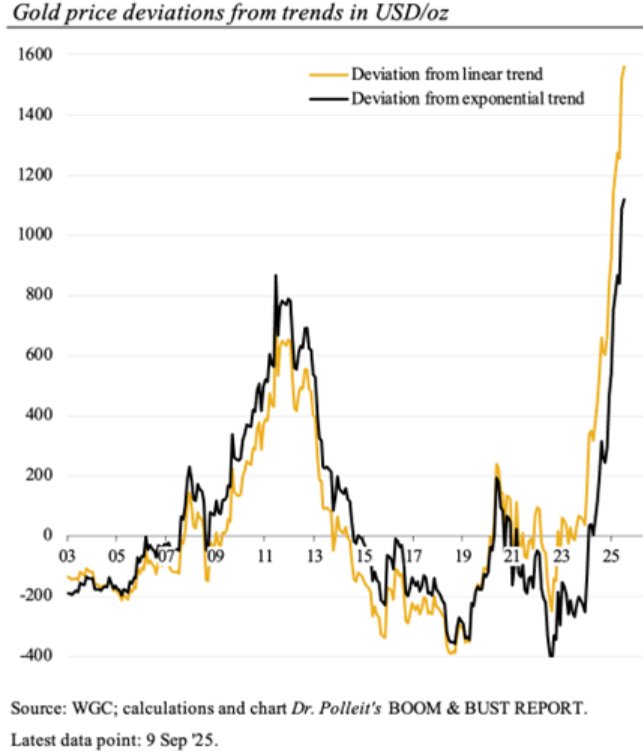
Core Insights - Gold prices reached a historic high of $3,674 per ounce, driven by heightened expectations of interest rate cuts by the Federal Reserve due to revised U.S. employment data indicating a potential overestimation of job numbers by 911,000 [1] - Geopolitical tensions, including U.S. trade policy and military actions in the Middle East, have further supported the rise in gold prices as investors seek safe-haven assets [1] - Central banks globally, including the Czech National Bank and the People's Bank of China, have been increasing their gold reserves, contributing to a nearly 40% increase in gold prices this year [2] Market Dynamics - The upcoming U.S. Producer Price Index and Consumer Price Index reports are critical for influencing Federal Reserve policy decisions [1] - Analysts predict that the Federal Reserve may maintain a loose monetary policy until March 2026 due to rising labor market risks, with year-end gold price targets raised to $3,800 per ounce [2] - Current gold prices are significantly above long-term trend lines, suggesting a potential concern for investors who adhere to mean reversion strategies [3][5] Investment Sentiment - The demand for gold and silver is increasing as investors lose confidence in fiat currencies and seek alternatives amid global economic uncertainties [5] - Despite current prices being high relative to long-term trends, holding gold and silver remains a rational choice for investors in the current economic climate [5]
“申”度解盘 | 9月的三个提示
申万宏源证券上海北京西路营业部· 2025-09-01 02:31
Core Viewpoint - The market is expected to experience a short-term rise, with a focus on a gradual upward shift and potential consolidation after breaking through a 10-year trading range [6]. Group 1: Market Trends - The market has recently surpassed the 10-year trading range, indicating a reasonable phase of consolidation [6]. - All indices have reached new highs since October 8, except for the Shanghai Stock Exchange 50 (SSE 50), which is expected to catch up [6]. - The market is projected to target the 3900-4000 range in the short term, with attention to market rhythm [9]. Group 2: Sector Performance - Historical data from the past 14 years suggests that low P/E ratio sectors such as consumer goods, coal, and building materials have a higher probability of performance in September, while high P/E sectors have a low success rate of only 27% [6]. - The AI sector remains a key focus for medium-term investment opportunities [10]. Group 3: Hong Kong Market - The Hong Kong stock market has been in a sideways trend for the past three months, primarily due to its earlier peak in 2021 compared to other indices [7]. - With the expectation of a Federal Reserve interest rate cut, the liquidity impact on the Hong Kong dollar may lead to a resurgence in the Hong Kong stock market [8]. - The Hong Kong market is recommended for renewed attention starting in September [10].

美股现在处于泡沫的初期阶段!霍华德・马克斯:现在的投资组合应该更偏向安全,而不是激进
Xin Lang Cai Jing· 2025-08-29 09:35
Group 1 - The core belief emphasized by Howard Marks is that emotional stability, patience, a long-term perspective, and the ability to refrain from impulsive actions typically lead to better investment outcomes [2][54] - Marks suggests that investment is not about precise timing but rather about constructing a resilient portfolio that can withstand various market conditions, akin to a soccer team that plays the entire match with the same lineup [42][45] Group 2 - Marks discusses the current market environment, indicating that the U.S. stock market is in the early stages of a bubble, driven by optimism and a lack of perceived risk [17][26] - He highlights the importance of understanding one's position in the investment cycle and balancing aggressiveness and defensiveness based on individual circumstances [10][12] Group 3 - The traditional economic and market cycles may have been disrupted, particularly due to the pandemic, leading to uncertainty about future economic conditions [18][19] - Marks argues that central banks cannot permanently eliminate market fluctuations; they can only delay them, suggesting that future downturns may be more severe if they are postponed [26][28] Group 4 - In the current environment of narrow credit spreads, Marks emphasizes the need for investors to demand risk premiums when shifting from government bonds to corporate bonds, as optimism can lead to underestimating risks [30][31] - He notes that while the U.S. remains a favored investment destination, non-U.S. markets often present cheaper opportunities, particularly in high-yield bonds [35][37] Group 5 - Marks uses the analogy of American football and Brazilian soccer to illustrate investment strategies, advocating for a consistent approach rather than frequent adjustments based on market conditions [42][45] - He stresses the importance of patience and emotional control in investing, advising against the common tendency to buy high and sell low [51][52]

创金合信基金魏凤春:惯性的力量与思维的转变
Sou Hu Cai Jing· 2025-08-25 05:35
Group 1 - The core viewpoint of the article emphasizes that the driving force of the stock market is shifting from risk preference to performance-driven, indicating a transition in investment strategies towards leading industries, particularly in technology [1][2] - Last week's market performance showed technology leading the way, driven by advancements in domestic chip development and expectations of a potential interest rate cut by the Federal Reserve [1][2] - The article highlights a divergence in the market, with technology sectors performing well while cyclical commodities like coal and rebar continue to struggle, confirming previous assessments of weakening cyclical forces [2][3] Group 2 - The article suggests that the next market momentum requires a shift in thinking, focusing on improving earnings expectations across industries and adapting investment strategies to meet the demands of the new era [2][3] - It discusses the importance of innovation as a key theme in investment, emphasizing that the spirit of entrepreneurship is crucial for growth and that innovation should be a fundamental instinct for businesses [4][5] - The need for a transition from aggregate thinking to structural thinking in industry research is highlighted, as understanding industry organization becomes increasingly important in a stable growth environment [4][5] Group 3 - The article outlines characteristics of leading industries, suggesting that high-end manufacturing and hard technology will be central to future economic growth, with a focus on quality consumption and technological advancements [7][8] - It notes that the current market is at a crossroads, with the potential for significant adjustments, but the fundamental trend of asset revaluation remains unchanged [3][10] - The impact of wealth effects, stricter credit card investment regulations, and the potential for a Federal Reserve interest rate cut are discussed as factors influencing market dynamics [10][11]

宏观经济宏观周报:高频指标连续两周超季节性上升-20250824
Guoxin Securities· 2025-08-24 13:20
Economic Growth Indicators - The Guosen High-Frequency Macro Diffusion Index A maintained a positive value, while Index B continued to rise, indicating ongoing economic growth momentum[1] - The standardized Index B increased by 0.3, outperforming historical averages, suggesting improved domestic economic dynamics[1] - Consumer sector performance showed a recovery, while investment and real estate sectors remained stable[1] Price Tracking and Inflation - Food prices are expected to rise by approximately 0.5% month-on-month in August, while non-food prices are projected to remain flat, leading to an overall CPI increase of about 0.1%[2] - The CPI year-on-year is anticipated to decline to -0.3%[2] - The PPI is expected to rise by 0.4% month-on-month in August, with a year-on-year increase to -2.5%[2] Asset Price Predictions - Current domestic interest rates are considered low, while the Shanghai Composite Index is viewed as high, indicating potential downward pressure on the index and upward pressure on the ten-year government bond yield[1] - The predicted ten-year government bond yield for the week of August 29, 2025, is 2.49%, while the Shanghai Composite Index is forecasted to be 3,206.20[19]