
美元流动性

Search documents
中信期货晨报:商品期货大面积飘红,黑色系多数收涨-20250916
Zhong Xin Qi Huo· 2025-09-16 06:55
1. Report Industry Investment Rating No relevant content provided. 2. Core Viewpoints of the Report - For overseas markets, focus on the Fed's interest - rate meeting on the early morning of September 18. The market expects a 25bp rate cut, with a small probability of a 50bp cut. US inflation data and the Fed's personnel issues boost the rate - cut expectation [8]. - Domestically, observe the progress of physical work in Q4 and changes in financial market liquidity. Special bond issuance supports infrastructure demand, but there are risks of more funds used for debt reduction. The demand pulse for commodity consumption may be postponed to the end of Q4. Investors should also focus on the process of household deposit transfer and inflation changes [8]. - The improvement of US dollar liquidity is a medium - term trend, which is beneficial for risk assets. Domestically, as the process of household deposit transfer indicates a rising risk preference, investors are recommended to focus on liquidity - sensitive risk assets such as CSI 1000 stock index futures, non - ferrous metals, oilseeds, and precious metals. Also, pay attention to the Q4 allocation opportunities of Chinese bonds [8]. 3. Summary by Related Catalogs 3.1 Macro Highlights - **Overseas Macro**: The Fed's interest - rate meeting on September 18 is crucial. Market expects rate cuts due to inflation data and personnel issues [8]. - **Domestic Macro**: Special bond issuance supports infrastructure, but there are risks of more funds for debt reduction. The demand for commodity consumption may be postponed. Investors should focus on household deposit transfer and inflation [8]. - **Asset Views**: Improvements in US dollar liquidity benefit risk assets. Domestically, focus on liquidity - sensitive risk assets and Q4 Chinese bond allocation opportunities [8]. 3.2 Viewpoint Highlights 3.2.1 Financial Sector - **Stock Index Futures**: Use a dumbbell structure to deal with market divergence. Short - term judgment is oscillation due to the attenuation of incremental funds [10]. - **Stock Index Options**: Continue the hedging and defensive strategy. Short - term judgment is oscillation due to potential deterioration of option market liquidity [10]. - **Treasury Bond Futures**: The stock - bond seesaw may continue in the short term. Short - term judgment is oscillation, with concerns about tariff, supply, and monetary policy surprises [10]. 3.2.2 Precious Metals - **Gold/Silver**: Dovish expectations drive prices up. Short - term judgment is oscillatory rise, with attention on US fundamentals, Fed policy, and global equity market trends [10]. 3.2.3 Shipping - **Container Shipping to Europe**: Focus on the rate of freight decline. Short - term judgment is oscillation as the peak season fades and there is no upward driving force [10]. 3.2.4 Black Building Materials - **Steel**: Steel mill profits shrink, and supply - demand is weak. Short - term judgment is oscillation, with attention on special bond issuance, steel exports, and iron - water production [10]. - **Iron Ore**: Iron - water production is high, and port inventory slightly increases. Short - term judgment is oscillation, with attention on overseas mine production, domestic iron - water production, and other factors [10]. - **Coke**: Supply increases significantly, and the second - round price cut starts. Short - term judgment is oscillation, with attention on steel mill production, coking cost, and macro sentiment [10]. - **Coking Coal**: Supply has basically recovered, and the spot market is cautious. Short - term judgment is oscillation, with attention on steel mill production, coal - mine safety inspections, and macro sentiment [10]. - **Silicon Iron**: Supply - demand tends to be loose, and the market is under pressure. Short - term judgment is oscillation, with attention on raw material cost and steel procurement [10]. - **Manganese Silicon**: Supply - demand outlook is pessimistic, and there is limited upward driving force. Short - term judgment is oscillation, with attention on cost price and overseas quotes [10]. - **Glass**: Supply slightly increases, and expectations are still volatile. Short - term judgment is oscillation, with attention on spot sales [10]. - **Soda Ash**: Middle - stream inventory is decreasing. Short - term judgment is oscillation, with attention on soda ash inventory [10]. 3.2.5 Non - ferrous Metals and New Materials - **Copper**: Supply of recycled copper is tight, and copper prices are strong. Short - term judgment is oscillation, with attention on supply disruptions, domestic policies, and Fed policies [10]. - **Alumina**: Spot prices are weakening, and warehouse receipts are increasing. Short - term judgment is oscillatory decline, with attention on ore production and electrolytic aluminum复产 [10]. - **Aluminum**: Inventory is accumulating, and aluminum prices are falling. Short - term judgment is oscillation, with attention on macro risks, supply disruptions, and demand [10]. - **Zinc**: Inventory is accumulating, and zinc prices are weak. Short - term judgment is oscillatory decline, with attention on macro risks and zinc - ore supply [10]. - **Lead**: Social inventory slightly decreases, and lead prices are oscillating. Short - term judgment is oscillation, with attention on supply disruptions and battery exports [10]. - **Nickel**: LME nickel inventory increases significantly, and nickel prices fluctuate widely. Short - term judgment is oscillation, with attention on macro, geopolitical, and Indonesian policy risks [10]. - **Stainless Steel**: Warehouse receipts are slightly accumulating, and the market is weak. Short - term judgment is oscillation, with attention on Indonesian policies and demand [10]. - **Tin**: Inventory in two markets slightly increases, and tin prices are oscillating. Short - term judgment is oscillation, with attention on Wa State's复产 and demand improvement [10]. - **Industrial Silicon**: Supply is increasing, and silicon prices are capped. Short - term judgment is oscillation, with attention on supply - side production cuts and photovoltaic installations [10]. - **Lithium Carbonate**: The peak - season supply - demand gap is less than expected, and prices are oscillating. Short - term judgment is oscillatory rise, with attention on demand, supply disruptions, and technological breakthroughs [10]. 3.2.6 Energy and Chemical Sector - **Crude Oil**: Supply pressure continues, and geopolitical disturbances exist. Short - term judgment is oscillatory decline, with attention on OPEC+ policies and Middle - East geopolitics [13]. - **LPG**: Valuation has been repaired, and focus on cost - end guidance. Short - term judgment is oscillation, with attention on crude oil and overseas propane costs [13]. - **Asphalt**: Asphalt futures prices are below 3500. Short - term judgment is decline, with attention on sanctions and supply disruptions [13]. - **High - Sulfur Fuel Oil**: Production increase is disturbed by geopolitics, and prices first fall then rise. Short - term judgment is decline, with attention on geopolitics and crude oil prices [13]. - **Low - Sulfur Fuel Oil**: Follows crude oil in wide - range oscillations. Short - term judgment is decline, with attention on crude oil prices [13]. - **Methanol**: There is a large contradiction between near - and far - month contracts. Short - term judgment is oscillation, with attention on macro - energy and upstream - downstream device dynamics [13]. - **Urea**: Returns to fundamentals and is under pressure. Short - term judgment is oscillation, with attention on export and market sentiment [13]. - **Ethylene Glycol**: The market is pessimistic about future production capacity. Short - term judgment is oscillation, with attention on coal, oil prices, port inventory, and device commissioning [13]. - **PX**: Fundamental drivers are limited, and prices follow costs. Short - term judgment is oscillation, with attention on crude oil fluctuations, macro changes, and demand [13]. - **PTA**: Low inventory - holding willingness and sufficient spot liquidity suppress basis. Short - term judgment is oscillation, with attention on crude oil, macro, and demand [13]. - **Short - Fiber**: Raw material support is average, and processing fees are recovering. Short - term judgment is oscillation, with attention on downstream yarn - mill purchases and demand [13]. - **Bottle Chip**: Demand is in the off - season. Short - term judgment is oscillation, with attention on enterprise production cuts and terminal demand [13]. - **Propylene**: Reduction in propane and PL commodity volume boosts prices. Short - term judgment is oscillation, with attention on oil prices and domestic macro [13]. - **PP**: May find support near previous lows. Short - term judgment is oscillation, with attention on oil prices and domestic/overseas macro [13]. - **Plastic**: Peak - season demand provides slight support. Short - term judgment is oscillation, with attention on oil prices and domestic/overseas macro [13]. - **Styrene**: Market sentiment improves, and focus on policy details. Short - term judgment is oscillation, with attention on oil prices, macro policies, and device dynamics [13]. - **PVC**: Weak reality and strong expectations. Short - term judgment is oscillation, with attention on expectations, cost, and supply [13]. - **Caustic Soda**: Spot prices are falling. Short - term judgment is cautious decline, with attention on market sentiment, production, and demand [13]. 3.2.7 Agricultural Sector - **Oils and Fats**: Focus on the sustainability of the upward trend. Short - term judgment is oscillation, with attention on US soybean weather and Malaysian palm oil supply - demand [13]. - **Protein Meal**: Prices fall after China - US - Spain talks. Short - term judgment is oscillation, with attention on US soybean weather, domestic demand, and trade relations [13]. - **Corn/Starch**: Imported corn increases, and futures prices fall. Short - term judgment is oscillation, with attention on demand, macro, and weather [13]. - **Pig**: Pig supply is abundant, and prices are oscillating at a low level. Short - term judgment is oscillation, with attention on farming sentiment, epidemics, and policies [13]. - **Rubber**: Short - term support is strong. Short - term judgment is oscillation, with attention on产区 weather, raw material prices, and macro changes [13]. - **Synthetic Rubber**: Continues the oscillatory trend. Short - term judgment is oscillation, with attention on crude oil fluctuations [13]. - **Cotton**: Cotton prices are well - supported, and focus on new - cotton purchases. Short - term judgment is oscillation, with attention on demand and inventory [13]. - **Sugar**: The short - term downward space is limited, and prices rebound. Short - term judgment is oscillation, with attention on imports [13]. - **Pulp**: Rebounds after continuous decline, and it's better to wait and see. Short - term judgment is oscillation, with attention on macroeconomic changes and US dollar - based quotes [13]. - **Offset Paper**: Lacks upward and downward drivers, and prices oscillate around the listing price. Short - term judgment is oscillation, with attention on production - sales, education policies, and paper - mill operations [13]. - **Log**: New warehouse receipts are registered, and prices oscillate around 800. Short - term judgment is oscillation, with attention on shipment and dispatch volumes [13].
港股午评:恒指跌0.22%、科指涨0.27%,黄金及苹果概念股走高,药品关税令生物医药概念股普跌
Jin Rong Jie· 2025-08-26 04:12
Market Overview - The Hong Kong stock market opened lower but showed signs of recovery, with the Hang Seng Index down 0.22% at 25,773.56 points, while the Hang Seng Tech Index rose 0.27% to 5,840.71 points [1] - Major tech stocks like NetEase, Kuaishou, Xiaomi, and Tencent turned positive, while Alibaba fell over 1% [1] - Gold prices increased due to dovish signals from the Federal Reserve, benefiting gold and non-ferrous metal stocks, with China Gold International and Lingbao Gold rising over 6% [1] - The gaming sector saw a significant rise, with Kingsoft Holdings surging over 19% post-earnings [1] Company Earnings - Haidilao reported a revenue of 20.703 billion yuan, a decrease of 3.7% year-on-year, and a net profit of 1.76 billion yuan, down 13.7% [2] - Times Electric's revenue was approximately 12.594 billion yuan, down 7.7%, with a net profit of about 264 million yuan, a decrease of 20.2% [2] - China Software International achieved a revenue of approximately 8.51 billion yuan, up 7.3%, and a net profit of 316 million yuan, up 10.4% [2] - CIFI Holdings reported a revenue of approximately 7.09 billion yuan, an increase of 3.7%, and a net profit of about 769 million yuan, up 4.3% [3] - BOE Technology Group's revenue was 6.671 billion yuan, an increase of about 8%, with a net profit of approximately 180 million yuan, up 5% [3] - JunDa Holdings reported a revenue of approximately 3.656 billion yuan, a decrease of 42.5%, with a net loss of about 264 million yuan, widening by 58.5% [3] - Yihai International maintained stable performance with a revenue of approximately 2.927 billion yuan and a net profit of about 310 million yuan [4] - Innovent Biologics reported a revenue of approximately 2.82 billion yuan, up 2.7%, and a net profit of about 390 million yuan, up around 1% [5] - Maoyan Entertainment achieved a revenue of approximately 2.472 billion yuan, up 13.9%, but adjusted net profit fell by 33.2% to 235 million yuan [5] - Green Tea Group reported a revenue of approximately 2.29 billion yuan, up 23.1%, and a net profit of about 234 million yuan, up 34% [6] - Hopson Development issued a profit warning, expecting a mid-term net loss exceeding 1.6 billion yuan, marking a shift from profit to loss [7] Institutional Insights - Huatai Securities noted that foreign capital still has room to increase allocation to the Chinese market, with a focus on improving domestic fundamentals and potential appreciation of the RMB [8] - China Merchants Securities remains optimistic about the Hong Kong stock market, highlighting a high earnings pre-announcement rate and suggesting a focus on sectors with differentiation from A-shares [8] - Shenwan Hongyuan indicated that the recent underperformance of the Hong Kong index is a phase of consolidation, with previously low earnings expectations likely to regain market favor [9] - GF Securities emphasized the long-term value of the Hong Kong market, supported by improved liquidity and continued inflow of southbound funds [9] - Guotai Junan projected that undervalued Hong Kong stocks could rise further, driven by technology breakthroughs, potential foreign capital return, and additional southbound fund inflows [9]
突发重磅转向!
Ge Long Hui· 2025-08-23 10:30
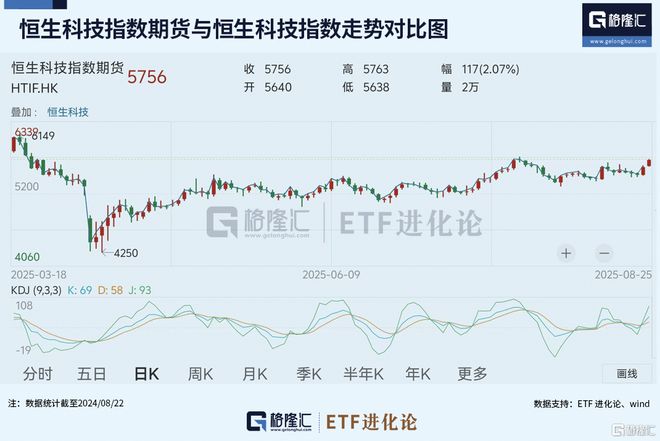
Group 1 - Federal Reserve Chairman Jerome Powell indicated a potential interest rate cut, stating that "the policy is in a restrictive range" and adjustments may be needed due to changing risk balances [1][2] - Following Powell's remarks, the capital markets reacted strongly, with the US dollar index experiencing its largest single-day drop since April, and major stock indices like the Dow Jones and Nasdaq seeing significant gains [1][3] - Market expectations for a September rate cut surged back to around 90% after initially dropping to 70% before the meeting, indicating strong market sentiment towards a dovish shift [1][2] Group 2 - Powell highlighted the labor market's "peculiar balance" due to a significant slowdown in both labor supply and demand, suggesting increasing downside risks for employment [2] - He also noted that the impact of tariffs on inflation may be more of a one-time effect rather than a sustained increase, which aligns with a more dovish stance on future monetary policy [2] - The market's belief in a clear signal for a September rate cut was reinforced, leading to positive sentiment from investors, including a notable shift in Trump's rhetoric praising Powell [3] Group 3 - The Hang Seng Tech Index futures surged by 2.07% following Powell's dovish comments, indicating a potential turning point for Hong Kong stocks [4] - The Hong Kong market has historically benefited from increased US dollar liquidity, as seen after the Fed's unexpected rate cut in September last year [6] - The Hong Kong Monetary Authority has intervened multiple times to manage liquidity, resulting in a significant rise in the overnight Hibor rate, which reflects the tightening liquidity conditions [8] Group 4 - The report from the global chief strategist at Industrial Securities suggests that global investors, particularly from China, are increasingly optimistic about the Chinese stock market, predicting a long-term bullish trend [14] - A-share market has shown accelerated growth, with trading volumes exceeding 20 trillion yuan for eight consecutive days, indicating strong market momentum [15] - Analysts believe that the Chinese stock market could reach 4000 points by the end of the year, with a long-term target of 5000 points based on asset securitization goals [17]

国金证券:全球TACO牛市,谁泡沫更大?
Xuan Gu Bao· 2025-08-19 08:14
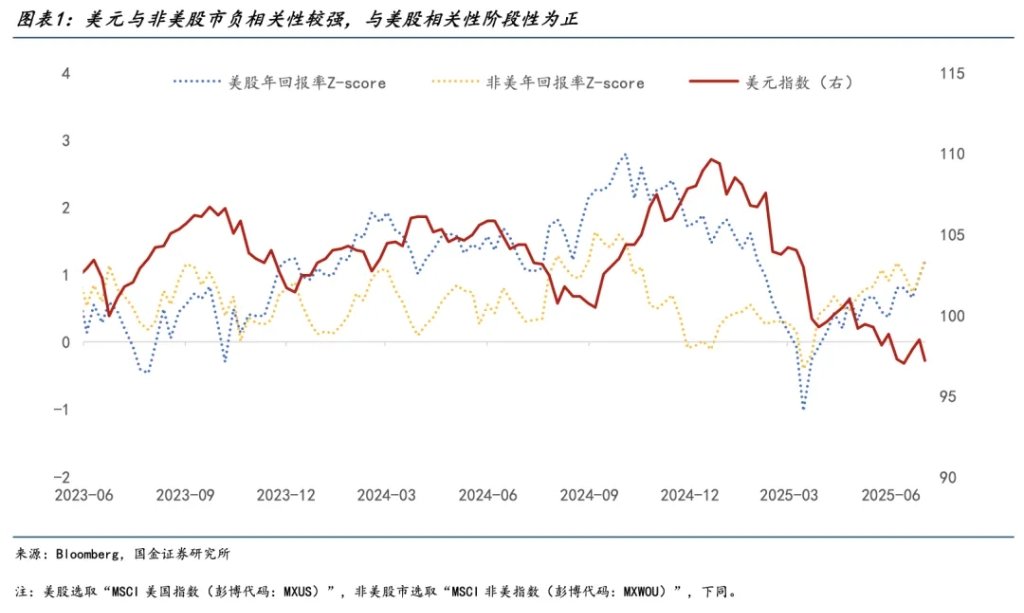
Group 1 - The core viewpoint of the article is that global market risk appetite has significantly improved following the TACO (Trump Always Chickens Out) trades, leading to new highs in various stock markets, including developed and emerging markets [1][2] - The primary driver of the recent global stock market rally is the increased dollar liquidity, which is closely linked to U.S. monetary policy and cross-border capital flows [2][3] - The dollar index has declined by 2.4% in the past quarter and 10% year-to-date, contributing to the warming of non-U.S. stock markets [3][6] Group 2 - The actual interest rates on U.S. Treasury bonds have decreased, which influences both U.S. and non-U.S. stock markets, providing a foundation for risk sentiment to be released [6][7] - Global central banks have accelerated their monetary supply, with a notable increase in the growth rate of global central bank money supply by nearly 7 percentage points in the past quarter [7][10] - The cost of offshore dollar financing has decreased, indicating a more favorable liquidity environment for non-U.S. equity markets [10][12] Group 3 - There is a noticeable trend of foreign capital inflow into non-U.S. equity markets, with A-shares seeing a 0.75% increase in foreign ownership value compared to the end of last year [13][19] - Various Asian markets, including Japan, South Korea, and Vietnam, have experienced net foreign inflows since July, contrasting with the net outflows observed over the past 12 months [19][20] - The article discusses how to measure market bubbles, particularly in the U.S. stock market, where concerns about the effectiveness of capital expenditures by tech giants are prevalent [20][22] Group 4 - The "Buffett Indicator" for the U.S. stock market has reached a historical high of 2.1, indicating a significant divergence from the economic output [25][28] - A comparison of current TTM P/E ratios shows that U.S. stocks, Indian stocks, and Vietnamese stocks have higher valuations, while Korean, A-shares, and British stocks are relatively lower [28][29] - The article highlights that the risk premium levels in developed markets are at historical lows, while emerging markets still exhibit higher risk premiums [31][32] Group 5 - The article concludes that the high valuation levels in global equity markets are reflective of abundant dollar liquidity and the potential vulnerabilities in both U.S. and non-U.S. markets due to economic cycles and TACO trades [39][40]

宋雪涛:全球TACO牛市,谁泡沫更大?
Xin Lang Cai Jing· 2025-08-19 06:25
Group 1 - The core of the global market's risk appetite recovery is attributed to the loosening of dollar liquidity, with potential risks arising from changes in Federal Reserve policy or cross-border capital flows [3][5] - The TACO (Trump Always Chickens Out) trades have led to increased confidence among investors, resulting in new highs for developed and emerging markets, including US, European, and Asian stocks [4][5] - The current environment of dollar liquidity is closely linked to the Federal Reserve's monetary policy and cross-border capital movements, impacting multiple markets and asset classes [5] Group 2 - Recent changes in dollar liquidity can be observed through five dimensions, including a significant decline in the dollar index, which has dropped 2.4% in the last quarter and 10% year-to-date [6][9] - The actual yield on US Treasury bonds has decreased by over 20 basis points since the peak in April, contributing to a more favorable risk sentiment [9] - Global central banks have accelerated their monetary supply, with a notable increase in the growth rate of global central bank money supply by nearly 7 percentage points in the last quarter [11] Group 3 - The cost of offshore dollar financing has decreased, indicating a more favorable liquidity environment for non-US equity markets [13] - Foreign capital inflows into non-US equity markets are becoming evident, with A-shares seeing a 0.75% increase in foreign ownership value compared to the end of last year [15] - In the broader non-US equity markets, foreign capital inflows have been observed in various Asian markets, contrasting with the net outflows seen over the past 12 months [19] Group 4 - The current AI wave has led to significant capital expenditures among tech giants, with an average capital expenditure growth rate of 18% from 2021 to 2024, raising concerns about the effectiveness of these investments [24] - The recent rise in US stocks has shown a barbell structure, with tech giants on one end and small-cap stocks on the other, reflecting a market pricing in economic resilience and policy risk reduction [27] - The Buffett Indicator, which measures the ratio of total market capitalization to nominal GDP, has reached a historical high of 2.1, indicating potential overvaluation in the US stock market [30][37]

宋雪涛:全球TACO牛市,谁泡沫更大?
雪涛宏观笔记· 2025-08-19 06:18
Group 1 - The core viewpoint of the article is that the recovery of global risk appetite and stock market increases are primarily driven by the loosening of dollar liquidity, with potential risks arising from changes in Federal Reserve policies or cross-border capital flows [2][4] - The article discusses the phenomenon of TACO (Trump Always Chickens Out) trading, which has led to increased confidence among investors and a bullish atmosphere in various global markets, including US, European, and Asian stocks [4][5] Group 2 - The improvement in global risk appetite is attributed to the loosening of dollar liquidity, which is closely linked to the Federal Reserve's monetary policy and cross-border capital flows [5][6] - The dollar index has significantly declined, dropping 2.4% in the past quarter and 10% year-to-date, which has positively impacted non-US stock markets [7][9] - The actual interest rates of US Treasury bonds have decreased, providing a foundation for risk sentiment release, with a decline of over 20 basis points since April [9][11] - Global central banks have accelerated monetary supply, with a notable increase in the growth rate of global central bank money supply by nearly 7 percentage points in the past quarter [11][14] - The cost of offshore dollar financing has decreased, indicating a more favorable liquidity environment for non-US equity markets [14][16] Group 3 - There is a noticeable trend of foreign capital inflow into non-US equity markets, with A-shares seeing a 0.75% increase in foreign ownership value compared to the end of last year [16][19] - Various Asian markets, including Japan, South Korea, and Vietnam, have experienced net inflows of foreign capital since July, contrasting with the previous 12 months of net outflows [19][20] Group 4 - The article highlights concerns regarding the effectiveness of capital expenditures by technology giants amid the current AI boom, with an average capital expenditure growth rate of 18% projected for tech stocks from 2021 to 2024 [20][22] - The current market structure shows a "barbell" effect, with significant gains in both large tech companies and small-cap stocks, indicating a potential increase in market fragility [22][26] Group 5 - The "Buffett Indicator," which measures the ratio of total market capitalization to nominal GDP, has reached a historical high of 2.1, suggesting a potential overvaluation of the market [26][28] - Comparisons of risk premiums across global indices reveal that US and Indian stocks have low risk premiums, while A-shares and Korean stocks maintain higher levels [31][34] - The article concludes that the high valuation levels across major stock indices, combined with the low risk premiums in developed markets, indicate a potential bubble in the current market environment [39]

全球TACO牛市,泡沫有多大?
SINOLINK SECURITIES· 2025-08-18 14:52
Group 1: Market Trends and Drivers - Recent global market risk appetite has significantly improved, with many developed and emerging market indices reaching new highs, including A-shares and Hong Kong stocks entering a bull market atmosphere[2] - The decline of the US dollar index by 10% this year has notably boosted non-US stock markets[2] - The actual yield on US Treasury bonds has decreased, alleviating valuation pressure on global assets[2] - Global central banks have accelerated monetary supply growth, with 76 rate cuts this year compared to only 19 rate hikes, particularly benefiting non-US markets[2] Group 2: Valuation Concerns - The "Buffett Indicator" (total market capitalization/GDP) for US stocks has reached a historical high of 2.1, approximately 2.9 standard deviations above the long-term average, indicating potential overvaluation[3] - The capital expenditure growth rate for tech giants is projected at 18% from 2021 to 2024, raising concerns about the sustainability of this growth and potential valuation corrections[3] - The current valuation levels of major markets show that US, Indian, Vietnamese, and German stocks are at absolute highs, while risk premiums for Indian, US, and Vietnamese stocks are relatively low[4] Group 3: Market Sensitivities and Risks - The high non-fundamental premium in markets like A-shares and German stocks suggests increased sensitivity to potential reversals in dollar liquidity or changes in capital flows[4] - If the Federal Reserve's policies or cross-border capital flows change, markets with high non-fundamental premiums may be more vulnerable to corrections[4] - The report highlights the potential for a "shrinking circle" effect in global markets if risk appetite declines, particularly affecting markets with high non-fundamental premiums[4]
中金研究 | 本周精选:宏观、策略、大类资产
中金点睛· 2025-08-09 01:07
Macroeconomy - Despite a slowdown in economic growth and low inflation in Q2, A-shares have experienced a rapid rise, likened to a "water buffalo" in the context of financial cycles [4] - The current economic indicators in China are still in need of improvement, but several factors support the stock market performance, suggesting a shift from traditional economic cycle perspectives to financial cycle perspectives may provide better insights [4] - Policies aimed at addressing debt issues are crucial during a financial cycle downturn, as they can enhance balance sheets and boost economic vitality, which is significant for capital markets [4] Strategy - Tariffs have contributed to a partial rebound in U.S. inflation, with seasonal adjustment methods underestimating inflation by nearly 20 basis points over the past two months; CPI readings may not yet reflect the true inflation rebound [6] - A turning point in CPI is anticipated within the next 1-2 months, with a potential confirmation date around August 12, and the CPI year-on-year upturn may last for about a year [6] - The low risk premium in U.S. equities is primarily due to rising real returns and investor enthusiasm for U.S. stocks amid a global "asset shortage"; adjustments in risk-free rates suggest there is still slight room for recovery in the risk premium [8] Macroeconomy - The central rate of interest in China has significant downward potential, but the rapid decline in the 10-year government bond yield over the past three years may not continue; short-term policy rate cuts may face limitations around 1% [10] - The 10-year government bond yield's term premium is unlikely to fall below 0.2%, indicating that other policy measures, such as fiscal expansion and central bank balance sheet expansion, may be more effective in stimulating growth [10] Macroeconomy - The U.S. dollar index has rebounded during a depreciation cycle, but this trend halted following the release of July's non-farm payroll data, leading to significant market fluctuations [12] - The U.S. economy appears to have bottomed out in June and showed signs of improvement in July, with a debt issuance wave beginning to absorb dollar liquidity [12] - Looking ahead, the impact of tariffs on inflation may become more apparent, and tightening dollar liquidity could negatively affect U.S. stock performance in August and September, with the 10-year Treasury yield potentially rising to around 4.8% [12]
中金:美元流动性短期收紧或压制美股 但长期风险资产仍具潜力
智通财经网· 2025-08-07 00:14
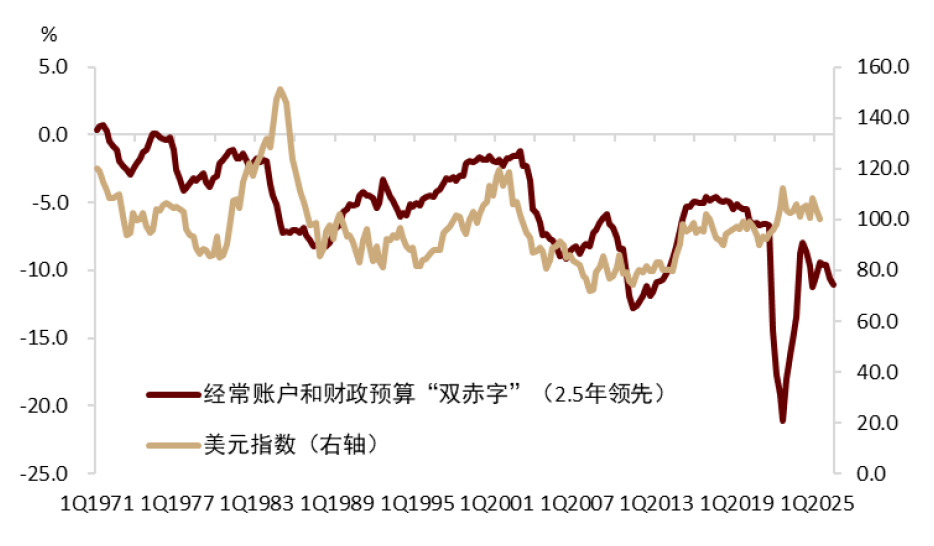
Core Viewpoint - The report from CICC indicates that the U.S. economy showed signs of improvement in July after hitting a low in June, despite a rebound in the dollar index since July. The tightening of dollar liquidity and the impact of tariffs on inflation may negatively affect U.S. stock performance in August and September, while the 10-year Treasury yield is expected to rise to around 4.8% in the near term. However, the long-term outlook remains positive for risk assets due to potential dollar liquidity easing and fiscal support for the economy [1][2][16]. Group 1: Dollar Index and Market Dynamics - The dollar index reflects various factors including cross-border capital flows, fundamentals, and dollar liquidity. Its fluctuations indicate a structural bear market for the dollar amidst ongoing capital rebalancing between the U.S. and other markets [2][4]. - The dollar index has maintained strength despite the widening U.S. fiscal and trade deficits over the past two years, driven by continued capital inflows into U.S. assets underpinned by AI-related market confidence [2][4]. Group 2: Economic Indicators and Labor Market - Following a structural depreciation in April, the dollar index regained positive correlation with the U.S.-Germany yield spread from May, reflecting the recovery of the U.S. economy in July after a downturn from April to June [6][7]. - High-frequency data indicates that unemployment claims rose significantly from April to June, peaking at 1.95 million, corresponding to an unemployment rate of 4.3%. However, new job openings showed a recovery starting in July [9][10]. Group 3: Liquidity and Debt Issuance - The liquidity situation shifted from easing to tightening as the Treasury General Account (TGA) began releasing funds to replenish reserve accounts, with a significant increase in net debt issuance in July amounting to $308.3 billion compared to $104.9 billion from April to June [12][14]. - The Treasury is projected to issue $1 trillion in net debt from July to September, with long-term debt issuance reaching $470 billion, which may lead to financial risks and market volatility [20][21]. Group 4: Inflation and Economic Outlook - The potential for inflation is increasing as the impact of tariffs on import costs becomes more apparent, coupled with strong wage growth and low inflation base effects [16][18]. - The report suggests that if the U.S. economy remains stable with rising inflation and tightening dollar liquidity, Treasury yields are unlikely to stay low, which could adversely affect the real estate and manufacturing sectors [21][22]. Group 5: Future Market Trends - The report anticipates potential adjustments in risk assets over the next couple of months due to tightening liquidity and rising inflation, particularly affecting growth sectors, while financial, real estate, and industrial sectors may remain resilient due to policy support [22]. - The long-term trend suggests that fiscal dominance may lead to renewed liquidity and continued improvement in fundamentals, maintaining an upward trajectory for the market despite short-term adjustments [22].
中金公司:风险资产长期来看仍具潜力,美元下行周期也将持续
Mei Ri Jing Ji Xin Wen· 2025-08-06 23:53
Core Insights - The U.S. economy hit a bottom in June and showed signs of improvement in July, following policy shocks in the first half of the year [1] - A wave of debt issuance began in July, gradually absorbing U.S. dollar liquidity [1] - The impact of tariffs on inflation may start to become evident, and combined with tightening dollar liquidity, this could negatively affect U.S. stock performance in August and September [1] - The 10-year U.S. Treasury yield may quickly bottom out and gradually rise to around 4.8% [1] - From a longer-term perspective, increased fiscal intervention alongside monetary policy may lead to a resumption of dollar liquidity easing, supporting the potential of risk assets [1] - The downward cycle of the dollar is expected to continue [1]
