
智能驾驶

Search documents
传言理工男CEO上位!苹果汽车又有戏了?
Sou Hu Cai Jing· 2025-12-08 10:31
Group 1 - The core viewpoint of the article highlights the transition in leadership at Apple from Tim Cook to John Ternus, emphasizing Ternus's technical background and potential to drive innovation [1][5][12] - Under Tim Cook's leadership, Apple achieved record sales and market value, but faced criticism for a lack of technological innovation, with significant updates only appearing in the iPhone 17 [3][7] - John Ternus, the current Senior Vice President of Hardware, is recognized for his role in major product developments, including the transition to self-developed M-series chips and contributions to the iPad and MacBook Pro [5][9] Group 2 - There are strong rumors that Ternus will initiate the development of Apple's electric vehicle (EV) project, which had previously been abandoned due to its similarity to Tesla's offerings [7][9] - Apple is expected to enter the EV supply chain, providing components such as smart cockpit and intelligent driving systems to other EV brands, following Huawei's success in the Chinese market [10][12] - This new approach is anticipated to yield higher profit margins compared to direct vehicle manufacturing, potentially leading Apple into a new era of high-value and high-performance products [12]



汽车行业周报:自动驾驶发力,出行公司先行-20251208
Guoyuan Securities· 2025-12-08 07:50
Investment Rating - The report maintains a "Recommended" investment rating for the automotive industry [6] Core Insights - The automotive industry is experiencing a gradual recovery, with November wholesale sales remaining within a reasonable range. Retail sales of passenger vehicles in November reached 2.263 million units, a year-on-year decrease of 7%, but a month-on-month increase of 1%. Cumulatively, retail sales for the year reached 21.519 million units, a year-on-year increase of 6% [1][19] - The new energy vehicle market is showing strong growth, with November retail sales of 1.354 million units, a year-on-year increase of 7% and a cumulative increase of 20% for the year [1][19] - The report highlights the importance of autonomous driving and the strategic initiatives of ride-hailing companies, with significant advancements in technology and policy support driving the sector forward [4][26] Summary by Sections Weekly Market Review (2025.11.29-12.05) - The automotive sector saw a weekly increase of 1.38%, outperforming the Shanghai Composite Index by 0.10 percentage points. Most sub-sectors within the automotive industry also experienced gains [12][14] Weekly Data Tracking (2025.11.29-12.05) - Passenger vehicle retail and wholesale sales data for November indicate a mixed performance, with wholesale sales showing a year-on-year increase of 2% [19][1] Industry News (2025.11.29-12.05) - Significant developments include Shanghai's announcement of 330 kilometers of autonomous driving test roads, advancements in autonomous vehicle technology by companies like Xpeng and Geely, and the launch of new models featuring cutting-edge technology [26][27][32][30]



激光雷达行业简析报告
Jia Shi Zi Xun· 2025-12-08 06:55
Investment Rating - The report indicates a strong growth potential for the LiDAR industry, with a projected market size increase from $300 million in 2020 to $17.1 billion by 2029, reflecting a compound annual growth rate (CAGR) of 60.6% [4]. Core Insights - The global LiDAR market is experiencing rapid growth, transitioning from mechanical to semi-solid and eventually to fully solid-state technologies, with costs significantly reduced to the "thousand-yuan level," facilitating adoption in mainstream vehicles and expanding into robotics and industrial automation [4]. - The upstream core components (lasers, detectors) have a low domestic production rate, dominated by companies from Europe, the US, and Japan, while the midstream market is primarily occupied by Chinese firms, which hold over 60% of the global market share [4]. - The primary application of LiDAR is in the automotive sector, with increasing demand driven by the penetration of L2+ intelligent driving systems, while robotics is emerging as a second growth driver, expected to reach a market size of $5.1 billion by 2029 [4]. Summary by Sections 1. Introduction to LiDAR - LiDAR is a sensing technology that uses pulsed laser beams to measure distances, providing high-resolution data unaffected by lighting or weather conditions [5]. 2. Advantages of LiDAR Products - LiDAR excels in three-dimensional perception and all-weather night vision capabilities, outperforming other sensors like millimeter-wave radar and cameras in terms of resolution and adaptability [11]. 3. Technological Pathways - The technology has evolved from mechanical scanning to semi-solid and fully solid-state systems, with significant improvements in size, cost, and performance [14]. 4. Industry Development - The LiDAR industry has progressed through four phases: technology emergence (pre-2007), automotive-driven growth (2010-2021), cost reduction and expansion (2022-2024), and the transition to fully solid-state technology (2025 and beyond) [17]. 5. Market Size - The global LiDAR market is expected to grow from $300 million in 2020 to $1.6 billion by 2024, with a CAGR of 52%, and further to $17.1 billion by 2029, indicating a high growth phase [18]. 6. Industry Value Chain - The LiDAR industry encompasses upstream components, midstream product integration, and downstream applications, with a focus on ADAS and robotics [24]. 7. Upstream Industry - The upstream segment is characterized by low domestic production rates of core components, with most high-end parts sourced from foreign companies [25]. 8. Midstream Industry - The midstream sector is highly concentrated, with four out of the top five global suppliers being Chinese companies, reflecting a significant shift in market leadership [26]. 9. Downstream Applications - Automotive applications dominate the LiDAR market, with the share of automotive use expected to rise from 50% in 2022 to over 63% by 2024, driven by the adoption of intelligent driving technologies [32]. 10. Future Opportunities - The industry is poised for growth due to economies of scale, policy support for intelligent driving, and advancements in digital chip technology [49]. 11. Challenges Ahead - Despite significant cost reductions, LiDAR remains more expensive than alternatives like millimeter-wave radar, posing challenges for broader adoption [51].
“智驾神器”一点也不神还很危险
Jing Ji Guan Cha Wang· 2025-12-08 05:49
Core Viewpoint - The emergence of "smart driving gadgets" poses significant risks to road safety by deceiving vehicle assistance systems, leading to dangerous driving conditions and potential accidents [1][2][3] Group 1: Product Overview - "Smart driving gadgets" are marketed as simple accessories but effectively disable the "hands-off detection" feature of driver assistance systems, allowing for a false sense of security in automated driving [1][2] - These products include two main types: capacitive straps for certain brands and weighted rings for others, both designed to trick the vehicle's sensors [2][3] Group 2: Regulatory Response - The National Market Supervision Administration has indicated that these products violate the Product Quality Law of the People's Republic of China, which prohibits the production and sale of items that pose unreasonable dangers to personal and property safety [2] - A draft of mandatory national standards for vehicle operation safety is being considered, which would include requirements for detecting driver hand and gaze disengagement [4] Group 3: Market Dynamics - The market for these gadgets is thriving due to low development barriers and the ability to evade regulatory scrutiny, with sales primarily occurring through online platforms [3][6] - The automotive industry relies on torque and capacitive sensors to detect driver engagement, but these gadgets effectively bypass these safety measures [3] Group 4: Industry Statistics - As of January to July 2025, the cumulative sales of passenger cars equipped with L2-level driving assistance in China reached 7.76 million units, with a penetration rate of 62.58% [5] - Current smart driving systems available to consumers are classified as Level 2 or below, indicating that they are not fully autonomous and require driver attention at all times [5] Group 5: Recommendations for Action - To eliminate the presence of "smart driving gadgets," a comprehensive approach is needed, involving e-commerce platforms, regulatory bodies, automotive manufacturers, and traffic enforcement agencies [6] - The implementation of AI technology for keyword monitoring, stricter regulations on production, and enhanced user education are essential to combat this issue effectively [6]
理想“背水一战”:MEGA召回、L系列滞销,百亿研发能否换来“具身智能”未来?
Xin Lang Cai Jing· 2025-12-08 02:14
Core Viewpoint - Li Auto is facing its most severe test since its establishment, with significant declines in revenue and net loss reported in the third quarter, marking the end of 11 consecutive quarters of profitability [2][24][26]. Financial Performance - In Q3, Li Auto reported revenue of 27.365 billion RMB, a year-on-year decline of 36.2%, and a net loss of 624 million RMB, compared to a profit of 2.821 billion RMB in the same period last year [3][26]. - Vehicle sales revenue for Q3 was 25.9 billion RMB, down 37.4% year-on-year and 10.4% quarter-on-quarter, attributed to a decrease in vehicle deliveries [6][28]. - The total vehicle deliveries in Q3 were 93,211 units, a 39.0% decrease year-on-year, while competitors like NIO and Xpeng saw significant growth in their deliveries [6][28]. Future Outlook - The company expects Q4 deliveries to decline further, projecting a drop of 37% to 30.7%, with total revenue anticipated to be between 26.5 billion and 29.2 billion RMB, reflecting a year-on-year decrease of 34.2% to 40.1% [13][35]. - Li Auto has revised its annual sales target for 2025 from 700,000 to 640,000 units, with cumulative deliveries reaching only 328,916 units by October, indicating less than 60% of the target achieved [8][31]. Challenges and Strategic Shifts - Li Auto's CEO, Li Xiang, indicated that the company is returning to a startup model, moving away from a professional management structure, and aims to innovate through self-developed AI and hardware technologies [18][39]. - The company is facing challenges in its range-extended electric vehicle (REEV) segment, which has seen a decline in market share due to increased competition and the maturation of the market [14][36]. - Li Auto's flagship pure electric model, MEGA, has faced criticism and has not replicated the success of its REEV models, contributing to the overall decline in sales [15][37]. Financial Health - As of Q3 2025, Li Auto's cash reserves stood at 98.9 billion RMB, but the company is experiencing cash flow issues, with a net cash outflow of 7.4 billion RMB compared to a net inflow of 11 billion RMB in the same period last year [11][35]. - The company reported a free cash flow deficit of 8.9 billion RMB, indicating a significant deterioration in financial health [11][33]. Market Position - Li Auto is the only new energy vehicle manufacturer among its peers to report a revenue decline in Q3, contrasting sharply with the growth reported by NIO and Xpeng [6][28]. - The company's stock price has also suffered, dropping over 33% from its peak in September, reflecting investor concerns about its future performance [15][37].


吉利高管:有车企为博流量盲目模仿,拉低中国车设计高度;因「薪资过高」限制招聘信息发布?BOSS直聘回应;曝苹果芯片核心人物将离职
雷峰网· 2025-12-08 00:52
Group 1 - Geely's executive criticized some car companies for blindly imitating designs to gain traffic, which lowers the standards of Chinese car design [4][5] - Geely emphasized that true Chinese design must be rooted in Chinese culture, possess independent aesthetic judgment, and have distinct characteristics [5] - Huawei's Ren Zhengfei stated that self-reliance is a necessity due to external pressures, and acknowledged that China is still lagging behind in technology compared to the U.S. [7][8] Group 2 - A wind power company in Guangdong offered a starting salary of 8,500 to 10,000 yuan, but faced restrictions from BOSS Zhipin for exceeding average salary levels [16][17] - New Oriental's chairman, Yu Minhong, reassured that employees who expressed concerns in an open letter would not face repercussions and that their issues would be investigated [19][20] - The CEO of Ele.me, Fan Yu, highlighted the strategic importance of the newly launched "Taobao Flash Purchase" as a significant move for Alibaba in the consumer service sector [26] Group 3 - The launch of the new AI model GPT-5.2 by OpenAI is anticipated to counter the competition from Google's Gemini 3, with a release expected on December 9 [39][40] - Meta has postponed the release of its mixed reality glasses to 2027 to ensure a fully polished product, reflecting the company's commitment to user experience [42][43] - Musk criticized the EU's fine against his platform X, calling it absurd and indicative of bureaucratic overreach, while also highlighting the broader implications for U.S. tech companies [48][49]

华泰证券汽车行业2026年度展望:聚焦景气赛道核心资产
Zheng Quan Shi Bao Wang· 2025-12-08 00:20
人民财讯12月8日电,华泰证券发布汽车行业2026年度展望:①乘用车:总量平淡,自主高端发力大五/ 六座SUV市场,新能源抢滩登陆西欧,推荐高端化和出口有看点的公司。②零部件把握"全球化+新赛 道"两条主线:全球化更侧重欧洲新机会,围绕订单与产能进行投资布局;新赛道重点关注机器人和AI 液冷,机器人2026年把握去伪存真与技术变量,液冷与汽车底层技术高度相通,新赛道带来业绩成长性 与估值弹性。③智能驾驶:将是AI应用重要方向,技术端整车AI化加速,城市NOA加速由20万向15万 价格标配化,L4也将迎来更大规模商业落地,推荐核心运营平台以及高成长性零部件供应商。 ...

汽车行业周报:曹操出行发布Robotaxi战略目标,2025年前11个月汽车以旧换新超1120万辆-20251207
Guohai Securities· 2025-12-07 12:34
2025 年 12 月 07 日 行业研究 评级:推荐(维持) 研究所: 证券分析师: 戴畅 S0350523120004 daic@ghzq.com.cn 曹操出行发布 [Table_Title] Robotaxi 战略目标,2025 年前 11 个月汽车以旧换新超 1120 万辆 ——汽车行业周报 最近一年走势 | 行业相对表现 | | 2025/12/05 | | | --- | --- | --- | --- | | 表现 | 1M | 3M | 12M | | 汽车 | -2.0% | -1.2% | 17.4% | | 沪深 300 | -0.9% | 2.8% | 16.9% | 相关报告 《汽车行业周报:阿维塔递交港股 IPO 申请,"蔚 小理"相继披露三季度财报(推荐)*汽车*戴畅》 ——2025-12-01 《汽车行业周报:广州车展开幕,小鹏 X9 增程版/ 享界 S9 新款上市,华为举办乾崑大会(推荐)* 汽车*戴畅》——2025-11-24 《汽车行业周报:10 月乘用车批发同比增 7.5%, 上汽智己 LS9 上市(推荐)*汽车*戴畅》—— 2025-11-18 年底多家车企发布购车 ...



一周新车盘点 | 雷克萨斯发布LFA概念车 锐胜M8正式上市
Xin Lang Cai Jing· 2025-12-07 05:40
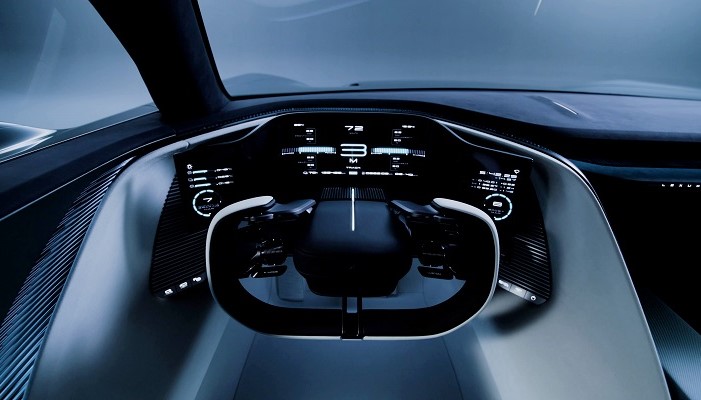
Group 1: Lexus LFA Concept Car - Lexus officially unveiled the new LFA concept car on December 5, marking the first revival of the LFA name since the fuel version ceased production in 2012, showcasing the design direction and technological foundation for the next-generation electric high-performance sports car [1][5] - The new LFA concept shares core technology with Toyota's GR GT and GR GT3 models but features a fully electric powertrain, with dimensions of 4690mm in length, 2040mm in width, 1195mm in height, and a wheelbase of 2725mm, indicating a significant increase compared to the previous model [1][2] - The design retains iconic elements from the original LFA, such as the L-shaped daytime running lights and a large front splitter for aerodynamic optimization, while also incorporating modern features like a lightweight high-rigidity aluminum chassis [2][5] Group 2: Beiqi (Beijing Automotive Manufacturing Plant) Ruisheng M8 - Beiqi's Ruisheng M8 was launched on December 5, offering both pure electric and range-extended versions, with a starting price of 129,800 yuan after limited-time subsidies [9] - The M8 is positioned as a mid-to-large MPV with dimensions of 5317mm in length, 1870mm in width, and 1955mm in height, featuring a wheelbase of 3200mm and available in 7-seat and 9-seat configurations [9][11] - The vehicle includes a range of high-end features such as electric adjustable second-row seats with heating, ventilation, and massage functions, and offers a maximum power of 231 horsepower from the electric motor [11][12] Group 3: Dongfeng Nissan NX8 - Dongfeng Nissan's new electric SUV, NX8, has been revealed in the Ministry of Industry and Information Technology's application phase, set to launch in the first half of 2026, and will offer both pure electric and range-extended power options based on an 800V platform [15][19] - The NX8 features a sleek design with a closed front panel and layered headlight groups, measuring 4870mm in length, 1920mm in width, and 1680mm in height, with a wheelbase of 2917mm [15][19] - The vehicle will support advanced intelligent driving assistance features, with power options of 292 horsepower or 340 horsepower for the pure electric version, and a 148-horsepower range extender [19][21] Group 4: Buick Zhijing Family - SAIC General Motors Buick launched its second model under the "Zhijing" brand, the Zhijing Family, on December 5, with a starting price of 439,900 yuan, featuring a 1.5T plug-in hybrid power system [24][26] - The Zhijing Family is a mid-to-large MPV with dimensions of 5260mm in length, 2000mm in width, and 1820mm in height, offering a spacious interior and advanced technology features [24][26] - The vehicle emphasizes intelligent driving capabilities, equipped with high-level driver assistance systems and a maximum power output of 180 horsepower from its hybrid powertrain [26][29]
曹操出行Robotaxi战略升级 绿色智能通行岛迎首批机器人员工
Shen Zhen Shang Bao· 2025-12-06 17:52
Core Viewpoint - Cao Cao Mobility has announced an upgraded Robotaxi strategy with a ten-year goal of establishing operations in 100 cities and achieving a total transaction value of 100 billion RMB [1] Group 1: Robotaxi Strategy - The company has outlined a "three-step" strategy for Robotaxi, which includes initial technology validation and small-scale testing, transitioning to mixed operations of human and unmanned driving, and finally launching fully customized Robotaxi models for global commercial operations [1] - The CEO stated that during the Robotaxi 2.0 phase, the company will enhance the automation capabilities of large-scale fleets and integrate smart cockpit and driving technologies to achieve a closed loop of unmanned operations [1] Group 2: Green Intelligent Transit Island - The first "Green Intelligent Transit Island" has been launched, featuring functions such as automatic battery swapping, cleaning, vehicle maintenance, intelligent scheduling, and automatic settlement, along with reserved eVTOL landing pads and charging interfaces [2] - The company has established replicable construction standards for the transit island, which aims to lay the groundwork for future urban transportation infrastructure [2] Group 3: Strategic Partnerships and Collaborations - Cao Cao Mobility has expanded its collaborative ecosystem around the Robotaxi business, partnering with various companies to integrate satellite communication, high-precision positioning technology, and low-altitude travel networks [3] - A strategic cooperation agreement was signed with Qianli Zhijia to accelerate the large-scale application and commercialization of intelligent driving technology [3] - Future plans include seamless connections between Robotaxi and eVTOL, supported by low-orbit satellite networks for comprehensive communication coverage and high-precision positioning data [3]
