
反内卷

Search documents
2025年行业打分表结论回顾与策略反思:行业轮动如何做到既敏锐又不丢主线?
ZHESHANG SECURITIES· 2025-12-24 08:51
Core Insights - The 2025 industry scoring report identified the top five sectors as Electric New Energy, Military Industry, Nonferrous Metals, Machinery, and Chemicals, which showed a strong correlation with actual annual performance [1][3][18] - A simulated equal-weighted portfolio of the top five sectors yielded a cumulative return of 44.8% by December 23, 2025, outperforming the CSI 300 by 22.2%, with a monthly success rate exceeding 90% [1][3][12] - The report emphasizes that in a bullish market, focusing on industry fundamentals is more effective than trading strategies, advocating for a buy-and-hold approach based on economic cycles [1][5][21] 2025 Industry Review - The Shanghai Composite Index rose over 16% in 2025, marking the largest increase since 2020, with Nonferrous Metals and Communication sectors leading the gains at 89.9% and 89% respectively [2][13] - The report highlights that the performance of Nonferrous Metals and Communication significantly outpaced the CSI 300's 17.4% increase [12][13] 2025 Annual Industry Scoring Conclusions and Performance Review - The annual scoring report, published in November 2024, ranked Electric New Energy, Military Industry, Nonferrous Metals, Machinery, and Chemicals as the top five sectors, correlating well with actual performance [3][18] - The top five sectors' simulated portfolio achieved a cumulative return of 44.8%, with 11 out of 12 months showing positive excess returns [3][20] 2025 Monthly Industry Scoring Conclusions and Performance Review - The monthly scoring report indicated a sample return of 34.7% since 2025, outperforming the CSI 300 by 14.8%, although this was lower than the annual scoring report's performance [4][12] - Key insights from the monthly performance include successful allocations in Communication and Nonferrous Metals, while frequent trading led to missed opportunities [4][5] Summary and Reflections - The analysis suggests that in a bullish market, prioritizing industry fundamentals over trading strategies is crucial, with a focus on tracking industry prosperity differences [5][21] - For 2026, sectors that should receive higher fundamental scores include those aligned with cyclical and technological trends, particularly in areas like Electronics, Communication, Military, Consumer Services, Agriculture, Trade, Pharmaceuticals, Electric New Energy, Chemicals, and Automotive [5][21]
2026:经济温和修复,股市长牛继续
Dong Zheng Qi Huo· 2025-12-24 07:44
Report Industry Investment Rating - Stock index: Bullish [6] Core View of the Report - The report is cautiously optimistic about China's macro - economy in 2026 but positive about the A - share market. It predicts that the A - share market will shift from valuation - driven to a mode of both valuation and profit contribution, with an expected annual index increase of about 10%. The long - term bull market in A - shares may continue throughout the "14th Five - Year Plan" period [4][103]. Summary by Directory 1. 2025 Year Review: A Feast of Equities - In 2025, it was a feast for equity assets globally. Global stock markets generally rose, supported by three common factors: global fiscal and monetary "double - easing", the AI industry trend, and the "de - dollarization" narrative [16]. - In China's A - share market, it showed a diverse and hot state. Most indices rose by over 20%, with micro - cap stocks performing best. The significant difference in performance between micro - cap stocks and blue - chip weight indices was mainly due to institutional behavior and capital attributes [24]. 2. 2026 Domestic Macroeconomic Outlook: Moderate Recovery and Deepening Differentiation 2.1 Exports: Room for Surplus Remains, and Resilience Continues in 2026 - In 2025, China's exports grew strongly, with a trade surplus reaching a record high. The market has debated the balance of the trade surplus, but China's trade surplus/GDP still has room to expand [30][31]. - In 2026, although global demand may slow down, China's active economic and trade policies and the certainty of Chinese enterprises going global will support exports. The export growth rate is predicted to be around 3 - 4% [42]. 2.2 Real Estate: In the Stock Era with Moderate Policies, It May Still Decline in 2026 - The real estate industry has entered the stock era, with the housing supply approaching saturation. It still has a strong financial attribute, and the pessimistic market expectations may lead to a continued decline in 2026 [43][45]. - The continuous adjustment of the real estate industry will affect residents' wealth and total demand, putting pressure on domestic demand [50]. 2.3 Fiscal Policy: Small - scale Total Growth and Possible Structural Re - equilibrium - In 2025, China's fiscal policy was more active, with an increased deficit rate and special bonds. The fiscal expenditure structure shifted towards people - oriented investment, weakening investment in infrastructure [56][58]. - In 2026, the fiscal policy will maintain an active tone but with limited expansion. The structure may be re - balanced, and the pace will be front - loaded, with obvious guidance on industrial policies [62]. 2.4 Monetary Policy: Limited Easing Space, More Focus on Flexibility and Precision - In 2025, the central bank's monetary easing had limited impact on credit expansion. Constrained by factors such as low corporate returns and high mortgage rates, the central bank's further interest rate cuts are restricted [63]. - In 2026, the central bank will maintain a loose policy, use various policy tools more flexibly, and support industrial upgrading and domestic demand expansion [69]. 2.5 Inflation: The Contradiction between Capacity Reduction and Capacity Increase - In 2026, China's industrial production capacity is still in a state of over - supply. The "anti - involution" policy aims to reduce capacity, but it faces challenges in implementation [71][73]. - At the same time, new fixed - asset investments will increase production capacity. On the consumer side, the expansion of service consumption will support CPI. It is predicted that PPI will recover to around - 1% and CPI to around 0.8% [74][81]. 3. 2026 Stock Index Outlook: The Long - term Bull Market Continues - The current A - share market valuation is not low, and the space for further valuation expansion in 2026 is limited, with the target P/E ratio estimated to be between 20 - 24x [96]. - It is predicted that the profit growth rates of the entire A - share market, non - financial stocks, and financial stocks in 2026 will be 4.5%, 8.4%, and 1.0% respectively, showing an N - shaped trend throughout the year [100]. - In terms of capital preferences, technology stocks and blue - chip growth stocks are expected to outperform in 2026 [102]. 4. Investment Advice: Continue to Hold the Long - Position Strategy for Stock Indices - Be cautiously optimistic about China's macro - economy in 2026 but positive about the A - share market. The long - term bull market in A - shares will continue, and the long - position strategy is recommended [4][103]. - Favor the CSI 1000 Index Futures (IM) with a high proportion of technology stocks and the SSE 50 Index Futures (IF) with more blue - chip stocks. The performance of the CSI 500 Index Futures (IC) may be weaker in 2026 [105].
中金:2026光伏需求有望修复 储能迎海内外景气共振
智通财经网· 2025-12-24 07:41
Core Viewpoint - The photovoltaic industry chain is expected to gradually bottom out and improve by the second half of 2025, aided by anti-involution measures, although financial improvements may slow market clearing, making the continuation of anti-involution essential [1] Group 1: Industry Outlook - The photovoltaic demand is anticipated to recover in the latter half of the 14th Five-Year Plan due to enhanced energy storage capacity and the need for market-oriented adjustments in the domestic electricity market [1] - The global energy transition is driving strong demand for energy storage, with a projected growth rate of nearly 50% for new installations in 2026, fueled by domestic policies and decreasing costs [2] Group 2: Market Dynamics - A decline in domestic installations is expected to lead to profit differentiation among glass glue film companies, with those having overseas clients likely to increase export ratios and profit margins [3] - The high silver prices are promoting the industrialization of silver-copper paste, while auxiliary material companies are actively seeking second growth curves in sectors like semiconductors and storage [3] Group 3: Valuation and Recommendations - Current valuations for major companies in the main industry chain are at historical low levels of 1xP/B to 2.5xP/B, with potential for performance recovery and sector opportunities as demand improves in 2Q26 [4] - Recommended stocks include: 1) Quality large-scale storage and industrial storage companies such as Canadian Solar (688472.SH), Shangneng Electric (300827.SZ), and others [4] 2) High-power module manufacturers like JinkoSolar (688223.SH) and Aiko Solar (600732.SH) [4] 3) Silicon material companies such as GCL-Poly Energy (03800) and Tongwei Co., Ltd. (600438.SH) [4] 4) Optimized players like Xinyi Solar (00968) and Flat Glass Group (601865.SH) [4] 5) Companies with new product launches like Dike Co., Ltd. (300842.SZ) and Juhe Materials (688503.SH) [4]





兴银景气优选A(010124)近1年涨幅近50%!
Jin Rong Jie· 2025-12-24 06:42
12月24日消息,截至12月23日,Choice数据显示,兴银景气优选A(010124)近1年涨幅达到49.78%! 该基金近三年收益53.13%,位于同类前12%(409/3235)。据基金三季报,截至9月30日,该基金过去 一年收益 40.65%,超越基准收益29.41%;近三年收益30.11%,超越基准收益率12.44%。 风险提示:文中提及的指数成份股仅作展示,个股描述不作为任何形式的投资建议。任何在本文出现的 信息(包括但不限于个股、评论、预测、图表、指标、理论、任何形式的表述等)均只作为参考,投资 人须对任何自主决定的投资行为负责。基金投资有风险,基金的过往业绩并不代表其未来表现,基金管 理人管理的其他基金的业绩并不构成基金业绩表现的保证,基金投资须谨慎。 基金频道更多独家策划、专家专栏,免费查阅>> 责任编辑:栎树 在反内卷方向,认为这是国家在全国统一大市场的安排下的中长期战略安排,需要自下而上去根据每个 细分行业的具体情况来选择投资机会。优先选择即使没有反内卷政策,行业也进入了自然出清向上阶段 的细分行业,其次,看好反内卷政策能给行业带来产能退出,从而改善行业格局的细分行业。 公开资料显示,兴 ...
贵金属领涨商品,日元反弹
Hua Tai Qi Huo· 2025-12-24 05:03
Report Industry Investment Rating No information provided. Core Viewpoints - The market is influenced by policy expectations, Fed actions, and Japanese central bank decisions. In the current inflation - expectation game stage, focus on non - ferrous metals and precious metals with high certainty. Consider buying commodities, stock index futures, precious metals, and non - ferrous metals on dips [1][2][3][4][5] - Be vigilant about the risks of macro - and fundamental resonance if market sentiment turns cold [2] Summary by Related Catalogs Market Analysis - Policy expectations in China have a pendulum effect. The Politburo and Central Economic Work Conference emphasized policies such as a proactive fiscal policy and a moderately loose monetary policy. Multiple ministries responded, and attention should be paid to recent expectations of reserve requirement ratio (RRR) and interest rate cuts, as well as policies for stabilizing growth or the supply - side. China's November economic data was still under pressure, but foreign trade growth rebounded significantly [1] - The Fed restarted a "restrictive" stance, announcing the purchase of $40 billion in short - term bonds in the next 30 days and a 25 - basis - point interest rate cut. The Fed may pause interest rate cuts again. The previous round of the Fed's bond - buying had a limited impact on the market, mainly providing liquidity [2] - The impact of the Bank of Japan's interest rate hike was low. The reversal of carry - trade derivatives had limited impact due to the low proportion of foreign - held Japanese government bonds and the non - significant increase in net long positions of the US dollar against the yen [3] Commodity Analysis - In the non - ferrous metals sector, the long - term supply shortage has not been alleviated, and copper prices reached a record high due to Trump's tariff expectations and mine shutdowns [4][7] - In the energy sector, some countries submitted additional production - cut plans, and there were warnings of oversupply and high inventories. There were also developments in the Ukraine - related negotiations [4] - In the chemical sector, there is "anti - involution" potential in varieties such as methanol, caustic soda, urea, and PTA [4] - In the agricultural products sector, attention should be paid to China's procurement plan for US goods and next year's weather expectations after the China - US peace talks [4] - In the precious metals sector, look for opportunities to buy on dips, but the short - term risk of silver has increased, and the gold - silver ratio has deviated and is in the process of reasonable repair [4] Strategy - Go long on stock index futures, precious metals, and non - ferrous metals on dips [5] Important News - The National Housing and Urban - Rural Development Work Conference proposed measures to stabilize the real estate market, including incremental control, inventory reduction, and supply optimization [7] - The US Navy announced a plan to build new warships as part of Trump's "Golden Fleet" plan, aiming to revitalize the US shipbuilding industry [7] - There were price movements in commodities such as gold, silver, crude oil, and copper, and some commodity futures contracts had significant price changes [7] - Japan's Ministry of Economy, Trade and Industry plans to issue special bonds to support investment in the US [7]
大宗商品圆桌对话:2026黄金“逢低买入”逻辑不变、白银正抢跑通胀风险、明年最大风险点在美国市场|Alpha峰会
Hua Er Jie Jian Wen· 2025-12-24 04:17
Group 1 - The global geopolitical uncertainties persist, and the logic of buying gold on dips remains unchanged for next year, with potential pullbacks expected to be around 10%-15% from recent highs [1][4][20] - Factors that could lead to a pullback in gold prices include overly optimistic economic trends and a de-escalation of geopolitical tensions, but such pullbacks are viewed as buying opportunities [1][4][20] - The copper market is expected to experience a bull narrative in the first half of the year, driven by significant visible inventory in the U.S. and anticipated stockpiling in China post-Spring Festival, rather than economic recovery [4][20] Group 2 - The U.S. market may experience significant volatility next year, which could impact all asset classes, including commodities, presenting potential buying opportunities during downturns [2][24] - The focus for 2026 will be on sectors where supply growth stabilizes after rapid capacity expansion, particularly in the chemical industry, where price responses may lag behind company valuations [16][18] - The long-term outlook suggests that inflation will persist due to rising logistics costs from barrier trade, indicating potential opportunities in commodities [36][37] Group 3 - The influence of the Federal Reserve is expected to weaken, with fiscal policy becoming more dominant, and the dollar's credibility may be at risk, potentially leading to a drop in the dollar index to the 70-80 range [1][5][24] - The AI sector's heavy investment may not guarantee productivity gains, and if the anticipated economic recovery does not materialize, it could lead to systemic valuation declines in traditional industries [5][24][45] - The commodity market is likely to see speculative inventory accumulation when prices drop significantly, increasing the correlation between inventory levels and price movements [41][24] Group 4 - The geopolitical landscape is expected to remain competitive, with countries vying for technological and industrial supremacy, which may lead to ongoing tensions [30][31] - China's food security has improved significantly, reducing reliance on imports, which may mitigate the impact of geopolitical threats on agricultural prices [33] - The internationalization of the renminbi is anticipated to accelerate, with potential implications for commodity pricing and trade dynamics [34][36]


估值重塑与价值重估:聚焦创业板2026两大投资主线
Sou Hu Cai Jing· 2025-12-24 03:44
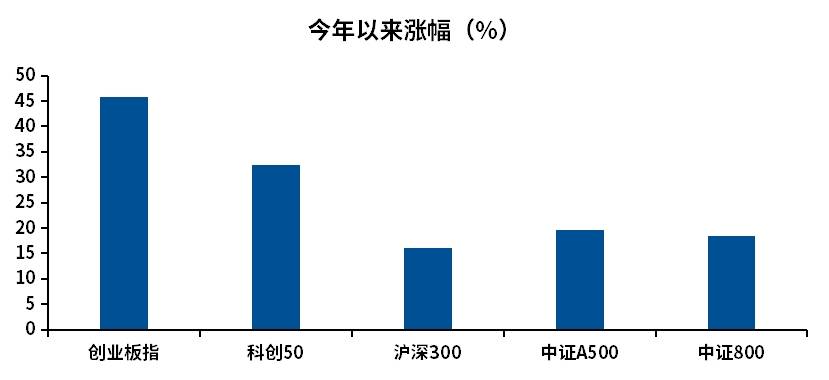
Core Viewpoint - The ChiNext Index is expected to lead the A-share market in 2026, driven by strong performance and the dual themes of technological independence and anti-involution, indicating a new phase of valuation reshaping and value reassessment [1][4]. Group 1: Technological Independence - The ChiNext serves as the main battleground for new productive forces, benefiting from policy dividends and industry trends, particularly in the fields of electric equipment, electronics, and biomedicine [4]. - As of December 19, 2025, over 70% of the market capitalization in ChiNext is concentrated in the core sectors of new information technology, new energy vehicles, and biomedicine [4]. - Profit margins in electric equipment and electronics have stabilized, with some tech sub-sectors experiencing profit growth rates exceeding 40%, reinforcing the investment value of the technology theme [4]. Group 2: Anti-Involution - The anti-involution policy aims to correct vicious competition in industries facing overcapacity and price wars, which could catalyze profit improvements in key ChiNext sectors like new energy and manufacturing [7]. - The policy is expected to optimize industry competition by regulating market order and eliminating outdated capacity, potentially improving supply-demand dynamics and stabilizing product prices and gross margins [7]. - Companies are likely to focus more on genuine technological innovation and efficiency improvements rather than mere scale expansion, enhancing free cash flow and shareholder returns [7]. Group 3: Investment Opportunities in ChiNext - The ChiNext Index's valuation has fallen to a low level, with a TTM price-to-earnings ratio of 39 times as of December 17, 2025, which is in the 37th percentile over the past decade [8]. - The expected net profit growth rates for the ChiNext Index are 38%, 30%, and 23% for the years 2025, 2026, and 2027, respectively, indicating strong profit growth certainty [8]. - Investors are encouraged to consider ChiNext index ETF products, such as E Fund ChiNext ETF, which ranks high in scale and liquidity among similar index products [9].

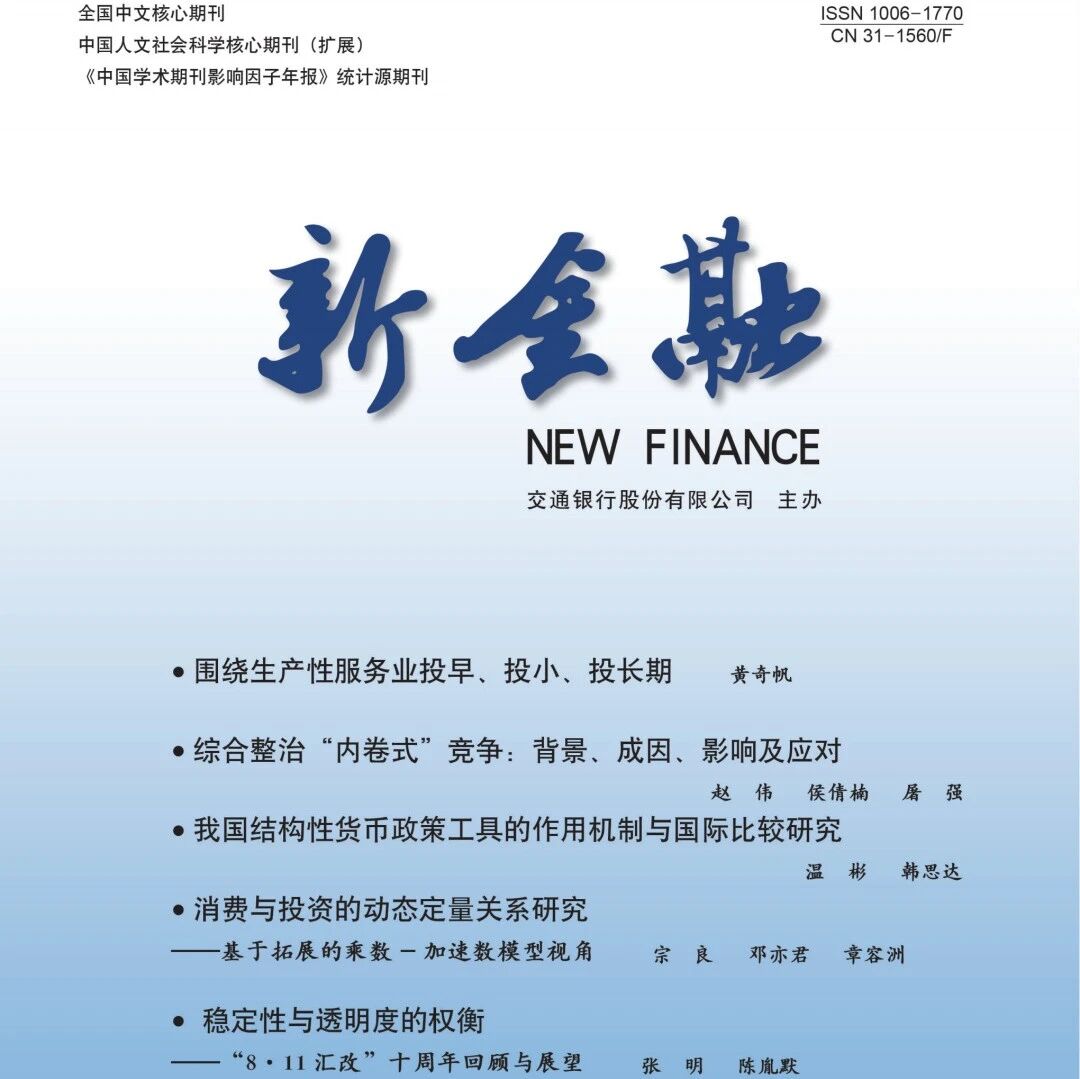
赵伟:综合整治“内卷式”竞争:背景、成因、影响及应对
申万宏源证券上海北京西路营业部· 2025-12-24 03:08
作者简介: 赵 伟, 经济学博士,申万宏源证券首席经济学家,上海申银万国证券研究所有限公司副总经 理,中国证券业协会首席经济学家委员会委员,中国首席经济学家论坛理事 侯倩楠 (通信作者),管理学博士,申万宏源研究所宏观分析师 屠 强, 申万宏源研究所资深高级宏观分析师 摘要 : 本文立足纵深推进全国统一大市场背景,系统探讨眼下"内卷"现象的成因、影响与 政策应对。研究指出,本轮"内卷"核心表现为PPI长期负增长及中下游产能利用率偏低,挤压企 业盈利、阻碍产业升级。深层根源是经济转型期新旧动能分化,叠加地方政府为追求GDP和财 政收入的同质化无序竞争。破解困境的对策包括:供给侧通过产量调控、淘汰落后产能优化产业 结构,提升产品质量以修复价格、增强竞争力;需求侧大力发展居民服务消费,借财政补贴与社 保完善释放消费潜力,同时引导就业从制造业向服务业转移,实现供需结构适配。本文贡献在 于,系统论证"反内卷"政策与经济高质量发展的内在联系,为相关部门优化产业结构、激发市 场活力提供理论依据与实践方向。 本文来源《新金融》2025年第12期 全文内容 综合整治"内卷式"竞争: 背景、成因、影响及应对 一 引言 近年来," ...
黑色金属数据日报-20251224
Guo Mao Qi Huo· 2025-12-24 02:55
周二期价略偏强运行,现货小涨,但涨价后成交转弱。往后看,从钢厂检修计划来推导,铁水产量尚未见底,但后续可能复 | 焦煤基差(右轴) 大津港:库提价:主焦煤( (家古,A10%,V27%,0. 2000 800 4000 600 3000 400 2000 1000 产的动力也不差;更重要的是,时间再往后,还有冬储补库的增量需求,给低位价格提供支撑。煤焦的盘面异动是否会带动 现货企稳甚至出现补库的行为,是决定当下行情能否再延续的重要驱动力。从估值的角度,可适当短多,设置止损;止盈 -200 标位观察前一处高点位置。 【硅铁锰硅】能源端犹动较多,同上走强 近期有关能耗双控,清洁能源和反内卷等政策消息较多,双硅价格受情绪助推向上。由于电力和煤炭是双硅的主要成本,短 期情绪发酵下,双硅价格仍将偏强为主。基本面上,钢材价格承压格局不变,钢厂利润不佳,铁水向下调整,直接需求走 焦炭基差(右轴) 弱。随着终端需求淡季来临,负反馈压力大。整体合金厂利润不佳,但产量依旧偏高。合金厂自身减产或控产的驱动不足, 中期供给过剩压力仍不减。由于供需过剩,合金厂库存累积较快,仓单数量趋于累积。对比双硅,近期猛硅供需弱于硅铁 = 青岛港: ...
中泰期货晨会纪要-20251224
Zhong Tai Qi Huo· 2025-12-24 02:46
1. Report Industry Investment Ratings No relevant content provided. 2. Core Views of the Report - Based on fundamental analysis, the trends of various commodities are classified as trend - bearish, oscillating - bearish, oscillating, oscillating - bullish, and trend - bullish. For example, silicon ferrosilicon is in a trend - bearish state, while caustic soda is in an oscillating - bearish state [2]. - Based on quantitative indicators, commodities are divided into bearish, oscillating, and bullish categories. For instance, Zhengzhou cotton is bearish, while rapeseed meal is bullish [4]. - In the stock index futures, it's necessary to focus on the sustainability and structure of liquidity restoration. If it materializes, the index may strengthen, and attention should be paid to IH. In the bond futures, medium - and short - term bonds may be oscillating - bullish, but the odds are more important than the direction [9][10]. - In the black market, steel and ore are expected to oscillate in the short - term and be bearish on rallies in the long - term. Coking coal and coke may oscillate and rise in the short - term, and silicon and manganese alloys are bearish on rallies in the medium - term [14][15][16]. - In the non - ferrous and new materials market, lithium carbonate may be bullish in the short - term, and industrial silicon and polysilicon have different trends based on different factors [20][21]. - In the agricultural products market, cotton may face pressure at the rebound high, sugar is recommended to be observed, eggs' near - term contracts are weak and far - term contracts have support, and other agricultural products have their own market characteristics [24][26][28]. - In the energy and chemical market, crude oil may be affected by the Venezuelan situation in the short - term, and other energy and chemical products also have their own market trends and influencing factors [36]. 3. Summaries According to Relevant Catalogs 3.1 Macroeconomic and Financial - **Stock Index Futures**: A - shares fluctuated narrowly. The Shanghai Composite Index rose 0.07% to 3919.98 points, the Shenzhen Component Index rose 0.27%, and the ChiNext Index rose 0.41%. The market turnover was 1.92 trillion yuan. The strategy is to focus on the sustainability and structure of liquidity restoration. If it is realized, the index may strengthen, and attention should be paid to IH [9]. - **Bond Futures**: The capital market is balanced and loose, with stable capital interest rates. The market is discussing the reduction of the Ministry of Finance's issuance scale ratio, and the bond market sentiment has improved significantly. The strategy is that medium - and short - term bonds may be oscillating - bullish, but the odds are more important than the direction [10]. 3.2 Black - **Steel and Ore**: From a policy perspective, the demand - side macro - policies generally meet market expectations. From a fundamental perspective, the demand for building materials is weak, while the demand for coils is acceptable. The supply side may see a decline in molten iron production, and the inventory is relatively high compared to last year. The short - term trend is to oscillate, and the long - term is bearish on rallies [13][14]. - **Coking Coal and Coke**: The prices may oscillate and rise in the short - term. In the medium - term, domestic mine production is restricted by policies. In the short - term, coal production is affected by safety supervision and environmental protection. However, the potential negative feedback risk from weakening steel demand restricts price increases [15]. - **Ferroalloys**: The hedging pressure of silicon alloys increases as the price rises. The cost of manganese silicon may decline. In the short - term, focus on the resumption of silicon ferro - alloy plants and the new capacity of manganese silicon. In the medium - term, both are bearish on rallies [16]. - **Soda Ash and Glass**: The soda ash and glass industry is oscillating. For soda ash, it is recommended to wait and see. For glass, try to go long after the market sentiment stabilizes [18]. 3.3 Non - ferrous and New Materials - **Lithium Carbonate**: The short - term price may be bullish, and attention should be paid to buying opportunities on pullbacks. The demand may weaken in the first quarter of next year, but the delay in the resumption of production in Jianxiawo provides support [20]. - **Industrial Silicon and Polysilicon**: Industrial silicon may have some potential for valuation repair, but the focus may shift to the expectation of polysilicon production cuts. Polysilicon is expected to be supported by strong spot prices and policy expectations [21][22]. 3.4 Agricultural Products - **Cotton**: The short - term supply is loose, but the long - term supply is expected to shrink. The cotton price may face pressure at the rebound high, and short - term long positions need to be cautious [24]. - **Sugar**: The domestic sugar supply - demand situation is expected to be bearish. The new sugar listing pressure and the Spring Festival demand coexist. It is recommended to wait and see [26]. - **Eggs**: The short - term spot price increase is less than expected, and the contracts after the Spring Festival may face pressure. The far - term contracts have support due to the expected decline in inventory, and it is recommended to wait and see [28]. - **Apples**: The futures price oscillates strongly. The sales in the producing and selling areas are slow, and the price of high - quality goods is firm. The follow - up needs to focus on the price changes in the selling areas [30][31]. - **Corn**: Pay attention to the changes in the spot price in the producing areas. You can short the 03 contract on rallies or look for reverse - spread opportunities [31]. - **Red Dates**: The market is in the digestion stage of new arrivals. The supply pressure is emerging, and the market is expected to oscillate in the short - term. Pay attention to the sales progress in the selling areas [33]. - **Hogs**: The supply - demand pattern of strong supply and weak demand remains unchanged. The spot price is expected to oscillate and decline. It is recommended to short the near - term contracts on rallies [34]. 3.5 Energy and Chemical - **Crude Oil**: The Venezuelan situation drives the oil price to rebound. The medium - term outlook is bearish due to new supply and weakening demand. In the short - term, beware of further escalation of the Venezuelan situation [36]. - **Fuel Oil**: The price follows the oil price, and the supply - demand structure is loose [37]. - **Plastics**: The supply pressure of polyolefins is large, and the demand is weak. The price may oscillate, and there is some support from upstream losses [38]. - **Synthetic Rubber**: It may correct in the short - term. You can short with a stop - loss or consider the RU - BR spread strategy [39]. - **Methanol**: The real - time supply - demand situation has improved slightly, and the inventory is starting to decline. The near - term contracts are expected to be oscillating - bullish, and the far - term contracts can be considered for long positions after the inventory decline is smooth [40][41]. - **Caustic Soda**: The near - term contracts are close to the real - world situation, and the far - term contracts have many macro - bullish expectations. The main contract's long positions should be held dynamically [42]. - **Asphalt**: The price fluctuation is expected to increase, and the focus is on the price bottom after the winter storage game [43]. - **Polyester Industry Chain**: The short - term trend is dominated by strong expectations and market sentiment. There is negative feedback from downstream. You can reduce long positions on rallies and consider the positive spread of PX and PTA 5 - 9 contracts [44]. - **Liquefied Petroleum Gas**: The supply is relatively abundant, and the demand has pressure. The price is expected to oscillate [45]. - **Paper Pulp**: The fundamentals are gradually improving. The price has reached the hedging point, and it is recommended to wait and see in the short - term. You can sell out - of - the - money call options on the 03 contract for hedging [47]. - **Logs**: The fundamentals are in a weak balance, and the price is expected to oscillate [48]. - **Urea**: The market is expected to oscillate. Pay attention to the basis pressure when the futures expectations are too strong [49].