
货币政策

Search documents
2026年01月13日申万期货品种策略日报-国债-20260113
Shen Yin Wan Guo Qi Huo· 2026-01-13 03:44
1. Report's Investment Rating for the Industry - There is no information about the industry investment rating in the report. 2. Core View of the Report - The prices of Treasury bond futures showed mixed trends, with the T2603 contract rising 0.07% and its trading volume decreasing. The IRR of the CTD bonds corresponding to the main contracts was at a low level, indicating no arbitrage opportunities. Short - term market interest rates generally increased, and the yields of key - term Treasury bonds also fluctuated. The market risk preference increased, suppressing the bond market sentiment, and the prices of Treasury bond futures were generally weak under the stock - bond seesaw effect [2][3]. 3. Summary by Relevant Catalogs Futures Market - **Prices and Changes**: The closing prices of TS2603, TF2603, T2603, and TL2603 increased, while those of TS2606, TF2606, T2606, and TL2606 showed different changes. The T2603 contract rose 0.07%. The trading volume and open interest of each contract also changed, with the open interest of T2603 and TF2603 decreasing [2]. - **Cross - period Spreads**: The cross - period spreads of TS, TF, T, and TL contracts changed, with some spreads widening and some narrowing [2]. - **IRR**: The IRR of the CTD bonds corresponding to the main contracts of Treasury bond futures was at a low level, and there were no arbitrage opportunities [2]. Spot Market - **Short - term Market Interest Rates**: Short - term market interest rates generally increased. SHIBOR 7 - day rate rose 1.2bp, DR007 rate rose 0.92bp, and GC007 rate rose 5.4bp [2]. - **Key - term Treasury Bond Yields in China**: The yields of key - term Treasury bonds showed mixed trends. The 10Y - term Treasury bond yield decreased 1.38bp to 1.87%, and the long - short (10 - 2) Treasury bond yield spread was 45.72bp [2]. - **Key - term Treasury Bond Yields Overseas**: The 10Y Treasury bond yield in the US rose 1bp, that in Germany rose 0bp, and that in Japan rose 1.3bp [2]. Macro News - **Central Bank Operations**: On January 12th, the central bank conducted 86.1 billion yuan of 7 - day reverse repurchase operations, with a net investment of 36.1 billion yuan after 50 billion yuan of repurchases matured [3]. - **Policy Announcements**: The State Council issued the "2026 First Batch of Key Matters List for 'Efficiently Completing One Thing'", and four departments jointly released work methods for government investment funds [3]. - **International News**: The US Department of Justice launched a criminal investigation into Fed Chairman Powell, which led to concerns about the Fed's independence and an increase in the prices of gold and silver [3]. Industry Information - **Interest Rate Changes**: On January 12th, most money market interest rates in China increased, and US Treasury bond yields also rose collectively [3]. Comment and Strategy - **Market Analysis**: The central bank's net investment, rising short - term interest rates, improved economic data, and increased market risk preference all put pressure on the bond market. Although there are expectations of loose policies at the beginning of the year, the prices of Treasury bond futures are generally weak under the stock - bond seesaw effect [3].
鲍威尔被起诉后,美联储三把手发声:美联储没有面临改变利率的强大压力
Hua Er Jie Jian Wen· 2026-01-13 03:10
Core Viewpoint - The current monetary policy stance is robust, with no immediate need for interest rate adjustments, as stated by New York Fed President John Williams [1][2]. Group 1: Monetary Policy Stance - Williams emphasized that the Federal Open Market Committee (FOMC) has adjusted its "moderately restrictive monetary policy stance" closer to a neutral level [2]. - He noted that the current monetary policy effectively supports labor market stability and aims to bring inflation back to the long-term target of 2% [1][2]. - The expectation for GDP growth is optimistic, projected at 2.5% to 2.75%, with the unemployment rate remaining stable [1]. Group 2: Inflation and Employment Outlook - Williams anticipates inflation will peak between 2.75% and 3% in the first half of the year, averaging 2.5% for the year, and returning to the 2% target by 2027 [1]. - He acknowledged that while inflation remains high, the labor market shows signs of cooling, leading to increased downside risks for employment [2]. Group 3: Defense of Powell and Independence Risks - Williams defended Fed Chair Jerome Powell, asserting his integrity and leadership during challenging times, amidst attacks on the Fed's independence [3]. - He warned against undermining the central bank's independence, stating that such attacks could lead to unfortunate economic consequences, including high inflation [3]. Group 4: Market Reactions - The market's response to the ongoing political and legal issues surrounding the Fed has been relatively calm, attributed to the uncertainty of how these matters will resolve [3][4]. - Williams described the current market volatility as moderate, indicating that the lack of certainty regarding the outcomes limits significant asset level changes [4].
美元指数震荡蓄力冲击 美联储动向成关键指引
Jin Tou Wang· 2026-01-13 02:31
Core Viewpoint - The US dollar index is experiencing a slight rebound, supported by hawkish comments from Federal Reserve officials and a resilient US economy, despite political pressures on the Fed [1][2]. Group 1: Economic Indicators - The US unemployment rate for December was reported at 4.4%, slightly below expectations, alleviating concerns about the labor market [2]. - The Federal Reserve's stance indicates no immediate reason for interest rate cuts, with GDP growth projected between 2.5% and 2.75% for 2026 [1]. Group 2: Market Performance - The dollar index has shown a fluctuating upward trend since the beginning of January, rising from 97.905 to around 98.90, with a cumulative increase of over 1% [2]. - The dollar index is currently trading above the 5-day and 10-day moving averages, indicating a bullish trend [2]. Group 3: Support and Resistance Levels - Key support has shifted to 98.87, previously a resistance level, with additional strong support between 98.40 and 98.50 [3]. - The 99.00 level is identified as a critical short-term resistance, with potential upward movement towards 99.22 and further resistance at 99.50 and 100.00 [3].
格林大华期货早盘提示:国债-20260113
Ge Lin Qi Huo· 2026-01-13 02:31
研究员: 刘洋 从业资格: F3063825 交易咨询资格:Z0016580 联系方式:liuyang18036@greendh.com | 板块 | 品种 | 多(空) | 推荐理由 | | | | | | | | | | | | | | | | --- | --- | --- | --- | --- | --- | --- | --- | --- | --- | --- | --- | --- | --- | --- | --- | --- | --- | | 【行情复盘】 | 周一国债期货主力合约开盘涨跌参半,早盘小幅冲高,午后略有回落,临近尾盘再 | | | | | | | | | | | | | | | | | | 度拉升,截至收盘 | 30 | 年期国债期货主力合约 | TL2603 | 上涨 | 0.30%,10 | 年期 | T2603 | 上 | 涨 | 0.06%,5 | 年期 | TF2603 | 上涨 | 0.05%,2 | 年期 | TS2603 | 持平。 | | 【重要资讯】 | | | | | | | | | | | | | | | | | | | 1、公开市场:周一央行开展了 ...
宝城期货国债期货早报(2026年1月13日)-20260113
Bao Cheng Qi Huo· 2026-01-13 02:29
Group 1: Report Industry Investment Rating - No relevant content Group 2: Core Viewpoints of the Report - The TL2603 variety is expected to experience short - term and medium - term oscillations, with a weakening trend in the intraday period, and overall it will be in an oscillatory consolidation state. The short - term probability of interest rate cuts is low, but there are still long - term expectations for monetary easing [1]. - For the TL, T, TF, and TS varieties, the intraday view is weak, the medium - term view is oscillatory, and the reference view is oscillatory consolidation. Due to factors such as the weakening of the downward momentum of Treasury bond futures and the insufficient upward momentum, it is expected to be mainly in an oscillatory consolidation state in the short term [5]. Group 3: Summary by Relevant Catalogs Variety Viewpoint Reference - Financial Futures Index Sector - For the TL2603 variety, the short - term outlook is oscillatory, the medium - term is oscillatory, the intraday is weak, and the overall view is oscillatory consolidation. The core logic is that the short - term probability of interest rate cuts is low, while long - term easing expectations remain [1]. Main Variety Price Market Driving Logic - Financial Futures Index Sector - The intraday view of TL, T, TF, and TS is weak, and the medium - term view is oscillatory, with a reference view of oscillatory consolidation. The core logic is that Treasury bond futures rebounded slightly yesterday. As the price of Treasury bond cash bonds fell, the interest rate cut expectations implied by the Treasury bond yield to maturity faded, and the anchoring effect of the policy interest rate emerged. Coupled with the central bank's resumption of net investment in the open market, the downward momentum of Treasury bond futures weakened. However, due to the insufficient effective domestic demand, there is still an expectation of a policy interest rate cut. But the manufacturing PMI returned to the expansion range in December, inflation data improved, and the short - term urgency of interest rate cuts weakened, resulting in insufficient upward momentum for Treasury bond futures [5].
特朗普置昔日盟友于死地?美联储主席收到法院传票,鲍威尔或要面临牢狱之灾!
Sou Hu Cai Jing· 2026-01-13 02:10
最近,鲍威尔作为美联储主席,竟然被卷入了一场刑事调查,其中涉及的金额高达25亿美元,牵动着整个华盛顿的神经。这起事件不仅反映了两位关键人物 之间复杂的关系,还揭示了美联储独立性与白宫意志之间日益紧张的博弈。 自鲍威尔于2018年上任以来,他便没能得到特朗普政府的宽待。特朗普在多个场合公开指责鲍威尔的行动迟缓,要求其加快降息步伐,以促进经济增长,对 即将到来的选举加以利好。在这种背景下,鲍威尔的独立性变得岌岌可危,尽管他的主要职责是保障美国经济的稳定,而非迎合短期的政治需求。 梳理一下事件的脉络,就能看出特朗普对鲍威尔施压的策略非常明确。他没有直接解职,而是利用司法手段来达到自己的目的。这一做法打破了美国三权分 立的基本原则,将总统的行政权与司法权结合在一起,对美联储进行干扰。这种操作毫无疑问是对美联储独立性的重大冲击,也是对美国政治体系的根本挑 战。鲍威尔在声明中也提到,这场调查实际上是对其坚持独立货币政策的惩罚,反映了他与白宫之间的深层矛盾。 美联储的独立性并非只是关乎美国国内的货币政策,它对全球市场的影响也不容小觑。当特朗普试图通过刑事调查来逼迫鲍威尔妥协、调整利率时,国际投 资者们的神经同样高度紧绷。他 ...

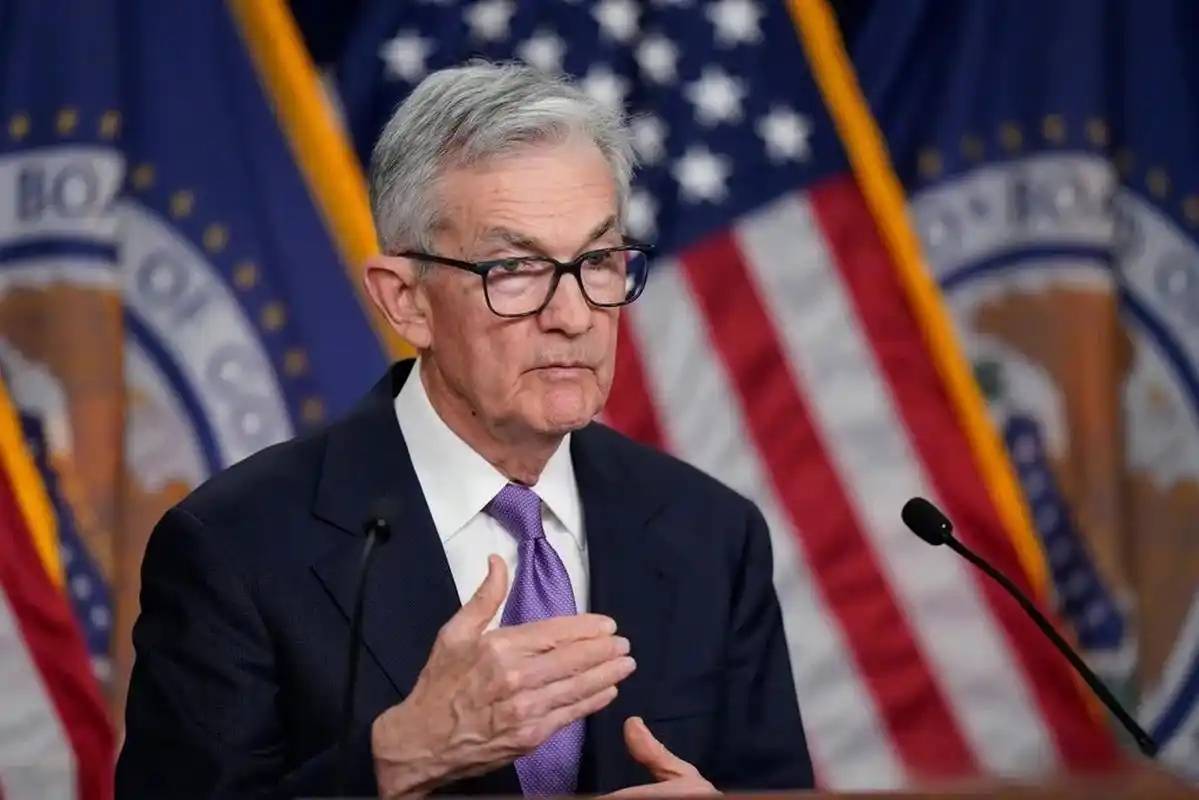
美联储三把手:关税对物价影响为“一次性” 当前利率将稳定就业和通胀
智通财经网· 2026-01-13 01:43
他周一在为纽约市对外关系委员会(CFR)活动准备的演讲稿中表示:"货币政策目前已具备良好条件,可 以支持劳动力市场的稳定,并使通胀回归 FOMC 2% 的长期目标。" 智通财经APP获悉,纽约联储主席约翰·威廉姆斯表示,目前的利率水平已处于"有利位置",足以稳定劳 动力市场,并将通胀率带回美联储 2% 的目标。 对于特朗普政府征收的进口关税,威廉姆斯认为这对价格的影响"很大程度上"将是一次性的。他预计通 胀率将在今年上半年达到 2.75% 至 3% 的峰值,随后全年的通胀率将降至 2.5% 以下。他补充说,经济 将继续以高于趋势的速度增长。 威廉姆斯指出,在联邦公开市场委员会(FOMC)去年降息 75 个基点后,美国央行双重使命所面临的风险 已达到"更好的平衡"。 多位政策制定者对持续存在的价格压力表示担忧,因为通胀率保持在美联储目标上方已近五年。根据 12 月会议纪要,在当时的利率决议中,部分官员对降息 25 个基点持"微妙平衡"的支持态度,并表示他 们很容易被说服转而维持利率不变。 威廉姆斯是众多表示美联储可以负担得起"等待更多数据后再考虑是否再次降息"的联储官员之一。根据 12 月发布的最新经济预测,政 ...
金荣中国:美司法部发起多鲍威尔调查,金价大幅走高再度收涨
Sou Hu Cai Jing· 2026-01-13 01:35
Market Overview - International gold prices saw a significant increase on January 12, opening at $4,518.58 per ounce, reaching a high of $4,627.49, a low of $4,513.08, and closing at $4,621.30 [1] Economic Outlook - New York Fed President Williams projected a healthy U.S. economy in 2026, indicating no reason for interest rate cuts in the short term. He stated that current monetary policy is well-positioned to support labor market stability and help inflation return to the 2% target [2] - Williams expects GDP growth this year to be between 2.5% and 2.75%, with the unemployment rate stabilizing and then declining in subsequent years. He anticipates inflation pressures peaking between 2.75% and 3% in the first half of the year, averaging 2.5% for the year, and returning to 2% by 2027 [2] Federal Reserve Investigation - Treasury Secretary Mnuchin expressed dissatisfaction regarding the investigation into Fed Chair Powell, suggesting it could negatively impact financial markets. He indicated that Powell's position is now more secure than before [4] - Former Fed Chair Yellen criticized the investigation as undermining the Fed's independence, expressing surprise at the market's lack of concern. She firmly stated that Powell would not commit perjury [5] - UBS Chief Economist Donovan noted that the investigation could ultimately strengthen the Fed's independence, as market concerns about political interference in rate management are rising [5] Geopolitical Developments - President Trump announced a 25% tariff on goods from countries conducting business with Iran, which is intended to increase pressure on the Iranian government. This move may temporarily reduce the likelihood of U.S. military intervention in Iran [6] - The White House emphasized that diplomacy remains the preferred approach, although military options are still on the table if necessary [6] Protests in Iran - Protests against rising prices and currency devaluation have occurred in Iran, leading to unrest and casualties. However, reports indicate that the situation in Tehran has stabilized, with improved public order [7] Gold ETF Holdings - The SPDR Gold Trust, the largest gold ETF, increased its holdings by 6.24 tons, bringing the total to 1,070.8 tons [7] Market Sentiment - The probability of a 25 basis point rate cut by the Fed in January is at 5%, while the probability of maintaining the current rate is at 95%. By March, the cumulative probability of a 25 basis point cut rises to 26% [7]
固收-债市利空加速出尽
2026-01-13 01:10
Summary of Key Points from the Conference Call Industry Overview - The conference call primarily discusses the bond market dynamics and monetary policy implications for 2026, highlighting the current state of the fixed income sector and its future outlook. Core Insights and Arguments 1. **Market Sentiment and Yield Curve** The current market shows an expansion of term premium, reflecting an increase in risk appetite, but the loose monetary policy limits further expansion of term premium. The yield curve is expected to remain steep, but the extent will be limited [1][3]. 2. **Initial Market Performance in 2026** The bond market experienced a "black opening" at the beginning of 2026, with significant increases in long-term rates. The 10-year government bond yield hovered around 1.9%, while the 30-year yield surpassed 2.3%, marking new highs since 2025. This led to a steepening of the yield curve, creating an inverted U-shape [2]. 3. **Factors Behind the "Black Opening"** The "black opening" was influenced by three main factors: a rebound in risk appetite from the equity market, unmet expectations for monetary easing, and the continuation of a previous trend where bonds did not rise despite falling stock prices [4]. 4. **Future Monetary Policy Outlook** Despite pessimism regarding monetary easing, the central bank is expected to maintain low social financing costs. Rate cuts are anticipated, which will support the bond market and alleviate current pressures [5]. 5. **Impact of Risk Appetite on Market Trends** The temporary shock from the rebound in risk appetite has been fully priced in and is not expected to lead to a systemic increase in yield levels. The fundamental situation has not reversed, suggesting that yields will return to normal levels after this temporary phase [6]. 6. **Current Market Sentiment Drivers** The pessimistic market sentiment is primarily due to the absence of monetary easing, high proportions of long-term bonds in local debt issuance plans, and increased issuance sizes of 10-year government bonds, raising concerns about supply pressure [7]. 7. **Potential for Future Rate Cuts** If policy rates continue to decrease, it could create trading opportunities. Given the significant prior declines, there may be substantial room for bond price increases, with limited potential for large upward movements in yields [8]. 8. **Inflation Expectations** Current inflation expectations are driven more by short-term trading factors, with commodity price increases not affecting most categories significantly. This reflects a pessimistic trading sentiment in the bond market rather than a long-term trend [9]. 9. **Local and National Debt Issuance Plans** The high proportion of long-term bonds in local debt issuance and increased sizes of 10-year government bonds have raised supply concerns. However, these factors are considered scattered and not sufficient to conclude that supply pressure will significantly increase [10]. 10. **Assessment of Yield Increase Potential** Future yield increases are unlikely to be substantial based on comparisons with investment returns and other financial indicators. Current metrics suggest that there is significant resistance to further yield increases, indicating that the impact of risk appetite will be temporary [11].
贵金属:贵金属日报2026-01-13-20260113
Wu Kuang Qi Huo· 2026-01-13 00:59
1. Report Industry Investment Rating - No relevant content found 2. Core Viewpoints - If the silver price stabilizes, it will continue a new upward trend, and the driving force for the gold price remains strong. The large holdings of silver ETFs will keep the available inventory of London silver at a low level. The silver premium in India has significantly rebounded at the beginning of the year, and the new silver mortgage regulations will take effect in April. It is expected that India's silver imports in the first quarter will significantly increase, providing strong support for the spot demand for silver. Therefore, the upward driving force for the silver price still exists. The current strategy is to focus on the support levels of gold and silver prices around the BCOM and tariff adjustment nodes and conduct buy-on-dips operations after the short - term negative factors end. The reference operating range for the main contract of Shanghai gold is 970 - 1100 yuan/gram, and for the main contract of Shanghai silver is 16870 - 22000 yuan/kilogram [2] 3. Summary by Related Contents 3.1 Market Quotes - On January 13, 2026, Shanghai gold rose 1.31% to 1030.26 yuan/gram, and Shanghai silver rose 7.23% to 21268.00 yuan/kilogram. COMEX gold was reported at 4608.80 US dollars/ounce, and COMEX silver was reported at 85.16 US dollars/ounce. The yield of the 10 - year US Treasury bond was 4.19%, and the US dollar index was 98.90 [1] - The US federal prosecutor announced a criminal investigation into the current Federal Reserve Chairman Powell, which has greatly impacted the Fed's independence. If Powell resigns under pressure, the new Fed Chairman will start a fast - paced easing cycle, which has strongly boosted the prices of gold and silver [1] 3.2 Key Data of Gold and Silver - **Gold**: COMEX gold's closing price (active contract) on January 12, 2026, was 4608.80 US dollars/ounce, up 2.00% from January 9; the trading volume was 28.19 million lots, up 42.36%; the position was 48.81 million lots, up 1.30%; the inventory was 1129 tons, unchanged. LBMA gold's closing price was 4612.95 US dollars/ounce, up 2.65%. SHFE gold's closing price (active contract) was 1026.28 yuan/gram, up 1.97%; the trading volume was 42.21 million lots, up 58.40%; the position was 33.34 million lots, up 4.65%; the inventory was 97.65 tons, unchanged; the settled funds were 54.747 billion yuan, an inflow of 6.71%. AuT + D's trading volume was 57.43 tons, up 77.11%; the position was 187.67 tons, up 1.27% [5] - **Silver**: COMEX silver's closing price (active contract) on January 12, 2026, was 85.16 US dollars/ounce, up 6.72% from January 9; the position was 15.32 million lots, down 2.64%; the inventory was 13607 tons, down 0.51%. LBMA silver's closing price was 84.07 US dollars/ounce, up 7.59%. SHFE silver's closing price (active contract) was 20945.00 yuan/kilogram, up 11.82%; the trading volume was 247.48 million lots, up 8.31%; the position was 71.48 million lots, up 5.44%; the inventory was 649.64 tons, up 4.74%; the settled funds were 40.422 billion yuan, an inflow of 17.90%. AgT + D's trading volume was 411.21 tons, up 33.37%; the position was 3042.48 tons, down 0.61% [5] 3.3 Market Structure and Spread - **Gold**: The near - far month structure of COMEX gold, the spread between London gold spot and COMEX gold continuous one, the near - far month structure of Shanghai gold, and the spread between Au(T + D) and Shanghai gold continuous one are presented in relevant charts [21][23] - **Silver**: The near - far month structure of COMEX silver, the spread between London silver and COMEX silver continuous one, the near - far month structure of Shanghai silver, and the spread between Ag(T + D) and Shanghai silver continuous one are presented in relevant charts [34][36] - **Internal - External Spread**: On January 12, 2026, the SHFE - COMEX spread of gold was - 11.41 yuan/gram (- 50.89 US dollars/ounce), and the SGE - LBMA spread was - 4.65 yuan/gram (- 20.76 US dollars/ounce). The SHFE - COMEX spread of silver was 2099.91 yuan/kilogram (9.37 US dollars/ounce) [49]