
反内卷

Search documents
兴证策略张启尧团队:本轮躁动行情有哪些潜在启动信号?
Xin Lang Cai Jing· 2025-12-21 10:30
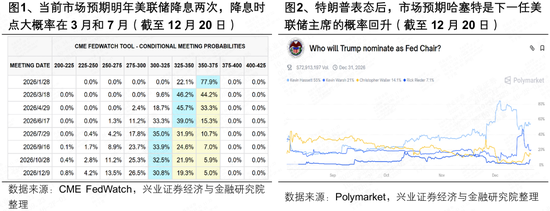
Group 1 - The market is experiencing increased volatility since December, reflecting a series of important events impacting liquidity and fundamental expectations, leading to a cautious and speculative sentiment among investors [1][27] - The recent Federal Reserve meeting and the domestic Central Economic Work Conference have set a more favorable overall tone than market expectations, laying a good foundation for a potential market rally [1][32] - The U.S. employment and inflation data released this week did not trigger further pessimism, instead providing more room for the Fed to consider further easing, with the November unemployment rate slightly rising and CPI data significantly below expectations [1][30] Group 2 - Japan's recent interest rate hike of 25 basis points did not lead to the anticipated liquidity shock from carry trade unwinding, as market expectations were already priced in [4][30] - The Bank of Japan's governor indicated that further data would be needed before making additional rate decisions, suggesting a cautious approach moving forward [4][30] - The convergence of various international events affecting liquidity expectations, combined with a supportive domestic policy environment, is expected to shift investor behavior from cautiousness to actively seeking opportunities [6][32] Group 3 - Historical patterns indicate that market rallies often require a catalytic event, with potential signals for the current rally categorized into three types: strong macro policy shifts, year-end market performance stabilization, and early-year market dynamics [7][33] - The current market conditions align with the second category, where strong performance throughout the year leads to a rally after year-end disturbances are resolved [7][33] - Key indicators to watch for potential rally signals include the possibility of interest rate cuts and improvements in fundamental data such as PPI, PMI, and corporate earnings forecasts [17][19] Group 4 - The investment strategy should focus on sectors benefiting from economic recovery and supportive policies, particularly in cyclical industries and new consumption trends [20][22] - High-growth sectors such as AI, renewable energy, and advanced manufacturing are expected to lead the market rally, supported by favorable liquidity conditions and risk appetite [24][22] - The market is anticipated to transition from a balanced style to favoring small-cap and technology growth sectors as the rally progresses [18][24]

年终报道∣车企在激烈厮杀中告别2025,未来竞争更残酷
Zhong Guo Ji Jin Bao· 2025-12-21 10:00
Core Insights - The competitive landscape of the Chinese automotive market is rapidly changing, with new leaders emerging and traditional giants facing challenges [2][3] - The shift from a price war to a "value war" is evident, as companies seek to differentiate themselves beyond just pricing strategies [2][5] - The reduction of subsidies for new energy vehicles (NEVs) is expected to intensify competition between fuel and electric vehicles [2][8] Group 1: Market Dynamics - In the first half of 2025, BYD narrowly maintained its position as the leading domestic automaker, with automotive revenue only exceeding SAIC Group by 8.17 billion [3] - BYD's sales have been declining since July 2025, with monthly sales dropping by 15.63%, 14.29%, 15.89%, 24.11%, and 26.81% year-on-year [3] - Leap Motor has emerged as the new leader among new car manufacturers, leading in delivery volumes for nine consecutive months [3][4] Group 2: Competitive Strategies - The automotive industry is transitioning towards a "反内卷" (anti-involution) approach, focusing on sustainable competition rather than price wars [5][6] - Major automakers have committed to reducing payment terms to suppliers to no more than 60 days, contrasting with some companies that had terms exceeding 120 days [6] - Companies are increasingly recognizing the importance of ecosystem collaboration, with GAC Group emphasizing deep co-creation with partners like Huawei [6] Group 3: Future Outlook - The introduction of a reduced purchase tax for NEVs starting January 1, 2026, is expected to shift the market dynamics from policy-driven growth to market-driven growth [8] - The penetration rate of NEVs in China reached 47% in the first 11 months of the year, with expectations of further growth [8] - Industry leaders predict a "survival of the fittest" phase in 2026, where only companies with stable strategies and strong foundations will thrive [9]





年终报道∣车企在激烈厮杀中告别2025,未来竞争更残酷
中国基金报· 2025-12-21 09:52
Core Viewpoint - The competition among automotive companies in China is intensifying, with significant shifts in market leadership and strategies as they transition from price wars to value-based competition [2][6]. Group 1: Market Dynamics - In 2025, the leading position among domestic automotive companies is unstable, with BYD narrowly maintaining its top spot over SAIC Group by only 81.70 billion yuan in revenue [3]. - BYD's sales have been declining, with monthly sales from July to November 2025 showing year-on-year decreases of 15.63%, 14.29%, 15.89%, 24.11%, and 26.81% respectively [3]. - The new leader among new car manufacturers is Leap Motor, which has led in delivery volumes for nine consecutive months [4]. Group 2: Industry Trends - The automotive industry is undergoing a critical transition towards electrification and smart technology, with product lifecycles shortening to "half-year updates and annual redesigns" [5]. - The concept of "fast-moving consumer products" is becoming prevalent in the automotive sector, making it difficult for companies to maintain long-term advantages with just a few successful models [5]. Group 3: Competitive Strategies - The price war that characterized the first half of 2025 has shifted to a "反内卷" (anti-involution) approach, focusing on sustainable competition and value creation [7][10]. - Companies are now emphasizing ecological cooperation and deep collaboration with technology partners to enhance their competitive edge [10]. Group 4: Future Outlook - The reduction of the new energy vehicle purchase tax starting January 1, 2026, is expected to shift the market dynamics from policy-driven growth to market-driven growth [12]. - The penetration rate of new energy vehicles reached 47% in the first eleven months of the year, with projections indicating a steady increase in market share by 5% to 10% in 2026 [12][15]. - The automotive industry is anticipated to enter a "finals" phase, where only companies with stable strategies and strong foundational capabilities will survive [15][16].

硅铁、锰硅产业链周度报告:硅铁、锰硅产业链周度报告-20251221
Guo Tai Jun An Qi Huo· 2025-12-21 08:53
硅铁&锰硅产业链周度报告 资料来源:Mysteel、iFInd、国泰君安期货研究所 2 资料来源 Mysteel 、iFInd国泰君安期货研究所 : ◼ 本周合金价格走势震荡偏强,主要受到宏观与基本面双重作用影响。上周"反内卷"或使得市场交易情绪对低估值品种再度袭来,叠加合金端的供 应变动及煤焦板块对合金盘面的情绪冲击,使得价格走势偏强,但大厂对盘套保意愿显现,叠加需求短期偏弱迹象仍存,盘面高度或有压力 。 ◼ 宏观:国内:中央经济工作会议进一步明确了明年经济工作的方向和任务: ①传统稳增长领域,重新释放了诸多稳增长信号,超出市场预期 ②在 物价方面,在多个领域提到涉及物价或反内卷方面的工作,显示政策重视的态度;海外:美联储如期再降息25基点。 ◼ 微观:铁水产量继续走弱,对原料需求支撑偏弱,当前锰硅基本面矛盾继续累积,硅铁减产缓解前序压力,仍需注意炉料供应端生产节奏的变动。 ◼ 本周合金端,成本均表现坚挺,供应环比走弱,硅铁减产力度较大,使得市场交易供应预期收紧情绪较强,但上升力度有限,需关注盘面回升后利 润修复,或使得宁夏地区大厂生产节奏存在变动;锰硅端,锰矿需求维持,海外矿企1月报价环比抬升,港口锰矿价 ...
螺纹钢、热轧卷板周度报告-20251221
Guo Tai Jun An Qi Huo· 2025-12-21 08:46
Report Industry Investment Rating - No relevant information provided Report's Core View - Expected boost has led to a rebound in steel prices [3] Summary Based on Related Catalogs 1. Macro - environment - Overseas: Interest rates were cut as scheduled in December, releasing liquidity [5][9] - Domestic: The Central Economic Work Conference re - emphasized "anti - involution", and state - owned enterprises were required to resist "involution - style" competition, creating a generally warm macro - environment. Policy expectations were reignited, and coking coal near the cost line rebounded rapidly [5][8] 2. Black Industry Chain - The industry is in a pattern of weak supply and demand. Demand has entered the off - season, steel inventories are high, seasonal maintenance has increased, and hot - rolled coil inventory reduction is difficult, suppressing the overall rebound height of steel prices. Negative feedback dominates the industrial logic [5][13] 3. Rebar (Thread Steel) 3.1 Basis and Spread - Last week, the Shanghai rebar spot price was 3300 (+30) yuan/ton, the 01 - contract price was 3120 (+38) yuan/ton. The 01 - contract basis was 180 (-8) yuan/ton, and the 01 - 05 spread was 1 (-21) yuan/ton [20] 3.2 Demand - New - home sales remained at a low level, indicating low market confidence. Second - hand home sales remained high, showing the existence of rigid demand. Land transaction area also remained low [24] 3.3 Supply and Inventory - MS weekly data showed low supply and demand, and healthy inventory. The short - and long - process production and inventory data presented different trends [27][28] 3.4 Production Profit - Last week, the rebar spot profit was 159 (+13) yuan/ton, and the main - contract profit was 197 (-33) yuan/ton. It is expected that after the Spring Festival, production will resume, and the main - contract profit will shrink [33] 4. Hot - rolled Coil 4.1 Basis and Spread - Last week, the Shanghai hot - rolled coil spot price was 3270 (+30) yuan/ton, the 01 - contract futures price was 3276 (+36) yuan/ton. The 01 - contract basis was - 6 (-6) yuan/ton, and the 01 - 05 spread was 7 (-1) yuan/ton [38] 4.2 Demand - Demand from the home appliance and automobile industries was poor, and the peak season was not prosperous. After January 1st next year, new steel export regulations will be implemented, restricting "paid - for" exports. In the short term, there will be an increase in rush - to - export, resulting in a stronger near - term and weaker far - term price spread [39][40] 4.3 Supply and Inventory - MS weekly data showed high hot - rolled coil inventory, and production cuts were being made to reduce inventory [45][46] 4.4 Production Profit - Last week, the hot - rolled coil spot profit was - 35 (+12) yuan/ton, and the main - contract profit was 197 (-55) yuan/ton. It is expected that after the Spring Festival, production will resume, and the main - contract profit will shrink [51] 5. Variety Spread Structure - The report presented data on spreads such as Shanghai cold - hot spread, Shanghai coil - rebar spread, Shanghai medium - plate hot - rolled coil spread, etc. over different time periods [53][54] 6. Variety Regional Difference - Data on regional price differences of rebar, wire rod, hot - rolled coil, cold - rolled coil, etc. were provided, including differences between cities like Hangzhou, Beijing, Guangzhou, Shanghai, and Tianjin [62][63][65] 7. Cold - rolled Coil and Medium - plate - Data on the supply, demand, and inventory of cold - rolled coil and medium - plate were presented, including seasonal data on total inventory, production, and apparent consumption [68]
证监会挺忙!一周两次“喊话”深化改革,稳预期下2026年A股如何演绎?
Hua Xia Shi Bao· 2025-12-21 06:39
本报(chinatimes.net.cn)记者王兆寰 北京报道 近日,在中央经济工作会议结束后的一周里,监管层着实忙碌,一周两次对外发声,从传达学习会议精 神,到研究部署,最后到组织专家座谈听取资本市场"十五五"规划编制和2026年资本市场工作的意见建 议。 中国证监会主席吴清指出,证监会将持续深化资本市场投融资综合改革,稳步扩大制度型高水平对外开 放,持续提高资本市场制度包容性吸引力,更好服务经济高质量发展和中国式现代化大局。 南开大学金融发展研究院院长田利辉在接受《华夏时报》记者采访时表示,2026年深化资本市场改革 是"十五五"实体经济提质的关键抓手,对A股核心是"筑基赋能"。 田利辉指出,改革将聚焦"三提升":提升市场稳定性,完善基础制度与监管机制,减少非理性波动;提 升包容性,推进注册制改革向纵深发展,让创新企业更便捷上市;提升吸引力,优化投资者结构,吸引 长期资金入市。 田利辉认为,短期以改革信号稳预期、降波动,中期通过制度优化提升标的质量、引入中长期资金,长 期将夯实市场韧性。 提高制度包容性吸引力 2025年12月召开的中央经济工作会议指出,做好2026年经济工作要坚持稳中求进工作总基调,纵深 ...

明年看好四大投资主题!摩根大通刘鸣镝:消费板块 估值有吸引力
Zheng Quan Shi Bao· 2025-12-21 00:17
Core Viewpoint - Morgan Stanley's Liu Mingdi highlights four major investment themes for 2026, indicating significant upside potential for key indices in China and Hong Kong [1][2]. Investment Themes - The four key investment themes for 2026 are: "anti-involution," growth in global AI infrastructure spending, the positive impact of developed countries' easing policies on exports, and the "K-shaped" recovery in consumption benefiting food and beverage and ultra-premium sectors [3][4]. Market Outlook - Liu's team has been optimistic about the MSCI China and CSI 300 indices since January 2025, predicting continued upward trends into 2026, with target levels set at 100 points for MSCI China, 5200 points for CSI 300, and 16000 points for MSCI Hong Kong, representing potential increases of approximately 22%, 13.5%, and 17.8% respectively [2][3]. Sector Analysis - The semiconductor sector is viewed as having high valuations, while sectors such as photovoltaics and energy storage are favored for investment [4][5]. - The "anti-involution" theme is expected to benefit industries with strong income prospects, such as batteries and renewable energy, as well as cyclical sectors closely tied to the macroeconomy [6][7]. Consumer Sector Insights - Current consumer spending is constrained more by confidence and employment concerns rather than a lack of funds, with disposable income growth outpacing consumption growth in most provinces [7]. - The MSCI China Consumer Staples Index has the lowest price-to-earnings ratio compared to markets like India, suggesting a favorable valuation for essential consumer goods [7].
赵伟:2025年经济运行的转折性变化与政策思考——基于宏微观温差视角的分析
申万宏源宏观· 2025-12-20 16:03
Core Viewpoint - The article discusses the significant turning points in China's economy for 2025, highlighting the weakening of the "scar effect" post-pandemic, the diminishing impact of tariff conflicts, the reduced marginal drag from real estate adjustments, and the improved integration of short-cycle frameworks with long-term reform directions [4][5][8]. Group 1: Turning Points in Economic Operation - The impact of the post-pandemic "scar effect" is significantly weakening, as evidenced by improved travel data and a divergence between core CPI and PPI trends [5][6]. - The influence of tariff conflicts on China's economy is diminishing, with exports showing resilience and an improved structure of export goods, indicating a new phase of domestic transformation and upgrading [6][7]. - The marginal drag from real estate adjustments on economic growth is expected to weaken, with new construction leading investment growth and a shift in the housing market dynamics favoring new homes [7][8]. - The integration of short-cycle frameworks with long-term reform directions has improved, with a robust policy system focusing on high value-added production and human-centered demand management [8][9]. Group 2: Recent Economic Indicator Weakness - The decline in investment growth since mid-year is not attributed to a single industry but shows significant regional differentiation, partly due to the "crowding out effect" from accelerated debt reduction efforts [10][11]. - The implementation of "debt clearance" policies has also affected investment funds, creating a similar "crowding out effect," although this is expected to strengthen the microeconomic foundation in the long run [11][12]. - Some regions report insufficient project reserves, which has impacted current investment performance, but this is anticipated to improve in the upcoming planning year [12]. Group 3: Policy Recommendations Based on Macro-Micro Temperature Difference - The phenomenon of "macro-micro temperature difference" has become more pronounced, indicating a disconnect between macroeconomic indicators and micro-level experiences, which is essential for understanding policy directions [13][14]. - Restoring corporate profitability and increasing household income levels are critical policy directions to address the economic cycle issues, emphasizing the need for policies that consider micro-level incentives [15][16]. - Recommendations include focusing on improving residents' income, increasing leisure time, creating favorable consumption environments, and providing quality products, rather than relying solely on leveraging consumption [16].

2026年投资策略展望:或跃在渊
Tebon Securities· 2025-12-20 13:56
Market Review - The current bull market has transitioned from a "narrative bull" to an "industry bull," marked by significant policy actions on September 24, which initiated a notable upward trend in the A-share market [5][13][15] - The introduction of DeepSeek's AI model in January 2025 ignited enthusiasm in the domestic AI sector, leading to a substantial increase in the AI index, which saw a maximum rise of 126.08% by December 10, 2025 [5][16] Sector Performance - The AI sector has been a major driver of market performance, with the AI index experiencing a maximum increase of 34.75% from January to March 2025, and a year-to-date increase of 126.08% [5][16] - The robotics sector is expected to see significant growth, with a maximum index increase of 90.72% by December 10, 2025, driven by policy support and new product launches [5][18] - The "new consumption" sector, represented by companies like Pop Mart and others, has shown remarkable growth, with maximum increases of 329.18% and 366.05% respectively, fueled by technological strength and cultural expression [5][19] - The innovative pharmaceuticals sector has also benefited from policy incentives, with a maximum index increase of 121.79% by December 10, 2025, driven by significant business development transactions [5][20] - The cyclical sector has seen an overall increase of 28.8% from July to November 2025, supported by anti-involution policies and improvements in supply chains for new energy sectors [5][23] Economic and Policy Environment - The macroeconomic outlook for 2026 suggests a stable overall economy with a focus on quality and efficiency, transitioning from "promoting stability through progress" to "enhancing quality and efficiency" [5][4.2] - The liquidity environment is expected to remain supportive, with a moderate easing of monetary policy and a net inflow of funds primarily from long-term investors [5][4.3] - The geopolitical landscape is characterized by a shift in major power dynamics, with the U.S. adopting a more selective approach in its foreign policy, particularly towards Latin America [5][4.1]



南华期货PX-TA产业周报:良好预期推高估值-20251220
Nan Hua Qi Huo· 2025-12-20 13:42
南华期货PX-TA产业周报 ——良好预期推高估值 戴一帆(投资咨询资格证号:Z0015428 ) 研究助理:周嘉伟(期货从业资格证号:F03133676) 交易咨询业务资格:证监许可【2011】1290号 2025年12月20日 第一章 核心矛盾及策略建议 1.1 核心矛盾 PTA在四季度以来的减产程度超出前期市场预期,目前表现出的高度自律也让PX-TA的结构性矛盾大幅 缓解。后续从供需结构上来看,2026上半年PTA静态对下游需求维持紧张格局,但随着去库与加工费修复预 期兑现,存量装置仍随时可能回归,因此PTA加工费预期中枢上移但空间较为有限,而最终去库情况同样需 要视PTA的减产力度而定。但抛开中间PX-TA-聚酯的动态平衡,而直接从PX对聚酯来看,PX当前已处于"能 开尽开"的状态,一季度预计随聚酯淡季小幅累库,而二季度则将大幅紧缺,上半年整体维持紧张格局。总体 而言,PX的良好供需格局确定性较高,当供需后续出现超预期的情况价格弹性将被大幅放大,从而引发向上 的流动性行情。在市场一致看好预期下预计保持易涨难跌,但当前尚未出现核心驱动,多配主要出于对格局 看好的考虑。因此后续随着现实端需求负反馈逐步向上传 ...