
关税博弈

Search documents
粤开宏观:中美互降关税:为何要降?还有哪些没解决?未来会如何?
Yuekai Securities· 2025-05-12 13:29
证券研究报告 | 宏观深度 2025 年 05 月 12 日 投资要点 分析师:罗志恒 执业编号:S0300520110001 电话:010-83755580 邮箱:luozhiheng@ykzq.com 分析师:马家进 执业编号:S0300522110002 电话:13645711472 邮箱:majiajin@ykzq.com 研究助理:孙文婷 邮箱:sunwenting1@ykzq.com 近期报告 《【粤开宏观】本轮物价低迷与前两轮有何 不同:特征、原因和应对》2025-05-11 《【粤开宏观】新一轮一揽子金融政策:重 现 924 及增量举措》2025-05-07 《【粤开宏观】"内卷式"竞争:风起何方? 《【粤开宏观】博弈视角看"关税战":特 朗普的意图与各经济体的不同反应》 2025-04-27 《【粤开宏观】政治局会议释放的七大信 号》2025-04-25 宏观研究 【粤开宏观】中美互降关税:为何要 降?还有哪些没解决?未来会如何? 事件 潮归何处?》2025-05-05 5 月 12 日,中国和美国发布《中美日内瓦经贸会谈联合声明》,要点包括: 1)美国将本轮对华加征的 125%的"对等关税 ...
每周投资策略-20250512
citic securities· 2025-05-12 09:49
Group 1: China Market Focus - The report highlights the importance of policy packages in stabilizing market expectations amid trade tensions, with a focus on stocks like Sungrow Power and Heng Rui Pharmaceutical [9][15][22] - The report emphasizes the potential for growth in the energy storage system (ESS) sector, particularly for Sungrow Power, due to increasing demand for grid upgrades in Europe [23] - Heng Rui Pharmaceutical is noted for its strong innovation capabilities, with expectations for record revenue and profit in 2024, driven by a significant share of innovative drug sales [23] Group 2: Japan Market Focus - The report indicates that Japan's economic growth is being hampered by trade wars, with a focus on stable high-dividend stocks [30][32] - The anticipated performance of high-dividend stocks such as KDDI and MS&AD Insurance is highlighted, as they are expected to continue to perform well despite economic uncertainties [41] - The report mentions that if Japan cannot secure tariff reductions from the U.S., it may face significant political risks [41] Group 3: Australia Market Focus - The report discusses the Labor Party's significant election victory and its historical correlation with strong performance in the energy and materials sectors [46][50] - Northern Star and Lynas Rare Earths are identified as key stocks that may benefit from increased demand for resources, particularly in the context of global shifts away from reliance on Chinese supply [56] - The report notes that historically, the Australian stock market has seen an average increase of 7.5% in the year following a Labor victory, with energy and materials sectors performing particularly well [56]


外需预期主导波动,关注迎峰度夏需求改善
Shanxi Securities· 2025-05-12 09:05
Investment Rating - The coal industry maintains a rating of "Synchronize with the Market - A" [1] Core Viewpoints - External demand expectations dominate fluctuations, with a focus on improving demand during the peak summer season [1] - The coal production recovery post-holiday has led to increased supply, while electricity coal demand enters a low season, compounded by tariff disputes affecting external demand expectations [8][81] - The recent monetary policy easing is expected to support the macroeconomic environment, with anticipated continued recovery in coal prices due to the upcoming peak summer demand [8][81] Summary by Sections 1. Coal Industry Dynamic Data Tracking - **Thermal Coal**: Post-holiday inventory has risen, and port coal prices remain weak. As of May 9, the spot reference price for thermal coal in the Bohai Rim was 643 CNY/ton, a weekly change of -2.13% [3][23] - **Metallurgical Coal**: Monetary policy easing has led to increased demand entering the traditional peak season. As of May 9, the price for main coking coal at Jingtang Port was 1320 CNY/ton, a weekly change of -4.35% [4][35] - **Coking Steel Industry Chain**: Downstream operations have improved, stabilizing coking coal prices. As of May 9, the average price for first-grade metallurgical coke at Tianjin Port was 1530 CNY/ton, unchanged from the previous week [5][55] - **Coal Transportation**: Weak coal prices have led to a decline in transportation demand, with the coastal coal transportation price index at 640.35 points, a weekly change of -8.06% [6][65] - **Coal-related Futures**: Tariff disputes dominate expectations, with futures prices for coking coal and coke showing fluctuations [8][70] 2. Coal Sector Market Review - The coal sector has rebounded alongside the broader market but has not outperformed major indices. The CITIC Coal Index closed at 3191.92 points, with a five-day change of +0.97% [7][72] 3. Industry News Summary - A comprehensive financial policy has been implemented to stabilize the market, with the People's Bank of China emphasizing a moderately loose monetary policy to support economic recovery [76][78] - Global thermal coal prices have seen an increase, with a reported rise of 8.8% over eight trading days [78] - The first quarter of 2025 saw a significant increase in coal production in Shanxi Province, with a year-on-year growth of 19.1% [79] 4. Important Announcements from Listed Companies - Announcements from companies such as Anyuan Coal Industry and Meijin Energy regarding management changes and stock pledges have been noted [80] 5. Next Week's Views and Investment Recommendations - The report suggests focusing on undervalued companies with strong performance support, particularly those with low non-coal business ratios such as Xinjie Energy and Zhongmei Energy [81]





“政策预期+风险缓和”短期共振
Sou Hu Cai Jing· 2025-05-12 06:55
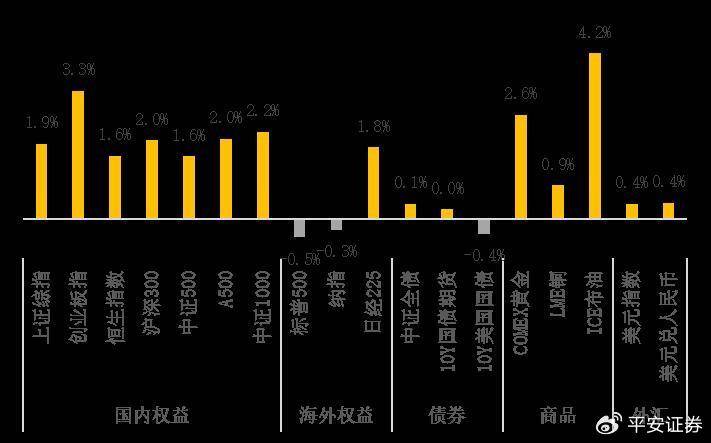
1、市场点评 "政策预期+风险缓和"短期共振(向好趋势不变) 中美谈判达成重要共识,并取得实质性进展,推动风险偏好回暖,市场保持活跃,短期市场震荡回升。 需关注中美12日发布会内容,把握结构性布局窗口机会,放眼中期机遇,杠铃策略占优。 关税博弈:短期超预期,双方同意建立磋商机制,关注发布会内容,中期达成全面协议还需时间。。 国内政策:金融组合拳"稳市场、稳预期",更多体现"托而不举"思路,财政接力成关键。 基本面:关税影响尚未在经济数据中明显体现,Q2仍面临下行压力。 特朗普关税政策或有反复, 5 月是上市公司分红派息窗口期,红利风格仍处布局良机,中长线资金加速 入市,低利率与资产荒背景下,高股息、优质消费龙头深受机构资金青睐,是底仓配置的较优选; 4月财报担忧已释放,TMT等成长板块成交占比回落低位,自主可控逻辑强化,AI产业在资本支出周期 下持续迭代,科技成长板块仍是中期主线。* 2、国内财经要闻 【5月7日】"一行一会一局"(政策加码发力) 5月7日,国务院新闻办公室举行新闻发布会,中国人民银行行长潘功胜、国家金融监督管理总局局长李 云泽、中国证券监督管理委员会主席吴清介绍"一揽子金融政策支持稳市场稳预 ...

全球市场观察系列:关税博弈下的港股与美股
Soochow Securities· 2025-05-12 02:32
Group 1 - The report highlights the increasing macroeconomic uncertainty, with the Federal Reserve signaling a "wait and see" approach, indicating a cautious stance towards inflation and employment data, while trade policy remains a critical variable [2][3] - The U.S. and U.K. have reached a preliminary trade agreement, reducing tariffs on U.K. car imports to a maximum of 10%, which reflects a potential baseline for future negotiations [2] - The report expresses a cautiously optimistic view on the Hong Kong stock market, noting a strong rebound due to new financial policies, but acknowledges ongoing external risks and market volatility [3][5] Group 2 - The U.S. stock market is expected to experience volatility, with the S&P 500 showing signs of pressure despite recovering from previous declines, influenced by trade negotiations and potential earnings pressures [5][6] - The report indicates that the Hong Kong stock market's rebound requires additional capital inflows and sustained policy support, with current inflows primarily from the southbound channel [3][18] - The report notes that global stock and bond ETFs have seen accelerated net inflows, particularly into European markets, while U.S. markets continue to experience net outflows [6][25]
策略周报:关税窗口期应如何博弈?
HWABAO SECURITIES· 2025-05-11 12:23
2025 年 05 月 11 日 证券研究报告 | 策略周报 关税窗口期应如何博弈? 策略周报 分析师:刘芳 分析师登记编码:S0890524100002 电话:021-20321091 邮箱:liufang@cnhbstock.com 分析师登记编码:S0890524080002 电话:021-20321080 邮箱:haoyifan@cnhbstock.com 021-20515355 1、《政治局会议临近,应如何布局?— 策略周报》2025-04-20 2、《关税对 A 股哪些行业影响较大?— 策略周报》2025-04-13 3、《关税迷雾叠加美股震荡,资产应如 何配置?—策略周报》2025-03-30 4、《科技主线重燃,二次上行可期 —策 略周报》2025-03-09 5、《从关税博弈到 AI+突围—策略周 报》2025-02-23 投资要点 分析师:郝一凡 【债市方面】新低后宜适度止盈。央行本周降息 10BP,降息幅度相对有 限,后续预计为应对关税影响,未来仍有降息空间。整体来看,在增量政策出 台前,利率仍有下行创新低的可能,新低或是止盈机会(十年期国债收益率止 盈区间 1.50-1.55%)。债 ...
策略周报:关税窗口期应如何博弈?-20250511
HWABAO SECURITIES· 2025-05-11 10:16
Group 1 - The report highlights the impact of recent tariff negotiations on the A-share market, suggesting that the market sentiment has improved due to expectations of tariff easing and liquidity release from the central bank [3][10][12] - The central bank's recent actions, including a 0.5 percentage point reserve requirement ratio cut and a 10 basis point interest rate reduction, are expected to provide approximately 1 trillion yuan in long-term liquidity, which is anticipated to support market stability [9][10] - The report indicates a shift in focus towards sectors such as low-volatility dividend stocks, banking, and public utilities, while also suggesting potential opportunities in technology and new consumption sectors like tourism and entertainment during market corrections [3][12] Group 2 - The bond market is expected to see further declines in yields, with a target range for ten-year government bond yields set between 1.50% and 1.55%, indicating a favorable outlook for short-term interest rate bonds [3][12] - The report notes that the A-share market's average daily trading volume has increased to 1,353.426 billion yuan, reflecting heightened market activity following the easing of tariff concerns and monetary policy adjustments [20] - The report emphasizes the importance of monitoring upcoming economic indicators, such as the U.S. CPI and China's M2 growth, which could influence market dynamics in the near term [21]
“一揽子金融政策支持稳市场稳预期”发布会点评:从情绪修复到政策组合拳再落地
Guo Tou Qi Huo· 2025-05-08 02:05
Monetary Policy Measures - The People's Bank of China announced a reduction in the reserve requirement ratio by 0.5 percentage points, expected to provide approximately 1 trillion yuan in long-term liquidity to the market[2] - The policy interest rate was lowered by 0.1 percentage points, with the 7-day reverse repurchase rate decreasing from 1.5% to 1.4%, which is anticipated to lead to a similar decline in the Loan Prime Rate (LPR) by about 0.1 percentage points[2] - The interest rate for personal housing provident fund loans was reduced by 0.25 percentage points, with the rate for first-time homebuyers on loans over five years dropping from 2.85% to 2.6%[2] Financial Support Initiatives - A total of 5,000 billion yuan was allocated for "service consumption and pension re-loans" to encourage banks to increase credit support in these areas[2] - The quota for re-loans supporting technological innovation and technical transformation was increased from 5,000 billion yuan to 8,000 billion yuan, with an additional 3,000 billion yuan allocated for supporting agriculture and small enterprises[2] - The combined use of 5,000 billion yuan for securities fund insurance company swaps and 3,000 billion yuan for stock repurchase loans was established to support capital market stability[2] Regulatory Adjustments - The Financial Regulatory Administration plans to introduce eight new policies aimed at financing and investing in real estate, foreign trade, small and private enterprises, and technological innovation[3] - Insurance funds' long-term investment pilot scope will be expanded, with an additional 60 billion yuan approved to inject more funds into the market[3] - The risk factor for stock investments by insurance companies will be reduced by 10%, encouraging greater market participation[3] Market Outlook - The overall policy measures are expected to enhance market confidence, stabilize economic growth, and promote healthy market development, with some policies exceeding market expectations[4] - The impact of tariff negotiations between China and the U.S. on the domestic economy will need to be monitored, particularly regarding the effectiveness of these policies in countering negative effects[4] - The bond market is anticipated to stabilize, with a focus on the timing for entering positions as the market recovers from previous declines[7]
博时基金王祥:国际金价波动加剧,贸易战走向扰动市场风险偏好
Xin Lang Ji Jin· 2025-05-07 07:37
Core Viewpoint - The international gold market experienced increased volatility due to trade war developments, significantly impacting gold prices and market risk appetite [1][2][3] Market Dynamics - Gold prices exhibited a V-shaped trend from April 28 to May 5, initially declining before rebounding, influenced by changing risk preferences amid tariff negotiations [1] - Following a rapid increase in April, gold prices require time for consolidation, with recent headwinds emerging from signals of easing tensions from the Trump administration and better-than-expected U.S. economic data [1][3] - The U.S. GDP contracted by 0.3% in Q1, marking the lowest growth rate in nearly three years, while personal consumption expenditures rose by 1.8% [3] Trade Relations and Economic Indicators - The U.S. and Ukraine reached agreements on resource development, which initially boosted market sentiment, but subsequent trade negotiations with Japan and China faced setbacks, reigniting concerns over trade tensions [2] - The U.S. labor market showed mixed signals, with April non-farm payrolls increasing by 177,000, surpassing expectations, but previous months' data were significantly revised downward [3] Currency Movements - Asian currencies appreciated during the May Day holiday, with the New Taiwan Dollar reaching a 22-month high, and the Hong Kong dollar rebounding within its trading range [4] - The Hong Kong Monetary Authority intervened in the market, indicating a significant capital flow [4] Investment Opportunities - The BoShi Gold ETF and its linked funds provide investors with exposure to gold prices through investments in Shanghai Gold Exchange contracts, enhancing investment options for gold [4]
一季度债市信用风险新特征与关注点:多空博弈之下,债市风险知多少?
Zhong Cheng Xin Guo Ji· 2025-05-06 11:10
Group 1: Report's Investment Rating for the Industry - No information provided Group 2: Core Viewpoints of the Report - In the context of effectively preventing risks in key areas, the bond default risk in the future market will remain under control. However, due to the complex international situation and domestic economic challenges, five types of risks need attention: changes in the fundamentals and risk evolution of export - oriented enterprises under tariff games, uncertainties in debt repayment during the mergers and reorganizations of real - estate enterprises, uncertainties faced by traditional industries during transformation and upgrading, risks of delisting or market fluctuations of convertible bond issuers due to weakened fundamentals, and potential impacts on the solvency of some small and medium - sized financial institutions from multiple risk factors [4][20]. - In Q1 2025, the credit risk in the bond market was generally controllable, with a decrease in the number of new defaulting entities and low - level fluctuations in the rolling default rate. The risk differentiation continued, with private enterprises' risks being continuously cleared. The default exposure of real - estate enterprises slowed down, but they remained the main entities for bond extensions. Negative rating actions decreased, and the progress of default disposal was slow [4]. Group 3: Summary by Relevant Catalogs Review: Five Characteristics of Bond Market Credit Risk in Q1 1. Decrease in the Number of New Defaulting Entities and Low - Level Fluctuations in the Rolling Default Rate - In Q1, the bond market default risk was generally controllable. There were 3 new defaulting issuers, 1 less than the same period last year. The new default scale was 41.28 billion yuan. The monthly rolling default rate in the public offering market first rose and then fell, reaching 0.25% at the end of March, the same as at the end of 2024 [4]. 2. Continued Risk Differentiation and Continuous Clearance of Private Enterprises' Risks - Support policies for private enterprises have been upgraded this year, but the transmission has a time - lag. In Q1, the credit bond financing scale of private enterprises was limited, with issuance less than 140 billion yuan, accounting for about 3% of credit bonds, and a net outflow of nearly 1.6 billion yuan. The 3 new defaulting entities in Q1 were all private enterprises, and the scale of bond extensions by private enterprises was 5.687 billion yuan, accounting for 92% of the total [9]. 3. Slowdown in the Exposure of Real - Estate Enterprises' Defaults, but They Remained the Main Entities for Extensions, and Tail Risks Were Still Being Cleared - In Q1, the default release of real - estate bonds slowed down significantly, with no new defaulting entities. The scale of bond extensions by real - estate enterprises was 5.659 billion yuan, accounting for over 90%. As of now, the cumulative scale of real - estate bond extensions is nearly 200 billion yuan, about 65% of the bonds have been extended again or multiple times, and 27% of the extended bonds defaulted [12]. 4. Decrease in Negative Rating Actions, and All Entities with Downgraded Levels Were Convertible Bond Issuers - From January to March, there were 17 rating actions in the bond market, including 10 downgrades of issuer levels, 1 less than the same period last year. The 7 entities with downgraded levels were all convertible bond issuers, mainly due to weakened profitability, losses, and legal issues [16]. 5. Ordered Progress of Default Disposal, but Slow Progress in Substantive Repayment - In Q1, the disposal of defaulted bonds progressed in an orderly manner. The reorganization application of Shanshan Group was accepted by the court, and the reorganization plan (draft) of Contemporary Technology passed the vote of the creditor's meeting. As of the end of March 2025, the scale of bonds with disclosed completed disposal accounted for 19.2% of the total defaulted bonds, and the proportion of bonds that completed repayment or were delisted was only 16.9% [19]. Outlook: Default Risks Are Stable and Controllable under the Risk - Prevention Tone, and Five Types of Risks Need Local Attention 1. Pay Attention to the Possibility of Fundamental Changes and Risk Evolution of Export - Oriented Enterprises under Tariff Games - Under the current intensified tariff game, domestic export - oriented enterprises face multiple pressures such as rising costs and shrinking market shares. Exchange - rate fluctuations also affect their earnings. Small and medium - sized export enterprises are at higher risk, and industries such as machinery, textiles, and chemicals need attention [20]. 2. Pay Attention to the Uncertainty of Debt Repayment Caused by Derivative Risks during the Mergers and Reorganizations of Real - Estate Enterprises - As of the end of March 2025, the real - estate bond stock was about 1.57 trillion yuan, nearly 20% less than at the end of 2020. However, with the increase in industry concentration, some real - estate enterprises may face mergers, reorganizations, or liquidation, and the risks during the debt - resolution process need attention [21]. 3. Pay Attention to the Uncertainties Faced by Traditional Industries during Transformation and Upgrading - In the trend of industrial upgrading, traditional industries may face challenges such as shrinking demand and technological innovation. For example, traditional automobile dealers are affected by the direct - sales model of new - energy vehicles. The risk of traditional industries being squeezed out of the market needs to be highly concerned [22]. 4. Pay Attention to the Risks of Delisting or Market Fluctuations of Convertible Bond Issuers due to Weakened Fundamentals - Since 2025, the financial delisting rules have become stricter. About 46% of convertible bond issuers that disclosed annual performance forecasts expect losses in 2024. There is a risk of delisting and market fluctuations, and the uncertainty of repayment due to delisting or price drops needs to be vigilant [23]. 5. Pay Attention to the Potential Impacts on the Solvency of Some Small and Medium - Sized Financial Institutions from Multiple Risk Factors - Small and medium - sized financial institutions have experienced risk events in recent years. Multiple risk factors such as regional economic pressure, industry fluctuations, and their own operational weaknesses may affect their bond repayment ability. Attention should also be paid to the risks during mergers, reorganizations, and market exits [24].