降息预期

Search documents
黄力晨:黄金短线回调修正 仍有再次冲高机会
Sou Hu Cai Jing· 2026-02-24 23:52
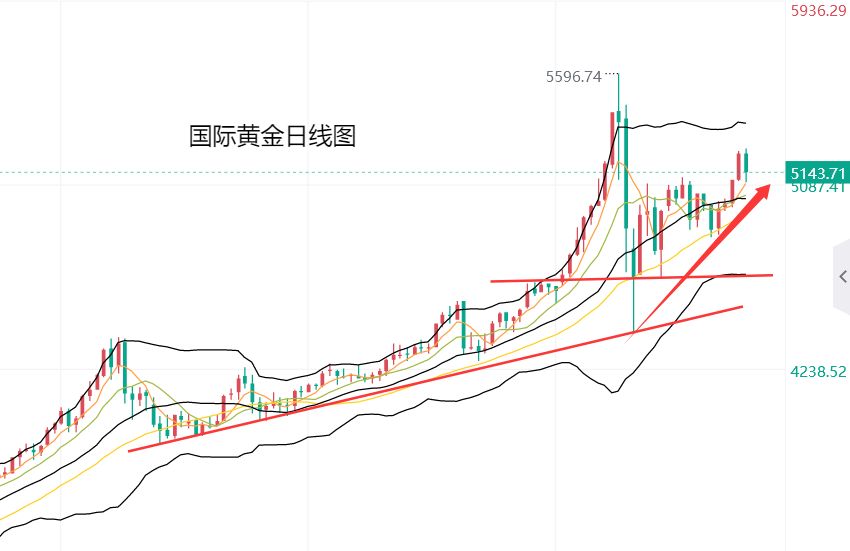
Core Viewpoint - The recent geopolitical tensions in the Middle East, particularly the heightened risk of military conflict between the U.S. and Iran, have led to increased market risk aversion, supporting a rise in gold prices, which reached a new high for the month [1][2]. Price Movements - Gold prices surged to a new high of $5249 but faced resistance, leading to a significant drop of nearly $80 to $5145 before stabilizing [1]. - Following this, gold experienced another decline of about $60, reaching $5092, before rebounding to $5173, indicating a high-level fluctuation [1][4]. Market Influences - The recent increase in gold prices was influenced by several factors, including profit-taking by investors after a substantial short-term rise, which intensified selling pressure [2]. - The U.S. Supreme Court's rejection of comprehensive tariffs and the announcement of a temporary 10% tariff alternative reduced extreme policy uncertainty, weakening safe-haven buying [2]. - Anticipation of U.S.-Iran negotiations on the 26th has also contributed to a decrease in safe-haven demand, as no immediate military action occurred as previously speculated [2]. Technical Analysis - The daily chart indicates that gold is currently experiencing high-level fluctuations, with support levels at $5090 and $5020, while resistance is noted at $5200 and $5260 [4]. - Technical indicators suggest a need for adjustment after a series of increases, with the 5-day moving average showing a slight golden cross and MACD indicators also indicating a mild bullish trend [4]. Future Outlook - Despite the recent pullback, the overall long-term trend for gold remains bullish, supported by expectations of interest rate cuts, geopolitical tensions, and central bank gold purchases [2][4]. - The market is advised to adopt a range-bound trading strategy, monitoring support and resistance levels closely for potential rebounds [4].

张尧浠:关税担忧加剧避险情绪 金价转强维持看涨上行
Xin Lang Cai Jing· 2026-02-24 11:57
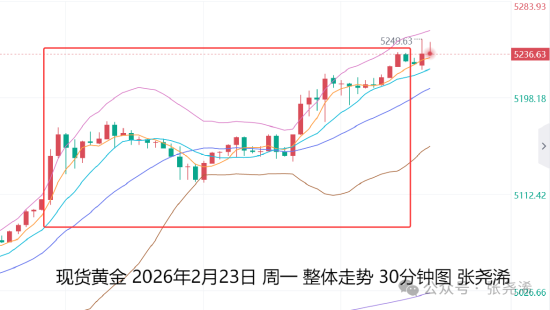
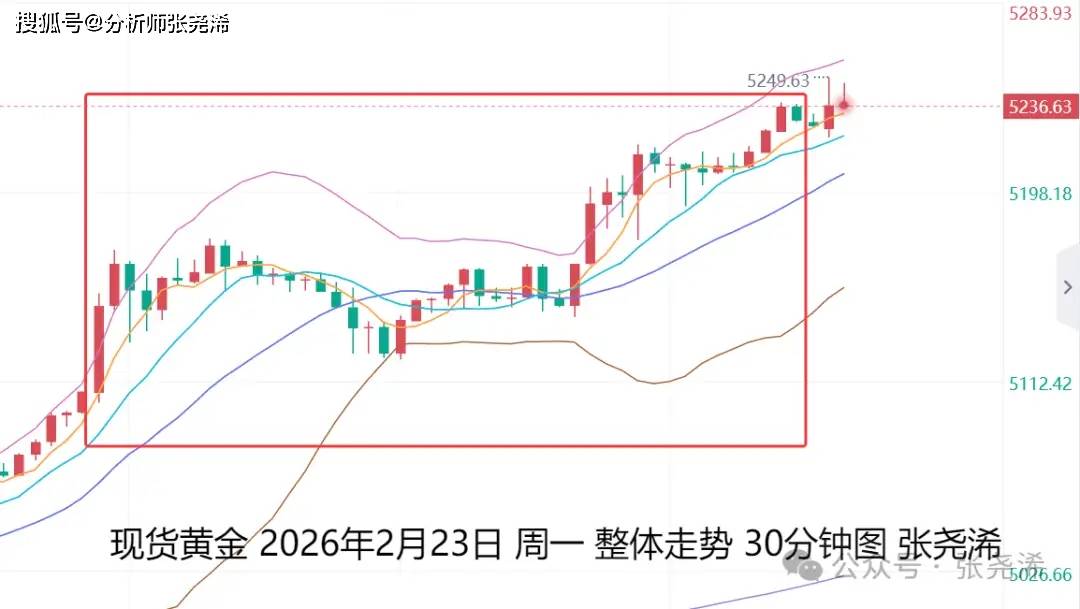
2月24日:上交易日周一(2月23日):国际黄金继续反弹走强收阳,特朗普宣布将临时关税上调至 15%,带动了避险需求,令其保持在中轨及短期均线上方运行,虽然主图ZZ指标显示反弹触顶,有回 落风险,但附图指标转强,主图各均线也多头排列,基本面也未有持续且较大的利空因素,故此,如有 回落,下方关注各均线支撑,也是继续入场看涨的机会。 周图级别,金价自之前深度触底回升后,一直保持着上移趋势,同时,也维持着牛市趋势,目前也在不 断收复回撤空间,前景上,也将进一步刷新高点。下方则将继续依托5周或者10周均线支撑进行看涨反 弹。 具体走势上,金价自亚市开于5106.96美元/盎司,便先行录得日内低点5102.18美元,之后反弹走强后, 陷入区间震荡,并在美盘时段,多头再度发力,连续反弹上行,于盘尾触及日内高点5237.65美元,并 最终持稳收于5227.40美元,日振幅 135.47美元,收涨120.44美元,涨幅2.36%。 展望今日周二(2月24日):国际黄金开盘仍偏强运行,虽然在地缘局势方面,特朗普释放美伊局势缓 和信号:更倾向协议而非战争。但美媒表示美军将领警告对伊朗动武风险极高,易陷长期冲突,这进一 步加剧了地 ...
【百利好黄金专题】降息概率下降 黄金宽幅震荡
Sou Hu Cai Jing· 2026-02-24 06:41
值得注意的是,地缘政治风险仍可能成为推动黄金价格上涨的催化剂。近期美伊谈判迟迟未能取得突破,美军向中东地区增派 军舰,使得地区局势日趋紧张,避险资金对黄金配置需求随之上升。此外,美国关税政策的不确定性导致通胀回落节奏慢于市 场预期,黄金的对抗通胀属性因此被激活,这为金价提供了坚实的支撑。 今年开年黄金价格呈现加速上涨态势,一度攀升至近5600美元的高位,然而上月底却出现大幅回调,随后黄金市场进入宽幅震 荡格局。此轮波动主要源于美联储降息预期显著降温,叠加前期高位获利盘集中了结,共同导致金价大幅回落,多空双方陷入 胶着状态。 降息概率骤降 关注重心后移 降息概率的大幅下滑成为黄金价格回落并陷入震荡的关键因素。去年年底,市场普遍预期今年将继续实施降息政策,但1月美联 储会议纪要释放出鹰派信号,加之特朗普新提名的美联储主席此前的言论明显偏向鹰派,这两重因素共同促成了黄金价格的显 著下跌。 月中公布的美国1月非农就业数据全面超越市场预期,充分彰显了美国就业市场的强劲韧性,这极大地削弱了市场对上半年降息 的预期。据CME美联储观察工具显示,3月降息25个基点的概率仅为5.9%,而6月累计降息25个基点的概率也仅有49. ...

未知机构:光大宏观假期海外地缘局势动荡全球权益市场多数上涨港股能源半导体软件表-20260224
未知机构· 2026-02-24 04:25
Summary of Key Points Industry Overview - The report discusses the global equity markets, highlighting that most markets experienced an increase despite geopolitical tensions during the holiday period. The Hong Kong stock market showed strong performance in sectors such as energy, semiconductors, and software [1][2]. Core Insights and Arguments - There is a notable divergence in commodity prices, with gold, silver, and oil all rising. However, the strengthening of the US dollar has put pressure on the Hong Kong stock market [1][2]. - The appreciation of the Chinese yuan and the visit of former President Trump to China have contributed to an overall increase in risk appetite in the equity markets following the holiday [1][2]. Additional Important Content - The strong inflation and economic data from the US are creating challenges for interest rate cut expectations, leading to volatility in short-term interest rate trading [2].
综合晨报-20260224
Guo Tou Qi Huo· 2026-02-24 03:36
1. Report Industry Investment Ratings No relevant content provided. 2. Core Views - During the Spring Festival, international oil prices continued to rise, with Brent and WTI crude oil reaching new highs since August 2025. Geopolitical risks, especially the tense situation between the US and Iran, are the main drivers of the oil price increase. The next two weeks will be a critical window for the situation, and geopolitical factors will continue to dominate the oil market [1]. - Precious metals showed strong performance during the Spring Festival. With the US - Iran negotiation making no substantial progress and the possibility of US strikes on Iran, the strength of precious metals may continue in the short - term [2]. - For most commodities, the market is affected by various factors such as geopolitical risks, supply - demand relationships, and seasonal patterns. Some commodities are expected to have price fluctuations, while others are likely to maintain a range - bound trend [3][4][5]. 3. Summary by Commodity Categories Energy Commodities - **Crude Oil**: During the Spring Festival, international oil prices rose significantly. Geopolitical risks, especially the tense US - Iran situation, are the main factors. The next two weeks are crucial for the situation, and oil prices will be dominated by geopolitical factors [1]. - **Fuel Oil & Low - sulfur Fuel Oil**: Due to the sharp rise in geopolitical risks between the US and Iran during the festival, oil prices soared. Fuel oil is expected to follow the upward trend. High - sulfur fuel oil is strongly supported by geopolitical factors, while low - sulfur fuel oil is relatively weak and mainly follows the trend of crude oil [21]. - **Asphalt**: International oil prices strengthened during the holiday, and asphalt is expected to start a catch - up rise on the first trading day after the festival. The asphalt market has a pattern of weak supply and demand, and its price follows the trend of crude oil [22]. Metal Commodities - **Copper**: LME copper prices were basically the same as before the holiday. During the domestic holiday, investment and physical demand were weak, and copper prices fluctuated. Copper inventories increased, and the copper market may strengthen the positive market structure. There is a risk that the unilateral copper price will adjust to the MA60 moving average to attract buyers [3]. - **Aluminum**: LME aluminum had limited fluctuations and a slight increase during the Spring Festival. After the festival, Shanghai aluminum is expected to have high - level oscillations. Attention should be paid to the inventory accumulation, demand recovery, and the impact of the US - Iran situation on the supply side [4]. - **Zinc**: LME zinc had high - level oscillations during the festival, with limited guidance for Shanghai zinc. After the festival, Shanghai zinc has weak rebound momentum due to short - term oversupply, but strong cost support. It is expected to oscillate between 24,000 - 25,000 yuan/ton. In the long - term, the oversupply situation remains, and the recovery of TC can be regarded as an opportunity for short - selling at high levels [7]. - **Lead**: The decline of LME lead slowed down near the cost line. After the festival, domestic lead prices are at a low level. Downstream purchases may increase, and recycled lead production has decreased. However, due to the opening of the import window, demand lacks an increase expectation. Shanghai lead is expected to have low - level oscillations between 16,500 - 17,500 yuan/ton [8]. - **Nickel & Stainless Steel**: Shanghai nickel is expected to open higher and then oscillate on the first trading day. During the holiday, the external market was generally strong, and factors such as the US tariff policy and economic data affected the market [9]. - **Tin**: LME tin had a slight increase compared to before the holiday and basically oscillated. The internal and external tin prices are supported by the MA60 moving average. LME tin inventories continued to increase slightly during the festival, and the spot discount narrowed. Tin prices are expected to continue to oscillate, and attention should be paid to the resumption of supply in the main production areas [10]. - **Carbonate Lithium**: Carbonate lithium still has optimistic sentiment in the short - term and is expected to have a strong - biased oscillation. The external market was strong during the holiday, and factors such as the US tariff policy and economic data are favorable [11]. - **Industrial Silicon**: Before the holiday, industrial silicon rebounded slightly after breaking through the previous low. After the holiday, it is expected to continue to oscillate. The supply side may see the resumption of production of large factories in Xinjiang, while the downstream demand is weak, and the social inventory is at a high level [12]. - **Polysilicon**: During the Spring Festival, spot trading was stagnant. Before the holiday, polysilicon futures had a slight increase and narrowed fluctuations. Although there is cost support, the market is expected to maintain an oscillating trend due to factors such as production reduction and inventory accumulation [13]. Ferrous Metals - **Steel (Thread & Hot - rolled Coil)**: During the Spring Festival, the external market generally rose, while the domestic spot market was on holiday. The demand for steel decreased, and the inventory accumulated. Due to factors such as poor steel mill profits and weak downstream demand, the iron - water output remained at a relatively low level. With the improvement of the financial market sentiment, the steel price has a certain rebound momentum after the festival [14]. - **Iron Ore**: During the holiday, overseas iron ore swaps weakened. The supply is relatively strong, and the market is worried about oversupply. Although the demand is expected to improve marginally, the supply pressure is greater, and the price is still under pressure [15]. - **Coke & Coking Coal**: During the holiday, the increase in oil prices may have an indirect impact on the black - series commodities. The inventory of coke increased slightly, and the purchasing willingness of traders was average. The carbon element supply is abundant, and the downstream demand is in the off - season. The prices of coke and coking coal are expected to oscillate in a range [16][17]. - **Manganese Silicon**: The increase in oil prices during the holiday may have an indirect impact. The spot price of manganese ore increased slightly, and the downward space of the disk is relatively small. The inventory of manganese ore in ports may start to increase slowly, and the demand side is at a seasonal low level. The price is affected by oversupply and policy expectations [18]. - **Silicon Ferrosilicon**: The increase in oil prices during the holiday may have an indirect impact. Some production areas have a decrease in power costs, and the demand side is at a low level. The export demand is stable, and the supply changes little. The price is affected by oversupply and policy expectations [19]. Chemical Commodities - **Urea**: During the Spring Festival, the supply of urea remained at a high level, and production enterprises are expected to accumulate inventory seasonally. With the increase in temperature, the demand for agricultural fertilizer preparation is expected to start, and the production enterprises are expected to reduce inventory after the festival. The short - term market is likely to oscillate and rebound [23]. - **Methanol**: The overseas methanol plant operating rate remains low, and the import volume is expected to decrease after the Spring Festival. The coastal MTO plant operating rate is low, and attention should be paid to the profit repair and restart expectations after the festival. The traditional downstream will resume work one after another, and the inventory in the inland and ports is expected to decrease [24]. - **Pure Benzene**: The instability of the US - Iran situation provides support for the cost of pure benzene. The supply during the Spring Festival is relatively high, and the inventory in the East China port is expected to remain at a high level. The downstream demand is expected to improve, and the port inventory may decrease slowly [25]. - **Styrene**: The increase in international oil prices during the holiday boosted the cost of styrene, and it may open higher. However, the supply is expected to increase significantly after the festival, while the downstream demand recovery needs time, and the fundamental contradiction is intensified [26]. - **Polypropylene & Plastic**: The increase in international oil prices during the holiday may boost the opening price after the festival. However, due to the inventory accumulation of polyolefin petrochemical enterprises during the Spring Festival and the slow recovery of downstream production enterprises, the fundamental contradiction is intensified [27]. - **PVC & Caustic Soda**: The PVC industry is in the seasonal inventory accumulation stage. The cost support is strengthened, and the demand for export is strong. The price is expected to rise. The profit of caustic soda has declined significantly, and the cost support is strengthened. The supply may decrease, and the price is expected to operate near the cost [28]. - **PX & PTA**: The strong oil price provides cost support. PX has new capacity in the second half of the year, while PTA has none. In the first half of the year, it is advisable to take a long position. Based on the PX maintenance and polyester production increase expectations in the second quarter, opportunities for long - term PX processing spreads and positive spreads after the decline of the month - spread can be considered [29]. - **Ethylene Glycol**: Ethylene glycol is under long - term pressure due to new capacity, but the supply is expected to shrink, and the downward space is limited. In the second quarter, the supply - demand situation may improve due to centralized maintenance and increased demand [30]. - **Short - fiber & Bottle - grade Chips**: Before the holiday, the production of short - fiber and bottle - grade chips decreased, and the inventory was at a low level. After the holiday, the production is expected to increase. Attention should be paid to the terminal production resumption and inventory preparation rhythm [31]. Agricultural Commodities - **Soybean, Soybean Meal & Rapeseed Meal**: During the Spring Festival, US soybeans continued to be strong. The export and crushing data were good, which boosted the price. The supply - demand balance sheet for the 26/27 US soybean season shows a tightening supply - demand structure [35][37]. - **Soybean Oil, Palm Oil & Rapeseed Oil**: During the Spring Festival, US soybean oil and Malaysian palm oil continued to be strong. The increase in the price of US RIN has a strong driving effect on US soybean oil. The supply - demand balance sheet for the 26/27 US soybean season shows a tightening structure. The short - term upward movement of palm oil has resistance. The export of Canadian rapeseed has improved, and attention should be paid to the policy orientation [36]. - **Corn**: During the Spring Festival, the US is expected to plant less corn in 2026. The US corn futures price oscillated during the holiday. In China, some enterprises in the Northeast started purchasing after the Spring Festival. The trading volume of Dalian corn futures may increase, and attention should be paid to risks [38]. - **Pigs**: After the Spring Festival, the average price of live pigs decreased compared to before the festival. The supply in the spot market is sufficient, and the futures price is expected to continue to weaken. Attention should be paid to the implementation of the pig production capacity reduction logic in the medium - term [39]. - **Eggs**: After the Spring Festival, the egg price decreased slightly. Considering the expected decline in supply in spring, there is a possibility of the futures price continuing to strengthen. It is recommended to go long on the near - month contract at a low price [40]. - **Cotton**: During the Spring Festival, US cotton was strong. The global supply in the 25/26 season is relatively loose, but there is an expectation of supply contraction in the 26/27 season. The domestic cotton market has a good sales situation, and the medium - term Zhengzhou cotton price may be strong [41]. - **Sugar**: During the holiday, US sugar oscillated. In the international market, India's sugar production increased, while Thailand's production was lower than expected. In the domestic market, the market focus is on the expected difference in production. Although the production in Guangxi is currently slow, there is a strong expectation of production increase in the 25/26 season [42]. - **Apples**: The futures price oscillated. The cold - storage trading volume decreased, and the market focus is on the demand side. The high purchase price and the strong reluctance to sell of traders and fruit farmers may affect the inventory reduction speed [43]. - **Wood**: The futures price is at a low level. The supply is expected to decrease in the short - term, and the demand has declined. The low inventory provides certain support, and it is advisable to wait and see for the time being [44]. - **Paper Pulp**: The domestic paper pulp port inventory is still at a high level. The overseas quotation is strong, providing cost support, but the demand is average. The downstream paper mills are cautious about high - price raw material inventory, and attention should be paid to the demand performance after the festival [45]. Financial Products - **Stock Index**: Before the long holiday, A - share major indexes fell by more than 1%, and stock index futures were all at a discount. During the Spring Festival, the Hong Kong stock market was strong, while the overseas stock markets fell. There are uncertainties in trade policies and geopolitical situations. After the festival, the market may maintain a strong - biased oscillation, and attention should be paid to the performance of the technology - growth and cyclical sectors [46]. - **Treasury Bonds**: On February 13, 2026, the treasury bond futures showed a differentiated trend. The long - term contracts are over - priced, and the central bank's bond - buying has not ended, with a strong willingness to maintain the capital market. The TL06 contract has a certain safety margin for long - position trading, and it is appropriate to participate in the unilateral trading of TL or flatten the yield curve [47].
未知机构:天风金属从今日港股有色板块大涨谈谈假期间有色行业需要更新的几件大事和最新观点2-20260224
未知机构· 2026-02-24 03:25
Summary of Key Points from the Conference Call Industry Overview - The focus is on the non-ferrous metals sector, particularly in the context of the Hong Kong stock market's performance on February 23, 2023, where the Hong Kong Non-Ferrous Metals Index rose by 4.51% [1][1][1] - The overall sentiment in the market is driven by geopolitical factors and tariff responses, with precious metals leading the gains, followed by basic and new energy metals [1][1][1] Core Insights and Arguments Precious Metals - Gold and precious metals are viewed as the strongest performers, with notable increases in stock prices: Tongguan Gold +12%, Chifeng Gold +7%, Zijin Mining International +6%, and China National Gold +6% [2][2][2] - Key drivers include geopolitical risk, gold price recovery, central bank purchases, and expectations of interest rate cuts [2][2][2] New Energy Metals - Lithium and new energy metals are also performing well, with Ganfeng Lithium +8% and Tianqi Lithium +3% [2][2][2] - Factors contributing to this include ongoing inventory depletion, positive demand expectations, and valuation recovery in the sector [2][2][2] Basic Metals - Basic metals like copper and aluminum are following the upward trend, with significant gains from companies such as Minmetals Resources +6% and Jiangxi Copper +4% [2][2][2] - The positive outlook is attributed to a pause in tariff disruptions, rising oil prices, economic recovery expectations, and a weaker dollar [2][2][2] Tariff Policy Changes - On February 20, 2023, the U.S. Supreme Court ruled that previous tariffs imposed by Trump were illegal, leading to the cancellation of approximately $170 billion in tariffs [2][2][2] - A new temporary tariff of 15% on global imports was announced, effective February 24, 2023, for a duration of 150 days, which could impact industrial metals positively while having a neutral effect on precious metals [2][2][2] Geopolitical Tensions - The escalation of U.S.-Iran tensions is noted, with potential sanctions and military actions that could increase demand for safe-haven assets like gold [3][3][3] - The situation is expected to raise inflationary pressures due to increased shipping costs, further benefiting precious metals [3][3][3] Sector-Specific Updates Copper Sector - Major mining companies are revising their production guidance downward due to operational challenges, with Anglo American reducing its 2026 production forecast to 700,000-760,000 tons [7][7][7] - The global supply growth forecast for 2026 has been adjusted down to 2%, indicating a significant supply gap of over 600,000 tons [7][7][7] Lithium Demand - Lithium demand is projected to continue rising, with inventory levels dropping significantly and a notable agreement between Tianhua and PLS for lithium supply [7][7][7] - The agreement highlights the scarcity of lithium resources and the importance of securing supply for major manufacturers [8][8][8] Aluminum Industry - The Mozal aluminum plant is set to transition to maintenance mode by March 15, 2026, which will significantly impact production levels [9][9][9] - Century Aluminum announced an early restart of its Icelandic aluminum plant, which could reduce expected production cuts for 2026 [13][13][13] Additional Insights - The SPDR gold holdings have increased, reflecting a rise in gold prices during the holiday period, with gold reaching $5,173 per ounce and silver increasing by 14.15% [8][8][8] - The U.S. economic data remains mixed, with expectations of two interest rate cuts within the year, which could further influence market dynamics [8][8][8]
张尧浠:关税担忧加剧避险情绪、金价转强维持看涨上行
Sou Hu Cai Jing· 2026-02-24 00:32
Core Viewpoint - The article discusses the strengthening of gold prices driven by increased risk aversion due to tariff concerns and geopolitical tensions, suggesting a bullish outlook for gold in the near term [1][5]. Market Performance - On February 23, gold opened at $5106.96 per ounce, reached a low of $5102.18, and then rebounded to a high of $5237.65, closing at $5227.40, marking a daily increase of $120.44 or 2.36% [3]. - The volatility for the day was $135.47 [3]. Geopolitical Factors - Trump's announcement of a temporary tariff increase to 15% has heightened risk aversion, leading to increased demand for gold [1][5]. - Despite signals of easing tensions between the U.S. and Iran, warnings from U.S. military leaders about the risks of conflict suggest that geopolitical risks will continue to support gold prices [3][5]. Economic Policy - The article notes that recent U.S. economic data has not significantly impacted interest rate cut expectations, with the Federal Reserve's leadership likely to favor low interest rates, which could support gold prices in the medium to long term [6]. - The potential for new national security tariffs on six industries by the Trump administration is expected to further increase market uncertainty and drive investment into gold [5]. Technical Analysis - Monthly and weekly charts indicate that gold prices are maintaining an upward trend, with support levels at the 5-week and 10-week moving averages [10]. - The article suggests that if gold prices experience a pullback, key support levels to watch are at $5190 or $5120 [11]. Future Outlook - The overall sentiment is bullish for gold, with expectations of continued upward movement and potential new highs throughout the year, driven by geopolitical tensions, tariff policies, and interest rate outlooks [6][8].
假期风云激荡 银价油价飙升!国内期市贵金属稳了?哪些品种将成为“黑马”?
Sou Hu Cai Jing· 2026-02-24 00:08
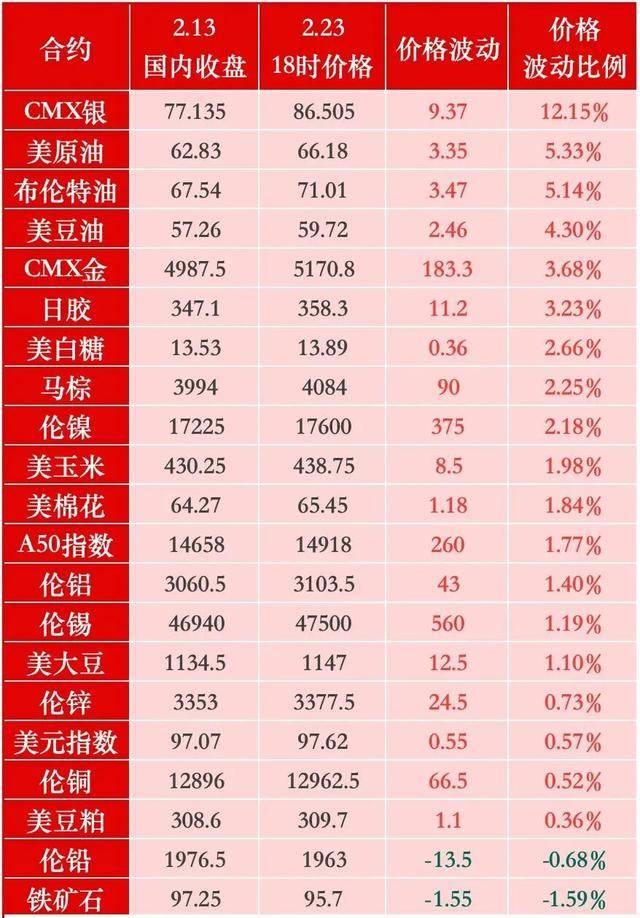
Group 1: Global Market Overview - During the Spring Festival holiday, significant global macro events occurred, including sudden changes in U.S. tariff policies and escalating geopolitical conflicts, leading to substantial price volatility in major assets, which adds uncertainty to the domestic market opening after the holiday [1] - The international market saw notable price fluctuations in various commodities, with silver prices increasing by 12.15%, crude oil prices rising by 5.33%, and gold prices up by 3.68% during the holiday period [2] Group 2: U.S. Federal Reserve and Economic Indicators - The Federal Reserve's internal divisions have intensified, with discussions around interest rate changes indicating possibilities of rate cuts, pauses, or increases, reflecting a complex monetary policy outlook [4] - The latest data from the U.S. Bureau of Economic Analysis shows that the core PCE price index increased by 3.0% year-on-year, which is higher than expected, leading to a reduction in market expectations for rate cuts [4][6] Group 3: Precious Metals and Investment Strategies - The precious metals sector is expected to experience significant price increases, supported by overseas market trends, although high volatility is anticipated due to potential regulatory measures from exchanges [15] - Silver prices have rebounded during the holiday, driven by both financial and commodity attributes, with a notable reduction in short positions in the silver market [11] Group 4: Oil Market Dynamics - Geopolitical risks are identified as the primary driver of global oil price fluctuations, with potential military actions against Iran posing risks to oil supply routes, particularly through the Strait of Hormuz [12][13] - The International Energy Agency's latest report indicates that global oil inventories are increasing at the fastest rate since 2020, suggesting a potential oversupply in the market [14] Group 5: Agricultural Products Outlook - The agricultural sector, particularly commodities like soybean oil and palm oil, has shown significant price increases, with wheat inventories declining for four consecutive years, indicating a potential rebound in wheat prices [15]
【春节节后总结】宏观:多重叙事定价,贵金属偏强走势
Xin Lang Cai Jing· 2026-02-23 09:18
Group 1 - The core narrative during the holiday period was influenced by macroeconomic factors, with precious metals driven by interest rate cut expectations and risk aversion sentiment [3][19] - Initial pressure on precious metals was due to a strong US dollar and adjustments in equity markets, but later rebounds in tech stocks and calming statements from Federal Reserve officials supported precious metal prices [3][19] - The US Supreme Court's ruling against Trump's previous tariff policies led to a weakening of the dollar, which in turn drove precious metals higher [3][19] Group 2 - Key economic data during the holiday included the US GDP growth rate of 1.4% for Q4 2025, significantly below the expected 2.5%, indicating a slowdown primarily due to government shutdowns and reduced consumer spending [4][20] - The US inflation rate remained stubborn, with the PCE price index rising to 2.9% in Q4, while the core CPI fell to 2.5%, the lowest in five years, indicating persistent inflationary pressures [4][20] - The Federal Reserve's statements regarding potential interest rate cuts were tempered by meeting minutes suggesting a willingness to consider rate hikes if inflation remains high, creating uncertainty in the interest rate path [5][21] Group 3 - Concerns over the impact of artificial intelligence on profits across various sectors led to a decline in equity markets prior to the holiday, but the market stabilized during the holiday period with tech stocks rebounding [5][21] - The Supreme Court's decision to overturn Trump's global tariffs fundamentally changed market pricing frameworks, leading to immediate increases in both stock and precious metal prices [6][22] - The geopolitical landscape remains uncertain, particularly with ongoing tensions in the Middle East and the lack of progress in US-Iran negotiations, which has implications for oil prices and market stability [7][23] Group 4 - The overall macro environment during the holiday was characterized by a lack of clear direction, influenced by narratives around interest rates, AI, geopolitical tensions, and trade tariffs, leading to volatility in the dollar and bond yields [8][24] - The market's focus on Trump's tariff narrative and its implications for pricing dynamics contributed to a stronger performance in precious metals, while the overall market remained sensitive to these narratives [8][24] - Upcoming events to watch include market reactions to the global tariff situation, Nvidia's earnings report, and statements from Federal Reserve officials, all of which could impact volatility [8][24]

揭秘!2026年,到底谁在操控黄金白银的过山车行情?
Sou Hu Cai Jing· 2026-02-22 23:22
Core Viewpoint - The precious metals market in 2026 is experiencing extreme volatility driven by geopolitical conflicts, central bank gold purchases, the credibility of the US dollar, and speculative funds, leading to significant price fluctuations in gold and silver [1] Group 1: Four Key Drivers of the Bull Market - The performance of gold is influenced by four key factors: economic expansion, risk and uncertainty, opportunity cost, and momentum, which are currently resonating with unprecedented intensity [3] - Central banks globally are significantly increasing their gold purchases, with net buying for 16 consecutive years and annual purchases exceeding 1,000 tons from 2022 to 2024, indicating a structural shift in gold pricing logic [5] - Emerging market central banks are accelerating "de-dollarization" and viewing gold as a hedge against geopolitical risks and declining dollar credibility, with their gold reserves still having substantial growth potential [5] - The market is currently focused on the Federal Reserve's interest rate cut path, which is expected to influence short-term gold prices, while a long-term trend of dollar depreciation is anticipated [6][9] Group 2: Geopolitical Risks and Supply-Demand Dynamics - Geopolitical risks are becoming a normalized backdrop for the market, with ongoing conflicts like the Russia-Ukraine situation and tensions in the Middle East driving demand for gold as a safe-haven asset [11] - Silver's demand is surging due to its industrial applications in sectors like renewable energy, while supply remains rigid, leading to a structural supply shortage in the silver market [13] - The available silver inventory has decreased significantly, with only about 200 million ounces left in the London market, down 75% from 2019 highs, creating conditions for extreme price volatility [13] Group 3: Short-Term Catalysts for Silver's Surge - The recent 60% surge in silver prices in January can be attributed to a liquidity crisis and speculative funds taking advantage of the low available inventory, leading to price manipulation [14] - Major institutions have increased their net long positions in silver, creating a feedback loop of rising prices and further buying, which has driven the recent price spike [16] Group 4: Future Outlook for Precious Metals - The long-term outlook for precious metals remains optimistic due to ongoing factors like de-dollarization, central bank gold purchases, and persistent geopolitical risks, with some institutions predicting gold could exceed $6,000 and silver could reach $133 [18] - High volatility is expected to be a constant in 2026, with potential for significant price corrections in a strong bull market, necessitating cautious investment strategies [20] - Investors are advised to view gold as a stabilizing asset in their portfolios and to manage risk carefully, especially in light of the current market dynamics [22]