地缘政治风险

Search documents
马斯克凌晨三点发文警告:全球进入大战倒计时!
Sou Hu Cai Jing· 2025-12-19 05:15
Group 1 - Musk stated that war is unavoidable within a time frame of five to ten years, responding to a user's post about nuclear weapons preventing war risks among major powers [1] - His comments sparked widespread discussion online, with many users expressing surprise at his typically optimistic demeanor turning pessimistic [1][3] - Musk's previous remarks on geopolitical tensions, including potential conflicts over Taiwan and the situation in Ukraine, were referenced, indicating a pattern of concern regarding global stability [1][3] Group 2 - Media coverage followed Musk's warning, highlighting the public's anxiety and prompting discussions on global security and geopolitical risks affecting the economy and supply chains [3] - Experts have mixed opinions on Musk's predictions, with some viewing them as speculative while others acknowledge his understanding of technology and global systems [5] - Potential conflict triggers identified include Taiwan issues, US-China military tensions, and social unrest in Europe due to immigration and economic pressures [5]


国投期货综合晨报-20251219
Guo Tou Qi Huo· 2025-12-19 05:05
Report Industry Investment Ratings No relevant content provided. Core Views of the Report - The oil market is affected by geopolitical issues in Venezuela and Russia-Ukraine, with oil prices under pressure before the further fermentation of geopolitical risks [2]. - Precious metals maintain a volatile and upward - trending pattern, and if gold breaks through the historical high, the performance of precious metals is expected to strengthen [3]. - Base metals such as copper, aluminum, zinc, etc. show different trends, with some having short - term adjustment needs and others having medium - term upward trends [4][5][8]. - Chemical products' prices are influenced by factors such as supply - demand relationships, cost, and policies, with varying trends of strength and weakness [12][13][14]. - Agricultural products' prices are affected by weather, supply - demand, and policies, and investors need to pay attention to relevant influencing factors [36][37][38]. - The financial market, including stock index and treasury bond, is affected by macro - economic data, policy expectations, and international market conditions, showing a pattern of volatility and differentiation [47][48]. Summary by Related Categories Energy - **Crude Oil**: Venezuela temporarily avoids the full - scale blockade of US - sanctioned oil tankers, and the oil export business is normal. The US plans a new round of sanctions on the Russian energy industry. Oil prices are under pressure after being priced for the rising geopolitical risks [2]. - **Fuel Oil & Low - Sulfur Fuel Oil**: Geopolitical changes in Russia - Ukraine and US - Venezuela affect fuel oil prices. High - sulfur fuel oil may get short - term support, but there is medium - term supply pressure. Low - sulfur fuel oil may have short - term support but is expected to be weak in the medium term [22]. - **Asphalt**: Venezuela's normal oil export eases the tension of domestic refinery asphalt raw material supply. Asphalt refinery inventory accumulates, and the overall commercial inventory reduction is weak, lacking continuous rebound power [23]. Precious Metals - **Precious Metals**: US November CPI and core CPI fall below expectations. Fed chair candidates think there is room for interest rate cuts. Precious metals maintain a volatile and upward - trending pattern, and gold is testing the resistance at the historical high [3]. Base Metals - **Copper**: Copper prices continue to have a narrow - range oscillation. The domestic copper inventory increases, but there is still potential for a multi - allocation rally at the end of the year, with short - term callback and consolidation [4]. - **Aluminum**: Shanghai aluminum oscillates around 22,000 yuan. The medium - term upward - trending pattern remains unchanged, and short - term long positions can be held with the 40 - day line as support [5]. - **Zinc**: The TC of domestic and foreign mines decreases. Shanghai zinc rebounds after finding support at 22,800 yuan/ton. The short - term is strong, but the medium - term is under pressure [8]. - **Lead**: Shanghai lead oscillates at a low level. The lead concentrate is in short supply, and the cost supports the price. The import window is open, and the overall supply is sufficient, constraining the price [9]. - **Nickel and Stainless Steel**: Shanghai nickel rebounds strongly. Stainless steel spot sales are weak, and the inventory accumulates. Nickel inventory increases, and short - selling on rebounds is recommended [10]. - **Tin**: The tin market follows the domestic market. The market focuses on the expansion of US data center construction funds in 2026, but the growth of photovoltaic production and sales is not optimistic. The inventory increases, and high - level risks should be noted [11]. Chemical Products - **Carbonate Lithium**: Carbonate lithium oscillates at a high level. Overseas mines keep prices firm, and the market inventory decreases. The futures price is strong, and short positions are at a disadvantage [12]. - **Polysilicon**: Polysilicon futures fall below 60,000 yuan/ton. There is a strong expectation of capacity acquisition, but the current reality is weak. The market is expected to oscillate [13]. - **Industrial Silicon**: The main contract of industrial silicon approaches 8,700 yuan/ton. The demand is weak, and the cost support decreases. The increase space is limited [14]. - **PVC & Caustic Soda**: Affected by the macro - sentiment, PVC rises, but the demand is weak. Caustic soda oscillates strongly, but the supply pressure is large [29]. - **PX & PTA**: The price of PX rises strongly, driving PTA up. PX is expected to be strong in the medium term, and PTA follows the cost - driven logic before the Spring Festival [30]. - **Ethylene Glycol**: Some ethylene glycol plants plan to have maintenance, and the supply is expected to shrink. However, it is under long - term pressure due to the planned new plant production [31]. Agricultural Products - **Soybean & Soybean Meal**: South American weather improves, and the market is worried about US soybean exports. Soybean meal prices will follow the oscillation of US soybeans, and waiting for weather changes is recommended [36]. - **Soybean Oil & Palm Oil**: The increase in the frequency of imported soybean auctions brings short - term supply pressure. Overseas palm oil has high - inventory pressure, and short - term supply - demand weakness should be noted [37]. - **Rapeseed & Rapeseed Oil**: Canada raises the rapeseed ending inventory, and the price is under pressure. The focus is on the import policy, and a short - biased strategy is recommended [38]. - **Corn**: Northeast and North Port corn prices decline slightly. The short - term supply - demand mismatch eases, and the Dalian corn futures 03 contract oscillates weakly at a high level [40]. - **Pig**: The pig futures 01 contract hits a new low, and the 03 contract falls. The pre - Spring Festival spot price is slightly strong, but there may be a second bottom - probing after the Spring Festival [40]. - **Egg**: Egg futures contracts fall, and the 03 and 04 contracts after the Spring Festival fall more. The industry fundamentals are gradually improving, and chicken - chick replenishment and old - chicken elimination should be followed [41]. - **Cotton**: US cotton rises slightly, and Zhengzhou cotton oscillates. The new cotton production increases, but the sales progress is fast, supporting the price. It is recommended to wait and see for now [42]. - **Sugar**: US sugar oscillates. India and Thailand have good production expectations. The domestic market focuses on the new - season production, and Guangxi has a strong production - increase expectation [43]. - **Apple**: Apple futures oscillate. The demand enters the off - season, and the market sentiment is bearish [44]. - **Wood**: Wood futures are at a low level. The supply decreases, the demand in the off - season is okay, and the low inventory supports the price. It is recommended to wait and see [45]. - **Pulp**: Pulp prices fall slightly. The port inventory decreases, and the new - year contract has less warehouse - receipt pressure. It is recommended to wait and see or conduct short - term operations [46]. Financial Products - **Stock Index**: A - share index shows mixed performance, and stock index futures fall. The US core CPI hits a three - year low, and the risk preference is boosted. A - shares are supported by the strong RMB and policy expectations, showing an oscillating and differentiated pattern [47]. - **Treasury Bond**: Treasury bond futures rise across the board. Attention should be paid to the impact of US inflation data on interest rate cuts. The domestic market sentiment improves, and the long - end bond recovers significantly [48].
中辉能化观点-20251219
Zhong Hui Qi Huo· 2025-12-19 03:10
1. Report Industry Investment Ratings - Crude oil: Cautiously bearish [1] - LPG: Cautiously bearish [1] - L: Bearish continuation [1] - PP: Bearish consolidation [1] - PVC: Bearish rebound [1] - PX/PTA: Cautiously chase up [3] - Ethylene glycol: Stop profit on short positions [3] - Methanol: Cautiously go long with a light position [3] - Urea: Cautiously chase up [3] - Natural gas: Cautiously bearish [6] - Asphalt: Bearish rebound [6] - Glass: Bearish rebound [6] - Soda ash: Bearish rebound [6] 2. Core Views of the Report - The geopolitical uncertainty and oversupply are pulling the oil price, which is oscillating weakly. The cost - end oil price rebounds in the short - term but is under pressure in the long - term. The demand of various chemical products is weakening or has uncertain expectations, and the inventory situation varies, with some products facing high inventory pressure [1][9][15] 3. Summaries According to Related Catalogs 3.1 Crude Oil - **Market Review**: Overnight international oil prices oscillated weakly. WTI slightly rose by 0.23%, Brent decreased by 0.30%, and SC rose by 0.94% [8] - **Basic Logic**: The Russia - Ukraine geopolitics is developing towards relaxation, while the South American geopolitical uncertainty is rising. The core driver is the oversupply of crude oil in the off - season, with global and US crude oil and refined product inventories increasing [9] - **Fundamentals**: In October, Saudi Arabia's crude oil exports increased to 7.1 million barrels per day. The IEA expects global crude oil demand to increase by 830,000 barrels per day in 2025 and 860,000 barrels per day in 2026. As of the week of December 12, US crude oil inventories decreased by 1.274 million barrels, while gasoline, distillate, and strategic crude oil reserves increased [10] - **Strategy Recommendation**: In the long - term, OPEC+ is expanding production and pressing down prices. The technical and short - cycle trends are weak. The strategy is to increase short positions. Pay attention to SC in the range of [420 - 435] [11] 3.2 LPG - **Market Review**: On December 17, the PG main contract closed at 4,212 yuan/ton, up 0.05% month - on - month. The spot prices in Shandong, East China, and South China were 4,410 (-20) yuan/ton, 4,398 (-10) yuan/ton, and 4,490 (+30) yuan/ton respectively [14] - **Basic Logic**: The price is anchored to the cost - end crude oil. The oil price rebounds in the short - term but is downward in the long - term. The supply and demand side shows that refinery operations are rising, the commodity volume is recovering, and downstream chemical demand is resilient. The inventory of refineries and ports has decreased [15] - **Strategy Recommendation**: In the long - term, the upstream crude oil supply exceeds demand, and the price center is expected to move down. The cost - end rebounds in the short - term but is under pressure in the long - term. The strategy is to hold short positions. Pay attention to PG in the range of [4050 - 4150] [16] 3.3 L - **Market Review**: L05 basis is - 96 yuan/ton, L15 is - 43 yuan/ton, and the number of warehouse receipts is 11,332 [19] - **Basic Logic**: Demand is weakening, and the sharp decline of North China's spot price has led to a significant weakening of the basis. The supply and demand are both weak. The parking ratio has slightly increased to 15%, and the LL weighted gross profit has been compressed to a low level. The supply is still sufficient. The peak season of shed film is ending, and the agricultural film operating rate is declining rapidly. The enterprise inventory has increased slightly, and there is still pressure to reduce inventory [20] - **Strategy Recommendation**: In the short - term, the price is at a low level, and some short positions can stop profit. In the long - term, it is in a high - production cycle. Wait for a rebound to go short. Hold short positions on the LP05 spread. Pay attention to L in the range of [6350 - 6500] [20] 3.4 PP - **Market Review**: PP05 basis is - 80 yuan/ton, PP15 spread is - 77 yuan/ton, and the number of warehouse receipts is 10,534 [22] - **Basic Logic**: Warehouse receipts continue to be cancelled, and high inventory restricts the rebound space. Pay attention to the dynamics of PDH devices. In December, demand is entering the off - season, the parking ratio has dropped to 16%, and there are insufficient maintenance plans in the future. The PDH profit has been compressed to a low level, increasing the expectation of maintenance [23] - **Strategy Recommendation**: Reduce short positions; in the long - term, it is in a high - production cycle. Wait for a rebound to go short. Short the MTO05. Pay attention to PP in the range of [6200 - 6300] [23] 3.5 PVC - **Market Review**: V05 basis is - 280 yuan/ton, and the number of warehouse receipts is 113,074 [26] - **Basic Logic**: The operation rate and inventory have decreased slightly. The inventory of the upper - and middle - reaches is still at a high level, and the domestic and foreign demand is in the seasonal off - season. The contradiction of oversupply is difficult to ease, but the northwest self - supplied calcium carbide process devices are losing cash flow. Pay attention to the device dynamics [27] - **Strategy Recommendation**: In the short - term, partially stop profit on long positions; in the long - term, wait for continuous inventory reduction and try to go long on pullbacks. Industrial customers can hedge at high prices. Pay attention to V in the range of [4600 - 4800] [27] 3.6 PX/PTA - **Market Review**: TA05 price is 4,674 yuan/ton, and the spot price in East China is 4,610 yuan/ton [28] - **Basic Logic**: The processing fee is relatively low. Domestic devices are under planned maintenance with a large intensity. Downstream demand is okay but the expectation is weakening. The cost - end support is weakening. The short - term supply and demand are tight, but there is an expectation of inventory accumulation in January [29] - **Strategy Recommendation**: TA01 is under pressure but has support at the bottom. Pay attention to the opportunity to buy on pullbacks for TA05. Pay attention to TA05 in the range of [4670 - 4850] [30] 3.7 Ethylene Glycol - **Market Review**: EG05 price is 3,627 yuan/ton, and the spot price in East China is 3,602 yuan/ton [31] - **Basic Logic**: The domestic and overseas device operating rates have decreased. Downstream demand is okay but the expectation is weakening. The inventory is expected to accumulate in December. The valuation is low, but there is no upward driver. It fluctuates in the short - term following the cost [32] - **Strategy Recommendation**: Stop profit on short positions; pay attention to the opportunity to short on rebounds. Pay attention to EG05 in the range of [3725 - 3785] [33] 3.8 Methanol - **Market Review**: Taicang spot price is slightly stronger, and the port inventory has decreased month - on - month [36] - **Basic Logic**: The domestic methanol device operating rate has increased to a high level in the same period. Overseas devices have decreased their loads. The import volume in December is estimated to be about 1.3 million tons, and the supply pressure still exists. The demand has slightly weakened. The cost - end support is weakening [36] - **Strategy Recommendation**: Cautiously short, and pay attention to the opportunity to go long on pullbacks. Pay attention to MA05 in the range of [2145 - 2185] [38] 3.9 Urea - **Market Review**: Shandong small - particle urea basis is 85 yuan/ton [39] - **Basic Logic**: The daily output of urea is as high as 199,000 tons. By mid - to late December, the supply pressure is expected to ease. The short - term demand is relatively good but lacks sustainability. The factory inventory has decreased but is still at a high level in the same period. The export has maintained a high growth rate since July. There is a ceiling and a floor for the urea price. The domestic fundamentals are still relatively loose [40] - **Strategy Recommendation**: Cautiously chase up, and pay attention to the opportunity to go long on pullbacks for UR05. Pay attention to UR05 in the range of [1670 - 1710] [42] 3.10 Natural Gas - **Market Review**: On December 17, the NG main contract closed at 4.024 US dollars per million British thermal units, up 3.55% month - on - month [44] - **Basic Logic**: The demand has entered the peak consumption season, but the recent mild weather in the US has reduced the support for gas prices. The supply is relatively sufficient, and gas prices are under pressure [45] - **Strategy Recommendation**: The demand has support during the peak consumption season, but gas prices are under pressure due to sufficient supply. Pay attention to NG in the range of [3.762 - 4.174] [45] 3.11 Asphalt - **Market Review**: On December 18, the BU main contract closed at 2,952 yuan/ton, down 1.99% month - on - month [47] - **Basic Logic**: The price is mainly anchored to the cost - end crude oil. The oil price is weak, and the supply and demand are both weak. The South American geopolitical uncertainty is the main disturbing factor recently, causing a price rebound [48] - **Strategy Recommendation**: The valuation is returning to normal, and there is still about 100 yuan/ton of compression space. The supply is sufficient, and the demand has entered the off - season. Partially stop profit on short positions. Pay attention to BU in the range of [2900 - 3000] [49] 3.12 Glass - **Market Review**: FG05 basis is - 32 yuan/ton, FG15 is - 109 yuan/ton, and the number of warehouse receipts is 1,244 [51] - **Basic Logic**: The number of warehouse receipts has increased, and the factory inventory has ended a three - week decline. High inventory restricts the rebound space. The daily melting volume is stable at 155,000 tons. The profits of the three processes have turned negative. The real estate market is in an adjustment period, and the deep - processing orders are weakening [52] - **Strategy Recommendation**: In the short - term, stop profit on some short positions due to the support of short - term moving averages. In the long - term, wait for a rebound to go short. Pay attention to FG in the range of [1030 - 1080] [52] 3.13 Soda Ash - **Market Review**: SA05 basis is - 43 yuan/ton, SA15 is - 109 yuan/ton, and the number of warehouse receipts is 4,332 [54] - **Basic Logic**: The factory inventory has ended a five - week decline. Short - term supply pressure has been relieved by maintenance, but there is a plan to put into production a 2.8 million - ton device of Yuanxing in late December. The long - term supply will remain loose. The cold - repair expectation of float glass has increased, and the demand support is insufficient [55] - **Strategy Recommendation**: In the short - term, stop profit on short positions due to the support of short - term moving averages. In the long - term, wait for a rebound to go short. Pay attention to SA in the range of [1150 - 1200] [55]
加元窄幅震荡政策分化 油价波动成核心博弈点
Jin Tou Wang· 2025-12-19 02:32
12月19日10时,美元兑加元汇价报1.3778,日内维持窄幅震荡格局,最高触及1.3781,最低下探 1.3768,今开与昨收均为1.3779,日内涨跌幅0.0363%,波动幅度不足0.02%。当前汇价处于多空均衡的 微妙状态,美联储与加拿大央行的政策分化、国际原油价格的持续低迷以及地缘政治风险等因素交织, 共同主导短期汇率走势。 货币政策分化是当前影响美元兑加元走势的核心逻辑之一。美联储方面,理事Christopher Waller重申鸽 派立场,强调将"从容调整政策利率,稳步降至中性水平",市场据此定价美联储1月维持利率不变的概 率升至75.6%。同时,美国11月非农就业数据呈现分化,11月新增岗位超预期但10月数据大幅下修,凸 显劳动力市场降温迹象,进一步强化美元结构性疲软预期,对汇价形成压制。 加拿大央行则维持中性政策基调,本周公布的11月CPI数据录得2.2%,虽略高于2%的政策目标,但整体 持稳的通胀水平缓解了央行收紧政策的压力,也使其相较于美联储更具政策稳定性,为加元提供支撑。 不过,市场仍存在对加拿大央行明年一季度降息的预期,若国际油价持续低迷压制出口,可能加速宽松 进程,进而削弱加元韧性。 ...
供需面进一步宽松,运费中枢下移
Guo Tai Jun An Qi Huo· 2025-12-18 13:13
1. Report Industry Investment Rating No relevant industry investment rating information provided in the report. 2. Core Viewpoints of the Report - In 2026, it is highly likely that the price center of the Container Shipping Index (Europe Line) futures will decline, and the volatility will continue to converge. The supply - side growth will gradually absorb the "bonus" of the detour caused by the Red Sea crisis, and the global maritime trade growth rate on the demand side may slow down [2][101]. - In 2026, the supply and demand of the Europe Line will both increase, but it is highly probable that the supply - demand situation will become looser. The annual freight rate center of the Europe Line is expected to fluctuate between 1300 - 2500 US dollars/FEU, corresponding to an SCFIS index of approximately 850 - 1800 points [2][101]. 3. Summary According to the Table of Contents 3.1 Overview - **Review of Spot and Futures Price Trends**: The Container Shipping Index (Europe Line) as a service - type futures has a relatively weak anchoring between spot and forward prices. The futures price generally follows the spot seasonal pattern, with a steeper upward slope than the downward slope in each V - shaped price movement, and the price center of the V - shaped movement continues to decline. Each contract has its own trading logic, with some similarities, such as the 2602 contract being similar to the 2508 contract [6]. - **Futures Price Structure Trends**: In the two - year listing period of EC, arbitrage trading mainly relied on seasonality. However, in 2025, due to increased macro and geopolitical uncertainties, the traditional trading logic of peak and off - peak seasons may fail. In the context of the Red Sea resumption risk in 2026, the safety margin of long spreads may be easier to capture than short spreads [29]. 3.2 Supply: Static Capacity Tends to be Saturated, and There is a Risk of Red Sea Route Resumption in the Distant Future - **Capacity Development**: In 2026, the global static capacity growth rate will be 4.6%. The Europe Line is expected to receive 8 - 14 new ships, mainly for upgrading ship types and filling small gaps. The difficulty of blank sailings will increase in 2026. In terms of dynamic capacity, the actual weekly average capacity of the China - Northwest Europe route in 2025 increased by 11.4% compared to 2024. In terms of market share, the capacity of Cosco Group and Hapag - Lloyd on the Northwest Europe route has increased [34][36][37]. - **Supply Chain Event Review**: - **Port Congestion**: The average in - port capacity of major ports related to Northwest Europe increased in 2025. Port congestion can cause passive blank sailings, affect the index settlement price, and lead to the loss of customer resources of some shipping companies [47][48]. - **Impact of the US Line on the European Supply Side**: After the implementation of the equal - tariff policy on April 2, 2025, 15 US - bound ships were transferred to the European Line from April to May, increasing the supply pressure. After the relaxation of tariffs on May 12, the US Line "rushed to export", and some ships were transferred from the European Line [54]. - **Impact of the 301 Investigation on the European Line Market**: The US 301 investigation on China's maritime, logistics, and shipbuilding industries and China's counter - measures did not cause significant disruptions to the European Line container shipping market [57][58][59]. 3.3 Demand: There is No Strong Inventory - Replenishment Drive in the US in the First Half of the Year, and European Import Demand May be Resilient - **US Perspective**: In the first half of 2026, if there are no major changes in the Sino - US tariff policy, the US may maintain rigid inventory replenishment. There is no strong upward drive on the demand side, so importers do not have a strong motivation for large - scale inventory replenishment [70]. - **European Perspective**: In 2025, from January to October, Asia's exports of containers to Europe continued to grow rapidly. In 2026, European import demand may be resilient, but attention should be paid to the marginal change in the growth rate [83]. 3.4 Major Geopolitical Events and Their Impact Paths - **Middle East**: The Red Sea and potential Hormuz Strait security risks persist. Shipping companies are preparing for the resumption of the Red Sea route in 2026, but the risk has not completely disappeared, and there is no unified schedule for the west - bound resumption of the European Line. If the Red Sea route resumes, there will be an issue of over - capacity [90][91][92]. - **Russia - Ukraine Conflict**: In 2025, the situation on the battlefield tilted in favor of Russia, and there was a "28 - point cease - fire framework" proposed but not accepted. In 2026, the conflict may end with Ukraine "forced to accept a cease - fire" or "resisting firmly with Europe". The easing of the conflict may boost the import demand of the Europe - Mediterranean route and have a positive impact on the European Line [94][95]. - **Taiwan Strait**: Japan's provocations may lead to an escalation of the situation in the Taiwan Strait. In case of conflict, the shipping routes in the East China Sea, South China Sea, and the Malacca Strait may be affected, leading to an increase in shipping prices [97][98]. 3.5 Strategy Recommendations - **2602 Contract**: The trading logic is similar to that of the 2508 contract, focusing on freight rate height, inflection point time, and subsequent decline rate. The current most profitable spread - filling market has ended, and it is expected to be mainly volatile and follow the delivery logic [3][102]. - **2604 and 2610 Contracts**: Market speculative funds may try to trade on the off - peak season attributes. The 2604 contract has already priced in most of the off - peak season expectations, and it is recommended to short with a fluctuating rhythm, with a fundamental resistance level of 1150 - 1250 points. The 2610 contract is suitable for trading the long - term weakening of the fundamentals and the negative impact of the Red Sea route resumption [3][102]. - **2606 and 2608 Contracts**: Due to the uncertainty of the Red Sea route resumption rhythm, there is a certain risk in unilateral long positions. In the initial stage, it is advisable to enter the market through 6 - 10 and 8 - 10 long spreads [3][103].

山金期货贵金属策略报告-20251218
Shan Jin Qi Huo· 2025-12-18 12:23
投资咨询系列报告 山金期货贵金属策略报告 更新时间:2025年12月18日16时17分 一、黄金 报告导读: 今日贵金属震荡偏强,沪金主力收涨0.33%,沪银主力收涨3.44%,铂金主力收涨5.32%,钯金主力收涨涨6.99%。逻辑:①核心 逻辑,短期避险方面,贸易战避险消退,地缘异动风险仍在;美国就业走弱通胀温和,降息预期放缓。②避险属性方面,美欧考虑 停火后向乌克兰提供安全保护,德总理称必要时可对俄军动武。中美经贸磋商成果共识公布。中东等地缘异动风险仍存。③货币属 性方面,美国11月就业反弹超预期,失业率升至四年高位。美联储在重重分歧中下调利率,暗示将暂停行动明年或仅降息一次。 鲍威尔指出,美联储的利率政策已处于良好位置,可以应对未来经济走势,但他拒绝就近期是否会再次降息提供指引。目前市场预 期美联储26年1月不降息概率维持在80%附近,下次降息或到4月。美元指数和美债收益率震荡偏弱;④商品属性方面,白银受到 供应偏紧支撑。铂金氢能产业铂基催化剂需求预期强劲。钯金短期需求仍有韧性,长期面临燃油车市场结构性压力。CRB商品指数 震荡偏弱,人民币升值利空内价格。⑤预计贵金属短期金弱银强,铂钯上行,中期高位震荡 ...
黄金与铂金携手冲高!降息预期+地缘政治风险共振 资金蜂拥至贵金属
Jin Rong Jie· 2025-12-18 10:15
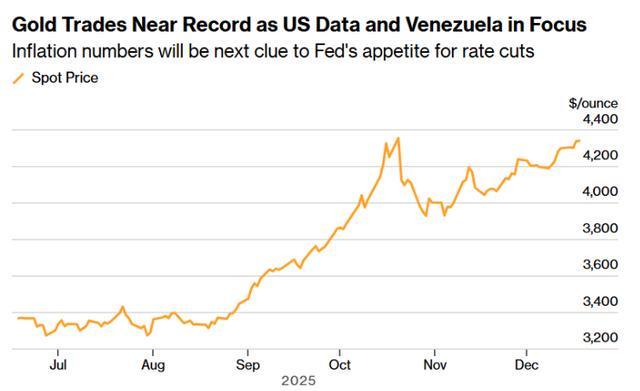
随着全球投资者们追踪委内瑞拉不断升级的紧张局势,并等待美国通胀数据,黄金现货价格在历史最高 位附近持稳。近期涨势如虹的铂金则延续迅猛涨势,盘中一度大涨4%,仍然位于2008年以来的最高价 位水平——距离历史最高位相差320美元,众多宏观利好因素推动下的这一轮猛烈涨势有望推动铂金在 长达17年后创下历史新高点位。 黄金与铂金价格近期持续强势,主要受益于地缘政治局势持续升温,以及美联储降息预期之下的宏观流 动性宽松预期,铂族金属相比于黄金则还大幅受益于供需失衡——世界铂金投资协会(WPIC)预计2025 年全球铂金市场将迎来连续三年供给短缺。对于黄金来说,若铂金持续上涨,从这两大贵金属的历史线 性关系来看,有望推动黄金接下来一段时间的持续上涨步伐,这也意味着黄金在2026年涨至华尔街心心 念念的5000美元超级关口并非不可能之事。 现货金条价格在每盎司4,335美元附近交投,周三已上涨约0.8%。它距离10月创下的历史最高点仅仅约 50美元。周四即将公布的通胀数据将被市场密切关注,以寻找美联储进一步降息意愿的线索。 上图显示,金价在创纪录高位附近交投,距离突破历史最高位仅一步之遥,投资者们焦点转向美国数据 与美国 ...
石油股集体上扬 中石化涨超3% 地缘风波推动油价反弹
Zhi Tong Cai Jing· 2025-12-18 09:49
石油股集体上扬,截至发稿,中石化(00386)涨3.6%,报4.61港元;上海石化(600688)(00338)涨 1.54%,报1.32港元;中海油(00883)涨1.09%,报20.38港元;中石油(00857)涨1%,报8.11港元。 消息面上,据央视新闻,当地时间12月17日,在美国总统特朗普下令全面封锁所有进出委内瑞拉的受制 裁油轮后,市场对地缘政治风险担忧升温,推动油价走高,布伦特原油重回60美元上方。光大证券此前 研报指出,在地缘政治仍存不确定的前提下,中长期原油供需格局仍具备景气基础,在长期主义视角 下,该行持续坚定看好"三桶油"及油服板块。 上海石化 中国石化 中国石油 中国海油 上海石油化工 股份 中国石油化工 分时图 日K线 周K线 月K线 2.66 0.02 0.76% 股份 1.14% 0.76% 0.38% 0.00% 0.38% 0.76% 1.14% 2.61 2.62 2.63 2.64 2.65 2.66 2.67 09:30 10:30 11:30/13:00 14:00 15:00 0 109万 217万 326万 ...




ATFX策略师:黄金逼近历史高位!多头狂欢,还是风险前夜?
Sou Hu Cai Jing· 2025-12-18 09:14
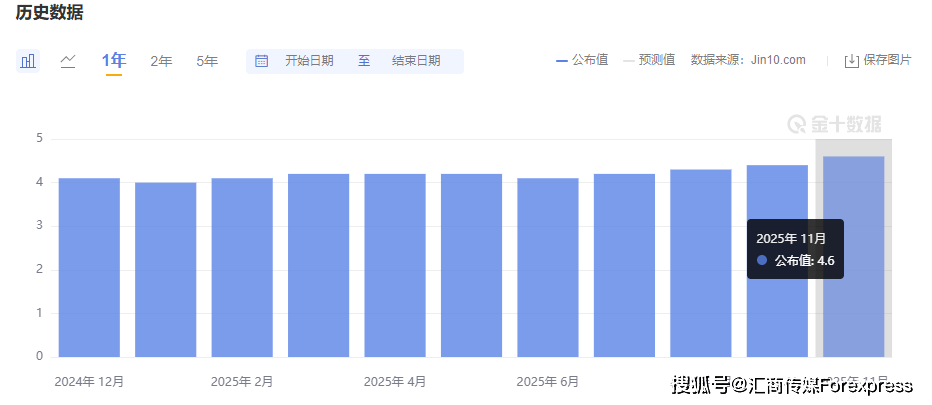
Core Viewpoint - The international gold price is rising significantly, approaching historical highs, driven by weakening U.S. economic data, renewed expectations for Federal Reserve rate cuts, and escalating geopolitical risks [1][4]. Group 1: U.S. Economic Indicators - The U.S. labor market shows signs of divergence, with November's unemployment rate unexpectedly rising to 4.6%, the highest in nearly four years, despite job additions exceeding expectations [4]. - The increase in unemployment raises doubts about the feasibility of a "soft landing" for the U.S. economy, leading to heightened expectations for future rate cuts by the Federal Reserve [4]. - Lower interest rates or expectations of rate cuts reduce the opportunity cost of holding gold, prompting a return of funds to the precious metals market, which is a key driver of rising gold prices [4]. Group 2: Geopolitical Risks - Escalating geopolitical tensions, particularly regarding Venezuela, have amplified demand for safe-haven assets like gold, as investors worry about energy supply and regional stability [4]. - Historical trends indicate that military or political conflicts involving energy-exporting countries often lead to a premium on gold prices, which is evident in the current market dynamics [4]. Group 3: Market Dynamics - The simultaneous decline in the U.S. stock market, particularly in the tech sector due to uncertainties around AI investment returns, has shifted some funds towards defensive assets like gold [5]. - The surge in silver and platinum prices indicates a rotation within the precious metals sector, with silver breaking historical highs, reinforcing the consensus on a cyclical strengthening of precious metals [5]. Group 4: Future Uncertainties - Gold bulls face uncertainties, including potential short-term rebounds in the U.S. dollar index and internal disagreements within the Federal Reserve regarding future policy paths [7]. - Upcoming U.S. CPI and PCE inflation data will significantly impact market expectations for monetary policy, with potential for gold price fluctuations based on inflation outcomes [7]. - The current high gold price environment is characterized by both risks and uncertainties, with geopolitical and macroeconomic expectations providing support, but short-term volatility may increase ahead of key data releases [7].
港股收评:午后回暖!恒指涨0.12%,航空股、石油股齐涨
Ge Long Hui· 2025-12-18 08:38
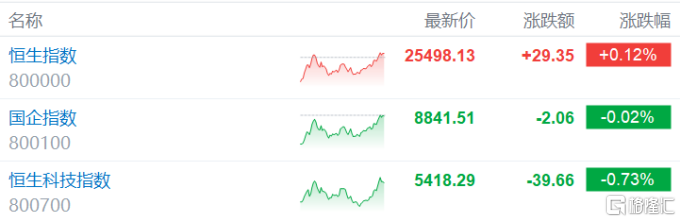
Market Overview - The Hong Kong stock market showed mixed performance with the Hang Seng Index closing up 0.12%, while the Hang Seng China Enterprises Index and the Hang Seng Tech Index fell by 0.02% and 0.73% respectively, indicating a failure to maintain the previous day's strong rebound [1] - Overall market sentiment was affected by the weak performance of major technology stocks, influenced by a decline in US tech stocks [5][6] Technology Sector - Major technology stocks in Hong Kong experienced significant declines, with Xiaomi down 2.47% and Alibaba down 1.3%, contributing to negative market sentiment [3][5] - Other tech stocks such as Baidu and JD.com also showed weakness, reflecting broader concerns in the sector [5] Airline Sector - The airline sector saw notable gains, with China Eastern Airlines rising by over 8%, supported by a strong performance in operational data and increased ticket bookings for the New Year holiday [6][7] - Other airlines like Beijing Capital International Airport and China Southern Airlines also reported gains of over 5% [6] Energy Sector - The energy sector, including oil, coal, and gas stocks, performed well, with major coal stocks like China Shenhua and Yanzhou Coal both rising over 2% [8] - Oil stocks were active, with China Petroleum and Chemical Corporation increasing by 3.37%, driven by geopolitical concerns and rising oil prices [9][10] Banking Sector - The banking sector showed positive momentum, with predictions of increased operating income and net profit for the year ahead, leading to a general rise in bank stocks [12] - Notable gains included China Merchants Bank up over 2% and other major banks like Industrial and Commercial Bank of China and Agricultural Bank of China rising over 1% [12][13] Education Sector - The education sector saw some stocks rise, with Bojun Education increasing by over 10% and Dadi Education up over 5% [14] Paper and Lithium Battery Sectors - The paper sector faced significant declines, with Nine Dragons Paper down 8.19% and Lee & Man Paper down 4.08% [15] - The lithium battery sector also struggled, with major players like Contemporary Amperex Technology and Ningde Times both falling over 3% [16] Automotive Sector - The automotive sector experienced declines, with several companies including Li Auto and Xpeng Motors down over 1% [18] Real Estate Sector - The real estate sector showed weakness, with Shimao Group down 4.48% and other major developers like China Overseas Land and New World Development also declining [19] Copper Sector - The copper sector faced challenges, with China Nonferrous Mining down 5.67% and other related stocks also experiencing declines [20] Capital Flows - Net inflows from southbound funds amounted to HKD 1.257 billion, with significant activity in the Hong Kong Stock Connect [20] Market Outlook - Analysts suggest that the Hong Kong market is at a turning point, with potential for a rebound in the coming months, particularly in technology growth stocks [22]