
降息预期

Search documents
张尧浠:金市再显流动性跳水 回踩支撑仍是看涨机会
Xin Lang Cai Jing· 2026-02-13 07:21
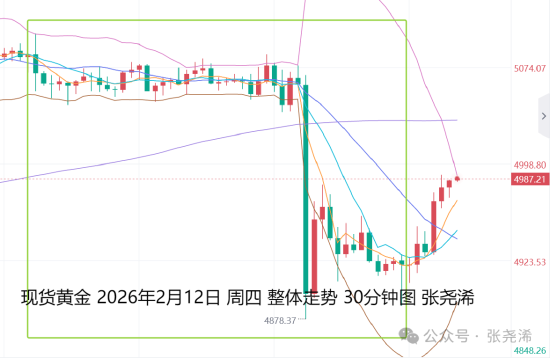
Core Viewpoint - International gold prices experienced a significant drop due to a resurgence of AI-related panic leading to a sell-off in tech stocks, which triggered liquidity issues in the U.S. stock market. This resulted in traders selling metals to cover stock losses, alongside comments from Trump suggesting the U.S. "must" reach an agreement with Iran, which diminished safe-haven demand for gold [1][10]. Price Movement and Market Reaction - On February 12, gold prices fell sharply after reaching a high of $5,100.26, entering a trading range of $5,080 to $5,045 before plummeting over $160 to a low of $4,878.77. The day ended with gold closing at $4,921.86, marking a daily decline of $170.97 or 3.36% [3][12]. - The opening on February 13 saw gold prices supported by an upward trend channel, leading to an initial rebound. Additionally, the market absorbed the liquidity sell-off, with U.S. initial jobless claims exceeding expectations and January's existing home sales showing weakness, which continued to support gold prices [3][12]. Economic Indicators and Future Outlook - Attention is focused on the U.S. January CPI data, with market expectations leaning towards an increase in rate cut predictions, which would be favorable for gold prices. The outlook for gold remains bullish, with strategies suggesting buying on dips when prices touch support levels [5][14]. - Technically, gold prices in February have shown a rebound after a drop, maintaining a position above the five-month moving average, indicating that the bearish sentiment from January has likely been exhausted. The new bullish outlook remains valid, with expectations of further strength or a potential consolidation before another upward move [6][14]. Technical Analysis - Daily charts indicate that gold prices fell below short-term moving averages, with bearish sentiment prevailing. However, there is support from the upward trend channel and various moving averages, suggesting a positive outlook for the bull market. Current pullbacks present opportunities for re-entry into long positions [8][16]. - Specific trading levels to watch include support around $4,900 or $4,840, and resistance at $5,020 or $5,095 for gold. For silver, support is noted at $74.00 or $70.90, with resistance at $79.70 or $83.60 [9][16].

美国一月非农就业数据大超预期,打压市场降息预期七月概率高
Sou Hu Cai Jing· 2026-02-13 06:01
Core Insights - The strong performance of the U.S. non-farm payroll data for January has significantly impacted market expectations regarding interest rate cuts, leading to a reduction in such expectations [1][2] - The robust job growth indicates resilience and growth momentum in the U.S. economy, providing the Federal Reserve with greater policy flexibility [1] - The market's previous anticipation of interest rate cuts due to economic or inflationary pressures may be altered by the strong non-farm employment data, suggesting the Fed may adopt a wait-and-see approach in the short term [1] Economic Indicators - January's non-farm payroll data showed job additions far exceeding market expectations, reflecting a strong labor market [1] - The positive employment data suggests that the Federal Reserve may not be in a hurry to implement interest rate cuts, at least in the near term [1][2] Future Policy Outlook - July is identified as a critical observation period for potential changes in monetary policy, influenced by seasonal economic adjustments and global economic uncertainties [1] - Despite the current positive data, there are concerns regarding future risks such as changes in the global economic landscape and geopolitical tensions, which could affect the Fed's decision-making [2]
美国就业数据爆了!强劲非农打击降息预期,美股三大指数集体收跌!芯片巨头,大涨近10%!金银、原油收涨
Sou Hu Cai Jing· 2026-02-12 16:56
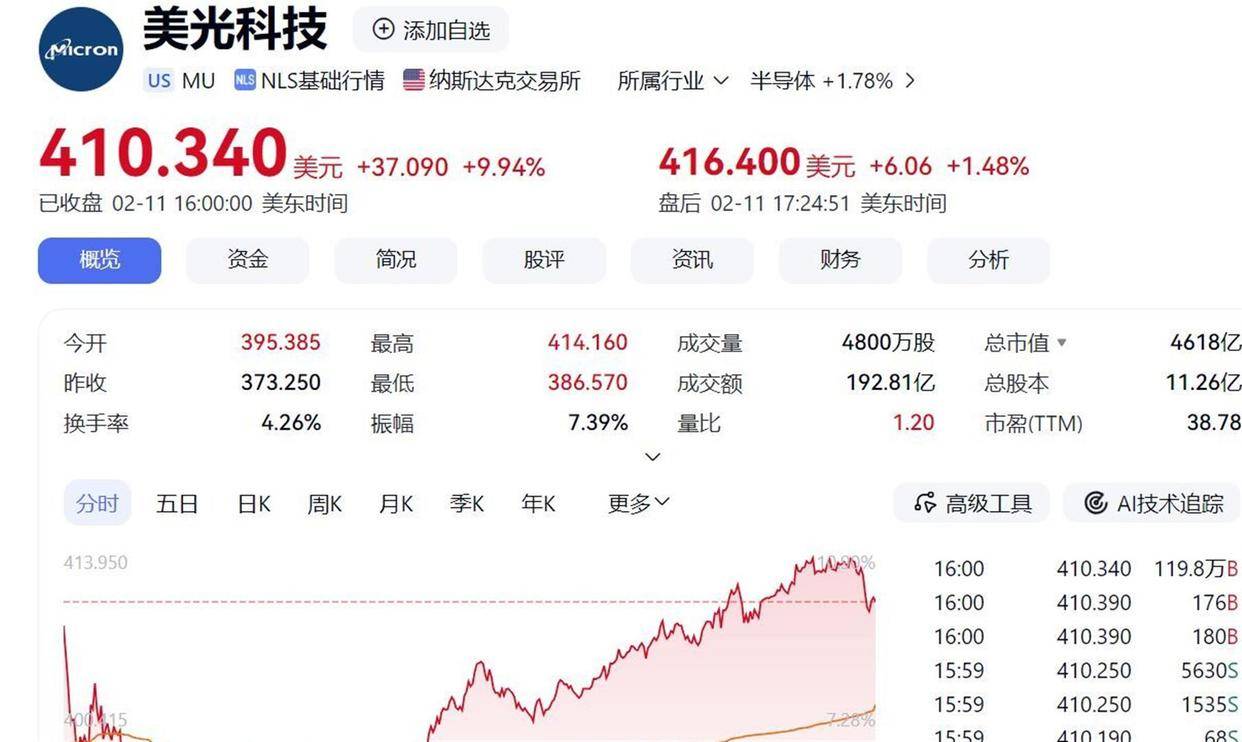
Employment Data - The U.S. added 130,000 jobs in January, significantly exceeding the market expectation of 55,000, marking the highest monthly increase in over a year [3][4] - The unemployment rate slightly decreased to 4.3%, better than economists' predictions [3] Market Reaction - The strong employment report led to a reassessment of the Federal Reserve's policy path, cooling earlier expectations for interest rate cuts [4] - The probability of a rate cut in June dropped below 50% according to the Chicago Mercantile Exchange's FedWatch tool [4] Sector Performance - The healthcare sector was the biggest winner in the employment report, contributing 124,000 new jobs, which is double its normal growth rate [8] - Micron Technology saw a significant stock increase of 9.94%, driven by strong demand for storage chips due to artificial intelligence [6] Commodity Market - The commodity market experienced a broad increase, with gold prices rising by 1.53% to $5,107.8 per ounce and silver prices soaring over 4.6% [8] - International oil prices also rose, with WTI crude increasing by 1.05% to $64.63 per barrel and Brent crude up by 0.87% to $69.40 per barrel [8] Economic Outlook - Concerns were raised about the quality of the employment data, with some analysts suggesting seasonal adjustments may have exaggerated the figures [9] - The Federal Reserve officials expressed differing views on the current economic situation, indicating ongoing discussions that could influence future interest rate expectations [9]
强生股价2026年2月12日上涨0.57%,业绩与行业地位支撑表现
Jing Ji Guan Cha Wang· 2026-02-12 15:03
Core Insights - Johnson & Johnson (JNJ) stock price showed strong performance on February 12, 2026, closing at $242.24, up 0.57%, but did not surpass its historical high of approximately $250 set in December 2025 [1] - The company reported Q4 2025 revenue of $24.56 billion, a year-over-year increase of 9.08%, with adjusted earnings per share of $2.46, exceeding market expectations [2] - Johnson & Johnson maintained its position as the world's largest pharmaceutical company in 2025 with revenue of $94.193 billion, driven by a 95.9% increase in oncology drug revenue [3] - As of February 2026, 57% of 28 institutions rated the stock as "buy" or "hold," with a target average price of $237.48, slightly below the current stock price [4] - Market attention is focused on the January CPI data to be released on February 14, which could impact interest rate expectations and the attractiveness of high-dividend stocks [5] Performance Summary - Q4 2025 revenue was $24.56 billion, with a 9.08% year-over-year growth and adjusted EPS of $2.46, surpassing market forecasts [2] - The company expects 2026 revenue to be between $99.5 billion and $100.5 billion, with adjusted EPS guidance of $11.43 to $11.63, both above Wall Street expectations [2] Industry Position - Johnson & Johnson led the global pharmaceutical industry in 2025 with $94.193 billion in revenue, highlighting the strength of its innovative pipeline, particularly in oncology [3] - The company has mitigated tariff pressures through a drug pricing agreement with the U.S. government, absorbing "hundreds of millions" in price reduction impacts while maintaining profit growth resilience [3]

美股前瞻02.12:超预期非农打压降息预期,AI恐慌蔓延至房地产服务
East Money Securities· 2026-02-12 13:11
Market Overview - The U.S. non-farm payroll data for January showed an addition of 130,000 jobs, significantly exceeding the market expectation of 65,000, with the unemployment rate unexpectedly dropping to 4.3% [1] - The strong job growth, particularly in healthcare, has dampened market expectations for an early interest rate cut by the Federal Reserve, pushing the anticipated timing for the first rate cut of the year to July [1] - Following the data release, major indices experienced volatility, with the Nasdaq down 0.16% and the S&P 500 closing nearly flat [1] Economic Trends - The January employment rebound is viewed as a response to the previous year's significant slowdown in job growth, with the total employment growth for the previous year revised down from 584,000 to 181,000 [4] - The current strong data may not indicate a stable long-term trend, as concerns about the labor market's rapid weakening persist [4] - The probability of the Federal Reserve maintaining rates in March has risen to over 94%, indicating a shift in market sentiment regarding interest rate cuts [4] Sector Analysis - The technology sector, particularly AI-related stocks, is facing significant selling pressure, with concerns about "AI disruption" spreading from software to real estate and financial services [4] - Despite the overall market weakness, sectors such as energy, materials, and consumer staples have shown relative strength, indicating a rotation of funds from high-valuation growth stocks to value and hard asset stocks [4] - Micron's stock surged by 10% due to expectations of increased capacity for HBM4, highlighting a renewed focus on the certainty of AI hardware investments [4]

ATFX:非农压不住金价:CPI前多头窗口开启,通道上轨或成突破关键
Sou Hu Cai Jing· 2026-02-12 09:28
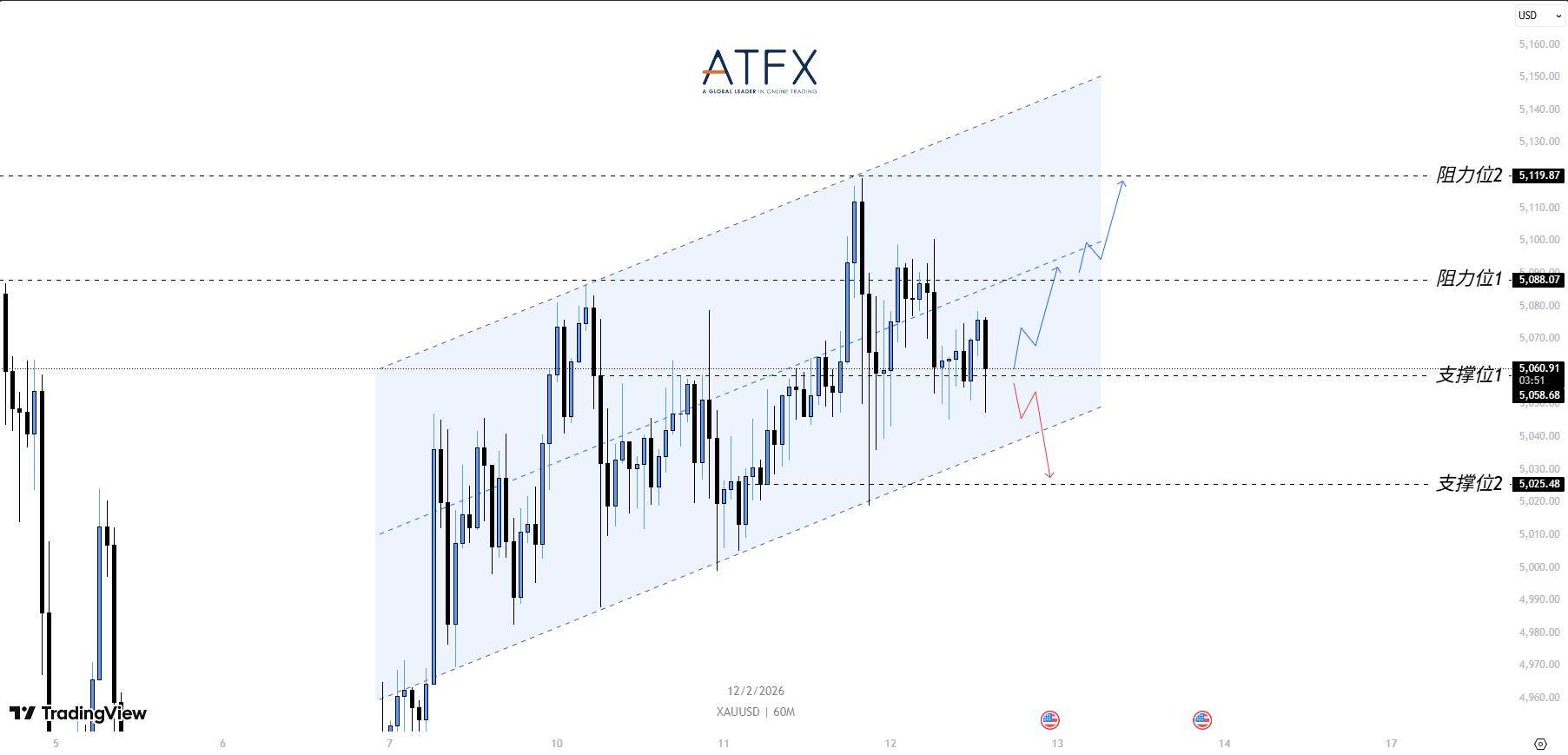
Core Viewpoint - Despite strong non-farm payroll data that typically suppresses gold prices, gold has shown resilience, rising over 1% and maintaining levels above $5,080, indicating a structural shift in the gold market logic [1][2][6]. Economic Data Impact - The U.S. added 130,000 jobs in January, with the unemployment rate dropping to 4.3%, which traditionally would suggest prolonged high interest rates, negatively impacting gold [2][3]. - Market expectations for a cumulative rate cut of about 50 basis points this year remain intact, despite the non-farm data suggesting otherwise [3]. Market Dynamics - The limited rise in the U.S. dollar index post-data release indicates a lack of sustained momentum for the "long-term high rates" narrative [3]. - Geopolitical tensions, uncertainties surrounding the Federal Reserve's leadership, and ongoing global central bank gold purchases are contributing to a long-term support for gold [3]. Upcoming Data Focus - The market's attention is shifting to the upcoming U.S. January CPI data, which will directly influence the probability of a rate cut in June [3]. - A further slowdown in inflation could provide more upward space for gold, while higher inflation may cause short-term volatility, but deep corrections are deemed unlikely under current conditions [3]. Technical Analysis - Gold is currently in a clear upward channel, with a structure of "higher lows and higher highs" since the low on the 7th [5]. - Key resistance levels are at $5,088 and $5,119, while support levels are at $5,058 and $5,025 [5]. - As long as gold remains within the channel and maintains the upward momentum, the bullish outlook is intact, indicating a consolidation phase rather than a trend reversal [6]. Market Sentiment - The current market sentiment suggests that the focus is not on whether gold can rise further, but rather on the effectiveness of bearish pressures [6]. - The upcoming CPI data will be a critical test for gold; if it can hold its channel structure, the upward trend may continue [7].
2026年1月美国就业数据点评:影响有限,静待变局
Tebon Securities· 2026-02-12 06:37
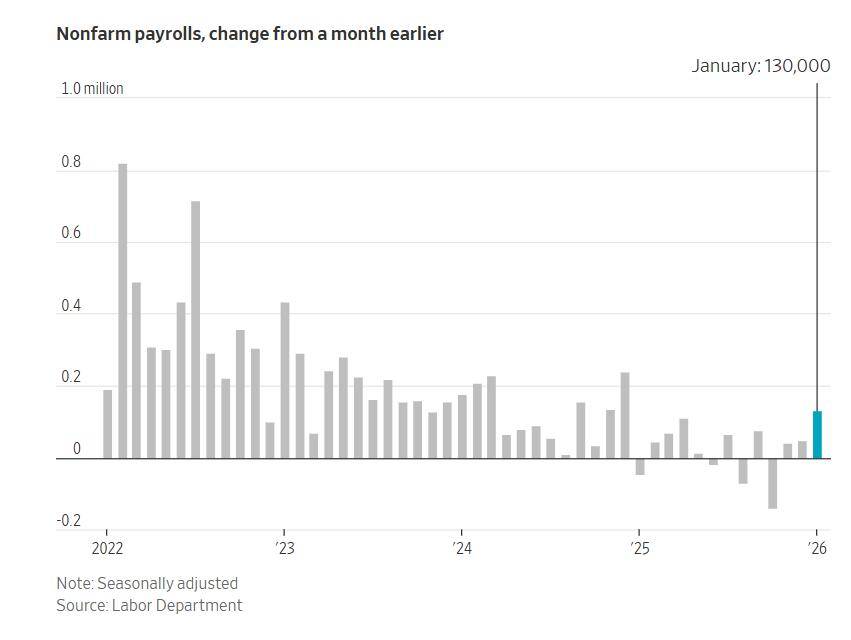
Labor Market Insights - In January 2026, the U.S. added 130,000 non-farm jobs, exceeding the market expectation of 70,000[2] - The unemployment rate decreased to 4.3%, lower than the expected 4.4%[2] - The labor force participation rate rose to 62.5%, surpassing expectations[2] - Hourly wage growth increased by 0.4% month-on-month and 3.7% year-on-year[2] - The total employment figure for 2025 was revised down by 862,000[2] Sectoral Employment Trends - Job growth in January was concentrated in healthcare (82,000 jobs), social assistance (42,000 jobs), and construction (33,000 jobs)[2] - The number of part-time workers decreased by 453,000, indicating a potential improvement in the labor market[2] - The number of individuals wanting to work but not in the labor force fell by 399,000[2] Market Reactions and Expectations - Following the non-farm data release, the market initially pushed back the June rate cut expectation to July, but later adjusted to favor a June cut probability of 47.1%[2][10] - U.S. Treasury yields rose post-data release, while gold prices experienced temporary fluctuations but remained stable[2] - The S&P 500 and Nasdaq indices showed a pattern of high-level fluctuations, indicating market uncertainty[2] Risk Factors - Potential escalation in U.S.-China tensions could lead to significant impacts on trade and financial markets[12] - Geopolitical crises, particularly in the Middle East, may heighten global risk aversion and market volatility[12] - A downturn in the U.S. economy could exert additional pressure on the global economic environment[12]
非农数据大“变脸”!降息预期被迫推迟,黄金多头的底气在哪?
Sou Hu Cai Jing· 2026-02-12 04:24
Group 1 - The non-farm payroll report reflects the real state of the economy and the policy direction, acting as a mirror rather than just a "market amplifier" [1] - The January non-farm data shows a strong monthly performance with 130,000 new jobs and a drop in the unemployment rate to 4.3%, but the annual benchmark revision significantly lowers the 2025 employment growth forecast from 584,000 to 181,000, indicating a weaker labor market than previously reported [4] - The contradiction of strong monthly data against a backdrop of long-term weakness highlights the need for investors to understand the cautious hiring trends and the overall economic context [4] Group 2 - The strong monthly job growth has led to a delay in interest rate cuts, pushing the first expected cut from June to July, as the labor market shows no significant deterioration [6] - This shift in interest rate expectations has resulted in rising U.S. Treasury yields and a temporary strengthening of the dollar, while gold prices are under pressure due to the high real interest rates [6] - Despite the short-term pressure on gold, there remains significant anticipation for future policy shifts, as the underlying vulnerabilities exposed by the annual revision persist [6] Group 3 - In a volatile macroeconomic environment, investors need to establish a systematic cognitive framework for asset allocation and risk hedging, rather than relying solely on simplistic relationships between interest rates and asset prices [8] - Gold is positioned as a risk hedging tool within asset allocation, suitable for mitigating long-term currency credit risks and balancing portfolio volatility before policy shifts occur [8] - The non-farm report conveys dual signals of strength and revision, widening the divergence in interest rate paths, emphasizing the importance of understanding the underlying logic rather than merely predicting market direction [9]
天然橡胶日度策略报告-20260212
Fang Zheng Zhong Qi Qi Huo· 2026-02-12 03:42
1. Report Industry Investment Rating There is no information about the report industry investment rating in the provided content. 2. Core Viewpoints of the Report - On Tuesday, commodities stopped falling and rebounded, and rubber futures prices followed the upward trend. During the week before the Spring Festival holiday, capital re - allocation led to wide - range market fluctuations. The concentrated re - allocation of long - position funds in the metal sector, along with liquidity and leverage effects, triggered a systematic adjustment in commodities. Rubber futures prices oscillated sharply near the previous high. Economic data showed weakness, and the market's expectation of interest rate cuts increased. The average weekly price of Shanghai full - latex was 16,030 yuan/ton, a week - on - week decrease of 60; the average weekly price of 20 - grade Thai standard rubber in the Qingdao market was 1,950 US dollars/ton, a week - on - week decrease of 6; the average weekly price of 20 - grade Thai mixed rubber in the Qingdao market was 15,168 yuan/ton, a week - on - week decrease of 52. Overseas production areas entered the seasonal production - reduction season, with strong willingness of factories to purchase at higher prices, and raw material prices continued to rise, providing strong cost support. [4] - As of February 1, 2026, China's natural rubber social inventory was 1.281 million tons, a month - on - month increase of 9,000 tons, an increase of 0.7%. The total social inventory of dark - colored rubber in China was 853,000 tons, an increase of 0.7%. The total social inventory of light - colored rubber in China was 428,000 tons, a month - on - month increase of 0.8%. The total inventory of natural rubber in bonded and general trade in the Qingdao area was 591,700 tons, a month - on - month increase of 7,200 tons, an increase of 1.23%. The bonded area inventory was 97,600 tons, an increase of 3.34%; the general trade inventory was 494,100 tons, an increase of 0.82%. China's natural rubber inventory increased, and the inventory in Qingdao increased due to the arrival volume. The inbound volume increased by 6.7% month - on - month. Vietnamese rubber tended to accumulate inventory, while Yunnan generally continued the trend of inventory reduction. [4] - In February, before the Spring Festival, the volatility of the commodity market increased significantly. In terms of supply and demand fundamentals, the current supply of rubber in the origin is stable, and raw material prices are stable with a slight upward trend. The Hainan production area in China has stopped tapping, and the enthusiasm of factories to purchase rubber is limited. The high - yield tapping season overseas exerts pressure on supply, and the raw material prices in Thailand rebounded slightly after the festival. It is the off - season for downstream demand. Weak terminal demand and sufficient supply lead to an increase in finished product inventory. The natural rubber spot inventory continues the seasonal accumulation, exerting pressure on the spot market. In the long - term, the pattern of oversupply is expected to gradually improve as production reaches its peak. [4] - Industrial products are undergoing adjustments. It is recommended to temporarily wait and see for rubber on a single - side basis. The macro - sentiment is prone to fluctuations, and it is advisable to avoid chasing the high. The support level of the RU main contract is 15,700 - 15,800, and the pressure level is 16,100 - 16,400; the support level of the NR main contract is 12,800 - 13,000, and the pressure level is 13,420 - 13,800. [4] 3. Summary by Relevant Catalogs 3.1 Rubber Variety Viewpoint Summary - The recommended strategy for rubber is to buy on dips. The main logic is that the domestic spot inventory continues to accumulate slightly, overseas supply has no obvious fluctuations, the spot price is firm, and the macro - sentiment boosts the commodity market. The support range is 15,500 - 15,800, the pressure range is 16,300 - 16,500, and the market is expected to fluctuate upwards. - The recommended strategy for 20 - grade rubber is also to buy on dips. The main logic is that the dark - colored rubber has reached an inventory inflection point, the price of Thai glue is firm, the production in the fourth quarter has declined, and there is still support below. The support range is 12,700 - 12,800, the pressure range is 13,420 - 13,805, and the market is expected to recover from the bottom. [10] 3.2 Futures Market Review 3.2.1 Futures Market Review | Variety | Closing Price | Daily Percentage Change (%) | Daily Change | Trading Volume | Open Interest | | --- | --- | --- | --- | --- | --- | | Rubber Main - continuous | 16,575 | 1.62 | 265 | 270,154 | 162,081 | | 20 - grade Rubber Main - continuous | 13,445 | 1.70 | 225 | 50,956 | 49,041 | | Singapore TSR20 Main - continuous | 192 | 1.11 | 2 | 41 | 18,914 | [10] 3.2.2 Futures Market Warehouse Receipt Situation - The latest warehouse receipt volume of 20 - grade rubber is 50,803, with a year - on - year change of - 17.78%. The warehouse receipts have rebounded from a low level recently, and the market's expectation of inventory accumulation has resurfaced. - The latest warehouse receipt volume of rubber is 112,570, with a year - on - year change of - 38.33%. The warehouse receipts were significantly cancelled again today, the futures inventory has dropped sharply year - on - year, the delivery risk of futures contracts has increased, which supports the RU futures price. [16] 3.3 Spot Market Trends | Variety | Spot Price | Month - on - Month Change | Year - on - Year Change | | --- | --- | --- | --- | | Natural Rubber (yuan/ton) | 16,225 | - 109 | - 685 | | Yunnan Glue (yuan/ton) | 14,200 | 0 | - 1,800 | | Thai Hat Yai Glue (Thai baht/kg) | 61 | 1 | - 5 | | Thai Hat Yai Cup Lumps (Thai baht/kg) | 54 | 0 | - 7 | | Thai 20 - grade Standard Rubber in Qingdao Bonded Area (US dollars/ton) | 1,965 | 10 | - 95 | [21] 3.4 Basis and Spread Situation | Futures | Spread Type | Present Value | Month - on - Month | Year - on - Year | | --- | --- | --- | --- | --- | | RU Main Contract Basis | Basis | - 110 | 10 | 500 | | NR Main Contract Basis | Basis | 1,770 | 20 | 175 | | Thai Mixed - RU | Non - standard Basis | - 1,135 | 40 | - 125 | | SVR3L - RU | Non - standard Basis | 215 | 10 | 385 | | RU - NR | Cross - variety Spread | 3,130 | 25 | 585 | | Full - latex - Thai Mixed | Light - dark Colored Rubber Spread | 850 | - 30 | 385 | [26] 3.5 Inter - month Spread Situation | Variety | Spread | Current Value | Month - on - Month Change | Year - on - Year Change | Prediction | Recommended Strategy | | --- | --- | --- | --- | --- | --- | --- | | Rubber | 5 - 9 | 90 | - 15 | 260 | Range Oscillation | Wait and See | | 20 - grade Rubber | 3 - 4 | - 55 | - 10 | - 205 | Range Oscillation | Wait and See | [28]
综合晨报-20260212
Guo Tou Qi Huo· 2026-02-12 03:35
Group 1: Energy and Metals Investment Rating Not provided Core View The market is influenced by multiple factors such as geopolitical tensions, supply - demand dynamics, and economic data. Prices of various commodities are expected to show different trends, with high volatility in some cases and stable or weakening trends in others. Summary by Commodity - **Crude Oil**: Tensions between the US and Iran are deadlocked, and the EIA data shows a significant increase in US crude oil inventory. The oil price is expected to remain highly volatile due to the combination of geopolitical risk premiums and inventory pressure [1]. - **Precious Metals**: US non - farm payrolls data suppresses the expectation of interest rate cuts. Short - term volatility of precious metals is decreasing, and it is advisable to wait and see before the holiday [2]. - **Copper**: The overnight London copper's amplitude expands. The Shanghai copper is expected to see inventory accumulation during the holiday, and the strategy is mainly for inter - period reverse arbitrage [3]. - **Aluminum**: The Shanghai aluminum continues to fluctuate. The inventory performance is weaker than in previous years, and there is adjustment pressure around the Spring Festival. Attention should be paid to the support at 23,000 yuan [4]. - **Cast Aluminum Alloy**: It follows the fluctuation of Shanghai aluminum, with low market activity. The price increase is weak, and the seasonal spread with Shanghai aluminum will be weaker than in previous years [5]. - **Alumina**: The domestic operating capacity and production of alumina have decreased. The cash cost support is below 2,500 yuan. It mainly fluctuates within the recent range, and attention should be paid to the capacity changes of large producers [6]. - **Zinc**: The strong non - farm payrolls push up the US dollar index, but Trump urges the Fed to cut interest rates. The domestic zinc market is in a state of oversupply during the holiday, and the zinc price is expected to oscillate at a high level [7]. - **Lead**: The lead price is running at a low level. The supply and demand in the spot market are both decreasing. The Shanghai lead is expected to oscillate at a low level within the range of 16,500 - 17,800 yuan/ton [8]. - **Nickel and Stainless Steel**: The Shanghai nickel rebounds, but the market trading is light. The social inventory of nickel and stainless steel is increasing. The market is in a pre - holiday state, waiting for a clear direction [9]. - **Tin**: The Shanghai tin encounters resistance at the MA20 moving average and oscillates. The overseas inventory is increasing. It is waiting for the post - holiday supply trend and peak - season consumption rhythm [10]. - **Lithium Carbonate**: It rebounds and surges, but the market trading is light. The total inventory decline slows down, and there may be spot selling. The short - term uncertainty is high [11]. - **Polysilicon**: The polysilicon futures rise slightly, and the price is expected to continue to oscillate due to weak policy support and low trading volume [12]. - **Industrial Silicon**: The price weakens after breaking through 8,400 yuan/ton. The supply is expected to increase after the holiday. The demand from downstream industries is expected to decline, and the price is expected to continue to be weak [13]. Group 2: Steel and Related Products Investment Rating Not provided Core View The steel market is affected by factors such as demand, production, and inventory. The overall market sentiment is weak, and prices are under pressure. Summary by Commodity - **Thread and Hot - Rolled Coil**: As the Spring Festival approaches, the demand for thread and hot - rolled coil decreases, and the inventory accumulates. The market sentiment is low, and the prices are under pressure [14]. - **Coke**: The coke price rebounds slightly. The coking profit is average, and the inventory increases slightly. The price is expected to oscillate within a range [15]. - **Coking Coal**: The coking coal price rebounds slightly. The total inventory increases significantly. The price is expected to oscillate within a range due to factors such as supply, demand, and policy expectations [16]. - **Manganese Silicon**: The price oscillates upward. The spot manganese ore price rises slightly, and the inventory may gradually increase. The price is affected by supply surplus and policy expectations [17]. - **Silicon Iron**: The price oscillates upward. The supply changes little, and the inventory decreases slightly. The price is affected by supply surplus and policy expectations [18]. Group 3: Shipping and Fuels Investment Rating Not provided Core View The shipping and fuel markets are influenced by geopolitical factors, supply - demand relationships, and seasonal factors. Summary by Commodity - **Container Shipping Index (European Line)**: The market trading activity decreases before the holiday. The post - holiday market trend depends on supply and demand changes, and the pre - holiday market is expected to oscillate [19]. - **Fuel Oil and Low - Sulfur Fuel Oil**: The prices are affected by geopolitical news. The high - sulfur fuel oil shows resilience, and the low - sulfur fuel oil's supply and demand are affected by factors such as overseas refinery production [20]. - **Asphalt**: The refinery production in February decreases, and the demand is in a downward channel. The asphalt market is in a state of weak supply and demand, and the price is mainly affected by crude oil [21]. Group 4: Chemical Products Investment Rating Not provided Core View The chemical product market is affected by factors such as supply, demand, cost, and policy. Different products show different trends. Summary by Commodity - **Urea**: The urea price is stable. The production enterprise inventory decreases before the holiday, and the price is expected to oscillate within a range before the holiday and strengthen after the holiday [22]. - **Methanol**: The methanol import volume increases, and the port inventory accumulates. The domestic production increases, and the downstream is actively stocking. The market may gradually destock after the holiday [23]. - **Pure Benzene**: The domestic production of pure benzene increases, and the downstream utilization rate improves. The inventory is basically stable, and the supply - demand pattern is expected to improve after the holiday [24]. - **Styrene**: The domestic styrene supply is expected to increase, and the demand is expected to decrease. The fundamentals may weaken in the short term [25]. - **Polypropylene, Plastic, and Propylene**: The market news is limited. The polyethylene supply pressure continues, and the demand support weakens. The polypropylene demand decreases, and the supply is expected to increase, showing a weak trend [26]. - **PVC and Caustic Soda**: The PVC price oscillates narrowly, and the inventory accumulates seasonally. The cost support strengthens, and the price is expected to rise. The caustic soda price oscillates, and the supply may decrease, with the price running near the cost [27]. - **PX and PTA**: The PX and PTA prices oscillate. The PX is recommended for long - term allocation in the first half of the year, but the demand weakens before the holiday. The PTA inventory accumulates, and the processing margin is under pressure [28]. - **Ethylene Glycol**: The supply of ethylene glycol contracts, but the price increase is limited. The supply - demand situation may improve in the second quarter, but the long - term price is under pressure [29]. - **Short - Fiber and Bottle - Chip**: The short - fiber supply - demand pattern is good, but the downstream order is weak. The bottle - chip processing margin recovers, but there is long - term capacity pressure [30]. Group 5: Building Materials Investment Rating Not provided Core View The building materials market is affected by factors such as inventory, production capacity, and demand. The supply - demand relationship is gradually adjusting. Summary by Commodity - **Glass**: The glass price oscillates. The inventory increases, and there is pressure to accumulate inventory during the Spring Festival. The production capacity is compressed, and the supply - demand pattern may improve. Attention can be paid to low - price buying opportunities [31]. - **20 - Number Rubber, Natural Rubber, and Butadiene Rubber**: The natural rubber supply decreases, and the synthetic rubber supply increases. The inventory increases, and the cost - driving effect weakens. The RU&NR are expected to be strong, and the BR is recommended for waiting and seeing [32]. - **Soda Ash**: The soda ash price oscillates. The inventory continues to rise, and the supply is still at a high level. The downstream demand is weak, and the price is expected to be under pressure in the long term [33]. Group 6: Agricultural Products Investment Rating Not provided Core View The agricultural product market is affected by factors such as production, demand, and policy. Different products show different trends. Summary by Commodity - **Soybean, Soybean Meal, and Rapeseed Meal**: The USDA February report is slightly bearish, but the previous bearish logic has been mostly priced in. The expectation of China's purchase of US soybeans may boost the US soybean export. The Canadian rapeseed import is expected to increase [34]. - **Soybean Oil, Palm Oil, and Rapeseed Oil**: The prices of soybean, palm, and rapeseed oils show a position - reducing trend before the holiday. The US soybean supply - demand balance sheet pressure is expected to decrease in 2026/27. The palm oil demand is good, and the US soybean oil price is expected to be strong. The rapeseed oil price is affected by policy [35]. - **Soybean No. 1**: The soybean No. 1 price rises strongly with increased positions. The policy - end soybean auction price is strong, and the US soybean price has a spill - over effect on domestic soybeans [36]. - **Corn**: The corn price continues to be strong at night. The USDA February report has little impact on the market. Attention should be paid to the Northeast grain - selling progress and post - holiday market changes [37]. - **Pig**: The pig futures rebound with reduced positions, and the spot price continues to decline slightly. Attention should be paid to the post - holiday supply pressure [38]. - **Egg**: The egg spot price is stable, and the futures show a near - strong and far - weak pattern. After the Spring Festival, attention can be paid to the opening price and the opportunity to go long at a low price after the basis narrows [39]. - **Cotton**: The US cotton rebounds, and the USDA monthly report is slightly bearish. The pre - holiday Zhengzhou cotton price is expected to oscillate. Attention should be paid to the post - holiday commercial inventory and import changes [40]. - **Sugar**: The international sugar production in India and Thailand shows different trends. The domestic sugar production in Guangxi is slow, but there is an expectation of increased production in the 2025/26 season. The sugar price is under pressure [41]. - **Apple**: The apple futures price oscillates. The Spring Festival stocking is coming to an end, and the market focuses on the demand side. The high acquisition price and strong reluctance to sell may affect the inventory - removal speed [42]. - **Timber**: The timber futures price is at a low level. The supply and demand both decrease before the holiday, and the low inventory provides some support [43]. - **Pulp**: The pulp futures price rebounds. The port inventory accumulates, and the downstream demand support is weak. The short - term price is expected to oscillate [44]. Group 7: Financial Products Investment Rating Not provided Core View The financial market is affected by economic data, geopolitical factors, and policy expectations. The market is expected to show a certain trend of volatility. Summary by Product - **Stock Index**: The A - share market shrinks and oscillates. The US non - farm payrolls data affects the Fed's interest - rate cut expectation. The market is expected to be oscillating and strengthening with structural rotation [45]. - **Treasury Bond**: The treasury bond futures rise moderately. The trading activity decreases before the holiday. The short - term uptrend is expected to continue, and attention can be paid to curve - trading opportunities [46].