财政赤字

Search documents
前议员警告美国陷入“破产” 银价回温上涨
Jin Tou Wang· 2025-11-07 01:57
Group 1 - Silver prices experienced fluctuations, currently reported at $48.68 per ounce, with a high of $48.77 and a low of $47.70, approaching the $49.00 level [1] - Former U.S. Congressman Ron Paul stated that the U.S. is facing a "moral and fiscal bankruptcy," highlighting a $1.9 trillion budget deficit and warning citizens to prepare for significant changes [2] - The ADP report indicated an unexpected increase of 42,000 jobs in the private sector for October, contrasting with McDonald's report of a double-digit percentage decline in low-income customer traffic [2] Group 2 - Technical analysis suggests that silver found support at the 50% Fibonacci retracement level of $45.85, with trading occurring between this level and $49.35 [3] - If silver prices break below $49.35, resistance may be encountered in the $50.40-$50.60 range, with a further upward target near the October 20 high of $59.80 [3] - Recent support levels are noted at $47.00 and $45.85, with a potential bearish scenario if these levels are breached, targeting the 61.8% Fibonacci retracement level and the September 24 low of $43.80 [3]
英媒:加拿大总理卡尼承诺投入1410亿加元应对美国贸易战
Huan Qiu Shi Bao· 2025-11-05 22:43
Core Points - Canadian Prime Minister Carney has committed to investing 141 billion CAD to address the impacts of the U.S. trade war [1] - The federal government has released its first budget since Carney took office, which includes significant fiscal spending to counter severe economic shocks and substantial cuts to public service spending [1] - The budget aims to stimulate economic growth and improve productivity amid rising trade uncertainty and economic slowdown [1] Economic Impact - The budget outlines proposed cuts and investment plans totaling billions of CAD, with a projected deficit of 78 billion CAD for the fiscal year 2025-2026, which is significantly higher than the previous Liberal government's commitment of 42 billion CAD [1][2] - The Canadian Parliament is expected to hold a key vote on the budget on the 18th [1] Trade and Defense Spending - The U.S. government has imposed a 35% tariff on all Canadian goods not covered by the USMCA, with tariffs on Canadian steel and aluminum products reaching as high as 50% [2] - Carney's budget is projected to stimulate 1 trillion CAD in domestic investment over the next five years to protect Canada from the U.S. trade war [2] - The budget will also increase defense spending, with a commitment of 9 billion CAD to enhance military capabilities, aligning with NATO's goal of spending 3.5% of GDP on core defense objectives by 2035 [2]
重估黄金储备可行吗
Sou Hu Cai Jing· 2025-11-05 10:41
Core Viewpoint - The potential revaluation of the U.S. gold reserves is being discussed, which could have significant implications for the country's fiscal policy and the value of the dollar [1][3]. Group 1: Reasons for Possible Implementation - The U.S. federal debt has exceeded $37 trillion, and revaluing gold reserves could provide nearly $1 trillion in funding without issuing new debt, which is appealing under high debt and deficit pressures [3]. - The U.S. Treasury holds approximately 8,133 tons of gold, valued at about $110 billion based on 1973 pricing, but could exceed $1 trillion if revalued at current gold prices [3]. Group 2: Reasons Against Implementation - The potential funds from revaluing gold reserves are limited compared to the overall debt, making it a less effective solution [3]. - Revaluing gold could lead to significant side effects, including synchronized easing of fiscal and monetary policies, which may exacerbate inflation risks [3]. Group 3: Market Reactions and Historical Context - The market may interpret the revaluation as a desperate measure under debt pressure, potentially undermining the international credibility of the dollar [5]. - Historical precedents, such as the UK central bank's sale of half its gold reserves from 1999 to 2002, resulted in a significant drop in gold prices, indicating potential negative impacts on gold value [7]. Group 4: Alternative Strategies - Other countries have approached gold revaluation gradually, often pairing it with fiscal tightening measures to balance policy effects [5]. - Suggestions include establishing a sovereign wealth fund with revaluation proceeds or even selling part of the gold reserves to invest in higher-yield foreign assets [5].


前财长萨默斯猛烈抨击:特朗普的“紧急关税”根本站不住脚!
Jin Shi Shu Ju· 2025-11-05 02:40
Core Viewpoint - The article discusses the legal and economic implications of President Trump's use of emergency powers to impose tariffs, with former Treasury Secretary Summers criticizing this approach as problematic and not reflective of true emergencies [1][2]. Group 1: Legal Authority and Criticism - Summers argues that the circumstances cited by Trump for imposing tariffs do not equate to genuine emergencies like the 9/11 attacks or a currency collapse [1]. - Critics highlight that the International Emergency Economic Powers Act (IEEPA) does not explicitly authorize the president to use tariffs for the situations described, emphasizing that trade issues fall under Congress's jurisdiction [1]. Group 2: Economic Measures and Solutions - Summers suggests that addressing the U.S. reliance on foreign capital should involve reducing budget deficits and increasing national savings rather than imposing tariffs [2]. - He also states that it is difficult to justify the use of emergency powers based on current economic conditions, which have not been seen in the past 25 years [2]. Group 3: Trump's Perspective - Trump claims that the Supreme Court's tariff case is crucial for the survival of the U.S., asserting that a victory would lead to significant economic and national security benefits [2]. - He emphasizes that tariffs have contributed to economic security and have facilitated favorable negotiations, linking them to the stock market's historical highs and the respect the U.S. commands globally [2].
美国为什么快要顶不住了?因为美国再也出不了一个罗斯福了,美国现在最大的问题是缺钱,入不敷出,欠了一堆债
Sou Hu Cai Jing· 2025-11-01 15:52
Core Insights - The article highlights the growing financial crisis in the U.S., with record national debt and increasing fiscal deficits, leading to a situation where each American carries approximately $110,000 in debt [1][3] - It discusses the disparity between the financial struggles of the nation and the wealth accumulation of major financial institutions and wealthy families, indicating a tight bond between politics and capital [3][5] - The article critiques the political landscape, where tax reforms aimed at the wealthy are consistently blocked, resulting in a growing budget deficit and wealth inequality [5][7] Financial Situation - The U.S. Treasury reported that interest payments for 2024 will exceed $870 billion, marking a historical high and surpassing military spending [3] - The wealth distribution is stark, with the top 10% of households holding nearly 70% of the wealth, while the bottom half collectively holds less than 3% [7] Political Dynamics - The 2024 presidential election campaign is projected to exceed $16 billion, primarily funded by large corporations and wealthy individuals, influencing political decisions [3][5] - Media narratives often support the wealthy, promoting the idea that protecting the rich is synonymous with protecting jobs, which misleads the public [5][7] Social Implications - The article notes a significant increase in homelessness, with over 75,000 homeless individuals in Los Angeles alone, highlighting the failure to address basic social needs [7] - It draws a parallel to historical figures like Franklin D. Roosevelt, suggesting that current politicians lack the courage to implement necessary reforms to address wealth inequality and social welfare [9][11]


香港特区政府:本财政年度前六个月录得1032亿港元赤字
Zhi Tong Cai Jing· 2025-10-31 08:53
Core Points - The Hong Kong government reported a deficit of 103.2 billion HKD for the first six months of the fiscal year ending September 30, 2025 [1] - Total expenditure and revenue for the first half of the fiscal year were 373.2 billion HKD and 235.2 billion HKD, respectively [1] - The deficit includes the issuance of government bonds amounting to 61.6 billion HKD and repayment of 26.8 billion HKD in principal [1] - As of September 30, 2025, the fiscal reserves stood at 551.1 billion HKD [1] - The deficit is primarily attributed to the timing of major revenues such as salaries tax and profits tax, which are mostly collected later in the fiscal year [1]
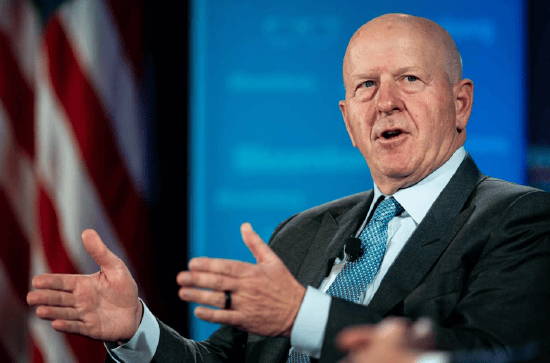
高盛CEO警告:美国38万亿美元国债或迎“清算时刻”,支付利息开支已超1.2万亿美元,规模超过国防支出!多个机构警告,可能进一步推升通胀压力削弱居民购买力
Sou Hu Cai Jing· 2025-10-31 08:30
Group 1 - The CEO of Goldman Sachs, David Solomon, expressed concerns about the rapid increase in U.S. national debt, which has surpassed $38 trillion, and warned of potential "clearing" consequences if economic growth does not improve [2] - Since the 2008 financial crisis, the national debt has increased by over $7 trillion, with the pandemic accelerating government borrowing [2] - The current debt growth rate is nearly $70,000 per second, rising from $34 trillion in January 2024 to the current level, although Solomon maintains that the overall condition of the U.S. economy is good and the likelihood of recession is low [2] Group 2 - The cost of servicing the debt has rapidly eroded fiscal space, with interest payments exceeding $1.2 trillion, accounting for approximately 17% of federal spending, surpassing defense expenditures [2] - Budget oversight organizations have warned that this trend may further increase inflationary pressures and weaken consumer purchasing power [2] - Despite concerns about the potential weakening of the U.S. dollar's status as a reserve currency, Solomon disagrees, noting that global capital continues to flow into U.S. markets, indicating the attractiveness of dollar-denominated assets [2] Group 3 - The Trump administration claims that the fiscal deficit has decreased by about $350 billion this year compared to last year, attributing this to spending controls and improved revenues, although overall debt continues to grow [3] - Solomon emphasized that the ability to avoid future fiscal pressures depends on the overall economy's capacity for stronger expansion; otherwise, the debt burden will accumulate to a significant level [3]

沙特三季度财政赤字扩大,因石油收入下降
Sou Hu Cai Jing· 2025-10-30 16:34
由于布伦特原油价格走弱和石油收入下降,沙特阿拉伯的预算赤字在第三季度有所加深,对其这个石油 出口国的财政造成压力。截至9月的三个月内,沙特的预算缺口达到885亿里亚尔(折合236亿美元), 使得今年年初以来的总赤字接近500亿美元。财政部的预测显示,第三季度的非石油收入约为317亿美 元,与去年同期持平;而石油收入则从略低于510亿美元下降至约400亿美元。 ...
美债规模可能将于本世纪二十年代末超越意大利和希腊
Shang Wu Bu Wang Zhan· 2025-10-30 14:54
Group 1 - The core viewpoint of the articles indicates that the U.S. public debt is projected to surpass that of Italy and Greece by the end of the 2020s, with a significant increase in debt levels expected [1][2] - By 2030, U.S. public debt is anticipated to grow by over 20 percentage points, reaching 143.4% of GDP, which would exceed the historical debt peak post-World War II [1] - The annual fiscal deficit in the U.S. is expected to remain above 7% of GDP through 2030 [1] Group 2 - The current political landscape in the U.S. presents challenges for budget deficit reduction, with Democrats unwilling to cut spending and Republicans refusing to raise taxes [2] - Predictions regarding the sustainability of U.S. fiscal conditions are based on optimistic expectations about future productivity, tariff revenues, demographic trends, and interest rates [2]
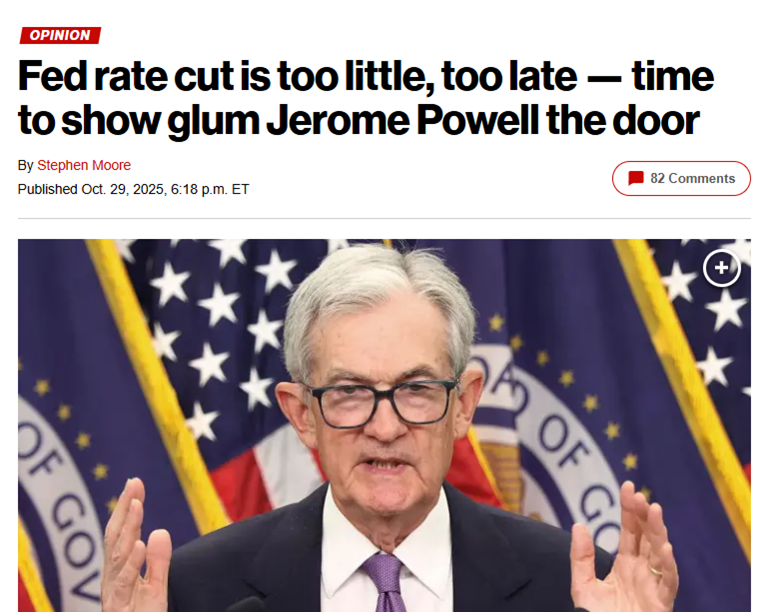
美国如期降息25个基点,但美联储官员内部仍存争议
Huan Qiu Wang· 2025-10-30 01:08
Group 1 - The Federal Reserve lowered the federal funds rate by 25 basis points to a range of 3.75%-4.00%, marking the second rate cut of the year [1] - The Fed announced the end of balance sheet reduction starting December 1, indicating a shift in monetary policy [1] - Internal disagreements among Fed officials were noted, with some advocating for a larger rate cut of 50 basis points while others preferred to maintain the current rate [1] Group 2 - The Fed's statement highlighted persistent high inflation and rising risks in the job market, suggesting a moderately restrictive monetary policy stance [1] - Commentary from the New York Post criticized the Fed's traditional view that growth leads to inflation, arguing for a focus on dollar stability and fiscal responsibility [1] - Powell's remarks indicated uncertainty regarding further rate cuts in December, influenced by data gaps due to government shutdowns [4]