市场情绪

Search documents
量化择时周报:价量匹配改善,情绪指标维持震荡-20251130
Shenwan Hongyuan Securities· 2025-11-30 14:45
权 益 量 化 研 究 2025 年 11 月 30 日 价量匹配改善,情绪指标维持震荡 ——量化择时周报 20251130 相关研究 证券分析师 沈思逸 A0230521070001 shensy@swsresearch.com 邓虎 A0230520070003 denghu@swsresearch.com 联系人 沈思逸 A0230521070001 shensy@swsresearch.com | 1.情绪模型观点:市场情绪得分周内继续回落 4 | | --- | | 1.1 从分项指标出发:价量匹配改善、主力资金回流,情绪指标维持震 | | 荡、分化 5 | | 2.其他择时模型观点:美容护理短期得分快速提升,价值风 | | 格与小盘风格占优 10 | | 2.1 美容护理行业短期得分快速提升,价值风格与小盘风格占优 10 | | 3.风险提示 14 | 请务必仔细阅读正文之后的各项信息披露与声明 第2页 共15页 简单金融 成就梦想 证 券 研 究 报 告 请务必仔细阅读正文之后的各项信息披露与声明 本研究报告仅通过邮件提供给 中庚基金 使用。1 量 化 策 略 - ⚫ 市场情绪得分周内继续回落: ...
钢材&铁矿石日报:市场情绪回暖,钢矿震荡企稳-20251128
Bao Cheng Qi Huo· 2025-11-28 11:24
Report Industry Investment Rating - Not provided in the content Core Viewpoints - The main contract price of rebar fluctuated higher with a daily increase of 0.71%. In the process of position transfer, the trading volume and open interest contracted. Currently, the fundamentals are fair under the situation of weak supply and demand. Inventory continued to decline, but demand weakened seasonally. The actual situation remains weak, and steel prices continue to be under pressure. The relatively positive factor is the low valuation. In the short term, the price will continue to fluctuate at a low level. Attention should be paid to the demand performance [5]. - The main contract price of hot-rolled coil fluctuated with a daily increase of 0.27%. In the process of position transfer, the trading volume and open interest contracted. Currently, the supply pressure of hot-rolled coils remains high, while the demand has weakened. The fundamentals are weak, and the coil price continues to be under pressure. The relatively positive factors are the low valuation and cost support. It is expected to continue the trend of bottom - seeking through fluctuations. Attention should be paid to the production situation of steel mills [5]. - The main contract price of iron ore rebounded after hitting the bottom with a daily decline of 0.19%. The trading volume increased while the open interest decreased. Currently, short - term positive factors have supported the iron ore price to fluctuate higher, but the demand for iron ore has weakened, and the supply remains at a high level. The fundamentals of the iron ore market have not improved, and the upward driving force is not strong. It is expected that the iron ore price will continue to fluctuate at a high level under the game of multiple and short factors. Attention should be paid to the performance of steel products [5]. Summary by Directory Industry Dynamics - The Political Bureau of the CPC Central Committee held a meeting on November 28, chaired by General Secretary Xi Jinping, to review the comprehensive report on the 20th Central Inspection of provinces (autonomous regions and municipalities directly under the Central Government) [7]. - The Chongqing Municipal Government issued the Action Plan for the Comprehensive Reform Pilot of Factor Market Allocation, proposing to optimize the mechanism for revitalizing existing land, support the use of special bonds to repurchase eligible idle land, and carry out pilot projects for the renewal of industrial and commercial land use rights [8]. - Australian mining company Akora Resources submitted an application to convert the exploration license of its wholly - owned Bekisopa iron ore project in Madagascar into a mining license. The project has an inferred resource of 194.7 million tons and can produce high - grade iron concentrate with an iron content of over 68% [9]. Spot Market - Rebar: The spot price in Shanghai is 3,220, in Tianjin is 3,210, and the national average price is 3,291. The price changes are 10, 10, and 3 respectively [10]. - Hot - rolled coil: The spot price in Shanghai is 3,290, in Tianjin is 3,220, and the national average price is 3,317. The price changes are 0, - 10, and - 3 respectively [10]. - Tangshan steel billet: The spot price is 2,970 with a price change of 0 [10]. - Zhangjiagang heavy scrap: The spot price is 2,080 with a price change of 0 [10]. - Other: The price of 61.5% PB powder at Shandong ports is 797 with a change of - 2; the price of Tangshan iron concentrate is 808 with a change of 0; the freight from Australia is 11.12 with a change of 0.39, and from Brazil is 24.71 with a change of 0.07; the SGX swap (current month) is 104.90 with a change of 0.00; the Platts Index (CFR, 62%) is 107.45 with a change of 0.10 [10]. Futures Market - Rebar: The closing price of the active contract is 3,110 with a daily increase of 0.71%. The highest price is 3,113, the lowest price is 3,084, the trading volume is 680,875 with a decrease of 72,377, and the open interest is 972,278 with a decrease of 97,339 [14]. - Hot - rolled coil: The closing price of the active contract is 3,302 with a daily increase of 0.27%. The highest price is 3,305, the lowest price is 3,285, the trading volume is 314,400 with a decrease of 64,833, and the open interest is 785,392 with a decrease of 90,927 [14]. - Iron ore: The closing price of the active contract is 794.0 with a daily decrease of 0.19%. The highest price is 798.0, the lowest price is 786.0, the trading volume is 252,881 with an increase of 53,230, and the open interest is 390,978 with a decrease of 23,368 [14]. 后市研判 (Future Outlook) - Rebar: The supply and demand have both weakened. The production of construction steel mills has declined, with the weekly output of rebar decreasing by 1.88 tons. The supply has shrunk slightly, but the profit of short - process steel mills has improved, and the sustainability of production reduction needs to be monitored. At the same time, the demand for rebar has weakened, with the weekly apparent demand decreasing slightly. The high - frequency daily trading volume has stabilized, but both remain at the low level in recent years, and the downstream industry is weak. The demand is expected to weaken seasonally, dragging down the steel price. In general, under the situation of weak supply and demand, the fundamentals are fair, inventory continues to decline, but the demand weakens seasonally, and the actual situation remains weak. The steel price continues to be under pressure. The relatively positive factor is the low valuation. In the short term, the price will continue to fluctuate at a low level. Attention should be paid to the demand performance [37]. - Hot - rolled coil: The supply - demand pattern is weak, and inventory reduction is limited. The production of plate steel mills has stabilized, with the weekly output of hot - rolled coils increasing by 3.00 tons. The supply has reached a high level, and the inventory level is high, with relatively large pressure. At the same time, the demand for hot - rolled coils has weakened, with the weekly apparent demand decreasing by 4.20 tons, but it is still at a relatively high level. It is worth noting that the contradictions in the downstream cold - rolling industry remain unresolved, and the improvement in external demand is limited, so the demand resilience is likely to weaken. In general, the supply pressure of hot - rolled coils remains high, while the demand has weakened. The fundamentals are weak, and the coil price continues to be under pressure. The relatively positive factors are the low valuation and cost support. It is expected to continue the trend of bottom - seeking through fluctuations. Attention should be paid to the production situation of steel mills [37]. - Iron ore: The supply - demand pattern continues to be weak. The production of steel mills has declined, and the terminal consumption of iron ore has continued to decline. This week, the average daily hot metal output and imported ore consumption of sample steel mills have decreased again. The profitability of steel mills has not improved, and coupled with production restrictions, the demand for iron ore will continue to weaken, which is likely to drag down the iron ore price. At the same time, the arrival of ore at domestic ports has increased significantly. Although the shipments of overseas miners have declined, they are still at a high level this year. The supply of overseas ore is active, and the domestic ore production has stabilized. The iron ore supply remains high. In general, short - term positive factors have supported the iron ore price to fluctuate higher, but the demand for iron ore has weakened, and the supply remains at a high level. The fundamentals of the iron ore market have not improved, and the upward driving force is not strong. It is expected that the iron ore price will continue to fluctuate at a high level under the game of multiple and short factors. Attention should be paid to the performance of steel products [38].
黑色建材日报-20251128
Wu Kuang Qi Huo· 2025-11-28 05:14
1. Report Industry Investment Rating No information provided in the report. 2. Core Viewpoints of the Report - The steel demand has officially entered the off - season. The price of steel products is likely to continue the weak shock in the short term, but with the implementation of policies and the improvement of the macro - environment, the steel demand is expected to have a marginal inflection point later [2]. - The iron ore price is expected to run within the shock range. If the molten iron output continues to decline, the ore price may decline periodically within the range [5]. - The ferroalloy price has declined significantly, but there is still hope for the positive impact of macro - events in December on the market sentiment. It is recommended to pay attention to the inflection point of market sentiment [9]. - For the black sector, it may be more cost - effective to look for positions to do rebounds rather than continue to short [10]. - The industrial silicon price is expected to run in shock in the short term, paying attention to periodic emotional disturbances [14]. - The polysilicon price fluctuates widely within the range, and the focus is on the progress of the platform company and the price feedback of the industrial chain [16]. - The glass price is expected to continue the shock trend at the bottom, and the space for further decline is limited [19]. - The soda ash is expected to maintain a weak operation before the glass demand improves substantially [21]. 3. Summary According to Relevant Catalogs Steel Market Information - The closing price of the rebar main contract was 3093 yuan/ton, down 6 yuan/ton (- 0.19%) from the previous trading day. The registered warehouse receipts were 37919 tons, with a month - on - month decrease of 0 tons. The position of the main contract was 1.069617 million lots, a decrease of 131083 lots month - on - month. In the spot market, the aggregated price of rebar in Tianjin was 3200 yuan/ton, a decrease of 10 yuan/ton month - on - month; the aggregated price in Shanghai was 3240 yuan/ton, a decrease of 10 yuan/ton month - on - month [1]. - The closing price of the hot - rolled coil main contract was 3293 yuan/ton, down 11 yuan/ton (- 0.33%) from the previous trading day. The registered warehouse receipts were 113732 tons, with a month - on - month decrease of 0 tons. The position of the main contract was 0.876319 million lots, a decrease of 58870 lots month - on - month. In the spot market, the aggregated price of hot - rolled coils in Lecong was 3310 yuan/ton, a decrease of 10 yuan/ton month - on - month; the aggregated price in Shanghai was 3290 yuan/ton, with no change month - on - month [1]. Strategy Viewpoint - The supply and demand of rebar have both declined, and the inventory has been continuously depleted, showing a neutral overall performance. The output of hot - rolled coils has increased, the apparent demand has slightly declined, and the inventory has only been slightly depleted. South Korea's new anti - dumping tax policy will have a certain impact on steel exports. Overall, the steel demand has entered the off - season, and the inventory pressure of hot - rolled coils still exists. It is necessary to pay attention to the actual progress of the production reduction rhythm [2]. Iron Ore Market Information - The main contract of iron ore (I2601) closed at 799.50 yuan/ton, with a change of + 0.31% (+ 2.50). The position changed by - 5496 lots to 414300 lots. The weighted position of iron ore was 934200 lots. The spot price of PB powder at Qingdao Port was 799 yuan/wet ton, with a basis of 49.48 yuan/ton and a basis rate of 5.83% [4]. Strategy Viewpoint - In terms of supply, the overseas iron ore shipping volume has decreased month - on - month. In the shipping end, the shipping volumes of Australia and Brazil have both decreased. The shipping volumes of the four major mines have all decreased month - on - month. The shipping volume of non - mainstream countries has increased to the highest level of the year, and the near - end arrival volume has increased month - on - month. In terms of demand, the daily average molten iron output was 2.3468 million tons, a decrease of 16000 tons month - on - month. Due to the weakening of demand and the decline of profits, the number of blast furnaces under maintenance has increased significantly, and the number of blast furnaces that can be restarted in a short time is low. The profitability rate of steel mills has fallen to the lowest level in the same period of the past three years, and the proportion of profitable steel mills is 35%. In the inventory end, the port inventory has increased month - on - month, and the steel mill inventory has been slightly consumed. Overall, the iron ore inventory is still high, but there are still structural contradictions, and the spot has certain support. The iron ore price is expected to run within the shock range, and if the molten iron output continues to decline, the ore price may decline periodically [5]. Manganese Silicon and Ferrosilicon Market Information - On November 27, the main contract of manganese silicon (SM601) closed down 0.07% at 5626 yuan/ton. In the spot market, the spot price of 6517 manganese silicon in Tianjin was 5630 yuan/ton, converted to the disk price of 5820 yuan/ton, a decrease of 20 yuan/ton month - on - month, with a premium of 192 yuan/ton over the disk. The main contract of ferrosilicon (SF603) closed down 0.48% at 5390 yuan/ton. In the spot market, the spot price of 72 ferrosilicon in Tianjin was 5400 yuan/ton, with no change month - on - month, with a premium of 10 yuan/ton over the disk [7][8]. Strategy Viewpoint - In the past week, the market risk appetite has weakened comprehensively. The ferroalloy price has declined significantly, but with the change of market expectations and the possible end of the decline of coking coal prices, although the pressure of price decline still exists, there is hope for the positive impact of macro - events in December on the market sentiment. It is recommended to pay attention to the inflection point of market sentiment and the corresponding price inflection point, and pay attention to overseas emotional fluctuations. For the black sector, it may be more cost - effective to look for positions to do rebounds. The fundamentals of manganese silicon are not ideal, and attention should be paid to the situation of manganese ore. The fundamentals of ferrosilicon have no obvious contradictions and drivers, and the operability is relatively low [9][10]. Industrial Silicon and Polysilicon Industrial Silicon - Market Information: The closing price of the main contract of industrial silicon (SI2601) was 9115 yuan/ton, with a change of + 1.05% (+ 95). The weighted contract position changed by - 23518 lots to 409946 lots. In the spot market, the market price of non - oxygen - passing 553 in East China was 9350 yuan/ton, with no change month - on - month, and the basis of the main contract was 235 yuan/ton; the market price of 421 was 9800 yuan/ton, an increase of 50 yuan/ton month - on - month, and the basis of the main contract was - 115 yuan/ton after converting to the disk price [12]. - Strategy Viewpoint: The industrial silicon price rebounded slightly in the short term, and the support below was acceptable. The weekly output of industrial silicon continued the downward trend, and the supply continued to shrink. The weekly output of polysilicon declined, and the maintenance of some enterprise bases was carried out smoothly. The organic silicon raised the spot price after the industry joint price - support meeting, but the output did not reach the expected reduction amplitude. The net export in October decreased significantly. The cost - end factors provided support for the industrial silicon disk. Overall, the current situation of industrial silicon has not changed significantly, and the price is expected to run in shock in the short term, paying attention to periodic emotional disturbances [13][14]. Polysilicon - Market Information: The closing price of the main contract of polysilicon (PS2601) was 55235 yuan/ton, with a change of - 1.18% (- 660). The weighted contract position changed by + 866 lots to 255238 lots. In the spot market, the average price of N - type granular silicon was 50.5 yuan/kg, with no change month - on - month; the average price of N - type dense material was 51 yuan/kg, with no change month - on - month; the average price of N - type re - feeding material was 52.3 yuan/kg, an increase of 0.05 yuan/kg month - on - month, and the basis of the main contract was - 2935 yuan/ton [15]. - Strategy Viewpoint: Polysilicon is still in a tug - of - war between reality and expectation. The production schedule in November has decreased, and the weekly output data has gradually declined, and the production reduction expectation has been fulfilled. The downstream silicon wafer output is expected to decline month - on - month compared with October. In the future, the supply - demand pattern of polysilicon may improve marginally under the large - scale reduction of supply, but the short - term de - stocking amplitude is expected to be limited. The prices of silicon wafers and battery cells have loosened, and the price pressure still exists under the weak demand. The upstream silicon material quotation is relatively firm, facing the price feedback pressure from the downstream. Under the weak reality background, the expectation of storage and the establishment of the platform company continue to tug at the disk, and the disk price is easy to fall or rise rapidly under the news disturbance. The focus in the future is still on the progress of the platform company and the price feedback of the industrial chain. In addition, the spread between near - and far - month contracts has intensified, and attention should be paid to the unstable risk caused by the rapid conversion of capital sentiment [16]. Glass and Soda Ash Glass - Market Information: On Thursday afternoon at 15:00, the main contract of glass closed at 1041 yuan/ton, up 0.39% (+ 4) on the day. The quotation of large plates in North China was 1070 yuan, with no change from the previous day; the quotation in Central China was 1080 yuan, with no change from the previous day. The weekly inventory of float glass sample enterprises was 62.362 million boxes, a decrease of 0.941 million boxes (- 1.49%) month - on - month. The top 20 holders of long orders reduced their long positions by 70889 lots today, and the top 20 holders of short orders reduced their short positions by 59259 lots today [18]. - Strategy Viewpoint: The expectation of cold repair of glass production lines in December has increased, and the supply is expected to shrink to a certain extent. The downstream processing orders are insufficient, and enterprises mostly purchase on demand, resulting in a lack of strong support for prices. With the decline of soda ash prices, the market's expectation of glass prices has further weakened. Overall, the current glass valuation is at a relatively low level, and the glass price is expected to continue the shock trend at the bottom, and the space for further decline is limited [19]. Soda Ash - Market Information: On Thursday afternoon at 15:00, the main contract of soda ash closed at 1176 yuan/ton, up 0.09% (+ 1) on the day. The quotation of heavy soda ash in Shahe was 1146 yuan, an increase of 1 yuan from the previous day. The weekly inventory of soda ash sample enterprises was 1.5874 million tons, a decrease of 57000 tons (- 1.49%) month - on - month. Among them, the inventory of heavy soda ash was 0.8468 million tons, a decrease of 40500 tons month - on - month, and the inventory of light soda ash was 0.7406 million tons, a decrease of 16500 tons month - on - month. The top 20 holders of long orders reduced their long positions by 8830 lots today, and the top 20 holders of short orders reduced their short positions by 9343 lots today [20]. - Strategy Viewpoint: Last week, some devices were under maintenance, driving the industry's operating rate to decline slightly, but it failed to reverse the market's oversupply situation. The demand shows differentiation. The demand for light soda ash is stable, and the tight local supply has pushed up the quotation. The demand for heavy soda ash is still weak, and the orders of glass factories in Shahe area are insufficient, and the price has been under pressure to decline several times this week. Although the rising coal price at the cost end provides certain support for soda ash, the high inventory and weak demand always constitute the main negative driving force. Before the glass demand improves substantially, the soda ash is expected to maintain a weak operation [21].
风险月报 | 多维度指标分歧明显改善
中泰证券资管· 2025-11-27 11:32
Core Viewpoint - The overall market sentiment has improved significantly, but there remains a notable divergence in various sentiment indicators, indicating a complex market environment [3]. Group 1: Market Risk Assessment - The risk score for the stock market, as per the Zhongtai Asset Management risk system, is 52.77, an increase from 45.79 last month, driven by marginal improvements in market sentiment [2]. - The valuation of the CSI 300 index has slightly decreased to 60.68 from 64.74, remaining in a relatively high range over the past six months, with significant valuation disparities across different sectors [2]. - The market expectation score has decreased to 52.00 from 55.00, reflecting weaker macroeconomic data, particularly in fixed asset investment growth [2]. Group 2: Sector Performance - Among the 28 Shenwan first-level industries, sectors such as steel, electronics, real estate, and defense continue to have valuations above the historical 60th percentile, while agriculture and non-bank financials remain below the 10th percentile [2]. - The consumer market showed a slight rebound in October, with retail sales growing by 4.28%, although this was a decrease of 0.22% from the previous month [8]. Group 3: Economic Indicators - Fixed asset investment growth has declined to -1.7%, with significant weakness in real estate and building materials, while industrial value-added growth remains stable at 4.9% year-on-year [7][8]. - The overall liquidity in the market is under pressure, with social financing and M2 growth rates declining, indicating a need for close monitoring of these trends [10][11].


市场企稳,一些值得关注的数据
Sou Hu Cai Jing· 2025-11-27 05:40
Market Overview - The recent market adjustment is viewed as a monthly correction within an ongoing upward trend, rather than an end to the current market rally [5][9] - Bitcoin has stabilized, rebounding 10% from its lowest point, serving as an indicator of market sentiment and risk appetite [6][7] Currency Analysis - The RMB/USD exchange rate has reached 7.08, marking a new high in over a year, with the RMB appreciating nearly 3% against the USD this year [10] - The decline of the USD index by 7.51% this year, with a maximum drawdown of 12.67%, is a factor in the RMB's appreciation, which is managed to support exports [11][12] - There is a divergence in the market regarding when exporters, who have been holding onto USD, will begin to convert their earnings back to RMB, although there are currently no signs of a rush to convert [14] Year-End Market Dynamics - As the year-end approaches, market behavior may become more complex due to various motivations, such as year-end ranking and profit-taking strategies [15] - The focus should remain on fundamental principles, including actual performance, growth, and valuation, rather than mere fluctuations in market prices [15]

黑色建材日报:市场情绪回落,钢价区间震荡-20251127
Hua Tai Qi Huo· 2025-11-27 02:50
1. Report Industry Investment Ratings - Steel: Sideways [1] - Iron Ore: Sideways with a Weak Bias [3] - Coking Coal: Sideways with a Weak Bias [5] - Coke: Sideways [5] - Thermal Coal: Sideways [7] 2. Core Views - The market sentiment for steel has declined, and steel prices are oscillating within a range. After weeks of continuous inventory reduction, the inventory pressure on finished products has been significantly alleviated. The supply - demand fundamentals of building materials have improved, and the inventory pressure has been well - relieved under the situation of weak supply and demand. The spread between hot - rolled coils and rebar has significantly narrowed. The supply and demand of plates are both strong, but high inventory still suppresses plate prices [1]. - The spot supply - demand of iron ore is tight, and ore prices are oscillating upwards. This week, iron ore shipments have slightly declined, port inventories have continued to rise, and the daily average pig iron output has slightly decreased month - on - month. Steel mill profits have continued to decline and triggered production cuts. High supply has not yet been transmitted to ore prices [2]. - The supply - demand of coking coal and coke is becoming more relaxed, and prices are oscillating. The coking coal market has weakened, driving down the sentiment in the coke market. The supply of coking coal has slowly recovered, and its trading has been significantly pressured [3][4]. - The procurement of thermal coal for essential needs is maintained, and coal prices are oscillating. In the medium - to - long - term, the pattern of loose supply remains unchanged. Attention should be paid to the consumption and restocking of non - power coal [6]. 3. Summaries by Related Catalogs Steel - **Market Analysis**: The main contract of rebar futures closed at 3099 yuan/ton, and the main contract of hot - rolled coils closed at 3304 yuan/ton. The spot trading of steel was average yesterday, weaker than the day before [1]. - **Supply - Demand and Logic**: After weeks of inventory reduction, the inventory pressure on finished products has been relieved. The supply - demand fundamentals of building materials have improved, and the spread between hot - rolled coils and rebar has narrowed. The supply and demand of plates are strong, but high inventory suppresses prices. Attention should be paid to production cuts and profit changes [1]. - **Strategy**: Sideways for single - sided trading; no strategies for inter - period, inter - variety, spot - futures, or options trading [1] Iron Ore - **Market Analysis**: Iron ore futures prices oscillated upwards yesterday. The prices of mainstream imported iron ore varieties at Tangshan ports fluctuated slightly. The cumulative turnover of iron ore at major national ports was 1.033 million tons, a month - on - month increase of 5.95%. The cumulative turnover of forward - looking spot was 1.542 million tons, a month - on - month decrease of 6.55% [2]. - **Supply - Demand and Logic**: This week, iron ore shipments slightly declined, port inventories continued to rise, the daily average pig iron output decreased slightly month - on - month, and steel mill profits declined and triggered production cuts. High supply has not yet affected ore prices. Attention should be paid to the progress of subsequent iron ore negotiations [2]. - **Strategy**: Sideways with a weak bias for single - sided trading; no strategies for inter - period, inter - variety, spot - futures, or options trading [3] Coking Coal and Coke - **Market Analysis**: The main contracts of coking coal and coke futures oscillated yesterday. The coking coal market has weakened, driving down the coke market sentiment. The supply of coking coal has slowly recovered, and its trading has been pressured. The price of Mongolian No. 5 raw coal is around 1000 - 1020 yuan/ton [3]. - **Supply - Demand and Logic**: The supply of coking coal has slightly increased, and supply - demand contradictions are gradually accumulating. The cost support for coke has weakened, and the market sentiment is weak. Attention should be paid to coking profits and cost changes [4]. - **Strategy**: Sideways with a weak bias for coking coal; sideways for coke; no strategies for inter - period, inter - variety, spot - futures, or options trading [5] Thermal Coal - **Market Analysis**: In the production areas, coal prices are oscillating strongly. The shipments of large stations and power plants are stable, and some coal mines have smooth sales. The supply is gradually tightening, supporting coal prices. At ports, the market sentiment is weak, and downstream procurement demand is cold. The inventory at northern ports has rapidly accumulated, and the pressure on traders to sell has increased. The import coal bidding price has decreased, and the market expectation for January is not good [6]. - **Demand and Logic**: Recently, there has been more wait - and - see sentiment, and coal prices are oscillating. In the medium - to - long - term, the pattern of loose supply remains unchanged. Attention should be paid to the consumption and restocking of non - power coal [6]. - **Strategy**: Sideways [7]
美联储降息预期下降,商品有何影响
2025-11-26 14:15
Summary of Key Points from Conference Call Records Industry Overview - **Federal Reserve's Interest Rate Expectations**: The divergence in expectations regarding the Federal Reserve's interest rate cuts in December has increased, with dovish officials citing a weak labor market as support for cuts, while hawkish officials express concerns over inflation rebound, leading to increased policy uncertainty [1][3][4][5] - **Domestic Macro Economy**: The LPR remained unchanged in November, indicating that the central bank believes there is still room for monetary policy, but the marginal efficiency is declining, making further easing unlikely this year [1][7][8] Commodity Market Insights - **Black Commodities**: There is a significant divergence in the performance of black commodities. Coal and coke prices have dropped sharply, with coking coal down 9% and coke over 4%. In contrast, iron ore has shown relative strength, increasing by approximately 1.2% [1][9][12] - **Iron Ore Market**: Iron ore has performed better than other commodities recently, but with increased shipments and port arrivals, supply-demand conflicts may intensify, leading to potential price volatility in the short term [1][12] - **Precious Metals**: The precious metals market remains weak, with the gold-silver ratio hovering around 81. Factors such as internal divisions within the Federal Reserve and geopolitical tensions have limited upward momentum for gold [1][15] - **Oil Market**: The oil market is under pressure from a mid-term supply surplus, with IEA predicting continued oversupply in global oil markets this year and next, leading to a bearish outlook for oil prices [1][20] Specific Commodity Analysis - **Coking Coal and Coke**: The coking coal market is facing increased supply due to domestic production recovery and rising imports from Mongolia. The coke market is also under pressure, with limited price increases expected [1][13][14] - **Steel Market**: The rebar and hot-rolled coil markets are experiencing narrow fluctuations, with recent data showing improvements in both supply and demand, although overall market sentiment remains cautious [1][10][11] - **Nonferrous Metals**: The nonferrous metals market is generally weak, with copper prices expected to remain volatile but high. The aluminum market faces seasonal inventory increases, limiting upward price potential [1][17] - **New Energy Materials**: The polysilicon and industrial silicon markets are weak, while lithium carbonate prices have risen unexpectedly due to improved fundamentals, although risks of price declines remain [1][18][19] Additional Insights - **Market Sentiment**: The overall market sentiment is cautious due to mixed economic data and geopolitical uncertainties, impacting various commodity prices and investor strategies [1][6][17] - **Future Expectations**: The outlook for many commodities remains uncertain, with potential for volatility driven by supply-demand dynamics and macroeconomic factors [1][20][21][25]
短期情绪亢奋 预计碳酸锂期货以偏强震荡运行为主
Jin Tou Wang· 2025-11-26 06:08
Core Viewpoint - The domestic futures market for non-ferrous metals is showing a predominantly positive trend, particularly in lithium carbonate futures, which are experiencing a strong upward movement despite some volatility in prices [1] Group 1: Market Performance - Lithium carbonate futures opened at 97,740.0 yuan/ton, with intraday fluctuations reaching a high of 99,880.0 yuan and a low of 95,860.0 yuan, reflecting an increase of approximately 1.56% [1] - The current market trend for lithium carbonate is characterized by a strong upward movement, indicating robust performance [1] Group 2: Institutional Insights - Chaos Tiancheng Futures indicates that high lithium battery demand and stable supply are maintaining a destocking trend, leading to a quick price increase after a brief consolidation, although market volatility remains a concern [1] - Galaxy Futures notes stable shipments of Australian lithium concentrate and optimistic outlooks from leading companies for next year, with December production data exceeding expectations, suggesting limited downside potential for prices [1] - Zhongtai Futures highlights marginal weakening in the recent fundamentals, but maintains that long-term lithium demand remains strong, providing significant price support, with increased market enthusiasm and capital inflow [1]
2025-11-26:黑色建材日报-20251126
Wu Kuang Qi Huo· 2025-11-26 00:51
Report Industry Investment Rating - Not provided in the given content Core Viewpoints of the Report - The steel demand has officially entered the off - season, with high inventory pressure on hot - rolled coils. Prices are likely to continue weak and volatile in the short term, but may see a marginal inflection point with policy implementation and macro - environment improvement [2] - Iron ore has a high overall inventory but structural contradictions, with spot having some support. It is expected to operate within a volatile range [5] - Ferroalloy prices have declined significantly, but there is hope for a turnaround in market sentiment in December. It is recommended to pay attention to the inflection point of market sentiment [9] - Industrial silicon is expected to oscillate in the short term, and attention should be paid to phased emotional disturbances [13][14] - Polysilicon is caught between reality and expectations, with prices expected to fluctuate widely within a range. Attention should be paid to the progress of platform companies and price feedback in the industrial chain [16] - Glass prices are expected to continue to oscillate at the bottom, with limited room for further decline [19] - Soda ash is expected to maintain a weak operation until the glass demand shows substantial improvement [21] Summary by Related Catalogs Steel Market Information - The closing price of the rebar main contract was 3106 yuan/ton, up 17 yuan/ton (0.550%) from the previous trading day. The spot prices in Tianjin and Shanghai increased by 10 yuan/ton. The closing price of the hot - rolled coil main contract was 3309 yuan/ton, up 14 yuan/ton (0.424%), and the spot prices in Lecong and Shanghai also increased by 10 yuan/ton [1] Strategy Viewpoints - Rebar shows a situation of both supply and demand increasing, with inventory continuously decreasing, presenting a neutral overall performance. Hot - rolled coils have a continuous recovery in terminal demand, but high inventory levels [2] - South Korea's anti - dumping tax on Chinese steel products will affect steel exports to some extent [2] Iron Ore Market Information - The main contract of iron ore (I2601) closed at 794.00 yuan/ton, up 0.44% (+3.50). The weighted position was 92.57 million hands. The spot price of PB powder at Qingdao Port was 794 yuan/wet ton, with a basis of 49.54 yuan/ton and a basis rate of 5.87% [4] Strategy Viewpoints - Overseas iron ore shipments decreased in the latest period, with reductions from Australia and Brazil. The shipments of the four major mines all declined. Non - mainstream country shipments reached a high for the year, and the near - end arrivals increased [5] - The average daily hot - metal output decreased, with more blast furnace overhauls than restarts due to weak downstream demand and poor profits. The steel mill profitability rate continued to decline [5] - Port inventories decreased slightly, and steel mill inventories were consumed. There is a structural contradiction in iron ore, and the spot has some support [5] Ferroalloys (Manganese Silicon and Ferrosilicon) Market Information - On November 25, the manganese silicon main contract (SM601) closed up 0.11% at 5636 yuan/ton. The Tianjin 6517 manganese silicon spot price was 5650 yuan/ton, with a premium of 204 yuan/ton over the futures [7] - The ferrosilicon main contract (SF603) closed down 0.15% at 5448 yuan/ton. The Tianjin 72 ferrosilicon spot price was 5400 yuan/ton, with a discount of 48 yuan/ton to the futures [8] Strategy Viewpoints - Ferroalloy prices declined significantly due to weak market sentiment, cost - side pressure on coal, and a macro - policy window period. However, market expectations for a December interest - rate cut have risen, and the decline in coking coal prices may end [9] - It is recommended to pay attention to the inflection point of market sentiment and corresponding price inflection points, and be cautious about overseas sentiment fluctuations [9] - Manganese silicon's fundamentals are not ideal, and attention should be paid to the manganese ore situation. Ferrosilicon has no obvious supply - demand contradictions, with low operational cost - effectiveness [10] Industrial Silicon and Polysilicon Market Information - The main contract of industrial silicon (SI2601) closed at 8960 yuan/ton, up 0.22% (+20). The weighted contract position increased by 3092 hands. The spot prices of 553 and 421 in East China remained unchanged [12] - The main contract of polysilicon (PS2601) closed at 54730 yuan/ton, up 2.65% (+1415). The weighted contract position increased by 3595 hands. The average spot prices of N - type granular silicon, N - type dense material, and N - type re - feeding material remained unchanged [15] Strategy Viewpoints - Industrial silicon production decreased, and the demand from polysilicon and organic silicon showed different trends. The cost side provides support, and it is expected to oscillate in the short term [13][14] - Polysilicon production is decreasing, and the supply - demand pattern may improve marginally. However, prices are under pressure in the short term and are expected to fluctuate widely within a range [16] Glass and Soda Ash Market Information - The glass main contract closed at 1014 yuan/ton, up 0.10% (+1). The weekly inventory of float glass sample enterprises increased by 5.60 million cases (0.09%). The long and short positions of the top 20 holders decreased [18] - The soda ash main contract closed at 1173 yuan/ton, down 0.85% (-10). The weekly inventory of soda ash sample enterprises decreased by 6.29 million tons (0.09%), with decreases in both heavy and light soda ash inventories. The long positions of the top 20 holders decreased, and the short positions increased [20] Strategy Viewpoints - The expectation of cold - repair of glass production lines in December is increasing, with insufficient downstream demand and weakening price expectations. Glass prices are expected to oscillate at the bottom [19] - Soda ash supply exceeds demand, with differentiated demand. High inventory and weak demand are the main negative drivers, and it is expected to maintain a weak operation [21]
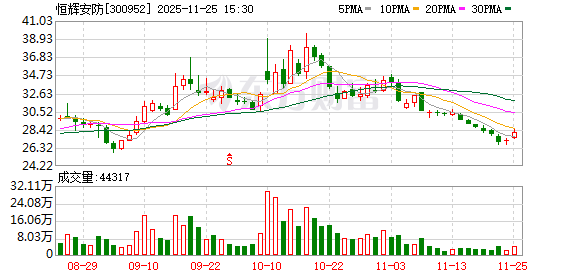
恒辉安防:公司股价受宏观经济、市场情绪等多重因素影响
Zheng Quan Ri Bao· 2025-11-25 11:13
Core Viewpoint - The company emphasizes that its stock price is influenced by multiple factors including macroeconomic conditions and market sentiment, while its performance adheres strictly to accounting standards and is audited for accuracy [2]. Group 1: Company Performance and Strategy - The recent pre-disclosure of share reduction is primarily aimed at allowing former employees to exit their incentive stock options, which is intended to optimize the incentive mechanism and enhance its effectiveness [2]. - The company asserts that its main business remains stable and that it is progressing steadily in new market segments [2]. - Future efforts will focus on operational improvements and value enhancement to reward investors with solid performance, with relevant updates to be disclosed as required [2].