
绿色消费

Search documents
沈建光:“十五五”中国数字消费发展的五大趋势
Di Yi Cai Jing· 2026-01-11 12:46
Core Insights - The Chinese digital consumption market is experiencing significant growth, with e-commerce transactions expected to reach 46.4 trillion yuan in 2024, maintaining its position as the world's largest online retail market for 12 consecutive years [1] - The market is shifting from user scale expansion to value extraction, focusing on existing users rather than acquiring new ones [2][3] - The integration of online and offline sales channels is becoming more pronounced, with instant retail emerging as a key driver of this trend [5][6] - Artificial intelligence is playing a crucial role in reshaping the consumer experience, enhancing personalization and operational efficiency [8][9] - Rural areas are becoming vital for digital consumption growth, with increasing internet penetration and a rising number of online consumers [10][11] - The focus is shifting from product consumption to service-oriented and green consumption, reflecting changing consumer preferences and environmental awareness [12][13][14] Group 1: Market Overview - In 2024, China's e-commerce retail sales are projected to account for 47% of total retail sales, significantly higher than in developed countries [2] - The digital consumption user base is expected to exceed 958 million by mid-2025, representing 85.3% of internet users [2] Group 2: Trends in Digital Consumption - The development model is transitioning from user scale expansion to deep value extraction from existing users, with live commerce and content commerce leading this change [3] - Instant retail is blurring the lines between online and offline shopping, with a projected market size of 781 billion yuan in 2024 [5][6] Group 3: Technological Advancements - AI technology is rapidly advancing in China, with significant improvements in model performance and application across various sectors [8] - AI is transforming the consumer journey, enabling personalized recommendations and automating service processes [9] Group 4: Rural Market Dynamics - Rural internet users are growing, with 322 million rural internet users by mid-2025, representing 28.7% of total internet users [10] - The rural market is becoming a new growth source for online consumption, with a significant increase in express delivery services to rural areas [11] Group 5: Consumption Shifts - Digital service consumption is on the rise, with online education and internet healthcare seeing substantial user growth [13] - Green consumption is gaining traction, with a notable increase in second-hand e-commerce transactions and a shift towards sustainable purchasing behaviors [14]
今日财经要闻TOP10|2026年1月11日
Xin Lang Cai Jing· 2026-01-11 11:50
Group 1 - The "Is it dead?" app, developed with a cost of just over 1000 yuan, has gained unexpected popularity on social media and is already profitable [1] - The app was initiated around mid-2025 and took less than a month to develop with a team of three young developers [1] - The founder plans to sell 10% of the company for 1 million yuan, implying a valuation of 10 million yuan for the app [1] Group 2 - The U.S. Central Command has conducted a large-scale strike against multiple targets of the extremist group "Islamic State" in Syria, as part of the "Eagle Eye Strike" operation [2] - This military action was ordered by President Trump in response to a deadly attack by the Islamic State on U.S. and Syrian government forces [2] Group 3 - The U.S. Secretary of the Treasury indicated that the U.S. may soon lift sanctions on Venezuela to promote oil sales and facilitate international financial engagement [14] - The U.S. is considering using Venezuela's frozen IMF Special Drawing Rights for economic reconstruction, with small private energy firms expected to return to the country before larger companies [14] Group 4 - The National Business Work Conference emphasized the need to optimize the implementation of the old-for-new consumption policy to expand and upgrade commodity consumption [4] - The conference outlined eight key areas for the national business system to focus on, including enhancing service consumption, promoting trade innovation, and improving foreign investment attractiveness [4]
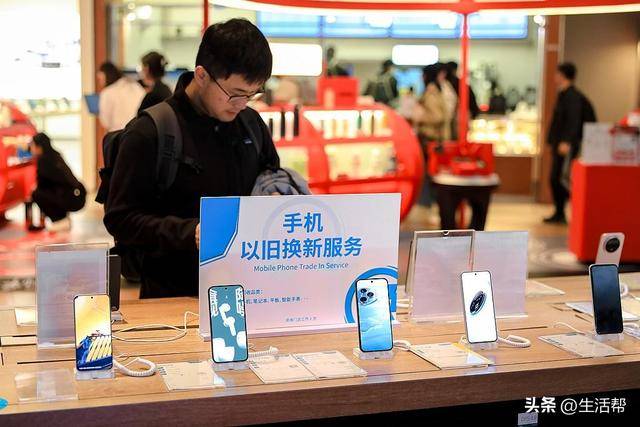
2026年商品消费扩容升级 电商平台在行动
Bei Jing Shang Bao· 2026-01-11 10:50
Group 1: National Business Conference Insights - The National Business Work Conference held on January 10-11, 2026, outlined key initiatives for enhancing consumption, including the implementation of a special action plan to boost consumer spending and the development of a modern commercial circulation system [1] - The conference emphasized eight key areas of focus, including the promotion of the "Buy in China" brand, fostering new growth points in service consumption, and optimizing the implementation of the old-for-new policy for consumer goods [1] Group 2: E-commerce and Subsidy Initiatives - Major e-commerce platforms like JD.com and Tmall have actively engaged in the "National Subsidy" program, offering substantial subsidies for energy-efficient appliances, with individual subsidies reaching up to 1,500 yuan [3] - JD.com has expanded its old-for-new service to over 200 categories, including home appliances and digital products, and has invested nearly 30 billion yuan in rural areas for subsidies and service enhancements [3][4] Group 3: Impact on Local Retail and Consumer Behavior - Meituan has leveraged its instant retail capabilities to connect local physical stores, significantly increasing sales of digital and home appliances due to the "National Subsidy" program [4] - From 2024 to 2025, the old-for-new policy led to the replacement of 192 million appliances, contributing to a sales increase of 3.92 trillion yuan and benefiting approximately 494 million consumers [4] Group 4: Logistics and Infrastructure Development - In Beijing, the completion of the JD.com logistics hub in Pinggu District is part of a broader plan to establish 100 central and node warehouses across the city, enhancing logistics efficiency [5] - By 2026, Beijing aims to build 50 logistics front warehouses equipped with smart sorting systems and cold chain storage to support the growing demand for efficient distribution [5]




新国补落地:普通人省钱攻略大揭秘,手把手教你薅羊毛!
Sou Hu Cai Jing· 2026-01-11 07:11
Core Insights - The new round of "trade-in" subsidy policy in China has been implemented with an initial allocation of 62.5 billion yuan, covering various consumer goods from home appliances to digital devices and automobiles [2][8] - The policy aims to stimulate consumption and promote energy-efficient products, with specific focus on first-level energy efficiency appliances and new energy vehicles [10] Home Appliance Upgrade - The subsidy for home appliances focuses on six core products: refrigerators, washing machines, televisions, air conditioners, computers, and water heaters, with a maximum subsidy of 1,500 yuan per item and a total potential savings of up to 9,000 yuan [2][3] - Sales of first-level energy-efficient appliances surged by 320% in the first week of the policy implementation, indicating strong consumer demand [3] Digital Device Upgrade - The subsidy now includes AI glasses for the first time, allowing consumers to save up to 500 yuan on eligible products priced under 6,000 yuan [4][5] - The digital subsidy covers smartphones, tablets, smartwatches, and smart glasses, with a 15% subsidy rate [4] Automotive Replacement - The policy favors new energy vehicles, offering a maximum subsidy of 20,000 yuan for scrapping old fuel vehicles, significantly reducing the effective purchase price [5][6] - The subsidy structure differentiates between scrapping and replacing vehicles, with varying rates for new energy and fuel vehicles [6] Policy Highlights - A unified national subsidy standard has been established, enhancing the benefits for consumers in regions with previously lower subsidies [8] - The policy is designed to encourage green consumption and accelerate the transition to low-carbon products, as evidenced by a 210% increase in green appliance sales and a 45% rise in new energy vehicle sales in the first week [10] Consumer Caution - Consumers are advised to be vigilant against price manipulation and fraudulent claims, with strict monitoring in place to prevent abuse of the subsidy system [9] - The policy includes specific timelines for subsidy claims, emphasizing the need for timely verification and submission of required documents [9]


消费添“绿”,产业向“新”
Sou Hu Cai Jing· 2026-01-11 05:19
Group 1 - The core idea of the news is the implementation of a green consumption promotion action plan by nine government departments, which includes 20 measures across seven areas to encourage sustainable consumption practices [1][3]. - The action plan aims to lower the cost of green consumption through subsidies, credit support, and incentive programs, thereby boosting consumer confidence and willingness to engage in green purchasing [3]. - The plan anticipates significant outcomes, including the replacement of 18.3 million cars and 192 million home appliances through trade-in programs by 2025, with nearly 60% of new vehicles being electric and over 90% of appliances meeting high energy efficiency standards [3][4]. Group 2 - The promotion of green consumption is expected to trigger transformations across various sectors, including manufacturing, construction, and energy, leading to innovations such as energy-efficient appliances and green buildings that can reduce energy consumption by over 90% compared to traditional structures [4]. - The national carbon market is gaining momentum, providing businesses with tangible incentives to reduce emissions, which is part of the broader strategy to enhance resource recycling and achieve a projected output value of over 5 trillion yuan by 2025 [4]. - Young consumers are identified as key drivers of green consumption, with a survey indicating that 93.3% of young respondents prioritize purchasing eco-friendly products, suggesting a shift towards sustainable lifestyles among the youth [6].
申万宏源建筑周报:年初建筑股开门红,一季度重视国企改革行动-20260111
Shenwan Hongyuan Securities· 2026-01-11 03:42
Investment Rating - The industry investment rating is "Overweight" indicating that the industry is expected to outperform the overall market performance [2][25]. Core Insights - The construction sector has shown a strong performance with a weekly increase of 5.72%, outperforming major indices such as the Shanghai Composite Index and Shenzhen Component Index [4][5]. - Key sub-sectors like steel structures and professional engineering have demonstrated significant growth, with notable companies like Zhite New Materials and Honglu Steel Structure showing exceptional stock performance [4][7]. - The report highlights the government's focus on infrastructure development, particularly in railway projects and green consumption initiatives, which are expected to drive investment opportunities in the sector [11][14]. Industry Performance - The construction industry outperformed major indices with a weekly increase of 5.72%, while the Shanghai Composite Index increased by 2.79% [4][5]. - The best-performing sub-sectors for the week included steel structures (+14.51%), professional engineering (+11.49%), and ecological landscaping (+7.63%) [7][10]. Key Company Updates - Honglu Steel Structure signed contracts worth 291.02 billion yuan in 2026, marking a 2.84% year-on-year increase, with a steel structure output of 502.07 million tons, up 11.3% [14]. - Zhite New Materials experienced a remarkable stock increase of 148.84% in the week, reflecting strong market interest [11][10]. - Precision Steel Structure secured 698 new contracts with a total value of 242.7 billion yuan, representing a 10.5% year-on-year growth [14]. Government Initiatives - The Ministry of Transport emphasized accelerating major railway project construction and promoting multi-modal transport systems [11][14]. - The Ministry of Housing and Urban-Rural Development, along with other departments, launched initiatives to promote green consumption and low-carbon production methods [11][14].
2025年中国茶叶连锁行业发展历程、产业链、市场规模、重点品牌及趋势研判:绿色消费带动茶叶连锁发展,茶叶供给能力不断增强[图]
Chan Ye Xin Xi Wang· 2026-01-11 01:03
Core Insights - The tea chain industry in China has seen significant growth, with market size increasing from 49.13 billion yuan in 2015 to 91.54 billion yuan in 2022, reflecting a compound annual growth rate (CAGR) of 9.3% [1][11] - However, a projected decline of 2.66% is expected in 2024, with the market size estimated at 87.83 billion yuan, primarily due to rational consumer spending and competition from online channels and new tea beverage brands [1][11] - The industry is anticipated to evolve towards greater branding and specialization, with an emphasis on brand building, market segmentation, and enhanced consumer experiences through smart features [1][11] Industry Overview - The tea chain industry operates through a standardized and chain-based business model, providing tea products and related services across various retail formats [3][11] - It can be categorized by product type (green tea, black tea, etc.), sales channels (direct, franchise, e-commerce), and service forms (tea shops, tea experience stores) [3] Industry Development History - The industry began in the 1990s, gaining momentum in the 21st century as consumer demand diversified and e-commerce emerged as a significant opportunity [5][6] - The current landscape features a more concentrated market with established brands and a need for continuous innovation to address challenges like product homogenization and intense competition [6] Industry Value Chain - The upstream of the tea chain industry includes tea plantations and processing facilities, while the midstream consists of tea chain enterprises responsible for brand management and retail operations [6] - The downstream involves consumers who drive demand and feedback, influencing the entire value chain [6] Market Trends - The tea chain industry is expected to focus on experiential retail, transforming stores into cultural and social spaces that enhance customer engagement [15] - Digital tools will facilitate precise service and supply chain integration, improving operational efficiency and product traceability [15] - There will be a shift towards health-oriented products and innovative forms, catering to modern consumer preferences [16][17] Key Companies - Notable companies in the tea chain industry include Baima Tea, Lancang Ancient Tea, Tianfu, and others, each with unique market strategies and product offerings [2][12] - Baima Tea, for instance, has over 3,700 stores and has established a strong online presence, achieving significant sales growth [12][13]


中国经济信心说丨消费添“绿”,产业向“新”
Xin Lang Cai Jing· 2026-01-10 16:23
Core Viewpoint - The recent joint announcement by the Ministry of Commerce and nine other departments on promoting green consumption aims to establish a comprehensive incentive mechanism, proposing 20 measures across seven areas to drive green transformation in production and lifestyle, thereby injecting new momentum into high-quality development [1][3]. Group 1: Policy Measures - The initiative includes policy subsidies, credit support, and incentive points to lower the cost of green consumption for consumers, effectively stimulating consumption willingness and confidence [3]. - Measures such as promoting green recycling and upgrading energy efficiency labeling management are designed to solidify the institutional foundation for normalizing green consumption [3]. - It is projected that from 2024 to 2025, 18.3 million vehicles will be replaced under the old-for-new policy, and 192 million home appliances will be upgraded, with nearly 60% being new energy vehicles and over 90% being first-level energy-efficient appliances [3]. Group 2: Industry Transformation - The push for green consumption is expected to trigger a chain reaction of transformations across various sectors, including manufacturing, circulation, energy, and emissions reduction [4]. - In manufacturing, energy-efficient appliances are continuously evolving, while smart variable frequency devices balance comfort and energy savings [4]. - The construction industry is seeing the rise of green buildings that can reduce energy consumption by over 90% compared to traditional buildings, significantly enhancing residents' living experiences [4]. Group 3: Youth Engagement - The youth demographic is identified as a key driver in promoting green consumption, with 93.3% of surveyed young individuals prioritizing the purchase of green products, and 77.6% believing that a green low-carbon lifestyle will become more prevalent among their peers [6]. - As policy support becomes more robust, it is expected to create new scenarios for green consumption, facilitating a seamless connection for young consumers to engage in sustainable practices [6].
(经济观察)前瞻2026:“两新”政策优化激发中国消费新活力
Zhong Guo Xin Wen Wang· 2026-01-10 11:40
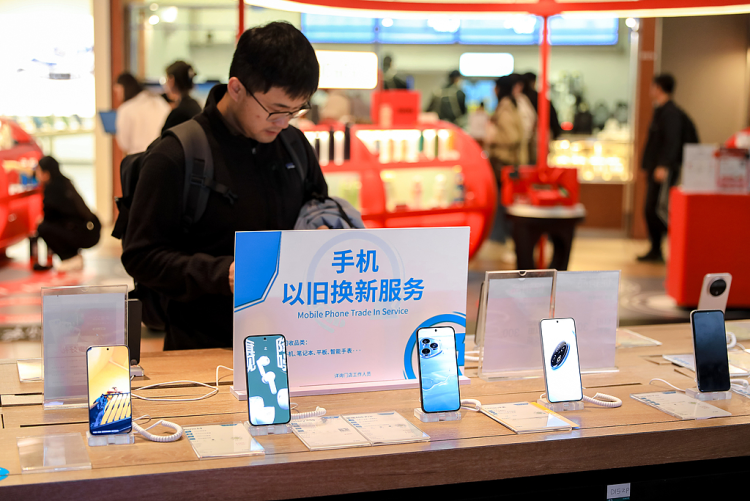
Group 1 - The new "Two New" policy in China is accelerating the implementation of large-scale equipment updates and the replacement of consumer goods, stimulating new vitality in the consumption market [1][2] - Rural areas are showing significant consumption potential, with retail sales of consumer goods in rural China expected to reach 66,729 billion yuan in 2024, a year-on-year increase of 4.3%, outpacing urban growth by 0.9 percentage points [1] - E-commerce platforms, particularly JD.com, are actively supporting the "National Subsidy" policy, having invested nearly 30 billion yuan by 2025 to enhance rural consumer access [2] Group 2 - The latest "National Subsidy" policy focuses on smart and green consumption trends, providing a 15% subsidy for eligible products such as smartphones and smart glasses, with a cap of 500 yuan per item [2][3] - The policy encourages green consumption by only subsidizing products with high energy efficiency ratings, with a maximum subsidy of 1,500 yuan for eligible appliances [3] - The "Two New" policy aims to precisely match high-end supply with demand, with projections indicating that 1.83 million vehicles will be replaced under the old-for-new program, with nearly 60% being new energy vehicles [3]
光伏退税退场,沪指站稳4100点丨一周热点回顾
Di Yi Cai Jing· 2026-01-10 07:51
其他热点还有:外卖平台迎来反垄断调查,一周之内三家AI企业港交所上市。 光伏产品增值税出口退税取消 继2024年底中国将光伏、电池出口退税率由13%下调至9%后,1月9日财政部、税务总局发布公告,决 定自2026年4月1日起,取消光伏等产品增值税出口退税;自2026年4月1日起至2026年12月31日,将电池 产品的增值税出口退税率由9%下调至6%;2027年1月1日起,取消电池产品增值税出口退税。 当前,光伏产业存在供需错配和无序低价竞争等问题。去年7月初,工业和信息化部召开光伏行业制造 业企业座谈会,提出依法依规、综合治理光伏行业低价无序竞争,引导企业提升产品品质,推动落后产 能有序退出,实现健康、可持续发展。 根据中国光伏行业协会数据,光伏主产业链31家企业2025年前三季度营业收入同比下降16.9%,合计亏 损310.39亿元。受全球光伏产业链价格整体下行影响,我国光伏产品出口额已连续两年同比下降。 【点评】经过多年出口退税支持,我国光伏和电池产业在国际上已经具备竞争优势,但也出现了无序低 价竞争以及其他一些国家反补贴调查等问题。业内人士认为,取消出口退税可看作"反内卷"的另一举 措,意在逼迫企业放弃 ...