
促消费政策

Search documents
瑞达期货沪铜产业日报-20250709
Rui Da Qi Huo· 2025-07-09 08:39
Report Industry Investment Rating - Not provided Core View of the Report - The fundamentals of Shanghai copper are currently in a state where supply is boosted, but demand is still weak. However, due to the support of the macro - environment, the industry is expected to operate favorably. The option market sentiment is bullish, and the implied volatility has slightly decreased. It is recommended to conduct light - position short - term long trades at low prices, while paying attention to controlling the rhythm and trading risks [2]. Summary by Relevant Catalogs Futures Market - The closing price of the Shanghai copper futures main contract is 78,400 yuan/ton, down 1,220 yuan; the LME 3 - month copper price is 9,611.50 dollars/ton, down 179 dollars. The main contract's inter - month spread is 200 yuan/ton, up 30 yuan; the main contract's open interest of Shanghai copper is 193,999 lots, down 13,383 lots. The top 20 futures positions of Shanghai copper are 9,545 lots, down 5,230 lots. The LME copper inventory is 102,500 tons, up 5,100 tons; the SHFE inventory of cathode copper is 84,589 tons, up 3,039 tons; the LME copper cancelled warrants are 37,100 tons, up 225 tons; the SHFE warrants of cathode copper are 21,336 tons, down 2,856 tons [2]. Spot Market - The SMM 1 copper spot price is 79,190 yuan/ton, down 605 yuan; the Yangtze River Non - ferrous Market 1 copper spot price is 79,255 yuan/ton, down 550 yuan. The Shanghai electrolytic copper CIF (bill of lading) price is 62 dollars/ton, unchanged; the Yangshan copper average premium is 28.50 dollars/ton, up 12 dollars. The CU main contract basis is 790 yuan/ton, up 615 yuan; the LME copper cash - 3 months spread is 51.31 dollars/ton, down 28.49 dollars [2]. Upstream Situation - The import volume of copper ore and concentrates is 239.52 million tons, down 50.98 million tons. The copper smelter's TC is - 44.25 dollars/thousand tons, up 0.56 dollars. The copper concentrate price in Jiangxi is 70,110 yuan/metal ton, down 70 yuan; in Yunnan, it is 70,810 yuan/metal ton, down 70 yuan. The southern processing fee for blister copper is 800 yuan/ton, unchanged; the northern processing fee is 750 yuan/ton, unchanged [2]. Industry Situation - The refined copper output is 125.40 million tons, unchanged. The import volume of unwrought copper and copper products is 430,000 tons, down 10,000 tons. The social inventory of copper is 41.82 million tons, up 0.43 million tons. The price of 1 bright copper wire in Shanghai is 55,990 yuan/ton, down 100 yuan; the price of 2 copper (94 - 96%) in Shanghai is 68,100 yuan/ton, unchanged. The ex - factory price of 98% sulfuric acid of Jiangxi Copper is 600 yuan/ton, unchanged [2]. Downstream and Application - The copper product output is 209.60 million tons, up 1.50 million tons. The cumulative completed investment in power grid infrastructure is 2,039.86 billion yuan, up 631.69 billion yuan. The cumulative completed investment in real estate development is 36,233.84 billion yuan, up 8,504.27 billion yuan. The monthly output of integrated circuits is 4,235,000 thousand pieces, up 68,000 thousand pieces [2]. Option Situation - The 20 - day historical volatility of Shanghai copper is 11.25%, up 1.31 percentage points; the 40 - day historical volatility is 10.33%, up 0.78 percentage points. The implied volatility of the current - month at - the - money IV is 10.86%, down 0.0038 percentage points; the call - put ratio of at - the - money options is 1.49, up 0.0312 [2]. Industry News - From January to June, policies to expand domestic demand and promote consumption continued to show effects. The year - on - year CPI changed from a decline to a 0.1% increase; the month - on - month decrease was 0.1%, with the decline narrowing by 0.1 percentage points. The core CPI excluding food and energy prices continued to rise, up 0.7%. The month - on - month PPI decreased by 0.4%, the same as last month; the year - on - year decrease was 3.6%, with the decline expanding by 0.3 percentage points. Trump announced that tariffs would start on August 1st, with a 50% tariff on imported copper and up to 200% on drugs. He also mentioned possible tariffs on semiconductors. Chinese Premier Li Qiang met with the Director - General of the WTO and stated that China has the resources and means to hedge against external adverse effects. In June, the production and retail of passenger cars increased year - on - year, with new energy vehicles showing more significant growth. By 2035, about 32% of global semiconductor production may be affected by climate - change - related copper supply disruptions [2].
2025年6月物价数据点评:6月菜价、油价上涨推动CPI同比转正,PPI同比降幅有所扩大
Dong Fang Jin Cheng· 2025-07-09 06:50
Group 1: CPI Analysis - In June 2025, the CPI increased by 0.1% year-on-year, reversing from a decline of 0.1% in May, with a cumulative year-on-year decline of 0.1% for the first half of the year[1][2] - The main drivers for the CPI increase were a significant narrowing of the year-on-year decline in vegetable prices and a rise in domestic energy prices due to international crude oil price increases[2][3] - The core CPI, excluding volatile food and energy prices, showed a cumulative year-on-year increase of 0.4%, indicating a weak overall price level[3][6] Group 2: PPI Analysis - In June 2025, the PPI decreased by 3.6% year-on-year, widening from a decline of 3.3% in May, with a cumulative year-on-year decline of 2.8% for the first half of the year[1][2][8] - The PPI decline was primarily influenced by weak domestic demand and oversupply, leading to accelerated price declines in coal, steel, and cement[2][9] - The PPI's month-on-month decline remained at 0.4%, consistent with the previous month, marking four consecutive months of such a decline[8][10] Group 3: Future Outlook - The report anticipates that the CPI may return to negative territory in July, likely around -0.2%, due to external economic pressures and high base effects from the previous year[7][12] - The PPI is expected to continue its month-on-month decline in July, but the rate of decline may slightly narrow, with a year-on-year decline projected to remain around -3.6%[12]
前5月家电和音像器材类商品零售额增长30.2%
Ren Min Ri Bao· 2025-07-03 00:31
Core Insights - The light industry in China is showing a steady recovery, with significant growth in revenue and profit during the first five months of the year [1][2] Group 1: Economic Performance - From January to May, large-scale light industry enterprises achieved operating income of 9.27 trillion yuan, a year-on-year increase of 4.7% [1] - Profit reached 531.45 billion yuan, reflecting a year-on-year growth of 2.8% [1] - The overall economic operation of the light industry continues to show a trend of steady progress [2] Group 2: Domestic Market Expansion - Domestic consumption demand has been steadily released, with retail sales of 11 categories of light industry goods reaching 3.5136 trillion yuan, a year-on-year increase of 11.9%, accelerating by 1.2 percentage points compared to the first four months [1] - In the home appliance sector, retail sales of household appliances and audio-visual equipment grew by 30.2%, maintaining double-digit growth since September of the previous year [1] - The added value of the home appliance industry increased by 6.9%, with production volumes for washing machines, water dispensers, and air conditioners growing by 9.3%, 7.9%, and 5.9% respectively [1] - The operating income of the home appliance manufacturing industry grew by 6.0% [1] Group 3: Export Performance - Light industry exports totaled 373.21 billion USD from January to May, showing a year-on-year increase of 0.5% despite facing pressure [1] - Out of 21 major categories in the light industry, 10 categories experienced a year-on-year increase in export value [1]
专访郭磊:促消费红利释放,做实内需应对潜在风险
21世纪经济报道· 2025-06-26 23:23
Core Viewpoint - The article discusses the recent economic data from January to May, highlighting strong consumer performance while industrial output and exports show signs of slowing down. The chief economist of GF Securities, Guo Lei, provides insights into the driving factors behind consumer growth and the expected trends for exports and industrial performance in the second half of the year [1][2]. Consumer Performance - In May, the total retail sales of consumer goods increased by 6.4% year-on-year, marking the highest monthly growth rate this year, outperforming exports and investments [1]. - The improvement in consumer spending is attributed to several factors, including enhanced economic growth momentum and improved household income expectations, with actual GDP growth rebounding from 4.6% in Q3 of last year to 5.4% in Q1 of this year [5]. - The reduction in mortgage pressure due to lower interest rates has improved household cash flow, leading to a more significant recovery in urban consumption [5]. - The government has allocated 300 billion yuan for long-term special bonds to support consumption, with over 160 billion yuan already disbursed, indicating a solid foundation for consumer demand [6]. Industrial Performance - In May, the industrial added value grew by 5.8% year-on-year, reflecting resilience despite a slowdown [8]. - The slowdown in industrial output is linked to reduced export demand and a decline in the construction sector, which has led to a decrease in production schedules and inventory levels [8]. - High-tech manufacturing and equipment manufacturing sectors continue to grow at rates above the overall industrial average, supported by ongoing policy incentives for innovation and efficiency [9]. Export Trends - Although the export growth rate has slowed compared to previous months, it remains resilient, with significant growth in exports to the EU (12.0%) and Africa (33.3%) in May [13]. - The diversification of export markets has helped maintain overall export performance, with the share of exports to ASEAN rising to 18.5% [13]. - High-end manufacturing products, such as automobiles and integrated circuits, continue to see strong export growth, contributing to the resilience of China's export sector [13]. Future Outlook - The second half of the year is expected to see a slowdown in the export-manufacturing sector, with potential countermeasures including promoting counter-cyclical construction and enhancing domestic consumption to offset external uncertainties [11]. - The overall GDP growth rate is projected to remain around 5%, with a focus on optimizing nominal growth and addressing supply-demand imbalances [17]. - Policies aimed at reducing "involution" in industries, such as the automotive sector, are anticipated to intensify, focusing on mergers, capacity optimization, and price stabilization [17].


恒生消费ETF(513970)涨近1%,冲击三连阳!六部门联合印发,促消费政策持续发力
Sou Hu Cai Jing· 2025-06-25 02:21
Group 1 - The core viewpoint of the articles highlights the positive market sentiment in Hong Kong, driven by easing geopolitical tensions and supportive financial policies aimed at boosting consumer spending [1][2] - The Hang Seng Consumption ETF (513970) has shown significant performance, with a recent closing increase of 2.18% and a continued rise of nearly 1% in early trading, indicating strong investor interest [1] - The ETF has reached a scale of 1.668 billion yuan, with net inflows exceeding 310 million yuan in the past three months and over 1.162 billion yuan year-to-date, reflecting robust demand for consumer-related investments [1] Group 2 - Guotai Junan Securities notes that Hong Kong stocks have outperformed global indices in the first half of the year due to strong earnings and reasonable valuations, with expectations for continued excess returns in the second half [2] - The Hang Seng Consumption ETF closely tracks the Hang Seng Consumption Index, focusing on essential consumer sectors while excluding liquor stocks, aligning with the preferences of a new generation that values emotional consumption and service experiences [2] - Investors without stock accounts can access the consumption sector through the Hang Seng Consumption ETF linked funds, providing additional avenues for investment in this growing market [2]
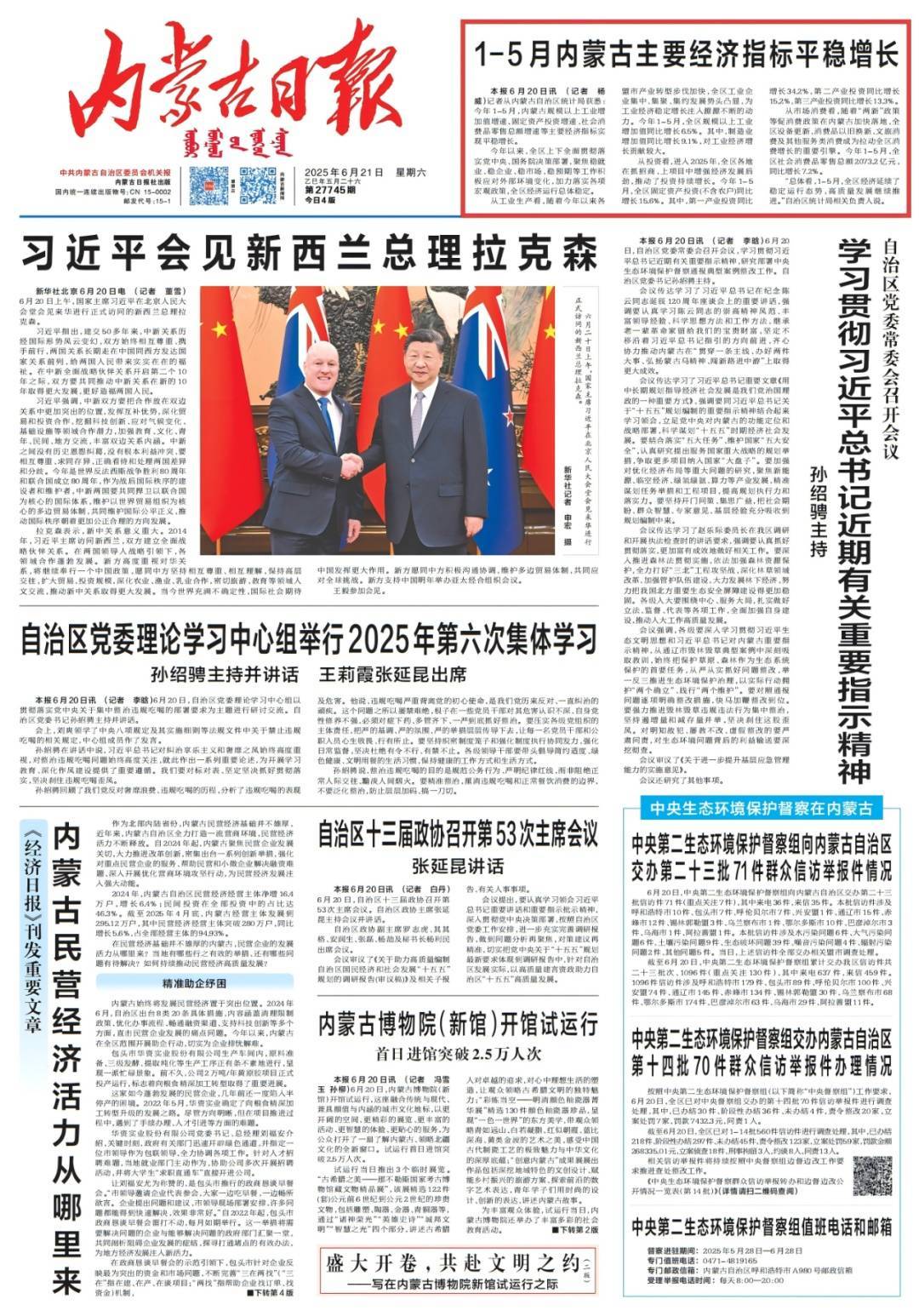
速看!1—5月内蒙古主要经济指标
Sou Hu Cai Jing· 2025-06-21 07:37
习近平会 新两兰 U4 型 拉 会堂会见来华进行正式的同的新西 the was 习近平相出,建变50多年来,中断 妈用际机构成元变灯 双方轴体相反题目 其 手前行,两国关系长期走在中国同朋方发达 列 , 给 两国人 民 带来实发 新全面战略伙伴关系开启 年取得更大发展。更好造福两国人民 习近平编副,中新双方塑拒会框放在双3 系中原加部用的位置、步展互补优势、感化 (10) Mi Mark Produkt And Childer 和联合国成立组团年,作为战后国际 必要和推起者 中新新闻要注册模式以联合E 为稀心的固定体系,推护以世界馆易组织》 出版 就体解 北侧輪的明后 际秩序朝藏華加公正合理的 两国使导人视剧可创 如 城合作福州 发展 第 有深度值 和 班 班 女 . 愿同中方坚持相互尊重、相互脚解,促持基层 中国皮魔 图 解单位标 版 化农业、通业、乳业合作、新切旅游、改革等销城人 推动循中关系胶得更大发展。当今世界充满不确定性,国际社会期待 对全球挑战。新方支持中国明年举办班大经合组织会议, 自治区党委理论学习中心组举行2025年第六次集体学习 孙绍骋主持并讲话 王莉霞张延昆出席 会上,刘爽循学了中央八项 ...
中国汽车流通协会:预计6月份全月乘用车终端销量接近200万辆 上半年销量同比增速或将达到7%
智通财经网· 2025-06-20 09:01
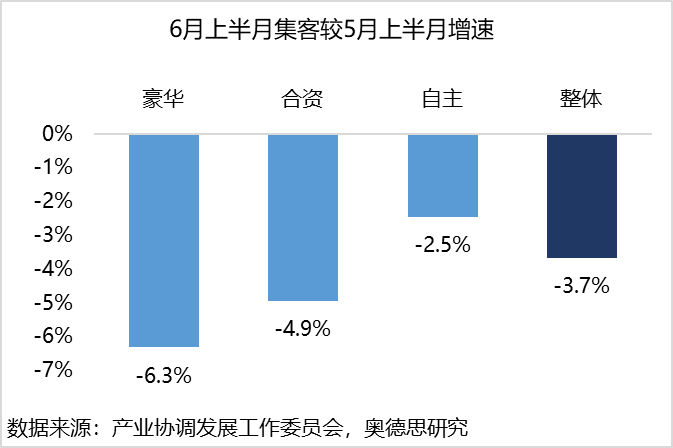
智通财经APP获悉,6月20日,中国汽车流通协会发布2025年6月乘用车市场半月报。在经销商半年目标冲刺、端午节 及"6.18"活动、叠加以旧换新政策的刺激下,消费者由前期观望转变为实际购车。高考结束及暑期自驾游购车需求的逐渐增 长,也将拉动6月份乘用车市场销量进一步提升。中国汽车流通协会预计6月份全月乘用车终端销量接近200万辆。今年上半 年销量同比增速或将达到7%。 中国汽车流通协会指出,在国家和地方促消费政策的推动下,上半年乘用车市场保持平稳向好的态势。"五一"期间,各地 车展密集启动叠加小长假效应,自驾游与结婚季等家庭购车需求集中释放,助力5月乘用车市场实现同比、环比双增长。 6月是上半年的时间节点,厂商及经销商全力冲刺半年目标,借助端午假期及"6.18"等活动积极促销冲量;另外随着高考结 束以及暑假旅游季的即将到来,新的购车需求形成,有利于6月市场销量的提升。 根据经销商反馈的集客、销量和库存双周报数据可知: 6月上半月销量较5月同期下降2.8%,较5月下半月下降11.8%。6月上半月订单较5月下半月已有所增长,预计将在下半月持 续转化为销量;厂商及经销商的半年度任务冲量促销力度大,消费者由前期观望 ...
德银中国首席经济学家熊奕: 经济基本面改善 支撑人民币汇率走强
Zheng Quan Shi Bao· 2025-06-18 18:25
以旧换新政策在促进商品消费方面已经取得阶段性成果,考虑到耐用品置换周期,后续政策刺激效应或 将逐渐趋缓。要进一步促进国内消费,还需要进一步提振就业与居民收入,以及扭转偏低的通胀预期。 促进服务业就业与消费,特别是教育、健康、育儿等消费升级趋势下居民有意愿增加支出的领域,可能 是进一步促进消费的突破口。 证券时报记者:自去年9月24日以来,中国陆续出台一揽子化债政策与促增长举措,今年政治局会议前 后,又落地特别国债发行、央行降准降息等政策工具。从当前经济运行节奏看,未来还有哪些政策利好 值得关注? 近日,国家统计局发布的5月经济数据超市场预期,以旧换新政策在促消费方面取得了阶段性成果。对 此,德意志银行等多家国际大行纷纷上调对中国经济增长的预测,并认为经济基本面的改善支持人民币 汇率走强。 为此,证券时报记者专访了德银中国首席经济学家熊奕。他就中国经济增长预期、人民币汇率、促消费 效果、政策发力方向等话题分享了观点。他认为,促进服务业就业和消费,特别是教育、健康、育儿等 消费升级趋势下居民有意愿增加支出的领域,可能是进一步促进消费的突破口。 证券时报记者:近日,国家统计局发布了5月经济数据,规模以上工业增加值同 ...
5月经济数据点评:消费增速超预期上行
Tai Ping Yang Zheng Quan· 2025-06-18 03:43
Economic Performance - In May, China's industrial added value increased by 5.8% year-on-year, slightly below the expected 5.9% and down from 6.1% in the previous month[5] - The total retail sales of consumer goods in May grew by 6.4%, exceeding the market expectation of 5.0% and up from 5.1% in April[5] - Fixed asset investment (excluding rural households) from January to May rose by 3.7%, below the expected 3.9% and down from 4.0% in the previous month[5] - The urban surveyed unemployment rate in May was 5.0%, down from 5.1% in the previous month[5] Industrial Production - The decline in industrial production growth is attributed to external factors, with a notable drop in export delivery values, which fell by 0.3 percentage points to 0.6%[9] - Domestic demand has provided support to industrial production, with the equipment manufacturing sector's added value growing by 9%, contributing 54.3% to industrial production[13] Consumer Spending - The growth in retail sales was driven by several factors, including ongoing consumption promotion policies and the early start of e-commerce sales events[19] - Key categories such as home appliances and communication equipment saw retail sales increase by 53% and 33% respectively, contributing 1.9 percentage points to total retail sales growth[19] Investment Trends - Fixed asset investment growth has slowed, with manufacturing investment showing resilience at 7.8% year-on-year in May, despite a decline from the previous month[25] - Infrastructure investment (excluding electricity, heat, gas, and water production and supply) grew by 5.6% from January to May, down 0.2 percentage points from the previous month[29] Employment Situation - The urban surveyed unemployment rate has shown a marginal improvement, remaining at 5.0% for three consecutive months, indicating a stable employment situation[37] - However, structural pressures in the labor market persist, with the unemployment rate for migrant workers rising to 5.0%[37]
“以旧换新”蓄动力,_过境免签”新亮点
China Post Securities· 2025-06-17 11:06
Economic Performance - In May, the economic growth rate is estimated to be around 5.5%, consistent with the previous month, indicating a stable economic performance[16] - The demand improvement is primarily driven by consumption, while investment and exports show marginal slowdown, aligning with prior assessments[16] Consumption Trends - Retail sales in May increased by 6.4% year-on-year, surpassing expectations and indicating a recovery in consumer spending[21] - Policy-driven consumption, particularly in home appliances and cultural products, showed significant growth rates of 53% and 30.5% respectively, contributing to the overall retail sales increase[25] Investment Insights - Fixed asset investment growth remains at 3.7% year-on-year, below expectations, with real estate investment declining by 10.7%[32] - Manufacturing investment growth is at 8.5%, reflecting a marginal decrease, influenced by uncertainties in the market due to U.S. tariff policies[48] U.S. Tariff Policy Impact - The uncertainty surrounding U.S. tariff policies continues to affect market sentiment and investment decisions, with expectations of a slight economic slowdown in Q2 to around 5.2%-5.3%[3] - The potential for a recovery in market sentiment is anticipated in Q3 if U.S. tariff policies stabilize or improve, possibly leading to new investment opportunities[3] Real Estate Market Dynamics - The real estate market remains under pressure, with property sales declining by 4.41% year-on-year, although the rate of decline is showing signs of slowing[35] - The average sales price of commercial housing in May was 10,004.44 yuan per square meter, with a year-on-year decline of 2.7%, indicating a need for price stabilization[35] Future Outlook - If U.S.-China trade negotiations yield positive results, there could be a restoration of market risk appetite, benefiting exports and overall economic recovery[57] - The upcoming July meeting of the Central Political Bureau is critical for observing potential policies aimed at stabilizing growth amid external pressures[58]