中美贸易摩擦
Search documents
综合晨报-20251014
Guo Tou Qi Huo· 2025-10-14 02:50
Report Industry Investment Ratings No relevant content provided. Core Views of the Report - The report analyzes various commodities including energy, metals, chemicals, and agricultural products, providing insights on their supply - demand, price trends, and investment strategies based on current market conditions such as geopolitical events, trade frictions, and seasonal factors [2][3][4] - It also offers views on financial products like stock indices and treasury bonds, considering macro - economic factors and policy directions [47][48] Summary by Commodity Categories Energy - **Crude Oil**: International oil prices partially recovered on Monday. Fourth - quarter Brent crude average price is expected to drop from $67/barrel in Q3 to $62/barrel. Short - term, end - of - month APAC meeting and Sino - US talks may affect risk sentiment, and the previously recommended strategy can be temporarily closed [2] - **Fuel Oil & Low - sulfur Fuel Oil**: Fuel oil is expected to follow crude oil's oscillation. High - sulfur fuel oil gets short - term support but faces medium - term pressure, while low - sulfur fuel oil has a weak fundamental outlook [20] - **Liquefied Petroleum Gas (LPG)**: OPEC+增产背景下海外伴生气供应压力加剧,沙特10月CP价格下调超出市场预期,LPG缺乏利好支撑而承压 [22] - **Urea**: Supply remains high, demand is weak, and the domestic supply - demand pattern is loose. The market is likely to continue its weak trend [23] - **Methanol**: The Iran sanctions ship event may reduce imports. Coastal MTO device operation is stable, and port inventory accumulation is less than expected [24] - **Polypropylene & Plastic & Propylene**: Cost support weakens, downstream demand is scattered, and inventory needs to be digested. Prices are under pressure [27] - **PVC &烧碱**: Trade friction may affect PVC exports. PVC supply is high, and it may have a weak - oscillating trend. Caustic soda has a marginal improvement, and the decline of futures prices is expected to be limited [28] - **PX & PTA**: PX price decline drives the polyester industry chain down. Supply is under pressure, and downstream demand is expected to weaken in the mid - to - long term [29] - **Ethylene Glycol**: Domestic production increases, ports accumulate inventory, but the price is at the bottom of the range. Pay attention to Sino - US trade relations [30] - **Short Fibre & Bottle Chip**: Short - fibre prices decline due to raw material and trade friction. Bottle - chip production increases inventory, and demand is expected to weaken [31] - **Glass**: It is in a weak state. After the holiday, inventory accumulates, and supply exceeds demand. It is recommended to wait for low - buying opportunities near the cost [32] - **20 - Number Rubber & Natural Rubber & Butadiene Rubber**: Demand recovers after the holiday, supply pressure is high, and inventory decreases. It is advisable to wait and see [33] - **纯碱**: Supply is high, demand increase is limited, and the supply - demand surplus pattern remains. It is advisable to short at high - rebound levels [34] - **大豆 &豆粕**: Domestic soybean supply in Q4 is sufficient, but it may be tight in Q1 next year. Wait and see for now, and be cautiously bullish in the long term [35] - **豆油 &棕榈油**: US soybean sales are slow. The supply of South American soybeans and existing domestic inventory can buffer. Palm oil inventory is high. Wait for price bottom - seeking and then go long [36] - **菜粕 &菜油**: Canadian rapeseed harvest nears completion, with good yield. Pay attention to Sino - US and Sino - Canadian relations. Consider short - selling rapeseed - related products in cross - product strategies [37] - **豆一**: Domestic soybeans are rebounding, and imports from the US are affected. Supply may be tight in Q1 next year. Pay attention to policy guidance [38] - **玉米**: Corn futures decline. New grain supply increases, and prices are under pressure. Hold short positions and wait for policy support [39] - **生猪**: Futures prices are under pressure, and the spot price is at the bottom. Pay attention to secondary fattening and the industry's capacity reduction cycle [40] - **鸡蛋**: Near - month contracts are strong, and far - month contracts are weak. Accelerate the elimination of old chickens. Short near - month contracts and go long on far - month contracts [41] - **棉花**: US cotton demand is weak, and domestic cotton supply may increase significantly. Demand is weak. Temporarily wait and see [42] - **白糖**: International sugar supply is sufficient, and the domestic market focuses on the new - season output. Pay attention to weather and sugarcane growth [43] - **苹果**: Futures prices are high - oscillating. Supply change is small, and cold - storage inventory may be higher than expected. Adopt a short - selling strategy [44] - **木材**: Prices are in a correction. Supply is low, demand is weak, and inventory pressure is small. Wait and see [45] - **纸浆**: Futures prices rise. Port inventory is high, and demand is average. Pay attention to inventory changes and wait and see [46] - **Stock Indices**: A - share market had a V - shaped recovery. Pay attention to Sino - US economic and trade relations and domestic policies. Increase allocation to the technology - growth sector in the medium term [47] - **Treasury Bonds**: Futures prices rise. The central bank maintains a moderately loose monetary policy. The yield curve steepening may end, and long - term bonds are more likely to recover [48]
资配如何应对新变化——总量创辩第113期:资产配置快评
Huachuang Securities· 2025-10-14 02:45
Economic Indicators - Manufacturing investment growth is expected to be 4.0% for January to September, the first time since 2021 that it falls below GDP growth of approximately 5.1%[2] - September PPI is expected to narrow year-on-year to -2.5%, with a month-on-month decline of around -0.2%[15] - Retail sales growth for September is projected at 3.2%, while fixed asset investment growth for January to September is estimated at -0.2%[15] Policy Adjustments - Recent policy adjustments include the acceleration of 500 billion yuan in new policy financial tools and changes to real estate purchase restrictions in first-tier cities[3][13] - The government plans to enhance economic monitoring and timely policy adjustments based on economic conditions, as stated in a press conference on September 29[2] Trade Relations - The recent escalation in US-China trade tensions includes a proposed 100% additional tariff on Chinese goods starting November 1, which has led to a short-term market reaction[5][24] - Historical data suggests that trade tensions have limited long-term impacts on market pricing, primarily affecting risk preferences rather than fundamental economic growth[4][19] Market Trends - The bond market has shown a quick decline in yields following the announcement of new tariffs, with a focus on the 1.7%-1.75% yield range for future movements[5][26] - The dollar index has rebounded by 2.3% since the Federal Reserve's September meeting, driven by a decrease in short positions and increased foreign investment in US Treasury bonds[6][28] Fund Performance - The total equity fund position increased to 96.02%, up by 118 bps from the previous week, while mixed funds rose to 93.86%, an increase of 70 bps[9][35] - The average return for equity ETFs was -0.66%, while mixed bond funds performed slightly better with an average return of -0.08%[9][37]
铜冠金源期货商品日报-20251014
Tong Guan Jin Yuan Qi Huo· 2025-10-14 02:25
Report Industry Investment Rating No relevant content provided. Core Viewpoints - Overseas risk assets have recovered, and A-shares opened lower and closed higher. The gold price reached a new high of $4,132 due to uncertainties such as Trump's tariff threats, the US government shutdown, and interest rate cut expectations. A-shares showed resilience, with the Shanghai Composite Index rebounding over 2% after touching 3,800 points. In the long - term, it is still cost - effective to buy on dips. China's September export and import data were better than expected, and the export structure continued to diversify [2][3]. - Precious metals are in a strong upward phase. Silver prices have reached new highs, driven by geopolitical and economic uncertainties, Fed interest rate cut expectations, and central bank gold - buying. If the shortage of London silver persists, silver prices are expected to continue to soar [4]. - Copper prices rebounded. Although there are uncertainties in Sino - US trade, China's September import data was strong, and the Fed's dovish stance on interest rate cuts is expected to support copper prices in the short term [6][7]. - Aluminum prices were adjusted. The market was mainly influenced by news, and the aluminum price is expected to remain in a favorable shock range considering the supply - demand fundamentals [8]. - Alumina prices are expected to remain weak due to sufficient supply, rigid demand, and a supply - demand balance leaning towards surplus [10]. - Zinc prices stabilized and oscillated. Sino - US tariff friction cooled down, and the Fed's hint of interest rate cuts supported zinc prices, but the increase in domestic social inventory limited the upward space [11]. - Lead prices faced increasing downward pressure. With the approaching delivery and the resumption of production in refineries, supply is expected to increase while demand improvement is limited [12]. - Tin prices adjusted at a high level. Supply disturbances limited the downward space, and the market was waiting for further developments in Sino - US tariff friction [13][14]. - Industrial silicon prices oscillated within a range. Supply was slightly in surplus, and demand showed mixed trends, resulting in short - term price oscillations [15][16]. - Lithium carbonate prices oscillated weakly. Although the power and energy storage markets were strong, supply continued to hit new highs, and with the cooling of resource disturbances, prices may decline [17]. - Nickel prices may rebound. Sino - US trade disturbances cooled down, and although the supply of nickel ore was expected to be loose, the current price was at the lower end of the range [19]. - The prices of soda ash and glass oscillated at a low level. After the holiday, inventory increased, and downstream purchasing was weak, so the market sentiment was low [20][21]. - Steel prices oscillated weakly. Terminal demand was weak, and the supply pressure increased, so the futures prices of steel showed a weak trend [22]. - Iron ore prices oscillated. The supply was stable, and the arrival of goods increased, while the demand from steel mills remained high, so the price was expected to oscillate [23][24]. - The prices of soybean and rapeseed meal oscillated weakly. Brazil's soybean sowing progress was fast, and domestic soybean inventory increased after the holiday, resulting in sufficient supply in the short term [25][26]. - Palm oil prices adjusted with wide - range oscillations. Malaysia's palm oil production and demand both increased in October, and although there were some supporting factors, the weakening of oil prices and cautious market sentiment led to price oscillations [27][28]. Summary by Related Catalogs 1. Metal Main Variety Trading Data - This section provides the closing prices, changes, change percentages, trading volumes, and positions of various metal futures contracts on October 13, including copper, aluminum, alumina, zinc, lead, nickel, tin, precious metals, steel, iron ore, coking coal, coke, industrial silicon, and agricultural products such as soybean and rapeseed meal [29]. 2. Industrial Data Perspective - For copper, it shows the prices, inventory changes, and other data of SHFE copper and LME copper from October 10 to 13, including spot prices, warehouse receipts, inventory, and price spreads [30]. - For nickel, it presents the price changes, inventory, and other information of SHFE nickel and LME nickel from October 10 to 13 [30]. - For other metals such as zinc, lead, aluminum, alumina, tin, precious metals, steel, iron ore, coke, coking coal, lithium carbonate, industrial silicon, and soybean and rapeseed meal, it also provides relevant price, inventory, and spread data from different periods [33][34][35].
四季度港股“剧本”或先抑后扬,高弹性恒生科技指数ETF(513180)向上动能充足
Mei Ri Jing Ji Xin Wen· 2025-10-14 02:21
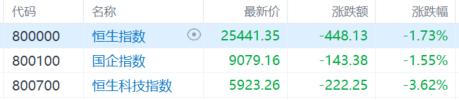
Group 1 - The Hong Kong stock market indices collectively rose, with the Hang Seng Technology Index experiencing a slight narrowing in its gains. The largest ETF in the same sector, the Hang Seng Technology Index ETF (513180), saw an intraday increase of over 1.5%, with leading stocks including XPeng Motors, JD Group, and BYD Company [1] - The automotive ETF (159323) in the Hong Kong Stock Connect rose over 2%, with leading stocks such as XPeng Motors, Beijing Jingcheng Machinery Electric Company, Yihua Energy, Weichai Power, Ganfeng Lithium, and BYD Company [1] - Guoyuan International stated that following the Federal Reserve's potential interest rate cuts, domestic policies may follow suit, supporting the valuation of Hong Kong stocks. The expectation of policy support is seen as a pillar for the long-term resilience of the Hong Kong market [1] Group 2 - According to China Merchants Securities, the Hong Kong market is expected to show a pattern of initial decline followed by recovery in the fourth quarter. In the short term, the market may continue to experience fluctuations due to a lack of incremental positive news [2] - However, with the Federal Reserve's interest rate cuts likely to attract foreign capital, upcoming policy meetings expected to boost market risk appetite, and breakthroughs in China's AI industry, multiple marginal benefits are anticipated to accumulate, potentially leading to an upward trend in the Hong Kong market [2] - As of October 13, the latest valuation (PETTM) of the Hang Seng Technology Index ETF (513180) was 23.36 times, which is approximately 31.75% of the valuation percentile since the index's inception, indicating it remains in a historically undervalued range, suggesting greater upward momentum due to its high elasticity and growth characteristics [2]
广发期货日评-20251014
Guang Fa Qi Huo· 2025-10-14 02:11
1. Report Industry Investment Ratings - No specific industry investment ratings are provided in the report. 2. Core Viewpoints - Trade friction disturbs the stock index, which opens lower but is expected to rebound after the initial decline, with the long - term upward trend remaining unchanged. The bond market influence is complex, and the 10 - year Treasury bond has increased allocation value when the interest rate rises above 1.8%. Gold has large fluctuations before the APEC meeting in South Korea at the end of October. Different commodities have different trends and corresponding trading suggestions based on their fundamentals and market conditions [3]. 3. Summary by Related Catalogs Financial Sector - **Stock Index**: Affected by trade friction, the stock index opens lower. It is recommended to sell put options near MO2512 - P - 7000 to collect premiums [3]. - **Treasury Bonds**: With the cooling of risk - aversion sentiment, the spot bond interest rate rises. The T2512 oscillation range may be between 107.4 - 108.3, and it is advisable to wait for oversold opportunities [3]. - **Precious Metals**: Due to the continuous fermentation of Sino - US trade friction concerns, precious metals reach new highs. It is recommended to buy gold at a light position above 910 yuan and maintain a long - silver strategy above 50 dollars [3]. - **Shipping Index (European Line)**: Given macro uncertainties, it is recommended to observe cautiously [3]. Black Sector - **Steel**: Affected by Sino - US friction, steel prices are weakly sorted. It is recommended to wait and see on a single - side basis and conduct reverse arbitrage on the monthly spread [3]. - **Iron Ore**: Supply disturbances weaken, and it is recommended to go long on iron ore 2601 at low prices, with a reference range of 780 - 850, and conduct arbitrage by going long on iron ore and short on hot - rolled coils [3]. - **Coking Coal**: After the festival, coking coal prices have a phased correction. It is recommended to go short on coking coal 2601 at high prices, with a reference range of 1050 - 1200, and conduct arbitrage by going long on iron ore and short on coking coal [3]. - **Coke**: The first round of price increases has been implemented before the festival, and there is limited room for further increases. It is recommended to go short on coke 2601 at high prices, with a reference range of 1550 - 1700, and conduct arbitrage by going long on iron ore and short on coke [3]. Non - ferrous Sector - **Copper**: With the easing of tariff concerns, copper prices are strongly running. It is recommended to take profits on long positions at high prices and pay attention to the support at 84000 - 85000 [3]. - **Alumina**: The market supply is sufficient, and the spot price continues to fall. The main operation range is 2850 - 3050 [3]. - **Aluminum**: The macro - environment boosts the price center to around 21000, and the main reference range is 20700 - 21300 [3]. - **Aluminum Alloy**: The scrap aluminum quotation is firm, and the finished ingot price rises with the aluminum price. The main reference range is 20200 - 20800 [3]. - **Zinc**: The fundamentals have limited support for prices, and zinc prices oscillate. The main reference range is 21500 - 22500 [3]. - **Tin**: With the repair of the macro - sentiment, tin prices rise slightly. It is recommended to wait and see [3]. - **Nickel**: The macro - expectations are volatile, and the main reference range is 120000 - 126000 [3]. - **Stainless Steel**: The macro - risk increases, and the industrial demand is still insufficient. The main reference range is 12500 - 13000 [3]. Energy and Chemical Sector - **Crude Oil**: The macro - sentiment repair promotes the oil price rebound, but the loose fundamentals suppress the oil price. It is recommended to take a short - selling approach on a single - side basis [3]. - **Urea**: The market trading sentiment improves, but the short - term rebound lacks fundamental support. It is recommended to take a short - selling approach on a single - side basis and reduce the implied volatility at high prices on the option side [3]. - **PX**: The supply - demand expectation is weak, and the oil price support is limited. It is recommended to wait and see on PX11 and look for short - selling opportunities on rebounds, and conduct reverse arbitrage on the monthly spread [3]. - **PTA**: The supply - demand expectation is weak, and the driving force is limited. It is recommended to wait and see on TA and pay attention to the support near 4500, and conduct rolling reverse arbitrage on TA1 - 5 [3]. - **Short - fiber**: The inventory pressure is not large, and there is short - term support. It is recommended to increase the spread at low positions, but the driving force is limited [3]. - **Bottle Chip**: The supply - demand pattern of bottle chips remains loose, but the cost side is weak, and the short - term processing fee improves. The trading suggestions are the same as those for PTA, and the main processing fee is expected to fluctuate between 350 - 500 yuan/ton [3]. - **Ethanol**: The port inventory accumulates, and the supply - demand structure of MEG in the far - month is weak. It is recommended to short - sell EG01 at high prices, hold the seller of the out - of - the - money call option EG2601 - C - 4350, and conduct reverse arbitrage on EG1 - 5 at high prices [3]. - **Caustic Soda**: The spot price is stable with a slight decline, and the short - term downstream demand for alumina is average. It is recommended to hold short positions [3]. - **PVC**: The spot procurement enthusiasm is average, and the disk continues to weaken. It is recommended to wait and see [3]. - **Benzene**: The supply - demand is relatively loose, and the price driving force is limited. BZ2603 is expected to oscillate following benzene ethylene and the oil price in the short term [3]. - **Styrene**: The supply - demand expectation is weak, and the benzene ethylene price may be under pressure. It is recommended to short - sell on the rebound of EB11 and increase the spread at the low level of the EB - BZ spread [3]. - **Synthetic Rubber**: The cost support weakens, and the supply - demand is relatively loose. It is recommended to hold the seller of the call option BR2511 - C - 11400 [3]. - **LLDPE**: The disk price drops, and the arbitrage transaction is average. It is recommended to pay attention to the inventory - reduction inflection point [3]. - **PP**: The PDH profit is significantly repaired, and the transaction improves. It is recommended to wait and see [3]. - **Methanol**: The basis strengthens significantly, and the transaction is acceptable. It is recommended to pay attention to the positive spread arbitrage opportunity between March and May [3]. Agricultural Sector - **Soybean and Related Products**: Affected by the changing Sino - US trade expectations, the supply pressure suppresses domestic prices. It is recommended to pay attention to the support of 01 near 2900 [3]. - **Live Pig**: The slaughter pressure of the breeding end is large, and the pig price remains low, showing a weak oscillating trend [3]. - **Corn**: As the supply increases, the disk price is under pressure and runs weakly [3]. - **Palm Oil**: Supported by the fundamentals, palm oil stops falling and recovers. The main short - term oscillation range may be between 9000 - 9500 [3]. - **Sugar**: The overseas supply outlook is broad, and the raw sugar price drops sharply. It is recommended to take a short - selling approach in the short term [3]. - **Cotton**: With the new cotton gradually coming onto the market, the supply pressure increases. It is recommended to hold short positions [3]. - **Egg**: After the festival, the demand weakens, and it maintains a short - bias trend. It is recommended to close short positions on the 2511 contract at low prices and pay attention to the monthly spread reverse arbitrage opportunity [3]. - **Apple**: The redness of late - Fuji apples is relatively light, and the high - quality apples have a significant price advantage. The main price runs near 8600 [3]. - **Jujube**: As the harvest time approaches, the long - short game intensifies, and it is bearish in the long - term [3]. - **Soda Ash**: The supply - demand surplus is difficult to reverse, and the soda ash price runs weakly. It is recommended to take a short - selling approach on the rebound [3]. Special Commodity Sector - **Glass**: The production and sales performance is average, and the logic of the off - peak season in the peak season continues. It is recommended to observe cautiously [3]. - **Rubber**: It is recommended to pay attention to the raw material price increase situation during the peak production season and wait and see [3]. - **Industrial Silicon**: The supply increases, and with cost support, the price oscillates between 8300 - 9000 yuan/ton [3]. New Energy Sector - **Polysilicon**: The supply increases, and polysilicon is under pressure. It is recommended to try to go long at low prices when the price returns to the lower edge of the range, and pay attention to the implementation of capacity storage [3]. - **Lithium Carbonate**: The macro - environment is weak, the fundamentals maintain a tight balance, and the main price center is expected to be in the range of 7 - 7.5 million [3].
钢材:中美摩擦升温干扰盘面 钢价弱势整理走势
Jin Tou Wang· 2025-10-14 02:08
【现货】 五大材库存+128万吨至1600万吨;其中螺纹+57万吨至660万吨;热卷+32万吨至412万吨;考虑节后需 求恢复,目前产量高于表需,预计库存维持同比增加,但环比下降走势。 【观点】 【供应】 9-10月铁水产量维持高位,但十一假期因环保因素,稍有减产。虽然铁水同比增长明显,但五大材产量 同比持平,增量铁水更多流向钢坯和非五大材。截止8日,五大材产量863万吨,环比-4万吨。其中螺纹 产量203万吨,环比-3.6万吨,近四周螺纹产量均值206万吨,低于220万吨左右的表需。热卷产量323万 吨,环比-1.4万吨,热卷产量维持高位,与表需基本持平。 【需求】 螺纹表需同比下降,环比有季节性改善。假期因素表需-95万吨至146万吨;热卷表需同比增加,环比基 本持平,假期热卷表需回落。-34万吨至291万吨。剔除假期因素,目前五大材产量低于表需,库存压力 不大。 【库存】 现货弱势下跌。上海螺纹-40元/吨3060元/吨,1月合约基差-23元/吨,螺纹基差走弱;热卷-40元/吨至 3320元每吨,基差50元/吨,热卷基差稍强。 【成本和利润】 成本端,10月8日钢联样本煤矿开工率和日产因国庆长假下降,日 ...
商品期货早班车-20251014
Zhao Shang Qi Huo· 2025-10-14 02:07
1. Report Industry Investment Rating - The industry investment rating is "Hold" [4] 2. Report's Core View - The report provides a comprehensive analysis of various commodity futures markets, including precious metals, base metals, black industries, agricultural products, and energy chemicals. It assesses market performance, fundamentals, and offers corresponding trading strategies for each sector, with an overall cautious and diversified view on the market trends [2][3][6] 3. Summary by Related Catalogs Precious Metals Gold - Market performance: International gold prices denominated in London gold continued to rise, breaking through $4,100 per ounce [2] - Fundamentals: Multiple factors influenced the market, including US Treasury payment prioritization, China's trade data, and international political events. Domestic gold ETF funds flowed in, and there were changes in gold and silver inventories in different exchanges [2] - Trading strategy: The logic of de - dollarization remained unchanged. With the Fed's expected interest rate cut and a high - price short - term situation, there was a possibility of significant high - level volatility in the future. It was recommended to hold gold long positions and be cautious with silver long positions [2] Silver - Market performance: Speculative funds flooded into London silver, causing a short squeeze, but global supplies started to enter the market [2] - Fundamentals: Similar to gold, influenced by various factors, with changes in inventories and ETF holdings [2] - Trading strategy: Be cautious with long positions due to potential high - level volatility [2] Base Metals Aluminum - Market performance: The closing price of the electrolytic aluminum main contract decreased by 0.45% compared to the previous trading day, closing at 20,885 yuan per ton [3] - Fundamentals: Aluminum smelters maintained high - load production, and the weekly aluminum product operating rate decreased slightly [3] - Trading strategy: Temporarily observe, paying attention to the progress of APEC on November 1st [3] Alumina - Market performance: The closing price of the alumina main contract decreased by 1.26% compared to the previous trading day, closing at 2,820 yuan per ton [3] - Fundamentals: Alumina plants maintained high production, and electrolytic aluminum plants maintained high - load production [3] - Trading strategy: Expect prices to fluctuate weakly, temporarily observe, and focus on heating - season production restrictions and alumina plant shutdowns [3] Zinc - Market performance: The closing price of the Shanghai zinc contract decreased by 0.07% compared to the previous trading day, closing at 22,205 yuan per ton. There were changes in spreads and inventories [3][5] - Fundamentals: Supply pressure persisted, with rising production expected in October. Consumption showed no significant improvement, and inventories had different trends in domestic and LME markets [5] - Trading strategy: Sell on rallies [5] Lead - Market performance: The closing price of the Shanghai lead contract remained unchanged at 17,100 yuan per ton. There were changes in spreads and inventories [4] - Fundamentals: Supply increased as recycled lead smelters resumed production, while consumption showed some resilience. Lithium - battery export control policies were expected to support lead - acid battery demand [4] - Trading strategy: Operate within a range [4] Industrial Silicon - Market performance: The main contract showed price fluctuations, with changes in positions, open interest, and warehouse receipts [4] - Fundamentals: Supply was expected to be affected by the upcoming dry season in the southwest region. Social inventories increased slightly, and demand was supported by high - rate polysilicon production [4] - Trading strategy: The price was expected to fluctuate between 8,200 - 9,300 yuan per ton, and it was recommended to observe [4] Lithium Carbonate - Market performance: The main contract price decreased by 0.6%, and there were changes in spot prices and basis [4] - Fundamentals: Supply increased, with expected growth in October production. Demand for downstream products such as lithium iron phosphate and ternary materials also increased. The market was expected to maintain a tight balance [4] - Trading strategy: Observe the progress of Sino - US leadership negotiations. Consider short - selling on rallies in the far - month contract if there is no significant impact from lithium mine shutdowns [4] Polysilicon - Market performance: The main contract price decreased by 0.46%, with changes in positions, open interest, and warehouse receipts [4] - Fundamentals: Supply increased slightly, and industry inventories accumulated faster. Downstream product prices were stable, and there were declines in silicon wafer and battery cell production schedules [4] - Trading strategy: Observe the progress of the state - reserve purchase platform and consider spread trading or option strategies [4] Black Industry Rebar - Market performance: The main contract price decreased by 35 yuan per ton compared to the previous night - session closing price [6] - Fundamentals: Rebar demand was weak, and production might decline due to low profits. Plate demand was stable. Overall, the steel market had limited supply - demand contradictions but obvious structural differentiation [6] - Trading strategy: Hold short positions in rebar, with a reference range of 3,040 - 3,110 yuan per ton for the RB01 contract [6] Iron Ore - Market performance: The main contract price increased by 1 yuan per ton compared to the previous night - session closing price [6] - Fundamentals: Australian and Brazilian shipments decreased, and iron - water production decreased slightly. The first round of coke price increases was implemented. The supply - demand situation was marginally neutral to strong, and inventory accumulation was expected to be slower than the historical average [6] - Trading strategy: Observe mainly, with a reference range of 790 - 820 yuan per ton for the I01 contract [6] Coking Coal - Market performance: The main contract price decreased by 8.5 yuan per ton compared to the previous night - session closing price [6] - Fundamentals: Steel mill profits were marginally stable. The first round of price increases was implemented, and there was resistance to further increases. Inventory levels were low, and the futures were at a premium to the spot [6] - Trading strategy: Observe mainly, with a reference range of 1,110 - 1,170 yuan per ton for the JM01 contract [6] Agricultural Products Soybean Meal - Market performance: CBOT soybeans rebounded slightly overnight [7] - Fundamentals: Supply was expected to be slightly higher year - on - year, with a small reduction in US soybean production and an expected increase in South American production. Demand was differentiated, with increased crushing but weak export demand due to tariff policies [7][8] - Trading strategy: US soybeans were expected to fluctuate within a range. The domestic market was in a loose situation, with a tendency to fluctuate, and the medium - term trend was uncertain, depending on Sino - US tariff policies [8] Corn - Market performance: Corn futures prices were weak, and spot prices continued to decline [8] - Fundamentals: Bad weather in North China affected corn harvesting, increasing the risk of quality damage and storage difficulty. New grain was about to be listed, and downstream procurement was inactive. New - crop production was expected to increase, and costs decreased, putting pressure on prices [8] - Trading strategy: Futures prices were expected to decline with fluctuations due to new - crop listing pressure [8] Edible Oils - Market performance: Malaysian palm oil prices fell, digesting a bearish MPOB report and weak macro - environment [8] - Fundamentals: Malaysian palm oil production was in a seasonal decline, while exports increased. Overall, inventory continued to accumulate in September, with an expected seasonal decline in the future [8] - Trading strategy: It was difficult to trade edible oils unilaterally, and there were differences among varieties. It was recommended to consider reverse spreads for palm oil. Pay attention to production in the producing areas and biodiesel policies [8] Cotton - Market performance: Overnight US cotton futures prices fluctuated and declined, while international crude oil prices rebounded [8] - Fundamentals: International data from USDA was suspended. US clothing retail sales increased, and there were changes in domestic cotton supply and inventory [8] - Trading strategy: Temporarily observe, with a range - trading strategy between 13,200 - 13,600 yuan per ton [8] Eggs - Market performance: Egg futures prices were weak, and spot prices showed mixed trends [8] - Fundamentals: Post - holiday demand decreased seasonally, while supply continued to increase, resulting in a supply - demand imbalance. Egg inventories accumulated, and low vegetable prices dragged down egg prices [8] - Trading strategy: Futures prices were expected to decline with fluctuations due to weakening demand [8] Pigs - Market performance: Pig futures prices were weak, and national pig prices showed mixed trends [8] - Fundamentals: Seasonally, pig prices usually declined after the double festivals. Supply was expected to increase from October to November, widening the supply - demand gap and putting pressure on prices [8] - Trading strategy: Futures prices were expected to decline due to the supply - demand imbalance [8] Energy Chemicals LLDPE - Market performance: The main contract continued to decline slightly, with changes in basis and market trading volume. The import window was closed [10] - Fundamentals: Supply increased but at a slower pace, with new device launches and potential production cuts in some plants. Demand improved in the agricultural film season but was stable in other areas [10] - Trading strategy: In the short term, the market was expected to fluctuate weakly. In the long term, as new devices were put into operation, the supply - demand pattern would become looser. It was recommended to short at high prices or engage in spread trading [10] PVC - Market performance: The V01 contract price decreased by 0.6% [10] - Fundamentals: Supply increased with new device launches, demand was weak due to low downstream factory operating rates and a sluggish real - estate market, and social inventories reached a new high [10] - Trading strategy: It was recommended to short or engage in spread trading due to the weak supply - demand balance [10] PTA - Market performance: There were changes in PX and PTA prices and basis [10] - Fundamentals: PX supply was high, and PTA supply pressure was relieved in the short term but large in the long term. Polyester factory loads were high, and terminal orders improved structurally [10] - Trading strategy: PX prices were expected to fluctuate weakly, and it was recommended to short the processing fee of PTA in the far - month contract [10] Rubber - Market performance: The main contract price decreased by 2.73% [10] - Fundamentals: Raw material prices in Thailand changed, and there were changes in natural rubber inventories in Qingdao [10] - Trading strategy: The price was expected to be weak in the short term, and it was recommended to hold short positions cautiously or observe [10] Glass - Market performance: The FG01 contract price decreased by 3.6% [11] - Fundamentals: Supply was high, and inventory accumulated. Downstream demand was weak, but there were expectations of supply reduction [11] - Trading strategy: Observe due to the supply - demand balance and supply - reduction expectations [11] PP - Market performance: The main contract continued to decline slightly, with changes in basis and trading volume. The import window was closed, and the export window was open [11] - Fundamentals: Supply increased with new device launches, and demand improved during the peak season [11] - Trading strategy: In the short term, the market was expected to fluctuate weakly. In the long term, as new devices were put into operation, the supply - demand pattern would become looser. It was recommended to short at high prices or engage in spread trading [11] MEG - Market performance: There were changes in MEG spot prices and basis [11] - Fundamentals: Supply pressure was large after new device launches, and inventory was at a low level. Polyester factory loads were high, and terminal orders improved structurally [11] - Trading strategy: Observe in the short term due to macro - volatility and low inventory. In the long term, short at high prices due to inventory accumulation pressure [11] Crude Oil - Market performance: Oil prices opened higher and then fluctuated, with a weaker rebound compared to other commodities [11] - Fundamentals: Supply increased due to multiple countries' production, and demand decreased seasonally and was affected by trade relations [11] - Trading strategy: Continue to hold short positions in SC crude oil [11] Styrene - Market performance: The main contract continued to decline slightly, with changes in spot prices and trading volume. The import window was closed [12] - Fundamentals: Pure benzene and styrene inventories were at normal or high levels, and downstream demand was weak despite a seasonal increase in operating rates [12] - Trading strategy: In the short term, the market was expected to fluctuate weakly. In the long term, as supply increased, the supply - demand pattern would become looser. It was recommended to short at high prices or engage in spread trading [12] Soda Ash - Market performance: The sa01 contract price decreased by 0.4% [12] - Fundamentals: Supply was high in the fourth quarter, and inventory accumulated during the National Day holiday. Downstream demand from photovoltaic glass had high inventory days [12] - Trading strategy: Observe due to the supply - demand balance [12] Caustic Soda - Market performance: The SH01 contract price decreased by 0.2% [12] - Fundamentals: The purchase price of the main downstream decreased, inventory accumulated, and non - aluminum demand recovery was less than expected [12] - Trading strategy: Observe due to a neutral valuation and seasonal demand recovery [12]
宝城期货贵金属有色早报-20251014
Bao Cheng Qi Huo· 2025-10-14 01:40
Report Summary 1) Report Industry Investment Rating No information provided. 2) Report's Core View - Gold and copper are both rated as long - term strong, with short - term and medium - term upward trends. Gold shows an intraday trend of being oscillating and strengthening, while copper is oscillating and stabilizing [1]. 3) Summary by Related Catalogs Gold - **Price Performance**: International gold prices have been rising, with New York gold breaking through $4100 per ounce and domestic Shanghai gold rising above 930 yuan per gram [3]. - **Driving Factors**: The upward trend is driven by global monetary policy shifts, increased geopolitical risk aversion, and structural demand changes. Market expectations of the Fed's interest rate cuts, geopolitical risks such as Sino - US trade friction and the Ukraine crisis, and concerns about the US government's debt problem have led to a continuous influx of safe - haven funds. Global central banks' large - scale gold purchases and strong investment demand from institutions and individuals, as shown by the record inflow of funds into global gold ETFs in September 2025, are also important factors [3]. - **Short - term Outlook**: Sino - US trade friction may accelerate the upward movement of gold prices, with gold likely to be stronger than silver and the gold - silver ratio rising. The 5 - day moving average can be used as a short - term strength or weakness dividing line [3]. Copper - **Price Performance**: On Monday, domestic copper prices oscillated and stabilized, and the night - session prices continued to rebound, recovering from the decline caused by the short - term intensification of Sino - US trade relations [5]. - **Driving Factors**: After the market digests trade disturbances, copper prices are in a context of macro - economic easing and shrinking demand. Attention should be paid to whether the demand side can accept high copper prices [5]. - **Short - term Outlook**: Copper prices are expected to continue to be strong, and attention should be paid to the technical pressure at the post - holiday high [5].
文字早评2025/10/14星期二:宏观金融类-20251014
Wu Kuang Qi Huo· 2025-10-14 01:35
Report Industry Investment Ratings No relevant content provided. Core Viewpoints of the Report - The stock market has uncertainties in the short - term due to concerns about Sino - US tariffs, but the long - term strategy is to buy on dips as policy support for the capital market remains unchanged [4]. - The bond market may improve in the fourth - quarter supply - demand pattern and is likely to oscillate. Attention should be paid to the stock - bond seesaw effect [6]. - Precious metals are in an accelerating upward phase in the short - term. It is recommended to hold existing long positions, and new long positions at current prices carry high risks [8]. - For non - ferrous metals, the prices of copper, aluminum, etc. may be affected by Sino - US trade relations and their own supply - demand fundamentals, with different price trends and trading suggestions [10][11][12][13]. - In the black building materials sector, steel and iron ore prices may be affected by Trump's tariff statements and their own supply - demand situations. The future trend depends on policy and demand recovery [31][33]. - In the energy - chemical sector, the prices of various products such as rubber, crude oil, and methanol are affected by macro factors, supply - demand fundamentals, and policy expectations, with different trading strategies [47][52][56]. - For agricultural products, the prices of products like hogs, eggs, and soybeans are affected by supply - demand relations, seasonal factors, and trade policies, and corresponding trading suggestions are given [76][78][80]. Summaries by Categories Macro - Financial Stock Index - **Market Information**: In September, passenger car retail sales reached a new peak. The Nasdaq Golden Dragon China Index rebounded significantly. COMEX gold futures exceeded $4100 per ounce, up 56% this year. JPMorgan will provide up to $1.5 trillion in financing for key US industries [2]. - **Strategy**: After the previous continuous rise, high - level hot sectors such as AI have shown differences. The short - term index faces uncertainties due to Sino - US tariff concerns, but the long - term strategy is to buy on dips [4]. Treasury Bonds - **Market Information**: On Monday, the main contracts of TL, T, TF, and TS had different changes. China's foreign trade data showed an increase in exports and a slight decrease in imports. Trump said the Gaza war was over. The central bank conducted a net injection of 137.8 billion yuan [5]. - **Strategy**: The recent escalation of Sino - US trade disputes is beneficial for the bond market's repair in the short - term, but the long - term trend depends on fundamentals and institutional allocation. The bond market is expected to oscillate in the fourth quarter [6]. Precious Metals - **Market Information**: Shanghai gold and silver futures rose. COMEX gold and silver also had certain prices. The shortage of silver in the London spot market drove up prices, and the inventory of COMEX silver decreased [7][8]. - **Strategy**: Precious metals are in an accelerating upward phase in the short - term. It is recommended to hold existing long positions, and new long positions at current prices carry high risks [8]. Non - Ferrous Metals Copper - **Market Information**: The concern about Sino - US trade relations eased, and copper prices rebounded. LME copper inventory decreased, and domestic social and bonded area inventories changed [10]. - **Strategy**: Trump's tariff threat is uncertain. The supply - demand relationship supports copper prices. If the trade situation is a short - term shock, copper prices may remain strong [11]. Aluminum - **Market Information**: Market sentiment recovered, and aluminum prices rose. The inventory of domestic aluminum ingots and aluminum rods increased, and the LME aluminum inventory decreased [12]. - **Strategy**: Sino - US trade relations are uncertain. Aluminum prices are expected to oscillate strongly due to factors such as domestic consumption and copper price drive [13]. Zinc - **Market Information**: Shanghai zinc index slightly declined, and LME zinc rose. Domestic and foreign inventories and other data were provided [14][15]. - **Strategy**: After the holiday, domestic zinc production was normal. The low registered LME zinc warehouse receipts pose a structural risk. Short - term, Shanghai zinc is expected to oscillate at a low level with increased risk [16]. Lead - **Market Information**: Shanghai lead index declined, and LME lead also fell. Domestic and foreign inventories and other data were provided [17]. - **Strategy**: The lead market has some changes in supply and demand. Due to Trump's tariff statement, short - term Shanghai lead is expected to oscillate at a low level with increased risk [17]. Nickel - **Market Information**: Nickel prices oscillated. The cost of nickel ore was stable, and the price of nickel iron was slightly weak [18]. - **Strategy**: In the short - term, Sino - US trade friction may affect market sentiment, but the impact on nickel prices is relatively small. In the long - term, nickel prices have support. It is recommended to wait and see in the short - term and consider buying on dips [20]. Tin - **Market Information**: Shanghai tin futures declined. The supply of tin ore was tight, and the demand was mixed [21]. - **Strategy**: In the short - term, Sino - US trade friction may affect market sentiment, but tin prices are expected to remain high and oscillate due to supply - demand balance and seasonal demand [21]. Carbonate Lithium - **Market Information**: The spot index of carbonate lithium was stable, and the futures price declined slightly [22]. - **Strategy**: Affected by macro news, carbonate lithium prices are expected to oscillate weakly. Attention should be paid to macro environment changes and demand expectations [22]. Alumina - **Market Information**: The alumina index declined. The spot price in Shandong decreased, and the import window was close to closing [24]. - **Strategy**: The short - term ore price has support, but the alumina smelting capacity is in surplus. It is recommended to wait and see, focusing on supply - side policies and Fed policies [25]. Stainless Steel - **Market Information**: The stainless - steel futures price declined, and the spot price also decreased. The inventory increased after the holiday [26]. - **Strategy**: After the holiday, the inventory increased, and the terminal consumption was weak. The market is expected to trend weakly [26]. Cast Aluminum Alloy - **Market Information**: The AD2511 contract of cast aluminum alloy declined. The inventory decreased slightly, and the trading was light [27]. - **Strategy**: The cost - side aluminum price rebounded, but the increase in warehouse receipts puts pressure on the price [28][29]. Black Building Materials Steel - **Market Information**: The prices of rebar and hot - rolled coil futures declined. The inventory and spot prices also changed [31]. - **Strategy**: Trump's tariff statement may impact the steel market. The demand during the National Day holiday was weak. The future trend depends on policy and demand recovery [31]. Iron Ore - **Market Information**: The iron - ore futures price rose. The spot price and basis were provided [32]. - **Strategy**: The supply of iron ore decreased seasonally, and the demand was relatively stable. The future trend depends on downstream demand and trade policies [33][34]. Glass and Soda Ash - **Market Information**: The glass futures price declined, and the inventory increased. The soda - ash futures price rose slightly, and the inventory also increased [35][36]. - **Strategy**: Glass prices are expected to oscillate narrowly, and soda - ash prices are expected to trend weakly due to supply - demand imbalance [35][36]. Manganese Silicon and Ferrosilicon - **Market Information**: The prices of manganese silicon and ferrosilicon futures declined. The spot prices and basis were provided [37]. - **Strategy**: The black - building materials sector may first decline and then rise. Manganese silicon and ferrosilicon are likely to follow the sector's trend [39][40]. Industrial Silicon and Polysilicon - **Market Information**: The industrial - silicon futures price rose, and the polysilicon futures price declined. The supply - demand and inventory data were provided [41][44]. - **Strategy**: Industrial - silicon prices may rise in the long - term due to supply reduction and cost support. Polysilicon prices are expected to adjust technically in the short - term [43][45]. Energy - Chemical Rubber - **Market Information**: Due to the US tariff statement, global risk - asset prices declined. The rubber market has different views on supply and demand [47][48]. - **Strategy**: The rubber price has broken down in the short - term. It is recommended to wait and see or operate short - term. A hedging strategy is also suggested [51]. Crude Oil - **Market Information**: Crude - oil and refined - oil futures prices declined. China's crude - oil and refined - oil inventory data changed [52]. - **Strategy**: Although the geopolitical premium has disappeared, oil prices should not be overly bearish in the short - term. It is recommended to wait and see and test OPEC's export - support willingness [53]. Methanol - **Market Information**: Methanol prices in different regions changed. The basis and 1 - 5 spread also changed [54]. - **Strategy**: The methanol market has supply - demand pressure, but the short - term downward space is limited. It is recommended to wait and see [56]. Urea - **Market Information**: Urea prices in different regions declined. The basis and 1 - 5 spread changed [57]. - **Strategy**: After the holiday, the urea market has supply - demand pressure. It is recommended to wait and see at low prices [57]. Pure Benzene and Styrene - **Market Information**: The prices of pure benzene and styrene changed. The supply - demand and inventory data were provided [58]. - **Strategy**: The BZN spread has room for upward repair. Styrene prices may stop falling due to inventory reduction [59]. PVC - **Market Information**: The PVC futures price declined. The cost, supply - demand, and inventory data were provided [60][61]. - **Strategy**: The PVC market has a supply - demand imbalance. It is recommended to consider short - selling opportunities in the medium - term [62]. Ethylene Glycol - **Market Information**: The ethylene - glycol futures price rose. The supply - demand and inventory data were provided [63]. - **Strategy**: The ethylene - glycol market is expected to accumulate inventory in the fourth quarter. It is recommended to short - sell on rallies [64]. PTA - **Market Information**: The PTA futures price declined. The supply - demand, inventory, and processing - fee data were provided [65]. - **Strategy**: The PTA market has a short - term de - stocking pattern, but the processing - fee space is limited. It is recommended to wait and see [67]. Para - Xylene - **Market Information**: The PX futures price declined. The supply - demand, inventory, and valuation data were provided [68]. - **Strategy**: The PX market is expected to accumulate inventory. It is recommended to wait and see and pay attention to terminal and PTA valuation changes [69]. Polyethylene (PE) - **Market Information**: The PE futures price declined. The supply - demand, inventory, and basis data were provided [70]. - **Strategy**: The PE price is expected to oscillate at a low level due to cost and inventory factors [71]. Polypropylene (PP) - **Market Information**: The PP futures price declined. The supply - demand, inventory, and basis data were provided [72][73]. - **Strategy**: The PP market has supply - demand pressure and high inventory. The short - term has no prominent contradiction [74]. Agricultural Products Hogs - **Market Information**: Domestic hog prices varied. Northern farmers were reluctant to sell, and secondary fattening supported prices [76]. - **Strategy**: The supply pressure is large in the fourth quarter. It is recommended to reduce short positions and consider positive spreads after the spot stabilizes [77]. Eggs - **Market Information**: Egg prices were stable or declined. The market had supply - demand pressure [78]. - **Strategy**: After the holiday, the egg market has multiple negative factors. It is recommended to be bearish in the short - term and wait for a rebound to short - sell in the long - term [79]. Soybean Meal and Rapeseed Meal - **Market Information**: CBOT soybeans declined. Domestic soybean - meal prices rose, and the inventory decreased [80]. - **Strategy**: The domestic soybean supply pressure is large. It is recommended to sell on rallies in the medium - term and expect range - bound oscillations in the short - term [81]. Oils and Fats - **Market Information**: Malaysian palm - oil exports increased. Domestic oil inventories changed, and prices oscillated downward [82]. - **Strategy**: Oils and fats are supported by supply - demand expectations. It is recommended to wait and see in the short - term and consider buying on dips in the medium - term [83]. Sugar - **Market Information**: Zhengzhou sugar futures prices declined. Brazilian sugar production data were provided [84][85]. - **Strategy**: Brazilian sugar production data are bearish. It is recommended to short - sell on rallies in the fourth quarter [86]. Cotton - **Market Information**: Zhengzhou cotton futures prices oscillated. The spot price and downstream operating - rate data were provided [87]. - **Strategy**: Due to Sino - US trade conflicts and weak fundamentals, cotton prices are expected to decline in the short - term [88].
国新国证期货早报-20251014
Guo Xin Guo Zheng Qi Huo· 2025-10-14 01:35
Report Summary 1. Report Industry Investment Rating No information provided. 2. Core Viewpoints - The A-share market showed a collective decline on October 13, 2025, with the Shanghai Composite Index down 0.19%, the Shenzhen Component Index down 0.93%, and the ChiNext Index down 1.11%. The trading volume in the Shanghai and Shenzhen stock markets reached 2354.8 billion yuan, a decrease of 160.9 billion yuan from the previous trading day [1]. - Futures prices of various commodities showed different trends. For example, the CSI 300 Index fluctuated widely and closed lower; coke and coking coal futures prices trended weaker; Zhengzhou sugar futures prices declined; rubber futures prices decreased; soybean meal futures prices oscillated; hog futures prices were weak; palm oil futures prices continued to decline slightly; copper futures prices had an upward - moving center with intraday corrections; cotton futures prices had a certain change in inventory; log futures prices dropped significantly; iron ore futures prices oscillated upward; asphalt futures prices oscillated downward; steel futures prices might oscillate weakly; alumina futures prices were weak; and aluminum futures prices had limited upward space [1][2][3][4][6][7][8][9][10][12][13][14]. 3. Summary by Commodity Category Stock Index Futures - On October 13, the A - share market had a collective decline. The Shanghai Composite Index closed at 3889.50 points, down 0.19%; the Shenzhen Component Index closed at 13231.47 points, down 0.93%; the ChiNext Index closed at 3078.76 points, down 1.11%. The trading volume in the Shanghai and Shenzhen stock markets was 2354.8 billion yuan, a decrease of 160.9 billion yuan from the previous trading day. The CSI 300 Index closed at 4593.98, a decrease of 22.86 [1][2]. Coke and Coking Coal - On October 13, the coke weighted index oscillated weakly, closing at 1665.5, down 19.0; the coking coal weighted index was weak, closing at 1162.4 yuan, down 18.2. During the National Day holiday, coking coal prices were weak, with some domestic and imported coal prices falling. Coke had its first round of price increase. Supply and demand of coke and coking coal were affected by the holiday, with changes in production, demand, and inventory [3][4][5][6]. Zhengzhou Sugar - Affected by factors such as the global sugar supply surplus and the decline in US sugar prices, the Zhengzhou sugar 2601 contract oscillated downward on October 13. The sugar production in the central - southern region of Brazil in the second half of September was expected to increase, and the sugar sales and inventory in Guangxi also changed [6]. Rubber - Affected by the resurgence of Sino - US trade disputes and the decline in Southeast Asian spot prices, the Shanghai rubber futures price oscillated downward on October 13. The total monitored natural rubber production in Malaysia in August decreased year - on - year and month - on - month, and the inventory situation also changed. The inventory in Qingdao showed different trends in bonded and general trade warehouses [7]. Soybean Meal - Internationally, the CBOT soybean futures rebounded slightly on October 13. The US soybean harvest was progressing actively, and the Brazilian soybean sowing progress was ahead of schedule. Domestically, the soybean meal futures oscillated on October 13. The import volume of soybeans in China was still high, and the cost support weakened. The market was affected by the Sino - US trade situation [8]. Hog - On October 13, the hog futures were weakly running. The supply of suitable - weight standard pigs was increasing, and the post - holiday consumption declined. However, the market was expected to stabilize and rebound after November, but the rebound height was limited by the over - capacity expectation [9]. Palm Oil - On October 13, the palm oil futures price continued to decline slightly. As of October 10, the national key - area palm oil commercial inventory decreased slightly compared with the previous week but increased compared with the same period last year [10]. Copper - The expectation of the Fed's interest rate cut in October and the shortage of supply provided support for copper prices. The intraday correction was due to the Sino - US trade friction. The supply - side support remained unchanged, and the LME copper inventory decreased [10][12]. Cotton - On the night of October 13, the main contract of Zhengzhou cotton closed at 13235 yuan/ton. The cotton inventory decreased, and the machine - picked cotton price was in a certain range. The cotton harvest progress in different regions of Xinjiang was different [12]. Log - On October 13, the log 2511 contract had a large - scale decline. The spot prices in Shandong and Jiangsu remained unchanged, and the import volume from January to September decreased year - on - year [12]. Iron Ore - On October 13, the iron ore 2601 main contract oscillated upward. The recent iron ore shipping volume decreased, the domestic arrival volume increased, and the port inventory continued to accumulate. The iron water production decreased slightly but remained high, and the steel mills had a certain replenishment demand after the holiday [13]. Asphalt - On October 13, the asphalt 2511 main contract oscillated downward. The asphalt production and shipment volume decreased, and the inventory decreased. The demand in the north was for rush - work, while the demand in the south was affected by rainfall [13]. Steel - On October 13, the steel futures prices showed different trends. The post - holiday steel market transaction was poor, and the market was affected by factors such as inventory increase, tariff events, and policy expectations [13]. Alumina - On October 13, the alumina 2601 contract closed at 2820 yuan/ton. The alumina enterprise operating rate remained high, the supply pressure increased, and the demand - side consumption increased slightly but the export volume declined, resulting in an oversupply situation [14]. Aluminum - On October 13, the aluminum 2511 contract closed at 20885 yuan/ton. The domestic electrolytic aluminum supply remained high, the demand showed structural differentiation, and the social inventory continued to accumulate. The upward space of aluminum prices was limited [14].