新旧动能切换

Search documents
ETF日报:从资产配置的角度,我们仍将债券视为股市风险的对冲器,可关注作为债市压舱石的十年国债ETF
Xin Lang Ji Jin· 2025-11-19 13:46
Market Overview - A-shares experienced fluctuations with the Shanghai Composite Index slightly up by 0.18% at 3946.74 points, while the Shenzhen Component remained flat and the ChiNext Index rose by 0.25% [1] - The trading volume in the Shanghai and Shenzhen markets was 1.73 trillion, a decrease of 200.2 billion from the previous trading day [1] - The overall market sentiment was weak, with over 4100 stocks declining, indicating a risk-averse environment [1] Investment Strategy - The current market pullback does not signify the end of the bull market, as excess liquidity continues to increase and optimistic sentiments remain, particularly in technology and export sectors [1][2] - Two key strategies are suggested: balancing between mainline and defensive stocks, and waiting for an uplift in income expectations [1][2] Sector Focus - The technology sector, particularly AI, and industries related to de-involution such as photovoltaic and lithium battery resources, remain key areas of focus [2] - Investors are encouraged to consider ETFs related to communication, chips, photovoltaic, and coal [2] Bond Market Insights - The bond market continues to show a consolidation trend, with the ten-year government bond ETF slightly down by 0.04% [3] - The central bank's cautious approach to monetary policy is leading to uncertainty in interest rates, with a focus on avoiding excessive liquidity [3] Lithium Market Dynamics - The lithium sector is experiencing a resurgence, with lithium carbonate futures rising by 5% to over 100,000 yuan per ton, driven by strong demand in downstream applications [4] - Investors are advised to monitor ETFs related to lithium mining and non-ferrous metals, as the sector is expected to benefit from ongoing demand [4] Gold Market Trends - Gold stocks ETF surged by 4.55%, with spot gold prices returning to 4100 USD per ounce, indicating a potential upward trend in the gold market [5][6] - The demand for gold as a safe-haven asset is increasing due to global uncertainties and the challenges facing the US dollar credit system [6] Future Outlook - The potential for gold prices to exceed 5000 USD per ounce next year is highlighted, contingent on ongoing macroeconomic conditions and central bank policies [6] - Investors are encouraged to explore gold ETFs that directly invest in physical gold and those that focus on gold mining stocks for greater volatility and potential returns [7]
11月19日大盘简评
Mei Ri Jing Ji Xin Wen· 2025-11-19 10:15
Market Overview - A-shares experienced fluctuations with the Shanghai Composite Index slightly up by 0.18% to 3946.74 points, while the Shenzhen Component remained flat and the ChiNext Index rose by 0.25%. The STAR Market Index fell by 1.99% [1] - The total trading volume in the Shanghai and Shenzhen markets was 1.73 trillion yuan, a decrease of 200.2 billion yuan compared to the previous trading day [1] - The market showed a weak risk appetite, with over 4100 stocks declining, indicating a bearish sentiment [1] Investment Strategy - The current market pullback does not signify the end of a bull market, as excess liquidity continues to increase and the narrative of deposit migration persists. Long-term optimism remains for sectors like technology, anti-involution, and exports [1] - Two key investment strategies are proposed: balancing between mainline and defensive stocks, and waiting for an uplift in income expectations [1] Sector Focus - The transition from old to new economic drivers remains unchanged, with thriving sectors concentrated in technology (primarily AI), anti-involution (solar energy, lithium batteries), and manufacturing exports. Suggested ETFs include communication ETF (515880), chip ETF (512760), solar 50 ETF (159864), and coal ETF (515220) [2] - Given the significant prior gains in the technology sector, volatility is expected to increase, and investors are advised to consider dividend stocks such as dividend Hong Kong stocks (159331), dividend state-owned enterprises (510720), and cash flow stocks (159399) [2] Bond Market Analysis - The bond market continues to show a consolidation trend, with the ten-year government bond ETF (511260) slightly down by 0.04% and the thirty-year government bond futures down by 0.41% [3] - The central bank's "moderate easing" stance has led to uncertainty in interest rates, with a shift towards more precise and efficient regulation to avoid excessive liquidity [3] - The outlook for the bond market remains one of fluctuation, with the central bank restarting government bond trading to set a yield ceiling. However, external risks have eased, limiting the potential for significant declines in ten-year bond yields [3]
从股债失联到股债同源
Guoxin Securities· 2025-11-14 06:46
Report Industry Investment Rating No relevant content provided. Core Viewpoints - The probability of "stocks and bonds sharing the same origin" is increasing, and they are likely to be in sync with the nominal growth rate [22][34]. - The focus of the "same origin" lies in price elasticity and the impact of price changes on the stock and bond markets, with policy and market attention centered on demand - led non - food prices [38][47]. - The "anti - involution" policy is an important arrangement in the future, with clear long - term and short - term goals and implementation paths [60][61]. Summary by Directory "Stock - Bond Disconnection" - After "9.24" in 2024, both stocks and bonds were bullish under the stimulus of loose monetary policy. In 2025, there was a slight "seesaw" pattern between stocks and bonds, with stocks strong and bonds weak. The median return of a certain scale of interest - rate bond public funds was around 0.2%, and the stock index rose nearly 800 points while the interest rate only increased by 20 points [7][8]. - The reason for the "stock - bond disconnection" is that they have different driving factors. In 2025, the bond market's main line was the revision and adjustment of expectations, including policy and economic expectations [9][11][12]. Increasing Probability of "Stock - Bond Homology" - A stock bull market requires both PE and EPS. Currently, it seems to be in a period where EPS needs to take over. When the stock market focuses on EPS, the probability of stock - bond homology increases [22]. - In the past year or so, the main factor determining the rise and fall of long - term interest rates has been the term premium. Currently, the term premium is at a reasonable level, and the long - term interest rate center's rise and fall will return to fundamental factors such as growth or prices [32]. - When the stock index returns to EPS and the bond market level matches the current policy and fundamentals, the probability of stock - bond homology increases, and they are homologous to the nominal growth rate [34]. Focus of "Homology" - In terms of the 2035 goals, the real growth has limited elasticity, while prices still have elasticity. Industry profit changes are closely related to prices, which are crucial for the stock market, and whether to get out of deflation is crucial for the bond market [38]. - Policy and the market pay more attention to demand - led prices, especially non - food prices or core CPI. When food and non - food prices move in the same direction, the situation is clear; when they move in opposite directions, in - depth structural analysis is needed [47]. - Under neutral assumptions, there is a chance to get out of deflation, but the risk lies in whether the month - on - month can reach the neutral level of recent years. The trend is determined, and it is unlikely to return to the 2024 situation [50][51]. - The "anti - involution" policy is very important. In the short term, the implementation path is still under observation, while in the long term, the goals and implementation paths are clear. International experiences from the US and Japan can be used for reference, and in the short term, administrative production control may be used to improve industry profit margins [60][61][66].
类权益周报:震荡期的破局之路-20251109
HUAXI Securities· 2025-11-09 15:02
Group 1 - The A-share market has shown a unique performance with a rebound during the period of November 3-7, 2025, where the Wande All A index closed at 6386.56, up 0.63% from October 31, 2025, while the China Convertible Bond index rose by 0.86% [9][11] - The improvement in structural risks within the A-share market has contributed to its independent performance, contrasting with the global market's concerns over AI valuation bubbles and macroeconomic factors [15][11] - The trading concentration has decreased to around 40%, significantly lower than the 45% threshold, indicating a reduction in structural risks and allowing for a market rebound [15][11] Group 2 - The current market resembles the period from December 2014 to February 2015, characterized by a similar pattern of adjustment and rebound, suggesting potential for a significant upward movement if the market breaks through previous highs [39][41] - The transition from traditional industries to emerging sectors is crucial for alleviating concentrated trading risks, as seen in the historical context of 2014-2015 [42][44] - The market's current trading concentration is at a historically high level, necessitating a new narrative to attract funds away from the technology sector to ensure a balanced market structure [49][52] Group 3 - The valuation of convertible bonds has shown significant stretching, with the valuation center for bonds priced at 80 yuan reaching 52.89%, an increase of 0.47 percentage points from October 31, 2025 [24][28] - The new convertible bonds have been listed with prices predominantly above 140 yuan, indicating a supply-demand imbalance in the market [58][59] - The performance of newly listed convertible bonds has been strong, with a notable price increase exceeding that of the underlying stocks, suggesting a bullish sentiment in the market [62]
拓普集团(601689):新兴业务推进高效 短期利润承压不改长期增势
Xin Lang Cai Jing· 2025-11-04 06:32
Core Insights - The company reported Q3 2025 revenue of 7.994 billion yuan, a year-on-year increase of 12.11% and a quarter-on-quarter increase of 11.53% [1] - The net profit attributable to shareholders for Q3 2025 was 672 million yuan, a year-on-year decrease of 13.65% [1] - The basic earnings per share (EPS) for Q3 2025 was 0.39 yuan [1] Revenue Breakdown - Revenue growth was driven by traditional core business segments and explosive growth in new automotive electronics [1] - Revenue contributions from various segments were as follows: interior functional components (31.32%), chassis systems (28.96%), shock absorbers (13.52%), automotive electronics (11.15%), and thermal management systems (6.77%) [1] - Year-on-year revenue changes for segments were: interior functional components (+18.34%), chassis systems (+4.04%), shock absorbers (-7.92%), automotive electronics (+52.83%), and thermal management systems (-7.36%) [1] Profitability Analysis - The gross profit margin for Q3 2025 was 18.64%, a decrease of 2.24 percentage points year-on-year [2] - Operating costs reached 6.503 billion yuan, a year-on-year increase of 15.27%, with costs growing faster than revenue by 3.16 percentage points [2] - The net profit margin for Q3 2025 was 8.42%, down 2.54 percentage points year-on-year [2] - High R&D expenses and increased management costs negatively impacted profitability [2] Emerging Business Development - The company is efficiently advancing its robotics projects, with electric drive actuators entering mass supply [3] - The company has successfully applied its thermal management technology from the automotive sector to the liquid cooling server industry, supplying major clients like Huawei, NVIDIA, and Meta [3] - The market recognition and coverage of the company's new business areas are continuously improving [3] Future Projections - Revenue projections for 2025-2027 are 30.348 billion yuan, 38.821 billion yuan, and 46.350 billion yuan, respectively [3] - Expected net profits for the same period are 3.094 billion yuan, 3.770 billion yuan, and 4.317 billion yuan, respectively [3] - EPS forecasts for 2025-2027 are 1.78 yuan, 2.17 yuan, and 2.48 yuan, respectively, with a "recommended" rating [3]

【申万固收|利率】新旧动能切换,债市依然承压——9月经济数据点评
申万宏源证券上海北京西路营业部· 2025-10-22 02:55
Core Viewpoint - The article discusses the pressure on the bond market due to the transition between old and new economic drivers, as reflected in the September economic data [2] Economic Data Analysis - September economic data indicates a slowdown in growth, with GDP growth rate showing a decline compared to previous months [2] - Industrial production growth has decreased to 4.5% year-on-year, down from 5.3% in August, signaling weakening manufacturing activity [2] - Retail sales growth has also slowed to 2.5% year-on-year, compared to 3.0% in August, reflecting reduced consumer spending [2] Bond Market Implications - The bond market remains under pressure as the economic transition creates uncertainty, leading to fluctuations in interest rates [2] - The yield on government bonds has increased, indicating a shift in investor sentiment amid economic concerns [2] - The article suggests that the current economic environment may lead to a prolonged period of volatility in the bond market [2]


新旧动能切换,债市依然承压:——9月经济数据点评
Shenwan Hongyuan Securities· 2025-10-21 11:19
Economic Overview - In Q3 2025, China's GDP growth rate declined to 4.8%, down 0.4 percentage points from Q2's 5.2%, but the cumulative growth for the first three quarters reached 5.2%, indicating that achieving the annual target of 5.0% is still feasible [1][2] - Fixed asset investment has been a major drag on growth, with a cumulative year-on-year decline of 0.5% in September 2025, marking the first negative growth since 2021 [1][10] Consumption Trends - Retail sales continued to decline in September 2025, with a cumulative year-on-year growth rate of 4.5%, down 0.1 percentage points from August [1][24] - The restaurant sector also saw a slowdown, with a cumulative year-on-year growth rate of 3.3%, down 0.3 percentage points from the previous month [1][28] Industrial Production - The cumulative year-on-year growth rate of industrial added value remained stable at 6.2% in September 2025, with significant differentiation between real estate-related and non-real estate-related industries [1][4] - Real estate-related industries such as glass, cement, and crude steel experienced accelerated production contraction, while non-real estate-related industries showed marginal growth [1][11] Inflation and Price Trends - Inflation remains weak, with the Consumer Price Index (CPI) rising slightly by 0.1 percentage points to 0.1% month-on-month in September, while the year-on-year decline narrowed to -0.3% [1][7] - Core CPI increased to 1.0% year-on-year, marking the fifth consecutive month of growth, driven by rising gold and service prices [1][7] Investment Landscape - Fixed asset investment showed a downward trend across real estate, infrastructure, and manufacturing sectors, with real estate investment down 13.9% year-on-year in September [1][10] - Infrastructure investment grew by 3.3% year-on-year, but this was a decline of 2.1 percentage points from the previous month [1][10] Debt Market Conditions - The debt market remains under pressure, with short-term fluctuations driven by U.S.-China trade news, but lacking strong long-term support [1][18] - The short end of the debt market shows higher certainty, while long-term and ultra-long-term bonds are experiencing increased volatility [1][18]
9月经济数据点评:新旧动能切换,债市依然承压
Shenwan Hongyuan Securities· 2025-10-21 10:14
Core Insights - The report highlights a shift in economic momentum, with China's GDP growth rate for Q3 2025 declining to 4.8%, down 0.4 percentage points from Q2's 5.2%. However, the cumulative GDP growth for the first three quarters remains at 5.2%, indicating that the annual target of 5.0% is likely achievable [3][4][6] - The report notes that while fixed asset investment has been a major drag on growth, new economic drivers are beginning to show effects, particularly through policies aimed at boosting consumption and production [3][6] - Consumer spending has continued to decline, with retail sales growth for January to September 2025 at 4.5%, a decrease of 0.1 percentage points from the previous month. The report suggests that ongoing policy support is necessary to stimulate consumer demand [3][29] Economic Data Summary - In September 2025, the cumulative year-on-year growth rate of industrial added value remained steady at 6.2%, with significant differentiation between real estate-related and non-real estate-related industries [3][6][12] - Inflation remains weak, with the Consumer Price Index (CPI) rising slightly to 0.1% month-on-month, while the year-on-year decline narrowed to -0.3%. Core CPI has increased for five consecutive months, reaching 1.0% [3][9] - Fixed asset investment has entered negative territory for the first time since 2021, with a cumulative year-on-year growth rate of -0.5% in September 2025. Real estate investment has seen a significant decline of -13.9% [3][12][20] Market Outlook - The report indicates that the bond market remains under pressure, with short-term fluctuations driven by U.S.-China trade news. The lack of strong interest rate cuts makes it difficult for the bond market to return to a "fundamentals + liquidity" pricing model [3][19] - The report suggests that while liquidity remains loose, the long-term and ultra-long-term bonds are experiencing increased volatility, recommending a reduction in duration exposure [3][19]
半导体、新能源等领域上市公司业绩增长强劲!近50家公司发布2025年前三季度业绩预告
Chang Sha Wan Bao· 2025-10-13 05:23
Core Insights - A-share listed companies are showing strong performance forecasts for the first three quarters of 2025, with 44 out of 49 companies expecting an increase in net profit attributable to shareholders [1][2] - The semiconductor and new energy sectors are particularly strong, reflecting the trend of industrial transformation and upgrading in China [2][3] Group 1: Company Performance - Daoshengtianhe and Hengdian Dongci have released their earnings forecasts, with 44 companies expecting an increase in net profit and 5 companies expecting a decrease [1] - Yinglian Co. anticipates a net profit of 34.5 million to 37.5 million yuan, representing a year-on-year increase of 1531.13% to 1672.97% [1] - Dongfang Carbon is expected to report a net loss of 58 million to 60 million yuan, attributed to decreased market demand and significant price drops [1] Group 2: Sector Performance - Semiconductor companies like Changchuan Technology expect a net profit of 827 million to 877 million yuan, reflecting a year-on-year increase of 131.39% to 145.38% due to strong market demand [2] - The new energy sector is also performing well, with companies like Yuexiu Capital forecasting a net profit of 292.21 million to 309.40 million yuan, a growth of 70% to 80% [2] - North Rare Earth expects a net profit of 1.51 billion to 1.57 billion yuan, showing a year-on-year increase of 272.54% to 287.34% due to increased production and sales [3]
当一个普通人中了1000万
Hu Xiu· 2025-09-11 23:23
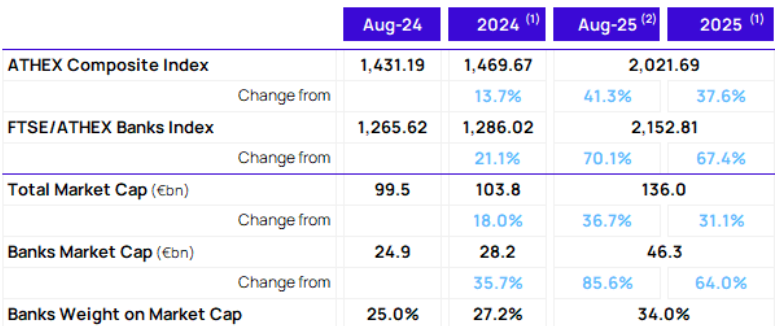
Core Viewpoint - The article discusses various investment opportunities and risks associated with different asset classes, highlighting the performance of stock indices in Greece, Vietnam, China, and the United States, and the implications for ordinary investors. Group 1: Investment Performance - The article presents a comparison of different investment assets, showing that the Greek index had a remarkable increase of 38.3% in euros, leading to a total value of 1229.6 million yuan after accounting for currency effects [1] - Gold also performed well, with a 23% increase, resulting in a final value of 1011 million yuan [1] - The Vietnamese index rose by 28.1% in its local currency, translating to a 20.85% increase in yuan, with a final value of 966.8 million yuan [1] - The Chinese index (CSI 300) had a more modest increase of 13.7%, ending at 909.6 million yuan [1] - The S&P 500 index in the U.S. saw a 10% increase, but after currency adjustments, the overall gain was only 7.91%, with a final value of 863.28 million yuan [1] - Real estate in major Chinese cities experienced a decline of 10%, resulting in a value of 684 million yuan [1] Group 2: Economic Context and Growth Logic - Greece's stock market growth is supported by economic reforms and a recovering tourism sector, with public debt as a percentage of GDP decreasing from 180% to about 150% [4][5] - The Greek banking sector has shown significant recovery, with major banks reporting return on tangible equity (ROTE) of 17.5%, 14.1%, and 11.7%, driving the stock index up [5] - Vietnam is positioned as a "next China," with a GDP growth target of 8% for the year and a focus on manufacturing and foreign direct investment [8][9] - The Chinese stock market is undergoing a structural transition, with a focus on new economic drivers such as technology and innovation, as evidenced by the strong performance of the tech sector [10] - The U.S. market remains a core asset class, but faces pressures from tightening liquidity and valuation concerns, particularly in high-growth tech stocks [11][12] Group 3: Investment Strategies for Ordinary Investors - Ordinary investors can participate in global markets through QDII products for Vietnam and other emerging markets, although there are currently no pure Greek ETFs available in the A-share market [21] - Understanding the underlying economic mechanisms and growth drivers of different markets is crucial for making informed investment decisions [22] - The article emphasizes the interconnectedness of global markets and the importance of recognizing how different economic phases influence investment opportunities [22]