以旧换新政策

Search documents
“以旧换新”政策成效显现,消费复苏态势明确,聚焦港股消费ETF(513230)布局机遇
Mei Ri Jing Ji Xin Wen· 2025-10-16 06:23
Core Viewpoint - The Hong Kong stock market is experiencing fluctuations, with the Hang Seng Index down by 0.43% and the Hang Seng Tech Index down by 1.36%, while certain sectors like passenger airlines and home goods are performing well, indicating a mixed market sentiment [1] Market Performance - As of the midday close on October 16, the Hang Seng Index decreased by 0.43% and the Hang Seng Tech Index fell by 1.36% [1] - The consumer ETF (513230) is down approximately 0.5%, with leading stocks such as Lao Pu Gold, Pop Mart, Shenzhou International, and China Wangwang showing gains, while stocks like Giga Bio, Xpeng Motors, and Xiaomi Group are experiencing declines [1] Economic Insights - A recent economic forum emphasized the need to expand domestic demand and strengthen the domestic circulation, with expectations that the upcoming "14th Five-Year Plan" will enhance the long-term development mechanism for consumption [1] - As of May 31, the "trade-in" policy for five major consumer categories has driven sales exceeding 1.1 trillion yuan, indicating a positive trend in consumer spending [1] Capital Flow - There has been a notable acceleration of southbound capital inflow into the Hong Kong stock market this year, driven by policy benefits and increased liquidity [1] - The combination of policy incentives and capital inflow is seen as a dual driving force for market recovery, with a clear trend of consumption recovery supported by the effectiveness of the "trade-in" policy [1] ETF Composition - The Hong Kong consumer ETF (513230) tracks the CSI Hong Kong Stock Connect Consumer Theme Index, encompassing a wide range of sectors including internet e-commerce leaders and new consumption brands [1] - Key components of the ETF include leading new consumption brands like Pop Mart and Lao Pu Gold, as well as major internet e-commerce players such as Tencent, Kuaishou, Alibaba, and Xiaomi, highlighting a strong tech and consumer attribute [1]
智能家居销售飙升、民企设备更新支撑作用凸显,增值税发票数据透露这些亮点
Sou Hu Cai Jing· 2025-10-16 06:10
Group 1 - The "old-for-new" consumption policy has significantly boosted sales in the home appliance and furniture sectors, with retail sales of daily household appliances like refrigerators increasing by 48.3% and audio-visual equipment like televisions by 26.8% year-on-year in the first three quarters [1] - The retail sales of furniture and lighting products also saw substantial growth, with increases of 33.2% and 17.2% respectively, while smart home products, particularly service robots like vacuum cleaners, experienced a remarkable sales growth of 75% [1] - The sales revenue of communication devices, including mobile phones, grew by 19.9% due to the expansion of the "old-for-new" policy [1] Group 2 - The sales of new energy vehicles (NEVs) rose by 30.1% year-on-year in the first three quarters, indicating a sustained vitality in China's NEV industry, driven by effective "old-for-new" policies that stimulate automotive consumption [1] - From January to August, 330 million people applied for the "old-for-new" subsidies, leading to a sales increase of over 2 trillion yuan in related products, with retail sales of household appliances and audio-visual equipment growing by 28.4% and 22.3% respectively [2] Group 3 - The National Development and Reform Commission has allocated 69 billion yuan in special bonds to support the "old-for-new" consumption policy, completing the annual target of 300 billion yuan [4] - Analysts suggest that the decline in consumption growth since May may be attributed to insufficient "old-for-new" funding rather than demand exhaustion, indicating that additional subsidy funding in the fourth quarter could stabilize consumption growth [4] Group 4 - Investment in equipment updates in the information and technology sectors has increased, with procurement amounts for information transmission and software services rising by 26.8% and for scientific research services by 32.5% year-on-year [5] - Private enterprises have shown a stronger role in equipment updates, with their procurement amounts increasing by 13%, surpassing state-owned and foreign enterprises, particularly in innovative sectors like the internet and unmanned aerial vehicles, which saw increases of 32.8% and 70.5% respectively [5]

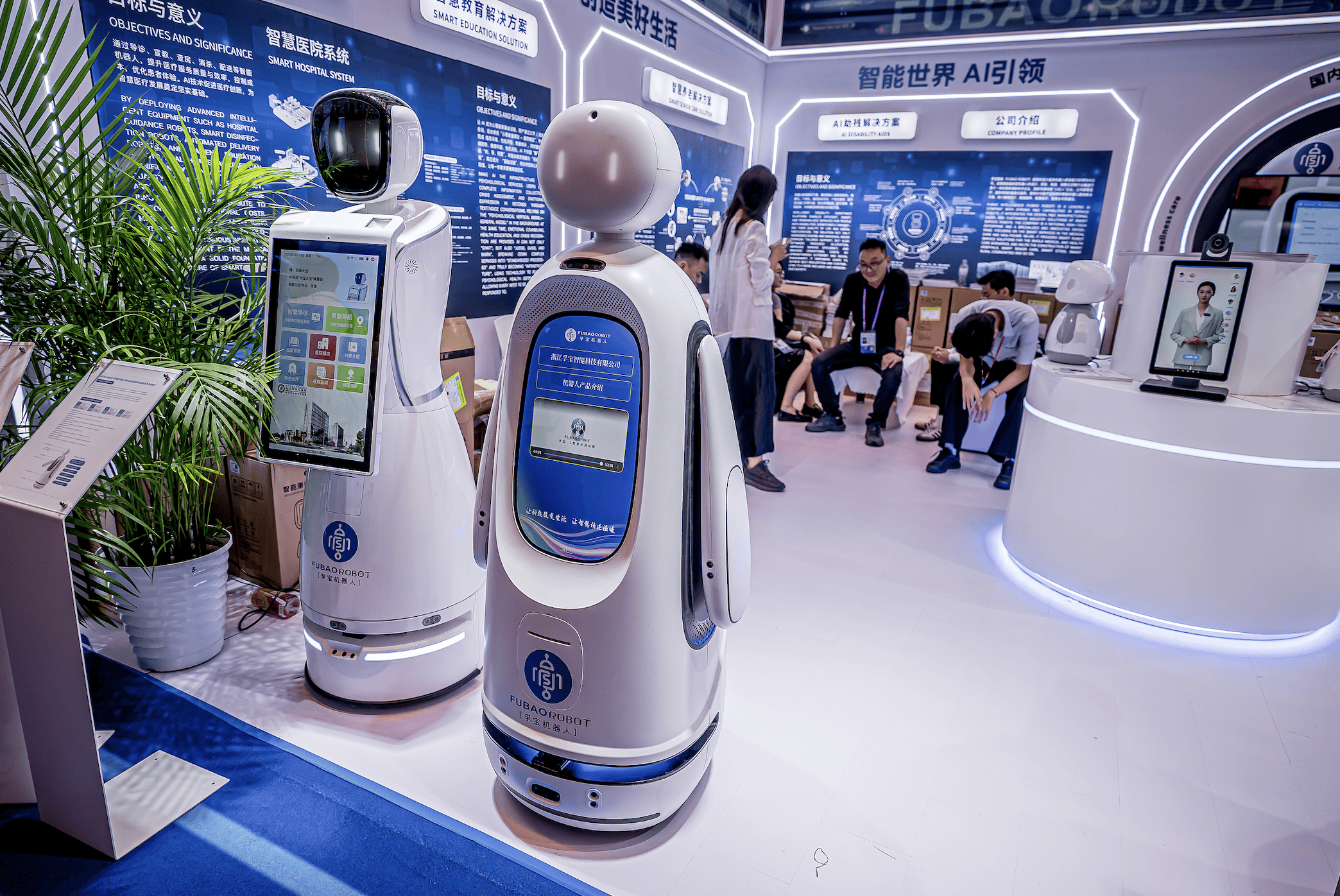
前三季度以旧换新显效 扫地机器人等制造业销售收入同比增75%
Sou Hu Cai Jing· 2025-10-16 03:26
Group 1 - The core viewpoint of the articles highlights the acceleration of equipment updates and the effectiveness of the old-for-new consumption policy in driving demand for consumer goods, particularly in the home appliance and smart home sectors [1][2][3] Group 2 - In the first three quarters of this year, the consumption of home appliances and home products has increased significantly, with retail sales of daily appliances like refrigerators rising by 48.3% and home audio-visual equipment like televisions increasing by 26.8% [2] - The industrial sector has shown a positive trend in equipment updates, with machinery and equipment purchases increasing by 9.4% year-on-year, and high-tech manufacturing seeing a 14% increase [1][2] - The information and technology sectors have ramped up their investment in equipment, with machinery purchases in the information transmission and software services sector growing by 26.8% and in scientific research and technical services by 32.5% [1][2] Group 3 - The digital equipment procurement by enterprises has surged by 18.6% year-on-year, indicating a strong push towards digital transformation, particularly in high-end manufacturing sectors like shipbuilding and computing, which saw increases of 17.3% and 22.7% respectively [2][3] - Private enterprises have played a significant role in equipment updates, with machinery purchases increasing by 13% year-on-year, surpassing state-owned and foreign enterprises [2] Group 4 - The sales of new energy vehicles have continued to grow, with a 30.1% year-on-year increase in the first three quarters, driven by effective policies promoting vehicle replacement [3] - The tax data reflects the positive impact of the "Two New" policies in stabilizing investment, expanding consumption, and promoting transformation, particularly in the information and technology sectors [3]

价格和金融数据的增量信号
Xinda Securities· 2025-10-16 02:36
Group 1: Price Trends - Food prices have been in negative territory for several months, but consumer goods are driving a rebound in CPI, marking the first divergence since food prices turned negative[1] - In September, the PPI for non-ferrous, black, and energy sectors all saw year-on-year increases, with black PPI showing the largest rise[1] - The core CPI reached a new high for the year at 1%, indicating potential structural policy tools may be more effective moving forward[1] Group 2: Financial Data Insights - The divergence between social financing (社融) growth and loan balance growth that began in December 2024 appears to have ended, suggesting a return to synchronized growth[1] - The M2-M1 spread has narrowed further, indicating an increase in the liquidity of funds, which historically correlates with positive stock market performance[1] - In September, M2 growth slowed while M1 growth increased, reflecting a more active financial environment[1] Group 3: Economic Policy Implications - Current inflation levels are under pressure, necessitating a continuation of loose monetary policy, as both CPI and PPI remain in negative territory[1] - The government's CPI target for 2025 is set at around 2%, the lowest since 2003, indicating a cautious approach to inflation management[1] - The ongoing anti-involution policies are expected to support PPI recovery, with potential for CPI to turn positive in Q4 2025[1] Group 4: Risk Factors - Geopolitical risks and unexpected increases in international oil prices are highlighted as potential threats to economic stability[1]
机构:汽车产业的竞争重心正逐步转向智能化领域
Zheng Quan Shi Bao Wang· 2025-10-16 00:41
Core Viewpoint - The 2025 World Intelligent Connected Vehicle Conference will be held in Beijing from October 16 to 18, highlighting the ongoing transformation in the automotive industry driven by policies and technological advancements [1] Group 1: Market Trends - Guohai Securities anticipates that the vehicle sales performance will exceed expectations in 2024 due to the trade-in policy, with continued support for automotive consumption in 2025 [1] - The automotive industry is experiencing a shift towards high-end and intelligent upgrades, presenting investment opportunities [1] Group 2: Investment Opportunities - Companies with high-quality offerings priced above 300,000 yuan are expected to benefit significantly from the strategic offensive in the high-end development phase of domestic brands [1] - The "affordability" of advanced driving assistance systems is likely to significantly increase their penetration rate, benefiting leading automakers and related component manufacturers [1] - Despite a complex export environment, high-quality component companies with upward operating cycles are viewed positively [1] - In the commercial vehicle sector, the demand for heavy trucks has been at a low for three years, but a recovery is expected in 2025, while the bus sector is anticipated to see continued growth in both domestic and export markets [1] Group 3: Industry Dynamics - Dongxing Securities notes that the domestic automotive market is characterized by accelerated electrification and the strong rise of domestic brands, with the advantages of intelligent features driving sales growth [1] - As the penetration rate of electrification continues to rise, the competitive focus of the automotive industry is shifting towards the intelligent sector, where leading companies with superior training data and ecosystems are likely to capture more market share [1]
京东集团-SW(09618.HK)2025Q3前瞻:利润端好于预期 日百品类维持高景气
Ge Long Hui· 2025-10-15 20:58
Core Viewpoint - JD.com is expected to achieve a revenue growth of 13.5% year-on-year in Q3 2025, reaching 295.54 billion yuan, with a Non-GAAP net profit of 4.4 billion yuan, resulting in a net profit margin of 1.49%, down from 5.06% in the same period last year [1][2] Revenue Forecast - The anticipated revenue growth for JD.com in Q3 2025 is driven by a 10% increase in retail revenue, while the daily necessities category continues to perform well, maintaining high growth rates [1][2] - The impact of national subsidy policies is becoming evident, particularly affecting the growth rate of the electric appliance category, which is expected to slow down significantly [1] Profitability Analysis - New business investments are expected to continue to drag down profit performance, although the absolute loss from food delivery investments has narrowed this quarter [2] - The adjusted operating profit for JD Retail (JDR) is projected to be approximately 13.5 billion yuan, with a profit margin of about 5.5%, slightly above the consensus estimate [2] Future Projections - For 2025 and 2026, JD.com’s revenue is forecasted to be 1.3243 trillion yuan and 1.3951 trillion yuan, representing year-on-year growth of 14.28% and 5.34%, respectively [2] - Non-GAAP net profits for 2025 and 2026 are expected to be 28.166 billion yuan and 46.797 billion yuan, with year-on-year changes of -41.11% and 66.15% [2] Investment Rating - The company maintains a "Buy" rating with a target price of 193.07 HKD, corresponding to a 12x PE for the group in 2026 [2]

9月CPI同比涨幅近19个月来首次回到1%,宏观政策持续见效
Bei Ke Cai Jing· 2025-10-15 08:00
Core Insights - The Consumer Price Index (CPI) in September increased by 0.1% month-on-month but decreased by 0.3% year-on-year, with the decline narrowing by 0.1 percentage points compared to the previous month [1][5] - The core CPI, which excludes food and energy, saw its first year-on-year increase in 19 months, rising to 1% and marking the fifth consecutive month of growth [2][4] CPI Analysis - The month-on-month increase in CPI was driven by seasonal price rises in fresh vegetables, eggs, fresh fruits, lamb, and beef, with increases ranging from 0.9% to 6.1%. Conversely, pork and aquatic product prices fell by 0.7% and 1.8%, respectively [4] - The year-on-year decline in CPI was primarily influenced by a base effect, with the tail effect contributing approximately -0.8 percentage points to the -0.3% change [5] - In the food category, pork, fresh vegetables, eggs, and fresh fruits saw price declines of 17.0%, 13.7%, 13.5%, and 4.2%, respectively, while beef and lamb prices increased by 4.6% and 0.8% [5] PPI Analysis - The Producer Price Index (PPI) remained flat month-on-month and saw a year-on-year decline of 2.3%, with the decline narrowing by 0.6 percentage points compared to the previous month [8] - The stabilization in PPI is attributed to improved supply-demand dynamics and the impact of macroeconomic policies, which have led to positive price changes in certain industries [8] - The "anti-involution" policy and the significant drop in the year-on-year comparison base have contributed to the narrowing of the PPI decline [9][10] Future Outlook - Forecasts suggest that the CPI may rise to around 0.1% year-on-year in October, driven by the effects of consumption-boosting policies and a lower base from the previous year [6] - The overall expectation is for a mild recovery in CPI throughout the year, with an anticipated annual increase of 0.1% [7] - PPI is expected to continue facing downward pressure until there is a significant recovery in the real estate market and consumer confidence [9]
为何9月出口增速超预期?:——2025年9月进出口数据点评
EBSCN· 2025-10-14 06:15
Export Performance - In September 2025, China's exports reached $328.57 billion, a year-on-year increase of 8.3%, exceeding the expected 5.7%[2] - The export growth rate increased by 3.9 percentage points compared to the previous month, driven by strong demand from non-US economies and a low base effect from last year[3] - Major contributors to export growth included high-tech products and machinery, with high-tech product exports growing by 11.5%[15] Import Trends - Imports in September 2025 totaled $238.12 billion, with a year-on-year growth of 7.4%, significantly higher than the expected 1.4%[2] - The increase in imports was supported by domestic demand recovery and easing trade uncertainties with the US[17] - High-end manufacturing products, such as integrated circuits and large aircraft, saw substantial import growth rates of 14.1% and 201.3%, respectively[17] Trade Balance - The trade surplus for September 2025 was $90.45 billion, down from $102.33 billion in the previous month[2] - The decline in trade surplus reflects the stronger growth in imports compared to exports, indicating a shift in trade dynamics[2] Regional Trade Dynamics - In September 2025, the share of exports to Africa and Latin America reached record highs, with year-on-year growth rates of 56.4% and 15.2%, respectively[6] - The combined export share to the US, EU, and ASEAN decreased to 41.4%, while the share to emerging markets increased, highlighting the effectiveness of trade diversification strategies[6] Future Outlook - Continued support for exports is expected from non-US economies, with ongoing recovery in consumer demand and manufacturing activity in regions like the EU and Africa[21] - Potential "export rush" may occur in October due to uncertainties surrounding US tariff policies and the upcoming holiday season[21]
家电行业 2025 年三季报业绩前瞻:内销将面临以旧换新高基数,关税扰动下出口不改长期增长趋势
Shenwan Hongyuan Securities· 2025-10-13 12:56
Investment Rating - The report maintains a positive investment outlook for the home appliance industry, highlighting the potential for growth driven by real estate policies and the "old-for-new" replacement program [4][6]. Core Insights - The home appliance sector is experiencing a recovery, with significant growth in both domestic and export sales, particularly in the white goods and kitchen appliance segments, supported by favorable government policies [6][7]. - The report identifies three main investment themes: 1) White goods benefiting from real estate policy changes and the "old-for-new" program, with a focus on leading companies like Haier, Midea, and Gree [8][14]. 2) Export opportunities driven by large customer orders and recovering overseas demand, particularly for companies like Ousheng Electric and Dechang [8][14]. 3) Core components seeing increased demand due to the recovery in the white goods sector, with recommendations for companies like Huaxiang and Shun'an [8][14]. Summary by Sections 1. Domestic Sales Growth - From January to August 2025, the air conditioning sector saw a cumulative production of 149.32 million units, a 6% year-on-year increase, with sales reaching 152.57 million units, up 7%, and domestic sales growing by 9% [11][12]. - The refrigerator and washing machine sectors also reported domestic sales growth of 4% and 6%, respectively, during the same period [11][12]. 2. White Goods and Components - The average price of white goods is expected to rise due to the "old-for-new" policy and increasing raw material costs, with air conditioning prices projected to continue their upward trend [23][24]. - Key companies in the white goods sector are expected to report varying revenue growth for Q3 2025, with Midea projected to grow by 3% in revenue and 8% in profit, while Gree anticipates flat revenue and profit [24][25]. 3. Kitchen Appliances - The kitchen appliance sector is benefiting from real estate policies and the "old-for-new" program, with significant sales growth in major categories like range hoods and gas stoves [7][8]. - Companies like Robam and Vatti are expected to see mixed results, with Robam projecting a 2% revenue increase but a 7% decline in profit [24]. 4. Small Appliances - The small appliance sector is experiencing a revival, particularly in exports, with companies like Supor and Joyoung expected to report positive revenue growth [7][8]. - The "old-for-new" policy is expected to significantly boost sales in small kitchen appliances, with new categories like microwaves and rice cookers included in the subsidy program [14][15]. 5. New Displays and Lighting - The report notes a turning point in the emerging display sector, with stable prices in the panel market and growth potential in the lighting industry [8][9]. 6. Investment Highlights - The report emphasizes the importance of real estate and export chains, recommending investments in companies that are well-positioned to benefit from the ongoing transformation in the home appliance sector [8][14].




家电行业2025年三季报业绩前瞻:内销将面临以旧换新高基数,关税扰动下出口不改长期增长趋势
Shenwan Hongyuan Securities· 2025-10-13 10:15
Investment Rating - The report maintains a positive outlook on the home appliance industry, particularly for the white goods sector, indicating a "Buy" recommendation for key players like Midea, Haier, and Gree [4][8]. Core Insights - The home appliance sector is benefiting from real estate policies and the "trade-in" program, leading to a sustained growth trend in domestic sales [6][14]. - The report highlights three main investment themes: white goods, export opportunities, and core components, with a focus on companies that are expected to outperform in these areas [8][17]. Summary by Sections 1. Domestic Sales Growth - From January to August 2025, the air conditioning industry produced 149.32 million units, a 6% year-on-year increase, with sales reaching 152.57 million units, up 7%, and domestic sales growing by 9% [6][14]. - The refrigerator and washing machine sectors also saw domestic sales growth of 4% and 6%, respectively, during the same period [6][14]. 2. White Goods and Components - The report notes that the average price of white goods is increasing due to the trade-in program, with air conditioning prices expected to rise further [27]. - Key companies are projected to show varied performance in Q3 2025, with Midea expected to see a 3% revenue increase and an 8% rise in profits, while Gree anticipates flat revenue and profit [28][29]. 3. Kitchen Appliances - The kitchen appliance sector is experiencing a recovery driven by real estate and trade-in policies, with significant growth in online sales for range hoods and gas stoves [6][14]. - Major players like Robam and Vatti are expected to see mixed results, with Robam projecting a 2% revenue increase but a 7% decline in profits [6][14]. 4. Small Appliances - The small appliance sector is benefiting from domestic trade-in policies, with companies like Supor and Joyoung expected to see revenue growth of 3% and a profit turnaround, respectively [6][14]. - The report highlights significant growth for companies like Stone Technology, which anticipates an 80% revenue increase [6][14]. 5. New Displays and Lighting - The emerging display sector is at a turning point, with companies like Hisense and Xiaomi expected to report revenue growth of 8% and 15%, respectively [6][14]. - The lighting industry is anticipated to see gradual improvements as market conditions stabilize [6][14]. 6. Investment Highlights - The report emphasizes the attractiveness of the white goods sector due to its low valuation, high dividends, and stable growth potential, recommending a combination of leading companies [8][17]. - Export opportunities are highlighted for companies like Ousheng Electric and Dechang, which are expected to benefit from increased orders and stable profitability [8][17]. 7. Trade-in Policy Impact - The trade-in policy has been expanded to include 12 categories of appliances, significantly boosting sales and consumer interest [17][18]. - The report notes that the trade-in program has already led to over 62 million units sold in 2024, generating nearly 270 billion yuan in consumption [17][18].