规模效应

Search documents
极兔速递-W(1519.HK):逐鹿海外电商高增 龙头优势尽显
Ge Long Hui· 2025-07-12 19:08
Core Viewpoint - J&T Express has shown significant growth in parcel volume across various regions, driven by the expansion of e-commerce platforms, leading to an optimistic outlook for market share and profitability [1][2][3] Group 1: Operational Data - In Q2, J&T Express reported a parcel volume increase of 65.9% year-on-year in Southeast Asia, reaching 1.69 billion parcels, and a 14.7% increase in China, totaling 5.61 billion parcels [1] - For the first half of 2025, the total parcel volume increased by 27.0% year-on-year to 14 billion parcels, with Southeast Asia, China, and new markets growing by 57.9%, 20.0%, and 21.7% respectively [1] Group 2: Market Dynamics - The Southeast Asian e-commerce retail market is projected to grow from $189.8 billion in 2023 to $373.6 billion by 2027, with a compound annual growth rate (CAGR) of 18.5% [1] - J&T Express has maintained its position as the largest express delivery company in Southeast Asia since 2021, with a market share of 28.6% in 2024, expected to rise to 30% in 2025 [2] Group 3: Financial Projections - The company has adjusted its profit forecasts for 2025-2027, increasing net profit estimates by 5% for 2025, 6% for 2026, and 3% for 2027, resulting in projected net profits of $360 million, $690 million, and $900 million respectively [3] - The target price for J&T Express has been raised by 44% to HKD 10.8, reflecting a higher price-to-earnings ratio due to the company's superior growth prospects compared to industry averages [3]
吉利汽车(00175.HK):上调全年销量目标 预计规模效应将促进盈利能力提升
Ge Long Hui· 2025-07-07 19:14
Group 1 - Geely Auto raised its annual sales target by 10.7% from 2.71 million to 3 million units, reflecting the company's confidence in its growth for the year [1] - In June, Geely's total sales reached 236,000 units, a year-on-year increase of 42.1% and a month-on-month increase of 0.4% [1] - New energy vehicle sales in June were 122,400 units, showing a year-on-year growth of 85.5%, although there was a month-on-month decrease of 11.3% [1] Group 2 - The sales of the Geely brand in June were 193,000 units, representing a year-on-year increase of 58.8% and a month-on-month increase of 2.3% [2] - Geely Galaxy's sales in June reached 90,200 units, a significant year-on-year increase of 201.8%, despite a month-on-month decrease of 11.4% [2] - The Galaxy A7, featuring advanced technology and competitive pricing, is expected to boost the sales of Geely's new energy vehicles further [2] Group 3 - Zeekr brand sales in June were 16,700 units, a year-on-year decrease of 16.9% and a month-on-month decrease of 11.7% [3] - Lynk & Co brand sales in June were 26,300 units, showing a year-on-year increase of 7.7% but a month-on-month decrease of 4.8% [3] - The introduction of the Zeekr 9X, featuring innovative hybrid technology, is anticipated to positively impact Zeekr's sales in the upcoming quarters [3]

吉利汽车(00175):上调全年销量目标,预计规模效应将促进盈利能力提升
Orient Securities· 2025-07-06 07:57
Investment Rating - The report maintains a "Buy" rating for Geely Automobile [4][7] Core Views - Geely Automobile has raised its annual sales target by 10.7%, from 2.71 million to 3 million units, reflecting the company's confidence in its growth prospects [11] - The company's sales in June reached 236,000 units, a year-on-year increase of 42.1%, with electric vehicle sales growing by 85.5% [11] - The Galaxy series continues to show strong growth, with sales of 90,200 units in June, a year-on-year increase of 201.8% [11] - The report highlights that Geely's strategy is not merely about price cuts but is supported by technological advancements and strong cost control, which are expected to enhance profitability as scale effects are realized [11] Financial Forecasts and Investment Recommendations - Adjusted earnings per share (EPS) forecasts for 2025-2027 are 1.50, 1.76, and 2.13 RMB respectively, up from previous estimates of 1.36, 1.54, and 1.94 RMB [4] - The target price is set at 22.50 RMB, equivalent to 24.69 HKD, based on a price-to-earnings (PE) ratio of 15 times the average for comparable companies [4] - Revenue projections for 2023A to 2027E are 179,204 million, 240,194 million, 319,444 million, 381,363 million, and 442,685 million RMB, with year-on-year growth rates of 21.1%, 34.0%, 33.0%, 19.4%, and 16.1% respectively [6][12] - Operating profit is expected to grow significantly, with projections of 3,806 million, 7,644 million, 14,116 million, 16,739 million, and 20,314 million RMB for the same period [6][12] - The net profit attributable to the parent company is forecasted to be 5,308 million, 16,632 million, 15,121 million, 17,735 million, and 21,451 million RMB, with growth rates of 0.9%, 213.3%, -9.1%, 17.3%, and 21.0% respectively [6][12]
顺丰同城20250703
2025-07-03 15:28
Summary of the Conference Call for SF Express City Company Overview - The conference call discusses **SF Express City**, a logistics company operating in the last-mile delivery sector, focusing on its market position and growth potential amidst competitive pressures and industry dynamics. Key Points Industry and Market Dynamics - **Short-term Impact of Internet Platform Subsidies**: The increase in subsidies from platforms like Taobao may be perceived as a short-term negative for SF Express City, but the long-term impact is expected to be limited due to its reliance on a crowdsourced delivery model and the rise of new consumer brands that grant logistics autonomy to leading merchants [2][4]. - **Market Share Potential**: SF Express City currently holds a low market share in daily order volume, estimated at around 5-6 million orders, with significant room for growth as traditional logistics firms face declining market shares [2][6]. - **Competitive Landscape**: The overall market is moving towards a scale of 200 million daily orders, with major competitors like Meituan and JD.com also expanding their delivery capabilities [3][6]. Financial Performance and Projections - **Revenue and Profit Growth**: The company is experiencing rapid growth in revenue, order volume, gross profit, and net profit, indicating strong short-term performance [2][8]. - **Improvement in Related Transactions**: SF Holding has revised its related transaction amounts with SF Express City for 2025 and 2026 to HKD 12.8 billion and HKD 20.6 billion, reflecting a year-on-year growth of 101% and 60%, respectively. This indicates a focus on cost reduction and efficiency improvements [7]. - **Long-term Valuation Outlook**: The company is expected to enter a mature phase in its express and takeaway segments by 2025, allowing for more accurate assessments of profit and valuation [4][12]. Strategic Initiatives - **Expansion into Lower-tier Cities**: SF Express City is expanding into second, third, and fourth-tier cities, which may lead to a decrease in per-order revenue but is expected to benefit from economies of scale and new technology applications that will lower costs [2][8]. - **Focus on Volume Over Absolute Profit**: During the expansion phase, the absolute profit figures are less critical. The company initially operated at a negative gross margin due to subsidies but is expected to see improvements in gross and net margins as volume increases and subsidies decrease [9][10]. Future Outlook - **Market Potential**: The current market valuation of approximately HKD 15 billion suggests significant growth potential, with expectations of increased market share in both the commercial and logistics sectors [4][12][13]. - **Sustained Industry Growth**: The overall industry remains stable, with SF Express City positioned to capitalize on growth opportunities across its express and takeaway segments [12][13]. Additional Insights - **Technological Integration**: The application of new technologies, such as autonomous vehicles, is anticipated to enhance operational efficiency and maintain stable gross margins despite market expansion [8][10]. - **Customer Autonomy**: The rise of new consumer brands has shifted logistics power towards major merchants, benefiting SF Express City as an independent third-party logistics provider [5].
车企的竞争逻辑变了?
Zhong Guo Qi Che Bao Wang· 2025-07-01 01:16
Group 1: Industry Trends - The automotive industry is experiencing a shift in competitive dynamics, with companies reassessing their strategies in response to market realities [2][3] - New energy vehicle (NEV) sales are increasing, with leading brands achieving monthly sales of 30,000 to 40,000 units, indicating a transition from a "10,000 club" to a higher competitive tier [2][3] - Traditional automakers are also seeing growth in NEV sales, with companies like Chery and Geely reporting significant year-on-year increases [3][4] Group 2: Sales Performance - BYD remains a dominant player in the NEV market, with May sales reaching 382,500 units, a 15% increase from the previous year [4] - In the first five months of the year, China's total NEV sales reached 5.608 million units, reflecting a stable growth trend despite a slowdown in the growth rate [4][6] - The competitive landscape is evolving, with a growing number of companies achieving substantial sales figures, indicating a shift towards a multi-strong market [5][6] Group 3: Fuel vs. Electric Vehicles - BMW has reduced its future production forecasts for electric vehicles by nearly 20%, signaling a strategic pivot towards fuel vehicles [6][7] - Many domestic brands are not abandoning fuel vehicles, with companies like Great Wall and Geely emphasizing continued investment in fuel technology [6][8] - The market penetration rate for NEVs has decreased from a peak of 53.7% to 48.7%, indicating a more balanced competition between fuel and electric vehicles [6][8] Group 4: R&D and Profitability - Companies are increasingly focusing on balancing scale, cost, and profitability, with R&D being a critical component in achieving this balance [10][11] - Leading companies are investing heavily in R&D, with significant year-on-year increases in spending, which correlates with improved sales performance [12] - The relationship between sales volume and profitability is emphasized, with larger sales volumes helping to spread costs and improve margins [11][12] Group 5: Future Outlook - The automotive market is expected to become more diversified, moving beyond price competition to focus on technology and innovation [15][16] - Companies are encouraged to explore niche markets and enhance product differentiation to drive future growth [15][16] - The industry is transitioning from a price-driven model to a value-driven approach, emphasizing the importance of technological innovation and collaboration [17]


中国血制品必将出现一个巨头
3 6 Ke· 2025-06-30 06:28
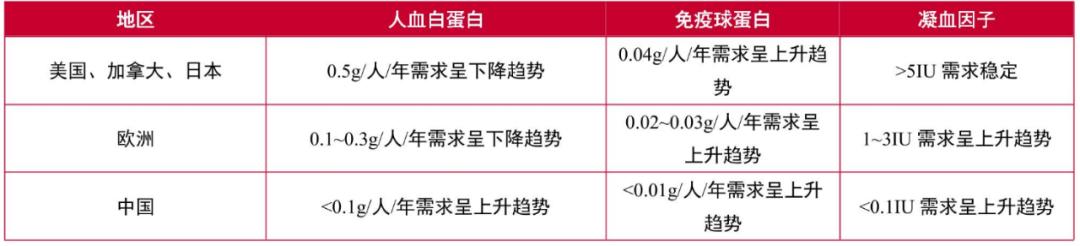
Core Viewpoint - The Chinese blood products industry is undergoing significant consolidation, with major players engaging in aggressive mergers and acquisitions to capture plasma resources, leading to the emergence of potential super giants in the sector [1][5]. Industry Landscape - The blood products industry in China is characterized by a "four-way" competitive landscape, dominated by four major groups: China National Pharmaceutical Group (Sinopharm), Haier Group, China Resources, and Hualan Biological Engineering [2][4]. - The industry has transitioned into a stock competition era since 2001, with new entrants needing to acquire existing licensed companies due to a moratorium on new licenses [2][3]. Mergers and Acquisitions - Significant acquisitions include China Resources' acquisition of Boya Biological for 4.8 billion yuan, Haier's 12.5 billion yuan acquisition of Shanghai Laishi, and Sinopharm's 4.5 billion yuan acquisition of Pilin Biological [1][2]. - The consolidation trend has led to a sharp increase in market concentration, with the top five companies' market share rising from under 50% in 2019 to over 70% by 2024 [4]. Plasma Collection and Utilization - Sinopharm's network includes 154 plasma collection stations, accounting for nearly 40% of the national total, with a collection volume of over 4,000 tons by mid-2025 [3]. - The cost structure of blood products heavily relies on raw plasma, which constitutes over 60% of total costs, making scale efficiency crucial for profitability [5][6]. Market Demand and Supply Gap - The domestic blood products market surpassed 60 billion yuan in 2023, with a demand gap of 4,000 tons, highlighting the need for leading companies to enhance their supply capabilities through technological upgrades [5][6]. - China's per capita consumption of blood products is significantly lower than that of developed countries, indicating a structural supply-demand imbalance [7][8]. Technological Advancements - Companies are shifting from a resource-driven model to a dual strategy of resource acquisition and research and development to overcome technological barriers and meet high-value product demands [9][10]. - Sinopharm and Hualan Biological are focusing on developing high-purity albumin and advanced coagulation factors, with significant investments in R&D to support these initiatives [10][11]. Future Outlook - The ongoing consolidation and technological advancements suggest that the Chinese blood products industry is on the verge of producing a super giant capable of competing globally [5][11]. - The combination of policy support, resource acquisition, and technological innovation is expected to drive the industry towards a more competitive and innovative future [10][11].




顺络电子(002138) - 2025年6月27日投资者关系活动记录表
2025-06-30 01:22
Group 1: Company Performance - The company has maintained a high capacity utilization rate since the second quarter, indicating strong order fulfillment [2] - The average gross margin has remained at a competitive level within the industry due to continuous R&D investment and management innovation [3] Group 2: Product Lines and Applications - The company operates in the electronic components industry with four main product lines: magnetic devices, sensitive and sensor devices, microwave devices, and precision ceramics [2] - Products are widely used in telecommunications, consumer electronics, automotive electronics, industrial automation, and data centers, with strategic focus on emerging markets like data centers and hydrogen fuel cells [2][3] Group 3: Growth Strategy - The company aims to become an expert in the electronic components field, leveraging over 20 years of experience to expand its market presence [3] - Continuous introduction of high-value new products and maintaining strong core technologies contribute to the company's competitive edge [3] Group 4: Financial Management - The company has achieved a compound annual growth rate of approximately 24% in sales revenue since its listing, with controlled overall expense management [4] - Investments are strategically aligned with long-term goals, focusing on talent development, R&D, and new product development [4] Group 5: Capacity Investment - The company operates in a capital-intensive industry and has ongoing expansion needs, primarily focusing on emerging fields like automotive electronics and data centers [4] - There will be no large-scale expansion in traditional product lines, only necessary capacity enhancements to improve utilization [4]

海顺新材筹划收购正一包装100%股权 初步交易价格为9487万元
Zheng Quan Shi Bao Wang· 2025-06-26 13:25
Core Viewpoint - The company HaiShun New Materials is planning to acquire 100% equity of Guangdong Zhengyi Packaging Co., Ltd. for an initial transaction price of 94.87 million yuan, aiming to enhance its competitive edge and market share in the packaging industry [1][2]. Group 1: Acquisition Details - The acquisition involves Zhengyi Packaging, established in 1998, which specializes in the research, production, and sales of packaging films with applications in food, beverages, pharmaceuticals, and cosmetics [1]. - Zhengyi Packaging has production lines for aluminum oxide films, vacuum aluminum films, and coated films, with an annual production capacity exceeding 20,000 tons [1]. - As of the end of 2024, Zhengyi Packaging's total assets are reported at 80.63 million yuan, net assets at 46.84 million yuan, with projected revenue of 112 million yuan and net profit of 10.13 million yuan for the same year [1]. Group 2: Strategic Importance - The acquisition is seen as a strategic move to integrate resources and enhance the company's overall competitiveness and market presence [2]. - Post-acquisition, Zhengyi Packaging will become a wholly-owned subsidiary, allowing for synergy in products, technology, and market areas [2]. - The company plans to establish a technology-sharing mechanism and strengthen its technological barriers through patent licensing and cooperation [2]. Group 3: Financial Performance - In 2024, the company reported a revenue of 1.143 billion yuan, a year-on-year increase of 11.92%, while net profit decreased by 12.70% to 74.59 million yuan [3]. - For the first quarter of 2025, revenue reached 286 million yuan, up 10.46% year-on-year, but net profit fell by 24.99% to 17.27 million yuan [3]. Group 4: Product Development and Market Trends - The company has established a high-performance medical film division focusing on products like ostomy pouch films and high-end infusion films, and an electronic materials division targeting UV adhesive tapes and PI high-temperature adhesive tapes [3]. - The company is also focusing on solid-state batteries, with aluminum-plastic films identified as the most suitable packaging material, anticipating significant market growth as the industry matures [4]. - The company is currently working on client certifications and has improved its thermal process technology for aluminum-plastic films, expecting substantial sales growth in 2024 [4].

5000月薪吃不起的河南火锅,收割中产23亿
盐财经· 2025-06-25 10:17
Core Viewpoint - Banu Hotpot, known for its premium ingredients and unique offerings, is attempting to differentiate itself in the competitive hotpot market by focusing on product quality rather than service or cost-effectiveness, but faces challenges in achieving sustainable profitability and scaling its high-end model [3][4][45]. Group 1: Market Position and Strategy - In 2024, Banu Hotpot holds a 3.1% market share in the high-end hotpot segment, leading in per capita spending at over 140 RMB, which is higher than competitors like Haidilao [3][6][18]. - Banu's strategy emphasizes "productism," focusing on the quality and uniqueness of its ingredients, such as its signature "papaya protease tenderized tripe," which aims to justify higher prices [3][4][10]. - The brand has established a reputation for being expensive, with incidents like the "sky-high potato" controversy highlighting consumer perceptions of its pricing [7][11][12]. Group 2: Financial Performance - Banu's revenue has shown significant growth, with figures of 1.433 billion RMB in 2022, 2.112 billion RMB in 2023, and projected 2.307 billion RMB in 2024, reflecting a compound annual growth rate of 26.88% [19][21]. - Despite the revenue growth, Banu's net profit margin remains low at 5.33% in 2024, compared to Haidilao's 10.99%, indicating challenges in cost management and profitability [18][19][22]. Group 3: Consumer Insights and Market Dynamics - Banu's target demographic includes consumers in lower-tier cities who may have higher disposable income relative to their expenses, making the premium pricing more acceptable [36][38]. - The brand has a strong customer retention strategy, with 75% of its customers being repeat visitors and a high membership rate of 94.6% among dine-in customers [31][34]. - Banu's focus on high-quality ingredients, such as its partnerships with local farmers for unique products, positions it as a brand that prioritizes quality over cost [28][29]. Group 4: Challenges and Future Outlook - Banu faces the challenge of scaling its high-end model while maintaining quality, as the capital market's patience may be tested by the slow growth associated with premium offerings [5][49]. - The company's cautious approach to capital investment and expansion, with a focus on direct ownership rather than franchising, reflects a desire to maintain control over its brand and operations [42][44]. - The future success of Banu will depend on its ability to convert brand recognition into scale and profitability, potentially following a path similar to that of Haidilao [48].

造车新势力能打赢盈利“冲锋战”吗
Zhong Guo Qi Che Bao Wang· 2025-06-24 01:29
Core Insights - NIO, Xiaomi, and Xpeng have set ambitious profitability timelines, indicating a shift in the electric vehicle (EV) industry from a "burning cash" competition to a focus on sustainable quality and profitability [2][3][4] Group 1: Company Performance - NIO's Q1 2025 revenue increased, but net losses widened, with a goal to achieve profitability by Q4 2025, facing challenges in maintaining specific gross margins and controlling costs [5] - Xpeng's Q1 2025 delivery volume surged, leading the new force in vehicle sales, but the reliance on low-priced models has significantly reduced average revenue per vehicle, making it difficult to reach breakeven with a target of 600,000 annual sales [4][5] - Xiaomi's automotive division is expected to enter profitability by the end of this year or next year, driven by increased production capacity and a solid order backlog [3] Group 2: Industry Trends - The EV industry is experiencing a "淘汰赛" (elimination race), with traditional automakers like GAC Toyota and Dongfeng Nissan entering the low-price electric vehicle market, increasing competition for new forces [4] - The financing environment for new energy vehicles is tightening, making 2025 a critical year for new forces to demonstrate cash flow health and profitability to regain investor confidence [3][4] - The transition from rapid growth to sustainable profitability is essential for the industry, as mere financial turnaround does not equate to sustainable profitability [5]