
再通胀交易

Search documents
陈果:海外再通胀交易有望继续
Sou Hu Cai Jing· 2025-09-28 13:07
Core Viewpoint - The A-share and Hong Kong stock markets continue to exhibit "volatile differentiation + internal rotation of technology style," with capital preference focusing on power equipment, non-ferrous metals, and electronics sectors [1][4] Economic Environment - The U.S. August core PCE data did not show significant inflationary pressure, increasing market bets on two more rate cuts by the Federal Reserve this year [1][18] - The "Great American Rescue Plan" is expected to gradually take effect in the second half of the year, alongside fiscal and monetary expansion in Europe, which may boost global demand recovery [1][11] Industry Performance - The technology-related overseas sectors are performing strongly due to ongoing capital expenditure expansion related to AI, while traditional manufacturing and consumption sectors are relatively weak due to high interest rates suppressing demand [2][8] - The A-share and Hong Kong markets are seeing a rotation in capital towards sectors with clear improvement in profitability, such as power equipment and non-ferrous metals [4][6] Investment Opportunities - The AI sector remains a mid-term industry prosperity mainline, with potential for short-term trading adjustments as valuations digest [3][18] - Key areas to watch include battery, engineering machinery, and the anti-involution price increase chain (express delivery, breeding, fiberglass) [3][18] - The overseas capital goods chain is worth early-stage exploration, particularly in non-ferrous metals, engineering machinery, and petrochemicals [3][18] Market Trends - Historical analysis shows that after the Fed resumes rate cuts, improvements in the U.S. job market often lag, while PMI and CPI rebound more quickly [14][18] - The current high interest rate environment is expected to gradually improve housing mortgage rates and corporate financing rates, potentially leading to a recovery in the real estate sector and traditional industry investment willingness [11][18]


高盛:A股水牛的十大问题
Sou Hu Cai Jing· 2025-09-25 10:14
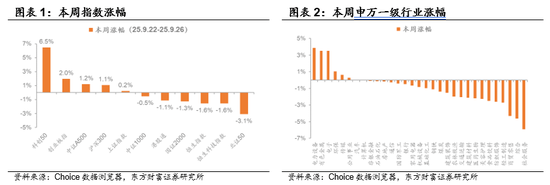
Group 1 - The "DeepSeek moment" at the end of January initiated a broad upward trend in the Chinese stock market, with MSCI China rising 35% year-to-date due to various factors including a private enterprise symposium in February and record inflows from southbound funds [1] - The A-share market lagged behind offshore markets for most of the first half of the year, but began to catch up in the second quarter, with the CSI 300 index surging 26% from its April low, resulting in a year-to-date increase of 15% [1] - The market's expectations for strengthened policy focus and execution, particularly regarding supply rationalization and improved pricing environments, may boost inflation expectations and trigger a re-inflation trade in financial markets [1] Group 2 - The recent rise in the Chinese market is supported by fundamentals, with profits for domestic and overseas listed companies expected to grow by 3% and 6% respectively in the first half of 2025, and certain sectors, particularly technology and AI, showing recent earnings upgrades [6] - Historical data indicates that valuation multiple expansion is a necessary condition for bull markets in Chinese stocks, contributing to 80% of realized returns during past bull markets [6] - The current market environment is seen as favorable for a "slow bull" market, supported by market reforms and improved liquidity provision, which may reduce market volatility [8] Group 3 - The Chinese stock market is experiencing a liquidity-driven boom, similar to trends seen in other major global markets, with the MSCI China index rebounding 72% from its low at the end of 2022 [4][15] - Institutional investors, including domestic public funds and insurance companies, have significantly increased their equity exposure, indicating a shift in market dynamics [12] - The potential for significant asset reallocation towards equities from real estate is highlighted, as Chinese households currently have a low allocation to stocks compared to real estate [14] Group 4 - The valuation of Chinese stocks remains attractive compared to historical averages, with the CSI 300 trading at a price-to-earnings ratio of 14.7, which is still below the historical upper limit of 15-20 times [7][15] - The market is characterized by a high level of retail investor participation, but sentiment indicators suggest that current levels are not at extremes, indicating potential for further market consolidation rather than an imminent reversal [9] - The strategic importance of the stock market for economic growth and wealth creation for Chinese households suggests that the likelihood of policy-induced market declines is low unless clear signs of excessive valuation emerge [20]
降息能救美国经济吗?
2025-09-11 14:33
Summary of Key Points from the Conference Call Industry Overview - The discussion revolves around the current state of the **U.S. economy** and the implications of potential **Federal Reserve interest rate cuts** on economic performance and market dynamics [1][2][4]. Core Insights and Arguments - The U.S. economy is experiencing a **controlled cooling** phase, not yet in recession, with GDP showing fluctuations due to import impacts and base effects [1][2][3]. - **Consumer spending** is slowing under high interest rates and tariff pressures but remains in positive growth territory, indicating resilience despite challenges [1][2]. - **Non-farm employment** is heavily reliant on the public sector, with a slight increase in the unemployment rate and stable wage growth, reflecting a simultaneous contraction in labor supply and demand [1][2]. - **Inflation** has shown a slight uptick after a decline earlier in the year, with tariffs beginning to exert their influence on prices [1][2]. - The market anticipates a **25 basis point rate cut** in September, with a cumulative reduction of **75 basis points** expected by the end of the year, driven by weakening labor demand and stable inflation expectations [4][5][7]. - The potential for **rate cuts** to alleviate recession fears is acknowledged, but the effectiveness may be limited by ongoing tariff impacts and the need for further reductions to offset these effects [5][6]. Additional Important Insights - The **independence of the Federal Reserve** could be compromised by excessive rate cuts, particularly if influenced by political figures, which may hinder long-term credit stability [6]. - The **shift in market focus** post-rate cuts will likely transition from employment metrics to inflation data, with potential implications for bond yields and the dollar [7][9]. - There is a recommendation to **overweight** investments in **Hong Kong and A-shares**, as well as sectors benefiting from liquidity and inflationary trends, such as technology and renewable energy [9]. - The **debt situation** remains a concern, with current rate cuts unlikely to resolve the challenges posed by the expanding U.S. debt [6][9]. This summary encapsulates the critical points discussed in the conference call, providing a comprehensive overview of the current economic landscape and the anticipated actions of the Federal Reserve.
华尔街到陆家嘴精选丨全球长债逃不过季节性下跌?外资主导日本再通胀交易 日本散户却观望?特斯拉未来约8成价值来自机器人?
Di Yi Cai Jing· 2025-09-03 01:12
Group 1: Global Bond Market Trends - September is historically a challenging month for long-term bonds, with a median loss of 2% for government bonds with maturities over 10 years over the past decade, primarily due to increased issuance [1] - Year-to-date, global ultra-long bonds have recorded a decline of 2.6%, with the increase in yields for short-term bonds reaching 7.9% [1] - The shift in pricing logic for the bond market has moved from being anchored by central banks to being influenced by fiscal policies, indicating a systemic rise in duration risk for investors [1] Group 2: Japanese Market Dynamics - Foreign investment is driving the re-inflation trade in Japan, with inflows reaching the strongest level in nearly a decade, pushing the Tokyo stock market to historical highs while selling off Japanese government bonds [3] - Japanese retail investors have withdrawn approximately $23 billion this year, reflecting a cautious stance, although recent positive sentiment may lead to increased participation [3][4] - The sustainability of the current market dynamics hinges on the return of domestic funds, as the Bank of Japan maintains low interest rates while U.S. Treasury yields remain high [3] Group 3: Tesla's Strategic Shift - Tesla's "Master Plan" fourth chapter emphasizes AI and robotics, with a significant focus on the production of the Optimus robot, which is projected to account for 80% of Tesla's future value [5] - The company aims to produce 5,000 units of Optimus by 2025, scaling up to 100,000 units by 2029, leveraging automotive production techniques [5] - The narrative shift from an automotive manufacturer to an AI-centric company may support higher valuation multiples, but the lack of a clear timeline for deliverables poses risks [5][6]


刺激!大牛股3个月狂涨5倍!今天350亿天量大跌,带崩最牛板块!牛市急跌是机会还是警告...
雪球· 2025-09-02 08:40
Market Overview - The A-share market experienced a collective pullback, with the Shanghai Composite Index down 0.45% to 3858.13 points, the Shenzhen Component down 2.14%, and the ChiNext Index down 2.85% [2] - Market activity remained high, with a total trading volume of 2.87 trillion yuan, an increase of 125.1 billion yuan from the previous trading day, marking the 15th consecutive day above 2 trillion yuan [2] Sector Performance Declining Sectors - The optical module sector faced significant declines, with New Yisheng down 7.8%, Zhongji Xuchuang down over 5%, and Tianfu Communication down over 10% [3] - Notably, New Yisheng and Zhongji Xuchuang had trading volumes exceeding 30 billion yuan, ranking first and second respectively [3] Defensive Sectors - The banking sector showed resilience, acting as a buffer against market selling pressure, with notable gains from Chongqing Rural Commercial Bank (up over 4%), Shanghai Rural Commercial Bank, Qilu Bank, and China Merchants Bank (all up over 3%) [8] - The overall performance of 42 A-share listed banks in the first half of the year showed a total revenue exceeding 2.9 trillion yuan, a year-on-year increase of over 1%, and a net profit of 1.1 trillion yuan, a growth of 0.8% [10] Precious Metals - Precious metals also performed well, with West Gold hitting the daily limit and Hunan Silver up over 4% [11] - The price of spot gold surpassed 3500 USD per ounce, reaching a historical high, driven by optimistic sentiment regarding potential interest rate cuts by the Federal Reserve [11] Institutional Insights - A report attributed to Morgan Stanley indicated that the market is not in a state of overheating, as trading volumes and margin financing balances have not reached historical highs, suggesting that risks remain manageable [13] - Economist Hong Hao expressed skepticism about the sustainability of the current bull market, suggesting that high valuation growth stocks may continue to rise if inflation is successfully managed, indicating potential for greater-than-expected market gains [13]

日本再通胀交易外资“唱主角” 本土资金回流或助力上涨行情延续
智通财经网· 2025-09-02 08:38
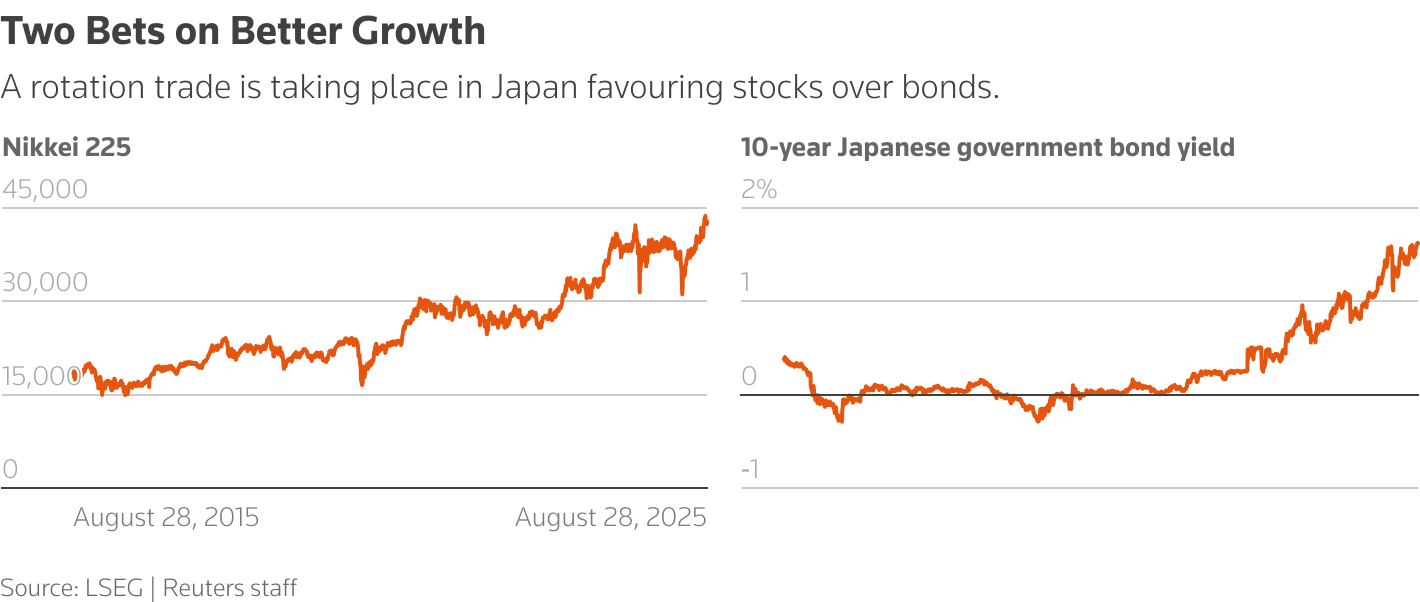
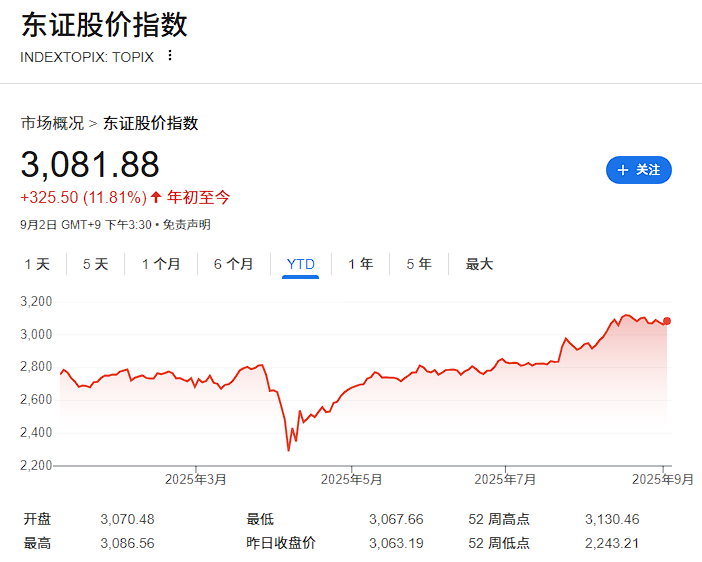
Group 1 - The Japanese financial market is experiencing a long-awaited "reflation trade," primarily driven by foreign investors, with domestic investors largely absent [1] - The Tokyo Stock Exchange index has risen by 34.2% since hitting a low in April, marking a significant increase attributed to global investor interest [1] - The Bank of Japan has raised interest rates for the first time since the 2008 global financial crisis and has reduced its substantial holdings of Japanese government bonds, leading to a rotation of assets between bonds and stocks [1] Group 2 - Foreign capital inflow into the Japanese stock market this year is the strongest in the past decade, potentially reaching the highest level since the "Abenomics" era began in 2013 [2] - Companies are also engaging in significant stock buybacks, supported by ample cash reserves, which is a positive sign for the market [2] - Despite volatility in the stock and bond markets, the yen has remained relatively stable, with the USD/JPY exchange rate stubbornly holding between 140-160 [2] Group 3 - Value stocks in Japan are outperforming growth stocks, similar to trends seen in other countries during reflation trades, indicating a broader economic growth momentum [5] - Foreign buyers are able to achieve significant excess returns in Japanese government bonds due to the substantial interest rate differential between the Federal Reserve and the Bank of Japan [8] - The cost of currency hedging makes it more expensive for Japanese investors to invest in the U.S., limiting their participation in these arbitrage opportunities [11] Group 4 - Japan has lost its title as the "world's largest creditor nation" to Germany, but it still holds a considerable amount of financial assets overseas that could be repatriated if necessary [14]
230亿美元大撤退!日本人正把牛市"拱手让给"外国人
Hua Er Jie Jian Wen· 2025-09-02 07:39
Core Insights - Japan's financial market is experiencing a long-awaited reflation trade, but domestic investors are surprisingly absent from this rally [1][4] - Foreign investors have driven the Tokyo stock market to record highs, while also selling off Japanese government bonds, leading to a peak in 30-year bond yields [1][5] - The absence of retail investors in Japan is a notable characteristic of the current market surge, with analysts suggesting that their return could further boost stock prices [4][6] Group 1: Foreign Investment Dynamics - Foreign capital inflow this year is on track to reach the highest level since the introduction of Abenomics in 2013, with a significant impact on the stock market [1][5] - The shift in market structure is being led by foreign investors, who are reshaping Japan's capital market landscape [5][6] - The trend of value stocks outperforming growth stocks reflects typical characteristics of a reflation trade, indicating a more dispersed economic growth signal [6] Group 2: Domestic Investor Sentiment - Japanese retail investors have withdrawn approximately $23 billion this year, indicating a cautious outlook on market prospects [4][6] - Analysts note that the sentiment among retail investors has shifted from extreme pessimism to a more positive outlook recently, which could be beneficial for the market [6] - The participation of domestic investors will be crucial in determining the sustainability of the current market rally, which is primarily driven by foreign investment [6] Group 3: Currency and Bond Market Dynamics - Despite significant fluctuations in the stock and bond markets, the yen has remained relatively stable, raising questions about the lack of capital repatriation [7] - Japanese institutions have heavily invested in U.S. Treasury markets, leading to losses after the Federal Reserve's rate hikes, which has contributed to the capital remaining overseas [7] - The current bond market presents unique arbitrage opportunities due to the yield differential between U.S. and Japanese bonds, but domestic investors face higher costs for investing in the U.S. market [7]
A股分析师前瞻:风险偏好明显提升,中期A股仍有充足空间和机会
Xuan Gu Bao· 2025-08-17 13:37
Group 1 - The core viewpoint is that the current A-share market is in the second phase of a bull market, characterized by risk preference recovery, and any market pullback presents a buying opportunity [2][4] - The second phase of a bull market typically sees funds from other asset classes flowing into the stock market, indicating a rebalancing of valuations between stocks and bonds [2][4] - The overall market sentiment is improving, with significant capital inflows from institutional channels such as insurance and bank wealth management products [2][4] Group 2 - The market is expected to have ample space and opportunities in the medium term, with indicators showing that household deposits are still in the early stages of moving into the stock market [2][4] - The total market value of A-shares relative to household deposits is at a historically low level, suggesting potential for further capital inflow as market vitality increases [2][4] - The focus for investment should include sectors like AI, pharmaceuticals, non-bank financials, and military industries, which are expected to benefit from the current market dynamics [3][4] Group 3 - The "healthy bull" market trend is characterized by a stable upward movement of indices and a decline in volatility, indicating a positive market environment [5] - Key sectors to watch include brokerage firms, AI expansion, military, and "anti-involution" strategies, which are expected to perform well in the current market context [3][5] - The market is experiencing a shift towards larger-cap stocks driven by profitability, as smaller-cap stocks face challenges in the current economic environment [5][6]
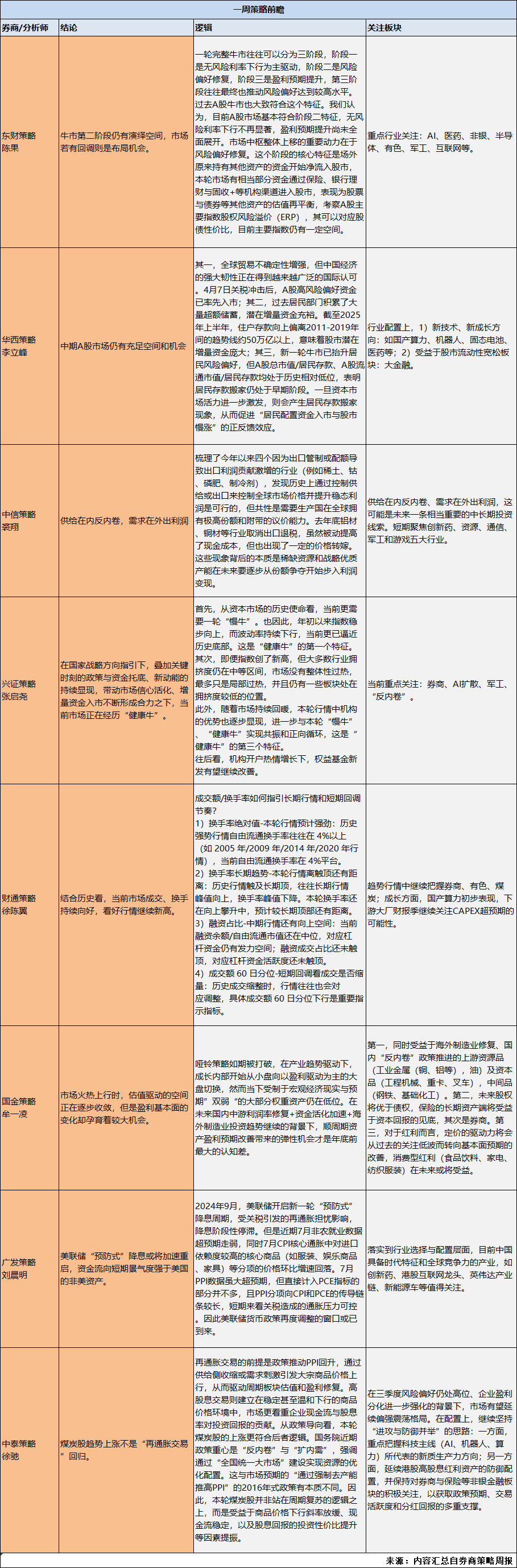
中泰证券:煤炭股趋势上涨是否代表“再通胀交易”回归?
智通财经网· 2025-08-17 12:44
Core Viewpoint - The recent strong performance of the coal sector is attributed to the repricing of high-dividend assets rather than a return to "re-inflation trading" [2][4] - The market is currently prioritizing dividend returns over cyclical resilience, leading to a defensive allocation strategy [1][2] Group 1: Market Dynamics - The coal stocks have seen a significant increase in attractiveness due to high dividend yields, with the industry average expected to exceed 5% in 2024, and some leading companies reaching over 10% [3] - The low-risk interest rate environment and stable bond market have enhanced the appeal of coal stocks as a substitute for traditional fixed-income investments [3] Group 2: Policy Impact - Recent policies, including the strengthening of social security contributions and the revitalization of state-owned assets, have reinforced the market's preference for high-dividend assets [4] - The social security policy aims to stabilize costs for companies, particularly small manufacturers, while the revitalization of state-owned real estate is intended to improve fiscal conditions and liquidity [4] Group 3: Investment Strategy - The company maintains a strategy of combining offensive and defensive approaches, focusing on sectors like technology (AI, robotics, computing power) while also emphasizing high-dividend assets in the Hong Kong market [1][2]

从风偏交易到负债再平衡:债券连续调整,问题出在哪?
ZHONGTAI SECURITIES· 2025-08-17 12:00
Report Industry Investment Rating - The report maintains a cautious stance on the bond market. It suggests that if there is a significant adjustment, one can use a small position to bet on an oversold rebound (not for buying at high prices) [3][41]. Core Viewpoints - The bond market has experienced a steep decline this week despite weak fundamental data, and the problem lies in the bond itself, as it lacks the conditions to rise from both the asset and liability sides [3]. - The current trading main - line of the bond market may not be data, and single - month data may not confirm trends. The re - inflation trading brought by anti - involution may be in the first stage, with signs possibly appearing at the price level by the end of the year at the earliest [3][16]. - The view that the stock - bond seesaw causes the bond market to fall has logical flaws. The bond market's potential positives mainly rely on other assets and central bank actions, indicating insufficient internal positives [3][21]. - This year, the incremental funds of traditional bond market allocators such as banks and insurance in the bond market have significantly decreased, and it is hard to say that it is still an asset - shortage pattern [3][33]. - Mid - to long - term pure bond funds with shorter durations and earlier duration - reduction timings have achieved better returns this year [35]. Summary by Directory 1. Bond Market Weekly Review (2025.8.11 - 8.15) - This week, the bond market sentiment was suppressed by equities. Despite negative credit growth and economic data falling short of expectations, the bond market continued to be weak. By August 15, the 10Y Treasury yield rose 5.74BP to 1.75% compared to August 8, and the 30Y Treasury yield reached 2.05%. The 10Y - 1Y spread widened [6]. 2. Why Isn't There Weak - Data Trading Despite Weak Data? - There are differences in the bond market from multiple perspectives: - Inflation: There is a divergence between the limited price - pulling effect of anti - involution and the view that inflation has bottomed out. The bulls focus on the limited improvement in PPI and the time lag in price transmission, while the bears focus on the phased stabilization of PPI and the super - seasonal improvement of CPI. In July, PPI was - 3.6% year - on - year and - 0.2% month - on - month, with the month - on - month decline narrowing for the first time since March. CPI increased 0.4% month - on - month [3][9]. - Financial data: There are divergences between social financing and credit, and between negative credit growth and M1 growth. The bulls note that the rise in social financing is mainly driven by government bond financing, and credit was unexpectedly weak in July, with a rare negative growth of 50 billion yuan. The bears point out that M1 growth continued to rise to 5.60% in July, indicating active capital activation [3][11]. - Economic data: There is a divergence between trends and single - month fluctuations in production, investment, and consumption growth. The bulls see a slowdown in July's economic data, while the bears believe that the annual economic target is likely to be achieved, and consumption will support the economy in the second half of the year [3][13]. - The bond market's trading main - line may not be data, and single - month data may not confirm trends. The re - inflation trading brought by anti - involution may be in the first stage, with signs possibly appearing at the price level by the end of the year at the earliest [3][16]. 3. Did the Bond Market Fall Due to Anti - Involution and Stock Market Suppression? - Many market views believe that anti - involution and the stock market's suppression led to the bond market adjustment. However, this week, the commodity performance was average, and there were cases where stocks fell but bonds did not rise, accelerating market doubts about bond assets themselves [18][20]. - Using high - volatility assets to judge the trend of low - volatility assets has logical flaws. The view that the stock - bond seesaw causes the bond market to fall implies that the bond market's opportunities mainly rely on other assets' weakness, indicating limited long - term opportunities [3][21]. 4. The Problem of Bonds Lies in Themselves - Asset side: Since July, policies related to anti - involution have increased market expectations of rising inflation. At the same time, the good performance of the equity market has driven up market risk appetite. From the perspective of insurance institutions, the cost - effectiveness of bond assets is insufficient. The average net investment yield of five major insurance companies has declined from 5.35% in 2017 to 3.6% in 2024 [23][26]. - Liability side: The allocation funds of insurance and banks are limited. Insurance has shifted to equity assets, and the incremental funds for bond allocation have not increased significantly compared to last year. Banks' liability sides have suffered serious losses due to factors such as deposit rate cuts and resident deposit migration. In July, the growth of wealth management scale was weak, with a monthly incremental of only 26 billion yuan, far lower than the seasonal level of 1.8 trillion yuan in the past four years [3][29]. - Asset - shortage pattern: The incremental funds of banks and insurance in the bond market have significantly decreased this year. Banks' bond investment increments are close to zero, and insurance's incremental funds for bond investment have dropped to 66.98 billion yuan [33]. 5. Should Bond Market Investment "Focus on Trading"? - Mid - to long - term pure bond funds with better performance have shorter durations, around 3 - 4 years, while the median duration of mid - performance funds is around 4 - 5 years [35]. - The top - performing bond funds reduced their durations earlier. As of August 15, the median duration of mid - to long - term pure bond funds generally increased compared to the beginning of the year, but the duration of the bottom 20% of funds changed little. The median duration of top - performing funds reached its maximum in late April, and the duration reduction was more significant compared to other funds [35]. - Technically, the long - end varieties of Treasury bond futures have shown oversold signals. Attention can be paid to short - term oversold trading opportunities [37].