经济修复

Search documents
刚刚!三部门座谈,事关反内卷
天天基金网· 2025-07-20 10:11
Group 1 - The Ministry of Industry and Information Technology (MIIT) of China is working to further regulate the competitive order in the new energy vehicle (NEV) industry, addressing the current challenges of "increasing volume without increasing revenue" amid intensified price wars and trade barriers in overseas markets [3][4]. - In 2024, the profit margin of the automotive manufacturing industry is expected to decline by 7.3%, with 41.7% of automotive dealers reporting losses and 84.4% experiencing price inversions, indicating a severe "involution competition" threatening sustainable development [4]. - The meeting emphasized the need for enhanced supervision, a long-term mechanism, standard leadership, and industry self-discipline to break the vicious cycle of "subsidy dependence - price war - profit shrinkage" [4]. Group 2 - Yushu Technology has initiated its IPO process, with a strong backing from reputable institutions, and has reported an annual revenue exceeding 1 billion yuan, making it a rare profitable company in the robotics sector [5][6]. - Yushu Technology holds over 60% of the global market share in quadruped robots and has launched two humanoid robots, H1 and G1, indicating its strong position in the industry [6]. Group 3 - In the United States, the consumer confidence index rose to 61.8 in July, the highest in five months, driven by a significant drop in inflation expectations [7][8]. - The one-year inflation expectation decreased from 5.0% to 4.4%, and the five to ten-year expectation fell from 4.0% to 3.6%, reflecting a cautious outlook among consumers regarding future inflation risks [8]. Group 4 - The Chinese stock market has shown positive signals with the Shanghai Composite Index breaking through a significant resistance level, indicating a potential upward trend [10]. - Economic data for the first half of 2025 suggests a continued recovery, with GDP growth expected at 5.3%, supported by strong internal financing and liquidity [11]. - The market is currently in a new bullish phase, with a focus on sectors such as technology innovation, industrial metals, and health care, which are expected to provide investment opportunities [11].



6月PMI:经济修复方向重于斜率,关注股债双牛兑现
ZHESHANG SECURITIES· 2025-06-30 11:24
Group 1: Economic Indicators - The manufacturing PMI for June is 49.7%, up 0.2 percentage points from May, indicating ongoing economic recovery but with increased uncertainty in the economic fundamentals[1] - The production index in June is 51.0%, rising 0.3 percentage points from May, suggesting a return to normal operations in manufacturing[3] - The new orders index is at 50.2%, up 0.4 percentage points from last month, reflecting a moderate recovery in domestic demand[11] Group 2: Industry Performance - The equipment manufacturing PMI is 51.4%, high-tech manufacturing PMI is 50.9%, and consumer goods PMI is 50.4%, all indicating expansion for two consecutive months[1] - The high-energy consumption industry PMI is 47.8%, up 0.8 percentage points from the previous month, showing improvement in the sector[1] - The strategic emerging industries PMI (EPMI) fell to 47.9%, down 3.1 percentage points from May, indicating a seasonal decline in industry performance[16] Group 3: Market Outlook - The expectation for the second half of the year is a dual bull market in stocks and bonds, supported by a potential easing of US-China trade relations and risk-averse funds[2] - The 10-year government bond yield is projected to decline to around 1.5% amid low probability of large-scale domestic demand stimulus[2] - The overall GDP growth target for 2025 is expected to be around 5%, with quarterly growth rates of 5.2%, 4.8%, and 4.7% anticipated for Q2, Q3, and Q4 respectively[20]
五穷六绝七翻身,A股牛市进行时
Jin Xin Qi Huo· 2025-06-25 14:14
Report Industry Investment Rating No information provided. Core View of the Report - A-share market is driven by "economic recovery + interest rate decline + deposit relocation", and the breakthrough of the Shanghai Composite Index above 3400 points marks the opening of a new upward space. The A-share "bull market" has shifted from expectation to reality, and investors can focus on the opportunity to go long on stock index futures on dips [2][24]. Summary by Relevant Catalogs Market Performance - As of June 25, 2025, the Shanghai Composite Index broke through and closed above the key level of 3450 points, with three consecutive days of stable gains. Other indices such as the Shenzhen Component Index and the ChiNext Index also rose in tandem. The trading volume of the two markets increased significantly, showing a healthy "volume-price increase" technical pattern, opening up upward space for the second-half market [3]. Economic Situation - In 2025, China's economy continued the recovery trend since the fourth quarter of last year. The GDP growth rate in the first quarter was 5.4%, significantly higher than 4.8% in the fourth quarter of last year [4]. - The new quality productivity-related industries improved notably, laying a solid foundation for further economic recovery. Policy-driven consumption played a key role, with durable goods like cars and home appliances directly benefiting from dual subsidies from the central and local governments. During the "618" promotion period, sales data in new consumption areas such as beauty, small home appliances, and pet economy exceeded expectations, indicating the accumulation of domestic demand resilience [6]. Policy Environment - Fiscal policy: In 2025, the deficit rate is expected to further increase, and ultra-long-term special treasury bonds will continue to be issued, with funds mainly invested in hard technology and people's livelihood areas. The focus of fiscal efforts is shifting from traditional infrastructure to promoting domestic demand [7]. - Monetary policy: The central bank has set the tone of "choosing the right time to cut reserve requirements and interest rates" and "maintaining ample liquidity". In 2025, policy interest rates and the deposit reserve ratio are expected to be further lowered [7]. - Real estate policy: Real estate policies have shifted from "protecting projects" to "protecting real estate enterprises", and a storage model is being explored to stabilize housing prices [7]. - Capital market policy: The "New Nine - Article Guidelines" for the capital market promotes investment - side reforms, aiming to improve shareholder returns and encourage mergers and acquisitions, providing institutional guarantees for the entry of medium - and long - term funds [7]. Corporate Earnings - After the profit adjustment in 2024, A - share corporate profits are expected to recover in 2025. In April 2025, the profits of industrial enterprises above the designated size in China turned positive year - on - year, reaching 1.5%. Most institutions predict that the profit growth rate of the entire A - share market will show an inflection point of improvement around mid - 2025, with an annual growth rate expected to reach 6.5%. Emerging industries may become the main force for profit growth [8][10]. Global Environment - The Fed is still in an interest rate cut cycle in 2025, which will have a positive impact on the Chinese stock market. Historically, Fed rate cuts tend to reduce the attractiveness of the US dollar, prompting international funds to flow from US dollar assets to emerging markets. The appreciation trend of the RMB exchange rate further enhances the attractiveness of A - shares to foreign capital [13]. Interest Rate Environment - China's monetary policy is in a loose cycle, and the decline in interest rates directly reduces corporate financing costs, which is particularly beneficial to high - leverage industries (such as real estate and infrastructure) and R & D - intensive technology companies. Historical data shows that in the middle and late stages of interest rate decline, the stock market rally often lasts for more than 4 months [14]. Market Liquidity - The current A - share liquidity shows a triple - support pattern: foreign capital is flowing back, with recent net inflows into the Chinese stock market hitting a new high; the investment ratio limit of insurance funds in equities has been increased by 5%, and it is expected that social security, insurance, and annuities will net buy more than 200 billion yuan of A - shares in 2025; leveraged funds are active, indicating a significant increase in on - site risk appetite [17]. Resident Savings - In March 2025, China's household deposits exceeded 160 trillion yuan, with per capita deposits reaching 107,000 yuan, significantly higher than the GDP of 135 trillion yuan. Households hold about 40 trillion yuan in excess savings. With the continuous decline in deposit interest rates, this part of the funds faces a strong need for re - allocation [18]. - The transfer of household savings to the capital market has become an irreversible trend. Recently, the one - year fixed - deposit rate has dropped to around 1.5%, while the dividend yield of the CSI 300 Index has risen to 3.2%, and the average dividend yield of the constituent stocks of the dividend index exceeds 5%. The relative attractiveness of equity assets is prominent [21].
经观月度观察|经济修复聚焦需求侧 托底政策继续发力
Jing Ji Guan Cha Wang· 2025-06-19 13:47
Group 1: Economic Indicators - The core viewpoint indicates that the economy remains resilient, with signs of improvement in core CPI stability and marginal PMI recovery due to ongoing "stabilization growth" measures [2] - In May, the CPI remained flat at -0.1%, while the PPI decreased from -2.7% to -3.3%. The manufacturing PMI increased from 49.0% to 49.5% [5][6] - New RMB loans in May amounted to 620 billion, an increase of 340 billion from the previous month, while M2 growth slowed to 7.9% [2][17][20] Group 2: CPI Analysis - The May CPI showed a month-on-month decrease of 0.2%, with a year-on-year decline of 0.1%. Core CPI remained stable with a year-on-year increase of 0.6% [5] - The decline in energy prices negatively impacted non-food items, but travel service prices saw a significant rebound, supporting the core CPI [5] Group 3: PPI Insights - The PPI's year-on-year decline of 3.3% was below market expectations, with traditional industry prices mostly declining while new momentum industries saw price increases [6] - Factors affecting PPI include falling international oil prices, seasonal declines in energy and raw material prices, and the impact of consumption and equipment renewal policies [6] Group 4: PMI Developments - The manufacturing PMI recorded 49.5%, indicating an improvement in economic sentiment, driven by tariff delays and proactive macro policies [9] - The production index rose to 50.7%, returning to the expansion zone, while the new orders index increased to 49.8% [9] Group 5: Fixed Asset Investment - Fixed asset investment growth in May decreased to 3.7%, with real estate investment continuing to decline significantly [13] - High-tech industry investments showed strong growth, particularly in information services and aerospace manufacturing [13] Group 6: Credit and M2 Analysis - In May, new credit issuance was 620 billion, reflecting a decrease in consumer loans and a recovery in corporate short-term loans [17] - M2 growth slowed to 7.9%, influenced by a decrease in deposit attractiveness and slower fiscal fund release [20]

利率周报:经济修复分化,债市或窄幅震荡-20250610
Hua Yuan Zheng Quan· 2025-06-10 07:22
Report Industry Investment Rating - The report does not explicitly provide a rating for the bond market industry, but it suggests a cautious and neutral stance towards the bond market in 2025, with a focus on specific investment opportunities such as high - yielding credit bonds [122] Core Viewpoints - The current economic operation is in a neutral range. The US may further lower tariffs on China, and the economy is expected to stabilize. The marginal change in the economy compared to 2024 may lie in consumption. However, due to over - capacity, PPI remains under pressure, and with negative real estate investment, the prices of the black series are relatively low. The bond market is unlikely to experience a trend - based bear or bull market in the short term [2][122] Summary by Directory 1. Macro - news - On June 6, the People's Bank of China conducted a 1 - trillion - yuan outright reverse repurchase operation, aiming to address the peak of maturing inter - bank certificates of deposit in June and release a signal of medium - term liquidity easing [11] - As of the end of May, China's foreign exchange reserves reached $3.29 trillion, achieving a "five - consecutive increase" but with a narrowing growth rate. The central bank's gold reserves increased by 600,000 ounces, with continuous increases for 7 months [10][12] - In May, the global manufacturing PMI was 49.2%, indicating weak global economic recovery momentum. Different regions showed varying trends, with Asia in the expansion range and the US, Europe, and Africa facing challenges [12] - On June 3 (Eastern Time), the US President Trump signed an executive order to raise the tariffs on imported steel, aluminum, and their derivatives from 25% to 50% [14] 2. Medium - term High - frequency Data 2.1 Consumption - As of May 31, the daily average retail and wholesale volumes of passenger cars increased by 6.1% and 9.7% year - on - year respectively. As of June 6, the seven - day movie box office increased by 140.3% month - on - month and 39.1% year - on - year [16][22] 2.2 Transportation - As of June 1, the weekly container throughput decreased by 0.7% month - on - month, while the CCFI composite index increased by 3.3%. The BDI index increased by 13.3%. However, civil aviation flights, postal express delivery, railway freight, and highway truck traffic all showed declines [30][34][39] 2.3开工率 - As of June 4, the blast furnace operating rate of major steel enterprises decreased by 0.5 percentage points month - on - month. The operating rates of the petrochemical industry chain, including soda ash, PVC, PX, and PTA, showed an upward trend [53][57] 2.4 Real Estate - As of June 6, the transaction area and volume of commercial housing in 30 large - and medium - sized cities decreased significantly. The transaction area of second - hand housing in 9 sample cities decreased by 13.6% month - on - month, and the listing volume and price of second - hand housing also declined [67][72] 2.5 Prices - Agricultural products were stable, with slight increases in the prices of vegetables and fruits. Industrial products continued to be under pressure, with declines in the prices of steel, iron ore, glass, and energy products such as thermal coal and crude oil [79][87][89] 3. Bond and Foreign Exchange Markets - On June 6, most money market rates and bond yields declined. The 1 - year/5 - year/10 - year/30 - year treasury bond yields decreased by 6.0/4.5/3.1/3.8 BP respectively compared to May 29. The central parity rate and spot exchange rate of the US dollar against the RMB decreased by 62/69 pips respectively [105][113] 4. Institutional Behavior - As of June 8, the net - breaking rate of public wealth management products of wealth management companies dropped to 1.58%, the lowest level this year. The duration of medium - and long - term interest - rate bond funds has been increasing, while that of medium - and long - term credit bond funds has been relatively stable [114][116][117] 5. Investment Recommendations - The bond market is in a volatile state with limited opportunities. It is recommended to focus on credit bonds with a yield of over 2%. For the 10 - year treasury bond, when the yield reaches the upper limit of the 1.6% - 1.8% range, extend the duration; when it approaches the lower limit, reduce the duration. Also, pay attention to 5 - year credit bonds with a yield of over 2%. Additionally, it is suggested to focus on Hong Kong stocks in the financial sector, especially the valuation restoration potential of Hong Kong banks [122][123]
股指 有望继续上行
Qi Huo Ri Bao· 2025-06-09 02:33
Group 1 - The market showed a positive trend last week, with major indices rising, particularly the ChiNext Index leading the gains [2] - Economic recovery is expected to continue in the second quarter, supported by a gradual improvement in exports following tariff reductions [3] - The manufacturing PMI increased by 0.5 percentage points to 49.5% in May, indicating a slight recovery in production and demand [3] Group 2 - Domestic demand is anticipated to become the core driver of economic growth in the second half of the year, especially as real estate sales show signs of weakness [4] - Government bond issuance has accelerated, with net financing reaching 6.4 trillion yuan from January to May, exceeding the same period last year by 3.7 trillion yuan [4] - The U.S. job market remains resilient, with May non-farm payrolls increasing by 139,000, surpassing expectations [5] Group 3 - The employment data in the U.S. alleviates recession concerns and supports the Federal Reserve's cautious stance on interest rates [5] - The overall economic environment is stabilizing, with limited downside risks due to the gradual recovery and support from policies [7] - Short-term market sentiment may be positively influenced by upcoming discussions between U.S. and Chinese leaders [7]
利率周报:经济修复分化,债市机会或来自调整-20250605
Hua Yuan Zheng Quan· 2025-06-05 08:03
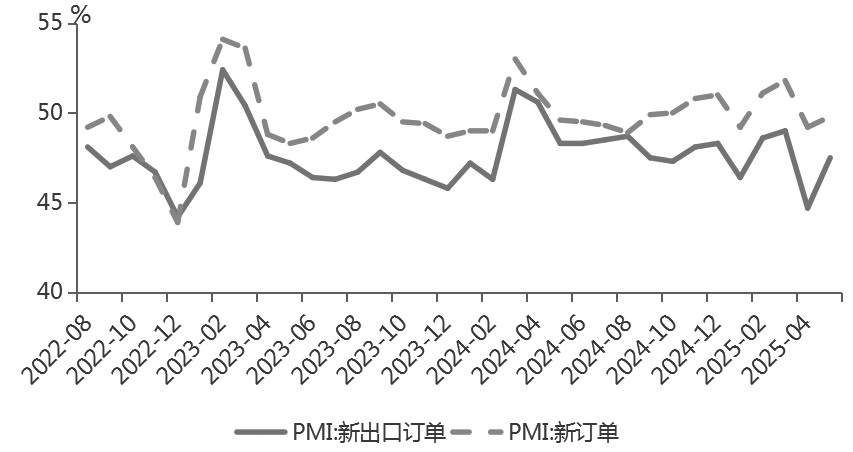
1. Report Industry Investment Rating No relevant content provided. 2. Core Viewpoints of the Report - The bond market opportunities may come from adjustments. If no unexpected events occur, the 10Y Treasury bond is expected to trade in a narrow range of 1.6% - 1.8% by the end of the year, and the bond market may lack trending opportunities [2]. - The current economic operation is in a neutral range. Exports are resilient, consumption has improved year - on - year, but investment remains sluggish. The marginal change in the economy compared to 2024 may lie in consumption. However, due to over - capacity, PPI is still under pressure, and combined with negative real estate investment and international energy prices, black - series prices are particularly low. The bond market is not likely to enter a major bear market in the short term [2]. 3. Summary According to the Directory 3.1 Macro News - The central bank did not conduct open - market Treasury bond trading operations in May. In May, it carried out 700 billion yuan of repurchase operations, but due to the maturity of 900 billion yuan of existing operations, it achieved a net liquidity withdrawal of 200 billion yuan [11]. - At the end of the first quarter of 2025, the balance of consumer loans was 21.02 trillion yuan, a year - on - year increase of 6.1%, and an increase of 32.1 billion yuan in the first quarter. The balance of RMB loans of financial institutions was 265.41 trillion yuan, a year - on - year increase of 7.4%, and RMB loans increased by 9.78 trillion yuan in the first quarter [12]. - From January to April this year, the profits of large - scale industrial enterprises increased by 1.4%, 0.6 percentage points faster than in the first quarter. The revenues of large - scale light - industry enterprises reached 7.35 trillion yuan, a year - on - year increase of 4.9%, and the profits were 419.06 billion yuan, a year - on - year increase of 3.8% [12][13]. - The US tariff policy is in a judicial tug - of - war. The Fed has maintained the federal funds rate at 4.25% - 4.5% for the third consecutive time, and may face "difficult trade - offs" in the future [17]. 3.2 Medium - term High - frequency Data: Strong Consumption, Stable Production, and Weak Prices 3.2.1 Consumption - As of May 25, the daily average retail volume of passenger cars was 60,800, a year - on - year increase of 26.4%, and the daily average wholesale volume was 75,900, a year - on - year increase of 14.4% [15]. - As of May 23, the weekly retail volumes of refrigerators/freezers, air conditioners, and washing machines were 741,400, 1.6127 million, and 655,700 units respectively, with month - on - month changes of - 8.1%, + 65.6%, and - 20.5%. The weekly retail revenues were 1.892 billion yuan, 3.901 billion yuan, and 1.246 billion yuan respectively, with month - on - month changes of + 2.6%, + 70.4%, and - 44.0% [23]. - As of June 1, the total movie box office in the past seven days was 480 million yuan, a month - on - month increase of 95.8% and a year - on - year increase of 17.5% [27]. 3.2.2 Transportation - As of May 25, the weekly container throughput of ports was 7 million TEUs, a month - on - month increase of 3.6%. The CCFI composite index on May 30 was 1118, a month - on - month increase of 0.9% [29]. - The Baltic Dry Index on May 30 was 1418, with a weekly average of 1342, a month - on - month decrease of 0.6%. The Baidu Migration Index on June 1 was 674, with a weekly average of 600, a year - on - year increase of 37.8% [33]. - As of May 25, the weekly number of civil aviation flights was 1.21 million, a month - on - month increase of 7.7%. The average subway passenger volume in first - tier cities on May 31 was 34.666 million person - times, and the weekly average was 39.258 million person - times, a year - on - year increase of 3.8% [37]. - As of May 25, the weekly postal express pick - up volume was 4.15 billion pieces, a month - on - month increase of 2.0%, and the delivery volume was 4.22 billion pieces, a month - on - month increase of 6.4%. As of June 1, the weekly railway freight volume was 78 million tons, a month - on - month decrease of 0.16%, and the highway truck traffic volume was 52.008 million vehicles, a month - on - month decrease of 6.14% [43][47]. 3.2.3 Operating Rates - As of May 28, the operating rate of blast furnaces of major steel enterprises was 77.8%, a month - on - month increase of 0.5%. As of May 29, the asphalt operating rate was 24.0%, a month - on - month increase of 4.3% [52]. - As of May 29, the soda ash operating rate was 79.13%, a month - on - month increase of 0.03%, the PVC operating rate was 72.2%, a month - on - month decrease of 0.6%. As of May 30, the average operating rates of PX and PTA were 82.1% and 74.2% respectively, with month - on - month increases of 6.2% and 1.1% [56]. 3.2.4 Real Estate - As of May 29, the transaction area of commercial housing in 30 large and medium - sized cities was 2.31 million square meters, with month - on - month increases of 8.9%, 18.3%, and 6.7% in first - tier, second - tier, and third - tier cities respectively. The number of transactions was 23,000 units, with month - on - month increases of 6.9%, 17.0%, and - 0.6% in first - tier, second - tier, and third - tier cities respectively [64]. - As of May 23, the transaction area of second - hand housing in 9 sample cities was 1.921 million square meters, a month - on - month increase of 4.0% and a year - on - year increase of 7.5% in May. As of May 25, the listing volume index of second - hand housing in the country was 16.0, a month - on - month decrease of 2.6% and a year - on - year decrease of 57.8% in May. The listing price index was 154.6, a month - on - month decrease of 0.1% and a year - on - year decrease of 8.1% in May [70]. - As of June 1, the number of land transactions in 100 large and medium - sized cities was 552, a month - on - month increase of 35.0%. The floor price per square meter was 49,504 yuan, a month - on - month decrease of 98.3%, and the land premium rate was 4.6%, a month - on - month decrease of 25.5% [74]. 3.2.5 Prices - As of May 30, the average wholesale price of pork was 20.7 yuan/kg, a month - on - month decrease of 0.3%. The average wholesale price of vegetables was 4.3 yuan/kg, a month - on - month increase of 1.3%. The average wholesale price of 6 key fruits was 7.8 yuan/kg, a month - on - month increase of 0.5% [75][80]. - The commodity price BPI on June 1 was 856, a decrease of 2.8% compared to the beginning of the year. The price of thermal coal at northern ports on May 30 was 615 yuan/ton, a decrease of 20.1% compared to the beginning of the year. The spot price of rebar on May 30 was 3077.1 yuan/ton, a month - on - month decrease of 2.4%. The spot price of iron ore was 756.5 yuan/ton, a month - on - month decrease of 3.0%. The spot price of glass was 14.4 yuan/square meter, a month - on - month decrease of 0.1% [80][83][84]. 3.3 Bond and Foreign Exchange Markets: Stable Capital Interest Rates - On May 30, overnight Shibor was 1.47%, down 3.50BP from May 26. R001 was 1.57%, up 1.78BP; R007 was 1.70%, up 0.12BP. DR001 was 1.48%, down 2.91BP; DR007 was 1.66%, up 1.00BP. IBO001 was 1.51%, down 3.57BP; IBO007 was 1.58%, up 12.78BP [88]. - Most Treasury bond yields declined. On May 30, the 1 - year/5 - year/10 - year/30 - year yields were 1.46%/1.56%/1.67%/1.89% respectively, up 1.1BP/down 0.2BP/down 5.0BP/up 0.3BP compared to May 23. The yields of 1 - year/5 - year/10 - year/30 - year state - owned development bonds were 1.54%/1.62%/1.70%/2.07% respectively, up 1.5BP/up 1.5BP/down 1.6BP/down 0.1BP compared to May 23 [98]. - On May 30, the yields of 1 - year/5 - year/10 - year local government bonds were 1.52%/1.66%/1.87% respectively, up 3.0BP/down 1.7BP/up 1.2BP compared to May 23. The yields of 1 - month/1 - year AAA and AA + inter - bank certificates of deposit were 1.56%/1.70%/1.59%/1.74% respectively, down 6.1BP/up 0.2BP/down 6.1BP/up 0.2BP compared to May 23 [102]. - The central parity rate and spot exchange rate of the US dollar against the RMB on May 30 were 7.18 and 7.20 respectively, down 71 pips and up 58 pips compared to May 23 [105]. 3.4 Institutional Behavior: Interest - rate Bond Funds Extend Duration, Credit - bond Funds Keep Duration Stable - As of May 25, the net - loss rate of public wealth management products of wealth management companies was about 1.08%, a decrease of 0.89BP from the beginning of the year, and it has dropped to the lowest level this year [107]. - Since the beginning of 2025, the duration of medium - and long - term pure interest - rate bond funds has shown a trend of first decreasing and then increasing. On May 29, 2025, the estimated median duration was about 4.1 years, and the estimated average duration was about 4.6 years, an increase of about 0.09 years compared to the previous week [110]. - Since the beginning of 2025, the duration of medium - and long - term pure credit - bond funds has shown a slight fluctuation trend. On May 29, 2025, the estimated median duration was about 2.0 years, and the estimated average duration was about 2.1 years, a decrease of about 0.05 years compared to the previous week [111]. 3.5 Investment Suggestions - The bond market opportunities may come from adjustments. When the 10Y Treasury bond yield reaches the upper limit of the range, extend the duration; when it approaches the lower limit, reduce the duration, and conduct 10BP - level band operations [2]. - In June, the bond market may face several challenges. It is recommended to wait until the second half of June for interest - rate bond band opportunities. The total maturity of inter - bank certificates of deposit in June will reach 4.17 trillion yuan, a record high in recent years. The scale of wealth management products may decline seasonally in the second half of June, and the scale may increase significantly in July due to the reduction of deposit interest rates [2]. - The yield curve of credit bonds within 5 years may flatten. It is recommended to focus on credit bonds with a yield of over 2%. It is also recommended to pay more attention to Hong Kong - listed financial stocks, fixed - income + Hong Kong - listed dividend stocks, and continue to be bullish on Hong Kong - listed banks [116].
5月PMI与4月工业企业绩效分析:6月18日是重要观察点
Yong Xing Zheng Quan· 2025-06-03 09:14
Industrial Performance - In the first four months, industrial enterprises' cumulative revenue increased by 3.2% year-on-year, down from 3.4% in the previous period[2] - Cumulative profit for industrial enterprises rose by 1.4% year-on-year, up from 0.8% previously, with April's profit showing a 3.0% increase year-on-year[2] - Private industrial enterprises achieved a cumulative profit growth of 4.3%, recovering from a decline of 0.3% in the previous period[2] Price and Inventory Trends - The Producer Price Index (PPI) for April showed a year-on-year decline of 2.7%, continuing a downward trend for two consecutive months[3] - Cumulative inventory of finished products in industrial enterprises increased by 3.9% year-on-year, down from 4.2% previously, marking the first decline since November 2024[3] PMI Insights - The manufacturing PMI for May was reported at 49.5%, slightly up from 49.0% in April, with the production index exceeding the critical threshold[3] - The new orders index for manufacturing PMI in May was 49.8%, an increase from 49.2% in April, while the export orders index rose to 47.5% from 44.7%[3] Employment and Sector Performance - The employment index for manufacturing in May was 48.1%, up from 47.9% in April, indicating a slight improvement in employment conditions[4] - The construction PMI for May was 51.0%, down from 51.9% in April, while the services PMI remained stable at 50.2%[4] Economic Outlook - June 18 is identified as a critical observation point for economic and policy developments, following the release of key economic data and the Federal Reserve's meeting[5] - The report highlights risks including external uncertainties and potential delays in counter-cyclical policies[6]
债市日报:5月28日
Xin Hua Cai Jing· 2025-05-28 09:23
Market Overview - The bond market continued to show weakness, with most government bond futures closing lower and interbank bond yields rising slightly by around 0.5 basis points [1] - The central bank conducted a net injection of 58.5 billion yuan in the open market, while short-term funding rates exhibited some divergence [1] Bond Futures and Yields - The closing prices for government bond futures showed a decline, with the 30-year main contract down by 0.04% to 119.400, while the 10-year main contract remained flat at 108.730 [2] - The yields on major interbank bonds mostly continued to rise, with the 10-year government bond yield increasing by 0.75 basis points to 1.705% [2] International Bond Markets - In North America, U.S. Treasury yields collectively fell, with the 2-year yield down by 0.74 basis points to 3.974% [3] - In Asia, Japanese bond yields mostly rose, with the 10-year yield increasing by 5.3 basis points to 1.514% [3] - In the Eurozone, yields on 10-year bonds from France, Germany, Italy, and Spain all decreased [3] Primary Market Activity - Agricultural Development Bank's financial bonds had successful bids with yields of 1.4792%, 1.7059%, and 1.7985% for 1.074-year, 3-year, and 10-year maturities, respectively [4] Funding Conditions - The central bank announced a 215.5 billion yuan reverse repurchase operation at a fixed rate of 1.40%, with a net injection of 58.5 billion yuan for the day [5] - The Shibor rates showed mixed performance, with the overnight rate declining by 4.1 basis points to 1.411% [5] Institutional Insights - Citic Securities indicated that uncertainty may persist in the economic landscape through 2025, with a projected GDP growth of 5% for the year [6] - China International Capital Corporation noted that credit bond supply may continue to recover, while short-term credit spreads are at historically low levels [7]
印度声称成为第四大经济体,上海一法拍房2.7亿成交 | 财经日日评
吴晓波频道· 2025-05-27 17:46
Group 1: Industrial Profit Growth - In April, profits of large-scale industrial enterprises increased by 3% year-on-year, showing a slight recovery in profitability [1] - From January to April, profits grew by 1.4%, with 23 out of 41 industrial sectors reporting profit increases, indicating a broad recovery [1] - Key sectors such as computer, communication, and electronic equipment manufacturing saw profit growth of 11.6%, while the agricultural and food processing industry experienced a significant increase of 45.6% [1] Group 2: Economic Data and Trends - April's macroeconomic data slightly exceeded market expectations, with a potential continuation of high export growth due to easing US-China trade tensions [2] - However, the recovery across various domestic industries remains uneven, with diminishing effects from previous domestic demand stimulation policies posing risks to future economic recovery [2] Group 3: India's Economic Position - India claims to have surpassed Japan to become the world's fourth-largest economy, with a nominal GDP projected to reach approximately $4.187 trillion by the end of 2025 [3][4] - The Indian economy has made significant progress in infrastructure, business environment, and education, although challenges such as income disparity and low manufacturing GDP share persist [4] Group 4: Real Estate Market - A luxury property in Shanghai was auctioned for 2.7 billion yuan, highlighting the high value of historical properties in prime locations despite a general market downturn [5][6] - The overall price of Shanghai's old houses has declined in recent years, influenced by increased supply and a shrinking buyer pool willing to pay over 100 million yuan for properties [6] Group 5: Japan's Economic Status - Japan has lost its status as the world's largest net creditor, now ranking second to Germany, with a net asset balance of 533.05 trillion yen [7][8] - Despite Japan's net external assets growing, the country faces challenges in maintaining its economic position amid global trade dynamics and competition from Germany [8] Group 6: Meituan's Financial Performance - Meituan reported a revenue of 86.56 billion yuan for Q1 2025, marking an 18.1% year-on-year increase, with a net profit growth of 87.3% [9] - The company's core business segment saw a revenue increase of 17.8%, while innovative business segments also contributed to growth, indicating a recovery in the domestic consumption market [9][10] Group 7: Automotive Industry Developments - Toyota is shifting part of its GR Corolla production to the UK, investing approximately $56 million to establish a dedicated production line, aiming to reduce delivery times [12] - This move is seen as a response to external pressures, including trade agreements and cost considerations, as the company seeks to optimize its production strategy [12][13]