产能过剩

Search documents
8月信用债投资策略思考
Minsheng Securities· 2025-07-28 11:56
Group 1 - The credit bond market is expected to experience strong fluctuations in August due to multiple factors, including the upcoming Politburo meeting and the end of the temporary period for "reciprocal tariffs" between China and the US on August 14, which may affect market sentiment [1][11] - The overall trend of credit bonds is likely to remain stable in the short term, with limited downward potential, as the central bank's supportive stance continues to provide backing for the bond market [1][11] - After recent adjustments, credit bond spreads are still compressing, and institutional investors are expected to gradually enter the market, driven by the current "asset shortage" environment [1][11] Group 2 - The supply of credit bonds is not expected to increase significantly, with the growth of sci-tech bonds potentially offsetting the reduction in local government bonds, but overall net supply is likely to remain constrained [2][14] - The weighted coupon rate of sci-tech bonds is below 2%, indicating a scarcity of high-yield assets, which maintains a strong demand for credit bonds in the market [2][14] - The investment value of credit bonds has improved after a significant adjustment, particularly for mid-to-high-grade short- to medium-term credit varieties, which are now yielding above 10% historical levels [19][20] Group 3 - Manufacturing, new infrastructure, and consumption are expected to be key areas of policy focus in the second half of the year, with various measures likely to be introduced to support these sectors [22][23] - The macroeconomic data for the first half of 2025 shows a resilient economy, with GDP growth of 5.3% and industrial output growth of 6.4%, indicating a stable economic environment for credit bonds [22][23] - The government is likely to implement more policies to regulate the competitive order in the new energy vehicle industry, which may improve cash flow for upstream suppliers [24][29]
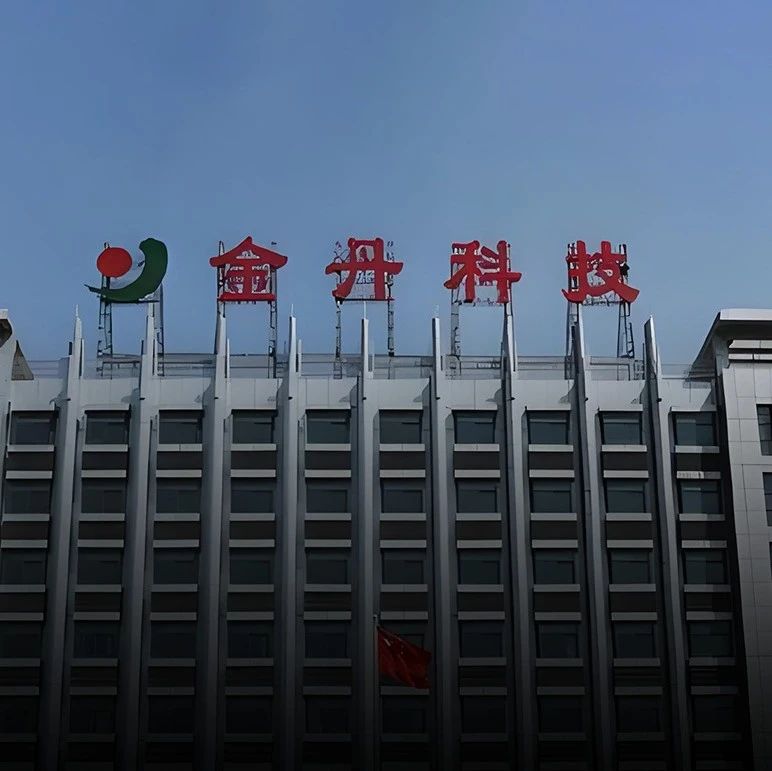
金丹科技“连环跳坑记”
市值风云· 2025-07-28 10:02
Core Viewpoint - JinDan Technology (300829.SZ) is a leading player in the domestic lactic acid industry, having established a comprehensive "corn-lactic acid-lactide-polylactic acid" industrial chain, particularly focusing on biodegradable materials like polylactic acid, which is seen as a potential blue ocean market [3][5]. Group 1: Company Overview - JinDan Technology has an annual production capacity of 183,000 tons for lactic acid and its derivatives, making it the leader in the domestic lactic acid sector [6]. - The company is currently expanding its lactic acid production capacity by an additional 50,000 tons, with an investment of 313 million, expected to be 75% completed by the end of 2024 [7]. - JinDan is located in a major corn-producing area in China and is extending its operations into upstream corn cultivation, planning to contract over 17,000 acres for high-starch corn cultivation in 2024 [8]. Group 2: Downstream Expansion - The company is extending its operations downstream into lactide, polylactic acid, and modified materials, which is a key strategic direction for JinDan [9]. - In 2024, JinDan has projects under construction that include a 10,000-ton lactide and a 75,000-ton polylactic acid biodegradable materials project [10]. - Additionally, JinDan has a project for producing 60,000 tons of biodegradable polyester and its products, with a budget of 466 million, expected to be completed by the end of 2024 [11]. Group 3: Industry Challenges - The lactic acid industry is currently characterized as a red ocean, with significant competition and pressure on prices, leading to a decline in revenue and profitability for JinDan [12][14]. - In 2023, the global lactic acid industry had a total capacity of 1.193 million tons, but the market is facing oversupply, resulting in a drop in JinDan's gross margin to 18.9%, the lowest on record [14]. - JinDan's net profit for 2023 was 85 million, a year-on-year decline of 35.54%, with projections for 2024 indicating a further drop to 37 million [15]. Group 4: Market Dynamics - The polylactic acid industry is experiencing rapid capacity expansion, with China's production capacity expected to reach 300,000 tons in 2024 and over 1 million tons by 2025, while consumption is only projected at 120,000 tons [19]. - The competitive landscape is intensifying, with many companies planning significant capacity expansions, leading to concerns about future oversupply [19][20]. - JinDan's projects have faced delays, with the 75,000-ton polylactic acid project now expected to be completed in June 2026, reflecting broader industry challenges [23].


再论“反内卷”政策下的通胀环境与债市趋势
Xinda Securities· 2025-07-28 07:45
Report Summary 1. Report Industry Investment Rating The document does not mention the industry investment rating. 2. Core Viewpoints - The low - inflation environment is the foundation of the bond bull market. The recent rise in commodity prices and equity market fluctuations have made investors worry about the change in the bond market trend. However, the long - term trend of the bond market may not have changed, and adjustments bring opportunities [2]. - The "anti - involution" policy is a structural reform. Although it aims to address over - capacity and boost inflation in the long run, the current implementation may have short - term negative impacts on the economy and may not be conducive to the sustainable recovery of inflation [2]. - The recent fluctuations in the bond market are mainly due to the "anti - involution" policy, the rise in commodity prices, and short - term disturbances in the capital market such as the freezing of funds for new share subscriptions on the Beijing Stock Exchange. The central bank is likely to maintain a relatively loose liquidity environment in the short term [3]. 3. Summary by Directory 3.1. Demand - Driven Investment Policies Cannot Change the Low - Inflation State - In Q2 2025, China's GDP growth rate was 5.2%, and the cumulative growth rate in the first half of the year reached 5.3%. However, due to the decline in inflation, the nominal GDP growth rate in Q2 dropped to 3.9%, a new low since the pandemic. This may be the reason for the "anti - involution" policy [6]. - Since 2018, China's core CPI has been in a downward trend, especially after 2021, remaining below 1%, which may be affected by the decline of the real estate market. Overseas experience shows that low - inflation environments in major developed economies are usually triggered by demand - side shocks [11]. - China's real estate and urban investment platforms absorbed a large amount of financial resources before 2021. After the real estate market declined, these sectors faced debt risks. The policies to address these risks have limited short - term impact on demand [16]. - In the demand side, measures such as development - oriented policy financial instruments in 2022 and additional treasury bond issuance in 2023 aimed at major project construction. However, they could not fully offset the impact of the decline in urban investment financing on infrastructure investment. Manufacturing investment has become a new driver of stable growth, but it has also led to over - capacity and low inflation [21]. 3.2. The Intention and Alienation of the "Anti - Involution" Policy - The low - inflation state in China is closely related to over - capacity in the manufacturing industry, which is the background for the "anti - involution" policy. The capital expenditure growth rate of manufacturing listed companies has been declining, and the over - capacity may be due to local government intervention [25]. - The Sixth Meeting of the Central Financial and Economic Affairs Commission on July 1, 2025, can be regarded as the top - level plan for "anti - involution", aiming to address over - capacity by constraining local government behavior. However, the current implementation focuses on short - term inflation through measures like production restrictions and price alliances, which may not lead to sustainable inflation recovery [27]. - Different from the 2015 supply - side reform, the current over - capacity is mainly concentrated in the mid - and downstream sectors, and it is more difficult to clear through administrative orders. Without demand - side support, the price increase caused by production restrictions may be short - term [29]. 3.3. Inflation Priority Increase Does Not Justify Central Bank Tightening; Capital Market Fluctuations Are Affected by Short - Term Factors - The recent tightening of the capital market and the central bank's OMO net withdrawal have made investors worry about the change in monetary policy. However, considering the policy goal of boosting inflation, the central bank has no reason to tighten in the short term [33]. - The freezing of funds for new share subscriptions on the Beijing Stock Exchange has affected the capital market. For example, the 6288 billion yuan frozen for the online issuance of Dingjia Precision on July 22 has caused fluctuations in the capital market. After the funds were unfrozen on July 24, large - scale transfers may have reduced banks' willingness to lend, but the central bank's net withdrawal has increased market concerns [37]. - The central bank is likely to maintain a relatively loose liquidity environment, and the short - term fluctuations in DR001 are expected to return to the 1.3% - 1.4% range [42]. 3.4. Short - Term Focus on Overshoot Rebound; Medium - Term Wait for Further Clarity of Macroeconomic Data - The long - term trend of the bond market may not have changed, and the short - term bond market may rebound. However, the bond market structure is still fragile after the rebound, and there is a possibility of a second shock [45]. - Currently, trading can be carried out with a volatile mindset. Short - term participation in market rebounds is possible, but profit - taking can be considered when the 10 - year bond yield falls below 1.7%. The greater opportunity in the bond market may come from the falsification of the inflation - boosting expectation of the "anti - involution" policy, which may require a decline in Q3 economic data or the disappointment of incremental policies after the Politburo meeting [46].

国泰君安期货商品研究晨报-20250728
Guo Tai Jun An Qi Huo· 2025-07-28 03:46
Report Industry Investment Ratings No investment ratings were provided in the report. Core Viewpoints The report offers daily insights and trend analyses for various commodities, including precious metals, base metals, energy products, agricultural products, etc. It assesses each commodity's price trends, supported by fundamental data and macro - industry news, and gives a trend strength rating for each commodity [2][4]. Summary by Commodity Categories Precious Metals - Gold is expected to oscillate downward, with a trend strength of - 1 [2][7][8]. - Silver is predicted to break through and rise, with a trend strength of 0 [2][7][8]. Base Metals - Copper: Domestic inventory reduction restricts price decline, with a trend strength of 0 [2][10][12]. - Zinc: High - level oscillation, with a trend strength of - 1 [2][13][15]. - Lead: Lacks driving force, price oscillates, with a trend strength of 0 [2][16][17]. - Tin: Prices are disturbed by floods in Wa State, with a trend strength of - 1 [2][19][22]. - Aluminum: High - level oscillation; Alumina has intense long - short game; Casting aluminum alloy follows electrolytic aluminum. Aluminum trend strength is 0, Alumina is - 1, and Aluminum alloy is 0 [2][24][26]. - Nickel: Macro expectations determine the direction, fundamentals limit elasticity, with a trend strength of 0; Stainless steel is dominated by macro sentiment, and the real - world situation needs repair, with a trend strength of 0 [2][27][31]. Energy and Chemicals - Carbonate Lithium: Commodity prices fell on Friday night, pay attention to the spread of pessimistic sentiment, with a trend strength of - 1 [2][32][34]. - Industrial Silicon: Sentiment declines, pay attention to the risk of sharp decline, with a trend strength of - 1; Polysilicon: Sentiment declines, with a trend strength of - 1 [2][35][37]. - Iron Ore: Supported by macro expectations, strong - biased oscillation, with a trend strength of 0 [2][38]. - Rebar and Hot - Rolled Coil: Resonance in sector market, strong - biased oscillation, with a trend strength of 1 for both [2][40][42]. - Ferrosilicon: Disturbed by energy consumption and carbon emission information, strong - biased trend, with a trend strength of 1; Silicomanganese: Disturbed by industry's cut - throat competition information, strong - biased trend, with a trend strength of 1 [2][45][47]. - Coke and Coking Coal: Emotions are realized, wide - range oscillation, with a trend strength of 0 for both [2][48][50]. - Steam Coal: Daily consumption recovers, oscillates and stabilizes, with a trend strength of 0 [2][52][55]. Others - Logs: Oscillate repeatedly [2][56].
锌:高位震荡
Guo Tai Jun An Qi Huo· 2025-07-28 02:24
Group 1: Industry Investment Rating - The investment rating for the zinc industry is "High-level oscillation" [1] Group 2: Core Viewpoints - The report presents the latest data on zinc's fundamentals, including prices, trading volumes, open interests, premiums, and inventories, and also mentions relevant news and trend strength [1][2] Group 3: Summary by Relevant Content 1. Zinc Fundamental Data - **Prices**: The closing price of SHFE Zinc main contract was 22,885 yuan/ton, down 0.56%; the closing price of LME Zinc 3M electronic trading was 2,829 dollars/ton, down 0.40% [1] - **Trading Volumes**: The trading volume of SHFE Zinc main contract was 152,086 lots, an increase of 83 lots; the trading volume of LME Zinc was 8,275 lots, a decrease of 2,398 lots [1] - **Open Interests**: The open interest of SHFE Zinc main contract was 129,228 lots, a decrease of 5,707 lots; the open interest of LME Zinc was 190,675 lots, an increase of 2,366 lots [1] - **Premiums**: Shanghai 0 zinc premium was -20 yuan/ton, down 5 yuan/ton; LME CASH - 3M premium was -1.8 dollars/ton, down 10.8 dollars/ton [1] - **Inventories**: SHFE zinc futures inventory was 13,289 tons, an increase of 1,349 tons; LME zinc inventory was 115,775 tons, a decrease of 1,125 tons [1] 2. News - The Chinese Ministry of Foreign Affairs clarified its stance on issues such as so - called "overcapacity" and industrial subsidies in China - EU economic and trade relations, emphasizing the complementary and win - win nature of China - EU economic and trade relations and the need for the EU to relax restrictions on high - tech product exports to China [2] 3. Trend Strength - The trend strength of zinc is -1, indicating a relatively bearish sentiment [2][3]
不出意外,2025年下半年,房子、车子、存款或将迎来这些重大改变
Sou Hu Cai Jing· 2025-07-28 02:00
Economic Overview - In the first half of 2025, China's GDP grew by 5.3% year-on-year, ranking among the top major economies globally [1] - The per capita disposable income for residents reached 21,840 yuan, also reflecting a nominal growth of 5.3% compared to the same period last year [1] - The Consumer Price Index (CPI) showed a slight decline of 0.1% year-on-year, indicating a stable yet decreasing trend in domestic prices [1] Real Estate Market Changes - The real estate market continued to experience a decline in both volume and price, with new residential sales area down by 3.5% and sales value down by 5.5% in the first half of 2025 [5] - A significant change in housing prices is expected, with a divergence in price trends across different cities; cities with previously larger declines may see a slowdown, while major cities like Shanghai and Shenzhen may face further price drops [5] - The pre-sale system for commercial housing is anticipated to be gradually abolished, with an increase in the proportion of completed homes for sale, allowing buyers to view properties before purchasing [7] - The government plans to accelerate the market entry of affordable housing, aiming to provide 6 million units over the next five years, which will likely reduce costs for buyers and exert downward pressure on market prices [7] Automotive Market Dynamics - The automotive market is experiencing a price reduction trend, with many brands reducing prices by 20,000 to 30,000 yuan for mid-range vehicles and up to 90,000 yuan for luxury cars [9] - Factors contributing to this price reduction include an influx of new energy vehicles, increased competition from tech companies entering the automotive sector, and a decline in demand due to reduced middle-class incomes [9] Banking and Savings Landscape - Concerns are rising that holding cash may become less valuable due to excessive money supply, with M2 reaching 326 trillion yuan, over twice the GDP of 2024 [11] - Despite a slight decline in CPI, the economy is currently experiencing deflation rather than inflation, as excess money is not circulating into the economy [11] - Although deposit rates have fallen to historic lows, further declines are expected to be limited, as extremely low rates may lead to significant withdrawals from banks, increasing financing difficulties [13]

早盘直击|今日行情关注
申万宏源证券上海北京西路营业部· 2025-07-28 01:44
Core Viewpoint - The commencement of the "Yaxia" hydropower station construction, with a total investment of 1.2 trillion, is expected to boost infrastructure investment growth and enhance economic stability expectations [1]. Market Performance - The stock market continued to rebound, with the Shanghai Composite Index showing a five-week upward trend and reaching a recent high during the week [1]. - Daily trading volume in both markets exceeded 1.8 trillion, indicating a significant increase compared to the previous week [1]. - The Shenzhen Component Index accelerated its gains, achieving a new high for the year [1]. Sector Focus - Market hotspots were primarily concentrated in construction and building materials sectors related to infrastructure [1]. - Investment styles favored small-cap and technology sectors, which experienced larger gains [1]. Technical Analysis - The Shanghai Composite Index has accelerated its upward movement after breaking through a consolidation range from the previous year [1]. - The main technical resistance level is at the high point from early October of last year, which also represents the top of a weekly large box range [1].

中国:反内卷-通缩解药?
2025-07-28 01:42
Summary of Key Points from the Conference Call Industry Overview - **Industry**: Chinese Economy - **Focus**: Addressing deflation challenges and overcapacity through anti-involution policies Core Insights and Arguments 1. **Deflation Challenges**: China has faced deflation for nine consecutive quarters, with the GDP deflator remaining negative and the Producer Price Index (PPI) in deflation for 33 months. This situation is attributed to overcapacity in the context of high investment-to-GDP ratios [7][8][32] 2. **Policy Response**: The government is expected to intensify policy measures to combat overcapacity, with a focus on demand-side solutions rather than solely supply-side adjustments. Historical comparisons are made to the 2015-16 supply-side reforms that helped the economy recover from deflation [7][9][10] 3. **Investment Dynamics**: The report highlights that the current economic strategy relies heavily on manufacturing and infrastructure investments to maintain GDP growth, especially in light of the structural slowdown in the real estate sector [8][15][31] 4. **Private Sector Role**: A significant portion of overcapacity is found in emerging industries, with 50-90% of capacity in the private sector. This complicates the management of supply-side reforms [7][44] 5. **Need for Demand Support**: The report emphasizes that merely reducing supply will not suffice; boosting demand through social welfare spending and consumption support is crucial for sustainable economic recovery [10][42] Additional Important Insights 1. **Historical Context**: The report draws parallels between the current economic situation and past deflationary periods, noting that previous recoveries were driven by strong external demand and real estate market rebounds, which are currently lacking [11][41] 2. **Population Dynamics**: The declining population and structural issues in the real estate market are expected to hinder future economic growth and complicate demand management [23][26] 3. **Sector-Specific Overcapacity**: The report identifies specific sectors, such as solar energy and electric vehicles, where supply significantly exceeds demand, complicating efforts to manage overcapacity [45][48] 4. **Long-Term Growth Strategy**: A shift in growth strategy is suggested, moving from investment-driven growth to a more balanced approach that includes consumption as a key driver [42][46] Conclusion - The report outlines a complex landscape for the Chinese economy, where addressing deflation and overcapacity requires a multifaceted approach that includes both supply-side reforms and demand stimulation. The historical context and current challenges highlight the need for a strategic shift in economic policy to ensure sustainable growth moving forward [42][50]

欧盟反击美国千亿关税,中欧合作新动向引全球关注
Sou Hu Cai Jing· 2025-07-27 11:16
Group 1 - The European Union has approved retaliatory tariffs against the United States, totaling €93 billion, targeting key industries such as Boeing, automobiles, and agricultural products [1][3] - The EU's response is a countermeasure to the high tariffs imposed by the US on various EU sectors, including steel, aluminum, and agriculture, which have significantly impacted the EU economy, particularly Germany's automotive and France's aerospace industries [3][6] - The EU's decision to impose tariffs is part of a broader strategic adjustment, influenced by recent discussions with China regarding trade imbalances and industrial subsidies, highlighting the need for a rebalancing of EU-China trade relations [3][6] Group 2 - The increasing tariff barriers are accelerating the economic decoupling between the EU and the US, prompting countries like Germany to relocate production lines to avoid tariffs, while US agricultural sectors, such as the bourbon industry in Kentucky, face substantial market losses [5] - Despite existing disputes, cooperation between the EU and China is deepening, particularly in areas like climate change and green technology, which opens new avenues for collaboration [5] - Internal divisions within the EU, particularly from countries like Hungary that rely heavily on Russian energy, pose challenges to the implementation of these tariffs, leading to compensatory measures from core EU countries like Germany and France to maintain unity [6]